Vietnam by the Numbers

Delicious pork-based meals consumed: 20+

Delicious pork-based meals that were bun cha: 10+

Items of bespoke clothing purchased: 3

Animals seen: 10 or so (easily the fewest of my entire trip)

Entombed heads of state briefly glimpsed: 1

World Heritage sites admired: 2

Instances in which I was run over by a four-door sedan: 1

Packages of Oreos and Ritz crackers offered as recompense for being run over by a taxi: 4

Weeks for burns to heal: 4

Weeks for puncture wound to heal: 7

Major sightseeing trips canceled due to injuries: 2 (see you next time, Sapa and Halong Bay!)

Total money spent: $1,468.40

Number of days in the country: 28

Average amount spent per day: $52.44

Total money spent, minus the hospital costs: $1,026.30

Average amount spent per day, minus the hospital costs: $36.65

New friends made: 6

Old friends happily re-met by chance: 2

Reasons to go back and see more, uninjured this time: 100+

hue bike traditional hat

The Monument He Never Wanted: Ho Chi Minh’s Mausoleum

Ho Chi Minh wanted his body cremated, his memory kept alive in the spirit of the soldiers still fighting the war that went on several years after his death. But the leaders left behind upon his passing on September 2, 1969 decided they needed a more visible symbol, so they embalmed his body and erected a tomb in which to display it. The tomb is modeled on Lenin’s, and as with that monument, hundreds of people file past the embalmed body every day to pay their respects.

Ho Chi Minh Mausoleum

Ho Chi Minh Mausoleum

I’d heard how strict the guards were about not allowing visitors to take photos, but we were allowed to take our cameras into the complex. The mausoleum is only open for three hours every day, and some days the line extends for ages. Luckily for me, the lines were short when I visited, so I stood under an awning for only about 20 minutes before I entered the building. Once we were in front of the building, the guards enforced the no-photos rule, so I have none of the inside.

Standing in line, protected from the midday sun

Standing in line, protected from the midday sun

Inside, we walked single-file past armed guards, up a ramp and into the tomb. The glass case was mounted on a pedestal in a sunken floor, and was surrounded by another four armed guards. We were ushered through quickly, just enough time to see the waxy face and uniformed body of Ho Chi Minh, an eerie Snow White in a glass coffin.

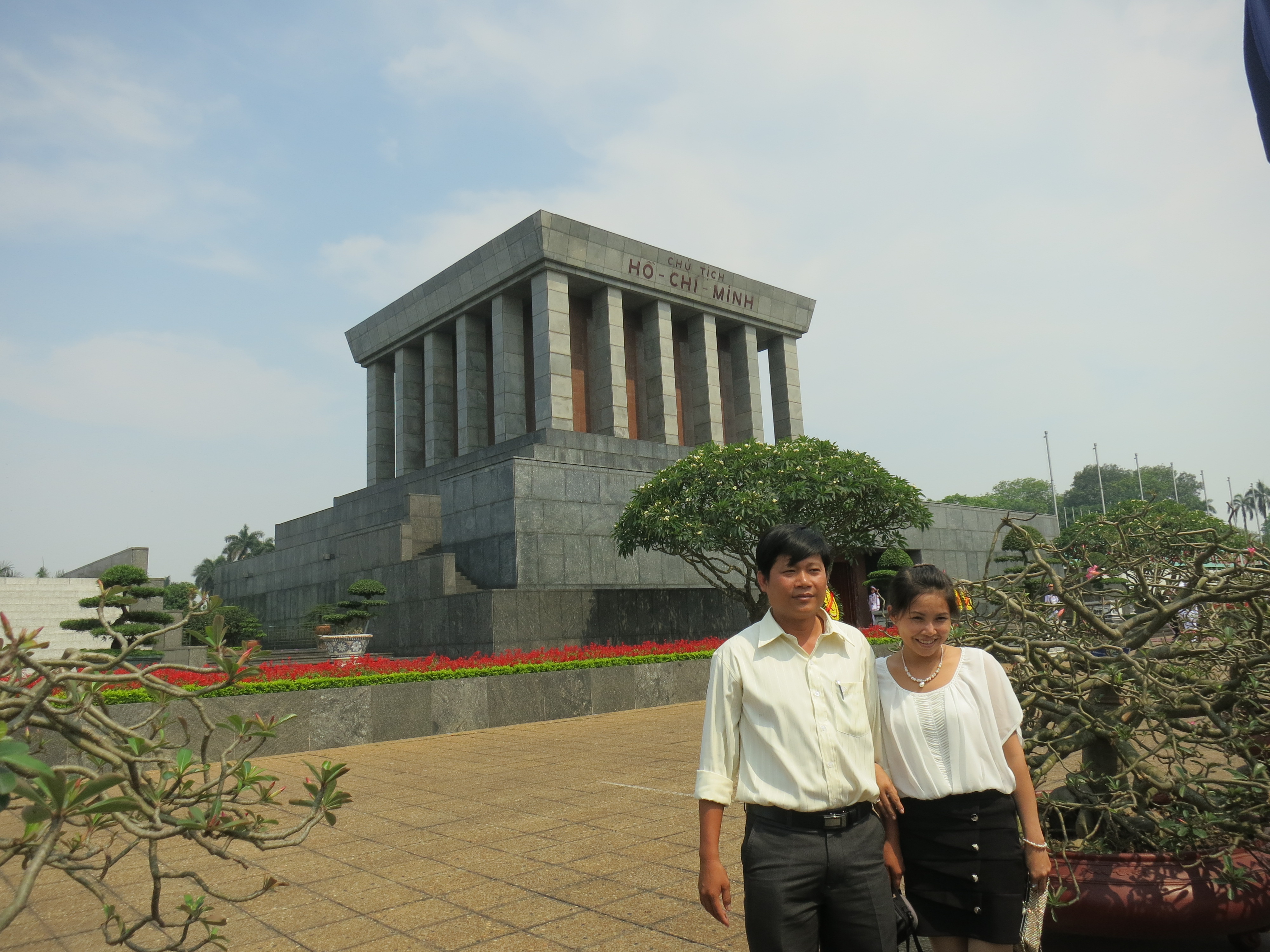
This Vietnamese couple snuck a photo when the guards weren't looking, and I snuck one of them

This Vietnamese couple snuck a photo when the guards weren’t looking, and I snuck one of them

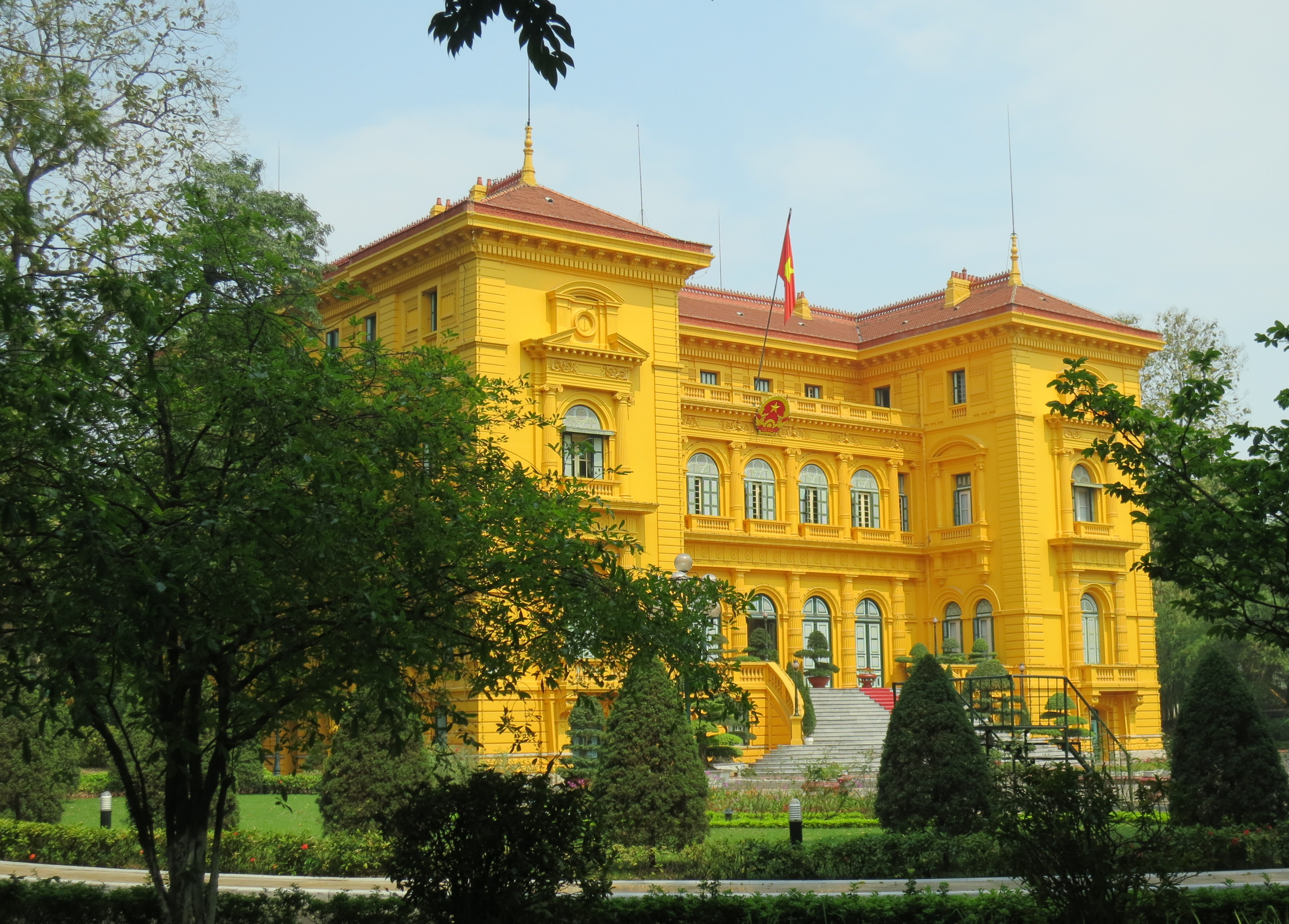
Outside, we were all encouraged to visit the palace grounds. I watched a group of schoolchildren, giggling in their little uniforms, sing a patriotic song together. I saw the outside of the palace, which had been built for French colonial rulers, was then used as the palace for Ho Chi Minh, and is now blocked off to the public.

The closed-off palace

The closed-off palace

Tranquil palace grounds

Tranquil palace grounds

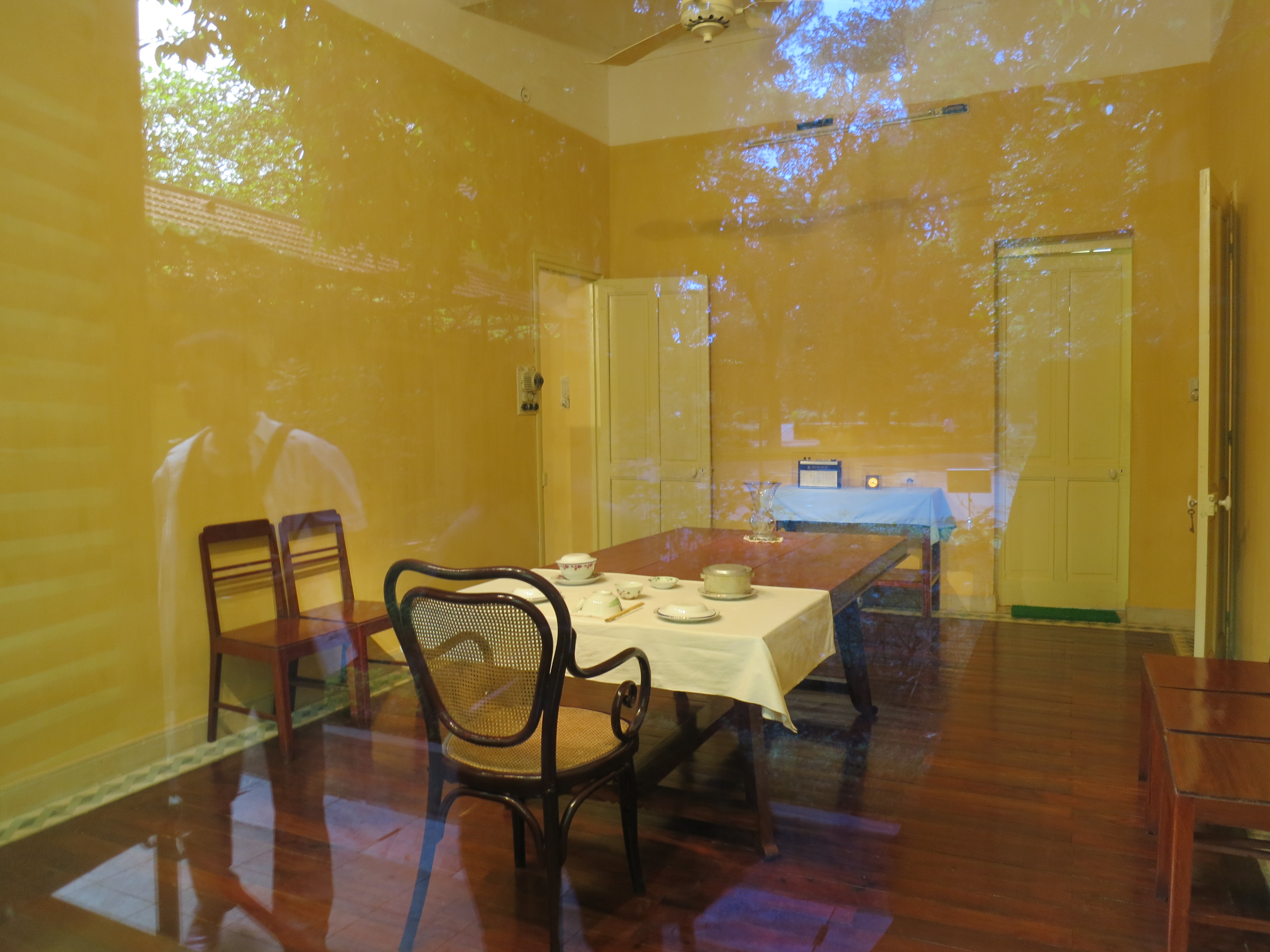
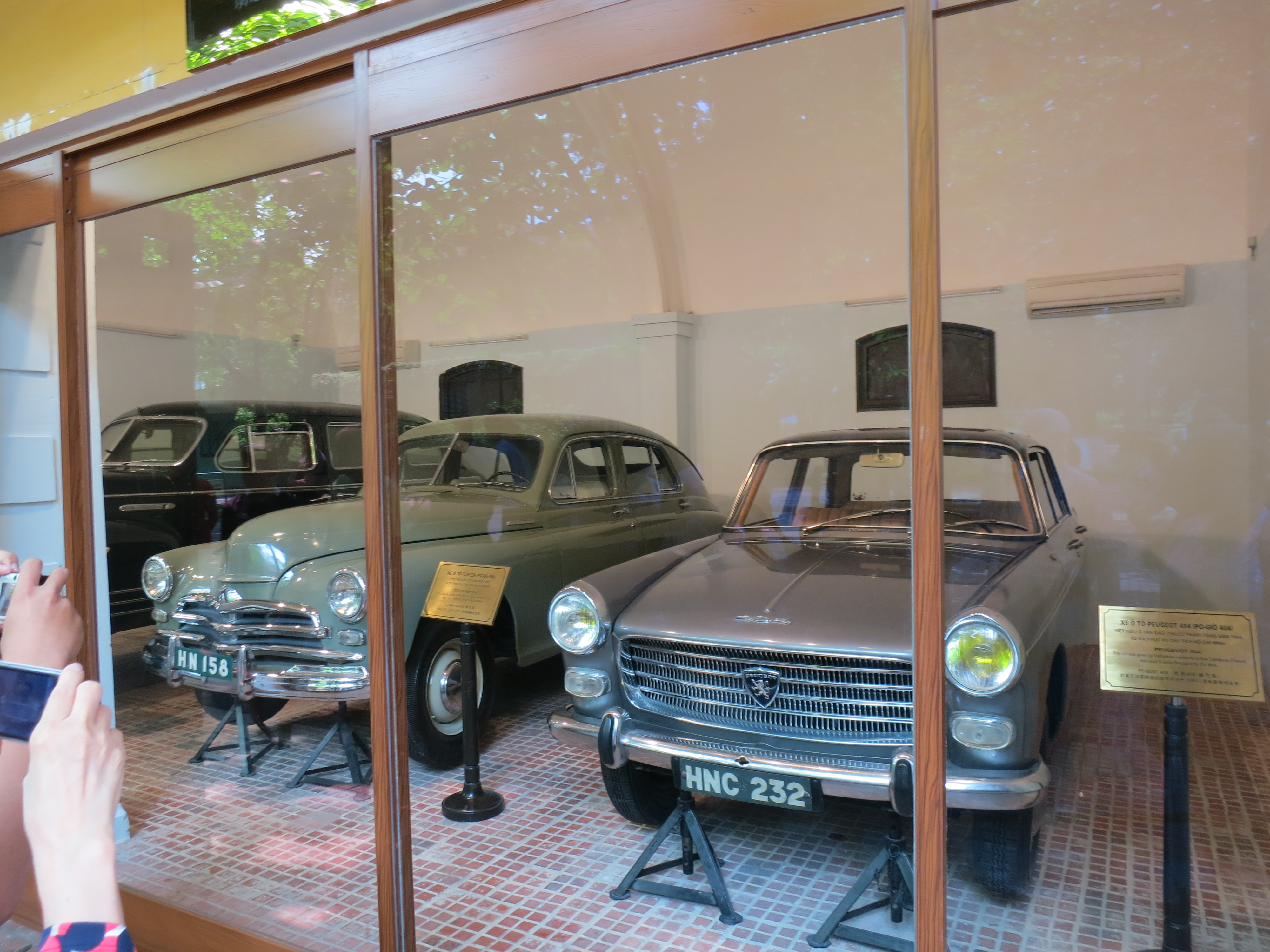
Ho Chi Minh apparently preferred to live in a simpler building during his presidency, and that building was displayed next to his three fancy cars near the small lake down the path. A little further along was the house on stilts, an even more basic construction that he retreated to during the later part of his tenure.

Simple quarters

Simple quarters

The cars of Ho Chi Minh

The cars of Ho Chi Minh

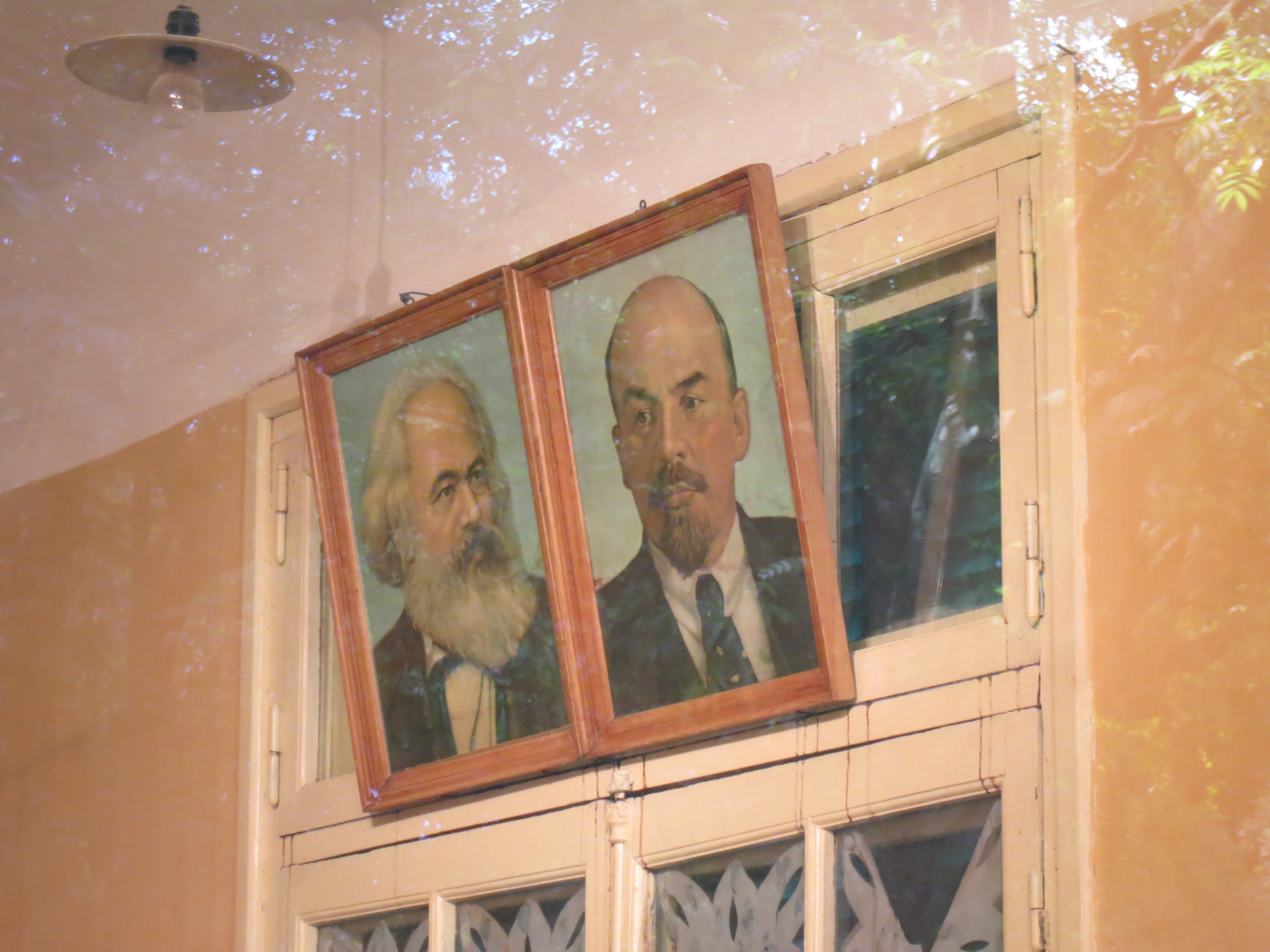
Inspirational posters for Communist leaders

Inspirational posters for Communist leaders

How much of this humility is legend and how much is the truth of the man, I don’t know. From the little I know of Ho Chi Minh, he did seem to truly believe in the cause he was fighting for, and in the liberation he believed a unified communist state would bring to Vietnam. It’s entirely believable that a man who worked most of his life for that outcome would request cremation and be embarrassed by the mausoleum he received instead.

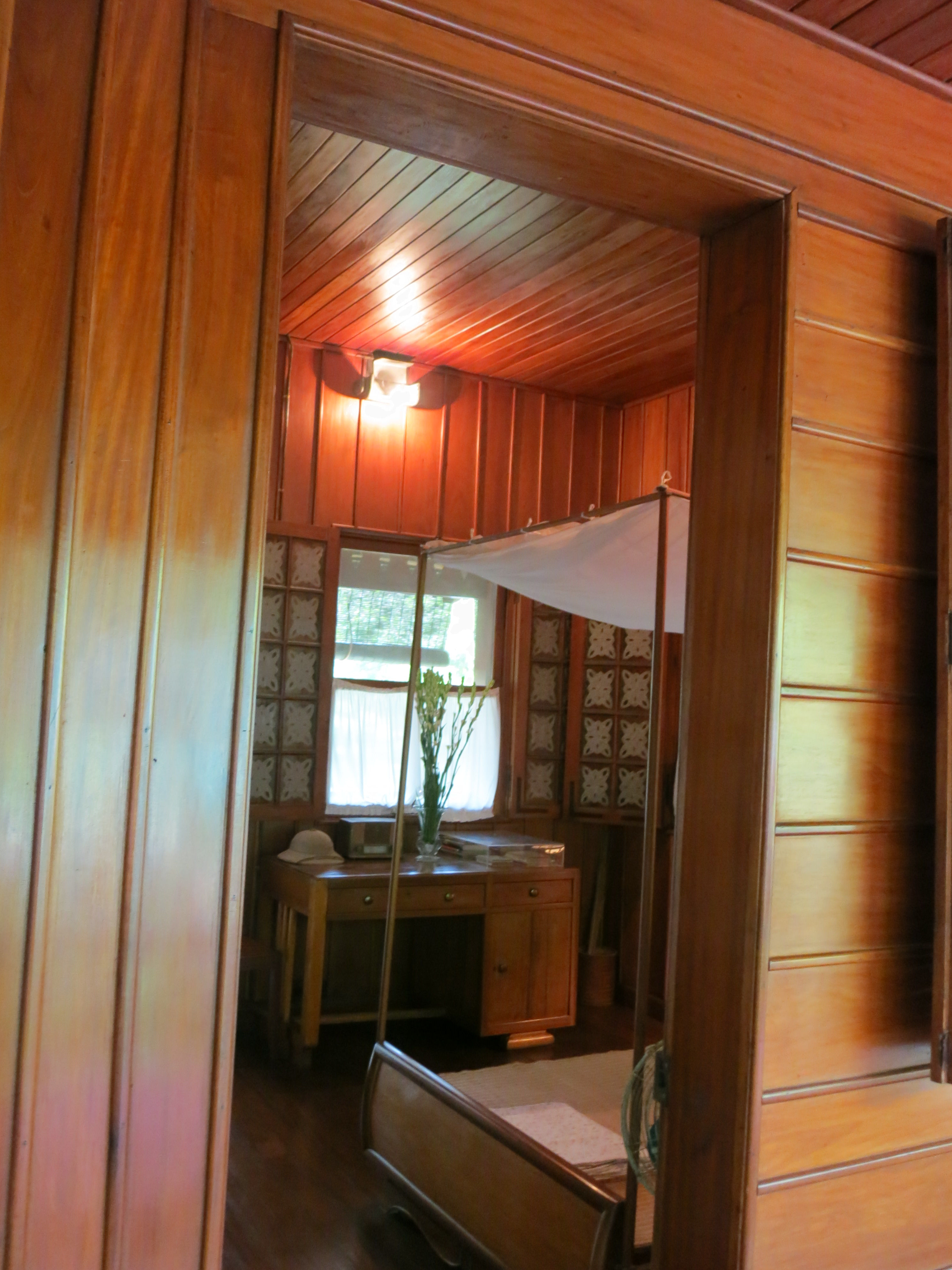
A quick glance inside the stilt house (the crowd was pushing forward very quickly!)

A quick glance inside the stilt house (the crowd was pushing forward very quickly!)

The stilt house

The stilt house

The Two Histories of the Hanoi Hilton

The Hoa Lo Prison in Hanoi combined the single-minded propaganda of the War Remnants Museum and the strange echoes of death sites felt at the Cu Chi Tunnels, resulting in a bizarre experience. A friend and I went together, and we were two of only about thirty or forty visitors in the mid-afternoon heat, so often we were the only people walking through rooms that were once packed full of prisoners, our voices swallowed up by the thick concrete walls.

Before it was the Hanoi Hilton, it was the Maison Centrale of Hoa Lo

Before it was the Hanoi Hilton, it was the Maison Centrale of Hoa Lo Prison

American prisoners of war nicknamed this place the “Hanoi Hilton” in a bitter jab at the conditions they endured. The official Vietnamese line is that the POWs were treated very well, and learned to empathize with the people they had previously only known as “the enemy.” However, multiple POWs have reported inhumane conditions, including substandard housing, insufficient food, and physical torture.

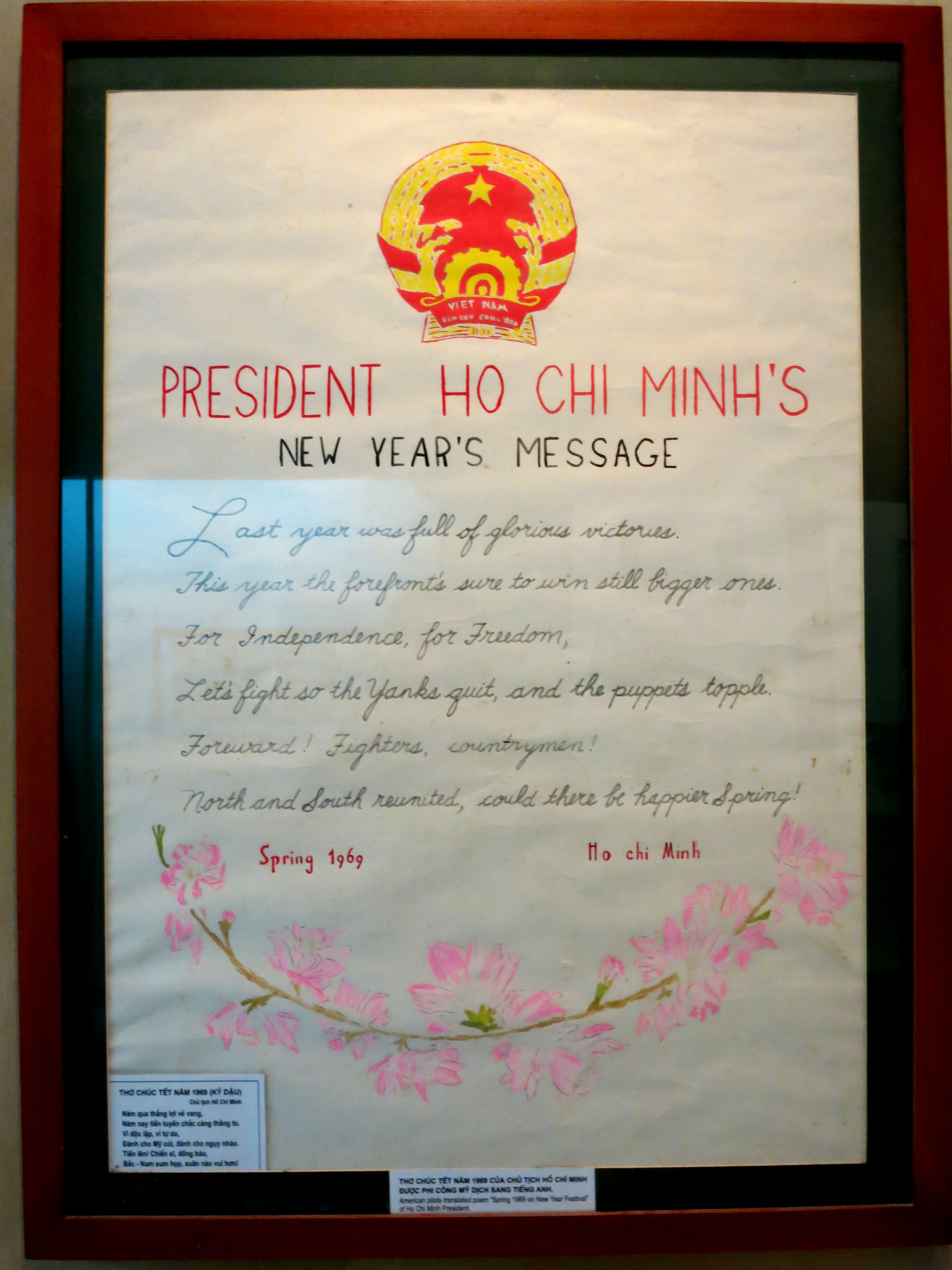
A 1969 New Year's message from Ho Chi Minh, wishing to eject "The Yanks" and reunite North and South

A 1969 New Year’s message from Ho Chi Minh, wishing to eject “The Yanks” and reunite North and South

But the first part of the museum doesn’t even mention Americans. The prison was built during French colonial times to house political prisoners, and the gatehouse that remains as the museum still has “Maison Centrale” arched over the doorway–the central house of the prison complex. Inside, there’s a mix of murals, glass cases filled with objects and scale models of the prison, and life-size sculptures of prisoners chained together and plotting revolution.
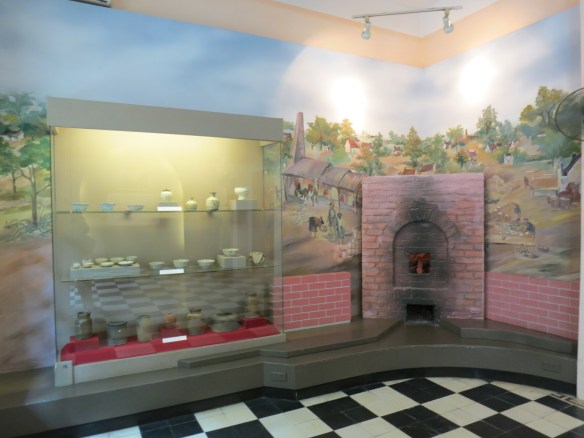
Before the 1880s, this part of the city sold stoves. This is part of the reason the prison is called "Hoa Lo"; it means "stove" and also "hell hole."

Before the 1880s, this part of the city sold stoves. This is part of the reason the prison is called “Hoa Lo”; it means “stove” and, supposedly, also “hell hole.”

Shackled statues

Shackled statues

The Vietnamese who were imprisoned by the French endured terrible conditions; the exhibits emphasized how resilient the prisoners were, and how they did everything they could to resist their imperial jailers, including gathering under an old almond tree in the courtyard to discuss resistance measures. The guillotine used to execute prisoners was on display, as were the solitary confinement cells, the piece of sewer pipe that 100 prisoners escaped through, and the room that held many more female prisoners than could comfortably fit.

Part of the sewer used as a means of escape by Vietnamese prisoners
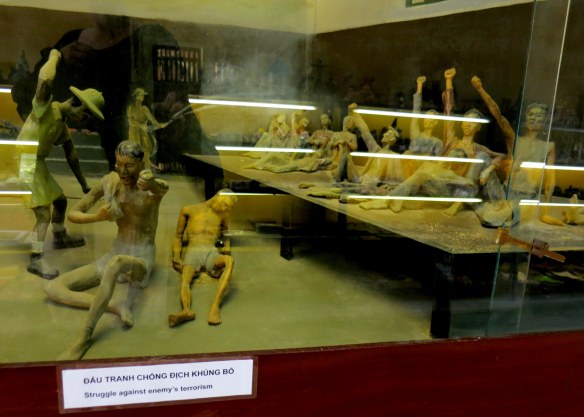
Part of the sewer used as a means of escape by Vietnamese prisoners

Several prominent Communist leaders were imprisoned here, when it was under French control

Several prominent Communist leaders were imprisoned here, when it was under French control

The guillotine was used as one method of execution

The guillotine was used as one method of execution

There were just a few small rooms devoted to the prison’s use in the ’60s and ’70s. These held artifacts like John McCain’s flight suit, a bed used by the prisoners, and a guitar and badminton net from all the leisure activities the POWs were supposedly allowed.

John McCain's flight suit

John McCain’s flight suit

Supposed evidence of benevolence

Supposed evidence of benevolence

The two most striking things I saw in these small rooms were a video from the time of the war, and a document listing the regulations of the camp. That list started with:

American servicemen participating in the war of aggression by U.S. administration in Viet-Nam and caught in the act while perpetrating barbarous crimes against the Vietnamese land and people, should have been duly punished according to their criminal acts; but the Government and people of Viet-Nam, endowed with noble and humanitarian traditions, have given those captured American servicemen the opportunity to benefit a lenient and generous policy by affording them a normal life in the detention camps as practical conditions in Viet-Nam permit it and conforming to the situation in which the war is still on. [sic on everything]

The video was a marvel of propaganda. It alternated scenes of American POWs playing basketball and grinning at dinner with scenes of Vietnamese cowering from falling bombs and picking through the wreckage afterward. It was a genius video; who could watch it and not sympathize with the Vietnamese, who were so generous to the people who were daily trying to kill them? Of course the smiling the POWs did for the cameras was all done under duress, and it was sick to hold up these tortured men as examples of how beneficent their captors were. But just because the POW sequences were lies doesn’t mean the bomb and wreckage scenes were. It was a bloody, hateful war–as they all are.
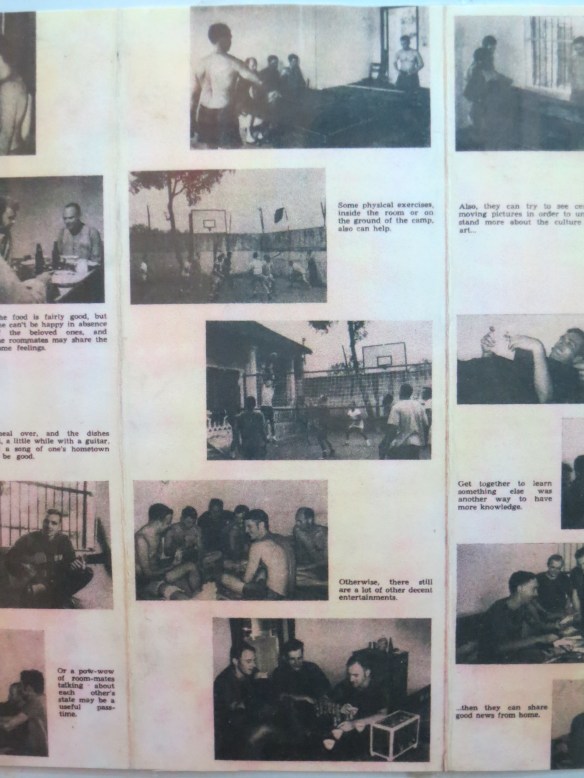
Lots of propaganda photos, accompanied by text detailing the typical life of a POW here

Lots of propaganda photos, accompanied by text detailing the “typical” life of a POW here

My interest in the prison derived from my knowledge of the Vietnamese-American War, but once again, seeing the place in person showed me a side I wasn’t aware of–how significant the prison was to the Vietnamese as a place where they had been tortured and unjustly confined by French colonial forces. There wasn’t even a straight line drawn between the displays showing how badly the Vietnamese were treated, to displays showing how well the Americans were treated. That was a line you could draw, yes, but the way the museum was set up, it was more like it was a museum about the prison under the French, and the heroic Vietnamese prisoners who lived and died inside; and there were a few rooms about how the prison was later used.

It was fascinating, and sobering, and nothing like I’d expected.
Last Minute Halloween Costumes 2013

Halloween is here! Well, it’s in just under a week, but since it falls on a Thursday, a lot of parties are happening this weekend. Maybe you’ve been enjoying the lovely fall weather too much to plan a costume, and the sudden cold snap has now focused your attention on the annual question: What should I be for Halloween?

Here are some costumes you can put together last minute, for little to no money:

Troy and Abed

Sing it: Troy and Abed Hall-o-wee-een!

Troy and Abed are probably the best thing about Community (along with the Dean’s costumes and any time Britta does drugs). They’re such good friends that not even a massive pillow war can separate them. Grab your best friend and put together this costume. You can go as Inspector Spacetime and Constable Reggie: white robe, bowler hat, red scarf for one and a blue sweater (sew some buttons or even just tape on some paper you cut out) and white gloves for the other. Or you can go even more low-key and wear your normal jeans and t-shirts, so long as you keep up the repartee. Use the handshake a lot, conduct fake talk show interviews, make pop culture references that only half the people at the party get. Bonus points if you get the whole party to build a pillow and blanket fort. Extra bonus points if you bring costume changes and get up to hijinks. Coolcoolcool.

Katy Perry

ROAR

Katy Perry, much like Lady Gaga, is a godsend for Halloween costumes, because she’s always wearing some wacky get-up. I recommend busting out your Tarzan costume from last year, teasing out your hair, and strapping on your highest heels. Use whatever liquor bottle’s handy as your microphone and belt out “Roar.” If you don’t have a Tarzan costume from last year, wear a swimsuit/tight skirt combo and drape animal print fabric over yourself (easily found for pretty cheap at a crafts store). Have a disarmingly good sense of humor about yourself and don’t be afraid to use anything nearby as a prop. Bonus points if your friends dress up in furry animal costumes and follow you around as your band.

Insufferable Resort Tourist

You’re in my sun

Maybe you’ve been busy lately, and you’re worn out. Make your Halloween party a mini-break and go as an insufferable resort tourist. Don a swimsuit, sarong, sunglasses, floppy hat, and sandals. Carry a drink with an umbrella in it and ask people if they got the full drinks package too. Spread a beach towel out on the couch and lie down on it. When people stand near you, flutter your fingers and say they’re in your sun. As they start to walk away, stop them and request a refill on your snacks. Obviously, you can’t do this the whole night if you want anyone to like you, so take it as far as you’re comfortable. Bonus points if you bring sand in the towel and when your host watches in horror as it gets in the crevices of the couch, you trill, “That’s the wonderful thing about these resorts. I don’t have to worry about the mess I make because the maids take care of everything!”

Photo 1. Photo 2. Photo 3

A Puppet Show for Grown-Ups in Hanoi

I went to shows in different countries on this trip, seeing types of theater particular to the region, like kabuki in Japan and hula dancing in Hawaii. In Hanoi, that meant seeing water puppet theater, which started in the rice paddies of northern Vietnam in the 11th century, if not earlier. Farmers put on shows after the flooded paddies had been harvested. The shows were a way to celebrate the end of harvest, and also a way to honor the water spirits of the paddies. As with so many forms of entertainment, it eventually became something used to entertain wealthier people, and the show moved inside. Now there are several shows a day in a few different theaters in the capital city.

Dance!

Dance!

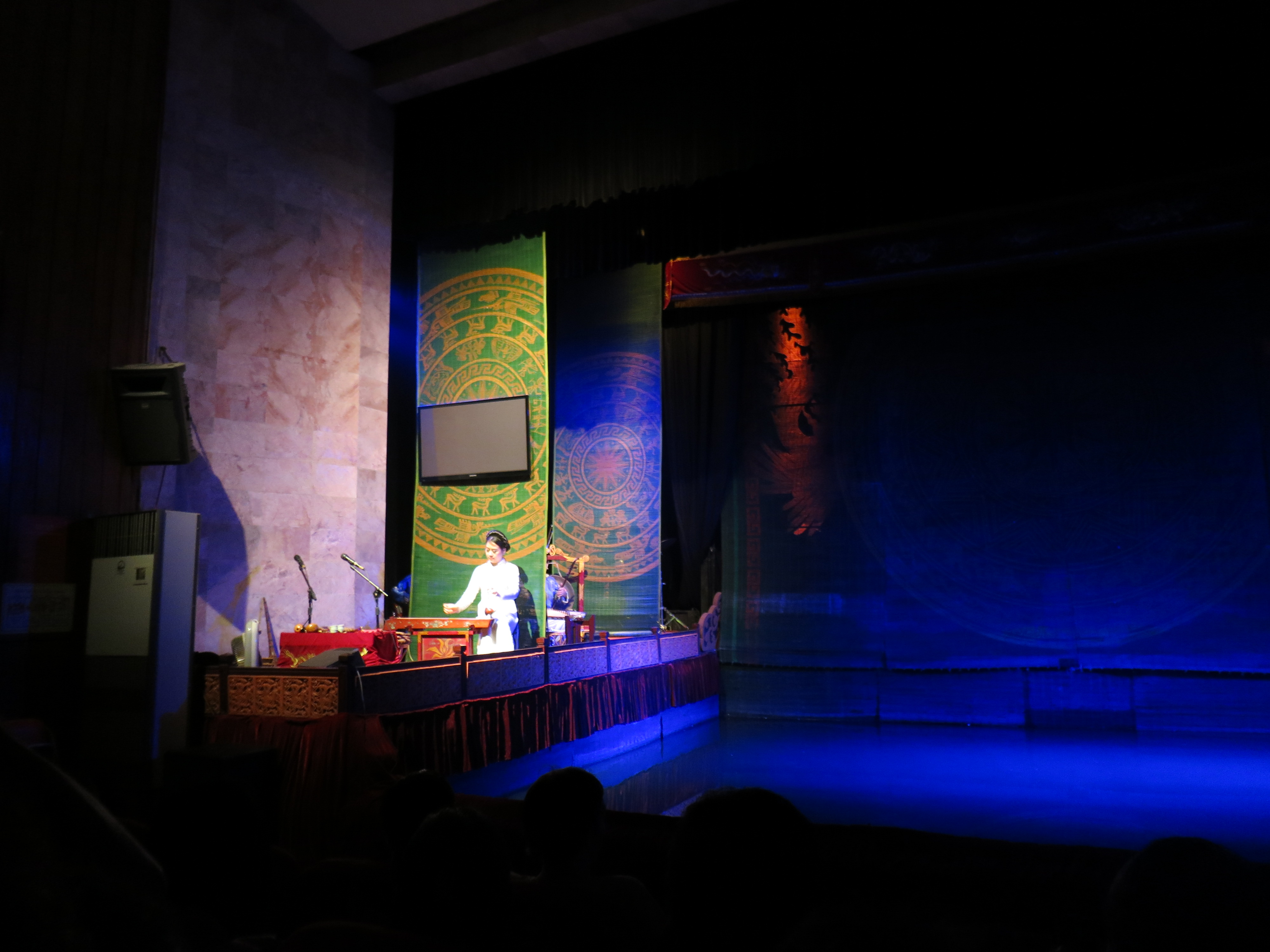
A live band played hidden behind screens stage right, and three women in traditional dress sat in front of the screens and narrated the show. They took turns talking, while TV screens showed English translations of what they said, and they sang during the performance. The stage was a large rectangle of water, and the puppeteers hid behind the large scrim and manipulated the puppets using long bamboo poles.

Narrator before the screen that hid the orchestra

Narrator in front of the screen that hid the orchestra

I caught them at a bad moment, but these were the singers and narrators

I caught them at a bad moment, but these were the singers and narrators

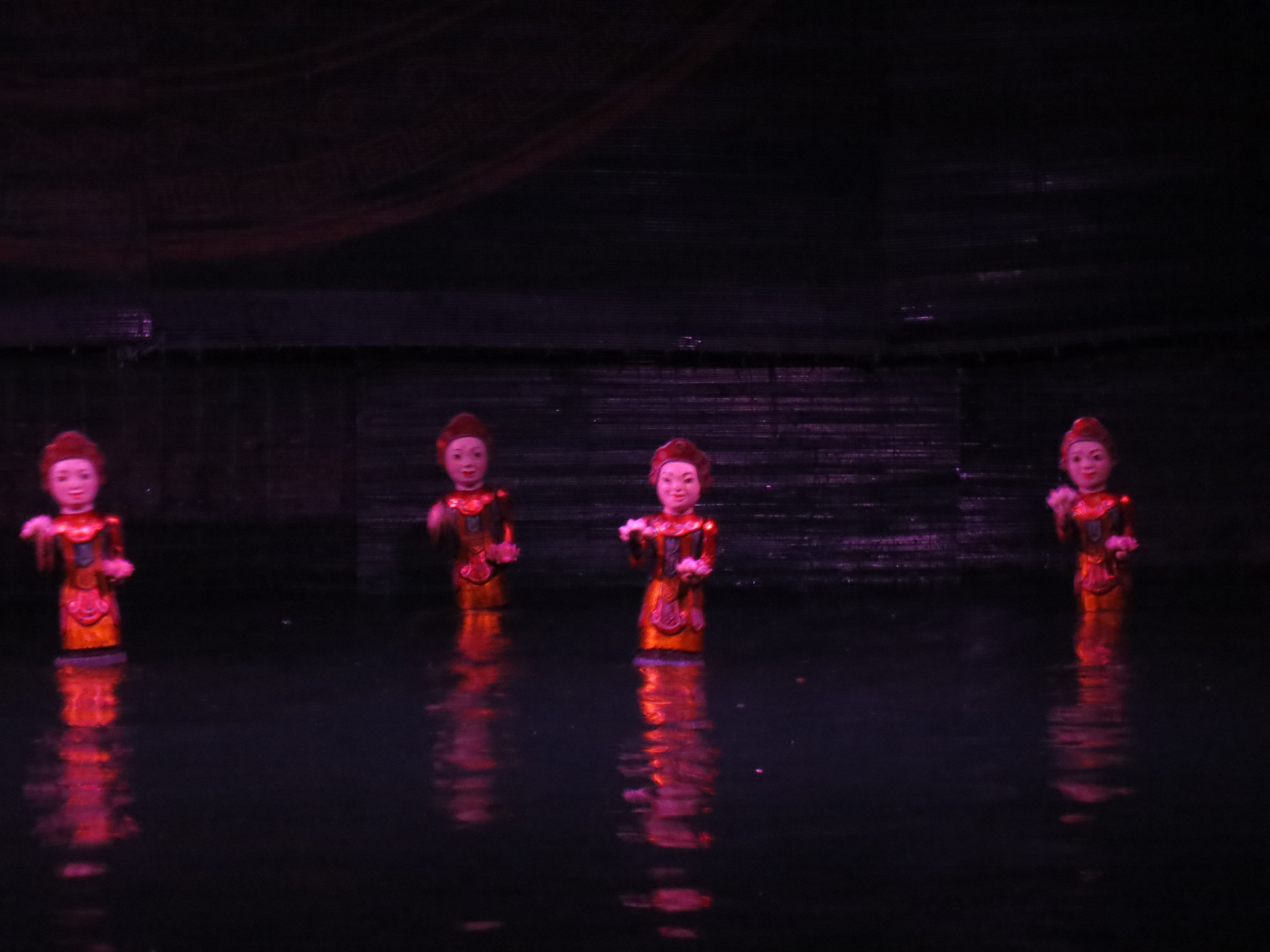
Demure lady puppets

Demure lady puppets

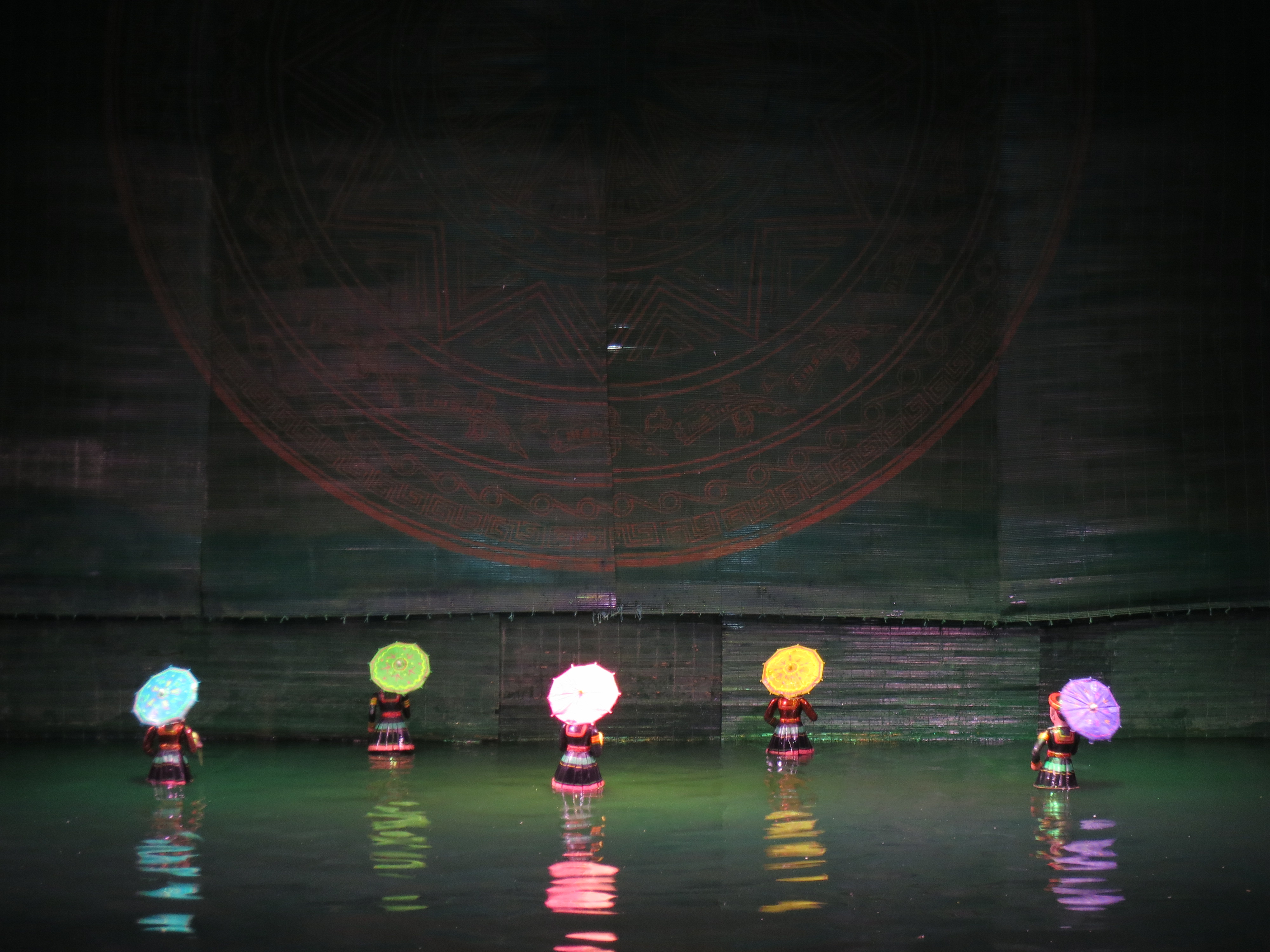
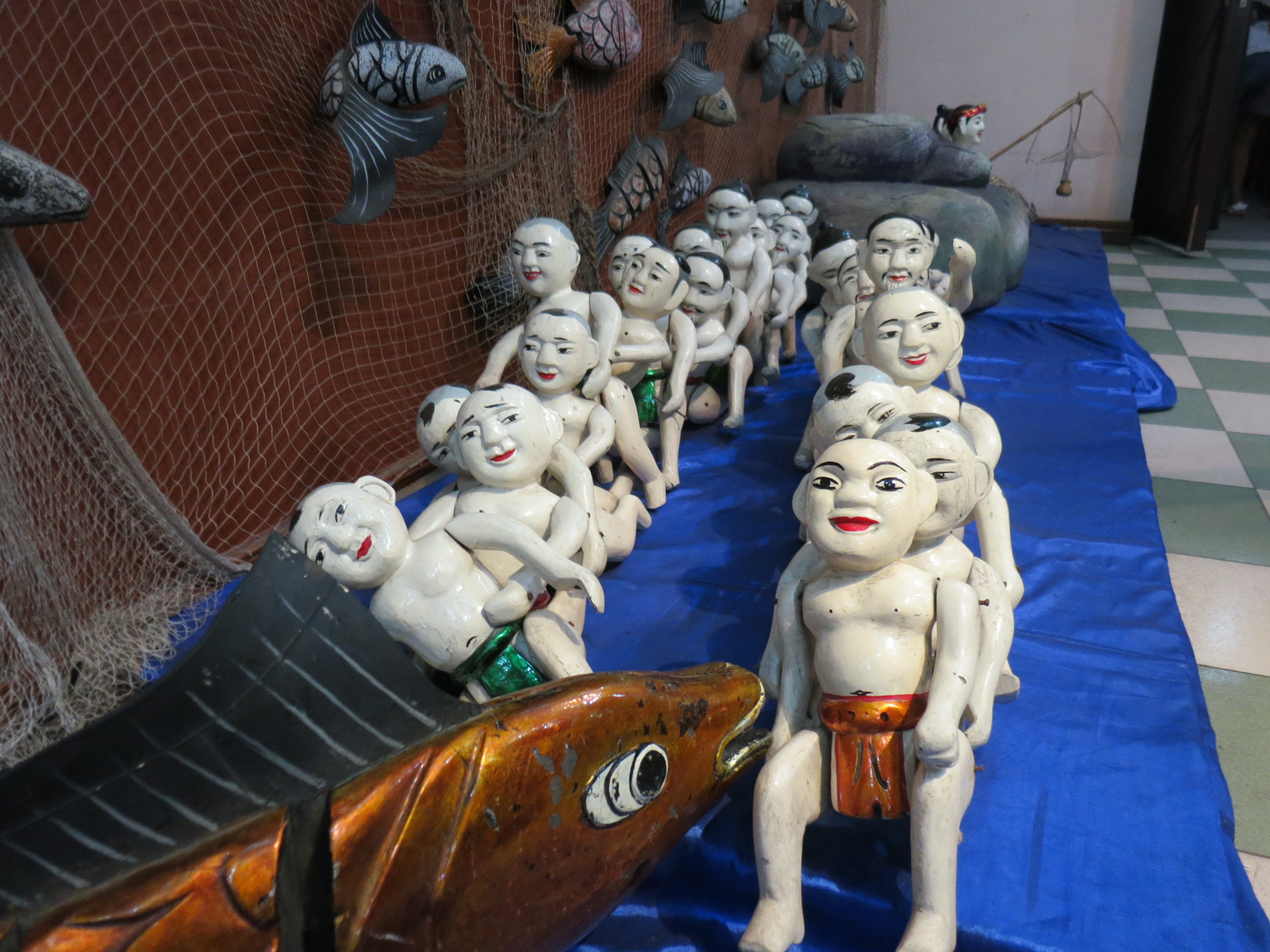
The puppets were small metal and wood creations, and they acted out love stories, country dances, and religious ceremonies. The narrators described each dance before it took place, and the TVs gave credit to the choreographers; this is an important art form here, and there are various awards to be won for choreography, story, and execution.

There were several battles and ceremonial displays

There were several battles and ceremonial displays

hanoi water puppets

To give you an idea of the size of the stage

To give you an idea of the size of the stage

It was fun to see, but I confess I didn’t get all the intricacies of the form. The puppets have jerky movements, as puppets do, which distracts me. Maybe their constant exposure to water made them rustier or slower than they would have otherwise been. I enjoyed watching them dance and spar, but puppets in general, not just ones in water, have never really captured my attention. Still, I’m glad I went.

The craftspeople behind the magic

The craftspeople behind the magic

They wear waist-high waders to protect them from the water

They wear waist-high waders to protect them from the water

Puppets on display

Puppets on display

Temples to Ancestors and Learning in Hanoi

Temple of Literature

The Temple of Literature in Hanoi was the first place I’ve been to that literally makes a shrine to learning. When I visited, it was the end of the school year and dozens of schoolgirls congregated to pay their respects to ancestors and ask for success in the future. It was cool to see a specific place you could go to hope for academic success, a place that had been the seat of learning for almost 1,000 years.

Temple of Literature, Hanoi

Temple of Literature, Hanoi

This structure is so iconic that it's been made the symbol of Hanoi.

This structure is so iconic that it’s been made the symbol of Hanoi.

I met another American in line for tickets, and we split the cost of hiring a guide. Hanh, our guide, was a middle-aged woman who was thrilled to hear we were from the States. She related the facts about the temple, but mostly she wanted to talk about how proud she was of her daughter, who is at college in Nebraska. It was fitting to hear a running commentary on the benefits of education in a place devoted to the celebration of it.

This character says men should be reliable. I do not disagree. (Okay, so it's intended to represent a virtue that scholars should have, but they meant "men" when they said "scholars," so I took the easy joke.)

This character says men should be reliable. I do not disagree. (Okay, so it’s intended to represent a virtue that scholars should have, but they meant “men” when they said “scholars,” so I took the easy joke.)

There are 82 stelae inscribed with the names of those who passed the highest level of testing.

There are 82 stelae inscribed with the names of those who passed the highest level of testing.

The place was established as the Imperial University in 1070, and it only closed in 1779. By 1802, the Nguyen dynasty set up the university in Hue, and the Hanoi temple became less important. For a 300-year period, large stone stelae were inscribed with the names of those who passed the rigorous examinations to hold the highest titles of learning in the land. The stone slabs were set up on the backs of stone turtles, which represent longevity and appear in various guises around the temple grounds.
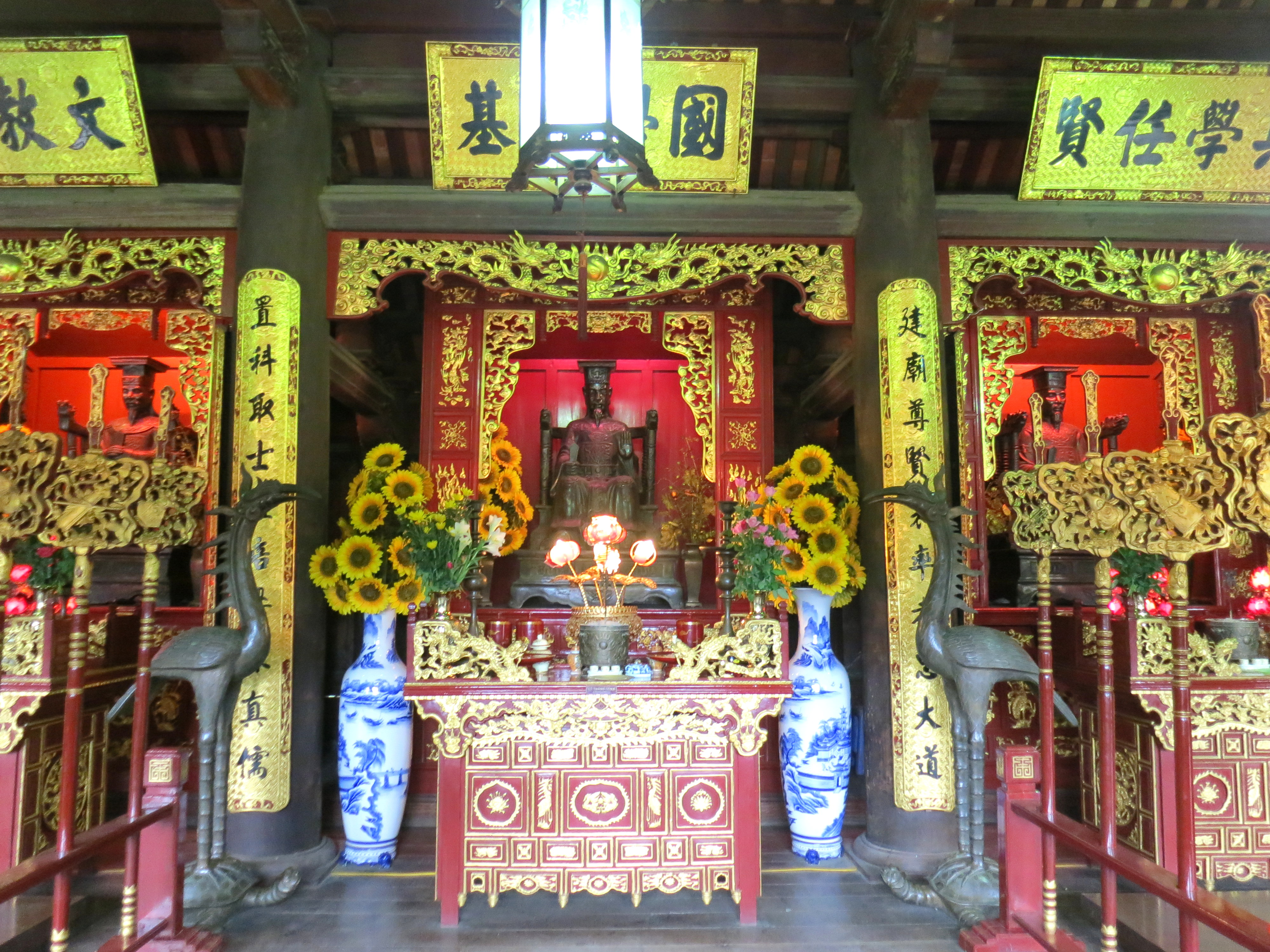
Altar in the temple

Altar in the temple

The Chinese influence in Vietnam was strong for many years, and Chinese was the language of learning for centuries, much in the same way that Latin was the language of learning in Europe until recently. So most of the writing and inscriptions were in Chinese characters, including the stelae and the planters lining the central path, which spelled out virtues learned scholars are expected to possess.

One of the students who posed for photographs for family and tourists alike.

One of the students who posed for photographs for family and tourists alike.

And then it got weird, with tourists hopping in to pose with the students, getting in the way of the students' own photos.

And then it got weird, with tourists hopping in to pose with the students, getting in the way of the students’ own photos.

Temple of the Jade Mountain

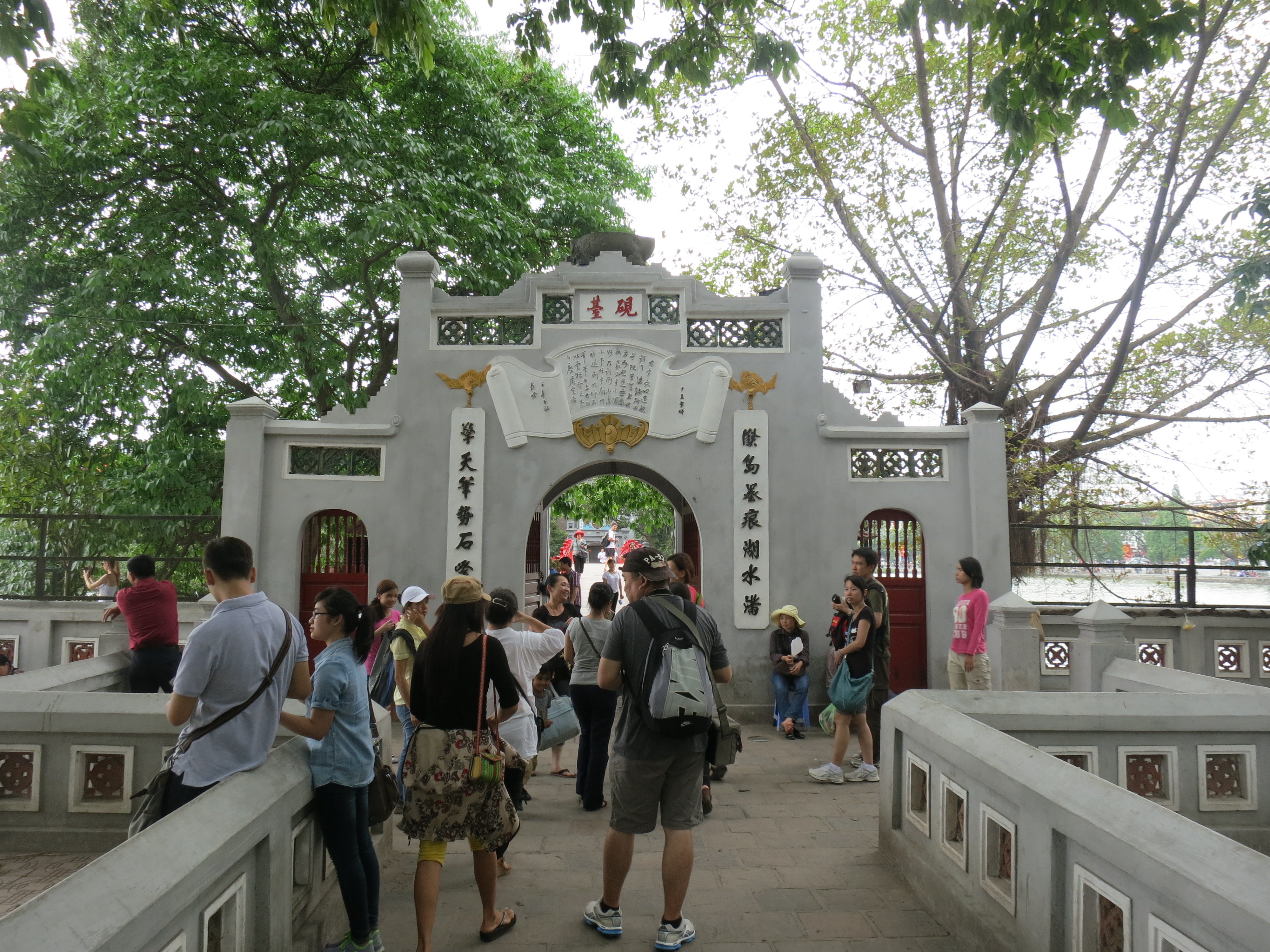
Hoan Kiem Lake is at the south end of the old town of Hanoi, and it’s a popular place with locals and tourists alike. I saw lots of Vietnamese relaxing by the shore on their lunch break or walking around the perimeter. There’s a tiny island of a shrine in the middle of it, and separately, there’s a Taoist temple, Temple of the Jade Mountain, accessed by a simple red bridge.

The approach to the red bridge (apparently called the Welcoming Morning Sunlight Bridge--it does go east-west)

The approach to the red bridge (apparently called the Welcoming Morning Sunlight Bridge–it does go east-west)

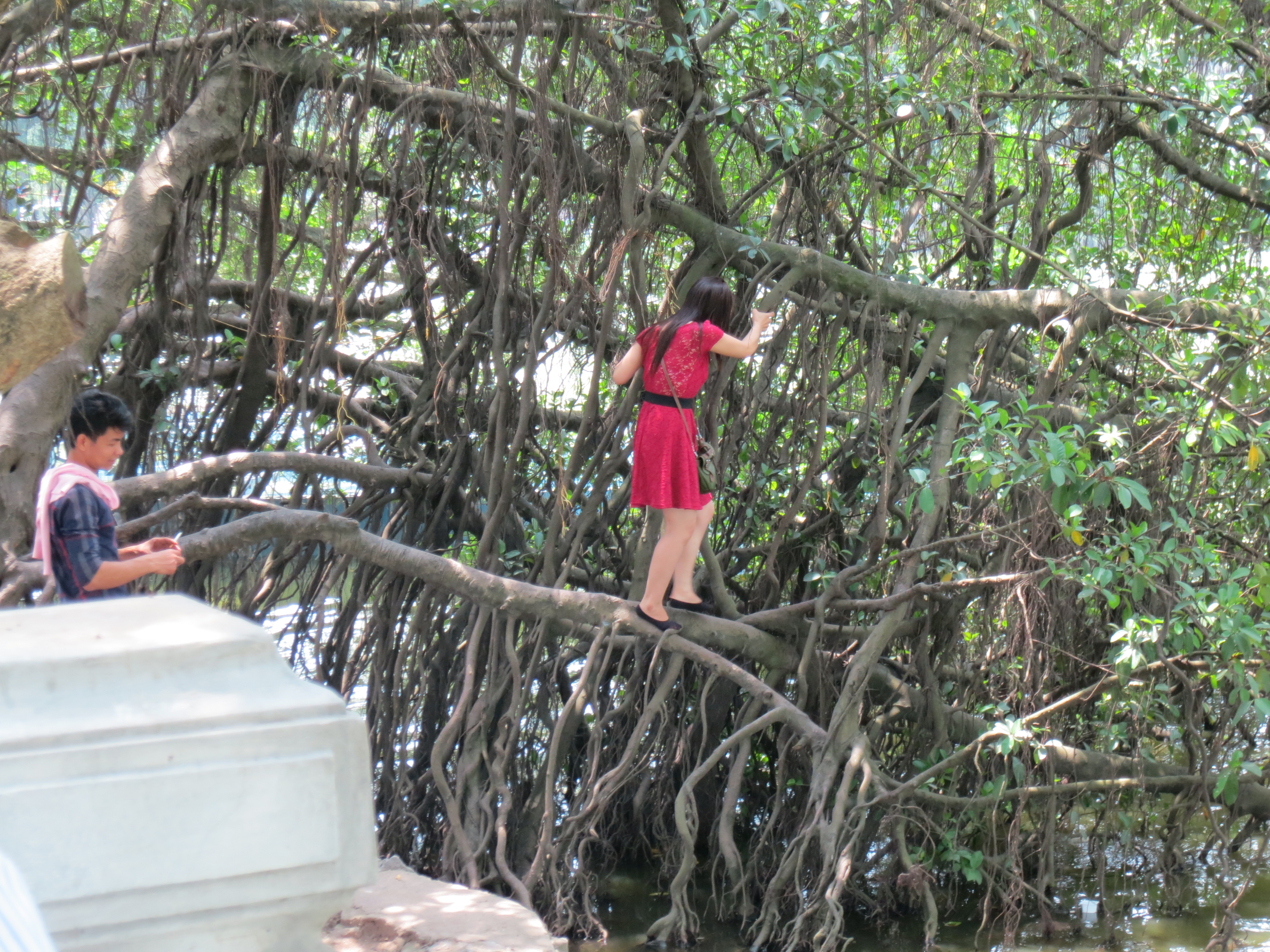
People will do a lot for a good photo

People will do a lot for a good photo

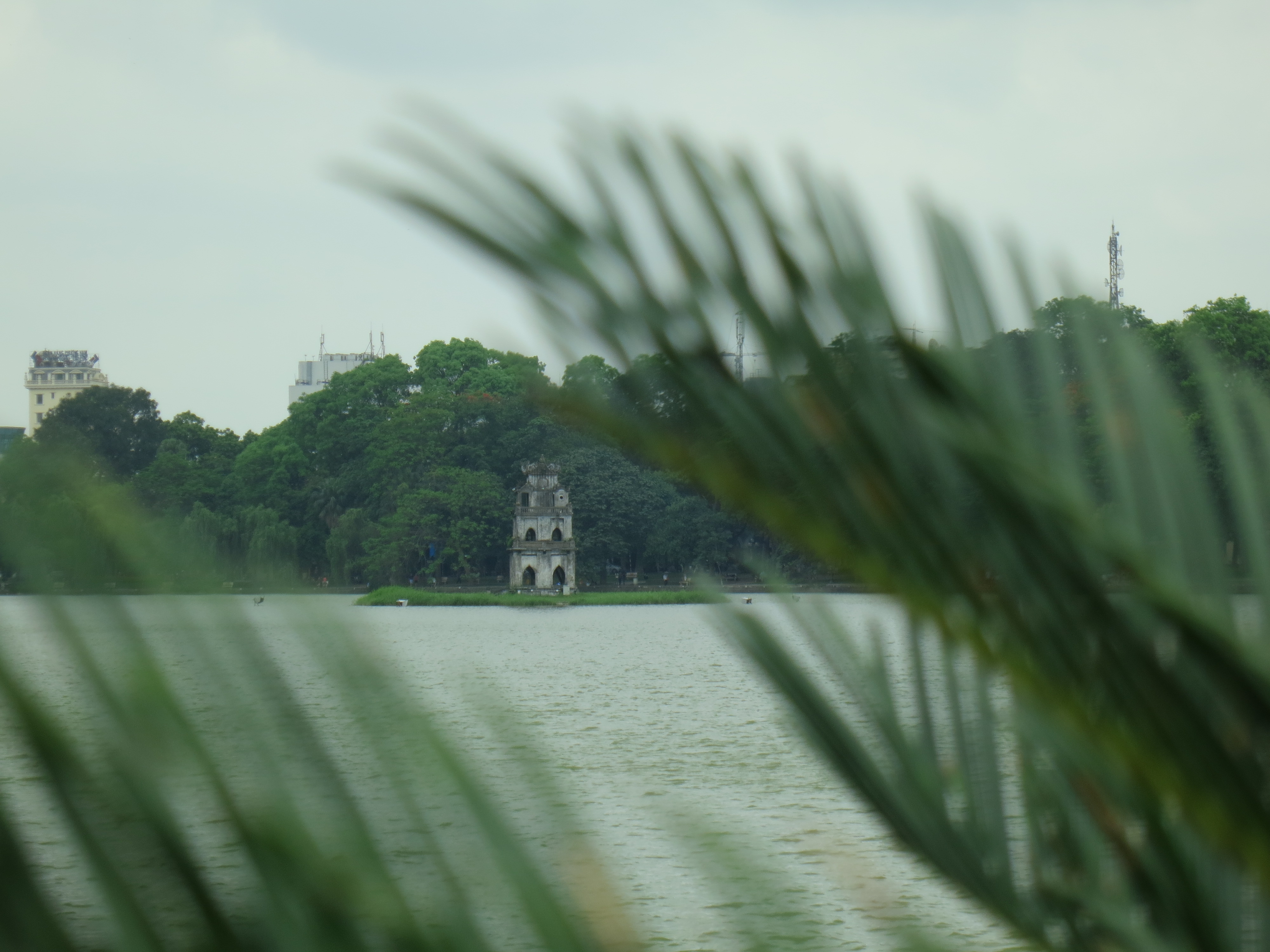
Somehow, I never got a picture of the bridge from a distance, which is too bad because it was pretty nice looking. Expand on this  photo in your imagination.

Somehow, I never got a picture of the bridge from a distance, which is too bad because it was pretty nice looking. Expand on this photo in your imagination.

I found it an odd temple once I crossed the bridge: a few cartoon-like paintings on the stucco gates, a garden of patchy grass, a couple dusty back rooms. But the altar was well-maintained, and the view of the shrine on the lake was nice, and there was the preserved body of a giant tortoise on display. Giant tortoises are something of a legend in this lake, not appearing very frequently but always happily received when they do. The one on display was one such adored specimen.

The famous tortoise

The famous tortoise

The place to burn the prayers you've written on a bit of paper, so they'll be taken up into the air

The place to burn the prayers you’ve written on a bit of paper, so they’ll be taken up into the air

Shrine in the distance

Shrine in the distance