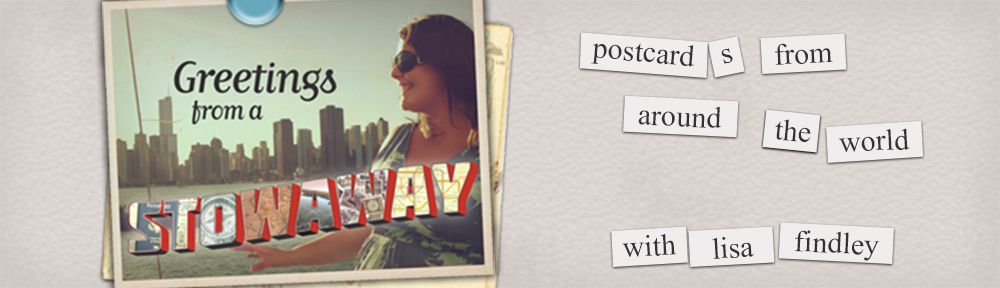
Dearest fellow travelers! It’s time for a change in these here parts. Nothing too upsetting, I hope. But it’s time for a bit of rebranding, both political and aesthetic — a new name.
Political
I chose the name for this blog on a whim, picking a phrase uttered by a funny character in a beloved book (Talking to Dragons by Patricia C. Wrede). I was certain no one else would choose “Wild Beasts and Dangerous Lunatics” as a moniker, and more importantly, it met my strict requirement of not being sentimental or cutesy. It’s served its purpose quite well for the past several months.
But then I read this post on Feministe about how damaging it is to casually use “crazy” or “insane” or the like, and I decided it was no longer a good name. (Go ahead, read it, it’s real short and real good.)
Actually, I read that article once, said, “good grief, stop being so sensitive,” and carried on with my life. I figured, what’s wrong with saying those words? Everyone says it and no one means anything by it. You say “he’s insane” when the cute bartender doesn’t want to date your friend; you don’t mean that he is literally chemically unbalanced. It’s just an expression. If you start policing all your expressions, soon enough you’ll have none left. You can’t censor yourself into a box just because someone, somewhere — not even the person you’re talking to! — might be offended by it. This is a free country, for crying out loud.
Wait. Hold up. JUMP BACK. That sounds like… dear lord, I was sounding like people who tell me to shut up already about using “fag” or “slut” or any number of epithets. When you’re making that many excuses to simply not use a word that others find horribly upsetting, it’s time to take a closer look. What was going on here?
When I talk with people about calling some inanimate object “gay,” or making cracks about women being gossips/shoehounds/overly emotional, etc., I talk about the long-lasting harm done. You’ve probably noticed that gay people can’t get married in this country, and women get paid less than men for doing the same work, to use two examples out of a lot of possible examples. That’s not unrelated to the way we talk about gay people and women; it’s actually intrinsically linked. All of these little comments are part of a larger understanding that gays and women are less than. Of course we protest that we don’t believe that, we believe in equality; and of course we do, consciously. But subconsciously we see it as a known fact that gay men are effeminate, and that’s laughable, because who wants to less like a man and more like a woman? Gay men are lacking, our collective subconscious says, so our collective subconscious finds ways to treat them as less than. (We’re not talking about bigots and outright hostility here, because that’s a whole other thing.)
So even though you’re not talking to a gay person when you call your friend a fag, you’re making it okay to say that, to use people’s identity as an insult. This contributes to a culture that sees that particular identity as an insult and treats it as such, with legal, psychic, and all too often, physical punishment. (While we’re at it, using someone’s identity as an insult is the lazy way out, and it’s much more satisfying to pick on someone’s Backstreet Boys fandom or tendency to put their foot in their mouth anyway.)
What that is all leading to is this: I don’t understand how it feels to have a mental disorder and hear people casually talk about “lunatics,” but I bet it feels shitty. What’s more, someone’s written a piece telling me just how shitty it feels. In general, I don’t want to make people shitty, so I’m going to stop doing that. It might just be a quote from a YA book, but it says specifically “dangerous lunatics.” There’s plenty of cultural understanding of mentally disordered people as dangerous, unstable, volatile, literally “out of their minds,” rather than as human beings dealing with one more layer of living than non-disordered people live with. Stereotypes of “dangerous lunatics” just make it easier to stigmatize people, dehumanize them, shut them away in institutions and forget about them. I didn’t mean anything by it, but that doesn’t matter. Once you know the damage, fix it. For any readers I’ve upset with the title of my blog, I apologize.
I’ve basically tried to make the same points here that Cara’s Feministe post made, although hers is more succinct and coherent, so I strongly recommend you read it. She says at the end that you can continue using phrases you know others find harmful, but be aware that you’re choosing to cause others harm. If that’s a choice you can live with, carry on, but if it’s not, cut it out. Also, each and every one of the links in her post is worth reading, especially this and this.
Aesthetic
Once I knew I had to change the name, I had some trouble coming up with a non-“journey,” non-“life traveler” type name. But inspiration was right under my nose — the quote on the blog’s masthead, from the poet Roselle Mercier Montgomery. “Never a ship sails out of bay but carries my heart as a stowaway.”
Stowaway. It’s about travel, but with a sense of real adventure to it. Sneaking away from the life plan of career, domesticity, etc. Smuggling rough-edged politics into the stately ships of traditional travelogues. Finding the unknown corners of the usual modes of travel, approaching it from another angle. A stowaway is so eager to go someplace that they do whatever they can to get there. A stowaway doesn’t just yearn, she acts. I take that as inspiration and mission statement both.
So now I have a name much more in keeping with what I do here and what I hope to do all around the world. Join me!
 Stowaway Travel Writing & Editorial Services
LOVE. IT.
When I first read this post, I contemplated mounting a defense of the language to which you object, and even as I type this I am still tempted. I would argue that intent and context do matter and they matter a lot.
However you have stated the case of the prosecution so well, as did Cara before you, that I have come to believe that further reflection rather than defensiveness may be the appropriate posture. I can’t promise I will personally follow suit in my own usage of such terms, which I can promise is not intended to harm, well, not intended to harm those who don’t deserve to be harmed, but I will give the notion further thought.
I’m someone who digs language a lot, as I know you are, so I instintively don’t like it when tools are removed from the linguistic box, but fundamentally language is merely a vehicle for the expression of ideas, and the idea that every individual human is entitled to the respect and compassion accorded by our common humanity remains the best idea anyone has ever had.
Rory, if you’re thinking about context and intent, you may be interested in this Tiger Beatdown post: http://tigerbeatdown.com/2010/02/03/inappropriate-language-some-notes-on-words-and-context/.
I have a similar kneejerk reaction of “how dare you take the words away!” when it comes to discussions of language that identify specific words as inappropriate. Putting aside all the problems and privileges that are tied up in my reaction, including the fact that the words haven’t gone anywhere, the more I think about it the more I realize that the art of language which I enjoy the most arises from a tension between limitation and possibility in which greater limitation can actually lead to more and unexpected possibilities. When writers reject that initial, easy phrase or word and reach for one that is more precise, I believe beautiful things can happen.
Thank you both for those thoughtful comments. That’s pretty much how I come down on it, too. I wouldn’t be surprised if you still occasionally hear me refer to things I don’t like as “lame” or “stupid,” as I’m still working them out of my vocabulary, but I am acknowledging that there are more accurate, less upsetting, simply better words out there.
And of course context has its place. Using words as a reclamation or in a humorous context is its whole own thing, and if I want to call myself a slut, that’s my business. If you want to call me a slut, you’d sure as hell be someone I know and like. The “insulting words” type of humor works in really specific situations, and we’re all better off not starting there. But you knew that. 🙂
Love it. And what a pithy someday-book title…
Ooh, good thought!
Since we’re all sharing and learning here, I’ll add a bit of info. that’s well-known to me (and probably to others), but that I do sometimes have to remind my friends of: the words “gypped” or “gyp” are offensive in origin. They refer to the reputation of gypsies (Roma) for ripping people off. And clearly the persistence of this bad reputation is based in the fears and racism of non-Roma peoples. So, if we’re cutting words out of our repertoire, those are good ones to cut. I prefer “scammed” or “ripped off.” (Rip van Winkle wasn’t Roma, right?)
Agreed!
Also, “ghetto,” which is a noun, not an adjective, and NOT a way to pass a moral judgment on people who appear to have less money than you.
And soon after writing that, I read this great article by Tami Harris: http://whattamisaid.blogspot.com/2010/08/my-latest-post-on-changeorg-what-so.html