Guest Post: 3 Easy Steps to Becoming a World-Class Postcard Correspondent

Dearest fellow travelers, please join me in welcoming to these pages one of the great comic writers of our time, a dear friend of mine and world traveler in her own right, Mlle. O’Leary. She has lived in Venice, New York, Seoul, and northern Ohio, and she’s traveled all over, from Dublin to Tibet. She’s a skilled postcard writer and the perfect person to guide you all in that dying art. Here we go!


vintage postcard from Chicago

Postcards: mini works of art


You’ve set the itinerary, you’ve broken in the backpack, you’ve burned any necessary bridges and left for adventures in greener pastures. You’re doing amazing, interesting things every day. Or maybe you’re doing the same old shit only now you’re doing it abroad! There is one thing you should seriously do when you travel and rarely does anyone think to do it. You should send postcards. You don’t, do you. But you buy them right? Ask yourself this: do you hand your written postcards over to your friends after coming back home, maybe with their first name written in the address column? If you answered yes, you are a terrible person. Yes, you are. Your friends hate this and they just put up with three weeks of your mass-emails. Stop it.

This post is part appeal, part advice on the plight of the postcard.  It is easier and easier to send an email out to everyone at once telling them that you are still alive, now broke and loving life. So with the internet in a growing stage of ubiquity, postcards seem more and more like an afterthought. A hassle. But they aren’t. Postcards are fun. They are timeless. More to the point: they are quick, or at least they should be. There are five things you need to write and to send a postcard: a postcard, a stamp, a pen, an address, and a message. Of these five things, three hinder sending the most. Here is some troubleshooting advice:

1. I don’t have stamps/didn’t get them/don’t know where the post office is (and similar iterations)

Get your stamps immediately. Even if you’re going on a huge hike or a crazy long train ride you will be in a major city before and after. Yes, this will take a little effort on your part but that’s part of the fun (see below). Many airports have post offices within or just outside customs (I believe this is the case with Greece’s airport). Other countries have dual Bank & Post Offices, making it a great catch-all: grab some currency, buy some stamps, spend the rest on beer. Kiosks are a great place to inquire for stamps, if you really have an aversion to post offices after your cousin was shot by a mail carrier. By picking up stamps ASAP you can write and send your postcards out at whim, which is the whole essence of the postcard.

2. I forgot your address

You planned the trip, right? Make ‘addresses’ part of that to-do list. Get the ones you need and keep them handy at all times. Some write them all in the back of a travel journal. Others fold up loose-leaf paper and stash it in pockets or carry-on. Tattoo street names and zip codes on your partner’s arm (always ask first). I used the Contacts feature on my iPod while traveling. Find a method that works best for you. If this falls through, depending on your country of choice, you are bound to have internet access at some point. Send an email to your desired recipient. I would much rather receive that email than another link to your Flickr account (a photo’s worth a thousand words but that don’t mean I can cash in on it).

3. I don’t know what to write

It’s the size of an index card. What did you eat today? Cobb Salad? Was it good? Did you find it weird they serve Cobb Salad in Bangkok? There, you’ve used up all of the space without even remarking that maybe you should have ordered Pad Thai. Focus on one cool/weird thing and you’ll send your friends postcards without sentences like “the weather’s really great!” or “I’m really enjoying seeing everything.” Which means you’ll be sending your friends really wonderful postcards! See? Easy.

It all boils down to accessibility. Keep everything in reach, always: stamps, postcards, addresses, pens. This makes it easier, which makes it stress free, which makes it fun, which makes you do it more frequently, which makes it easier. And then your friends won’t think you’re a dick. They will know you’re a good person.

The fact is that postcards – and ­sending postcards from their place of origin – are invaluable to the travel experience. Postcards can be your MacGuffin to hilarious antics. They can force you to learn more than “Hello!” and “Bathroom?” They can push you off the major tourist circuits: rather than stopping by the souvenir stores around major sites, seek postcards out in old bookstores, quirky shops, even grocery stores. And then look around. Chat up the proprietor. You might make a friend. You might find your newest favorite place in the world. You might even walk out with better postcards. If you’re taking any excuse to seek out undiscovered places, why not the excuse to write to your friends?

Maybe you’re somewhere without a recognizable writing system. Or maybe you’re in a land that missed out on the Indo-European fad (Magyar, I’m looking at you!). “How much are stamps?” isn’t the first thing you’re going to learn in a new country, which will make you seem that much more impressive. Ask a local to teach you some phrases. Hell, go all out:

“Are those the most interesting stamps you have?”

“Who is that man? Why are you honoring him? Oh that isn’t an honor?”

Sure, you’re bound to screw up but you only stared learning the language at the airport. Give yourself a break and keep at it. Remember: English is becoming the dominant language across the world. These exchanges might be a dying breed if you don’t make the effort. Take advantage of every opportunity. Even by asking for postcards.

You will also LOOK COOL writing postcards. There is only so long you can spend looking pensive in front of your Moleskine and that’s twenty minutes. This is a great way to unwind, take some deserved downtime. If you’re traveling alone, bring them to dinner. And yes, you will look cooler with a stack of postcards in front of your meal than your diary. Come on.

There used to be a tactile sense to our correspondence. Now, hardly anyone writes letters. People write postcards if they write at all and as more people forget to write postcards, the intimacy that comes with physical mail becomes more endangered. But the postcard comes with its own type of intimacy: with its limited space, the postcard asks for a snapshot of the writer’s feelings and for that moment, that second, the writer thinks only of the recipient, with no expectation of receiving anything in return. Unlike a letter, a postcard is not expected to have a return address. There’s no room for it. There’s no immediate way to respond in kind. The postcard exists solely for the recipient’s pleasure. That is what makes postcard sending so beautiful. Go send a few today.

**********************************************************************************

Keen to start writing postcards? Not going anywhere for a while? Maxed out your friends’ patience? Try www.postcrossing.com. Get mail from strangers, but not like that.

Milwaukee = Beer. Also, It’s Pretty.

Let’s try something new. I’m going to write about visiting an actual place, not just the preparations to go there or the abstract ideas about going there. One of my goals with this blog is to produce travel writing that people actually want to read. Not just a dull recitation of facts or a trite realization that underneath our differences, we’re all the same. Or at least I won’t go that route unless totally necessary. Like, if everyone I visit takes off their human suit to show me their identical alien bodies, then maybe I will concede that underneath our differences, we’re all the same green Martians. But I hope it doesn’t come to that. Anyway. Milwaukee.

MILWAUKEE, WISCONSIN, USA

Length of Trip: 12 hours

Traveling Companions: Sessily, T & K

Method of Transportation: car, walking

Money Spent: brunch — $16, brewery tour — $7, gas money — $5, fancy pants dinner — $40, TOTAL — $68

Sites Visited: Pabst Mansion, Comet Cafe, Lakefront Brewery, lakefront and Milwaukee Art Museum, Roots Restaurant and Cellar

Unless you are heartbroken, good weather improves any situation. If you are heartbroken, good weather is only proof that the entire world is doing better than you are, and is happier for it. But if you are feeling grumpy, or frustrated, or even morose, a good dose of sunshine and blue skies will work away at your discontent until you give in to a more favorable outlook on the world around you. And if you are already happy, and with friends, and traveling to a new place, then good weather makes your friendship seem stronger and the visited city more hospitable. Directions are easier to follow, wait times seem shorter, and food tastes better.

How fortunate for us, then, that this past Saturday was absolutely gorgeous — 80 degrees and sunny. Milwaukee being on Lake Michigan, there was even a breeze floating through town that cut the heat just the right amount during the early afternoon. Milwaukee has a nice set-up along the lakefront, with a lot of wide paths, public art, and bikes and things for rent. T said he wanted to just look at the outside of the art museum, and I thought that seemed a bit pointless until we came upon it:

Milwaukee Art Museum -- the ship sailing into Lake Michigan

Milwaukee Art Museum -- the ship sailing into Lake Michigan

That art museum wants to go sailing on Lake Michigan, and I want to join it. How delightful would it be to cruise around the expanse of blue while touring the fourth largest collection of Georgia O’Keeffe paintings contained in one museum in the country? Answer: very. (See how I snuck in that fact there, despite previous promises to stay away from such things? But it’s a cool fact, you like having it, don’t lie.)

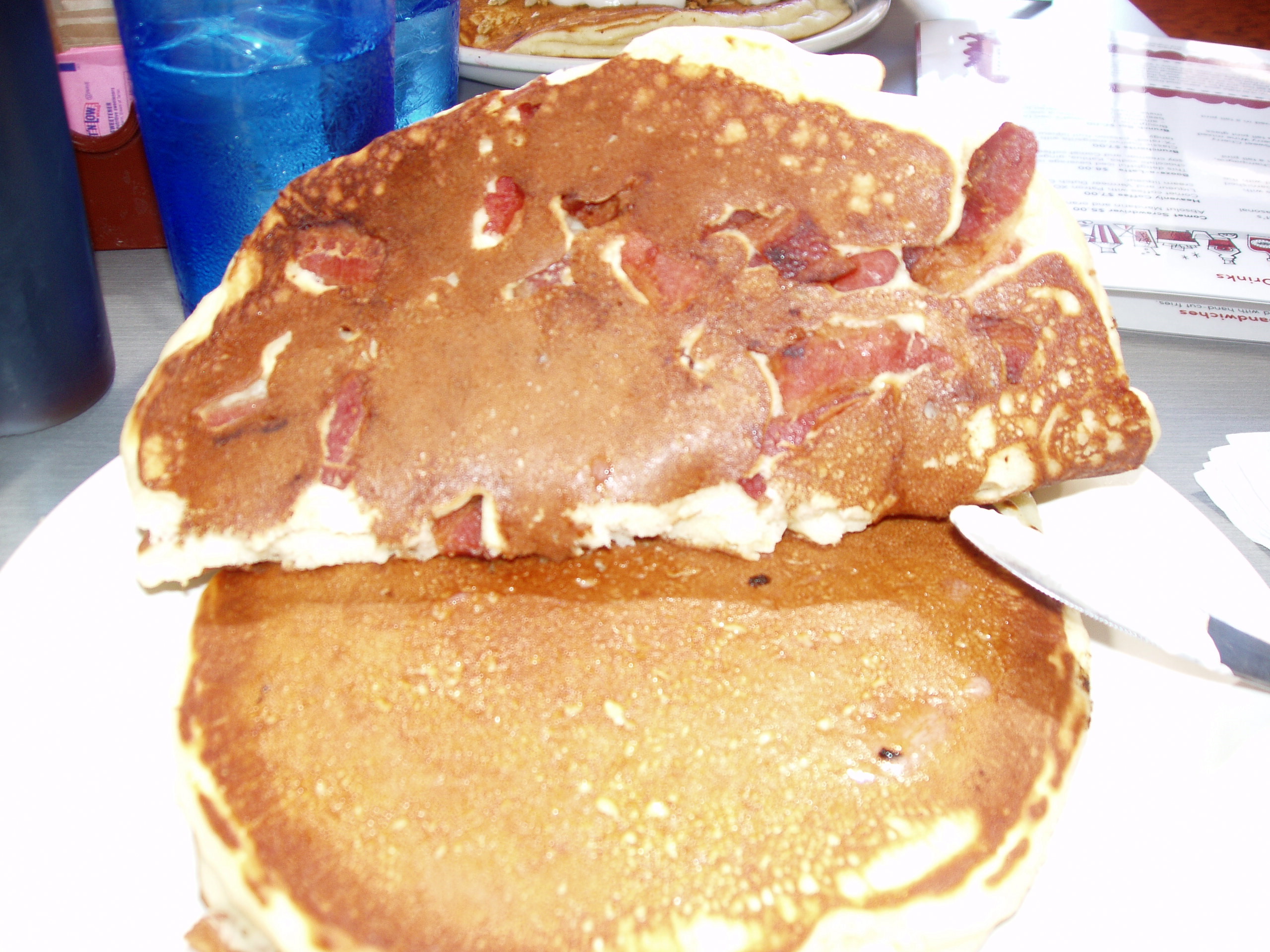
In the interest of full disclosure, I should inform you that the Milwaukee lakefront really is beautiful (just look at that photographic proof), and the day really was lovely, but that I possibly found them even more so due to the fact that I had a fair amount of alcohol throughout the day. In the city of PBR, Miller, Schlitz, Old Milwaukee, and several craft breweries, are you surprised? I accompanied my delicious brunch of BACON PANCAKES (yes, they mix the perfectly crisp and juicy bacon pieces into the pancake batter and it is as good as it sounds) with the equally delicious Brunch Box, a beermosa with amaretto and Guinness mixed in. Beermosa, you say? Why yes, mix up some orange juice with a white beer and you have yourself a fine drink. The other ingredients just perfected it. (Thanks to Nick at Comet for inventing this drink.)

BACON PANCAKES thank you, Comet

BACON PANCAKES + maple syrup = brilliant

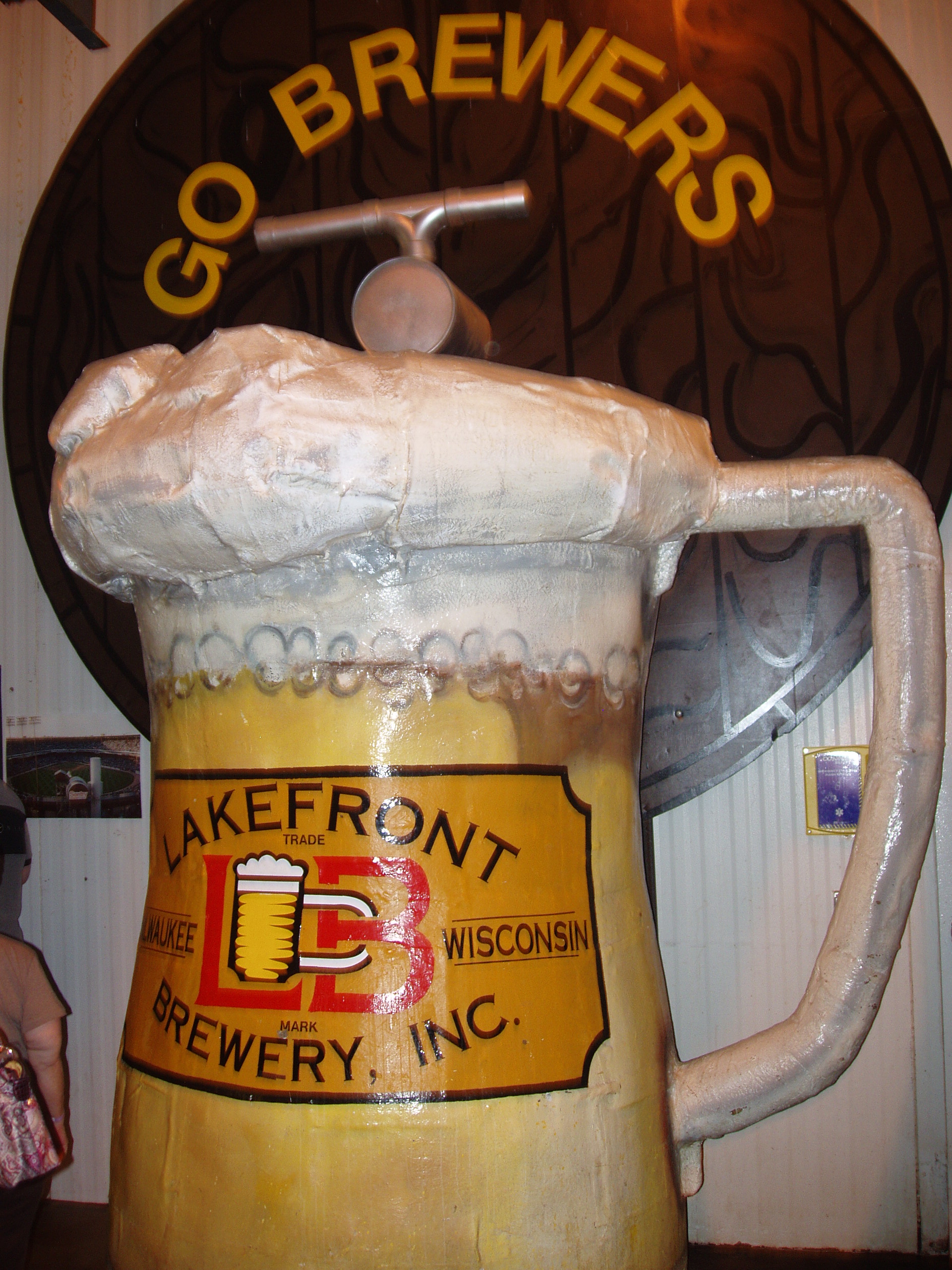
After this very good start, we went to Lakefront Brewery and got the best deal for my money in a long while. Seven bucks got us: a tour of the brewery, a souvenir glass, access to the riverfront deck, a coupon for a beer at participating bars in the area, and four 6 oz. pours of beer right there on the premises. I did learn a couple of things about the brewing process that I’d been curious about (what are hops? oh, that is the actual name of the plant that they take the flower from to add to the beer, etc.), which previous attempts to clarify by half-coherent friends at loud bars had not satisfied. We all made sure to try every beer available on tap, and shared our samples with each other. Everyone else enjoyed the Riverwest Amber, and while that was quite good, my favorites were the Fixed Gear (I guess the hipsters in my neighborhood affect me more than I thought) and the Rendezvous (a French Ale, they said, which seemed to mean close to a Belgian). The entire experience was only made better by the presence of a bachelorette party made up of women of all ages in the most ridiculous fancy dresses they could find. I’m talking 80s prom dresses, a Snow White/Belle from Beauty & the Beast hybrid, and a lot of tulle. I didn’t take any pictures of them, but here’s a picture of the giant beer mug that the Milwaukee Brewers mascot used to jump into (via slide from his game-watching balcony) every time the Brewers scored a home run. The mug is now housed at Lakefront Brewery:

Brewers mug at Lakefront Brewery

have some beer

While on our 3rd pour of free beer, Sessily, T, K, and I got into a discussion of perception and reality. No, it wasn’t a faux-deep “we’re all just specks in the universe, man” conversation. T said that he couldn’t remember the last time he was surrounded by so few hipsters (we live in Logan Square, an area of Chicago pretty well known for its trendy bicyclists), and we all agreed that yes, our fellow brewery tour participants were far more likely to attend sporting events than art-noise concerts, shop at The Gap rather than thrift stores, and hold a steady 9-5 instead of a part-time cafe job. (Please enjoy today’s edition of Stereotypes: Making Your Point Faster Than Truth Can.) Anyway, I said that Milwaukee has been voted drunkest city in the nation, and it’s a city of industry besides, so it’s got a reputation for being coarse, a little rough and tumble. In fact, most of the Midwest is probably seen in those terms by outsiders, I said. K, who is from Portland, Oregon, countered that he’d never thought of the Midwest in those terms; rather, everyone on the West Coast assumes the Midwest is full of unfailingly polite, boring types. True, I said, outsiders have that mostly insulting view of rural Midwesterners, but if you mention Chicago, St. Louis, or Milwaukee, they’ll tell you to watch out, those are dangerous places. Sessily pointed out that rural Midwesterners contribute to this idea of the cities being especially dangerous and shady, so the cities get it from all sides. (Also, now that I think about it, I’m not sure why I lumped in Milwaukee with those other two — does anyone think of Milwaukee as dangerous? Probably not. Sorry, Milwaukee. Please continue to give me beer.) It was an interesting discussion of how we see ourselves, how others see us, and how those perceptions affect the actual place we live.

We only day tripped to Milwaukee, and there’s a lot more to see, so I plan to be back sometime this year. But I can already say that the parts of town I saw were lovely, and the people, yes, were friendly. My takeaway, though, comes back to that delicious barley-and-hops concoction, beer. I was passing through the brewery gift shop, and a woman was trying to trade in her plastic taster cup for the souvenir glass. “Not til you finish your drink,” the gift shop attendant said. The woman looked warily at her almost-full glass. In other cities, maybe she would have been shown mercy. Maybe other cities would offer her as much time as she liked to finish it. But this is Milwaukee. This is The Nation’s Watering Hole. This is beer. The woman’s friend turned to her and said:

“This is Milwaukee. Slam it.”

Lakefront beer

This is Milwaukee. Slam it.

Storytelling as Action

I don’t have much time today to expound on this, but here’s a fascinating excerpt from the book Telling Stories: Indigenous history and memory in Australia and New Zealand, edited by Bain Attwood and Fiona Magowan (Allen & Unwin, 2001). In the entry “The saga of Captain Cook: Remembrance and morality,” Deborah Bird Rose relates the story of Captain Cook as told by Hobbles Danaiyarri, who is an Aborigine living in Yarralin in the Northern Territory of Australia. His story is told in a mix of past and present tenses, and relates the injustices his people suffered at the hands of Captain Cook and other Europeans. After reprinting Danaiyarri’s remembrance, Rose explains how history and morality are tied up in Aboriginal thinking, explaining that this remembrance is a saga as opposed to a Dreaming myth:

…the saga is set in a time frame that is conceptualised as part of the present (ordinary time), whereas Dreaming myths are set in a time frame conceptualised both as the past and as a concurrent present. The latter are source of moral principles, and moral action is judged by reference to these principles, which are deemed to be permanent rather than subject to change and negotiation. Captain Cook’s law, by contrast, is seen as immoral, and this presents Danaiyarri and others with a problem: how to account for immoral action that is reproduced through time and thus appears to endure, just as Dreaming law endures. I contend that Yarralin people’s logic requires that the Captain Cook saga be kept in ordinary time — that it not be allowed to become part of the Dreaming past. (p. 70)

Moral action is seen to endure, and actions that do not fit the moral frame of reference cannot be part of the same timeline as moral actions. So these immoral actions are framed in the present, in ordinary time, as a current problem, even if they happened hundreds of years ago. By viewing morality and history as intertwined in this way, wrongs can be addressed in the present day, even if a linear timeframe would see those wrongs as too far in the past to warrant redressing. The very act of telling these stories is a move for social justice, keeping history literally alive in the general consciousness and demanding recognition and action. As Rose concludes, “far from being the consolation of the powerless, remembrance is an active force for social change” (p. 79).

What a powerful way of viewing history, storytelling, and collective action! What do you think? What stories should we be telling in “ordinary time”?

Go Blackhawks! Now Change that Mascot!

Congrats, Blackhawks! Now get rid of that mascot. Not a single other team in the NHL is named after Native Americans. There are plenty in other major sports leagues, but in hockey, none. There is not a single other NHL team that takes an entire group of people and packages them into a mute mascot.

Read this great post on why Native American mascots aren’t harmless traditions: http://nativeappropriations.blogspot.com/2010/06/thanks-for-severed-head-youve-proved-my.html#more

One of the best parts of it points out that these mascots and their attendant imagery as bloodthirsty savages has a devastating effect on the psyche of Native American youth across the country. I know the majority population of the States tends to think of Native Americans as wiped out a century ago, but they are alive and well. If ever there were a time to actually think of the children instead of doing useless hand-wringing, this is a good one.

My dad went to University of Illinois, and I know he has a lot of fond memories of attending Illini games, wearing the Chief insignia on his shirts, doing the Illini chant. But those are memories anyone can have with their college sports team; K College students got pretty excited about a giant hornet. You don’t need to appropriate an entire group of people, their history, their culture, their stereotyped image, and make them into a symbol of how fierce, tough, and primitively warrior-like your sports team is. Use an eagle or something.

So Blackhawks, congratulations on your historic win. How about you make more history and change your mascot? Heck, you could even change your name to the Hawks; it’s what everyone calls you anyway. It’s not like you’ll lose your winning reputation — your name will always be more intimidating than the Pittsburgh Penguins.

ETA: I had a conversation with my coworker Branden about this post, and he pointed out how important Black Hawk is to the history of Illinois. I tried to clarify:

“The thing is (which maybe I need to be clearer about) is that there are a lot of things that are important to one group’s history, but that doesn’t mean that that group should be allowed to claim those things for everyone’s history. For example, the Confederate flag is important to a lot of white southerners as a symbol of independence and regional pride. It’s also a symbol of brutal violence, humiliation, and slavery to a lot of black southerners. Claiming the Confederate flag for Georgia, for example, on the state courthouse or whatever, is claiming it for all Georgians, and basically saying, ‘The independence/pride part is more important than the violence/humiliation/slavery part.’ Which is just wrong.

“Black Hawk is an important symbol to some, but to others is part of a long line of mascots that remind Native Americans that they are just symbols of savagery for major league sports teams. You can balance the legacy of Black Hawk with the pride of a sports team without doing that.”

Branden replied: “I wonder what the Sauk tribe thinks about it — I don’t know. They’d be the ones I’d primarily want to hear from. And if they find it offensive, then shoot, call the team the Hawks, like you said. They already have a badass Hawk logo they can use.”

And then he provided this awesome link: http://2.bp.blogspot.com/_r8tWGVHrjGI/SHPrp67Fv8I/AAAAAAAAE1I/DwFl7Nff5SY/s320/chicagologo.png

Film Club: Rabbit-Proof Fence

Damn, another movie that made me cry. Ask my family and they’ll tell you how rare that is — I’m the only one out of all five of us who is more likely, while watching sentimental schlock and genuinely moving fare alike, to roll my eyes than to have tears in them. Make no mistake, the director of Rabbit-Proof Fence fully intended to make me cry, and tugged my heartstrings all sorts of ways to make sure I did. But the story itself, plus three forlorn children onscreen, was enough to have me welling up at the end.

Rabbit-Proof Fence is an adaptation of Doris Pilkington Garimara’s book about her mother, Molly Craig. When Molly was 14, she, her sister and her cousin were forcibly removed from their home in Jigalong, in western Australia, and placed in the “re-education facility” Moore River Native Settlement. Under the White Australia plan of government, “protectors” of Aborigines were assigned to each state and territory in the country. They were supposedly meant to make sure Aborigines’ rights were looked out for, but in reality, they said who could and could not marry, where they were allowed to live, and whether they could keep their own children. It was established policy by 1931, when this movie is set, that mixed-race Aboriginal children were stolen from their families and placed in boarding schools that trained them for a life of working in white women’s houses (for the girls) or in white men’s fields (for the boys). The reasoning, like similar policies in the United States with Native Americans, was that it was best to assimilate the native population into the colonizing society, for their own benefit. Clearly it was better to be white, so whites were doing a public service by erasing Aborigines’ cultural heritage, never mind that grossly erroneous premise or the deep and lasting trauma to the parents and children.

The movie has a clear agenda, but for once I didn’t mind. The girls missed their family deeply, they couldn’t trust any whites they encountered because they would probably report the girls to the authorities and send them back to the settlement, and they walked 1500 miles to be reunited with the life and loved ones they knew. The movie didn’t have to try very hard to show that this was a really bad policy and a horrible affront to human rights — in fact, the movie tried a little too hard to show that the protector, A. O. Neville, truly believed that he was helping the Aborigines and couldn’t understand why they would possibly run away from the settlement. I mean, I guess that perspective is important, to show people that there was a majority of voting opinion that held this belief, because otherwise you’d just assume it was made-up, that it’s too obvious that you shouldn’t separate families based on racial prejudice. Because that is pretty damn obvious, but it wasn’t obvious enough to enough people until the 1970s, when the last children were ripped from their homes with official sanction before the government ended the program.

The most upsetting part about the movie was the very end. The last scene shows 2 of the 3 girls reunited with their mother and grandmother, the music swells, and we all feel relieved that they made it home. But then the voiceover comes up and says that Molly was sent back to Moore River with her own two children nine years later. She escaped with one of her two daughters and once again walked 1500 miles to get home, but that daughter was stolen from her and it was many years before she met the daughter she’d had to leave behind at Moore River. So Molly lost one of her children forever and reunited with her other child only after over 20 years of separation. This is why it’s called the Stolen Generations, plural; family after family was ripped apart in the name of racial purity and superiority.

Molly was torn from her mother, and then her children were torn from her. She was time and again denied her own family, her own choices, her own life. Despite this, she worked alongside her husband and became a mainstay in the desert community she knew and loved; in other words, she carved out her own life in spite of her country telling her she shouldn’t. I admire her immensely for that, and also her daughter for writing down her story and getting it published. Now, because of the movie, it’s a story that millions of people know, and that part of Australian history has been added back into the public consciousness. There are Stolen Generations deniers and former prime minister John Howard refused to apologize to Aborigines for the government’s actions, yes, but they know. People know. And that is the first step to action, right?

New Music Summer 2010 Mix

Well, I didn’t get any barbeque this holiday weekend, unfortunately, but I’m going to trust that you did, and therefore, as promised, here’s a bonus post for this week.

It’s your New Music Summer 2010 Mix! That’s not to say this music is all new; some of it is several years old. But it’s all new to me via one particularly music-savvy friend, Patrick (with the exception of the Michael Beauchamp track — he’s a Michigan artist and played my friend’s wedding). Patrick introduced me to a vast amount of new artists, and I’ve picked some of my favorites for a summer mix that starts out bouncy and bright in the park and meanders into sleepy and content on the porch. Enjoy!

(NB: Lala no longer exists and imeem is now owned by MySpace, so I currently have no way to play the mix for you, but I’ve included some videos to give you an idea. Please do go on out there and listen to the artists on their websites, and support with download/CD purchases.)

Oh Christine – The Cave Singers

Outside Looking In – Papercuts

Bernadette – Arrah and the Ferns

Masterplan – jj

Deadbeat Summer – Neon Indian

Orchard Fair – Wye Oak

Ruby Go Home – Thee Oh Sees

Love Is an Unfamiliar Name – The Duke Spirit

Brazen – Heartless Bastards

If We Can Land a Man on the Moon, Surely I Can Win Your Heart – Beulah

The Lucky Ones – Viva Voce

Sunday Noises – Califone

Golden Cloak – Marmoset

Buried in Teeth – Mariee Sioux

The Rest of the Day – Bedhead

Last Song of the Night – Michael Beauchamp

Light Up the Night – The Besnard Lakes