Spying on Bletchley

Bletchley Park would probably be just another stately home in Buckinghamshire, except that it happened to be the codebreaking hub for the British government during World War II. Apparently, when they broke the Germans’ Enigma code and could then spy on German communiques, they shortened the war by a couple years. For years after the war, everything about the place was secret–what really went on there, who worked there, etc.–but now the records have been unsealed and the park is open to the public.

Some of the many machines used for codebreaking at Bletchley

Some of the many machines used for codebreaking at Bletchley

The mansion is surprisingly empty, or I suppose not so surprisingly when you consider that it’s hired out for events and they need the space. The interesting stuff is all in the surrounding “huts,” one- and two-story concrete buildings that adjoin the mansion. The museum starts you off with a few rooms showing what life was like at the start the war. Walking through this section, past a reconstructed middle-class kitchen and a schoolroom full of tiny wooden desks, my siblings and I listened to my grandmother talk about daily life back then; she was six years old when the war started.

A massive codebreaking machine

A massive codebreaking machine

Downstairs, you can see a bombe, the machine that broke Enigma (brainy people figured out what kind of pattern they were looking for, and then they built this machine to do the tedious work of sorting it all out on each message that came through). There were some explanations of how the bombe worked, and what a difference it made to work with four code digits versus five. This kind of code working was all important groundwork for computers, too.
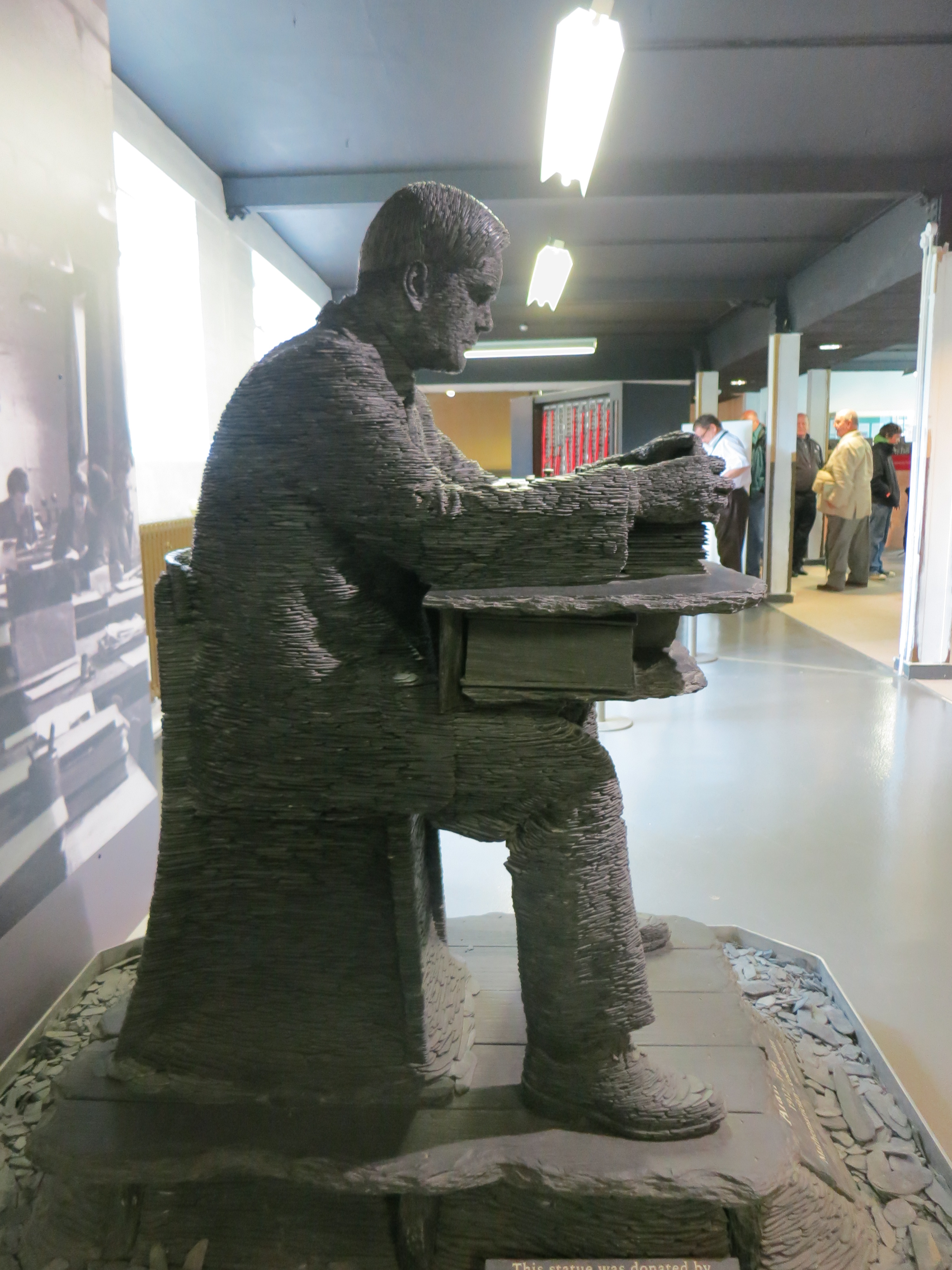
Stephen Kettle's slate statue of Alan Turing at work

Stephen Kettle’s slate statue of Alan Turing at work

Alan Turing, a major figure in computer science, had a position at Bletchley, and he was one of the key people to break the big codes. He did more computing work after the war, but then in 1952 he was convicted of the criminal activity of homosexuality. He had to choose between prison and chemical castration, and he chose the latter. He died two years later from cyanide poisoning (the official ruling was suicide, but due to the chemicals he worked with, it could have been accidental). How completely messed up is that? It took until 2009 for the British government to officially apologize for Turing’s prosecution, and until 2013 for the Queen to posthumously pardon him. Pardon him for being gay, that is. There’s a plaque about Turing’s postwar career and death in the museum, and cool slate sculpture of him that makes me think of bits of code stacked up to make his body hunched over a typewriter.

Some of the many files the codebreakers worked with

Some of the many files the codebreakers worked with

Most of the people working at Bletchley were women, some in secretarial roles but many more doing pre-codebreaking work, sorting through intercepted messages, looking for patterns, etc. They also did a lot of the grunt work involved in operating the machines, running the various numbers until the machines interpreted messages correctly. These women get their due, sort of, at the museum. I say “sort of” because the focus was definitely on the Oxbridge men who were in charge, and the women who proved so crucial to the operation were “girls” who helped out.
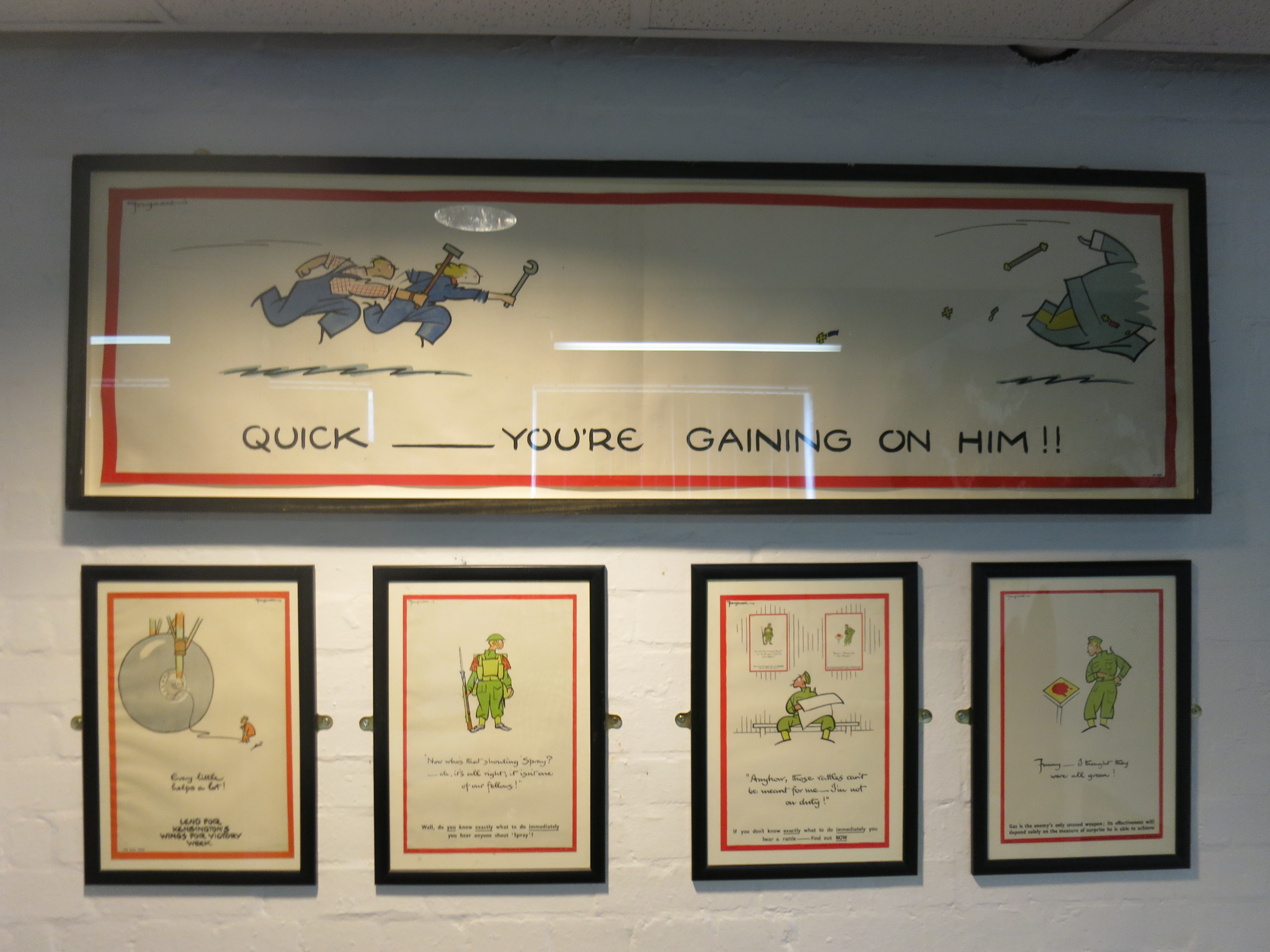
I am forever interested in the paranoid propaganda posters of WWII

I am forever interested in the paranoid propaganda posters of WWII

Also interesting was the class bias that formed Bletchley. The men were Oxbridge (Oxford and Cambridge graduates), and the women were daughters of the upper-class. The museum exhibit unquestioningly talked about how much more inherently trustworthy the upper-class was, and so naturally that’s where you’d go to recruit people for your secret mission. Implicit in this, since you needed to be really smart to work there, was that the rich folks were smarter, too. Sketchy stuff.
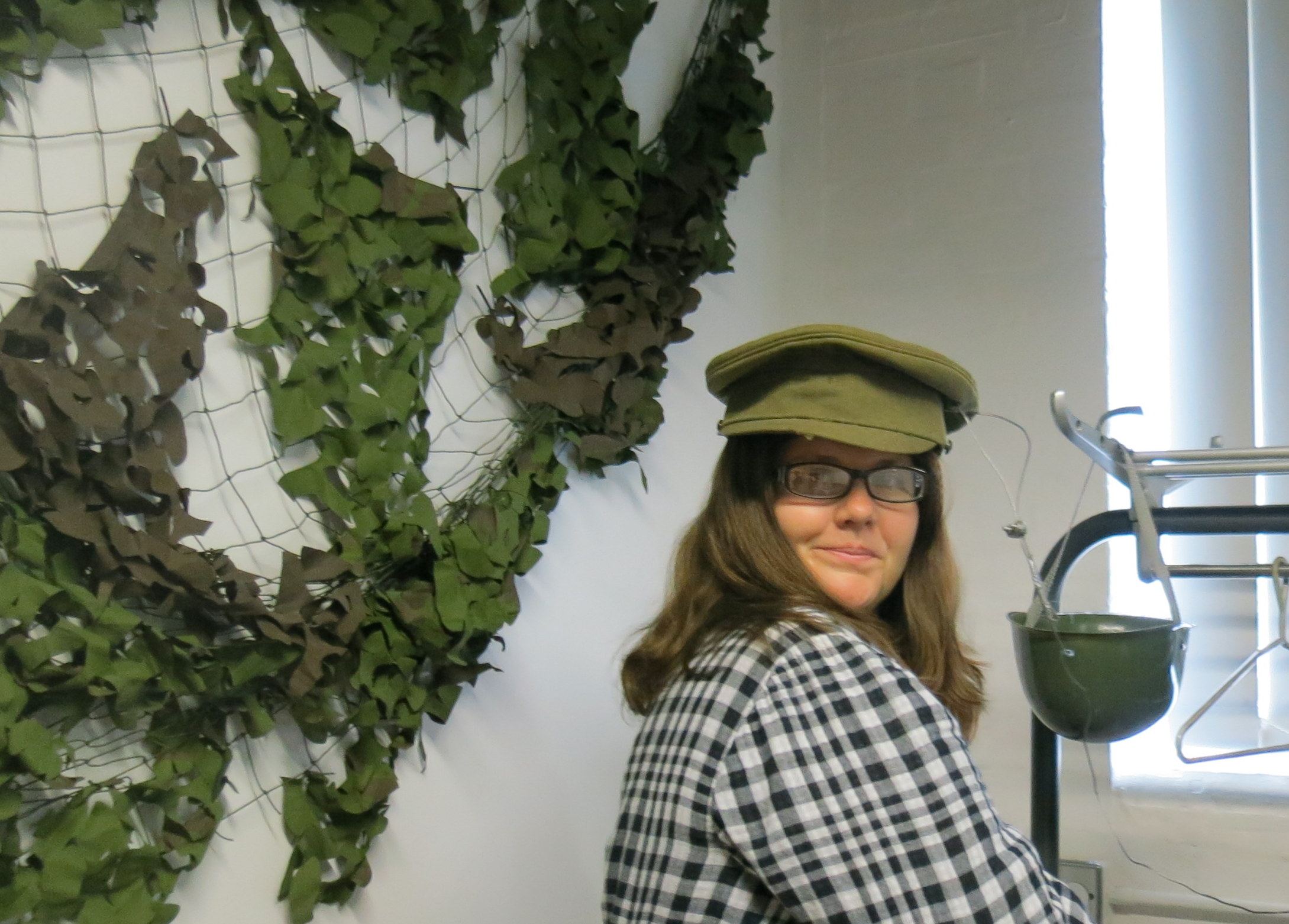
You caught me--I might not be spy material

You caught me–I might not be spy material

The final part of the exhibit was a display on some of the most famous British spies, including a criminal playboy who just kept sleeping around as part of the job (shades of Bond), and a black-market trader and saboteur.
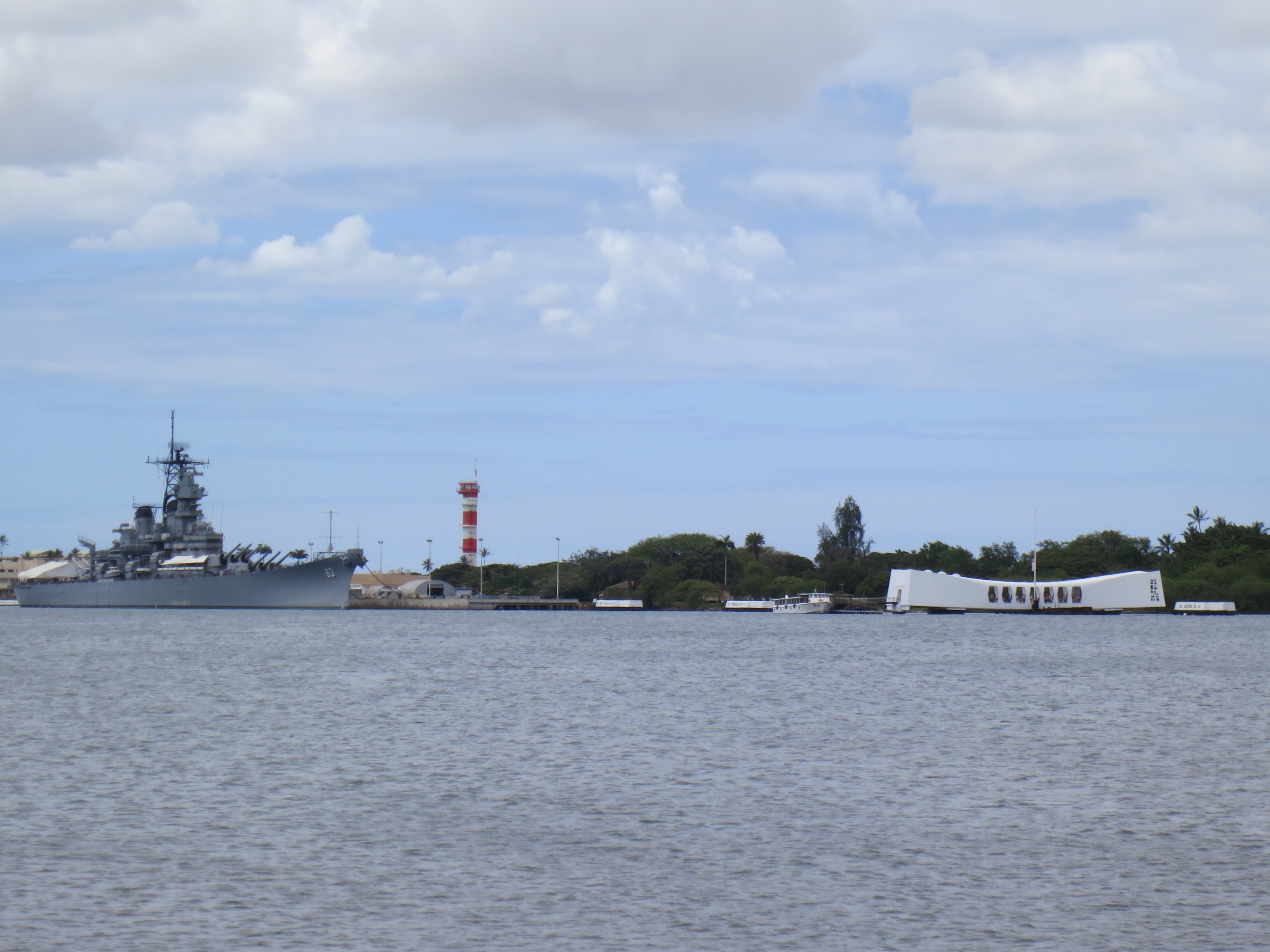
Somber and Conflicted at Pearl Harbor

Pearl Harbor is the most popular tourist attraction on Oahu, but I felt uneasy the whole time I was there. It’s a massive monument to a successful military strike, as told from the losing side in that strike. It’s a memorial for over 1,100 people who didn’t even have time to register that they were dying before they were gone. It’s a collection of solemn displays and audio clips that plot out exactly what happened on December 7, 1941. It’s a narrative of how the tide turned and the USS Missouri, one of the attacked ships, became the site of the official surrender ceremony on September 2, 1945.

The USS Missouri and USS Arizona Memorial

There’s a strange mix of lax security and overblown alert levels at the World War II Valor in the Pacific National Monument. We had to check our bags and only carry in cameras and wallets, but then we breezed through the gates with hardly a glance from the security officer on duty. Tickets to see the USS Arizona Memorial are free, but you have to pick one up so that you can start the tour in a specific time block.

The political and military significance of Hawaii’s location was stressed again and again

First, you watch a video that attempts some historical context for the attack on Pearl Harbor, although it’s comically simplified and contradictory. For example, it mentioned the commercial interests the United States wanted to protect in various parts of Asia, and then condemned Japan for having similar interests. I mean, I know this isn’t an unbiased museum display or anything, but that did seem a bit odd. The website actually does a better job at telling the story, I think.

Half mast

The rest of the video drives home just how thorough the Japanese were in preparing and executing the strike, and how a bad bit of luck resulted in the Navy getting no warning. (The guy on radar was literally on his second day on the job, with minimal training, and they were expecting a block of B-17s that day anyway, so a large group of planes flying in didn’t alarm them as it should have.) The video then does a good job of emphasizing that the Arizona is now a graveyard and should be treated with respect and solemnity. It seems an odd thing to have to point out to people, but then once we got to the memorial, I saw a couple posing for smiling photographs in front of the wall inscribed with the names of the dead, so I guess it’s necessary.

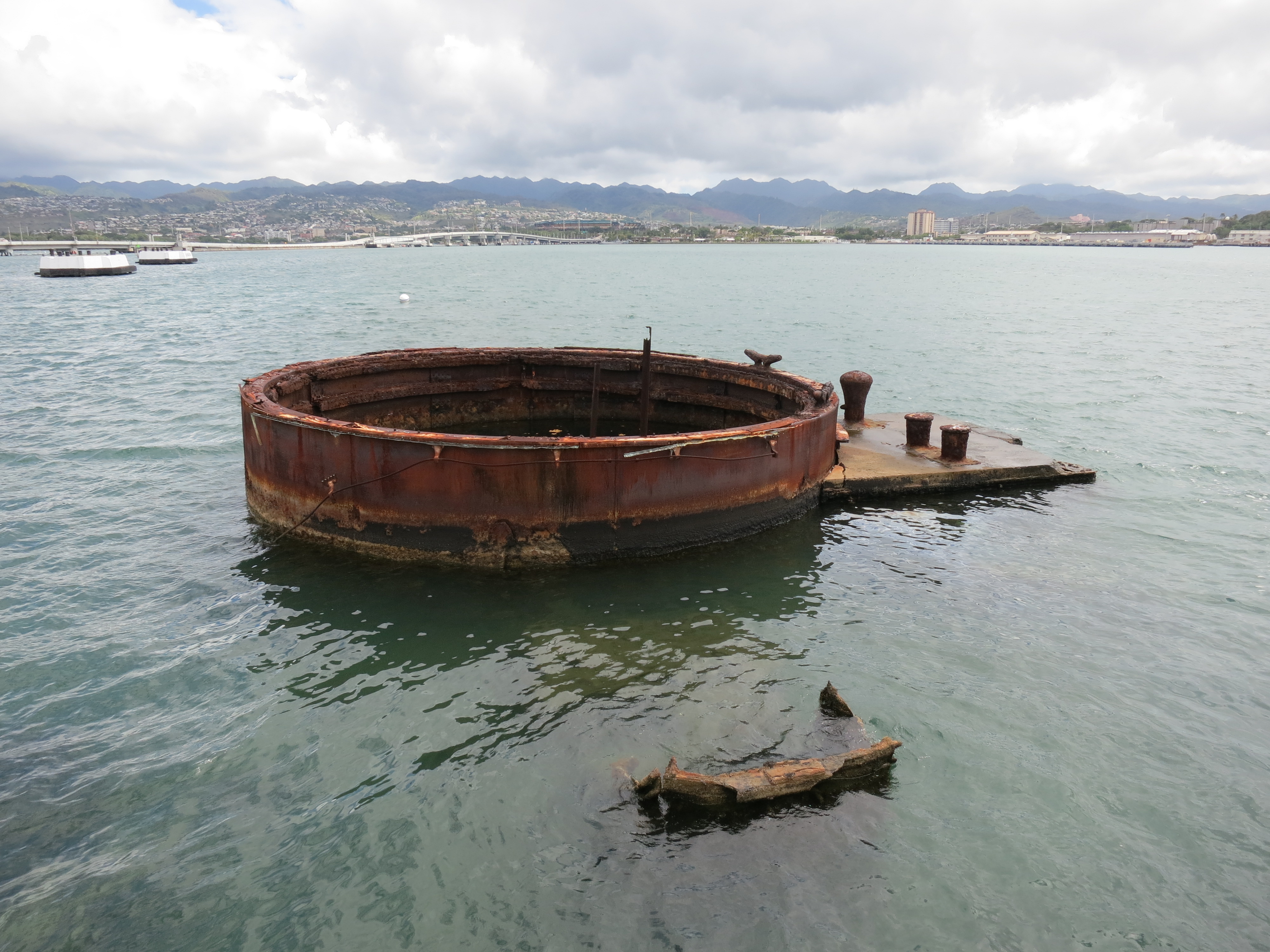
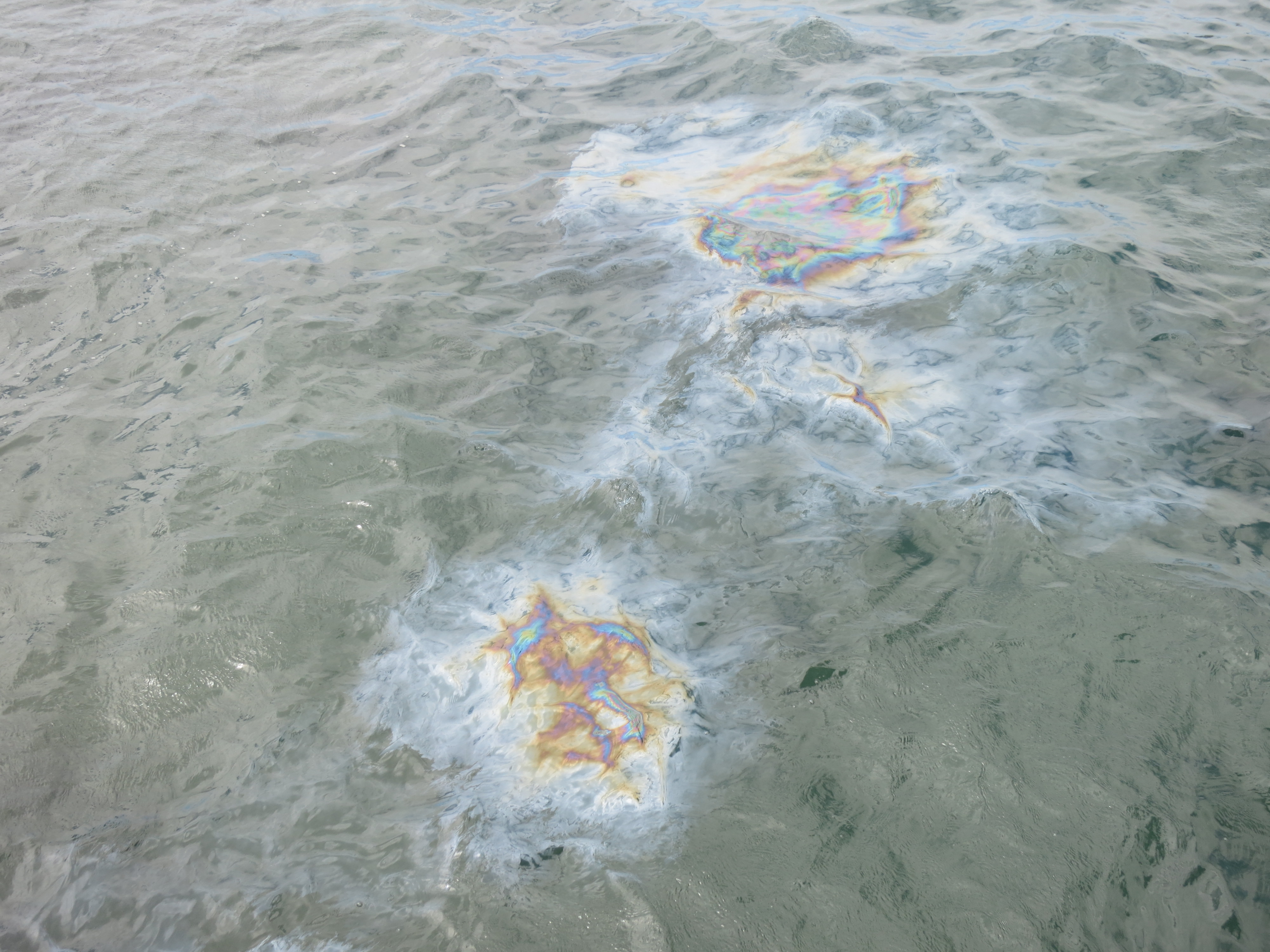
We took a short boat ride over to the memorial, which was built on top of the sunken wreckage of the ship. It’s a white building that sinks in the middle, which the architect said was to show how well the US was doing before the war, how low it felt after the attack, and how it emerged victorious at the end. The bridge-shaped building has been placed at a 90 degree angle to the ship, so that when you look out one window you can see a gun turret on one of the decks, and the “tears of the Arizona” leaking from beneath it. The National Park Service has decided it would disturb the dead too much to clean up the oil, so the remaining 500,000 gallons will continue to leak into the ocean for the foreseeable future.

USS Arizona gun turret

The tears of the Arizona

I liked the monument for its simplicity and focus. You can gaze at the Missouri across the harbor. You can look into a small hole in the floor of the memorial that shows flower petals floating in the water above the wreck. You can meditate on the flag flying at half mast. You can read the names of the dead on the wall of the shrine at the far end of the memorial. You can read the few plaques dotted about and listen to the audio tour, which features first-person accounts of being on the ship that day. That’s it. There is nothing else to do here, no gift shop to visit, no adjoining display to wander off to, not even any bathrooms to go to. When you are at the Arizona memorial, you are there to reflect on the lives lost on the day of infamy and in the war that followed.

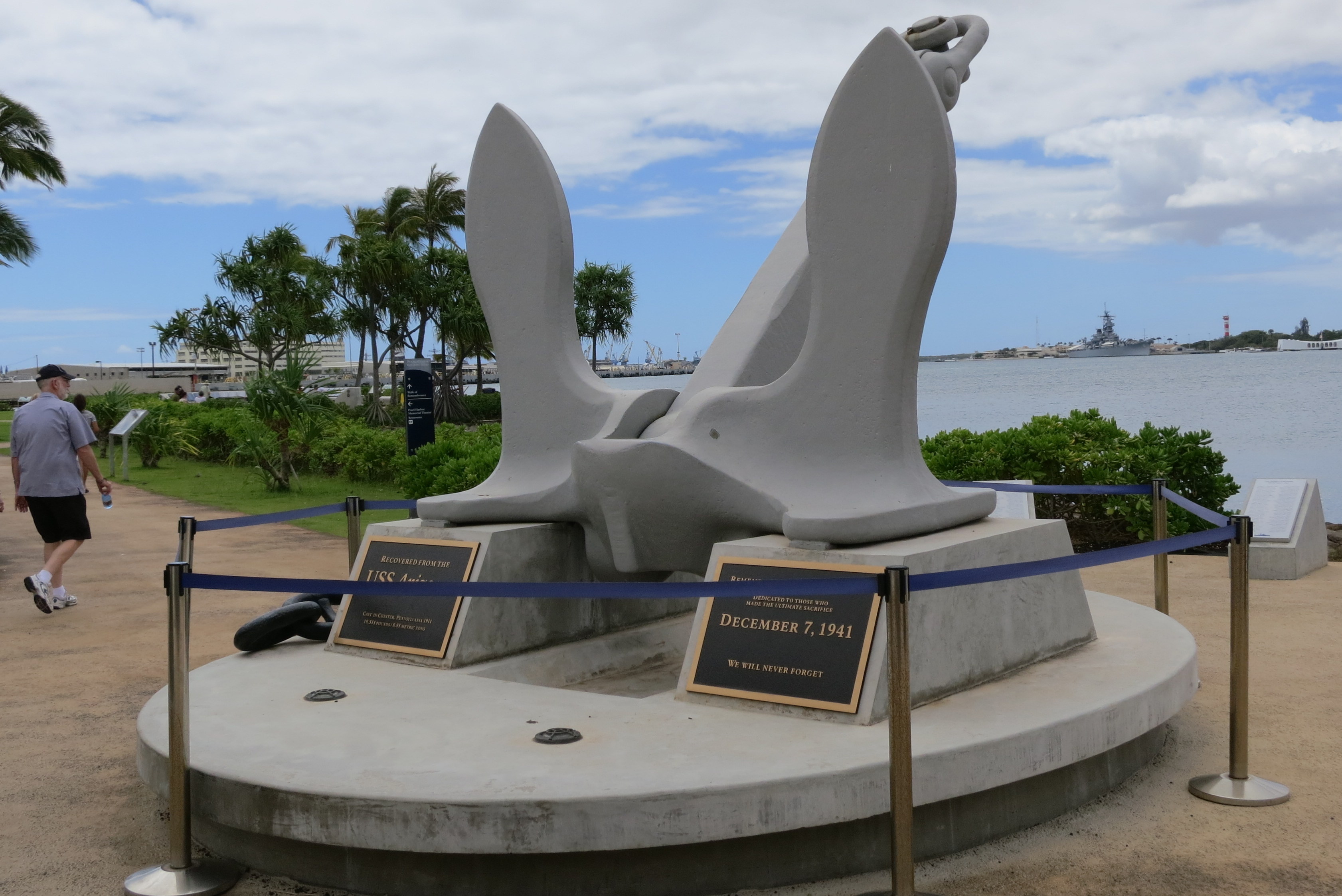
Back at the museum, we listened to an audio tour narrated by Jamie Lee Curtis (her father was a WWII vet before he was a Hollywood star) and walked through an exhibit that got very detailed about battleships and 1940s military technology. Outside the building, there’s a path along the shoreline with quotes from people who survived the attack, and from people commending the valor of those who died.

The most heartbreaking plaque on the Walk of Remembrance

I do not mean to diminish the importance of the deaths of those who lost their lives in the attack, but I do not understand how it was a matter of valor for those who died almost instantaneously. Surely we should be commending the brave men who survived the initial bombing and fought back, and the civilians who rushed to the hospital to help the wounded? It seems to cheapen the whole idea of valor to apply it to people who were unfortunate enough to have been in the wrong place at the wrong time, even if that place was a military ship.

I also wondered what it was like for the Japanese tourists who were there, quietly walking along the same path as me and hearing the same audio about the vicious Japanese attack and seeing the same signs about defeating the Japanese. War tourism is a strange thing.

I feel strange in places that walk a fine line between memorializing the dead and celebrating the war that killed them, but overall, I’m glad I went to a site that looms so large in American history.