The Two Histories of the Hanoi Hilton

The Hoa Lo Prison in Hanoi combined the single-minded propaganda of the War Remnants Museum and the strange echoes of death sites felt at the Cu Chi Tunnels, resulting in a bizarre experience. A friend and I went together, and we were two of only about thirty or forty visitors in the mid-afternoon heat, so often we were the only people walking through rooms that were once packed full of prisoners, our voices swallowed up by the thick concrete walls.

Before it was the Hanoi Hilton, it was the Maison Centrale of Hoa Lo

Before it was the Hanoi Hilton, it was the Maison Centrale of Hoa Lo Prison

American prisoners of war nicknamed this place the “Hanoi Hilton” in a bitter jab at the conditions they endured. The official Vietnamese line is that the POWs were treated very well, and learned to empathize with the people they had previously only known as “the enemy.” However, multiple POWs have reported inhumane conditions, including substandard housing, insufficient food, and physical torture.
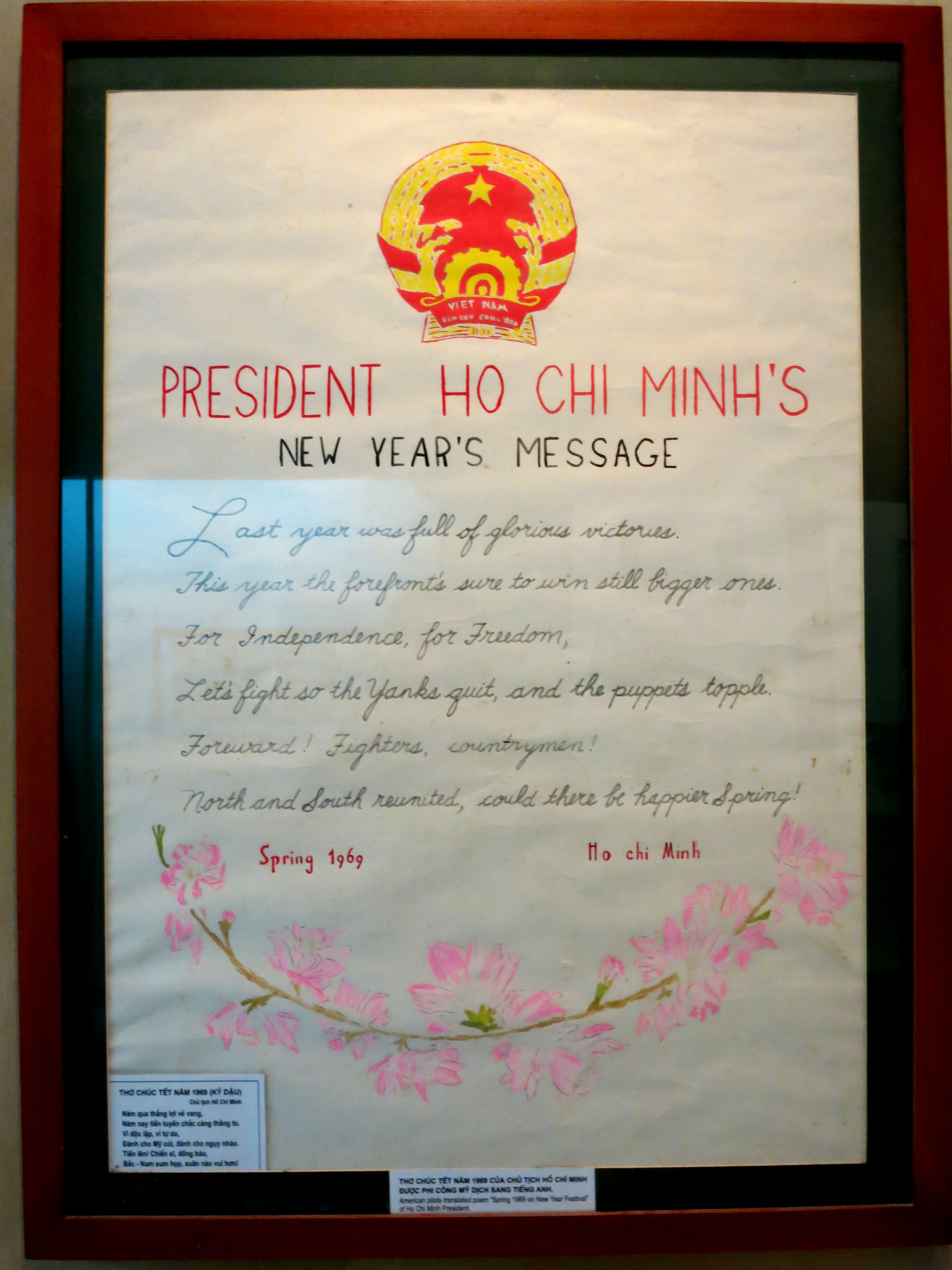
A 1969 New Year's message from Ho Chi Minh, wishing to eject "The Yanks" and reunite North and South

A 1969 New Year’s message from Ho Chi Minh, wishing to eject “The Yanks” and reunite North and South

But the first part of the museum doesn’t even mention Americans. The prison was built during French colonial times to house political prisoners, and the gatehouse that remains as the museum still has “Maison Centrale” arched over the doorway–the central house of the prison complex. Inside, there’s a mix of murals, glass cases filled with objects and scale models of the prison, and life-size sculptures of prisoners chained together and plotting revolution.

Before the 1880s, this part of the city sold stoves. This is part of the reason the prison is called "Hoa Lo"; it means "stove" and also "hell hole."

Before the 1880s, this part of the city sold stoves. This is part of the reason the prison is called “Hoa Lo”; it means “stove” and, supposedly, also “hell hole.”

Shackled statues

Shackled statues

The Vietnamese who were imprisoned by the French endured terrible conditions; the exhibits emphasized how resilient the prisoners were, and how they did everything they could to resist their imperial jailers, including gathering under an old almond tree in the courtyard to discuss resistance measures. The guillotine used to execute prisoners was on display, as were the solitary confinement cells, the piece of sewer pipe that 100 prisoners escaped through, and the room that held many more female prisoners than could comfortably fit.

Part of the sewer used as a means of escape by Vietnamese prisoners

Part of the sewer used as a means of escape by Vietnamese prisoners

Several prominent Communist leaders were imprisoned here, when it was under French control

Several prominent Communist leaders were imprisoned here, when it was under French control

The guillotine was used as one method of execution

The guillotine was used as one method of execution

There were just a few small rooms devoted to the prison’s use in the ’60s and ’70s. These held artifacts like John McCain’s flight suit, a bed used by the prisoners, and a guitar and badminton net from all the leisure activities the POWs were supposedly allowed.

John McCain's flight suit

John McCain’s flight suit

Supposed evidence of benevolence

Supposed evidence of benevolence

The two most striking things I saw in these small rooms were a video from the time of the war, and a document listing the regulations of the camp. That list started with:

American servicemen participating in the war of aggression by U.S. administration in Viet-Nam and caught in the act while perpetrating barbarous crimes against the Vietnamese land and people, should have been duly punished according to their criminal acts; but the Government and people of Viet-Nam, endowed with noble and humanitarian traditions, have given those captured American servicemen the opportunity to benefit a lenient and generous policy by affording them a normal life in the detention camps as practical conditions in Viet-Nam permit it and conforming to the situation in which the war is still on. [sic on everything]

The video was a marvel of propaganda. It alternated scenes of American POWs playing basketball and grinning at dinner with scenes of Vietnamese cowering from falling bombs and picking through the wreckage afterward. It was a genius video; who could watch it and not sympathize with the Vietnamese, who were so generous to the people who were daily trying to kill them? Of course the smiling the POWs did for the cameras was all done under duress, and it was sick to hold up these tortured men as examples of how beneficent their captors were. But just because the POW sequences were lies doesn’t mean the bomb and wreckage scenes were. It was a bloody, hateful war–as they all are.

Lots of propaganda photos, accompanied by text detailing the typical life of a POW here

Lots of propaganda photos, accompanied by text detailing the “typical” life of a POW here

My interest in the prison derived from my knowledge of the Vietnamese-American War, but once again, seeing the place in person showed me a side I wasn’t aware of–how significant the prison was to the Vietnamese as a place where they had been tortured and unjustly confined by French colonial forces. There wasn’t even a straight line drawn between the displays showing how badly the Vietnamese were treated, to displays showing how well the Americans were treated. That was a line you could draw, yes, but the way the museum was set up, it was more like it was a museum about the prison under the French, and the heroic Vietnamese prisoners who lived and died inside; and there were a few rooms about how the prison was later used.

It was fascinating, and sobering, and nothing like I’d expected.
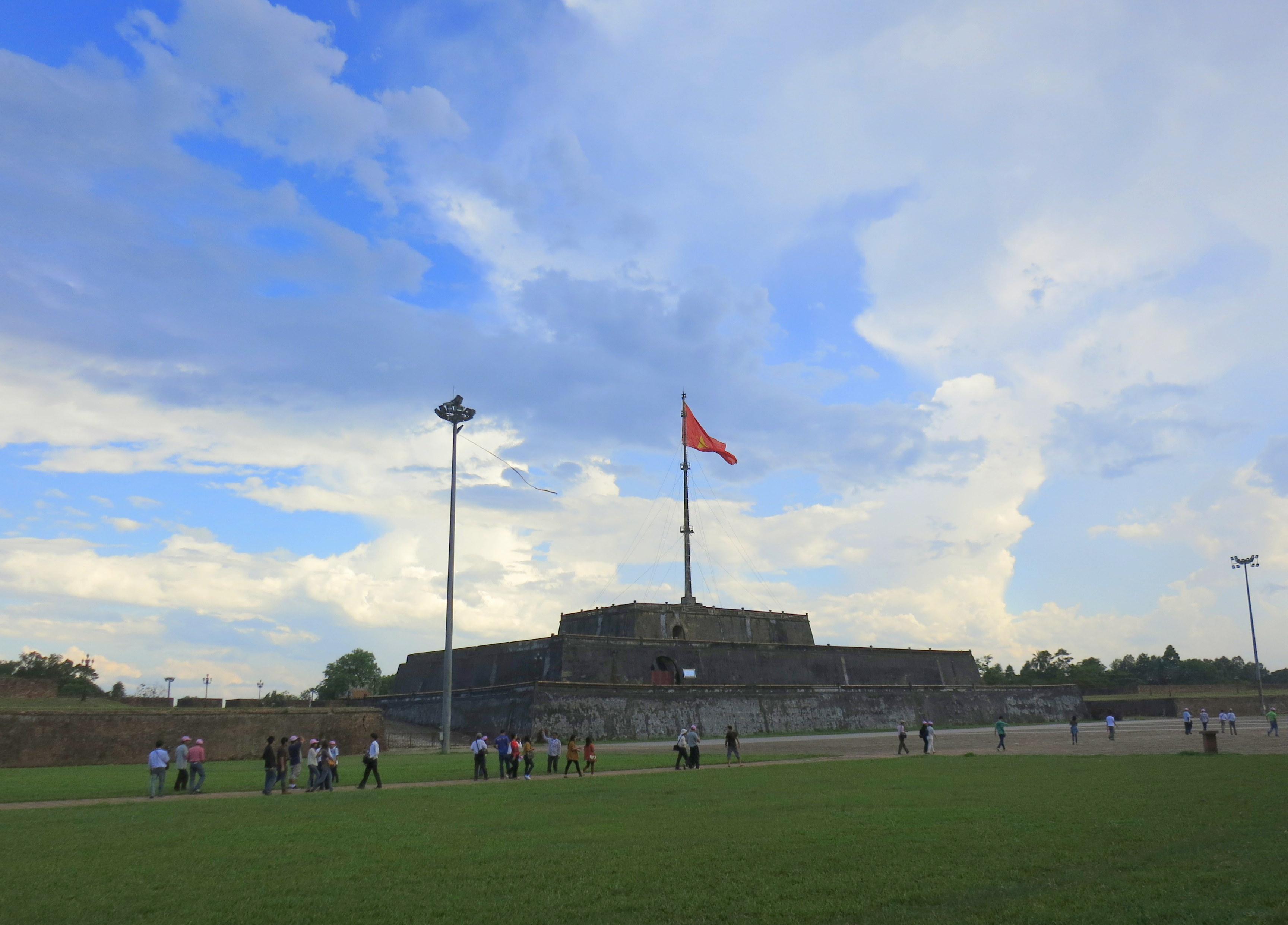
Remains of a Cultural Capital in Hue

Hue was once the site of Chinese authority, the outside force with the most influence on the cultural development of Vietnam. Starting from the 16th century, the Nguyen family of Vietnam reigned here, and in 1802 they became the imperial family of the country, with Hue as the official capital. The Nguyens were backed by the French, then ruled by the French when Vietnam was a protectorate, then ousted in 1945 during the French Indochina War.

The citadel in Hue

The citadel in Hue

The southern entrance

The southern entrance

The capital of the country moved to Saigon and later to Hanoi, and Hue’s been of secondary importance for decades, at least politically. Culturally, it’s been seen by many Vietnamese as the seat of learning, religion, art, and cuisine. Part of the struggle over the city during the Tet Offensive of 1968 was its geographic position at almost the exact center of the country, just miles from the Demilitarized Zone (DMZ), but part of it was a symbolic struggle for the heart of Vietnam.

Restored artwork in the palace

Restored artwork in the palace

hue citadel

The imperial city, behind the walls of the citadel, is about 2.5 kilometers along the perimeter. It used to house the main palace, in the Forbidden Purple City, but that was destroyed by the French in 1947. Apparently, the American and South Vietnamese forces were instructed not to touch the historically important citadel during the Vietnamese-American War, but as the Battle of Hue in 1968 dragged on, the restrictions were eased, and eventually many buildings were damaged or destroyed. Bullet holes can still be seen on many of the remaining structures.
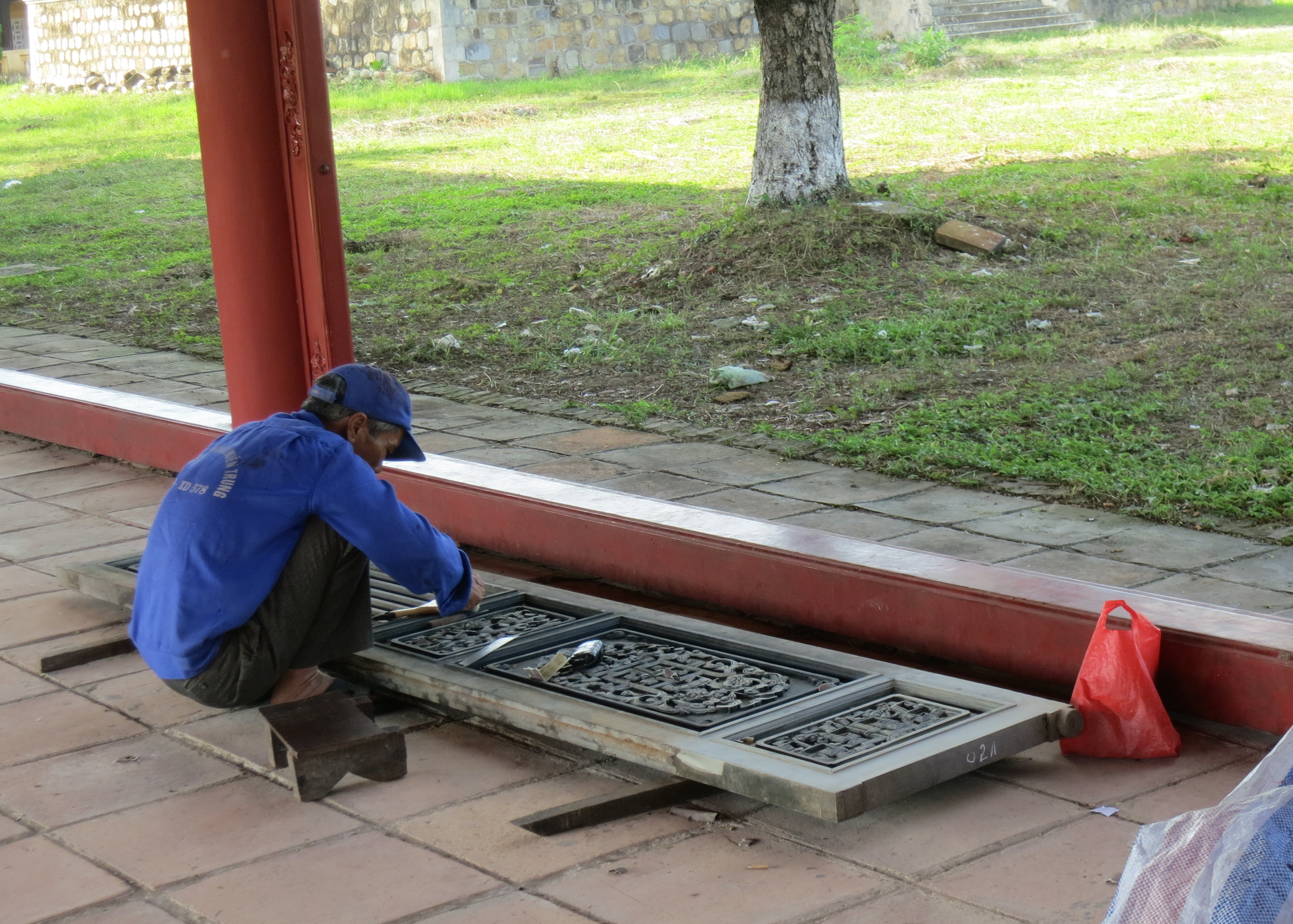
In 1996, the communist government of Vietnam, which had not previously prioritized rebuilding a symbol of imperialism, realized the tourist dollars a reconstructed city could bring in, and it committed to a 15-year plan to rebuild it. When I was there, I saw the project in action, as craftsmen sawed and carved wooden doors to hang along the long halls of the interior palace. (Also, it’s not just foreigners who bring in the money here–only a little under half of the tourists in Hue are from out of the country.)

Possibly where the emperor used to sit, who knows

Possibly where the emperor used to sit, who knows

The flag tower of the citadel looms on the north side of the Perfume River. Beyond the citadel are the walls of the palace grounds, and once you buy your ticket, you pass through the gates and find the Hall of Supreme Harmony, fronted by a broad tiled pavilion and two fish ponds. You can’t take photos inside the hall, but it was gorgeous in there. A crab shell-style roof covered a long, empty hall; the pillars were carved with dreamy cloud and dragon combinations, and the beams of the ceiling displayed poems written in Chinese characters. In the back, a video played on loop, using digital reconstructions to show what the whole palace complex looked like in its glory days.

hue citadel

Hall of Supreme Harmony

Hall of Supreme Harmony

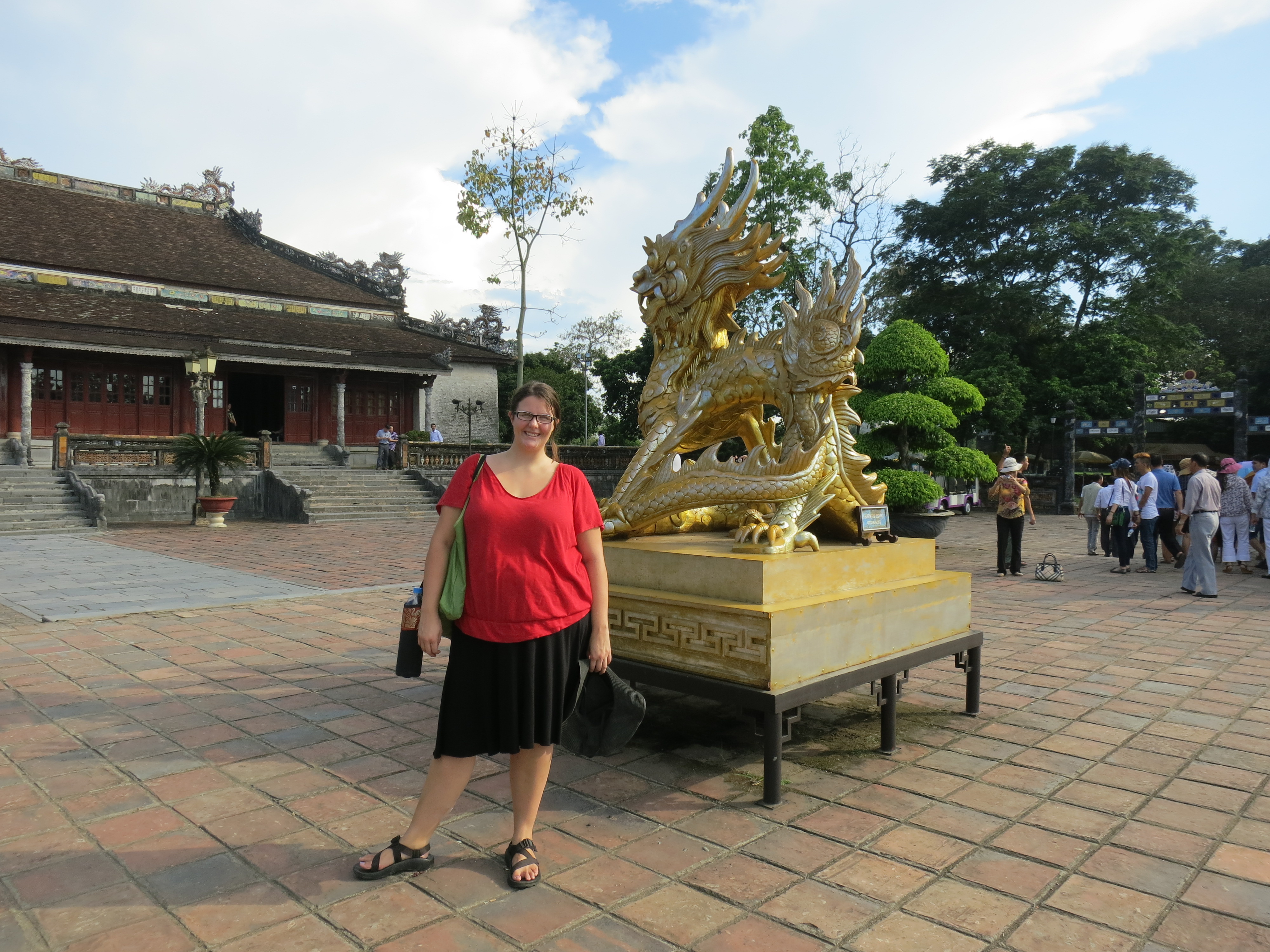
Hangin' with a gold dragon

Hangin’ with a gold dragon

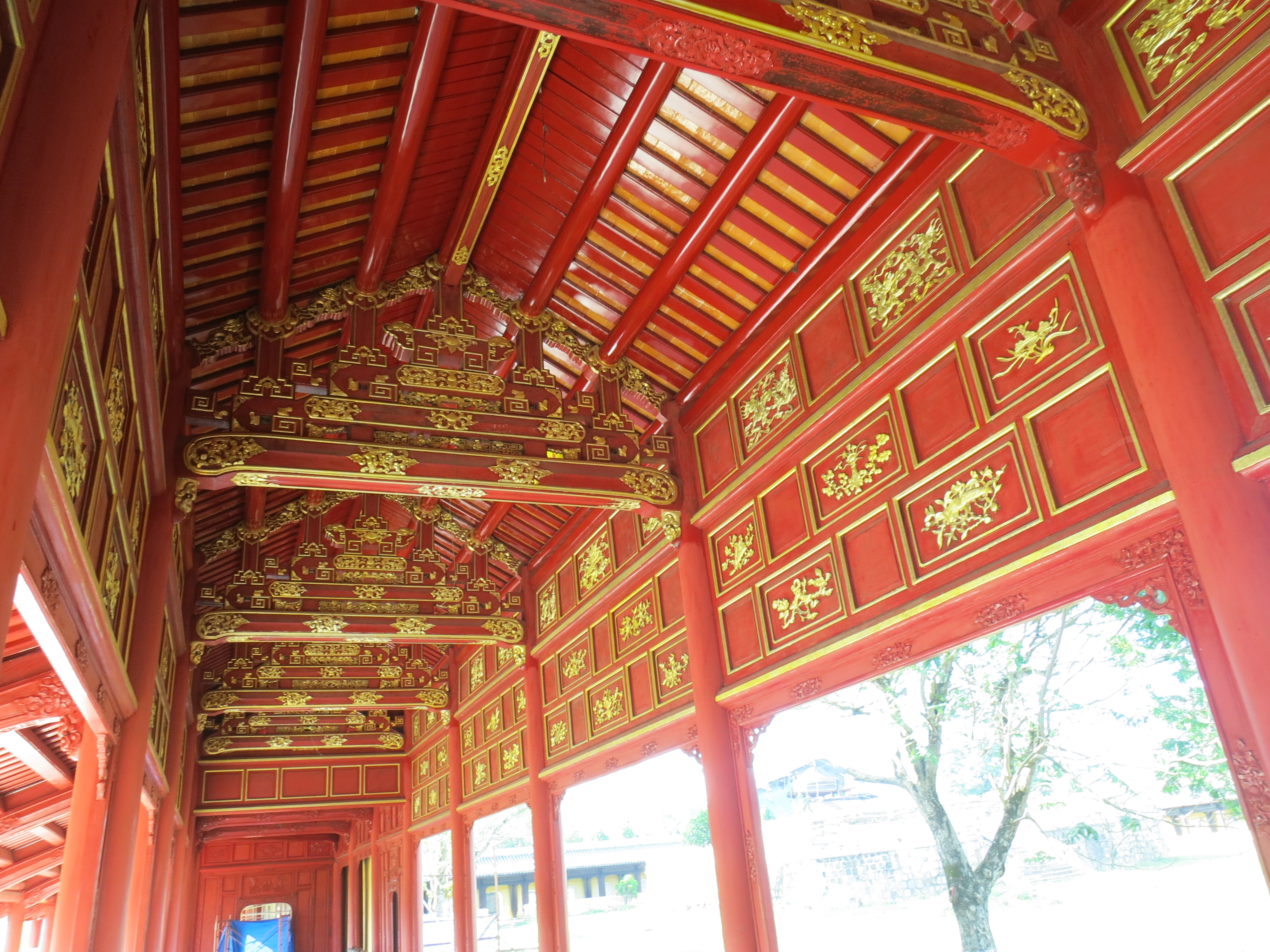
Behind the hall, I posed with a giant golden dragon, like you do, and then walked down one of the side halls of what remained of the interior palace. The side halls started out in magnificent style, double rows of red pillars, long lines of tall doors opening out onto the side gardens, but as I walked closer and closer to what used to be the center of the palace, the doors disappeared, the columns were unpainted, scaffolding appeared. What was once land so rarefied only the emperor could walk on it, was now flat stone foundations and trimmed green grass, barely the memory of a palace.
A totally reconstructed hallway

A totally reconstructed hallway

hue citadel

I loved these passageways

I loved these passageways

Restoring one of the doors

Restoring one of the doors

Looking out over the few remains of the innermost palace

Looking out over the few remains of the innermost palace

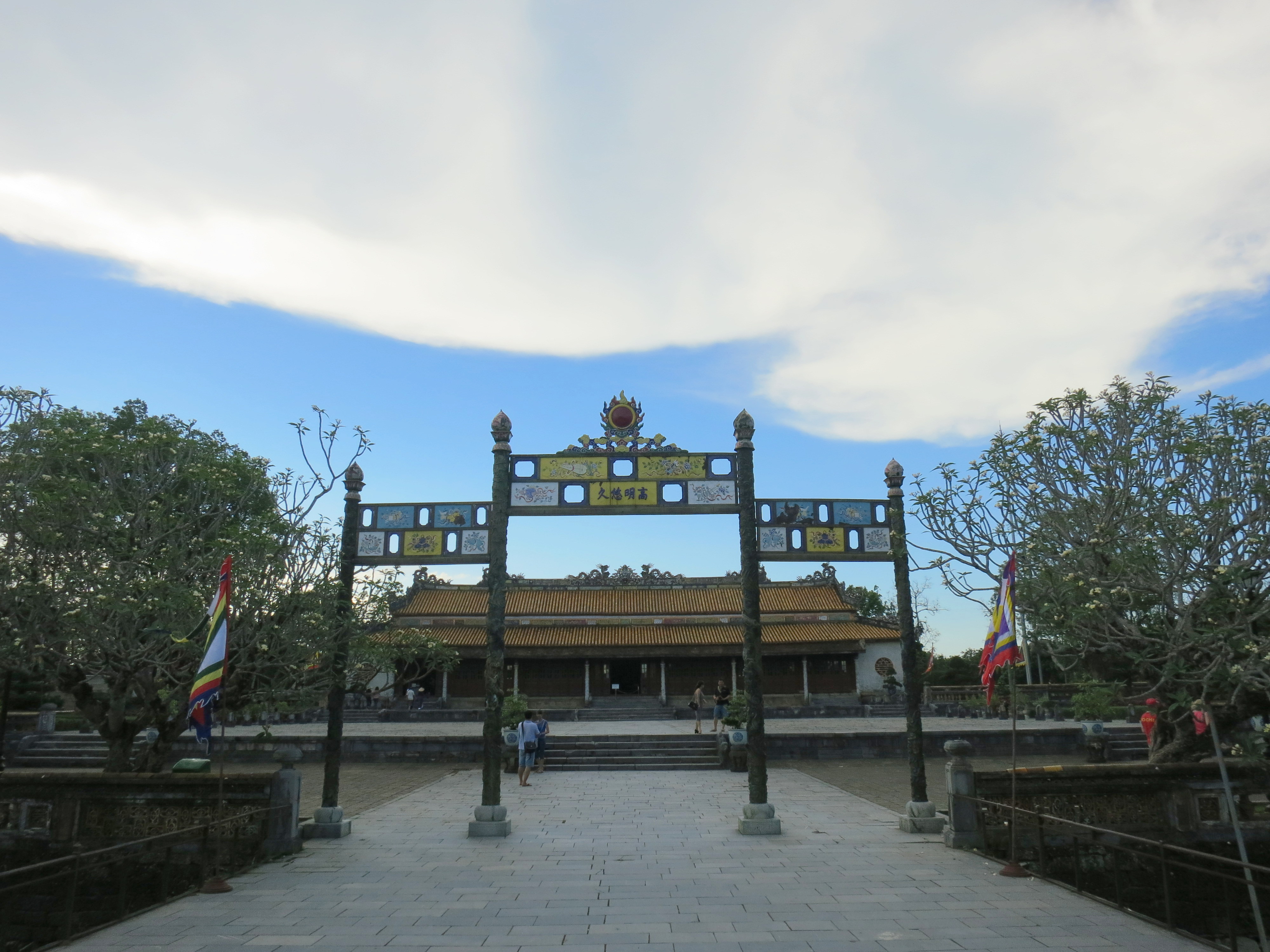
I then walked to the Dien Tho Residence, where the queen mother lived in the later years of the palace’s use. This had its own three-arched gateway, a couple lotus ponds, and long, low buildings (which I couldn’t take photos in).

Gateway to the residence

Gateway to the Dien Tho Residence

hue citadel

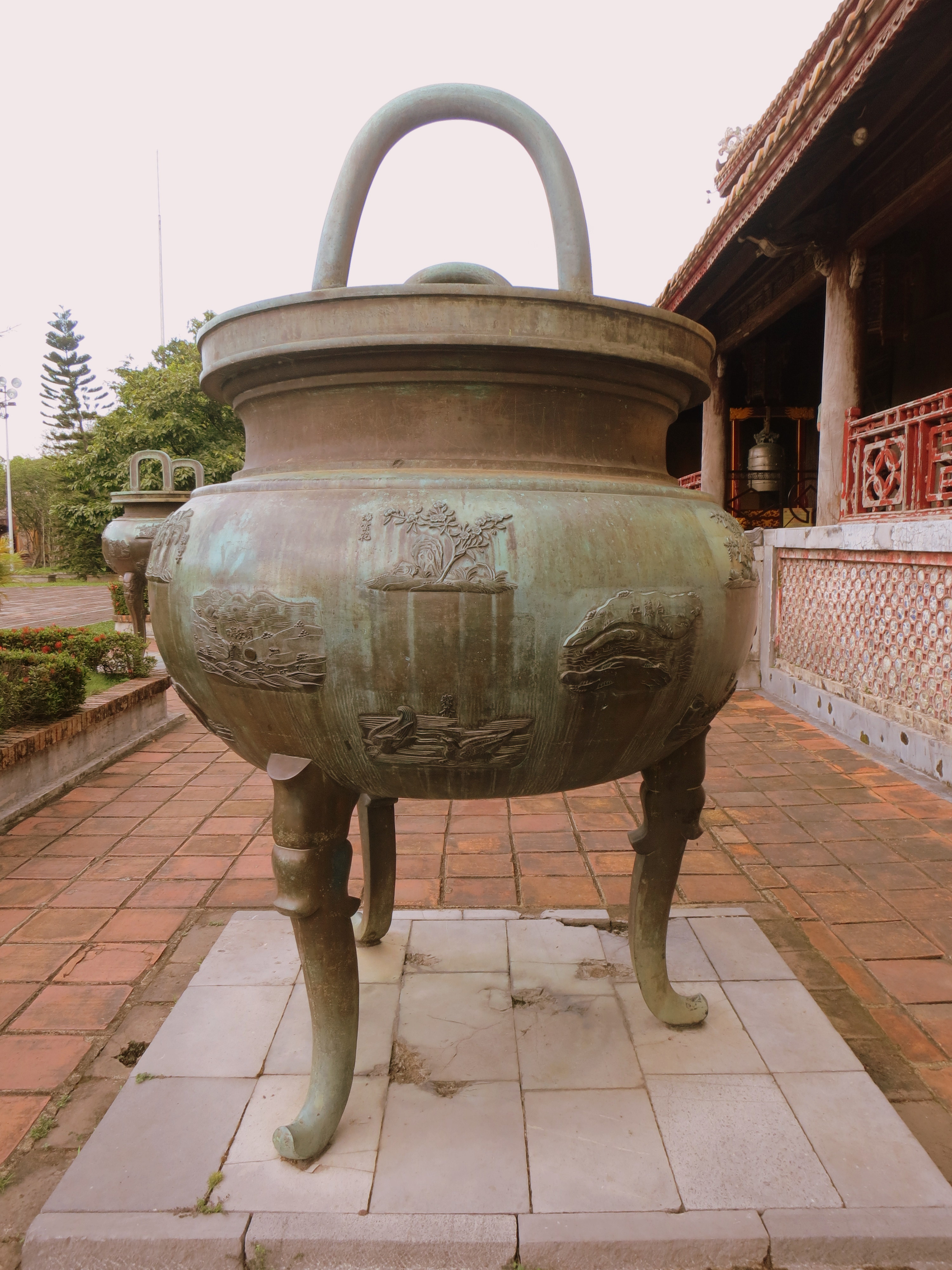
Finally, I visited the Hien Lam Pavilion, which has the The Mieu Temple on one end, and nine dynastic urns on the other. The temple is richly decorated, showcasing portraits of emperors and queens. The urns are lined up outside, giant bronze castings carved with scenes of natural beauty, each urn named after an emperor of the Nguyen dynasty.

The ?? Pavilion

The Hien Lam Pavilion

One of the nine dynastic urns of the ?? Pavilion

One of the nine dynastic urns of the Hien Lam Pavilion

On one of the nine urns

On one of the nine urns

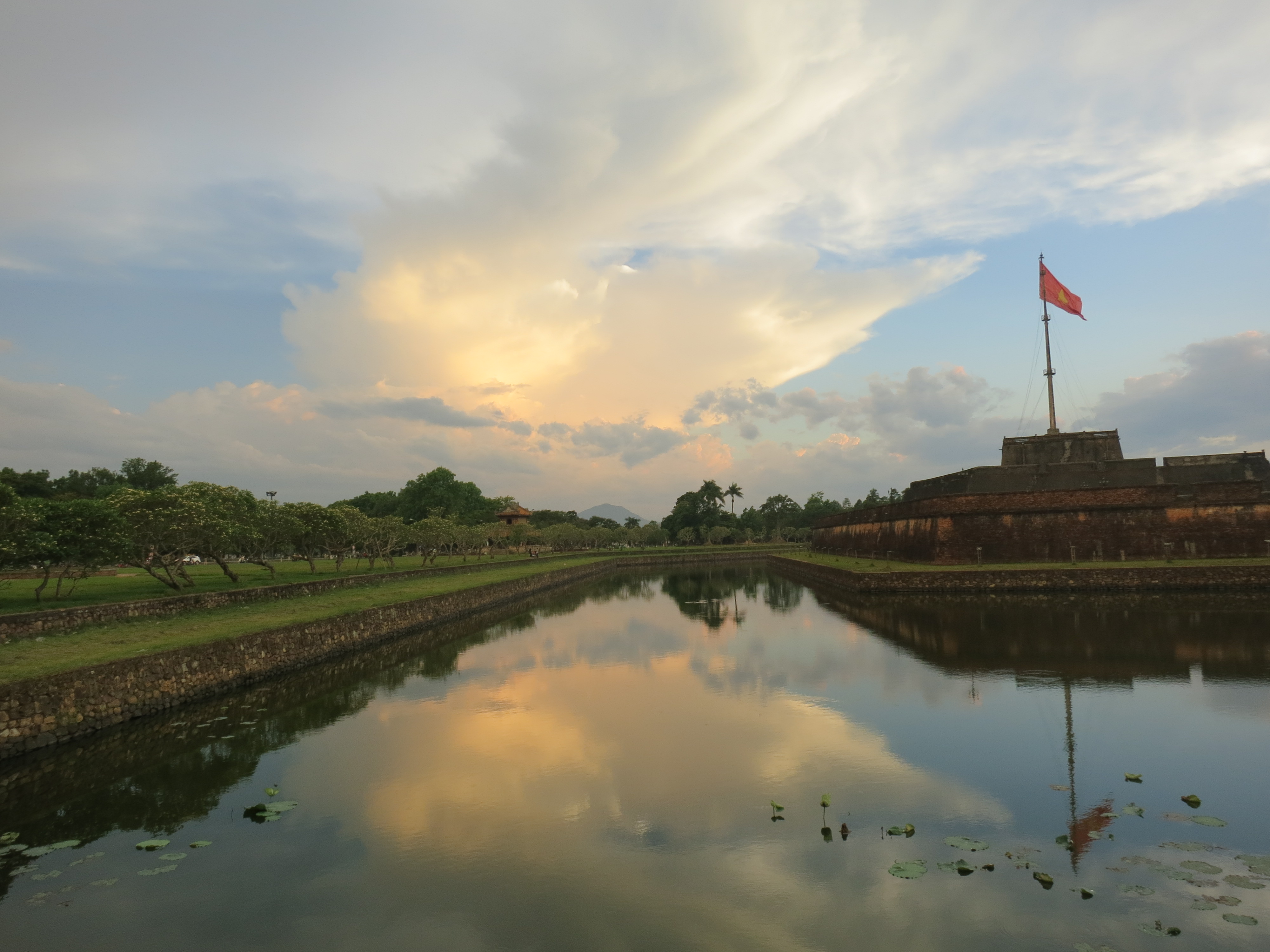
Walking away as the palace closed for the day, I left the swirls of clouds and curves of trees on the urns, passed the rows of flowers along the path and the sun setting behind the citadel walls, and strolled back into the city.

Sunset outside the palace

Sunset outside the palace

Beyond the Facts: Visiting the War Remnants Museum in Vietnam

No museum is a mere collection of facts. It’s not possible to display information completely objectively; there’s always a point of view taken, a lesson to impart, an agenda to push. This is true even for museums that aren’t at all political; for example, the Laura Ingalls Wilder Historic House & Museum promotes not just Wilder’s writing, but the idea that her values and way of living are worth emulating. Museums only exist because somebody thought the topic was worthy of further study and wider knowledge by the general public. Just by building a museum, you’re taking a position. But I have to say, I have never been to a more baldly biased museum than the War Remnants Museum in Ho Chi Minh City.

The War Remnants Museum in Ho Chi Minh City, Vietnam

The War Remnants Museum in Ho Chi Minh City, Vietnam

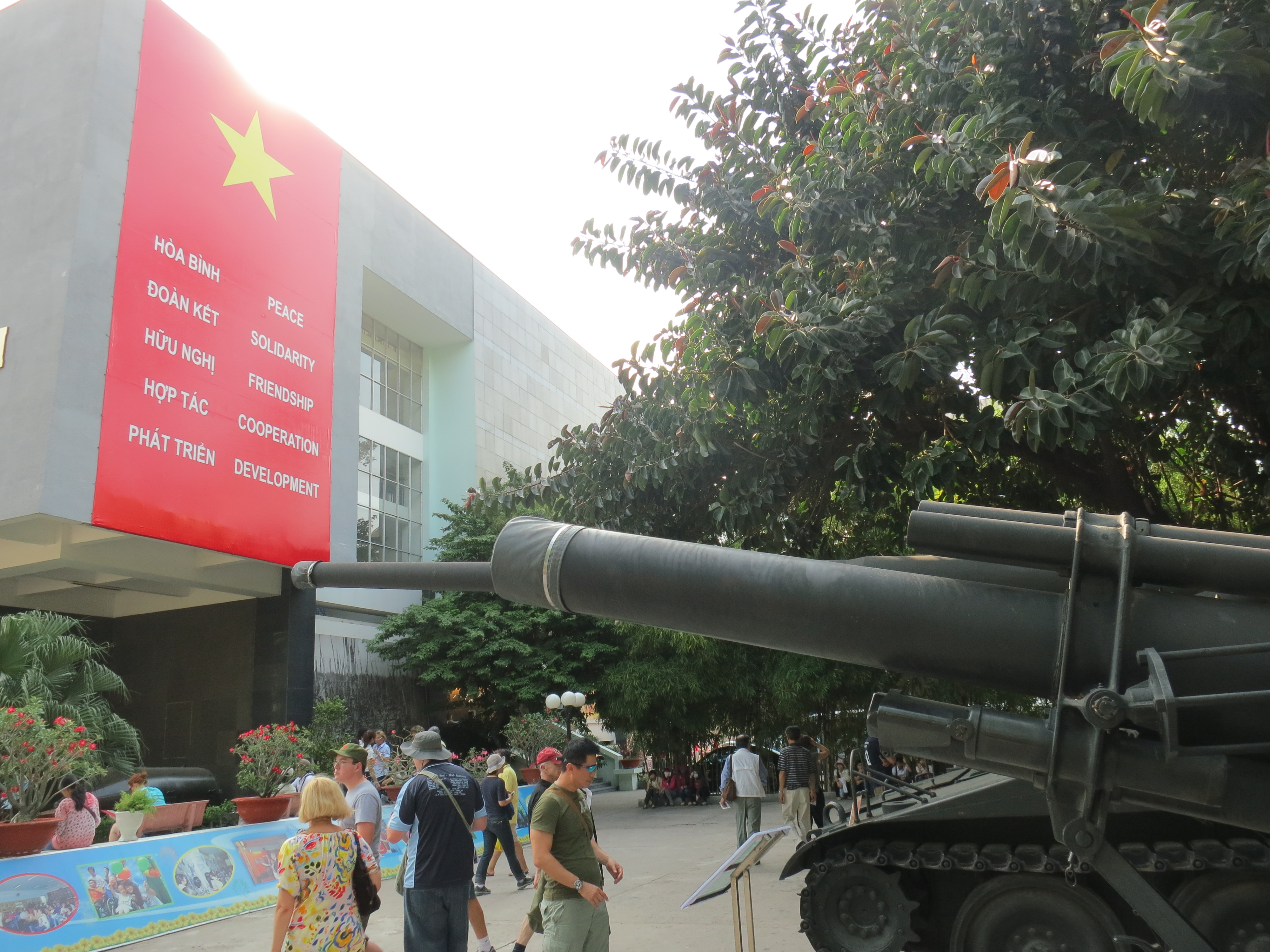
Unlike a lot of museums, this one makes no bones about its purpose: it is there to tell the story of the Viet Cong during the Vietnamese-American War, and it is there as a corrective to the American narrative of the war. Every single poster and placard called it the American War of Aggression. Any time the war was called “the Vietnam War,” the phrase was placed in quotes. South Vietnam was called the “so-called Republic of Vietnam.”

Protests around the world

Protests around the world

When the USSR or China were mentioned, the war was called a “struggle for national salvation,” to be more aligned with Communist vocabulary. One placard showed Australians protesting their government sending troops to aid the Americans, and the placard said they were protesting the agreement between the Australians and US to “force Australian youths to become field targets in the US battles in Vietnam.” The whole museum was a master course in semantics. (Which is not to say it was false–you can put a lot of gloss on a base of facts.)

Some veterans from the US have sent in their medals and fatigues to the museum, with notes of apology

Some veterans from the US have sent in their medals and fatigues to the museum, with notes of apology

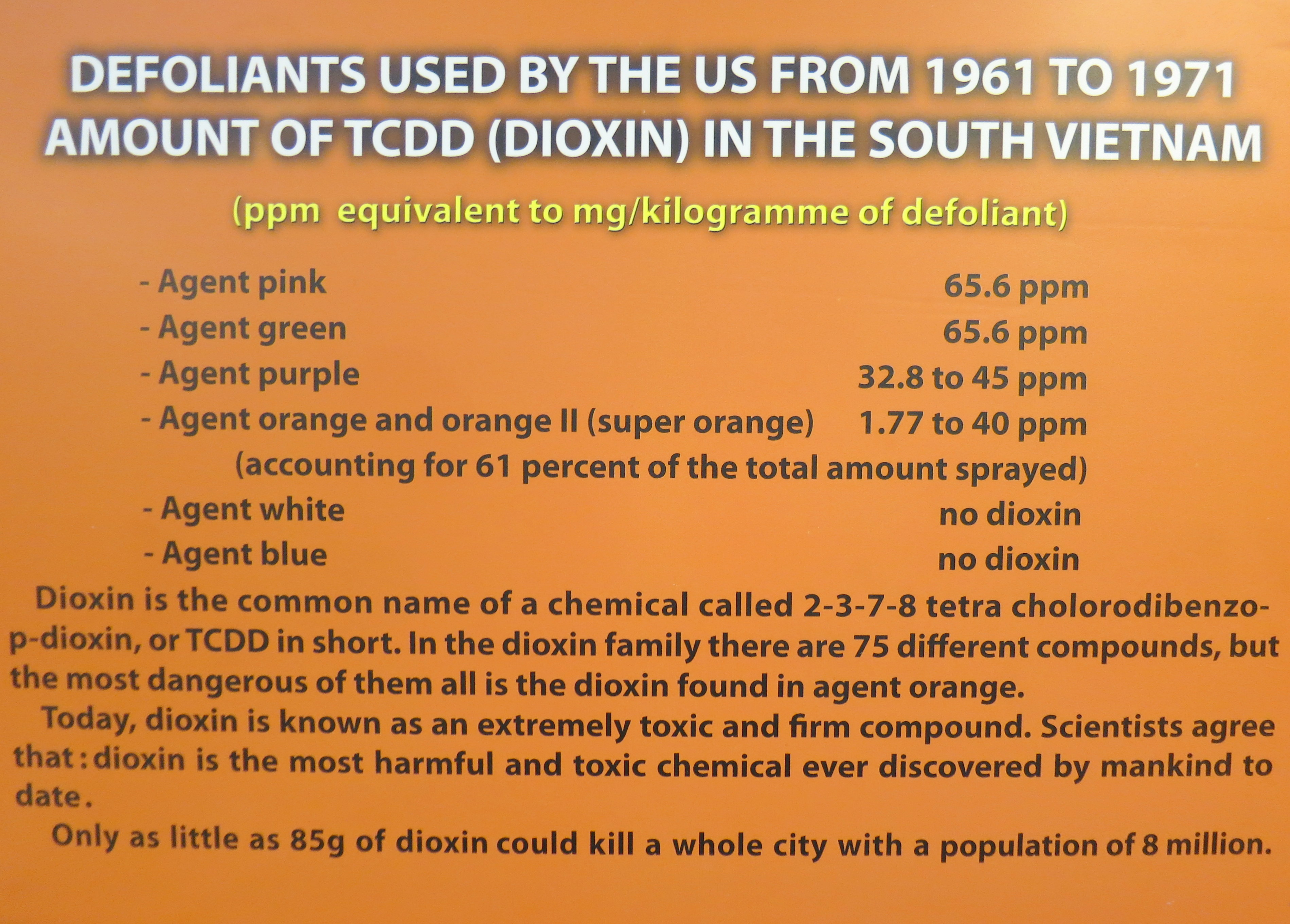
It was also extremely difficult to visit, because the anger and loss on display was so raw and so recent. An entire room was devoted to photos of children suffering from painful and debilitating birth defects, which they got because their parents were exposed to the dioxin in Agent Orange. Did you know that this was only one of the toxins sprayed over forests and farmlands? The museum showed posters of the various “colors” of toxins used by the US. The posters looked a lot like our terrorist threat level posters today, only guess who was the threat?

Yikes

Yikes

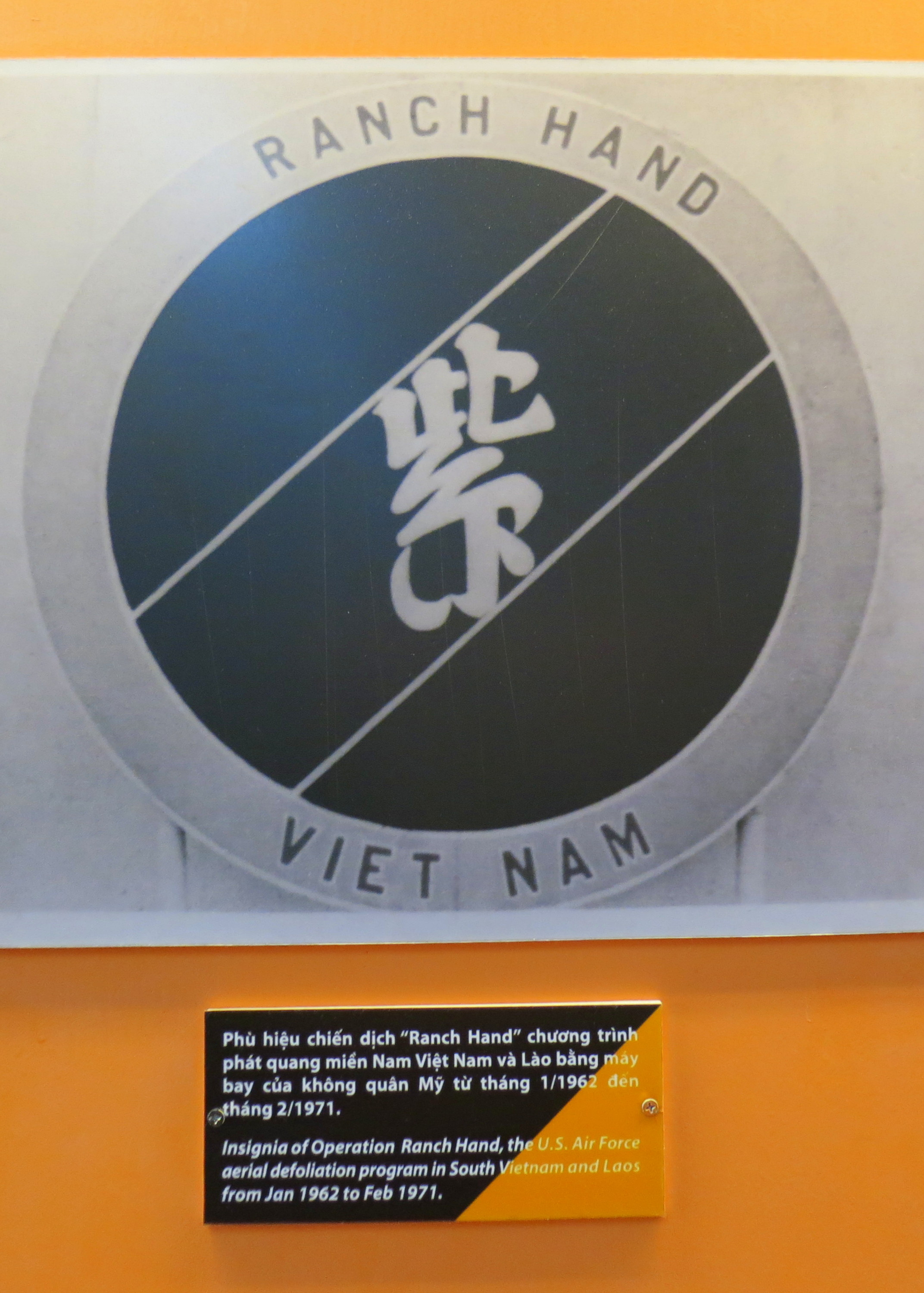
Ranch Hand: the name of the operation that sprayed various chemicals over the farmlands and forests of Vietnam from 1962 to 1971

Ranch Hand: the name of the operation that sprayed various chemicals over the farmlands and forests of Vietnam from 1962 to 1971

Research since the 1960s has shown that even just one parent exposed to dioxin could affect the DNA of the child, resulting in spina bifida, diabetes, various cancers, twisted or missing limbs, developmental disabilities, and other defects and diseases. So it’s not just the people who survived the war who developed health problems, but their children did, too. (Of course, this has been a big issue in the States, too, as the military has slowly agreed to compensate some US veterans for the health problems they and their children suffer as a result of being exposed to Agent Orange. We hurt ourselves when we hurt others.)

A whole room of these images, difficult to see, harder to contemplate.

A whole room of these images, difficult to see, harder to contemplate.

The Aggression War Crimes and Historical Truths sections, in addition to containing the Agent Orange room, included displays on the My Lai massacre, the founding of the National Front for Liberation (what we know as the Viet Cong), the bombings in Laos and Cambodia, and the airlift of Americans in Saigon in 1975.

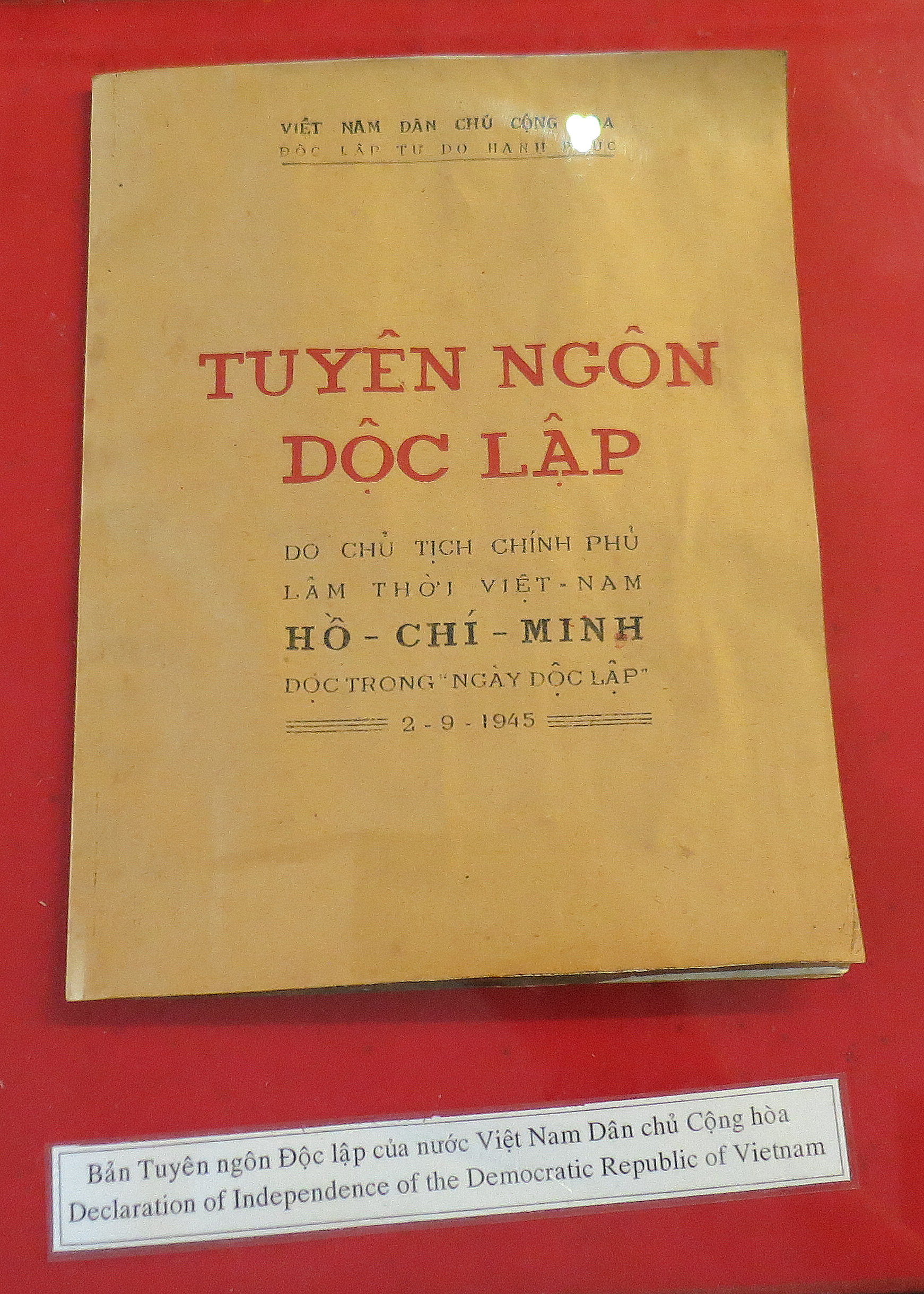
The Declaration of Independence

The Declaration of Independence of the Democratic Republic of Vietnam

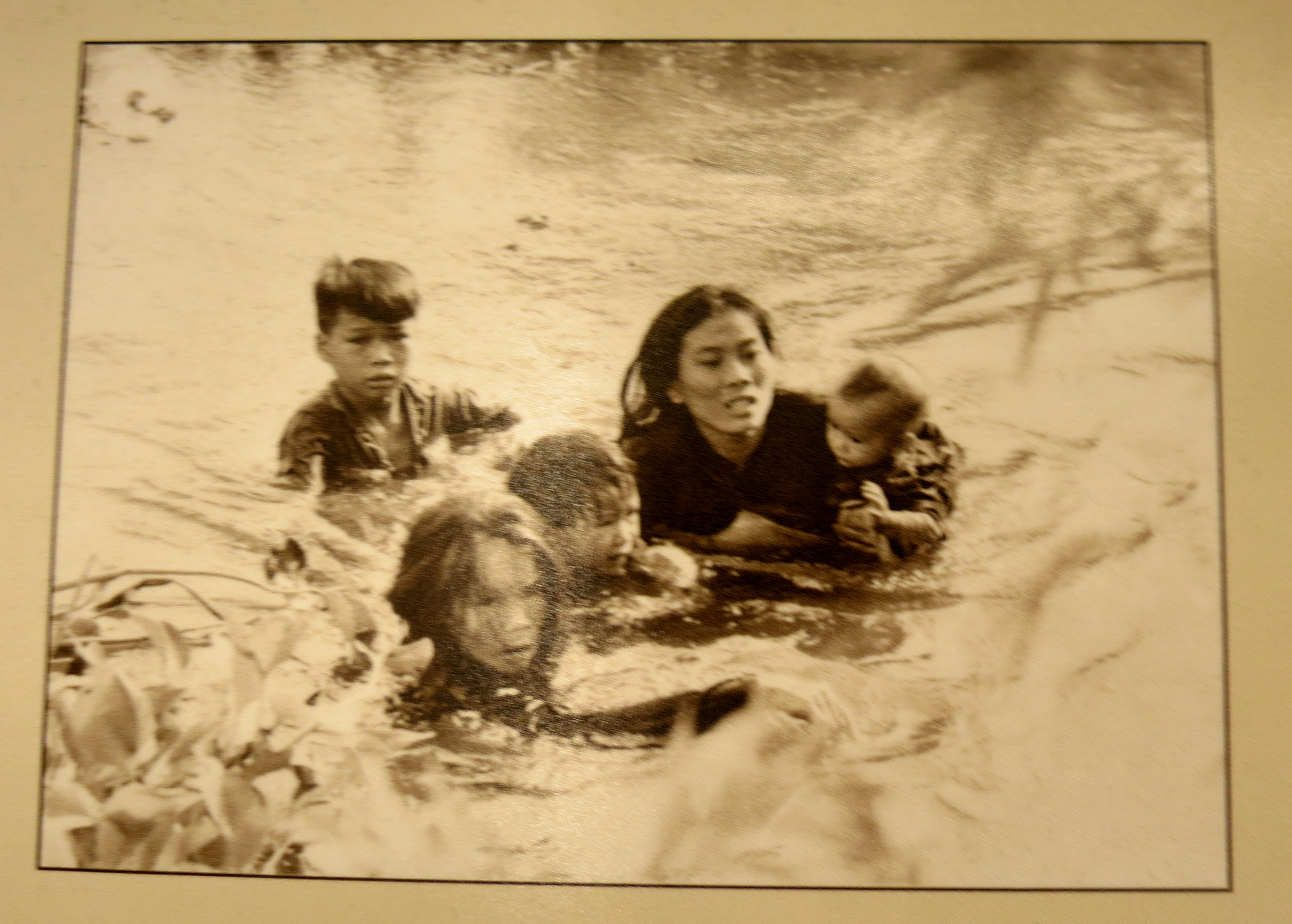
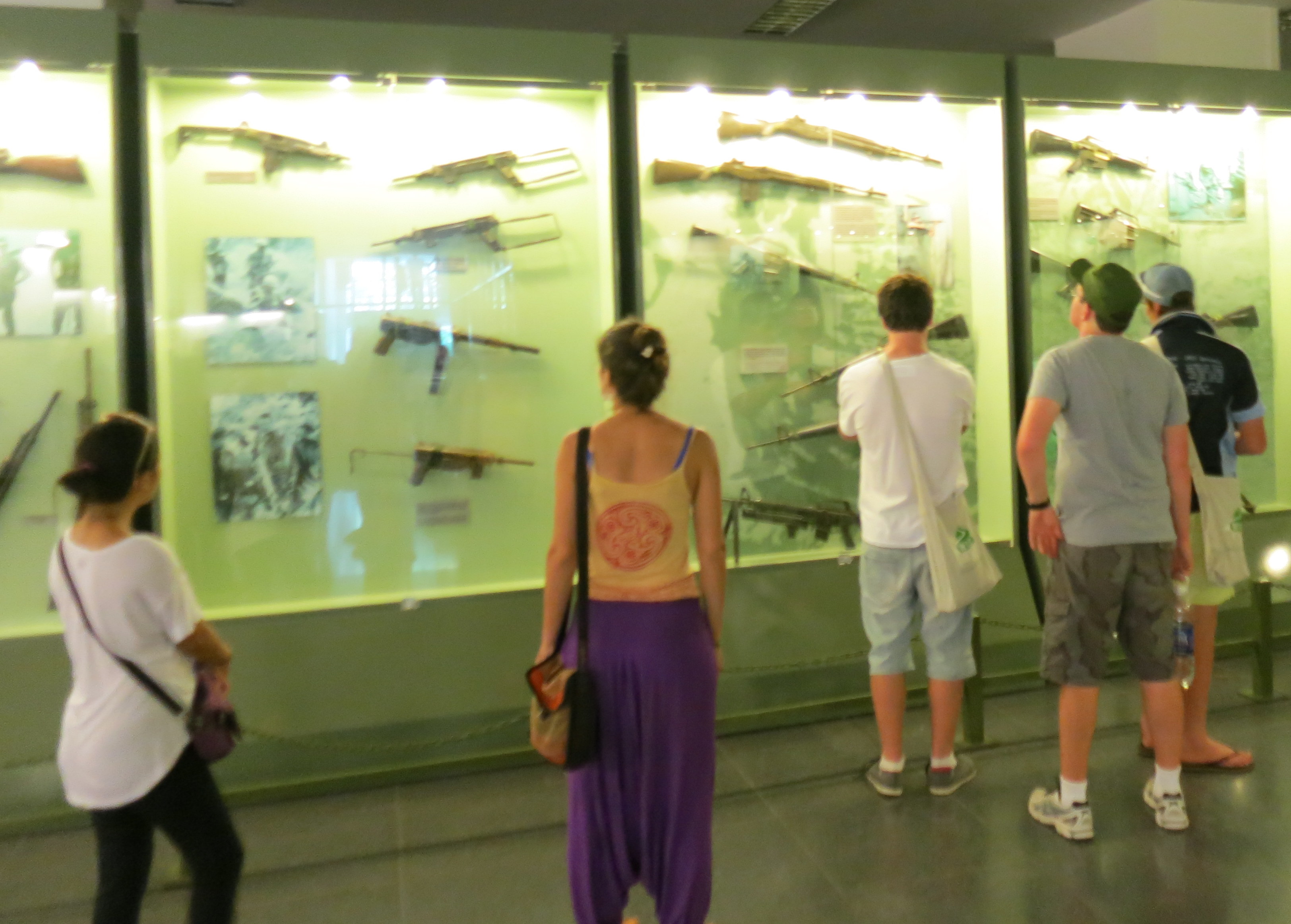
There was a special display on photographers of the war, especially American and French photographers who trained their cameras on the atrocities the Vietnamese suffered at the hands of the American troops. A couple rooms held displays of shell fragments, different kinds of guns, and in a display on the total destruction of villages in Son My, pots and baskets to show what the lives of the villagers were like before the attack.

Part of the Photographers of the War exhibit

Part of the Photographers of the War exhibit

war remnants museum hcmc

Pottery from the Son My massacre. We know it as the My Lai massacre, but that was just one of several villages in the area that was destroyed, and the Vietnamese call it the Son My massacre.

Pottery from the Son My massacre. We know it as the My Lai massacre, but that was just one of several villages in the area that was destroyed, and the Vietnamese call it the Son My massacre.

Visitors look at the guns on display

Visitors look at the guns on display

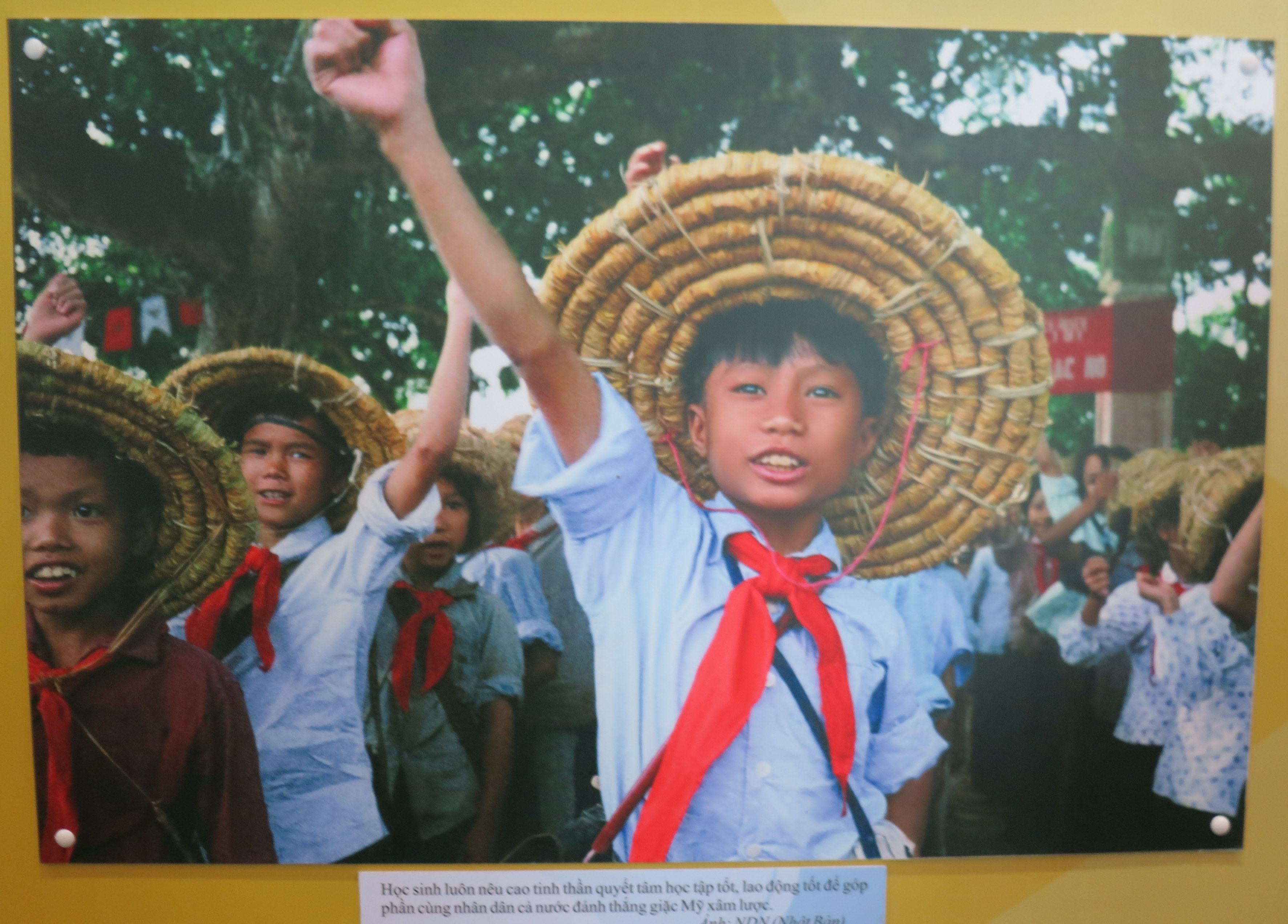
The first floor was split between two displays: one on the education the young Vietnamese received under the Viet Cong during the war, and one on the worldwide anti-war protests held during the ’60s and ’70s. The education display was dated, a magazine spread for people to read during the war. It showed children in obvious poses, smiles plastered on their faces as they shouted dedication to “Uncle Ho,” with captions like “Children tried to study well and work hard to make the contribution to the people’s movement defeating American aggressors.” I don’t mean to undermine the importance of the teachers during this time, though; they taught children in tunnels if they needed to, never sure of where or when the next bomb might go off.

Part of the "Children During War" exhibit

Part of the “Children During War” exhibit

The anti-war display was the opposite of dated; seeing the accumulation of anti-war and pro-Vietnam support from all those different countries, over many years, brought home how much this war meant to people around the world. People were not only concerned for the lives damaged and lost on both sides of the war, but also for what this kind of unofficial but all too real war meant for the world they lived in, and how it might affect their future. Seeing large posters declaring “Solidarity with Vietnam” in German, only 20 years after the end of World War II, was affecting. A man in Japan wore a sign saying “US Withdraw from Vietnam” during his commute, every day for 8 years. Several tribunals were convened on the “war crimes of the US” in Norway and Sweden. Thousands of people in South America, Africa, and Europe signed letters denouncing US intervention in Vietnam. Massive protests were held on every continent.

Before and after the war, from places around Vietnam

Before and after the war, from places around Vietnam

war remnants museum hcmc

I’m so used to the American version of the story, even the anti-war story, that I was surprised by these global actions against the war. I’d let myself be insulated, seeing everything through a particular lens, and it was good to be reminded how narrow that view is. Especially in light of the anti-war protests in 2003–those didn’t come from nowhere, they have a lot of historical precedent.

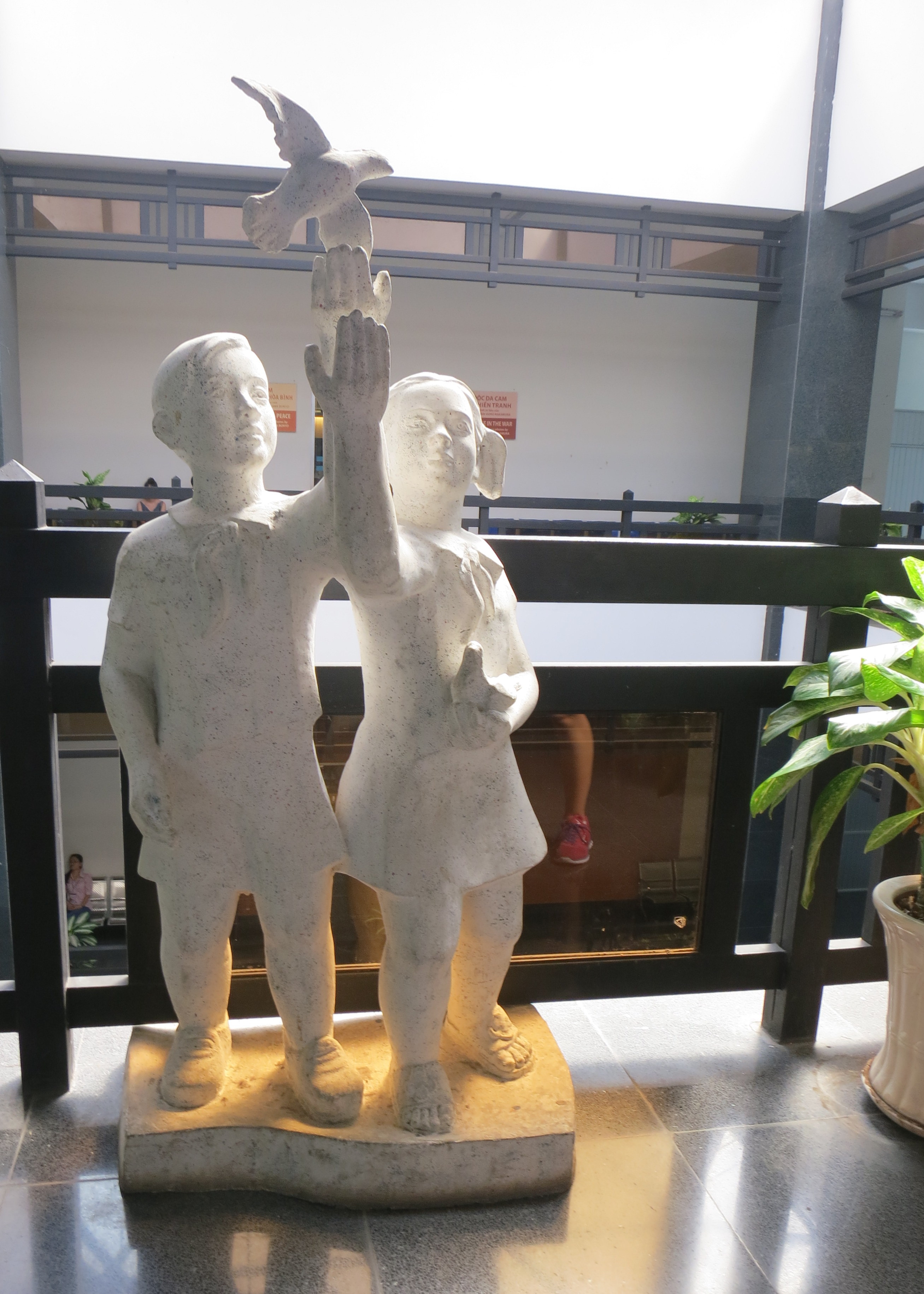
Let there be peace

Let there be peace

Outside the museum, captured American tanks, heavy artillery, and a bomber plane were on display in the sunshine. A group of children deformed by Agent Orange played musical instruments for a growing crowd of Vietnamese tourists. I stuck a flower in the gun of a tank, smiled and flashed a peace sign, consciously re-creating several historical photos of hope reaching out into violence. Behind me, the band struck up a folk song, and the gathered Vietnamese began to sing.

Outside the Peace Room

Outside the Peace Room

Going Underground at the Cu Chi Tunnels

I was nervous about visiting Vietnam, nervous because of how excited I was to see the places that stood out in my memory from my teenage years (when I was mildly obsessed with what we call the Vietnam War), and nervous for whether that excitement made me an insensitive visitor.

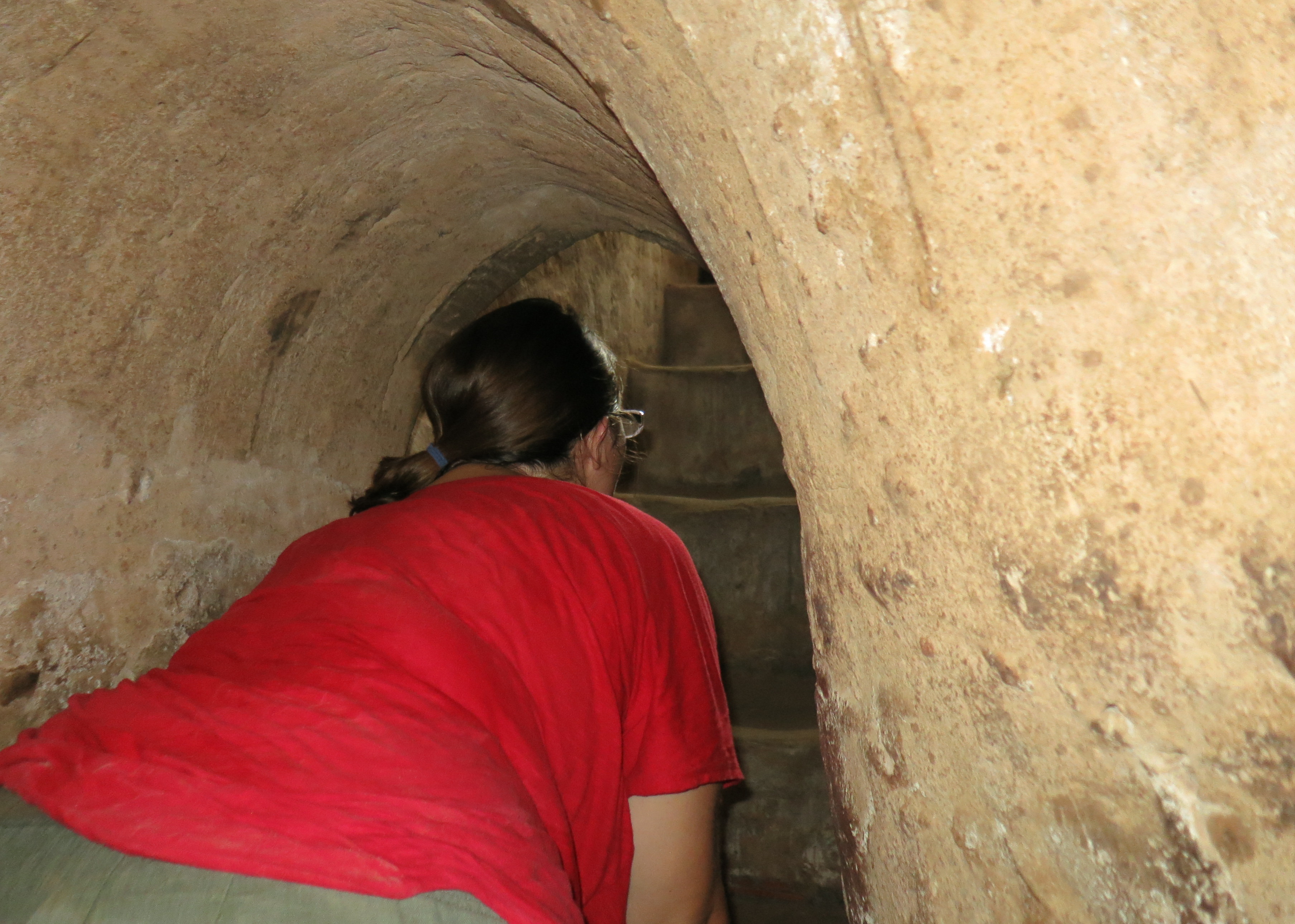
The enlarged tunnels didn't feel large at all

The enlarged tunnels didn’t feel large at all

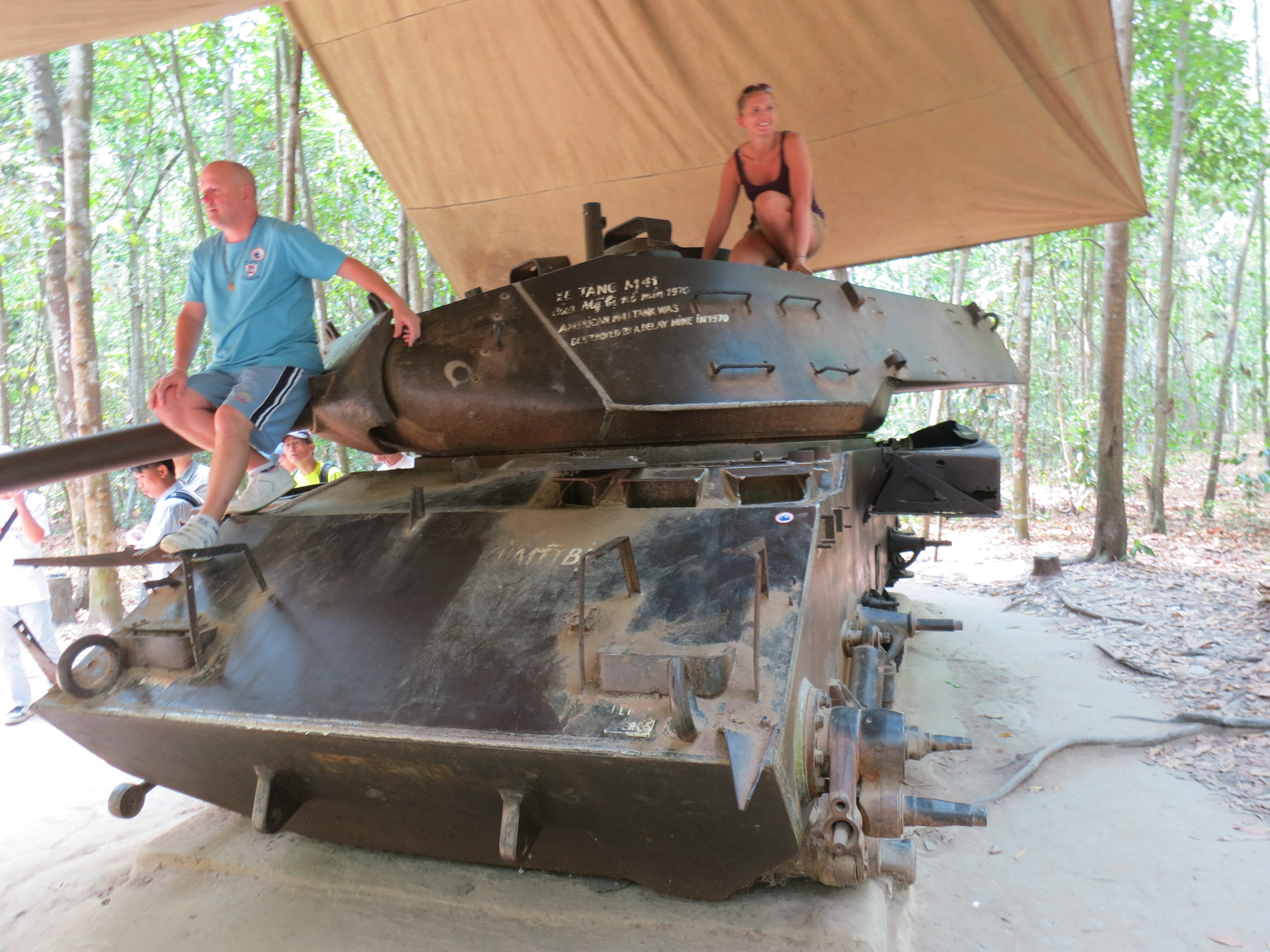
Turns out that asking those kinds of questions is kind of like asking, “am I being a good parent?”–the mere fact of asking means you’re on the right track. On my group tour of the Cu Chi Tunnels just outside Saigon, I saw people clamber on captured American war tanks, shooting finger guns and grinning. I saw people line up at the shooting range at one end of the park, paying by the bullet to shoot Uzis and M-21s. I saw a ten-year-old walking around with his family, totally oblivious in an American flag t-shirt.

Ahh, tourists

Ahh, tourists

The tunnels are part of an extensive network the Viet Cong built throughout the Saigon area during the war with the United States. They even managed to get under the American base, which rankled the US Army to no end. The Viet Cong lived in those tunnels; women cooked in them, men ran around in them on missions, children had lessons in there. The tunnels were tiny, perfectly sized for the Vietnamese, and far too small for the “tunnel rat” soldiers the Americans sent in to try to dismantle them. They never managed it, and the tunnels were a large part of the Viet Cong’s success in the war.

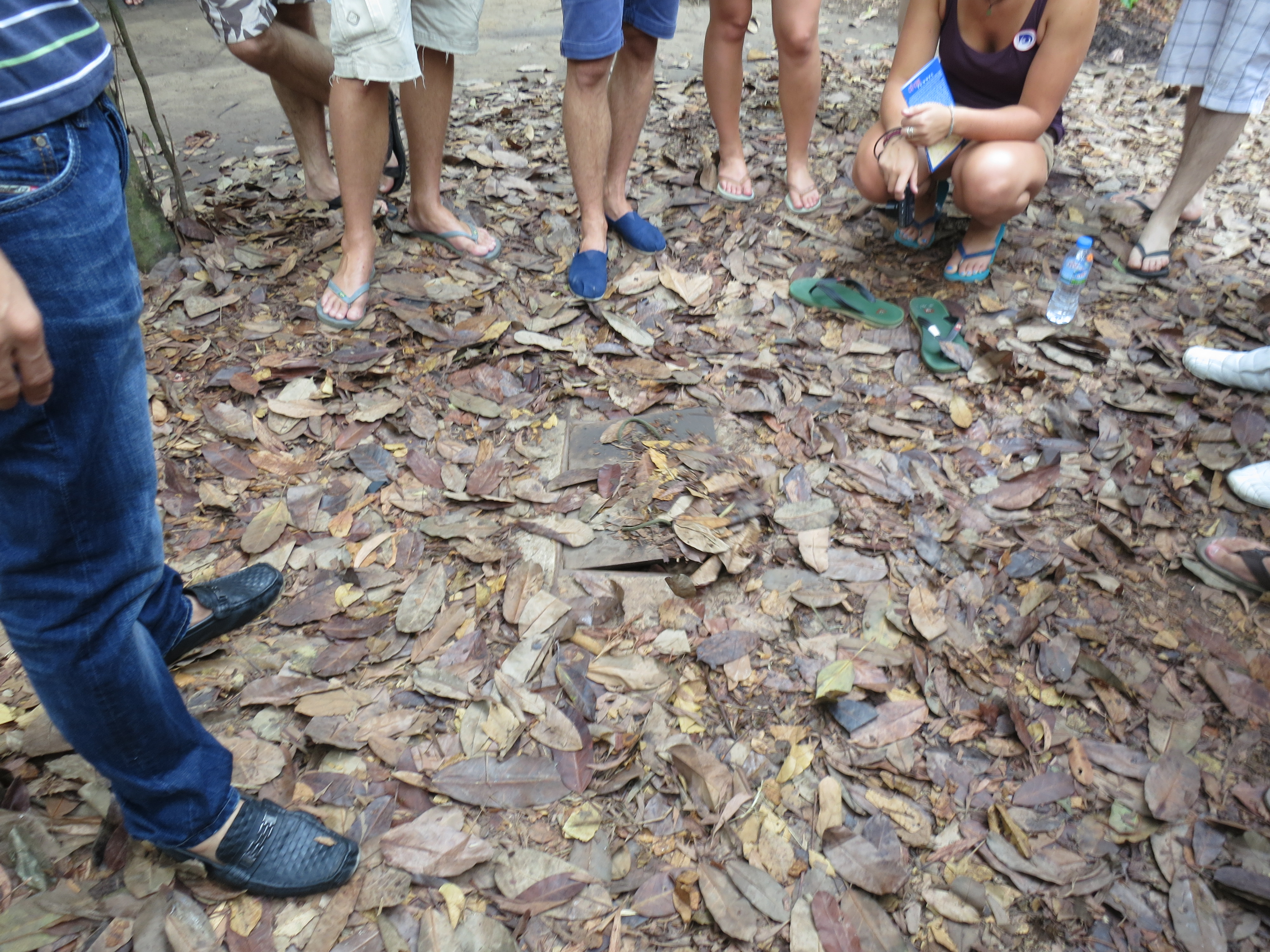
A nearly invisible tunnel entrance

A nearly invisible tunnel entrance

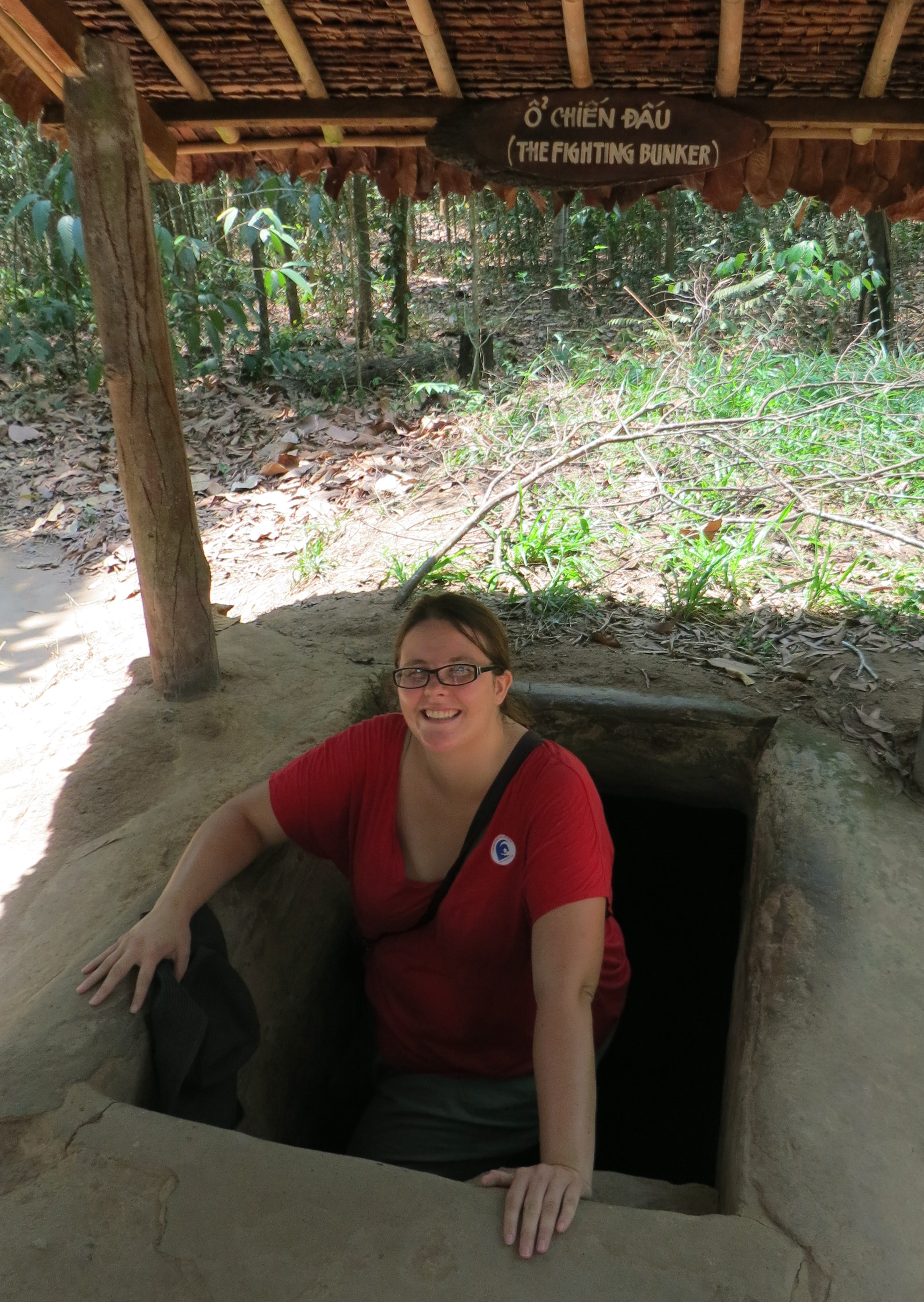
The tiny entrance to the tunnel

The tiny entrance to the tunnel

We saw the tiny entrance holes to the tunnels, which were so small that the soldiers had to go in feet first, holding the cover over their heads because the entrances were too narrow to fit their shoulders. We saw the small mounds that hid the holes the kitchen smoke escaped from; the mounds were many meters from the kitchens, so even if the Americans bombed where they saw smoke, they wouldn’t hit the actual kitchens.

An eerie kind of ambiance at the Cu Chi Tunnels

An eerie kind of ambiance at the Cu Chi Tunnels

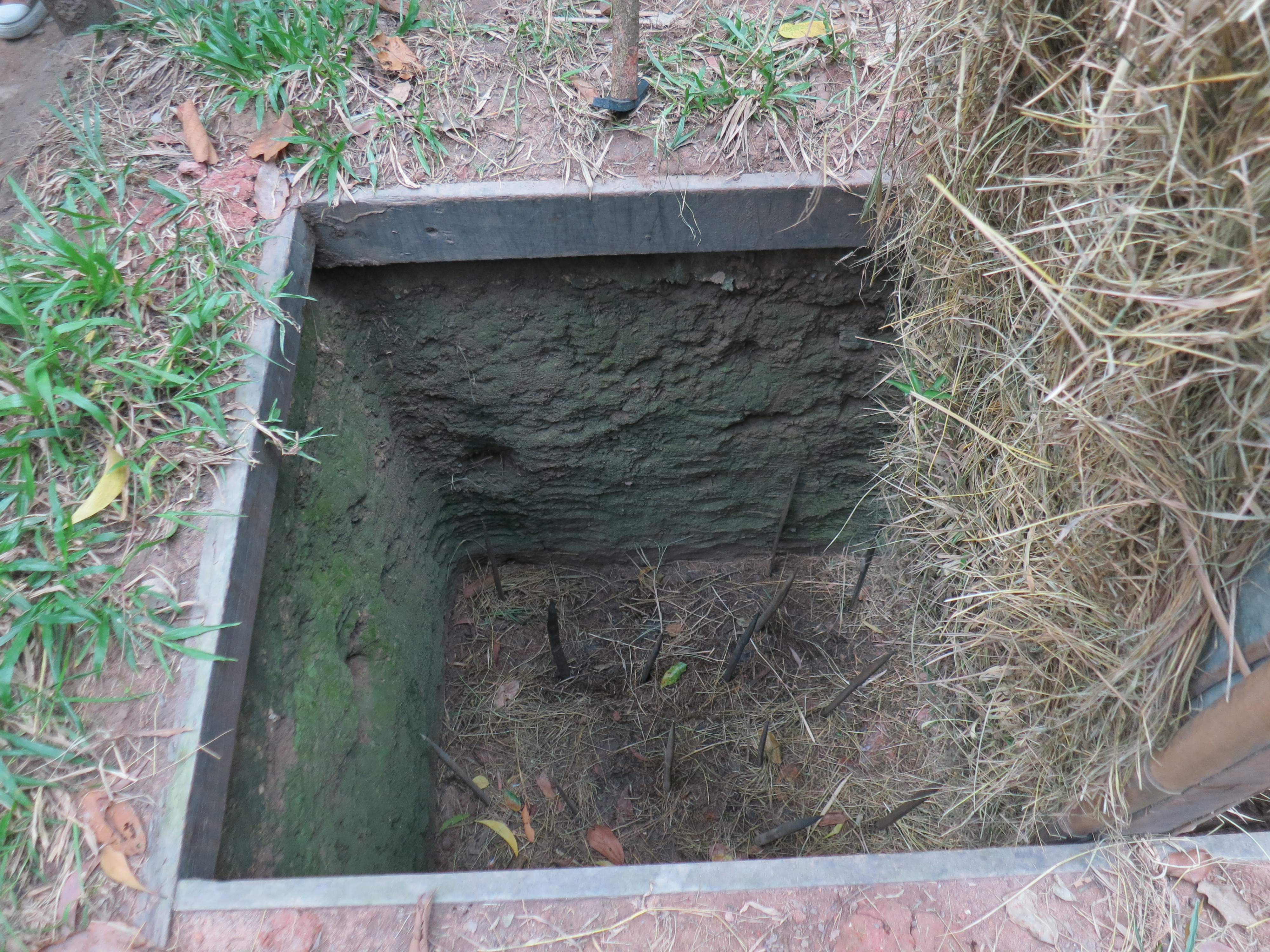
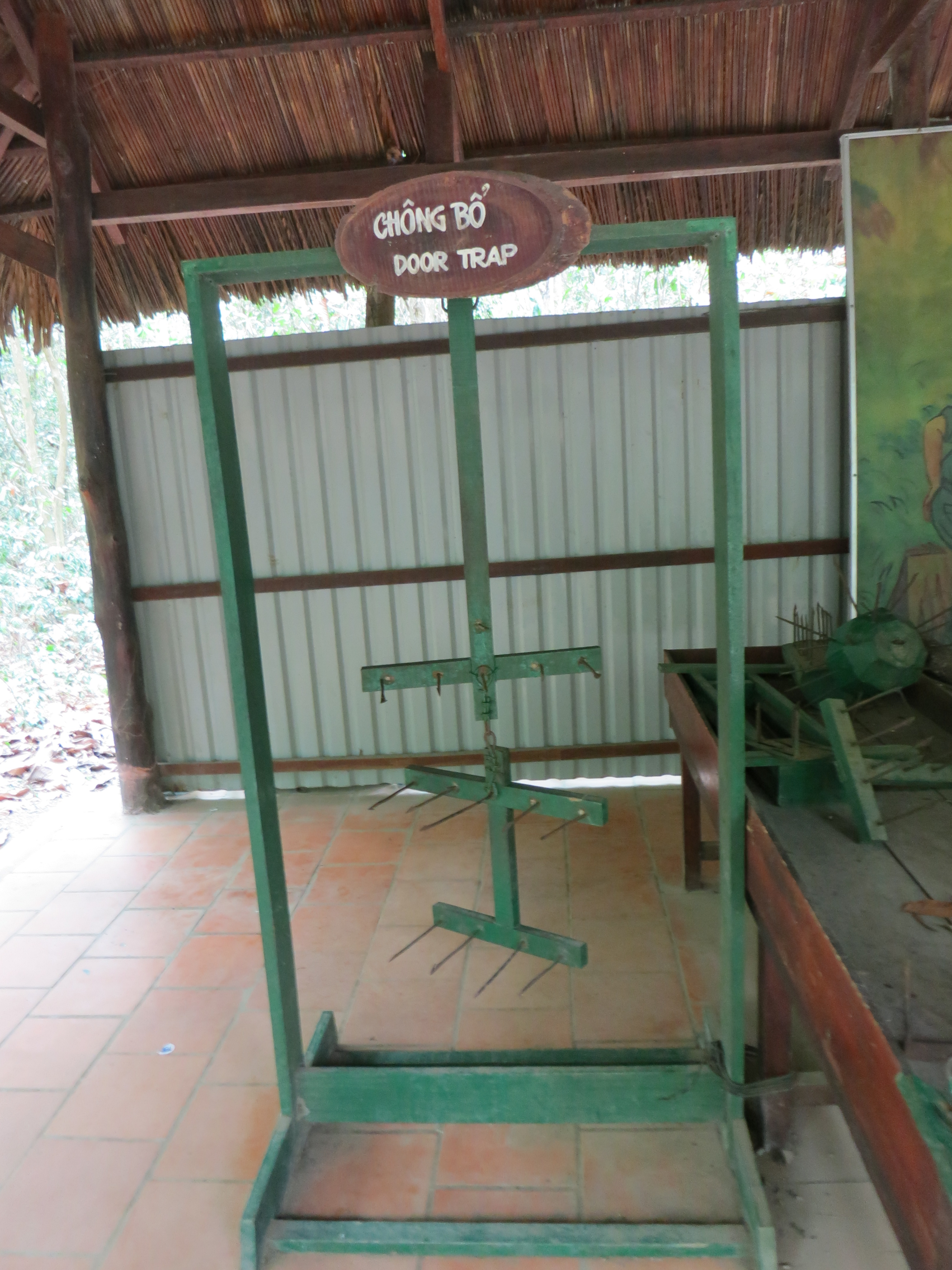
The Viet Cong set up many traps in the area–tiger traps armed with sharpened bamboo sticks, door traps studded with iron spikes, swinging traps to take a man’s leg off. At the park today, they have a row of the traps set up, and park employees walk solemnly down the row, poking at each trap with a long pole to set it off. We heard the bang! bang! from the shooting range nearly the whole time we were on the tour, which was disconcerting but I suppose actually gave some sense of realism for what it was like.

A tiger trap

A tiger trap

Used on doors in the area: US troops would kick in the door, and this would swing out at them, stabbing them with spikes

Used on doors in the area: US troops would kick in the door, and this would swing out at them, stabbing them with spikes

The original tunnels were too small for Westerners, so they’ve built enlarged tunnels for visitors, but our guide warned us that even these are too small for some. I could go down, he told me, but come out at the first exit; the tunnel gets progressively smaller and I’d be stuck if I tried to go to the third exit. With that cheery news in mind, I descended. I’m mildly claustrophobic, so I considered not going down at all, but I wanted to see what it was like, even for a little.

I'm smiling because I haven't gone underground yet

I’m smiling because I haven’t gone underground yet

The tunnels keep going down

The tunnels keep going down

What it was like was scary. I started crouched down and walking, but that was too constricting, so I ended up crawling. The walls were tight and there was a little light at either end, and I could hardly imagine it half its size, immersed in total darkness. Not to mention the vermin and insects that lived down there with the soldiers and families. I still shudder thinking about being down there.

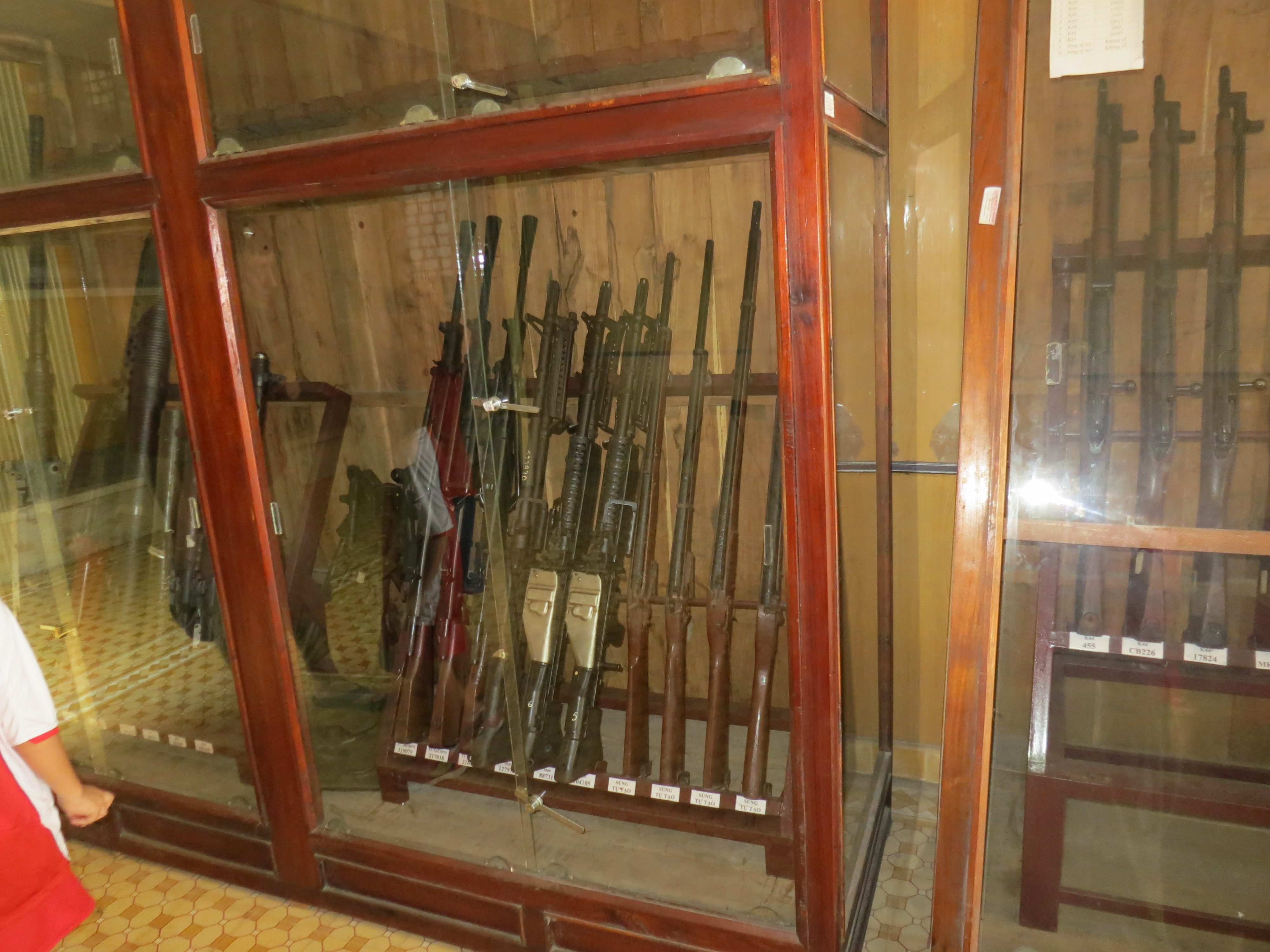
A lot of weapons on display at the end of the tour

A lot of weapons on display at the end of the tour

At the end of the tour of the park, there was a video, more like a work of art in the field of propaganda actually, on the tunnels and the Vietnamese who dug them, cooked in them, slept in them, ran dangerous missions in them, and made them their home for as long as it took until it was safe to come aboveground again.