Guest Post: Running Down a Dream

I warned today’s guest poster, Ms. Sara OD, that if she did not give me a title for her post, I would make one up for her. As you can see, she did not give me a title, so we’re going with a Tom Petty song that does relate to the post but in a kind of cheesy way. Ah well!

I am pleased to introduce you to Ms. Sara OD, a veteran traveler and academic. She has lived in Germany and driven around Australia, and one time we hung out with some swans in Ontario. She holds a Bachelor’s in Philosophy and Psychology, with a Master’s in Religious Studies, and she is working on a Master’s in Library Science. So if you feel the urge to travel, she can find you reference books on where to go, while pondering the larger questions of why you might pursue such a quest and how that relates to your childhood, all with a delightfully understated sense of humor. Obviously, she comes highly recommended. Please enjoy her first post with us here at Stowaway, and be sure to show your affection/ask your questions/request wallaby pictures in the comments.

Running Down a Dream by Ms. Sara OD

The other day I was talking to a coworker about travel and he said something along the following lines: “A lot of people travel to find themselves, but it always seems to me more like running away.” At the time I think I nodded and let this comment slide, intent on going back to making lattes and omelets. But it didn’t sit well with me throughout the day (the comment, not the omelet).

As an avid believer in the transformative power of travel it shook me to think that maybe it was all a sham. It was like being told there was no Santa Claus by Janelle Morris in 1st grade the week before Christmas (this may or may not have actually happened… and Janelle Morris may or may not be a jerkface). I began to ponder the possibility that all the hype about “expanding one’s horizons” and “absorbing new cultures” and “eating stinky foreign cheeses” was actually a cover-up for our inability to tolerate a humdrum existence. Is travel really just a form of escapism? Are we using geographic variation and cultural discontinuity as an unguent for our overworked, understimulated souls? After looking up the word “unguent” I came to a conclusion: My coworker is an idiot.

Although no one would deny that part of the appeal of travel is “getting away from it all,” it also allows for some serious self-discovery. I’m not saying that every time you visit your cousin in Toledo you’re going to re-envision your place in the universe. Nor am I saying that, ala Julia Roberts in Eat, Pray, Love, we ought to romanticize the unfamiliar to the point of saccharine-induced nausea. What I am saying is that when we open ourselves up to certain experiences, certain fears even, we reveal bits of ourselves that would otherwise remain dormant. For me, fear is essential to travel. When we travel, we intentionally displace ourselves, both spatially and culturally. I imagine the thrill of travel is closely related to the thrill of watching horror movies. How much discomfort can I handle? How far can I push myself? How many more stinky foreign cheeses can I eat?

a wedge of Stilton cheese

the stinkiest of cheeses this side of France -- Stilton (photo from http://www.recipetips.com)

The semester I spent in Germany during a study abroad my senior year of college was one of the loneliest and most revealing times of my life. Although my language skills were advanced enough to allow me to competently order a sandwich, this surprisingly did not facilitate an effortless transition into German society. There was always a tangible otherness about me as I fumbled through the different arenas of German life. Everyday tasks became streaked with uncertainty. And to this day I don’t know why it’s necessary that German laundry machines have so many options.

About two weeks into the program there was a day that, like any other day, I was watching dubbed episodes of The Cosby Show. (Until you’ve heard Bill Cosby speak German, you don’t know the meaning of the word “disconnect.”) I decided I’d had enough of Huxtable family values and determined that this particular day was a day of significance. There was an unidentifiable weight to it. Although still not adept at public transportation, I stuffed my German dictionary into my backpack and headed off toward the train station with no idea of where I intended to end up. I don’t distinctly remember that walk to the station, but I do remember the overwhelming buzz of freedom. I remember embracing my solitude. I remember the abandonment of fear. I remember that I should have worn more supportive shoes. Our story ends rather lamely with our heroine going to see a movie in Hamburg (a mere 30-minute train ride away). This is a particularly lame ending given that the movie was The Hitchhiker’s Guide to the Galaxy. But poor adaptations of awesome books aside, the point is not that I wasted twelve perfectly good Euros, but that I reached deep down inside to waste those Euros. Going to see a movie stateside would in no way have tested me in the same way that going to see a movie in Germany did. Eventually I ventured beyond the movie theaters of Hamburg, but that experience will always stick out in my mind as the day I recognized something in myself that, until that point, had been obscured. Only once I experienced that sense of displacement was I able to find the requisite verve to see a truly terrible movie.

University of Hamburg campus from the river

Hamburg, Germany -- not a bad place to see a bad movie (photo from http://www.informatik.uni-hamburg.de)

I know our dear Lisa has discussed many of these themes before much more eloquently than I have done here. I know she has talked about the fear, the solitude, and the sense of self that travel instills in the serious traveler. And what it comes down to is not a cliché about “overcoming fear” or “becoming who you were meant to be,” but a real moment of the self confronting the self. So travelers, know that you are not running away — or at least not only running away — you are also running toward. Toward what is up to you.

The Least Stinky Fish: The Top 5 Ways to Be a Great Guest

Benjamin Franklin, founding father, scientist, author, diplomat, and turkey advocate, once said, “Fish and visitors stink after three days.” As usual, he gets it exactly right with this pithy pull quote. Whether you’re visiting friends or family, after three days of living in close quarters, sharing every meal, waiting impatiently for the bathroom, staying up later than usual, and all while trying to maintain your friendship, it’s very easy for the visit to feel less like a welcome break and more of a drag on both of you.

I’m stretching this principle to its breaking point this weekend, as I’m staying three full days and four nights with my friend Mike in Boston. So how can I make sure that when I get on the airplane to head back home, both of us will be planning our next get together and not crossing each other’s names out of our address books? I’m sure you will not be surprised to find that I have a list, dearest fellow travelers, and I’m sharing it with you!

The Least Stinky Fish: The Top 5 Ways to Be a Great Guest

1. Set expectations ahead of time. This hearkens back to my advice on hosting couch surfers; if you both know what you’re getting into, you’ll both have a lot more fun. Don’t think that just because you’re family or friends with your hosts, you don’t need to set expectations — sometimes they’re the ones you most need to have these conversations with, to make sure you’re all on the same page and feelings don’t get hurt. For example, I wrote Mike last week to say how excited I was to visit, and to warn him that my knee and ankle injuries have resurfaced, with two unfortunate results: 1) I am now the least fashionable person ever, as I dress in bright white walking shoes no matter my outfit, and 2) I walk slower than a sloth on a lazy summer day. Mike was sorry to hear about my injury, of course, and no doubt he will regret being seen with me and the Great White Sneakers, but he was happy to know this vital piece of information enough ahead of time to reconsider how we should get to the various places we’re going.

2. No matter how short the trip, set aside some down time. Don’t wait until you’re halfway through your second marathon day of museums, hikes, street food, wacky local mode of transportation, tourist attractions, and shopping to realize you need to sitdownrighthisinstantoryouwillpassout — plan for it. Sure, your schedule will be different than when you’re at home, but that doesn’t mean that you don’t need time to rest when you’re away, same as you do at home. (Younger folks than I, I promise this is not an old person talking, just someone who knows what traveling while exhausted feels like — not good.) You don’t always have to crash back at the house, either; find a nice park and take a nap or stake out a corner of a local café to re-energize.

3. Pick up the tab. Not on everything, mind you, but it’s a great reciprocal gesture to pick up the tab somewhere along the way. Don’t bankrupt yourself, but do what you can, whether that’s a whole meal, or a round of drinks, or even an ice cream cone. Of course your loved one is happy to see you, but they are putting aside their normal life and opening up their home in order to do that, so show them your appreciation by paying for some food or drink during your visit.

4. Research where you’re going, even just a little. Trips based on visiting friends or family are inherently different from trips based on visiting new places; your purpose is different, so the way you prepare and the way you spend your time while there is different. I’m not going to be doing a Great Sites of Boston tour this weekend — I’ll be doing a Hang Out in Parks and Have Drinks tour with Mike. But that doesn’t mean I can’t see some of this city. So I’m checking out a guidebook from the library, I’ve poked around on some websites, and I’ve asked Mike what he might want to sightsee. So far we are going to the Mapparium and taking a swan boat ride.

5. Plan for some solo time. This is sort of similar to #2, but it’s specifically designed to separate you from your host for at least a couple hours. One of the stinkiest things about visitors, I suspect Mr. Franklin would agree, is their tendency to stick to your side for the duration of their visit. Nothing smells good when it’s been that close to you for that long. You’ll both enjoy your visit a lot more if you set aside some time to do your own thing — write some postcards, buy some souvenirs, go to that one tourist attraction your host can’t bear to visit one more time. This gives your host time to tend to their daily lives and needs as well, and the end result is that you appreciate each other all the more when you are hanging out.

So voila! Those are the top five ways to plan a trip to a friend’s or family member’s house so that not only do you have a great time, but your host does too — and best of all, you get invited back.

Goodbye, “Wild Beasts and Dangerous Lunatics.” Hello, “Stowaway.”

Dearest fellow travelers! It’s time for a change in these here parts. Nothing too upsetting, I hope. But it’s time for a bit of rebranding, both political and aesthetic — a new name.

Political

I chose the name for this blog on a whim, picking a phrase uttered by a funny character in a beloved book (Talking to Dragons by Patricia C. Wrede). I was certain no one else would choose “Wild Beasts and Dangerous Lunatics” as a moniker, and more importantly, it met my strict requirement of not being sentimental or cutesy. It’s served its purpose quite well for the past several months.

But then I read this post on Feministe about how damaging it is to casually use “crazy” or “insane” or the like, and I decided it was no longer a good name. (Go ahead, read it, it’s real short and real good.)

Actually, I read that article once, said, “good grief, stop being so sensitive,” and carried on with my life. I figured, what’s wrong with saying those words? Everyone says it and no one means anything by it. You say “he’s insane” when the cute bartender doesn’t want to date your friend; you don’t mean that he is literally chemically unbalanced. It’s just an expression. If you start policing all your expressions, soon enough you’ll have none left. You can’t censor yourself into a box just because someone, somewhere — not even the person you’re talking to! — might be offended by it. This is a free country, for crying out loud.

Wait. Hold up. JUMP BACK. That sounds like… dear lord, I was sounding like people who tell me to shut up already about using “fag” or “slut” or any number of epithets. When you’re making that many excuses to simply not use a word that others find horribly upsetting, it’s time to take a closer look. What was going on here?

When I talk with people about calling some inanimate object “gay,” or making cracks about women being gossips/shoehounds/overly emotional, etc., I talk about the long-lasting harm done. You’ve probably noticed that gay people can’t get married in this country, and women get paid less than men for doing the same work, to use two examples out of a lot of possible examples. That’s not unrelated to the way we talk about gay people and women; it’s actually intrinsically linked. All of these little comments are part of a larger understanding that gays and women are less than. Of course we protest that we don’t believe that, we believe in equality; and of course we do, consciously. But subconsciously we see it as a known fact that gay men are effeminate, and that’s laughable, because who wants to less like a man and more like a woman? Gay men are lacking, our collective subconscious says, so our collective subconscious finds ways to treat them as less than. (We’re not talking about bigots and outright hostility here, because that’s a whole other thing.)

So even though you’re not talking to a gay person when you call your friend a fag, you’re making it okay to say that, to use people’s identity as an insult. This contributes to a culture that sees that particular identity as an insult and treats it as such, with legal, psychic, and all too often, physical punishment. (While we’re at it, using someone’s identity as an insult is the lazy way out, and it’s much more satisfying to pick on someone’s Backstreet Boys fandom or tendency to put their foot in their mouth anyway.)

What that is all leading to is this: I don’t understand how it feels to have a mental disorder and hear people casually talk about “lunatics,” but I bet it feels shitty. What’s more, someone’s written a piece telling me just how shitty it feels. In general, I don’t want to make people shitty, so I’m going to stop doing that. It might just be a quote from a YA book, but it says specifically “dangerous lunatics.” There’s plenty of cultural understanding of mentally disordered people as dangerous, unstable, volatile, literally “out of their minds,” rather than as human beings dealing with one more layer of living than non-disordered people live with. Stereotypes of “dangerous lunatics” just make it easier to stigmatize people, dehumanize them, shut them away in institutions and forget about them. I didn’t mean anything by it, but that doesn’t matter. Once you know the damage, fix it. For any readers I’ve upset with the title of my blog, I apologize.

I’ve basically tried to make the same points here that Cara’s Feministe post made, although hers is more succinct and coherent, so I strongly recommend you read it. She says at the end that you can continue using phrases you know others find harmful, but be aware that you’re choosing to cause others harm. If that’s a choice you can live with, carry on, but if it’s not, cut it out. Also, each and every one of the links in her post is worth reading, especially this and this.

Aesthetic

Once I knew I had to change the name, I had some trouble coming up with a non-“journey,” non-“life traveler” type name. But inspiration was right under my nose — the quote on the blog’s masthead, from the poet Roselle Mercier Montgomery. “Never a ship sails out of bay but carries my heart as a stowaway.”

Stowaway. It’s about travel, but with a sense of real adventure to it. Sneaking away from the life plan of career, domesticity, etc. Smuggling rough-edged politics into the stately ships of traditional travelogues. Finding the unknown corners of the usual modes of travel, approaching it from another angle. A stowaway is so eager to go someplace that they do whatever they can to get there. A stowaway doesn’t just yearn, she acts. I take that as inspiration and mission statement both.

So now I have a name much more in keeping with what I do here and what I hope to do all around the world. Join me!

Tourist Traps That Don’t Suck

Ah, the tourist trap. A danger well-known to the savvy traveler, and one best avoided. It’s usually a cesspool of gaudy, overpriced trinkets, loud fellow tourists and shopkeepers, and somewhere in there, a pretty pitiful excuse for a landmark. Whether it’s a pit stop on a cross-country tour or a planned part of the itinerary, a tourist trap is, to those of us saving pennies and looking for more than plastic souvenirs, a hellish place.

Except when it’s not.

Hear me out, dearest fellow travelers! I’m certainly not saying that I’m planning my next vacation around a day at Wall Drug or an afternoon in Times Square, but the fact is that this is a pretty fantastic world we live in, and in even the most commercialized of places, there’s usually something of real value. Most of the time, this is because the people working the place have some interesting facts to share about it or a friendly perspective on the local culture. As we know, it’s the people who make the difference in where we go and what we see when we get there.

But sometimes it’s the place itself that’s worth seeing, honestly. My best example is Navy Pier. This is a giant pier originally built in 1916 to dock cargo boats and the like, as well as some pleasure boats. It has since grown into Chicago’s #1 tourist attraction, with a giant Ferris wheel (modeled after the first one ever, which debuted at the Chicago World’s Fair in 1893), several theaters, restaurants, bars, and docking for many pleasure boats. It is generally considered by most Chicagoans to be a hideous place, only visited when clueless relatives are in town. It has an indoor arcade of shop after cheap shop, a nasty little fast food court, and low ceilings lit by glaring fluorescence. In the summer especially, the entire pier is overrun with screaming children careening all over, drunk parents yelling after them, and slouching teenagers forming impassable knots on the throughways. Everything costs three times what it does in the rest of the city, the lines go on for miles, and it’s not like it’s even a famous or historical site.

Navy Pier

Navy Pier: Not So Bad! (photo via americanrail.com)

But! There’s a lot of good stuff going on at Navy Pier, underneath that hokey exterior. In the past few months alone, I’ve gone on a delightful brunch cruise, seen Taming of the Shrew at the Chicago Shakespeare Theater, and watched the acrobats of Cirque Shanghai tumble across the stage at sunset. Granted, these were all made considerably more enjoyable because they were free or nearly free (thank you, friends involved in theater). But the fact that they were there at all is impressive. Sure, the cruise had a cheesy DJ, but the brunch was tasty, and you can’t argue against a turn around the harbor on a bright summer day. The CST does some fantastic shows (even Shakespeare’s most blatantly misogynistic number was acted and costumed well), and the acrobatics of Cirque Shanghai are quite literally breathtaking. Each time I met up with friends to attend these events, I grumbled about getting all the way over there (it’s a two-bus destination) and dealing with the crowds, but once I got there, the crowds weren’t so bad, and the shows and rides were totally worth it.

There’s a lot of neat stuff packed onto that pier, and I’m now less likely to dismiss it as a whole. Some people might call that personal growth. I just call it application of advanced travel skills. You too can learn these skills of finding the fun and interesting wherever you go, and apply them to your own tourist traps.

So tell me, what tourist traps do you know of that don’t suck? Which ones have hidden gems and specific times to go? Which ones would you recommend (even with qualifications) to friends and visitors? Let everyone know in the comments!

Share the World: The Suggestions Page

Hello, dearest fellow travelers, and welcome to a short post that is INTERACTIVE. Exciting! In the 6+ years I’ve been planning this trip, I’ve received numerous suggestions from many people on specific places I should visit, restaurants I should eat at (or at least food to try), and bedbug-ridden hostels I should absolutely avoid. I welcome all of this advice; I’m fortunate to know so many people who’ve traveled and lived abroad and who have insight into what to do and where to go in places as diverse as Tibet and Cape Town. But it’d sure be helpful to have all that advice in one centralized spot.

Lucky for you and me both, I’m brilliant, so I’ve put together a couple tools to aid in this venture: the Suggestion Box and the Google Map. Head on over to the Suggestion Box (which is now the first tab at the top of the page, on any page on the blog) and leave a comment with tips on what to see, where to stay, etc., and then go to the Google Map and mark the spot. Now I can keep track of all these great suggestions, and when I actually go on my trip, I’m going to mark out my route on the map too, so you’ll be able to see where I go and how I get there in just about real time.

Here’s an example of what the map looks like so far:

See? It’s all bare and sad, with just a few sights and sites, and not a single eatery to be found. Don’t let this map continue in this way — adopt it today and shower it with love and helpful icons.

Suggestion Box: https://lisafindley.wordpress.com/suggestion-box/

Google Map: Lisa’s World Trip 2012-2014: http://maps.google.com/maps/ms?ie=UTF&msa=0&msid=110828102940815708391.00048a592ae072ccc0b8e

Guest Post: 3 Easy Steps to Becoming a World-Class Postcard Correspondent

Dearest fellow travelers, please join me in welcoming to these pages one of the great comic writers of our time, a dear friend of mine and world traveler in her own right, Mlle. O’Leary. She has lived in Venice, New York, Seoul, and northern Ohio, and she’s traveled all over, from Dublin to Tibet. She’s a skilled postcard writer and the perfect person to guide you all in that dying art. Here we go!


vintage postcard from Chicago

Postcards: mini works of art


You’ve set the itinerary, you’ve broken in the backpack, you’ve burned any necessary bridges and left for adventures in greener pastures. You’re doing amazing, interesting things every day. Or maybe you’re doing the same old shit only now you’re doing it abroad! There is one thing you should seriously do when you travel and rarely does anyone think to do it. You should send postcards. You don’t, do you. But you buy them right? Ask yourself this: do you hand your written postcards over to your friends after coming back home, maybe with their first name written in the address column? If you answered yes, you are a terrible person. Yes, you are. Your friends hate this and they just put up with three weeks of your mass-emails. Stop it.

This post is part appeal, part advice on the plight of the postcard.  It is easier and easier to send an email out to everyone at once telling them that you are still alive, now broke and loving life. So with the internet in a growing stage of ubiquity, postcards seem more and more like an afterthought. A hassle. But they aren’t. Postcards are fun. They are timeless. More to the point: they are quick, or at least they should be. There are five things you need to write and to send a postcard: a postcard, a stamp, a pen, an address, and a message. Of these five things, three hinder sending the most. Here is some troubleshooting advice:

1. I don’t have stamps/didn’t get them/don’t know where the post office is (and similar iterations)

Get your stamps immediately. Even if you’re going on a huge hike or a crazy long train ride you will be in a major city before and after. Yes, this will take a little effort on your part but that’s part of the fun (see below). Many airports have post offices within or just outside customs (I believe this is the case with Greece’s airport). Other countries have dual Bank & Post Offices, making it a great catch-all: grab some currency, buy some stamps, spend the rest on beer. Kiosks are a great place to inquire for stamps, if you really have an aversion to post offices after your cousin was shot by a mail carrier. By picking up stamps ASAP you can write and send your postcards out at whim, which is the whole essence of the postcard.

2. I forgot your address

You planned the trip, right? Make ‘addresses’ part of that to-do list. Get the ones you need and keep them handy at all times. Some write them all in the back of a travel journal. Others fold up loose-leaf paper and stash it in pockets or carry-on. Tattoo street names and zip codes on your partner’s arm (always ask first). I used the Contacts feature on my iPod while traveling. Find a method that works best for you. If this falls through, depending on your country of choice, you are bound to have internet access at some point. Send an email to your desired recipient. I would much rather receive that email than another link to your Flickr account (a photo’s worth a thousand words but that don’t mean I can cash in on it).

3. I don’t know what to write

It’s the size of an index card. What did you eat today? Cobb Salad? Was it good? Did you find it weird they serve Cobb Salad in Bangkok? There, you’ve used up all of the space without even remarking that maybe you should have ordered Pad Thai. Focus on one cool/weird thing and you’ll send your friends postcards without sentences like “the weather’s really great!” or “I’m really enjoying seeing everything.” Which means you’ll be sending your friends really wonderful postcards! See? Easy.

It all boils down to accessibility. Keep everything in reach, always: stamps, postcards, addresses, pens. This makes it easier, which makes it stress free, which makes it fun, which makes you do it more frequently, which makes it easier. And then your friends won’t think you’re a dick. They will know you’re a good person.

The fact is that postcards – and ­sending postcards from their place of origin – are invaluable to the travel experience. Postcards can be your MacGuffin to hilarious antics. They can force you to learn more than “Hello!” and “Bathroom?” They can push you off the major tourist circuits: rather than stopping by the souvenir stores around major sites, seek postcards out in old bookstores, quirky shops, even grocery stores. And then look around. Chat up the proprietor. You might make a friend. You might find your newest favorite place in the world. You might even walk out with better postcards. If you’re taking any excuse to seek out undiscovered places, why not the excuse to write to your friends?

Maybe you’re somewhere without a recognizable writing system. Or maybe you’re in a land that missed out on the Indo-European fad (Magyar, I’m looking at you!). “How much are stamps?” isn’t the first thing you’re going to learn in a new country, which will make you seem that much more impressive. Ask a local to teach you some phrases. Hell, go all out:

“Are those the most interesting stamps you have?”

“Who is that man? Why are you honoring him? Oh that isn’t an honor?”

Sure, you’re bound to screw up but you only stared learning the language at the airport. Give yourself a break and keep at it. Remember: English is becoming the dominant language across the world. These exchanges might be a dying breed if you don’t make the effort. Take advantage of every opportunity. Even by asking for postcards.

You will also LOOK COOL writing postcards. There is only so long you can spend looking pensive in front of your Moleskine and that’s twenty minutes. This is a great way to unwind, take some deserved downtime. If you’re traveling alone, bring them to dinner. And yes, you will look cooler with a stack of postcards in front of your meal than your diary. Come on.

There used to be a tactile sense to our correspondence. Now, hardly anyone writes letters. People write postcards if they write at all and as more people forget to write postcards, the intimacy that comes with physical mail becomes more endangered. But the postcard comes with its own type of intimacy: with its limited space, the postcard asks for a snapshot of the writer’s feelings and for that moment, that second, the writer thinks only of the recipient, with no expectation of receiving anything in return. Unlike a letter, a postcard is not expected to have a return address. There’s no room for it. There’s no immediate way to respond in kind. The postcard exists solely for the recipient’s pleasure. That is what makes postcard sending so beautiful. Go send a few today.

**********************************************************************************

Keen to start writing postcards? Not going anywhere for a while? Maxed out your friends’ patience? Try www.postcrossing.com. Get mail from strangers, but not like that.

Milwaukee = Beer. Also, It’s Pretty.

Let’s try something new. I’m going to write about visiting an actual place, not just the preparations to go there or the abstract ideas about going there. One of my goals with this blog is to produce travel writing that people actually want to read. Not just a dull recitation of facts or a trite realization that underneath our differences, we’re all the same. Or at least I won’t go that route unless totally necessary. Like, if everyone I visit takes off their human suit to show me their identical alien bodies, then maybe I will concede that underneath our differences, we’re all the same green Martians. But I hope it doesn’t come to that. Anyway. Milwaukee.

MILWAUKEE, WISCONSIN, USA

Length of Trip: 12 hours

Traveling Companions: Sessily, T & K

Method of Transportation: car, walking

Money Spent: brunch — $16, brewery tour — $7, gas money — $5, fancy pants dinner — $40, TOTAL — $68

Sites Visited: Pabst Mansion, Comet Cafe, Lakefront Brewery, lakefront and Milwaukee Art Museum, Roots Restaurant and Cellar

Unless you are heartbroken, good weather improves any situation. If you are heartbroken, good weather is only proof that the entire world is doing better than you are, and is happier for it. But if you are feeling grumpy, or frustrated, or even morose, a good dose of sunshine and blue skies will work away at your discontent until you give in to a more favorable outlook on the world around you. And if you are already happy, and with friends, and traveling to a new place, then good weather makes your friendship seem stronger and the visited city more hospitable. Directions are easier to follow, wait times seem shorter, and food tastes better.

How fortunate for us, then, that this past Saturday was absolutely gorgeous — 80 degrees and sunny. Milwaukee being on Lake Michigan, there was even a breeze floating through town that cut the heat just the right amount during the early afternoon. Milwaukee has a nice set-up along the lakefront, with a lot of wide paths, public art, and bikes and things for rent. T said he wanted to just look at the outside of the art museum, and I thought that seemed a bit pointless until we came upon it:

Milwaukee Art Museum -- the ship sailing into Lake Michigan

Milwaukee Art Museum -- the ship sailing into Lake Michigan

That art museum wants to go sailing on Lake Michigan, and I want to join it. How delightful would it be to cruise around the expanse of blue while touring the fourth largest collection of Georgia O’Keeffe paintings contained in one museum in the country? Answer: very. (See how I snuck in that fact there, despite previous promises to stay away from such things? But it’s a cool fact, you like having it, don’t lie.)

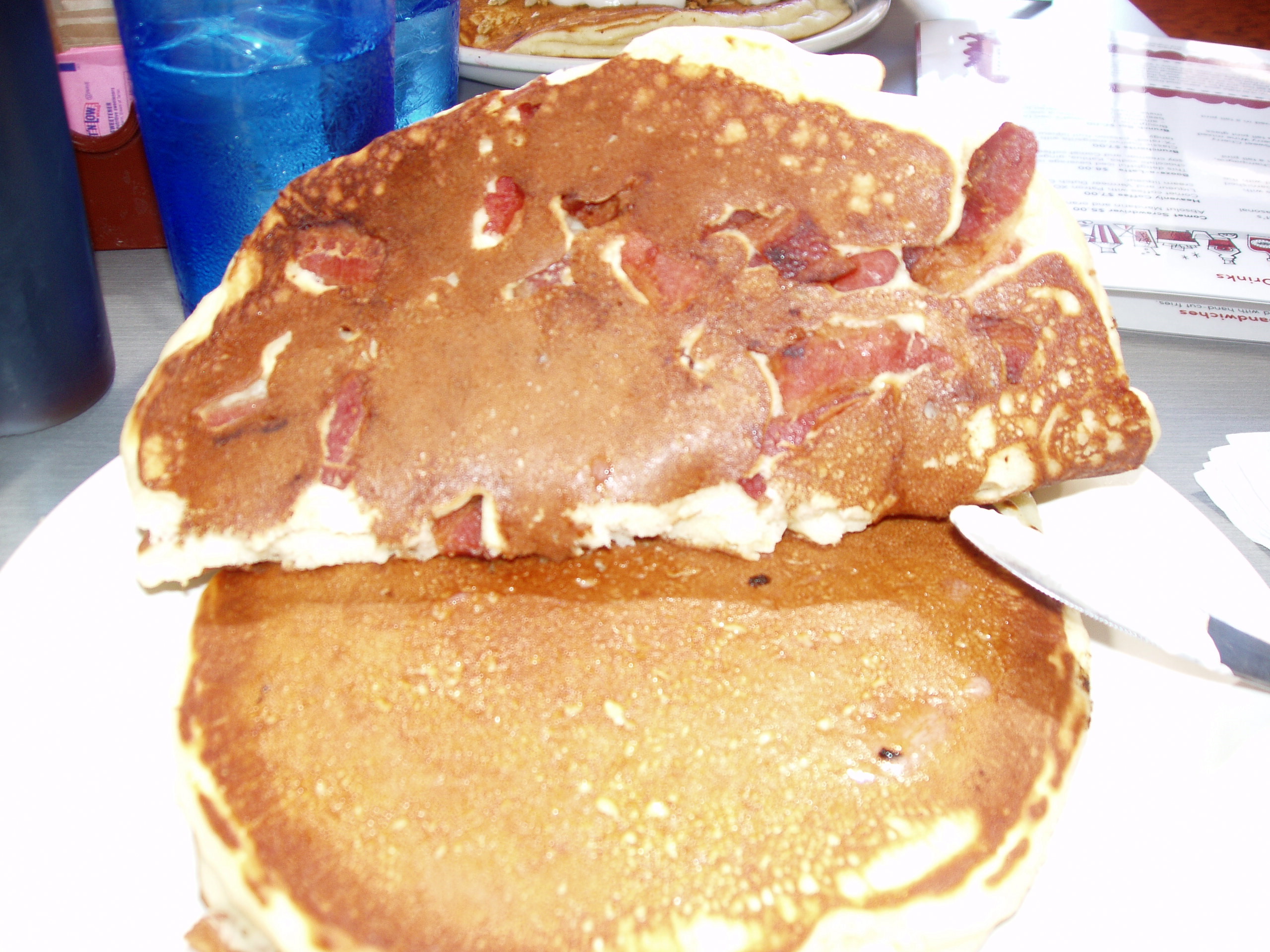
In the interest of full disclosure, I should inform you that the Milwaukee lakefront really is beautiful (just look at that photographic proof), and the day really was lovely, but that I possibly found them even more so due to the fact that I had a fair amount of alcohol throughout the day. In the city of PBR, Miller, Schlitz, Old Milwaukee, and several craft breweries, are you surprised? I accompanied my delicious brunch of BACON PANCAKES (yes, they mix the perfectly crisp and juicy bacon pieces into the pancake batter and it is as good as it sounds) with the equally delicious Brunch Box, a beermosa with amaretto and Guinness mixed in. Beermosa, you say? Why yes, mix up some orange juice with a white beer and you have yourself a fine drink. The other ingredients just perfected it. (Thanks to Nick at Comet for inventing this drink.)

BACON PANCAKES thank you, Comet

BACON PANCAKES + maple syrup = brilliant

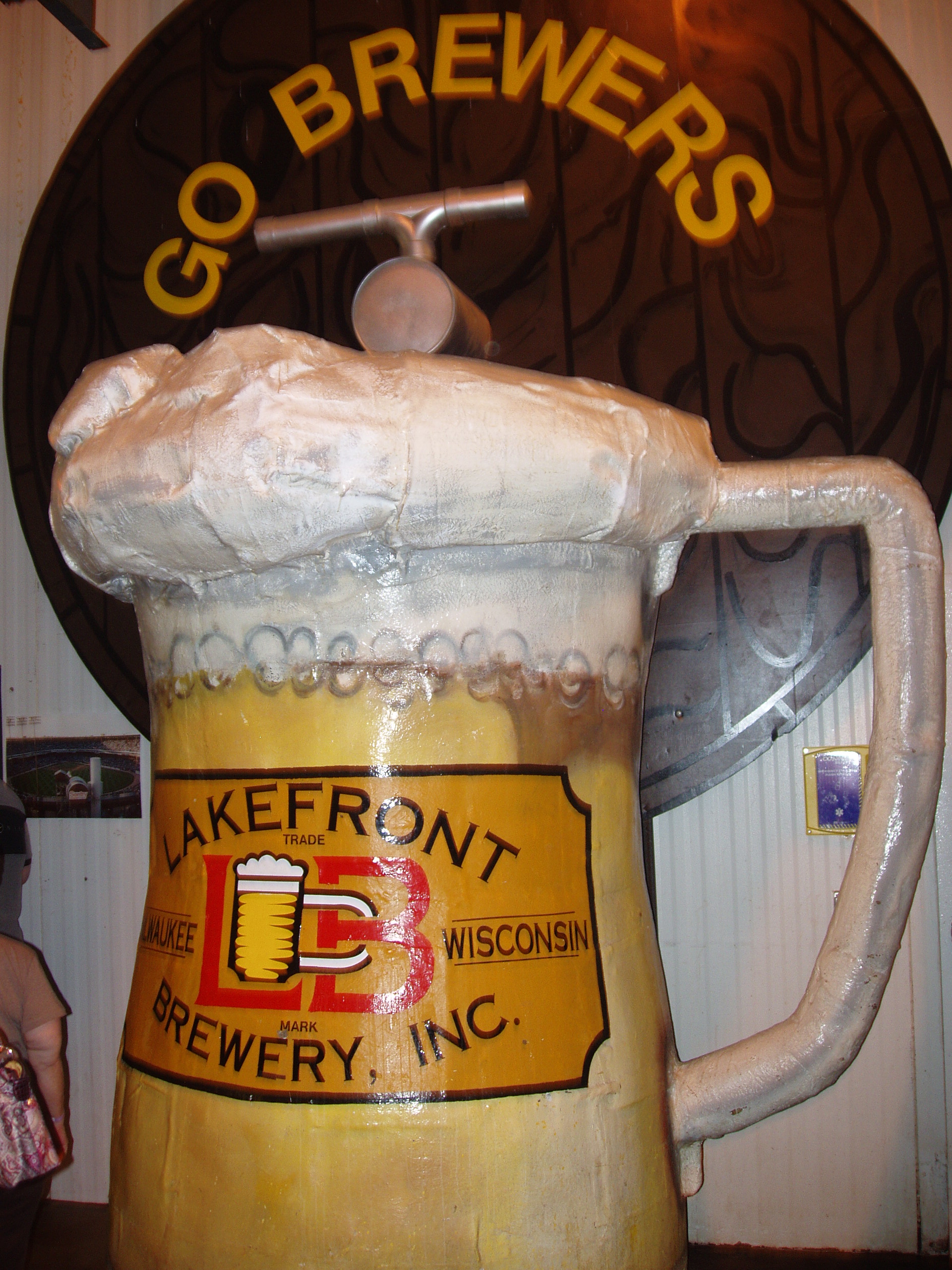
After this very good start, we went to Lakefront Brewery and got the best deal for my money in a long while. Seven bucks got us: a tour of the brewery, a souvenir glass, access to the riverfront deck, a coupon for a beer at participating bars in the area, and four 6 oz. pours of beer right there on the premises. I did learn a couple of things about the brewing process that I’d been curious about (what are hops? oh, that is the actual name of the plant that they take the flower from to add to the beer, etc.), which previous attempts to clarify by half-coherent friends at loud bars had not satisfied. We all made sure to try every beer available on tap, and shared our samples with each other. Everyone else enjoyed the Riverwest Amber, and while that was quite good, my favorites were the Fixed Gear (I guess the hipsters in my neighborhood affect me more than I thought) and the Rendezvous (a French Ale, they said, which seemed to mean close to a Belgian). The entire experience was only made better by the presence of a bachelorette party made up of women of all ages in the most ridiculous fancy dresses they could find. I’m talking 80s prom dresses, a Snow White/Belle from Beauty & the Beast hybrid, and a lot of tulle. I didn’t take any pictures of them, but here’s a picture of the giant beer mug that the Milwaukee Brewers mascot used to jump into (via slide from his game-watching balcony) every time the Brewers scored a home run. The mug is now housed at Lakefront Brewery:

Brewers mug at Lakefront Brewery

have some beer

While on our 3rd pour of free beer, Sessily, T, K, and I got into a discussion of perception and reality. No, it wasn’t a faux-deep “we’re all just specks in the universe, man” conversation. T said that he couldn’t remember the last time he was surrounded by so few hipsters (we live in Logan Square, an area of Chicago pretty well known for its trendy bicyclists), and we all agreed that yes, our fellow brewery tour participants were far more likely to attend sporting events than art-noise concerts, shop at The Gap rather than thrift stores, and hold a steady 9-5 instead of a part-time cafe job. (Please enjoy today’s edition of Stereotypes: Making Your Point Faster Than Truth Can.) Anyway, I said that Milwaukee has been voted drunkest city in the nation, and it’s a city of industry besides, so it’s got a reputation for being coarse, a little rough and tumble. In fact, most of the Midwest is probably seen in those terms by outsiders, I said. K, who is from Portland, Oregon, countered that he’d never thought of the Midwest in those terms; rather, everyone on the West Coast assumes the Midwest is full of unfailingly polite, boring types. True, I said, outsiders have that mostly insulting view of rural Midwesterners, but if you mention Chicago, St. Louis, or Milwaukee, they’ll tell you to watch out, those are dangerous places. Sessily pointed out that rural Midwesterners contribute to this idea of the cities being especially dangerous and shady, so the cities get it from all sides. (Also, now that I think about it, I’m not sure why I lumped in Milwaukee with those other two — does anyone think of Milwaukee as dangerous? Probably not. Sorry, Milwaukee. Please continue to give me beer.) It was an interesting discussion of how we see ourselves, how others see us, and how those perceptions affect the actual place we live.

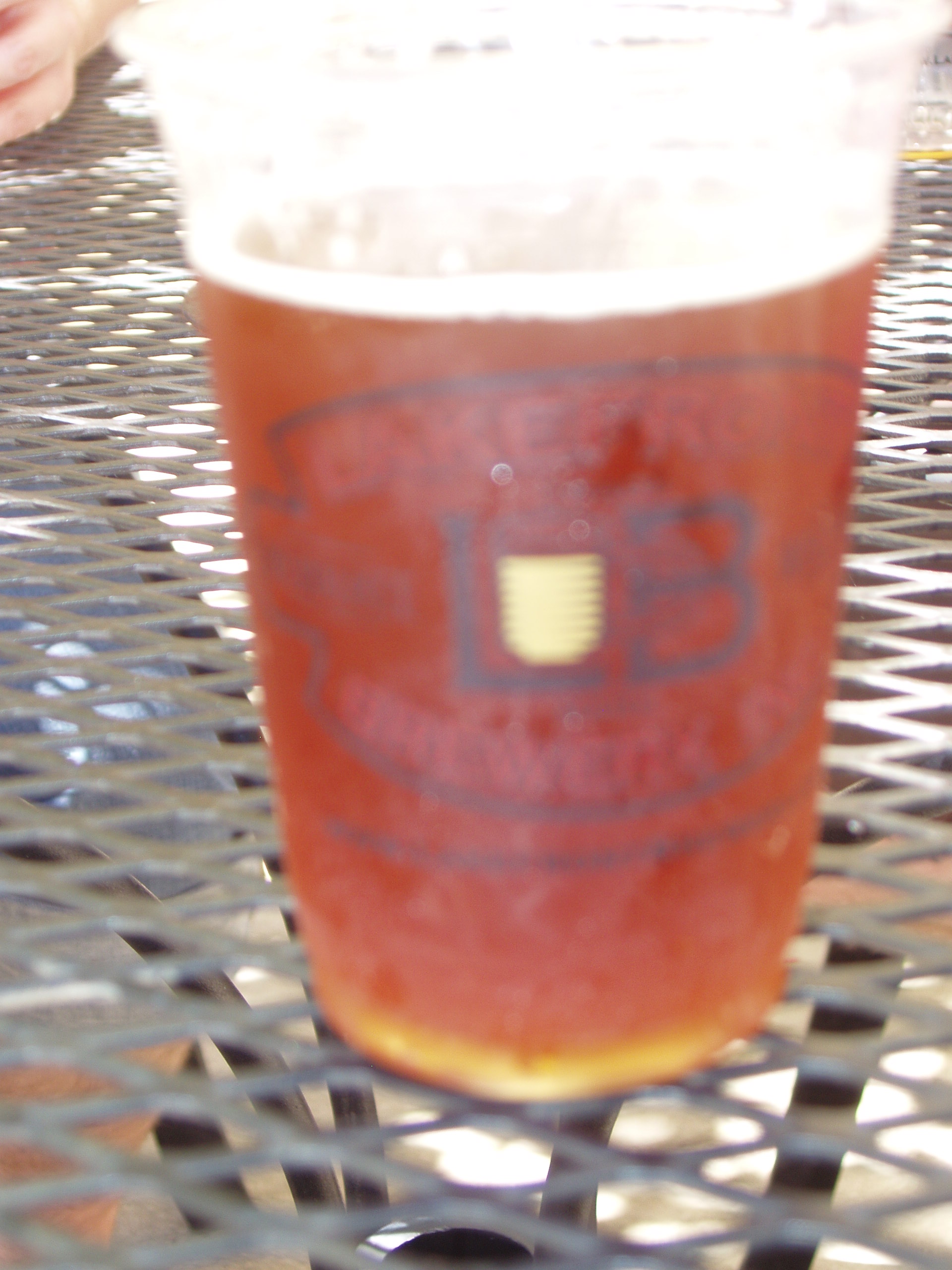
We only day tripped to Milwaukee, and there’s a lot more to see, so I plan to be back sometime this year. But I can already say that the parts of town I saw were lovely, and the people, yes, were friendly. My takeaway, though, comes back to that delicious barley-and-hops concoction, beer. I was passing through the brewery gift shop, and a woman was trying to trade in her plastic taster cup for the souvenir glass. “Not til you finish your drink,” the gift shop attendant said. The woman looked warily at her almost-full glass. In other cities, maybe she would have been shown mercy. Maybe other cities would offer her as much time as she liked to finish it. But this is Milwaukee. This is The Nation’s Watering Hole. This is beer. The woman’s friend turned to her and said:

“This is Milwaukee. Slam it.”

Lakefront beer

This is Milwaukee. Slam it.

History is Not Inevitable — and That Matters for Today

History is not inevitable. Perhaps this is something they go over with history majors (although I will say I never encountered the idea in the several history courses I took in college), but for me and I think for the general populace, it’s an unusual idea. After all, events unfolded the way they did and now we are here, so how could it have been otherwise? It’s like a kind of Q.E.D. — it happened, therefore it is proven; it happened, therefore it must have been meant to happen. I know that this shows up in several religious schools of thought, like determinism in Christianity, and also in general ideas about fate. But it’s a poor approach to history.

This way of thinking sees history as static, and usually consisting of political, military, and economic events rather than a synthesis of these with social, religious, artistic, and scientific events and movements. But history is a living, breathing thing that we are creating right now. If we view ourselves as not only part of the history we know but also the part of the history future generations will learn about, it becomes easier to see past historical events as not inevitable or fated, but part of a series of individual and communal decisions made in constantly shifting circumstances. That’s not to say that I can quite wrap my linear-focused brain around the Australian Aboriginal concept of Dreamtime (in which you are here now but also in the past and the future, all at once) or the physics concept of nonlinear time. All that fluid space and time is nifty but makes me dizzy. But I can grasp the interlocking moments, motivations, and actions that make up our history, as opposed to the clear-cut line from Cause A to Effect B.

Understanding history as more complex than a straight series of inevitable events is crucial to understanding the ways we interact now — legally, socially, personally. For example, the colonization of New Zealand by the British is often seen as something that was bound to happen. The British had more efficient killing machines and more of them, they had thousands more people to populate the land, and they had the backing of an entire empire. But even if colonization were inevitable, the way it happened was drastically different from, say, the colonization of Australia. The British imported convicts to Australia and swept aside the Aborigines as if they were only a small obstacle to populating a continent, rather than the original inhabitants of that continent. In New Zealand, however, they found the Maori not only ready to fight for their land (as many Australian Aborigines were), but organized in a way the British could better understand, with recognizable leaders and specific land boundaries. So the British decided the Maori were more advanced than the Aborigines, and much more likely to respond well to being “civilized.”

Because the British saw the Maori as more civilized and basically more human than the Aborigines, they gave the Maori more consideration when taking their land, and that different historical approach has repercussions today. Unlike Australia, which was declared terra nullius (“empty land”) despite the very obvious presence of Aborigines, the British negotiated for land sales with the Maori of New Zealand. The Treaty of Waitangi was signed by the Pakeha Lieutenant-Governor and most Maori chiefs on February 6, 1840. The document was written in English and immediately translated so the Maori could know what they were signing, but the translation has some key differences from the English version. Notably, the treaty states that New Zealand is part of the British Crown, and only the Crown has the right to purchase land from Maori – or at least, one version states that. Another states that the Crown does not have this right of pre-emption. All versions were introduced with Lieutenant-Governor William Hobson stating, “We are one people.” As Philippa Mein Smith says in A Concise History of New Zealand,

Did ‘one people’ mean all the same, including one law, which in British thought meant civilising and assimilating Maori? Or did it endorse the idea of a new community of Maori and Pakeha, two ethnic groups henceforth defined in relation to each other? (p. 47)

Did the treaty mean Maori chiefs were giving up their sovereignty, or did it mean they were ruling alongside the British monarch and Pakeha governor?

These questions reverberated through the next century and a half, as first the Pakeha poured into New Zealand and bought up Maori land at ridiculously cheap prices (after the Crown bought them at even cheaper prices; an insulting way to get around that provision of the treaty) and later Maori asserted their land rights and citizenship rights. The Waitangi Tribunal in the latter half of the twentieth century resulted not only in recognition of Maori as an official language of the nation and the recognition of the importance of environmental considerations in indigenous rights, but in actual money settlements for breach of treaty (p. 231-236). Central to the arguments for money settlements and land renegotiations in the 1980s and 1990s were questions of not just what had taken place in 1840 but what kind of future both Pakeha and Maori were envisioning when they signed that treaty.

I find it fascinating that the New Zealand national government actually had a public discourse about what its intentions had been 150 years previous, and what effect those intentions and actions had on its citizens subsequently. The government recognized a breach of treaty and redressed that breach to the descendants of the wrong party. It’s all very proper Western legal action, but it’s also a bold step in acknowledging history as a living thing with no inevitable outcome and no fixed endpoint. Just because New Zealand is now a part of the British Commonwealth and overwhelmingly run by people of European descent doesn’t mean that that’s how it has to stay. Maori have regained some fishing and land rights, and they have also gained seats in parliament due to proportional representation measures, so they have more of a voice in the shaping of history going forward and not just looking back. Asians, instead of being legally shut out of the country and considered a threat to New Zealanders, are now being welcomed and encouraged to settle in New Zealand.

Certainly New Zealand has its share of bigots and racist policies, but I do find it heartening that a country that had a strong “White New Zealand” movement for decades (much like the “White Australia” movement that has unfortunately not died out as quickly it should) has made conscious efforts to not erase that history but to repudiate it and build a better one. Of course, it took the tireless efforts of thousands of ordinary citizens, activists, and politicians to bring about these changes, and I find that even more encouraging. The more people recognize history as living and evolving, the more we can build a just and peaceful history for ourselves and those who come after us.

Use It or Lose It

I’m about a third of the way through Philippa Mein Smith’s A Concise History of New Zealand, and I’m starting to get the hang of some of the words she’s using. Mein Smith carefully uses Maori words for Maori objects and concepts throughout the book. She includes a glossary in the back, but once she’s explained it once in the actual text, that’s it, you have to remember what it means or constantly flip back to see what she’s talking about. This shouldn’t be hard, of course; many books introduce unfamiliar English terms and don’t re-explain them later, and I’m pretty easily able to file that new vocabulary word away in my brain and apply it to the reading at hand. But non-English phrases always stump me. My brain takes extra time to process them, even after a clear definition, so that I really am constantly flipping back to the glossary to see what she’s talking about. I find it frustrating to have to do this, but it is actually getting less frequent. I can remember now that “waka” means “large, ocean-going canoe” and “Pakeha” is the word for “white people of European descent” in the Maori language. I know that the more I think of these words themselves instead of their translations, the more I’m actually understanding the text and the culture it’s describing.

Language is hugely important in understanding anything about ourselves or others (and to some, it’s the only thing that matters at all, depending on how committed to language as sole meaning you are, but that’s a discussion for philosophers and English majors). To use the language of the people you’re learning about is to get a better sense of the nuances of words and the layers of meaning in each phrase. For example, as Mein Smith points out, the Maori weren’t Maori until the Pakeha arrived. It took the arrival of a whole new set of people to necessitate the construction of identity in opposition to (that doesn’t mean conflict with) the newcomers. So we get Maori and Pakeha, and Pakeha is different from Europeans. “Pakeha” implies intrusion, late arrival, strange new customs. “Europeans” implies Old World, civilization, explorers. “Europeans” may be the appropriate word in certain portions of histories, or in histories that don’t involve the Maori at all. But for Maori-Pakeha relations, “Pakeha” is the appropriate word to use. This repositions us, the American readers and travelers, from an outsider’s perspective so that we’re in New Zealand, with the Maori. This isn’t to say we suddenly become insiders and get to talk about the Maori as our brothers and sisters — that is just appropriation. But it does mean we get closer to understanding this point of view, this way of seeing and discussing the world, and that is a key part of travel.

I’m pretty bad at learning languages, but I’ve always wanted to be fluent in more than one. I want to be able to communicate with people in their language, to get their jokes and idioms, to see the world without translation. I don’t see myself becoming fluent in anything any time soon (although I do keep trying French), but I can learn a few words of the language everywhere I go. Saying “please” and “thank you” can seem like the lazy American’s concession to culture, but it doesn’t have to be. It can be a very real way to show respect for those you can’t understand, and a simple attempt to show appreciation for the communication you are having — be it through a translator, with gestures and pantomimes, or with their own knowledge of English.

Whether in a book or in a real life conversation, if you can use a word from the relevant language and use it with a good understanding of its many meanings and not just a word-for-word translation, chances are you’ll gain a better understanding of the culture that uses that language. Use it enough times til you’re comfortable with it, and then there’s no need to get lost in translation.

Film Club: Whale Rider

Dearest fellow travelers, come with me to the beautiful coastline of New Zealand, where we’ll cover some Film Club and some A Country a Month at the same time. Whale Rider is a 2002 film directed by Niki Caro, from a screenplay by Caro and Witi Ihimaera (who authored the book it’s based off of). Several people recommended this film to me, telling me how much I would enjoy the story of a young girl overcoming a thousand years of patriarchal rule to become the next leader of her tribe. This was an accurate prediction on your part. Whale Rider is a lovely movie.

Whale Rider movie poster

Whale Rider movie poster

Paikea is named after the legendary Maori figure who rode on the back of a whale from the homeland of Hawaiki to reach Aotearoa (the islands of New Zealand). Pai is a delightful 11-year-old who adores her crotchety old grandfather, Koro, the chief of the tribe. Yes, there is some of that well-worn gruff old man with a soft spot for a precocious young child — a tiresome cliché that flattens out both characters in many films — but it’s kept from getting too sentimental because Koro really does resent Pai for being a girl instead of a boy and thus unable to assume leadership of the tribe. Throughout the movie, he has many opportunities to relent and acknowledge her as his heir, but he refuses right up until the end. He does love Pai but says several cruel things about her and actively keeps her from learning the rites of chieftainship. She loves Koro but consistently disobeys his orders to keep her place as a girl. It’s more painful to watch a film like this, because the characters are acting more like real people than characters in other movies, and real people can be pretty awful to each other, but that’s what makes it so great, and also what makes the eventual reconciliation much more meaningful.

Another thing I liked about the movie is the film’s and Pai’s refusal to make her a saint or ideal. Koro is searching for a prophet to lead his people out of the troubled times they find themselves in (encroaching crime and drug use). Pai knows she is the next leader of the tribe, but she also knows she is no prophet. She is a gifted, sensitive girl, with a strong link to her ancestors and the natural world that her community lives in, but she is not superhuman. She doesn’t want to be a savior; she wants her whole community to come together and bring themselves out of the bad times and into a brighter future. How rarely do films, books, or even real life leaders express this wish? We are so accustomed to looking for saviors (and that’s not even counting religious figures) who will make everything right that we miss countless opportunities to fix our own problems and improve our own communities. Pai knows that the only way to be a strong group is to work as a group, and we see a beautiful illustration of that communal effort at the end of the film, when she leads a giant waka (Maori canoe) full of her neighbors into the sea as part of a celebratory ceremony. We need leaders who know how to bring out the best in us, not saviors who bring the best to us.

And yes, that happens to be my political philosophy. Heroes and saviors make great action figures and film stars, but they rarely make great history without a strong community to build on their vision. Whale Rider shows that truly humble people can also be compelling on the screen, and the numerous regular people in our lives working for a better world show how compelling they are in making history.