Do’s and Don’ts at Angkor

I went to Angkor, World Heritage site and location of dozens of ancient temples renowned for their architecture, carvings, and historical importance, in March of this year. I read up a little on what to expect before I went, but was still tripped up by a few things I discovered on the ground. Here’s my advice for how to visit the temples with minimum fuss and maximum enjoyment. Share your own tips in the comments!

Angkor Wat at sunrise

Angkor Wat at sunrise

DO:

Buy the 7-day pass for $60, if you have a flexible schedule and at least four days in the area. I bought the 3-day pass for $40, intending to use every day in full, but then I stepped outside and almost fainted from the humid heat (we’re talking over 100 degrees Fahrenheit every day). If I’d had the 7-day pass I could have done half-days in the mornings and escaped to air conditioning in the afternoons, but as it was I had to push on through the heat. I still didn’t fit in everything I wanted to see, so I had to buy a 1-day pass for $20 for my last trip out there. If I’d spent that $60 upfront, I’d have had more time in the park for the same amount of money.

angkor

Bring at least a liter of water to drink and plan to buy at least another liter while at the park. It is 40*C/104*F on a regular basis here.

Bring a bandana or handkerchief. You’ll use it as a sweat rag during the amazingly humid days, and also as a face mask during your tuk-tuk rides on the often dusty roads.

Bring snacks, and a full lunch if you can swing it. Unlike in town, no one’s pulling a food cart all over the parks, and there are just a few places where restaurants are set up. I got hungry climbing up and down the many stairs of the temples, and was glad of the fruit and granola I had in my bag. Of course, your driver will know of the perfect little place to take you when it’s lunchtime, and they all seemed more or less the same to me, so why not say yes and let him have his commission?

Plot your trip ahead of time. If you’re just going for a day and you want to catch sunrise and sunset at Angkor Wat and maybe see the Tomb Raider temple, then you’re fine and your tuk-tuk driver will have no trouble getting you to each place with plenty of time. However, if you have more time and want to explore the temples in more depth, work out with your driver ahead of time exactly where you want to go and in what order, and generally at about what time. My driver thought I would take less time than I did at each temple I went to, so he was surprised I couldn’t do his normal itinerary in one day, but I know I take a long time seeing sights, so I wasn’t surprised. I should have communicated better with my driver about timing, though, so that we both knew what to expect.

Bring a proper cardigan or long-sleeved shirt when going to Angkor Wat and Phnom Bakheng. I had a scarf to cover my shoulders as a sign of respect, which was fine at other temples, but at Angkor Wat and Bakheng I was turned away. I was told I needed to have a proper shirt–because a scarf is too easy to take off? I’m not sure what the reasoning was, but the guards were absolutely strict on this, despite there being no warnings about such rules at the ticket office or anywhere else, and as a result I never got to climb to the very top of Angkor Wat (yep, I planned to do it on my last day there, oops).

Plan more than one sunrise at Angkor Wat, if your schedule and sleepyhead ways can swing it. I only made it to one, and it was gorgeous, but I was torn between staying by the pond with the hundreds of other visitors to see the full sunrise, and scooting into the temple after a few minutes to explore while it was mostly still empty. I ended up doing the latter, and I do not regret that at all, but it would have been nice to have gone another time and just relaxed for sunrise.

angkor

DON’T:

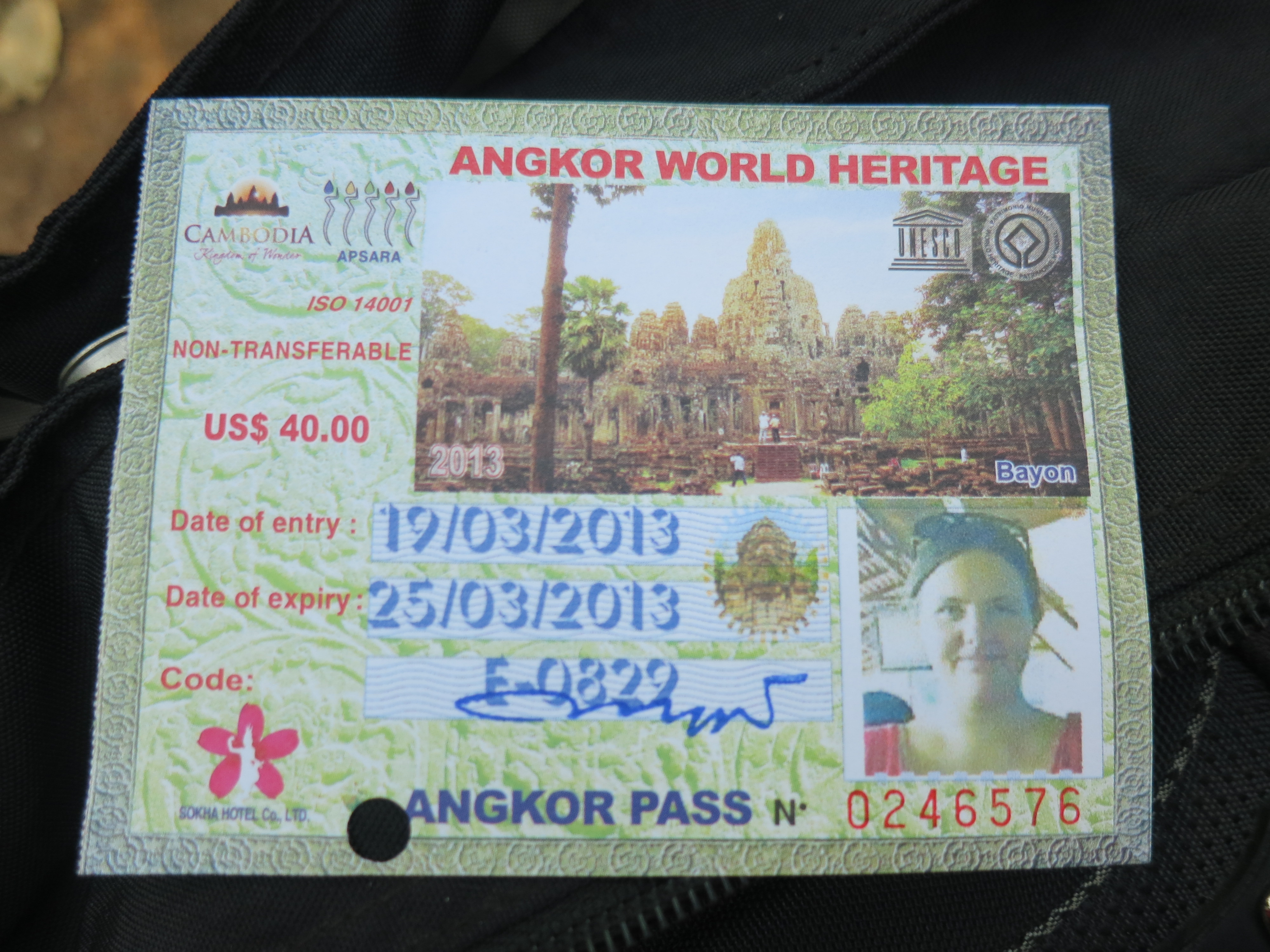
Lose your pass. That ticket just cost you at least $20, and they won’t replace it. At nearly every temple I entered, I needed to show my pass before I could climb the steps of the actual temple, so don’t think you only need it at the entrance, either. They take your photo and put it on the pass when you buy the ticket, so there’s no mistaking whose ticket is whose.
angkor

Pay attention to guidebooks that say you need a special ticket to get non-consecutive passes. That may have been true in past years, but not anymore. If you buy a 3-day pass, you can use it on any three days in a week, and you can use a 7-day pass any seven days in a month.

Forget to bring or buy a guidebook. There are no helpful placards here, no clear markers next to exhibits of note. You can hire a guide for the day, and I overheard some great guides sharing in-depth information, but I also heard some impenetrable accents and bare-bones introductions to the sites, so the quality of the guides varies and it can get pricey to hire one if you’re on your own. I bought Ancient Angkor by Michael Freeman and Claude Jacques, and it proved pretty useful. There’s a lot of history up front and then the sections on specific temples focus more on the architecture. It was last updated in 2003 and there have been improvements to the park since then, so some of the info on what is accessible is outdated. I got the book for $8 at a bookstore in town, and then six different touts tried to sell me the same one for $1 at the park itself. You can go that route, but realize it’s probably an illegal copy so the publisher isn’t getting paid, and of course the tout sees maybe a few pennies of that money.

angkor

Stress about getting from Siem Reap to the park. Your guesthouse/hostel/hotel will have tuk-tuk drivers they can call, guaranteed. The only thing you’ll need to do is negotiate price, which you can prepare for by looking online to see what other people have paid in the past. If you’re fancy, you can take an air-conditioned car, but tuk-tuks are much more affordable and perfectly comfortable (see above about a face mask, though). Hopping on the back of a motorcycle is even cheaper, but if you’re fat they might not let you, even if you’ve done this before and you know it’ll be fine. You can also bicycle there, if bicycling in 90% humidity at 100 degree temperatures appeals to you. Pretty decent roads, not sure where you’d lock it up, scary drivers to share the road with, but you do get to set your own pace and schedule.

Try to go against the grain on the prescribed routes in the temples. There are no markers telling you what you’re looking at, as I mentioned, but there are plenty of signs telling you which way to walk once you’re in the temple. These are set up to manage the flow of the crowds, and are really helpful. You can always dart off to the side and come back or take a seat if you need a breather, but try not to turn around and head the opposite way everyone else is going. You’re gumming up the works. Of course, some temples don’t have a prescribed path, so you can hop about all you like there.

angkor

It All Begins With a Smile

It’s been years since I took one of those Myers Briggs personality tests, and I don’t remember what four letters I got, but I bet it’s a strange mixture. My default setting is quiet, observant, hoping something cool will happen and I can join in. My approach after the disastrous years of middle school has been louder, friendlier, trying to start something cool. I still need a lot of privacy and alone time, but I wouldn’t say that I’m shy anymore, which is a big change.

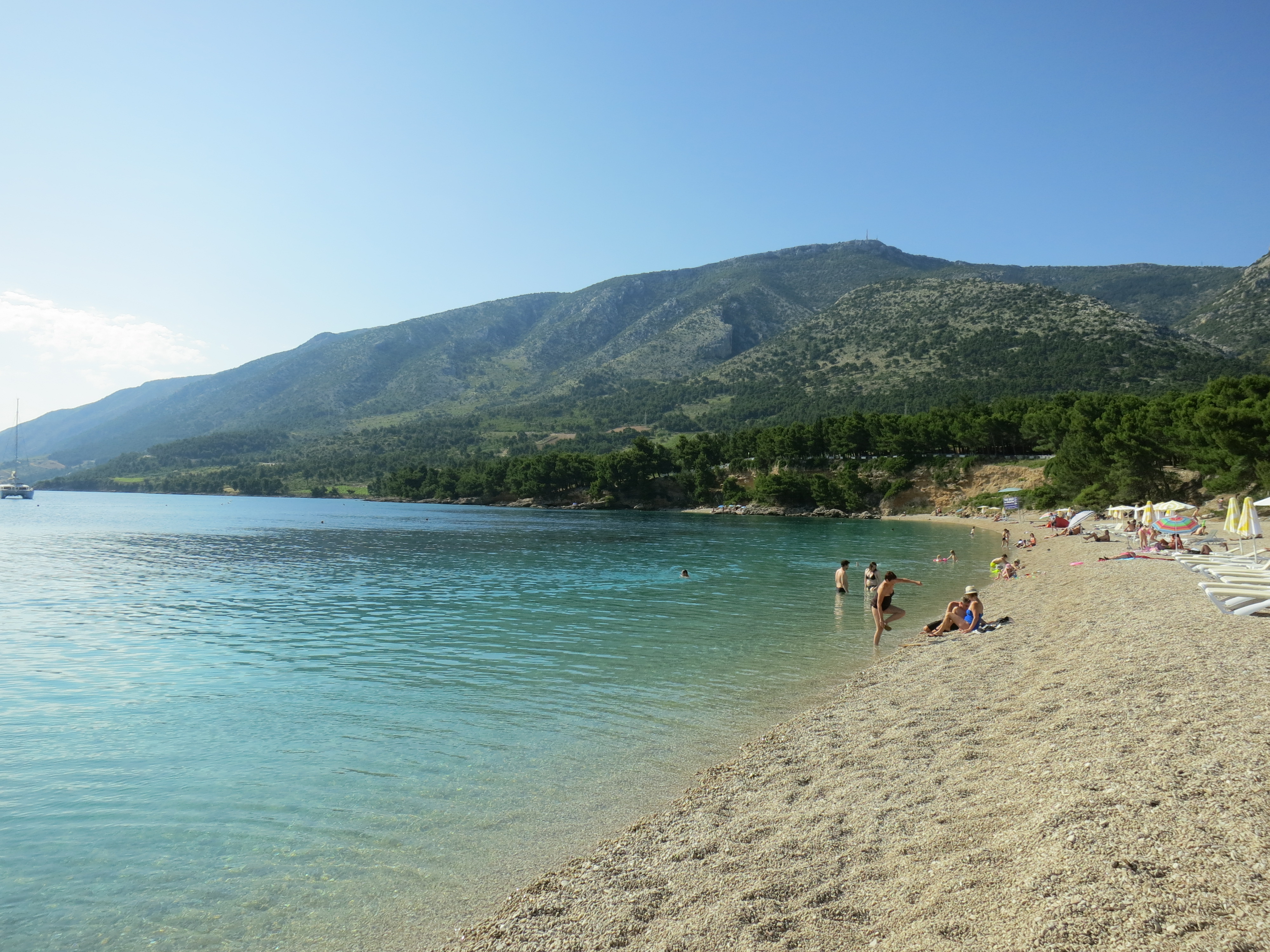
Bol Beach, Brac, Croatia -- nice way to pass an afternoon

Bol Beach, Brac, Croatia — nice way to pass an afternoon

Still, it doesn’t always come naturally, and sometimes I need to remind myself that I like meeting people and some of my best friendships are a result of me going up to someone and saying, “Hi!” Travel is the perfect setting for such encounters, and I’m rewarded again and again for approaching someone with a smile and a greeting.

This weekend, for example, I was in Split, on the coast of Croatia. I decided to take a day trip out to the island of Brac, to see the beach Bol, described by everyone I talked to as “the best in the country.” I bought my ticket at the booth on the pier and started the long walk to the ferry boat at the other end. At one point, I noticed the guy who had been behind me in line pass me, and then later I caught up to him as he stopped and looked around. He seemed a little unsure of where he was, so I paused, smiled, and said, “Further up, further in” (a weird quote that’s stuck with me from the last of the Narnia books–the terrible one).

And from that smile and that comment! He grinned and we started chatting as we walked the rest of the way to the boat, and we didn’t stop talking for the next hour. Russ asked me where I was from, and when I told him, he went into rhapsodies about how much he loved Chicago. I rarely meet non-Americans who have actually visited Chicago, but those who have always say they liked it (unless they went in winter, in which case I can’t help you for your terrible life choices). It’s always nice to hear someone say good things about your city.

The ferries lined up and ready to go

The ferries lined up and ready to go

Then it got a bit freaky. We did the British Zoom, which is what I call it when you zoom in on where, exactly, someone is from/has been on the tiny island of Britain. For him, it went, “You know Shakespeare, of course, well I’m near Stratford-upon-Avon.” “Oh yes, I’ve been there.” “Oh, do you know Warwick Castle?” “Yes!” “I’m closer to there, to Leamington Spa.” That’s as far as I zoomed in, to a town a few miles away.

But Russ won the game, hands down. I said, “Oh, my mom’s from Worcestershire.” “Oh yeah, I know it.” “Okay, she’s sort of near Birmingham.” “Yeah, I went to school near there.” “Okay, so you know Kidderminster, then.” “Yeah! Never tell me she’s from Kinver, haha.” Kinver being a tiny town, this seemed highly unlikely to him, just as it was highly unlikely to me that anyone, even a British guy, would have heard of Kinver, which is indeed where my mom was born.

So we had a laugh about the smallness of the world and the importance of starting conversations with fellow travelers, because you just never know what strange and wonderful bits of information are going to turn up, or what kind of new friend you might make.

Russ was headed to Brac to research it as a possible destination for his travel company, Green World Holidays. Best part of the job, as he said, and I remarked that I need something that will similarly let me move around. Should be easy, as an editor, since all I need is a computer and an Internet connection, but it’s tough finding clients. He laughed and said this really was a crazy day, because not only do I know tiny Kinver, I’m an editor and he’s probably looking to hire someone to oversee the company blog in the next few months. We definitely exchanged business cards. (No pressure, Russ, but I needed to mention it for the story!)

Later, he overheard a Finnish woman at the snack bar say something about pooling for a taxi to Bol, and he brought her over to me so we could figure out the details. Turns out this woman from Helsinki had also been to Kinver! We decided that we should all buy lottery tickets that day, because something was clearly in the air.

Those sorts of kismet moments don’t happen to me often, but they do happen, and as everyone who’s happily settled will tell me about finding love, they happen when you least expect it. I thought I was taking a quiet ferry ride on the Adriatic, but instead I found an hour of friendly conversation and fun connections. All because I saw a fellow traveler and said hello. A conversation that not only started with a smile but ended with one, too.

The smile looks something like this.

The smile looks something like this.

Three Steps to Keeping Your Belongings Safe on the Road

Or: I Did NOT Leave My Wallet in El Segundo

I’m paranoid about losing my keys or having my wallet stolen, especially since I’ve lived on my own and faced the prospect of being unable to get into my apartment if my keys go missing. So I’ve developed some overly paranoid steps to minimize the risk of these things happening. Most travel guides and websites will give you tips on how to keep your things secure when you’re in a foreign place (get a bag that zips, carry it across your chest instead of at your side, etc.), but the truth is that the same strategies work anywhere, whether at home or abroad.

Step One: Run “Ready, Set, Go”

Every single time I leave my house, I run a “ready, set, go” check. Look in my purse for keys, wallet, phone. With those three things, I’m good anywhere I end up. The one time I didn’t check, of course, my keys were still in my bedroom, and that was when I lived in a place with automatically locking doors. Not a pleasant realization, when I ran the ready, set, go after I’d already let the door close behind me with a sharp click.

Step Two: Develop a New Plane of Awareness

The CTA posts ads with tips on deterring pickpockets, including a recommendation that you not check for your wallet in your back pocket, or run a finger along your phone’s outline in your purse, or in some other way indicate to a thief the exact location of your valuables. But I don’t feel comfortable not being able to check up on things, so I’ve developed a a system of constant movement that allows me to check on things without being too obvious about it; I shift my purse from one arm to the other, and do a quick tactile check on its contents, or open it up to take out my chapstick or iPod, and do a quick visual check that way.

Step Three: Be Lucky

Okay, this is a bit of a cheat, since the very definition of luck includes being unable to control it, but I think it’s important to recognize the crucial role luck plays in keeping our belongings secure and our persons safe. There are a lot of steps we can take to protect ourselves, but sometimes thieves succeed or accidents happen, and all the precautions in the world can’t help in those instances. I mention this because I think it’s easy to blame people for not being careful enough with their things, and that’s not helpful. Especially when you’re traveling someplace new, it’s easy to get disoriented and lose track of your usual habits that keep your things with you, and if you get separated from those things, you won’t want it to ruin your trip. Do what you can to keep your belongings secure, but if misfortune strikes, remember that they are all replaceable, unlike the more pleasant memories you’re forming while traveling, so do your best to focus on those instead.

Any other suggestions?

Travel Advice — From YOU!

Dearest fellow travelers, I need your advice. Yes, instead of me imparting pearls of wisdom to you, this time I’d like some insight from your fine selves. This fall, my sisters and I are going on a weeklong trip, but we have no idea where to go.

We were meant to meet up in Portland for an event and travel around for a bit, but the event got canceled, so now we’re not tied to any specific location and we’re thinking of going somewhere less expensive to get to. When we realized we had the whole US of A to choose from, we got a little overwhelmed. I’ve traveled to at least two places outside of my state every year since college, but on each of those occasions, I was visiting someone for at least part of the time. The last time I traveled anywhere just because it looked like fun, and not because I knew someone who lived there, was in 2002, when my boyfriend and I drove to New Orleans for spring break our freshman year of college. (Side note: we were so naive and law-abiding that we didn’t even try to buy alcohol, although clearly we could have walked down the street with a giant margarita in each hand and no one would have blinked.)

If you could go anywhere in the US east of the Mississippi for a vacation with beloved family members, where would it be and why? If you’ve already been to great places and have tips on why we should go there, share that too! Drop hints, links, places NOT to go, etc. in the comments below.

Here are the requirements:

  • Must not be more than $300 round-trip from Chicago, Michigan, or New York in late September.
  • Must be gay-friendly.
  • Must be east of the Mississippi River.
  • Must have a balance of city/country life within a couple of hours’ driving distance (we’re going to rent a car). We’ll need to be able to go to a sports bar, take a hike in some mountains or stroll around a big park, visit a museum or cultural attraction, and relax in a cheap but tasty restaurant. (We have many interests.)

And… GO! Thanks in advance for your help!