
It rained most of the time I was in Kyoto, which was too bad for seeing the temples, but perfect for attending a tea ceremony and a dance performance one afternoon. Kyoto is famous for temples and geisha, but all these traditional elements are fit into a large, modern city. So I took a bus downtown and then walked down an alley to get to the theater for the dance.

Lamps in the lobby

Doors to the theater
The theater presents shows seasonally, and I was lucky to be there for the spring show by the maiko (geisha in training) and geisha. Kabuki is performed by an all-male cast, and near as I could tell, this show was all women. The first half was a full play, and again I was struck by how stylized every movement was, as it had been at the kabuki show. There was no English translation or program provided here, though, so I couldn’t really follow the story, but it involved thwarted love and I’m pretty sure mass suicide at the end.

A sneak photo before the show

Beautiful screens
After a short intermission, they performed a series of dances, mostly in small groups, with some individuals coming forward for a few moves. All very graceful, small movements, all set to live music from stage right. It was like a ballet in its wordlessness and gracefulness, and it was beautiful to watch.

After the show
There are several ways to attend a tea ceremony in Kyoto. I went to the one recommended to me by my hostel; I was the only one who attended this session, so after a short introductory conversation with the host, I sat on the tatami floor for instruction. She explained what a few implements were–the whisk, the serving bowl, the scoop–then said, “Now I will begin,” and walked out of the room.
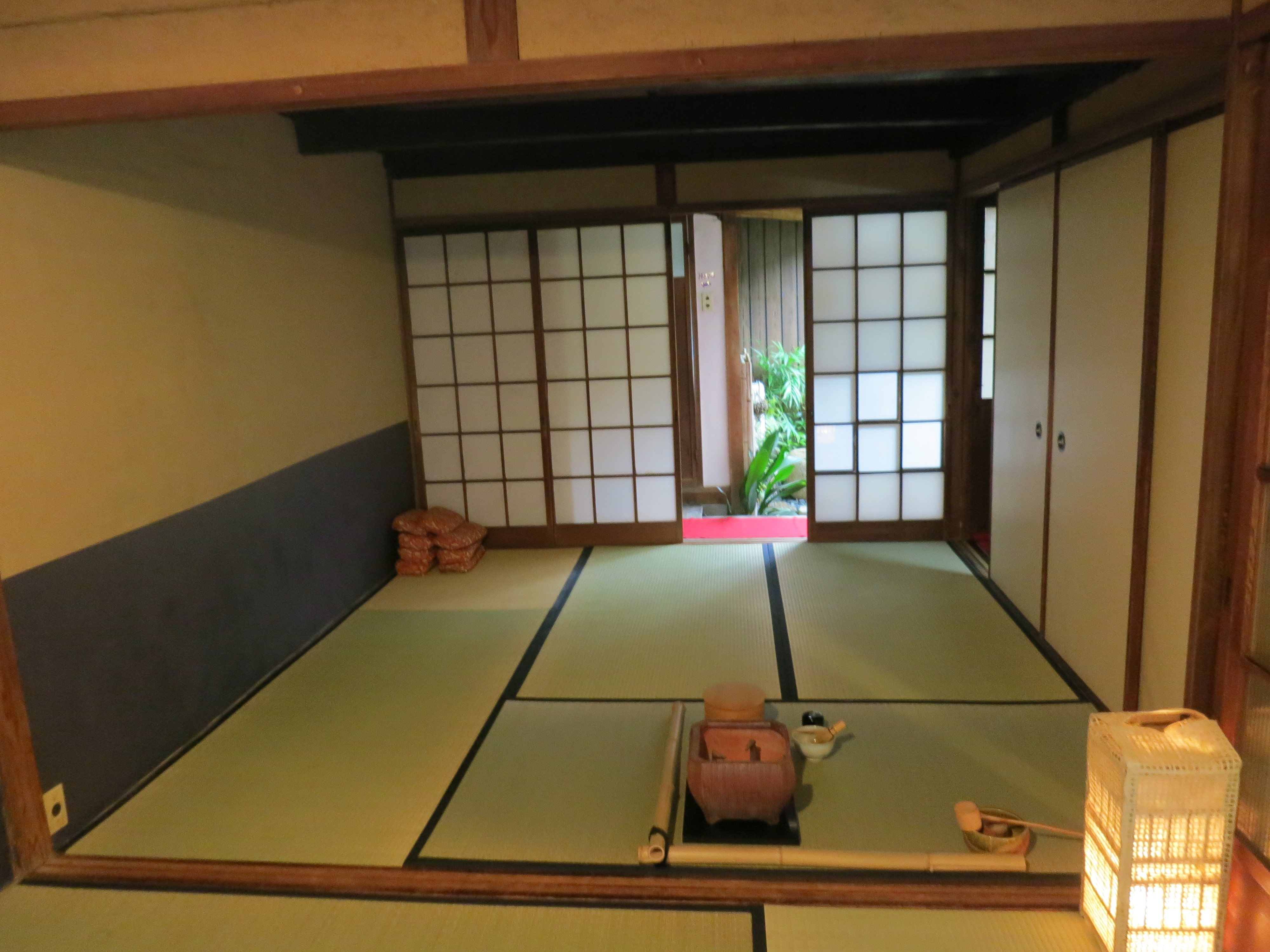
A simple layout
Everything for the next 15 minutes was silence, as she re-entered and performed the ceremony with precision and grace. She folded a red cloth a certain way and wiped the tea bowl with it, then refolded it and wiped the wooden tea scoop. Water from a small hot coals stove, tea whisked with a bamboo whisk. She bowed when serving me the tea, and I lifted my bowl in respect, turned the bowl a quarter turn, and then sipped.

Tea ceremony rooms
After she served me the tea, she left the room briefly. When she came back in, she explained some of the symbolism behind it all and had me whisk green tea on my own. The four qualities necessary to any tea ceremony, she said, are respect, harmony, purity, and tranquility. Each quality follows from the other–harmony from respect, etc. I found the ceremony the perfect end to the afternoon, a quiet, lovely time to reflect.
 Stowaway Travel Writing & Editorial Services