
Sunset, Sydney, Australia
Sunset, Sydney, Australia
Every guidebook has a “secret” hint on how to see some of the more famous sites without paying the usual price. In Venice, you’re advised to take the number one vaporetto rather than an expensive gondola ride; in Chicago, go to the 96th floor of the Hancock for a cocktail rather than the concrete dud of an observation deck. And in Sydney, instead of paying for a harbor cruise, you’re told to take a ferry boat out to Manly.

The water angle of the opera house
Sydney, I was pleasantly surprised to discover, isn’t on a semicircle harbor, but on a harbor with an uneven coastline, so there are many more houses with water views than in a lot of other cities. Manly is one of the suburbs with those views.
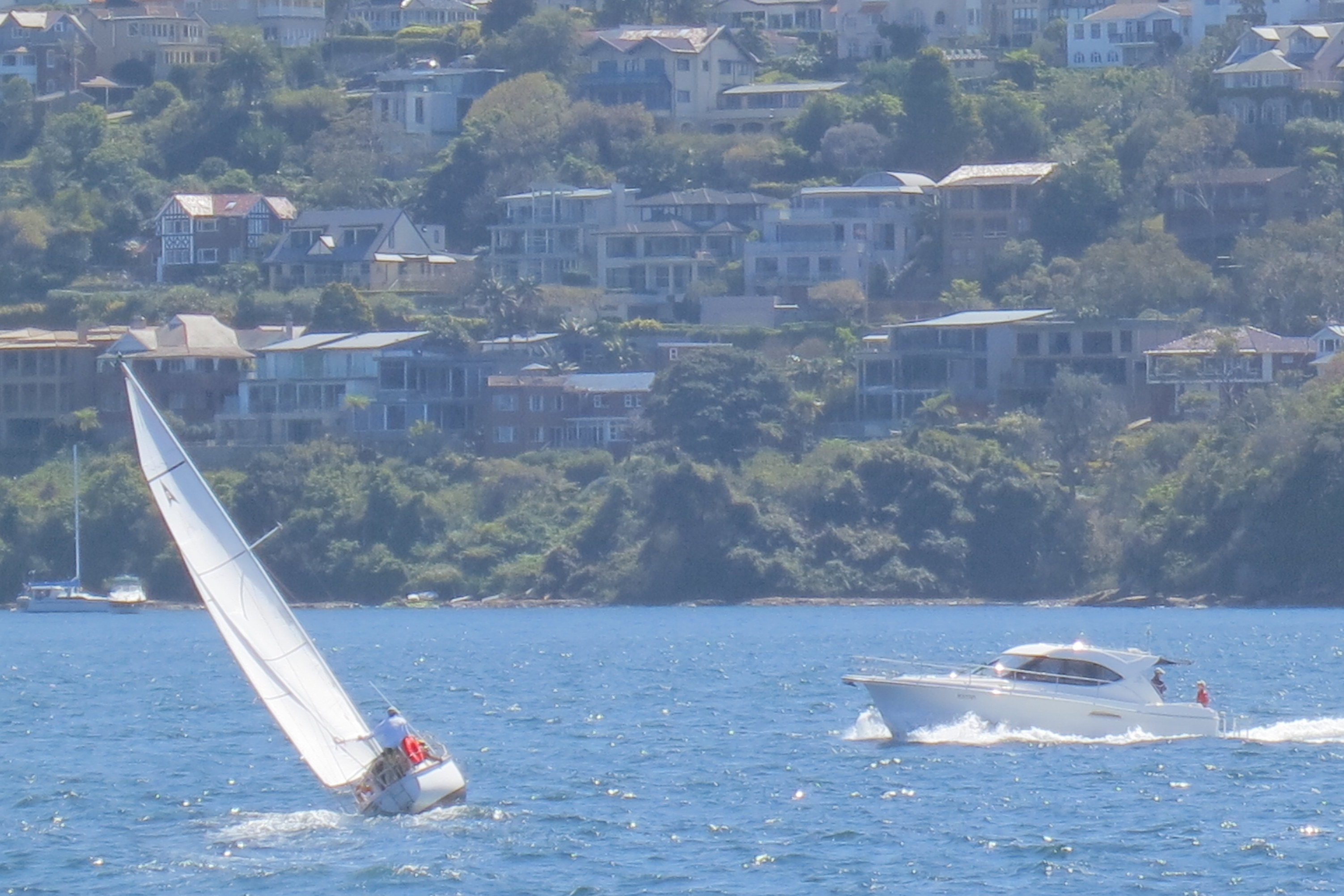
I actually tried to go to Manly twice. The first time, it was an ok day when I started out, but by the time the boat docked, it was drizzling rain and cold. Since I had a weekly transit pass, I just turned right around and went back to Sydney. Take two was much more successful. It was a beautiful day, and the decks of the ferry were full of teenagers carrying surfboards and families lugging beach equipment.
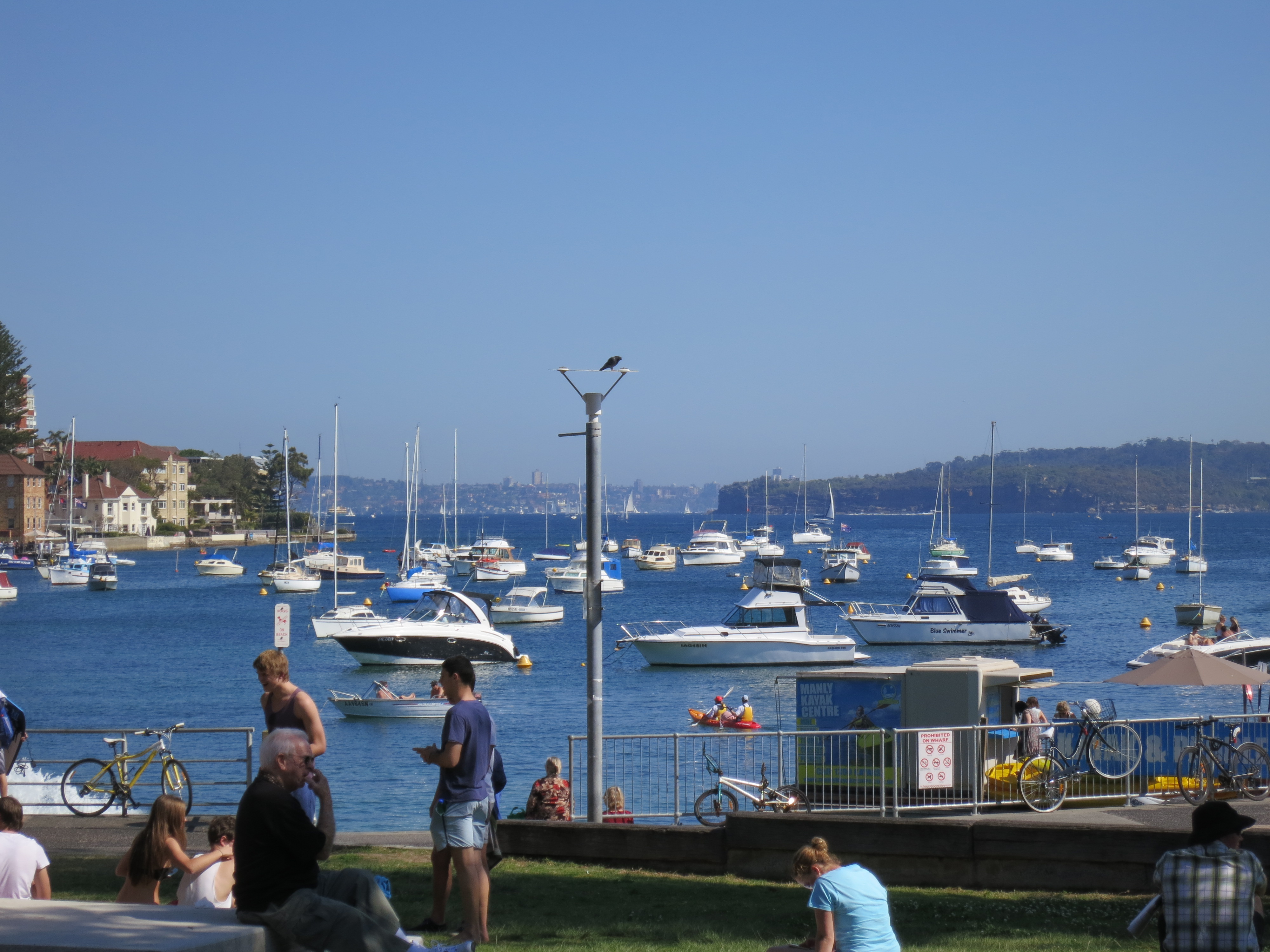
Manly boats
I met up with Heather, a friend of a friend, and we had a nachos and beer lunch, which is the perfect start to a lazy Sunday afternoon. We walked through town, and she popped into a few restaurants so she could say hi to her friends. She manages a restaurant, and she shared funny stories about the food service life in Manly.

The Corso in Manly

News from bygone days
Manly Beach was much narrower and much more crowded than Bondi had been, and I didn’t really want to squeeze in on the sand between sunbathing beauties and shrieking children, so we went on the short coastal walk instead. The path was full of people enjoying their weekend, and it was also narrower than the Bondi walk, so I was more crowded in general. But it was a great walk, past a pool right on the ocean that lets the saltwater spill over the edge to fill it, past a long lizard sunning himself, past a small group of suited-up divers taking rescue lessons, and right on up the small hill to a view of the coastline curving in and out all the way to the horizon.
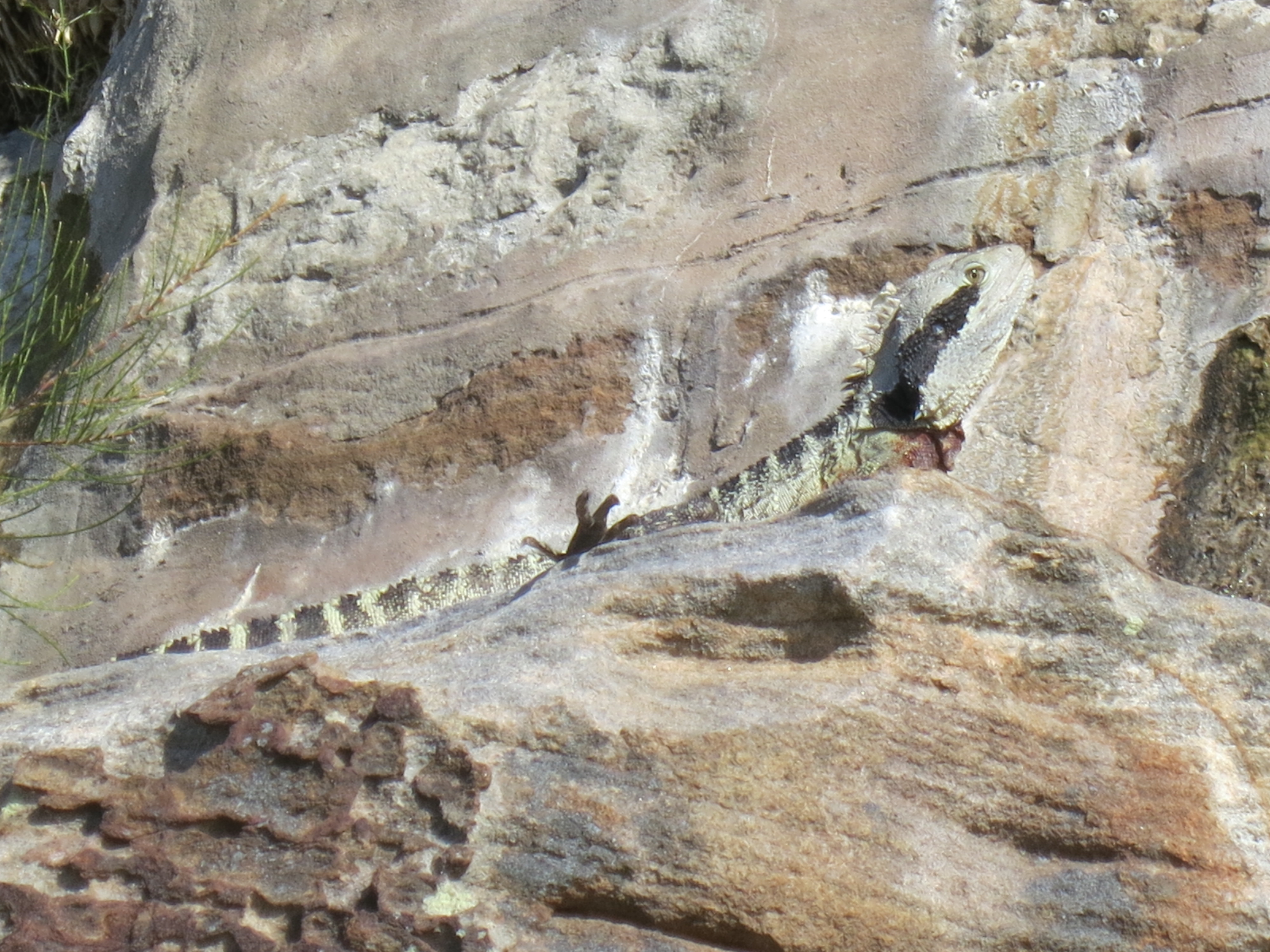
Spot the lizard
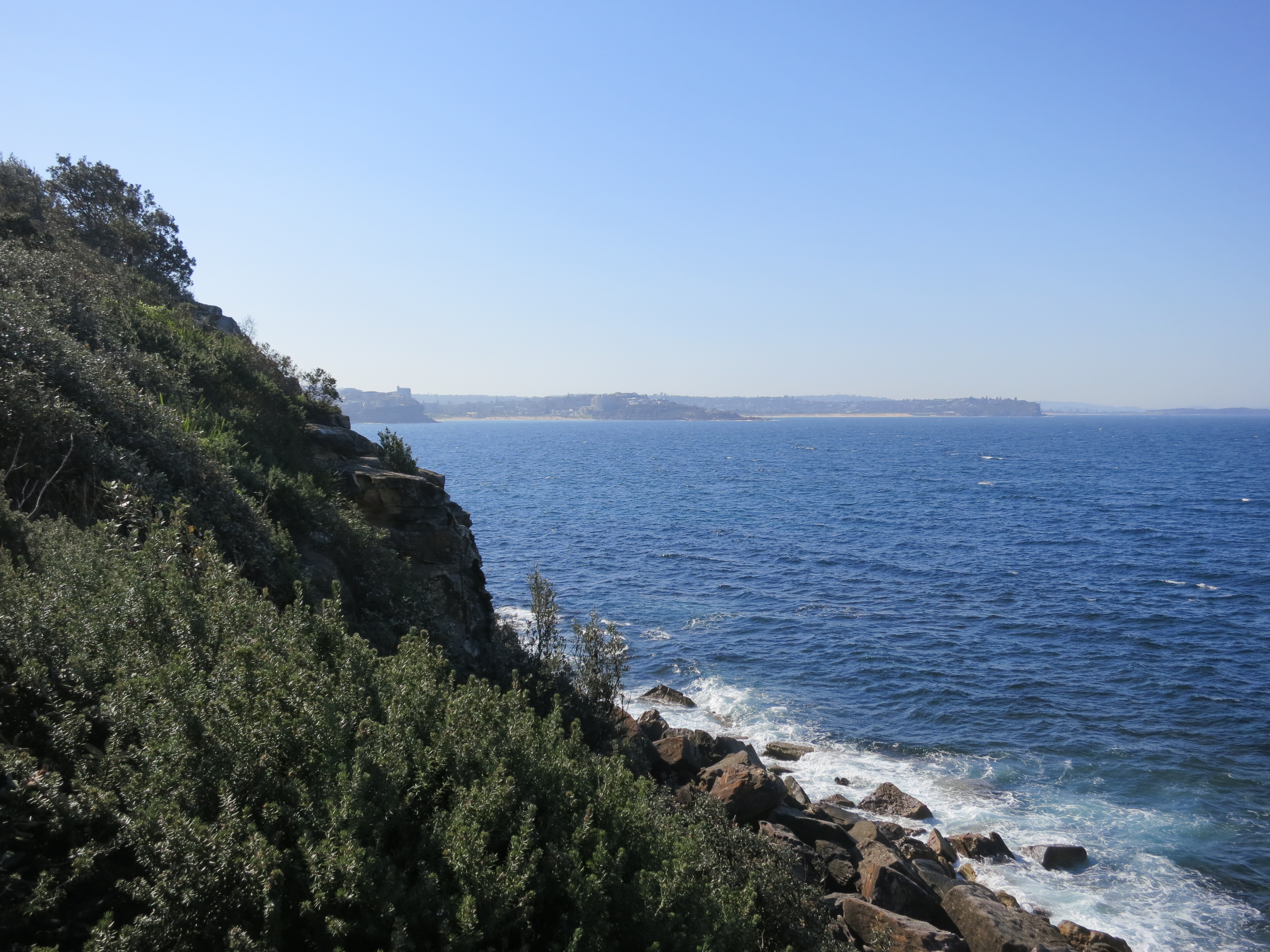 I said farewell to Heather and got back on the ferry for the return trip. I’d timed it just right for sunset, so as the boat rounded the point and came in to the main harbor, I saw the opera house and bridge lit up in reds and golds. A lovely end to a relaxing day.


Good night, Sydney
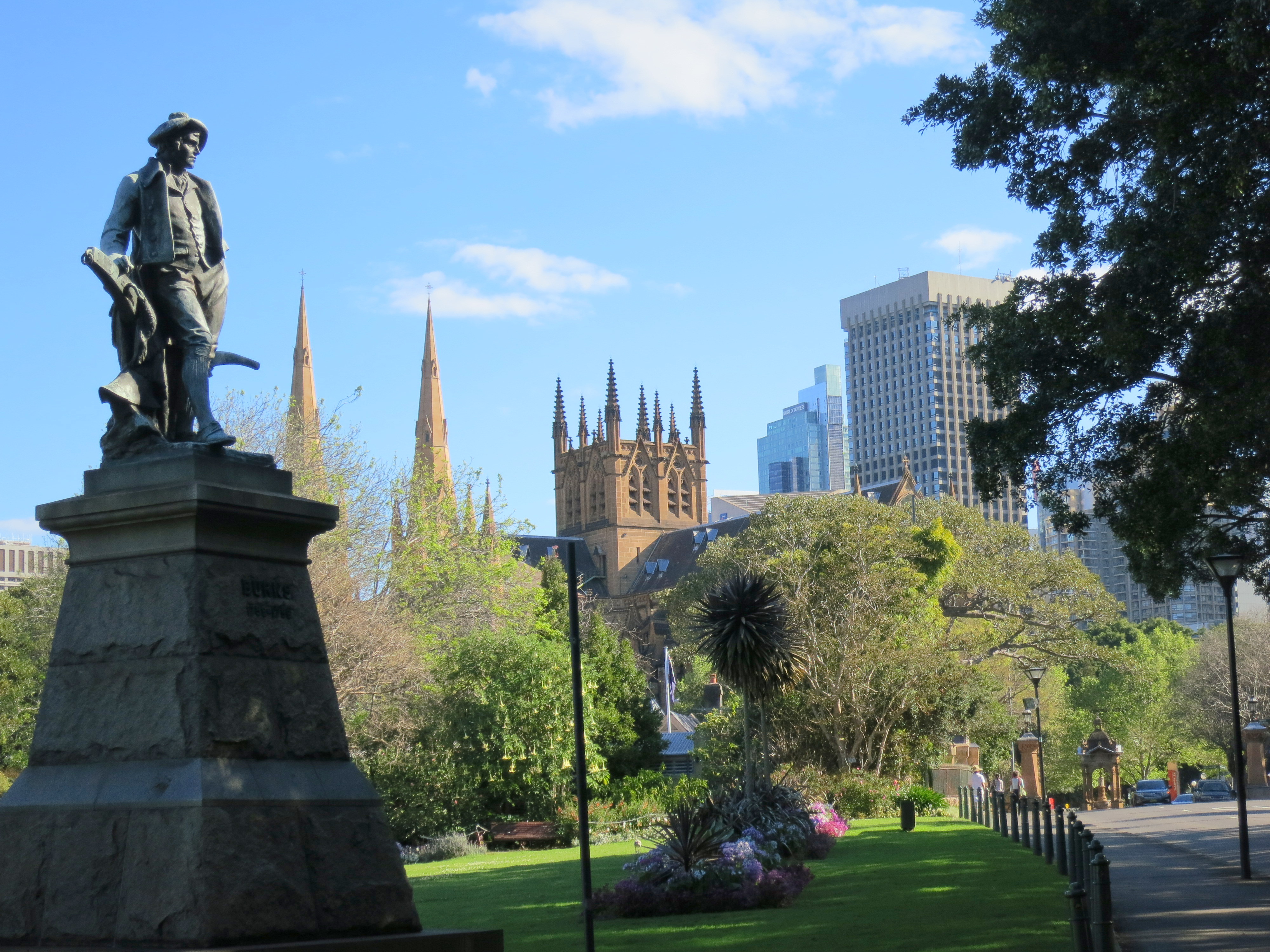
As with all major cities I’ve been to, Sydney has several large parks for city dwellers to gather in and reconnect to nature. Near Hyde Park is The Domain, and right next to that, the Royal Botanic Gardens. I love the idea of The Domain, which started as the private park of the first governor, and eventually became open to the public. Now, it’s set aside specifically for public use and enjoyment.
The Domain
Signs dot the park that read “The Domain is for everyone to enjoy… Please walk on the grass. We also invite you to hug the trees, picnic on the grass and talk to the birds (but please don’t feed them!).” How lovely! Of course, it then goes on to list the many things you can’t do, including seemingly innocuous things like flying kites and throwing frisbees. Still, the main sentiment is great. The Domain is used for concerts and other gatherings, and when I visited, lots of people were out enjoying the sunshine.

Art Gallery of New South Wales
I went into the Art Gallery of New South Wales, briefly, and took a look around. Signs indicate which areas you can and cannot take photos in, and the Aboriginal section was definitely one you can’t photograph. Otherwise, I’d show some of them to you. One piece by Genevieve Grieves, called “Picturing the Old People,” was a video installation on multiple screens that I particularly enjoyed; it showed someone setting up various tableaux, rearranging backdrops and subjects to get them just how he wanted for a photography shoot, including dressing people in “native” dress instead of the suits and ties they arrived in.

In the Australian Art room. I don’t remember ever seeing paintings hung in this style of stacking, which was the prevalent way of doing it in earlier centuries. Maybe in the Louvre?
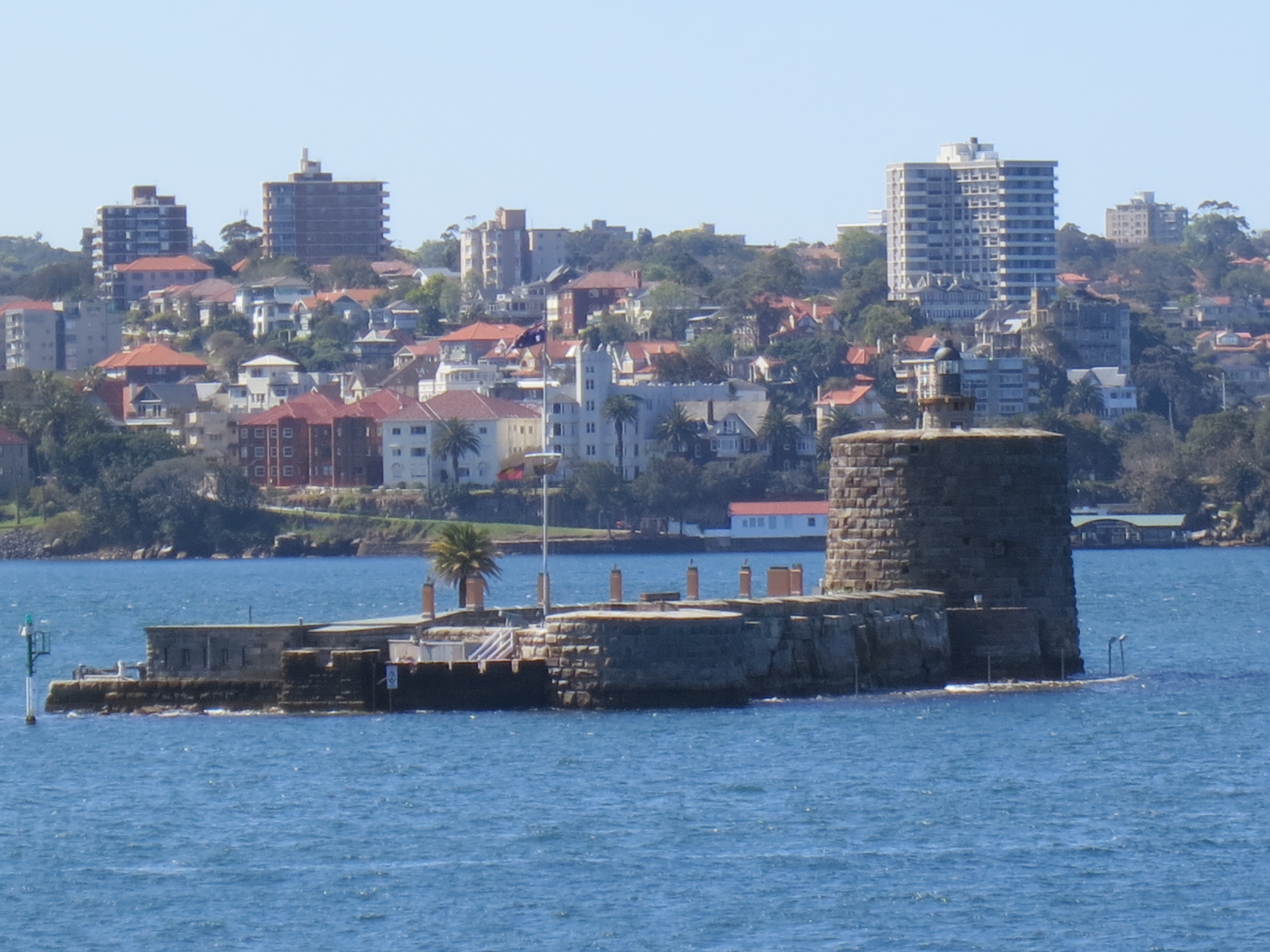
I walked down Mrs. Macquarie Road to the point, where I saw the opera house and bridge from another angle. From the tip of the peninsula it was also easy to see Fort Denison, which was originally used by colonists as a prison and execution site, before American warships circling it in the early 1800s prompted the Australian government to convert the tiny island into a fort for protection. Funny, then, that in 1942, when Japanese submarines attacked Sydney Harbour, the American ship USS Chicago took out one of the subs, but damaged Fort Denison while doing so.
Fort Denison

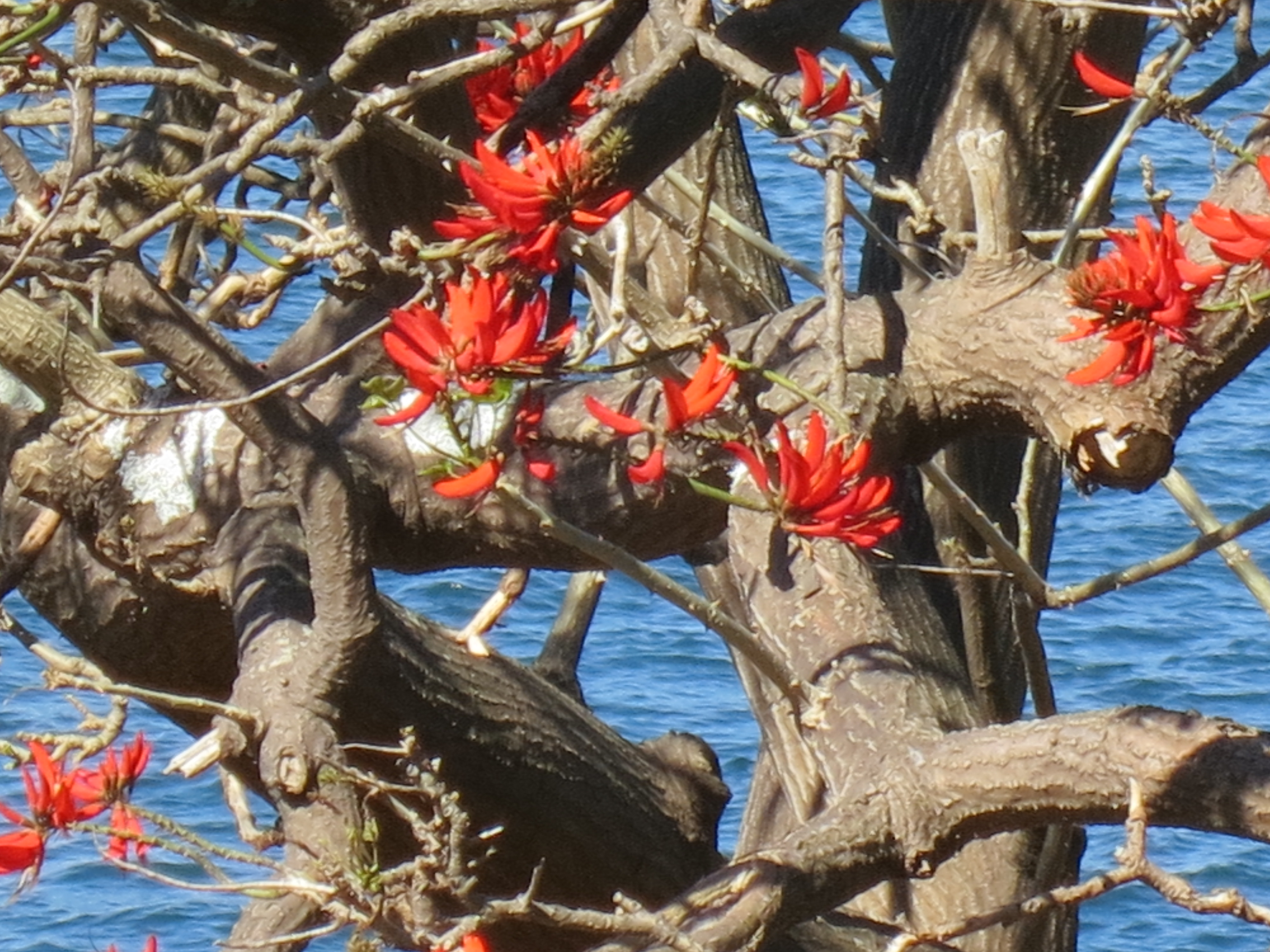
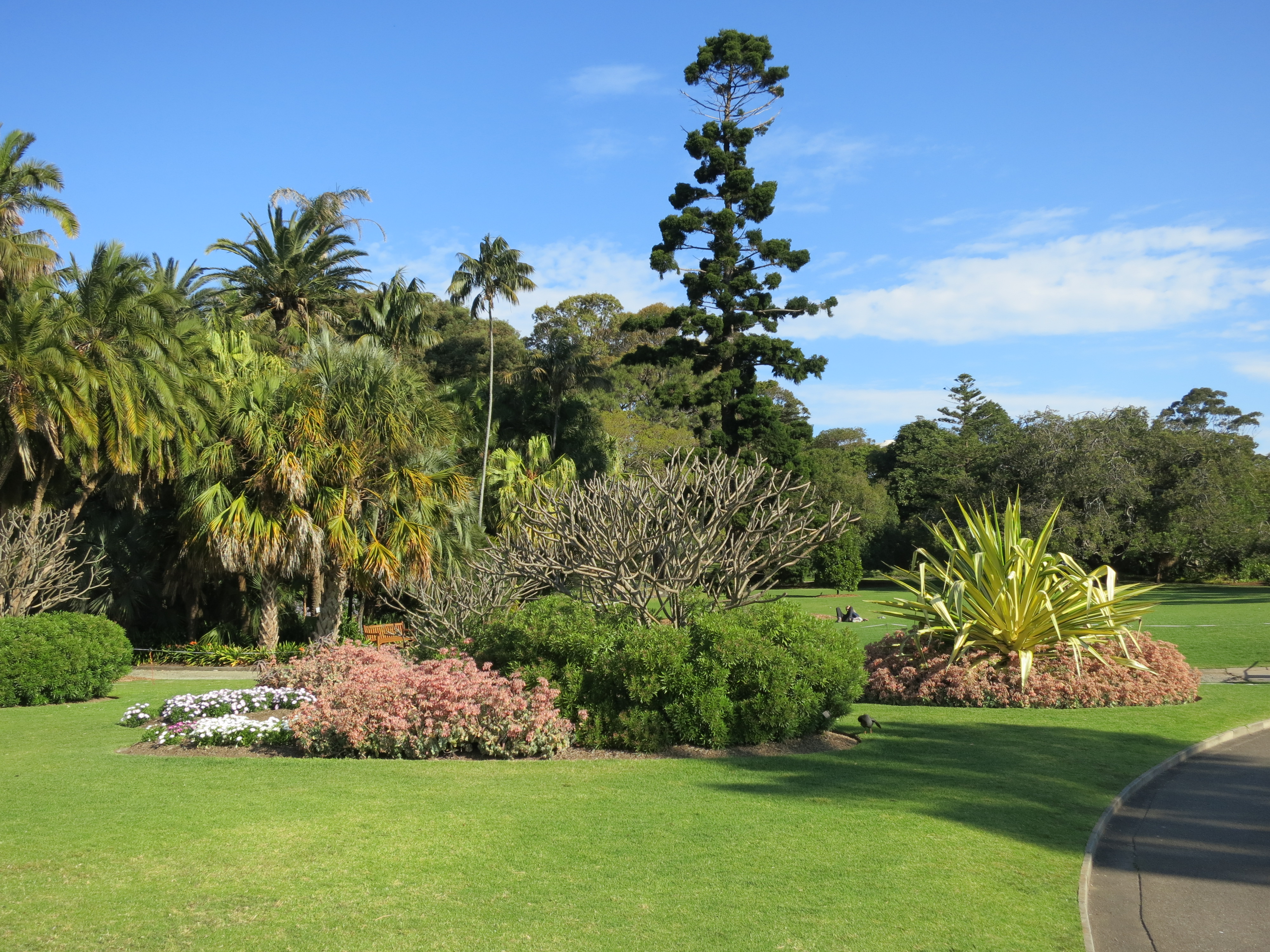
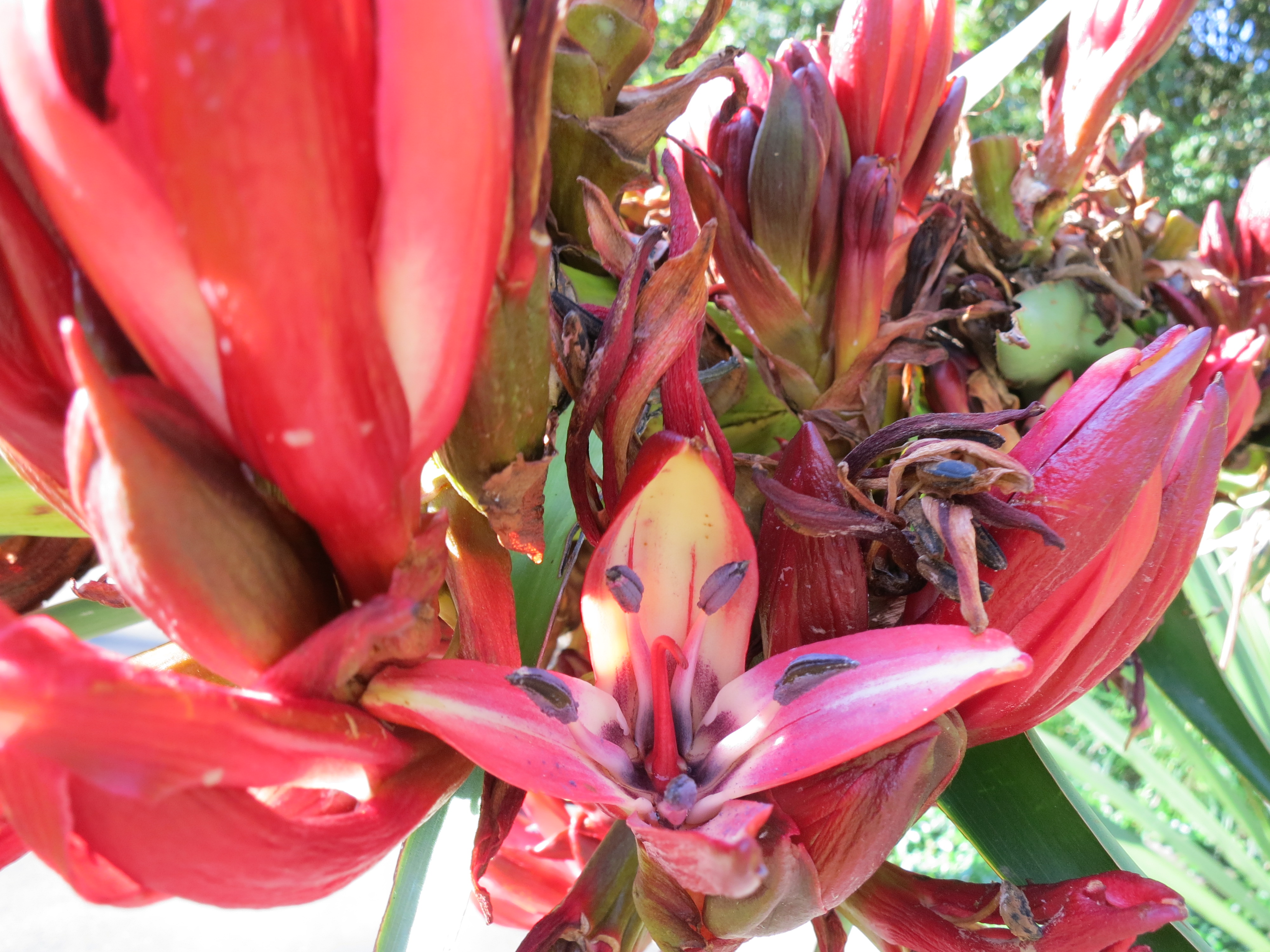
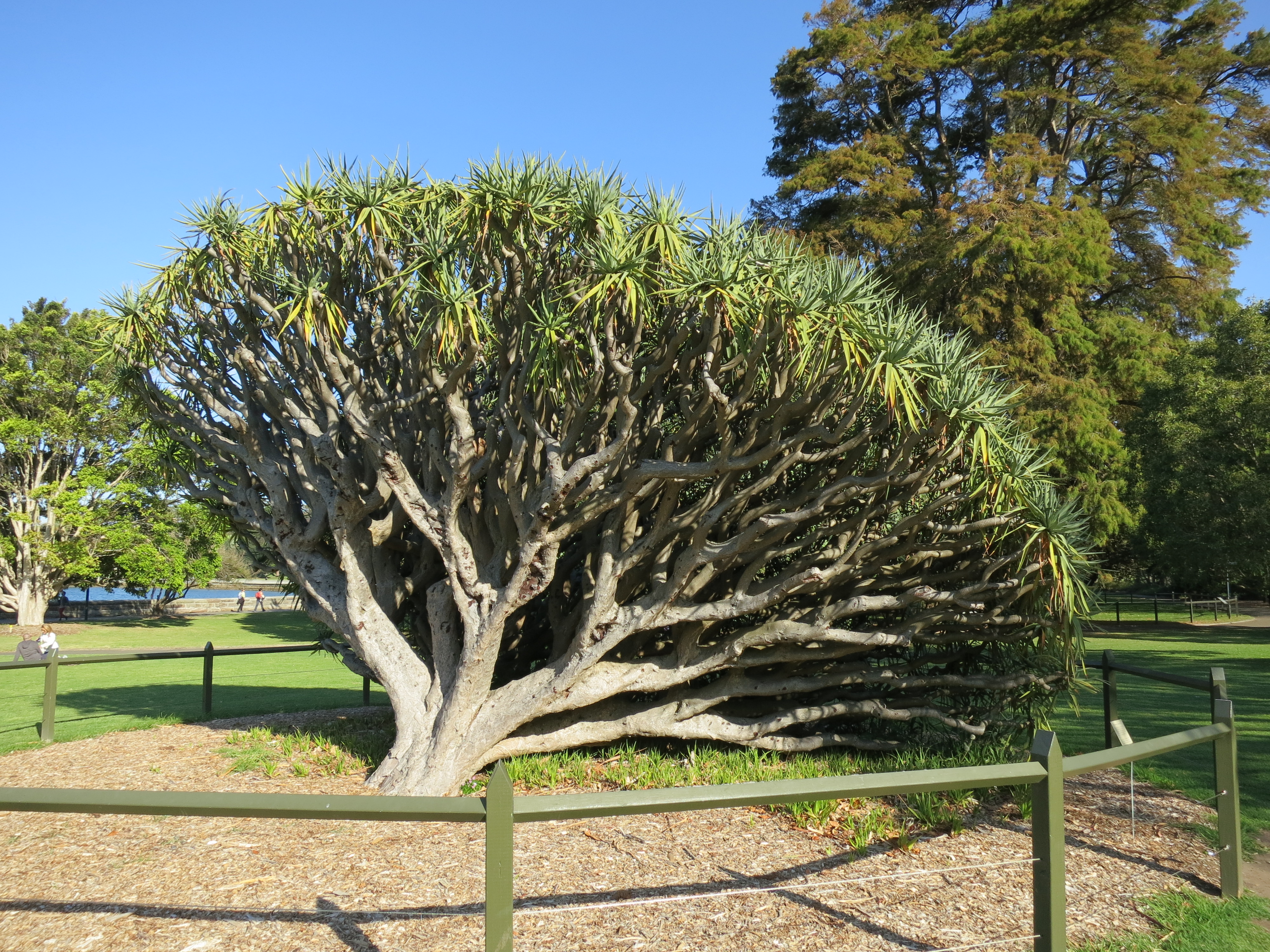
Abutting The Domain is the Royal Botanic Gardens. It was a pleasure to stroll through them and admire the foliage. There were several different parts to the gardens, including ponds, a path along the harbor, and the inevitable gift shop. The gardens were huge, and I spent well over an hour wandering through them before ending up at the stairs leading to the opera house.
I do not know any names of flora or fauna, so here are some unlabeled plants and birds I enjoyed looking at.



 And finally, here’s the most self-satisfied satyr I’ve ever seen:
 I mean, look at that face:

Oh heyyyy, playa
And with a wave to this friend of Dionysus, I left the (manicured, well-maintained) wilds of the gardens and re-entered the concrete world of the city.
I think most Americans have only a few images of Australia in their minds: kangaroos, koalas, the Great Barrier Reef, maybe Uluru, and the Sydney Opera House. At least, I know that’s all I could picture before I left the States. My first full day in Sydney, I went on a walking tour with I’m Free Tours. We spent three hours visiting the many sights of the city that don’t involve a building poised to set sail–although we saw that as well.
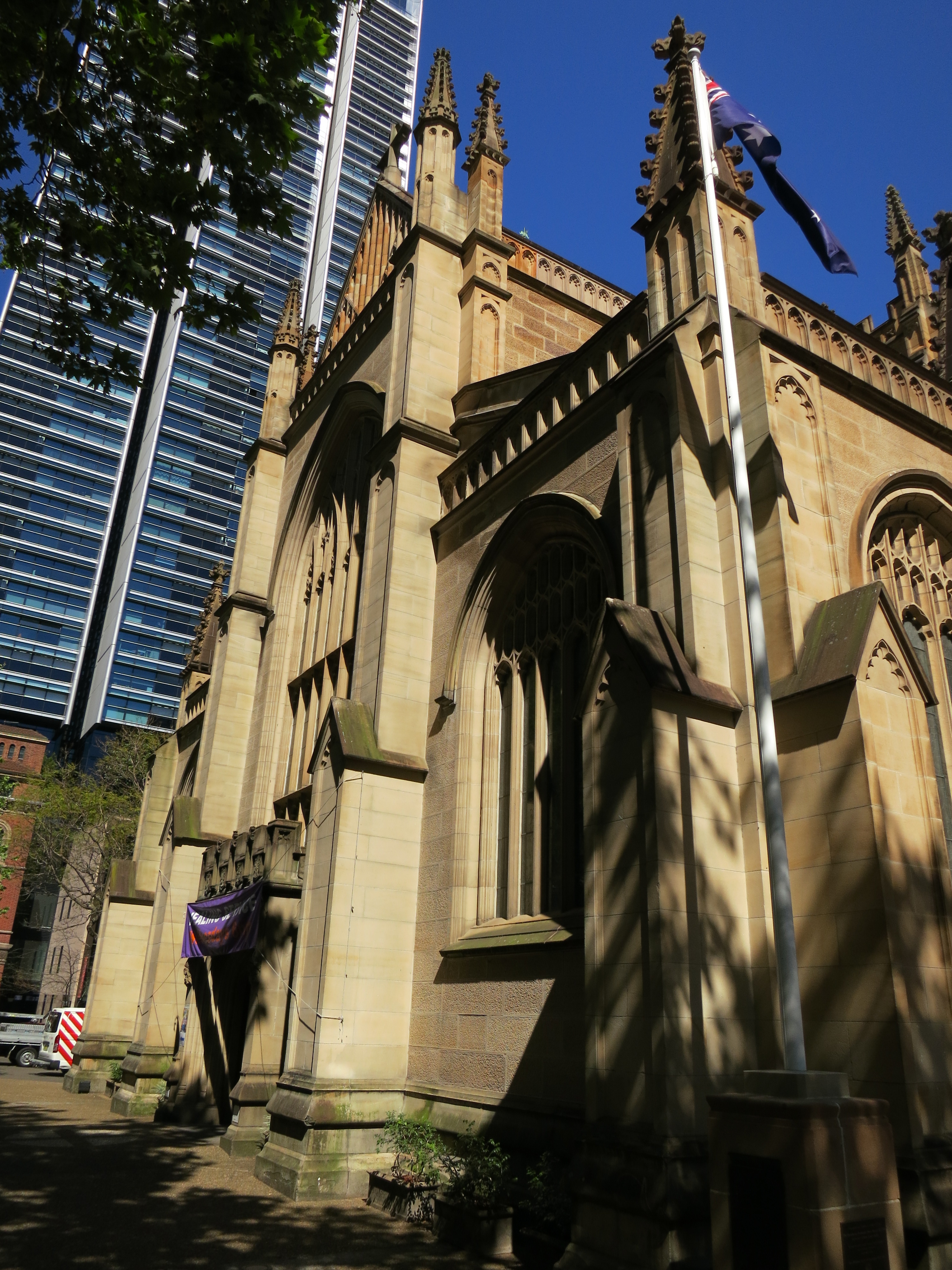
St Andrew’s Cathedral
We started at St. Andrew’s Cathedral, the oldest one in Sydney. It struck me as serviceable but not particularly impressive, and then our guide explained that this view is the back of the building. The front used to have a proper amount of lead-up space in front of it, but the city decided to build a road right about there, and the church then built a school by that road, so now it’s pretty well hidden. What an odd series of architectural choices.
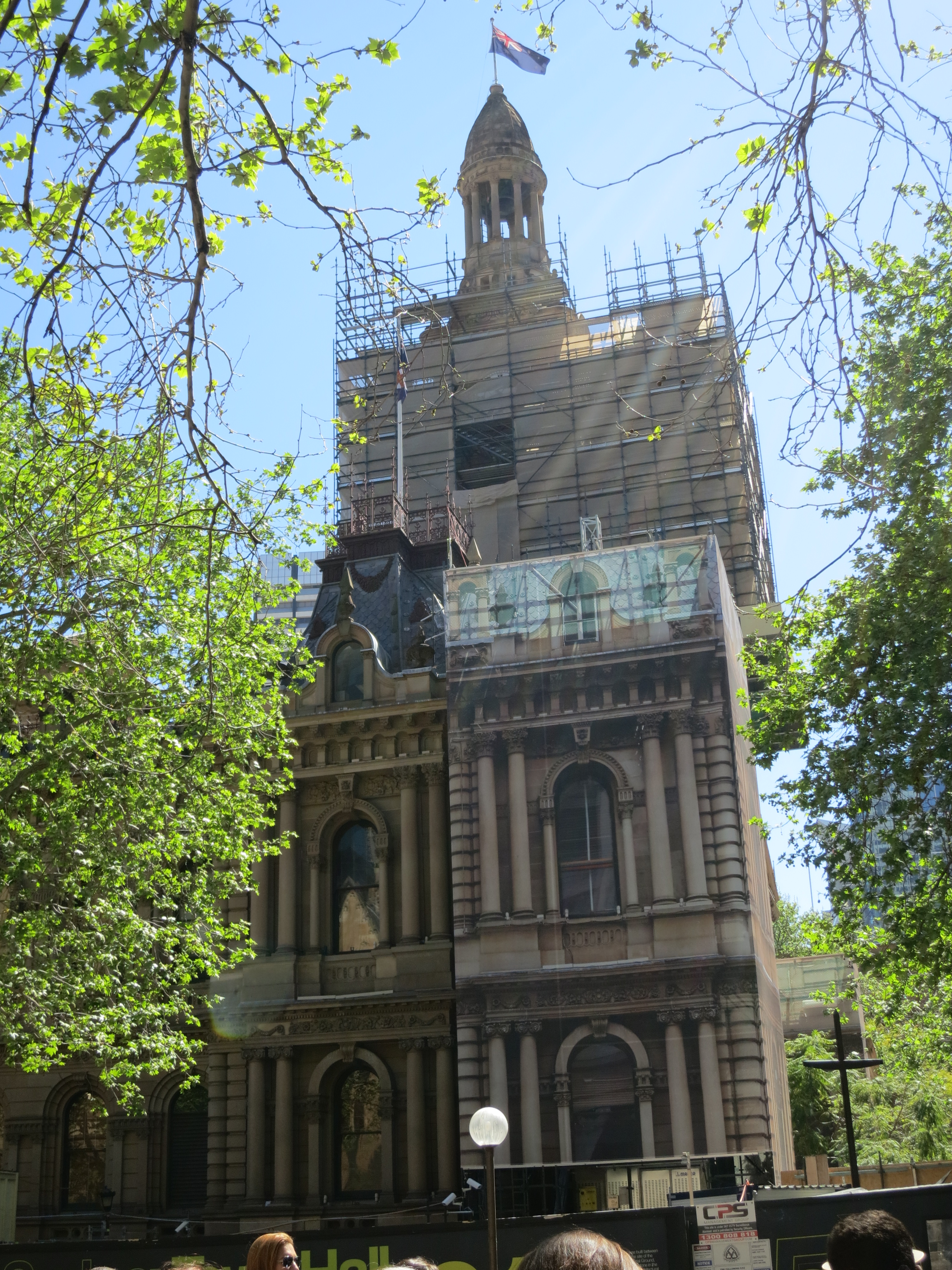
Town Hall
Town Hall is in the same square as the cathedral. It was under construction, as you can see in the photo, but after all the building originally took 21 years to complete, and our guide said finishing touches took decades more to add, so maybe scaffolding is the natural state for this building. Apparently, when they started work on the building in 1868, they knew the area had been a graveyard, and they moved some graves, but they weren’t terribly thorough. As recently as 2007, restoration workers found new graves in the foundations. A messy business!

Queen Victoria Building

The cupola of the QVB
Australians shorten the names of just about everything, so it’s no surprise that the Queen Victoria Building, an indoor marketplace, is just called the QVB by locals. It’s been many things through the years, including a library and the city council building, but now it’s back to its original purpose, more or less, as a three-story shopping mall. Nothing too special about that, but the interior is lovely–graceful arches, wrought-iron balconies, stained glass windows. Two elaborate clocks have little mechanical figures performing scenes from British and Australian history, including the hourly beheading of Charles I. And there’s a statue of a dog outside that talks when you throw coins in the fountain, although it wasn’t working when we tried. AND Queen Elizabeth II wrote a letter to the people of Sydney and put it in a vault in the QVB, and it can’t be opened for another 70 years. This building is a collection of quirks.
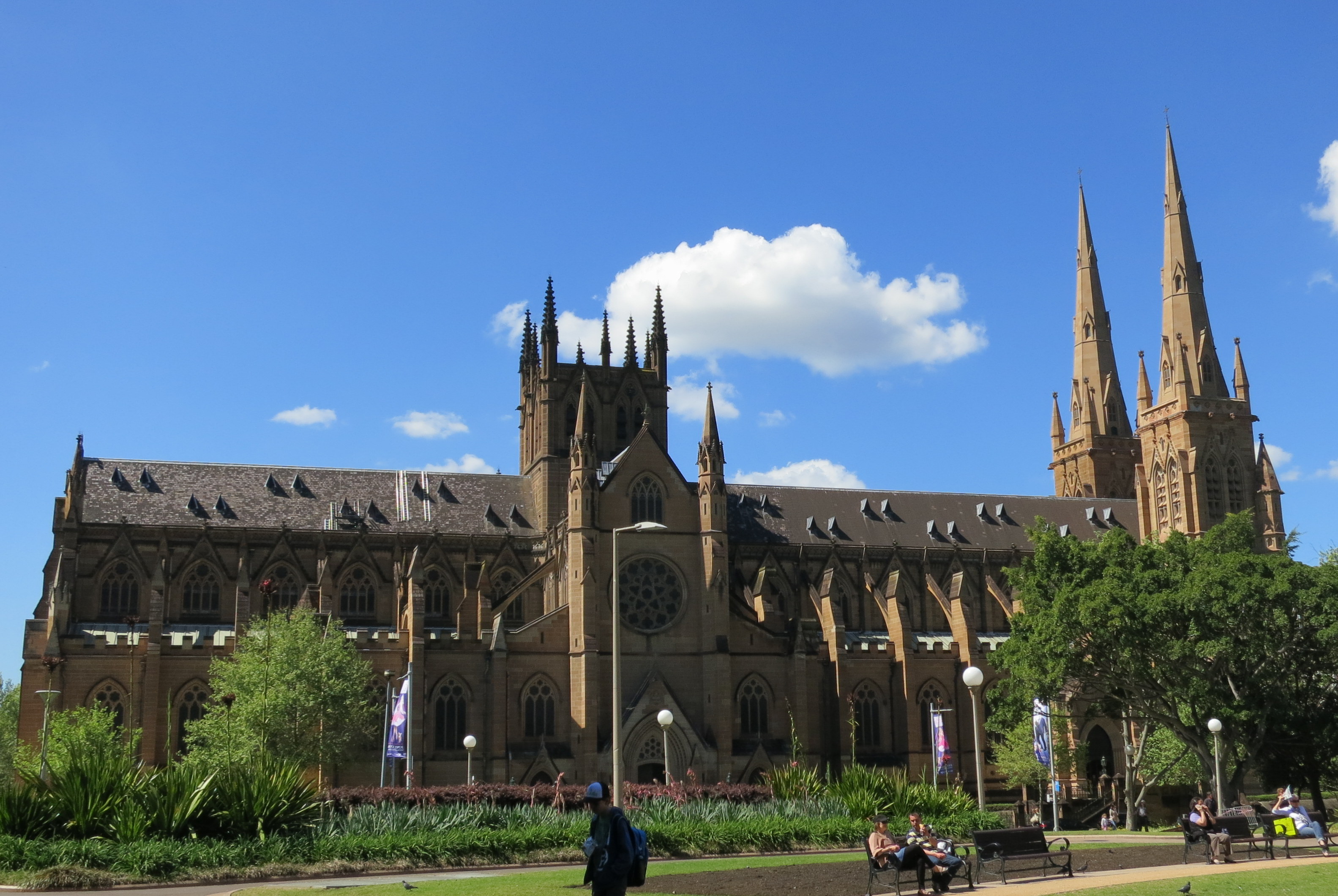
St Mary’s Cathedral
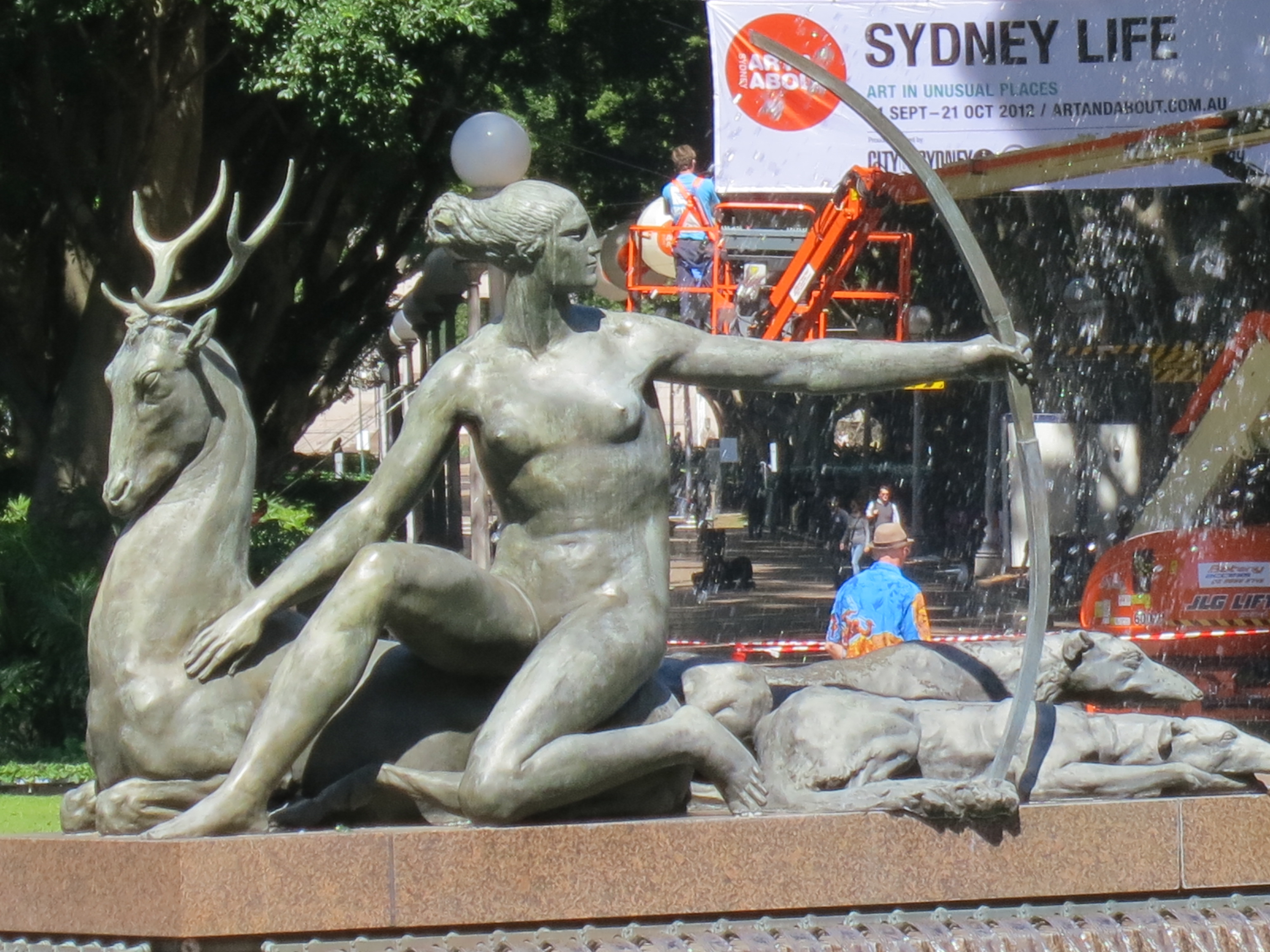
Archibald Fountain
Hyde Park is a tenth the size of its namesake in London, but it’s the same idea–an oasis of green amidst the city bustle. Boy Scout groups lunched on the lawn, two people with furrowed brows played a game of chess on a giant board, and a model posed for photos at Archibald Fountain. St. Mary’s Cathedral, the largest one in Sydney, sprawled gracefully to our left as we stood under an avenue of trees and listened to our guide tell us about the fountain, which was an international affair–commissioned by an Australian, created by a Frenchman, and built to show classical Greek mythical figures.
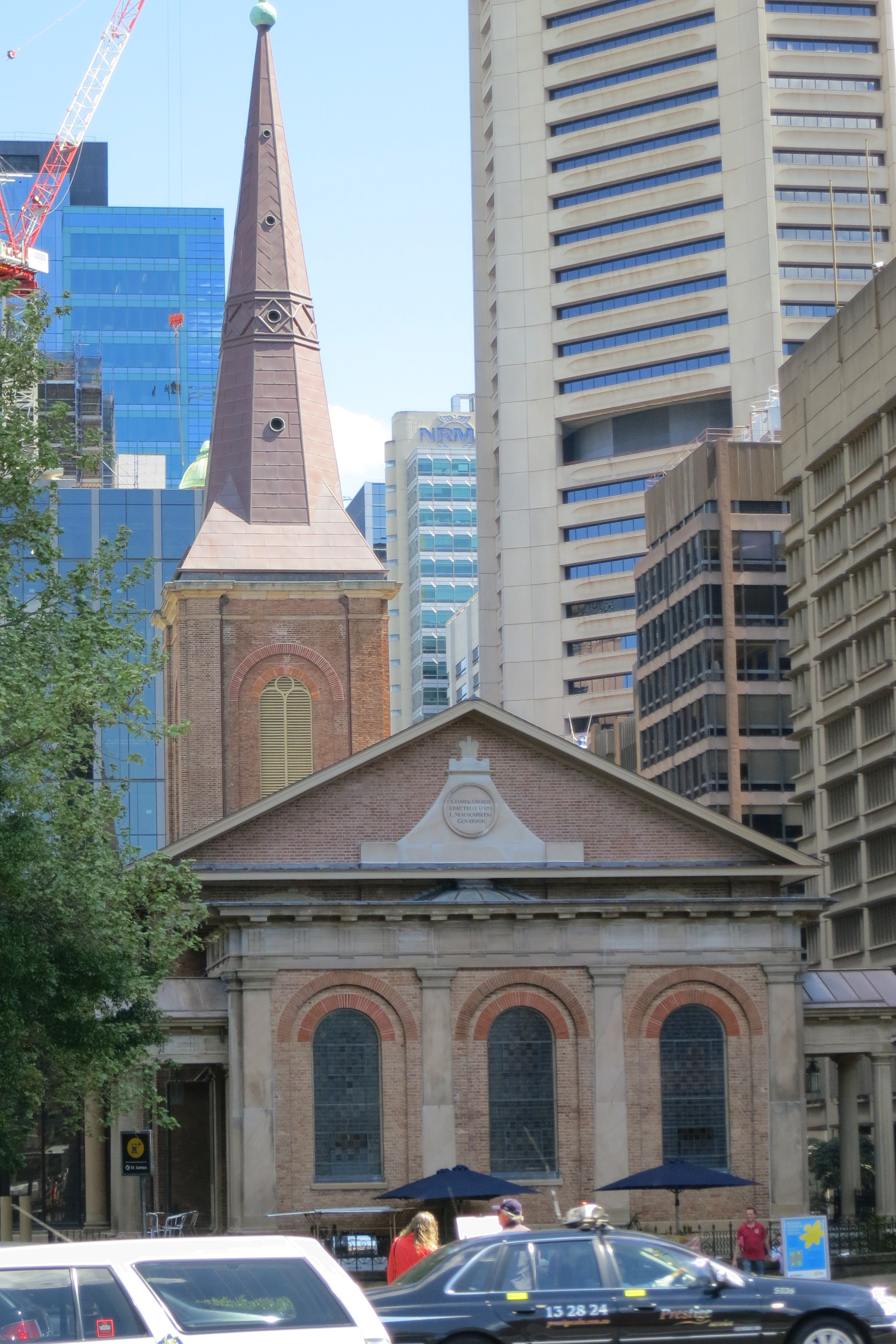
St James’ Church
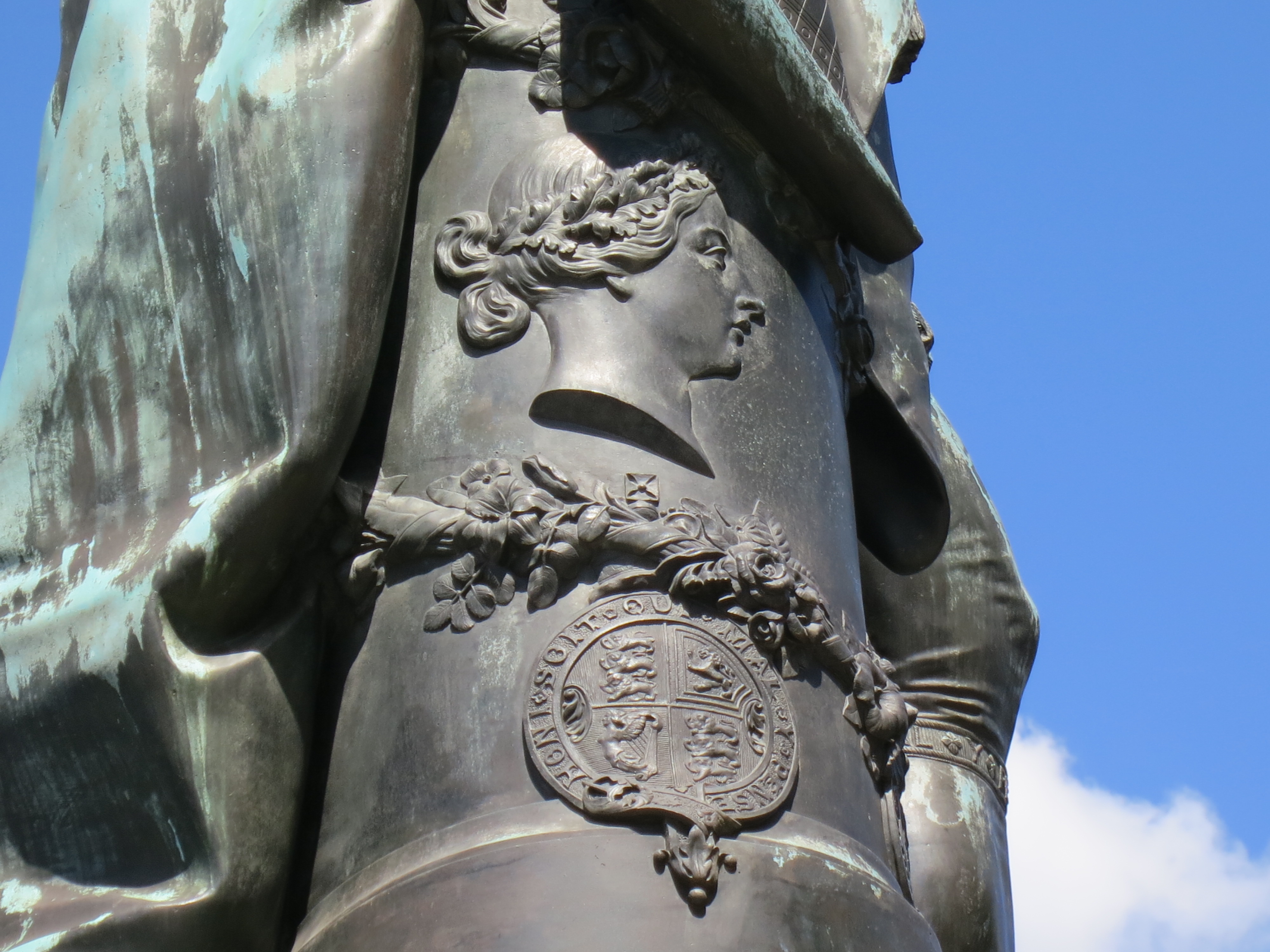
Albert the Good statue

Hyde Park Barracks
Just past Hyde Park, Macquarie Street is full of historical buildings and monuments. St. James’ Cathedral was the highest point in Sydney for a long time–as you can see, that’s no longer the case. We passed yet another statue of Queen Vic, although this time a statue of her husband looked across the street at her. She was really attached to him, though, so there’s a portrait of her face carved into the half-column to his right. Nothing says love like pressing the side of your face into your husband’s thigh on a major road. We passed the Hyde Park Barracks, which was commissioned by Governor Macquarie in 1818 and designed by a convict, Francis Greenway, who was sent to Australia for forgery. New beginnings!

The Rum Hospital

Il Porcellino
The first hospital in Sydney wasn’t built by taxes or philanthropy, but by booze. Governor Macquarie wanted to build a hospital but the British government didn’t deign to provide funds, so he came up with a workaround: a few local businessmen would front the money, and in return they’d get a monopoly on rum imports for a certain period of time. Thus, the nickname for the collection of three buildings: The Rum Hospital. Today, one of the buildings is a museum to the national Mint, while the central building remains a working hospital. A replica of “Il Porcellino,” a bronze boar statue in Florence, was placed in front of the hospital in the 1960s. You can rub his snout for luck, although closer inspection reveals that people are rubbing, um, other parts of its anatomy as well.

The national crest

First Fleet anchor
The Australian coat of arms, which we saw on the national bank building, features the emu and the kangaroo, two native animals that were chosen in part because they were believed to only be capable of moving forward, not backward, and thus they represented progress. (In reality, the animals can, but rarely do, move backward. But let’s not be spoilsports.) We walked past the anchor from one of the ships in the First Fleet, which arrived in 1788 with hundreds of convicts and a couple hundred Marines, sent from England to establish a colony.
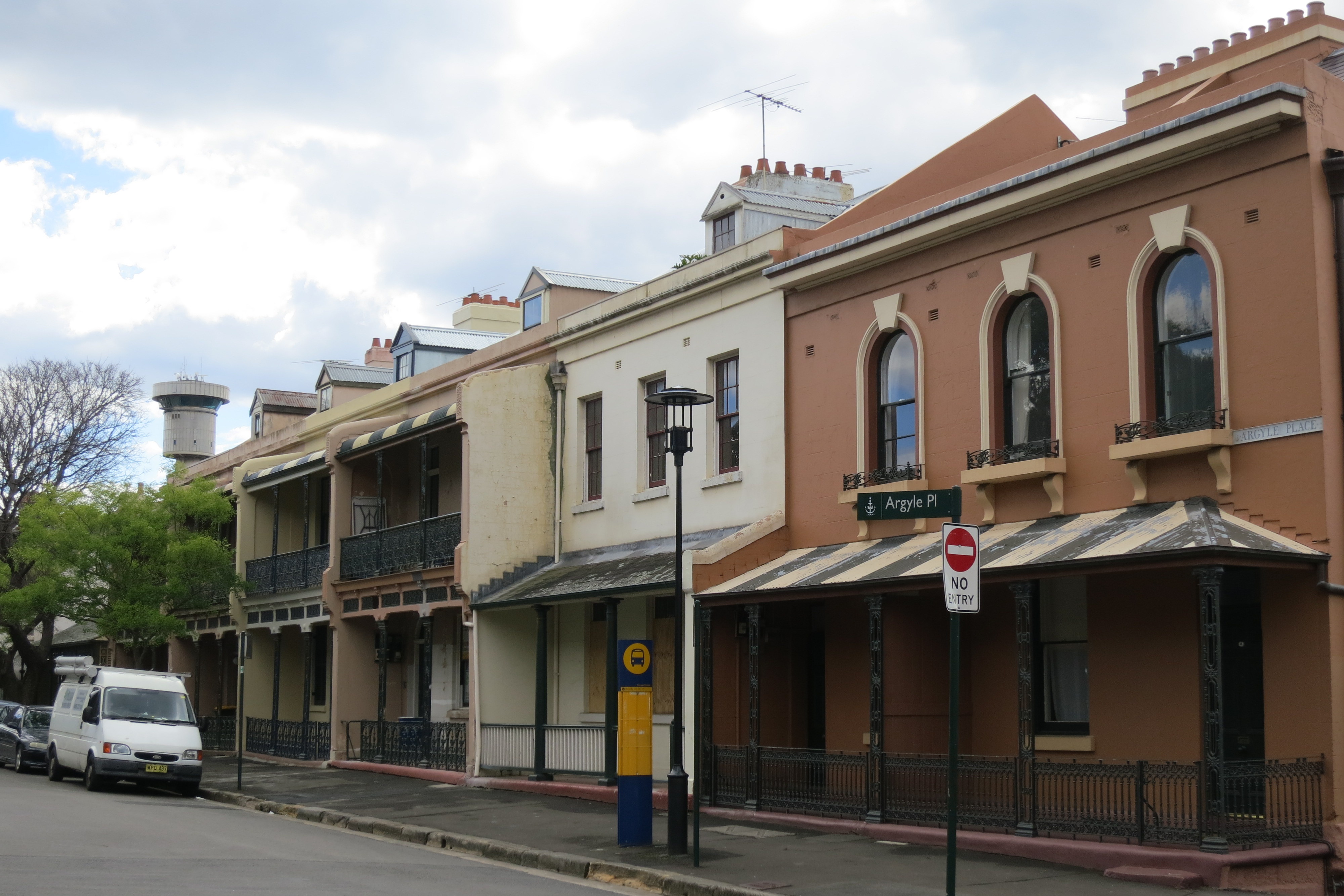
The Rocks

One of two pubs in Sydney claiming title to oldest
Our last stop before looking at the harbor was The Rocks, which is the oldest area of Sydney. As with so many other cities, this once dangerous area has been sanitized almost past the point of recognition. It was the docks originally, and now it’s got museums about the docks, and several high-end restaurants. Still, many of the original buildings have been saved from destruction and repurposed, which I think is generally a good thing.

A glimpse of the Harbour Bridge
And then, at last, we reached the harbor. While I’d only ever heard of the opera house, Sydneysiders (as Google tells me denizens of Sydney are called) are also really, really proud of their bridge. When it was first built, critics called it “the coat hanger,” but it’s a solid addition to the skyline. You can climb up to the lower part of the bridge and walk across it, on a path that runs parallel to the road, or for a couple hundred dollars, you can hitch yourself to a dozen other people and walk up the curved part of the bridge, to the very top. I opted not to do either of these things, and just admired it from afar.

Sydney Harbour Bridge
And finally, we turned to the right and saw the Sydney Opera House, a beautiful building that has been described variously as a collection of sails, a flower opening, and a group of clams or seashells. I saw the sails resemblance, probably because there were plenty of sailboats out on the water while I was in Sydney, prompting a comparison. The building was designed by Danish architect Jorn Utzon in 1957, although after a few years and some changes in government, he was scandalously forced out of his own job and not paid in full. Drastic cost-cutting changes were made to his designs, some of which affected acoustics, which is unforgivable in a performance space. Utzon was so upset at his ill treatment that although he lived until 2008, he never returned to Australia. A kind of reconciliation seemed to occur in 2004, when they named a room after him in the Opera House, but overall it was a shady business that damaged a man’s career and a great performance space. Still, it remains an iconic building, and one that doesn’t hurt for performance engagements despite the acoustics.
In all, it was a great tour, with a friendly guide and just enough information to pique interest but not overwhelm. If you’re in Australia, I recommend the I’m Free tours, which are apparently also in Melbourne.

Sydney Opera House

That was a good walking tour
It’s been a little trickier than I’d thought it would be to find time to blog, not to mention to find cheap and reliable internet. But I’m working on it, never you fear, dearest fellow travelers. In the meantime, here are some things I’ve done in the past two weeks:
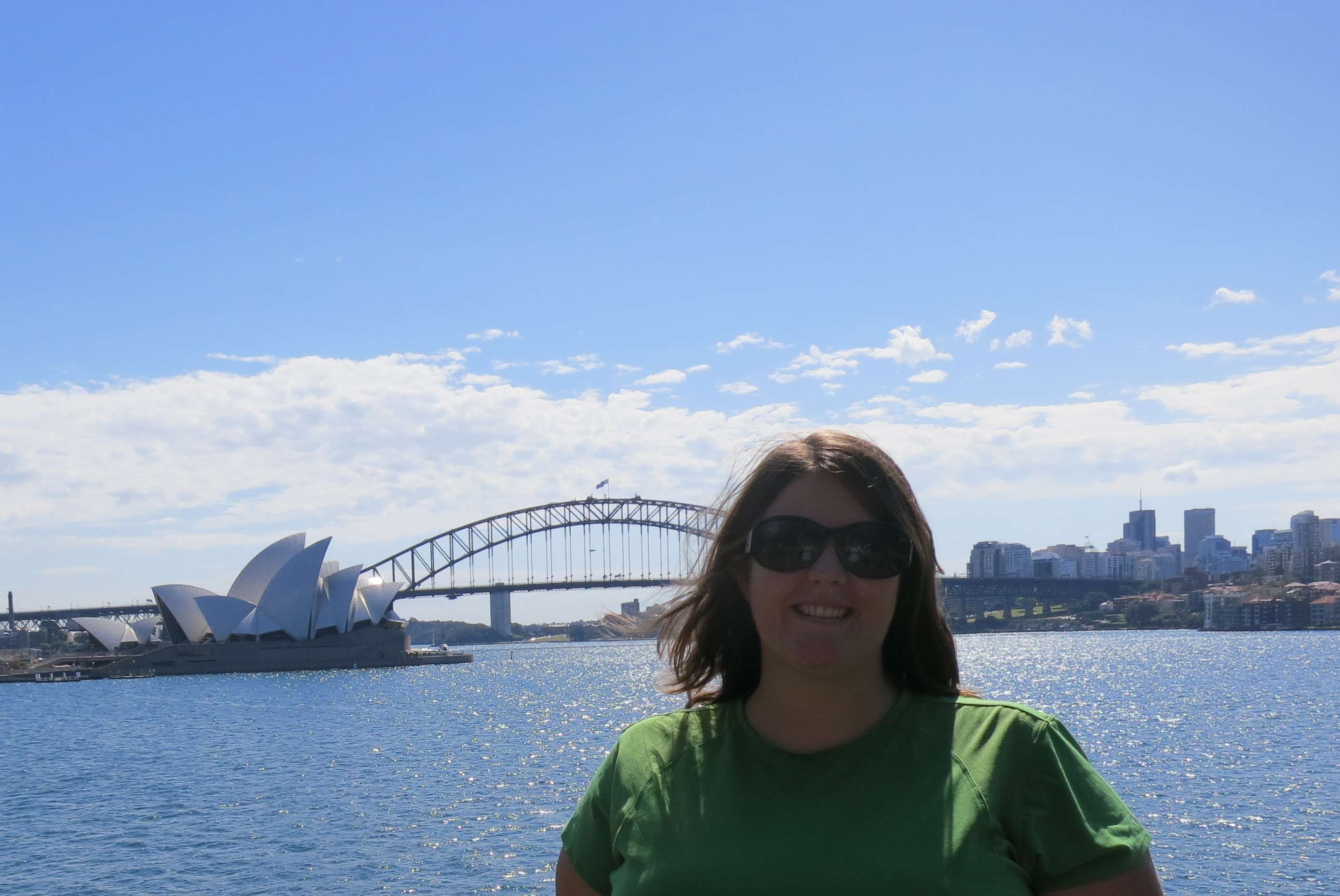
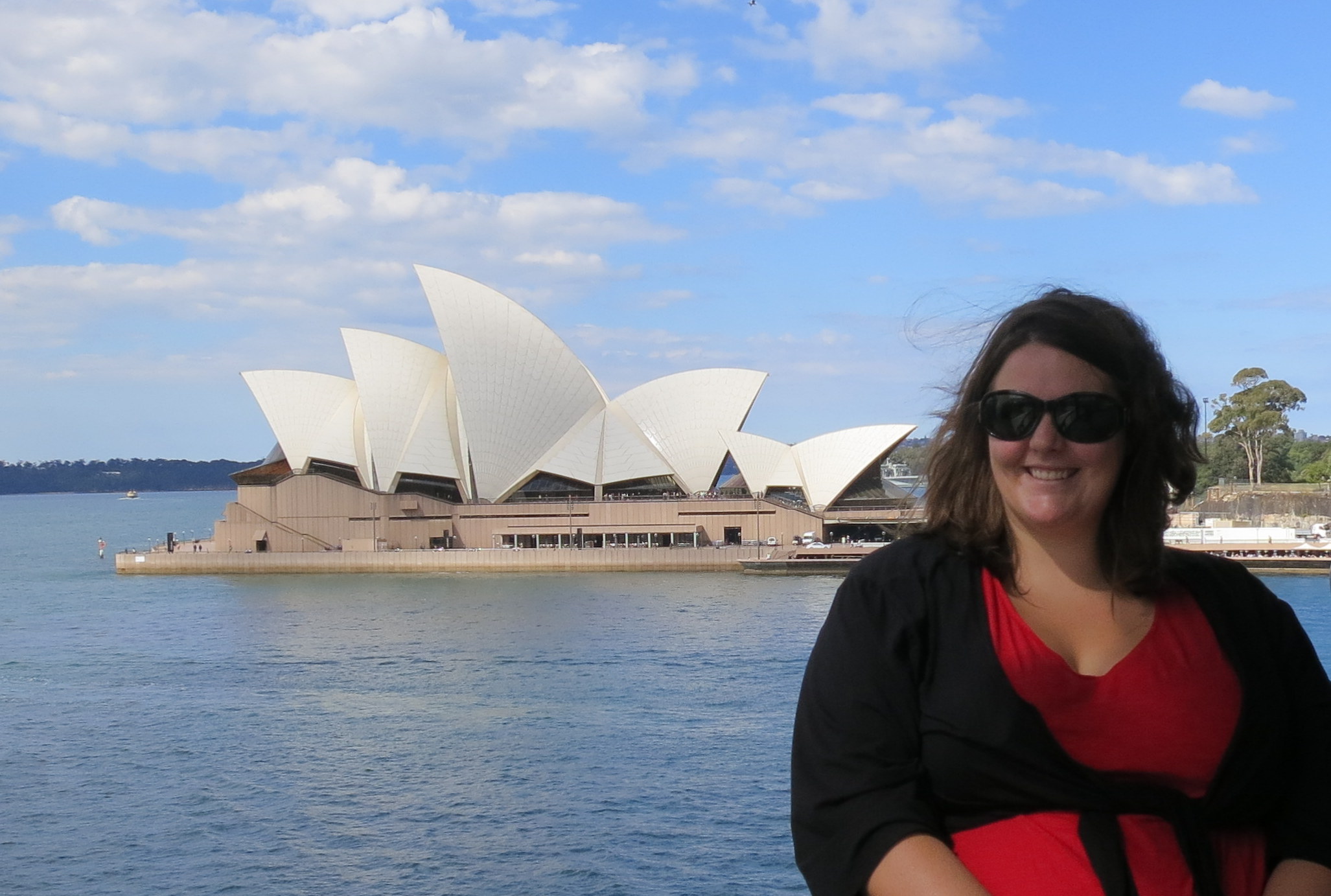
Backlit as all get-out, but there I am with the opera house and the bridge. Sydney!

In the Royal Botanic Gardens of Sydney
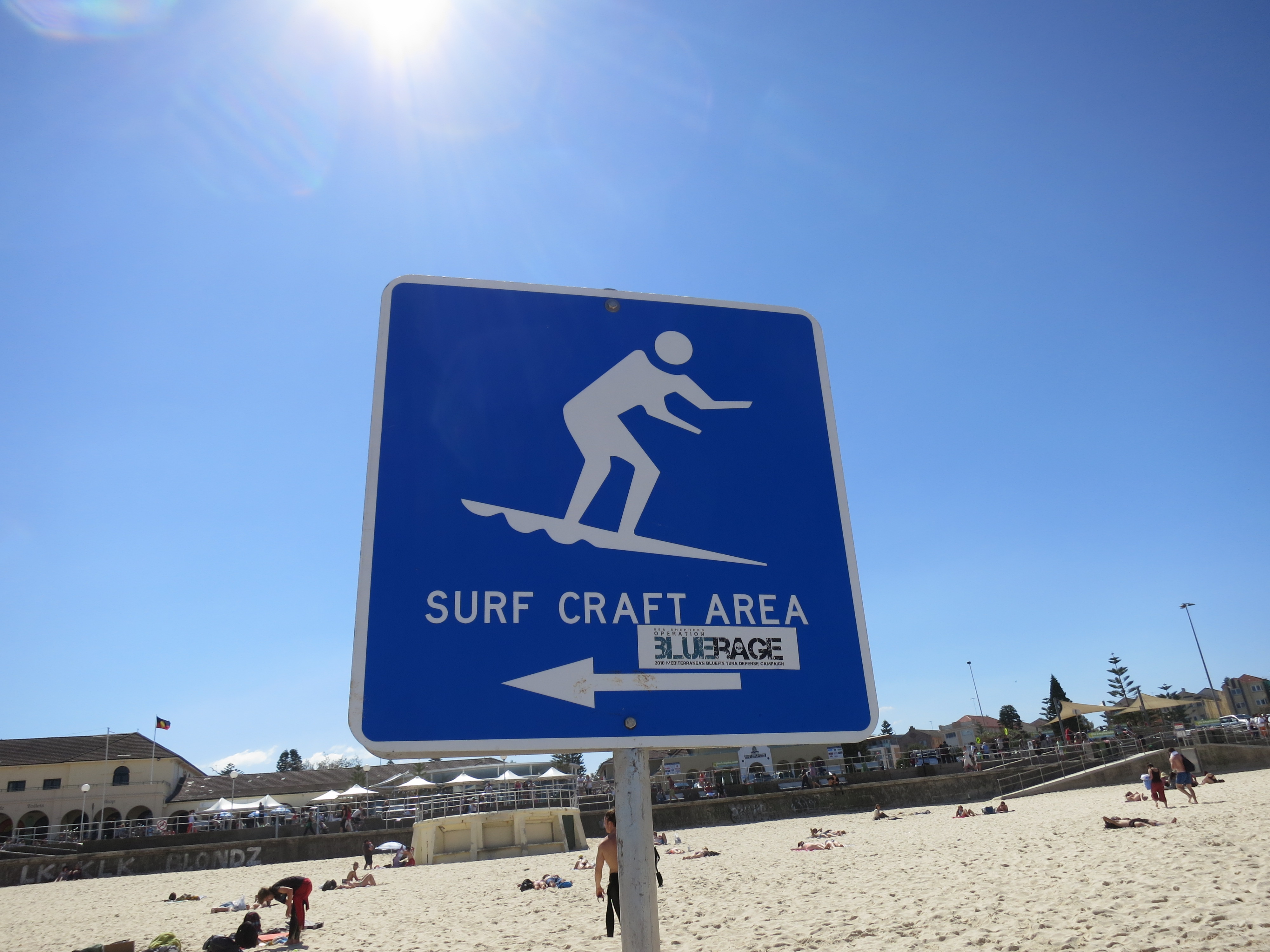
Surf’s up (haha, no, I did not surf, but I watched)
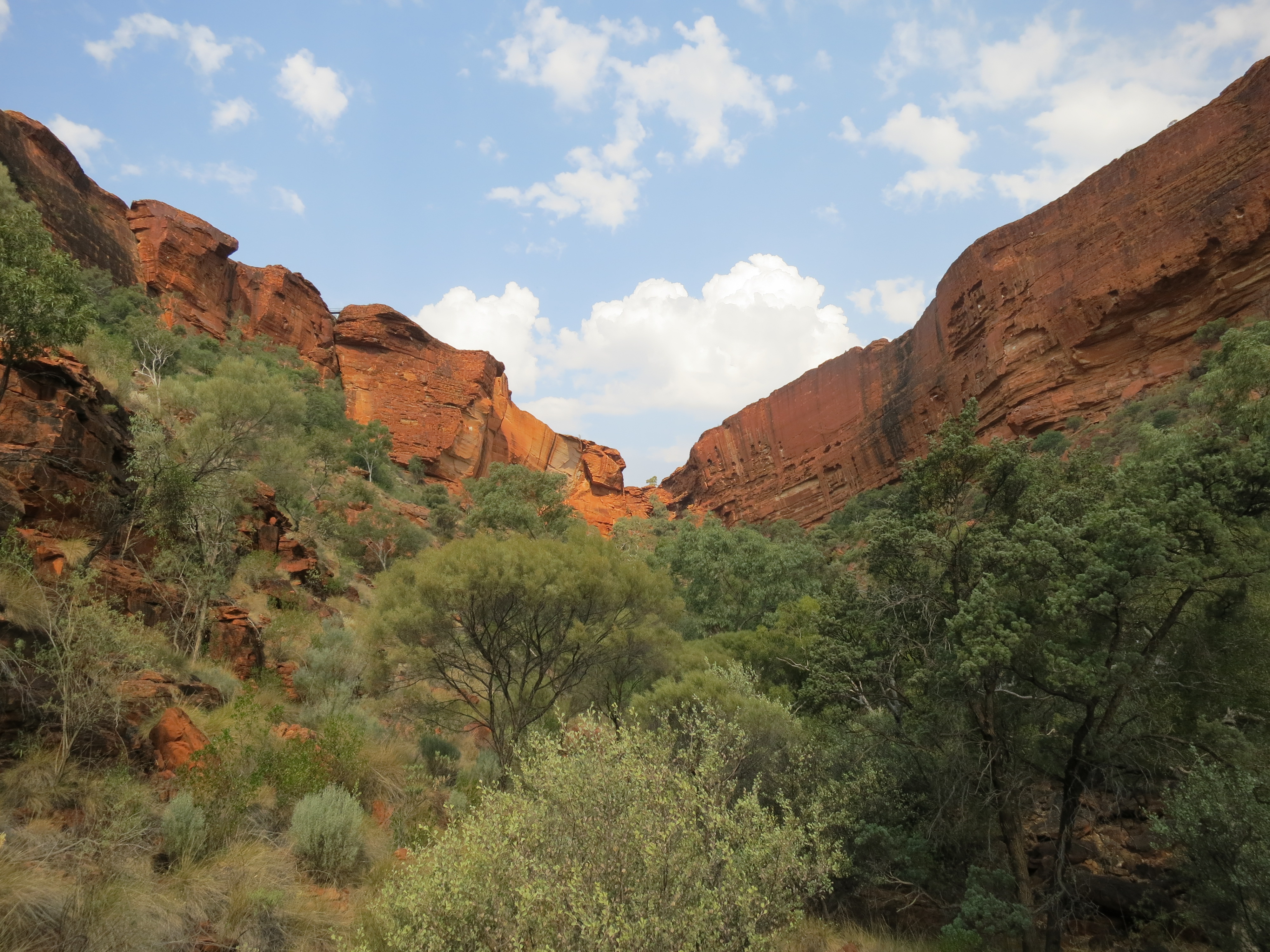
view of Kings Canyon from the dry riverbed

Kangaroos aren’t hopping down the street here, but they are nibbling around the edges of their spacious cages on camel farms (yes, camel farms)
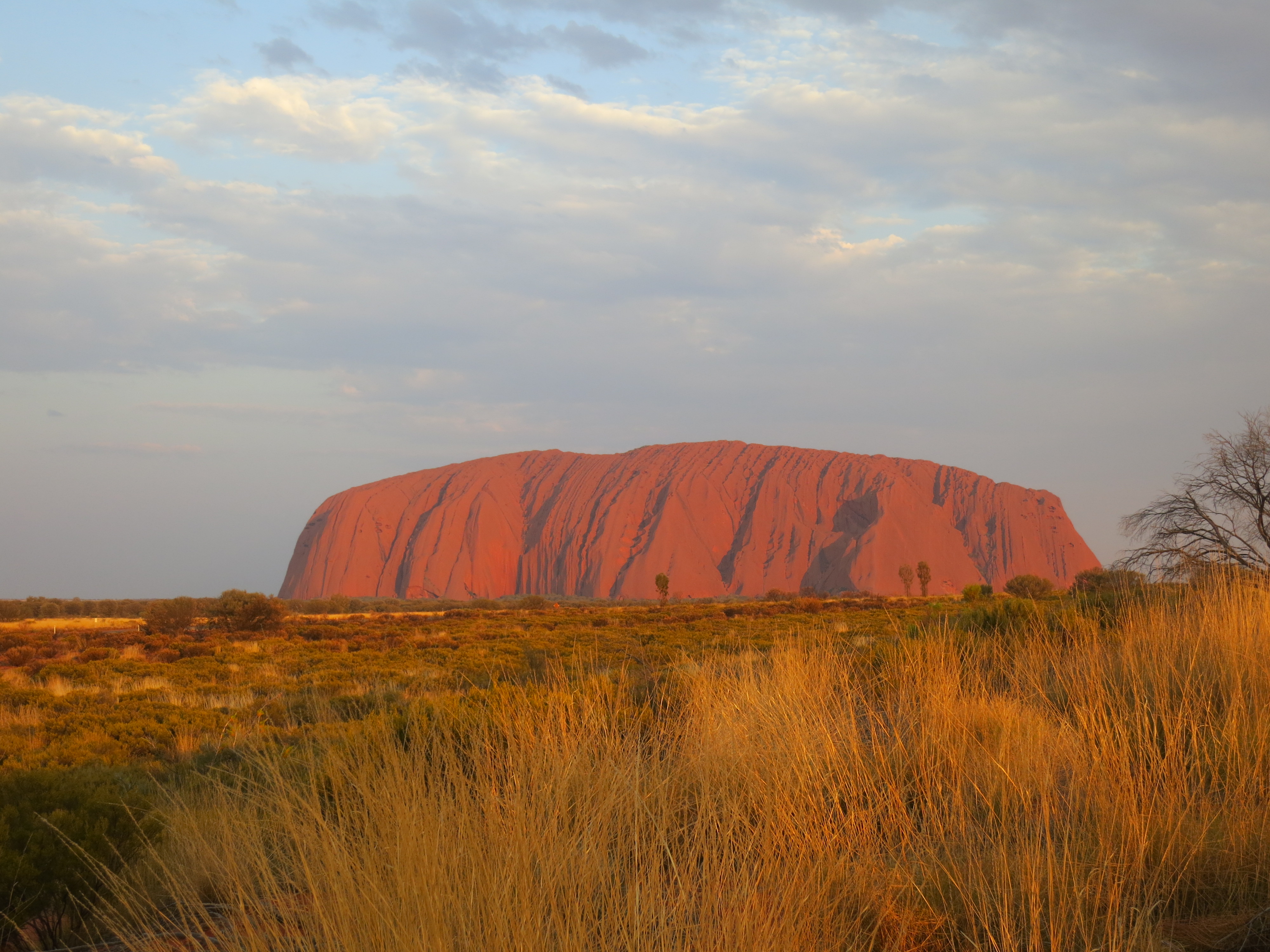
There it is.
Hello dearest fellow travelers! I have arrived in Australia, and the adventure has truly begun. I had a fantastic time with Heather in Hawaii, but that was more of a really good vacation. Now I’m on my own (I miss her already!) and feeling out what it means to travel more slowly.
My trip to Sydney was not the best. I paid extra to get an exit row so I’d have more legroom, but it turns out that Jetstar’s exit rows have physical barriers as armrests, rather than the armrest and space below as in other planes I’ve been on (and in the regular rows on this plane). That meant my hips were introduced to a whole new meaning of the word “squished.” But happily I did fit, and didn’t have to arrange a new seat while everyone watched and I squirmed in embarrassment.
The extra legroom was nice–when I was able to use it. The exit row was right by the bathroom, of course, and despite all the flight crew warnings to not congregate, people grouped up waiting to use the loo and I had to pull my legs in to keep from being stepped on. The movie screens in the exit row were the kind that fold under the seat, so you pull them up to watch the latest summer blockbuster/flop (The Avengers/Snow White and the Huntsman, in this case). Fine, except for the several times the same woman walked by me to the bathroom and tried to use my movie screen as a handhold, which sent the screen crashing down onto my shin. She finally realized after the third time and apologized, but by then I was already bruised.
But these are annoyances that come with flying coach, not really a big deal. The big deal was the four hours of stench on my ten-hour flight. Six hours in, one of the guys waiting for the bathroom suddenly fainted. He hit his head on the bathroom door on his way down, which made everyone look up, and then he was on the ground. His fiancee came running, we got some flight attendants, and they quickly revived him and determined that he was fine, thank goodness. He went back to his seat with an oxygen pump and a worried fiancee, and we all breathed a sigh of relief.
And then we tried to stop breathing. Because when he hit the ground, the poor guy vomited. The flight attendants cleaned it all up in yellow bags marked “biohazard,” but they apparently didn’t have any air freshener, so I inhaled vomit fumes for the rest of the flight.
It was gross, it was uncomfortable, it was long, but at last the flight was over. The captain dipped the wings over the city so we got a nice view, and we landed almost on time. I breezed through immigration, got my bag in a few minutes, and flew through customs. Were things looking up?
Yes, almost. People were not joking when they said Australia is expensive. I got cash from the ATM and broke my $50 with a chocolate bar–a $4 chocolate bar! It was cold and wet outside. Cold, wet, expensive–had I landed in London?
After an interminable shuttle bus ride, I arrived at Blue Parrot Backpackers. It’s been ten years since I last stayed at a hostel, but it all came flooding back as soon as I got inside. TV blaring, people running from common room to kitchen with beers in hand, animated discussions taking place in every nook and cranny. The guy at reception, Mark, was nice, if a bit distracted. He showed me to my room and went downstairs to argue over pizza toppings with a guest.
I looked around and realized the fears I’d had when booking the bunk bed had come true; all the bottom bunks were taken. Well, ok, I’ll try the top. I put a foot on the first rung to pull myself up to make the bed, and the bed literally started falling over. I do not remember that happening ten years ago. Shit. I was definitely too fat for a top bunk. I went downstairs and asked Mark for help. He went into the kitchen and made an announcement, asking if anyone would swap with me. Meanwhile, I sat on a couch and hid my face in embarrassment. No one volunteered.
I went back upstairs to turn on my laptop to search for a new place to stay, trying to stay practical and focused, trying not to cry or panic. Another guest came into the room and chatted with me while she put things on her bed–a bottom bunk. She’d just arrived and hadn’t heard Mark’s plea, so I asked her if she’d mind switching bunks. Right away she agreed, and was super nice about it. What a relief! I’m trying not to dwell too much on how that whole situation felt, but suffice it to say, it did not feel good.
After that, finally, at long last, things improved. The women in my women-only dorm room are friendly. I got some food and chatted a bit and went to sleep. I woke up when someone’s alarm went off at 5am and didn’t really get back to sleep after that. But that’s ok; I’m here, I made it, I’m in Sydney. It’s looking good from here.
And today I did this:
 Stowaway Travel Writing & Editorial Services