Train Travel in Vietnam

I’d read that train travel in Vietnam was comfortable and cheap, and the best way to see the countryside if you didn’t have a lot of time. I found it somewhat comfortable and well priced, and a good way to see the countryside. It was also a chance to talk with other travelers.

Train ticket

Train ticket — about $13 for a 270 mile trip

I traveled from Ho Chi Minh City to Nha Trang on a nine-hour journey. I purposely chose a daytime trip, so that I could see the landscape as it rushed by. When I boarded the train, it looked like most of the Vietnamese weren’t really paying attention to their assigned seats, and they just sat wherever suited them best. The tourists, on the other hand, stuck with the number on their paper, so it was a funny mix of me stubbornly searching for the seat that matched my ticket while everyone around me negotiated with one another for favorite spots.

Full train to Nha Trang

Full train to Nha Trang

There were a few other tourists in the same car, and that’s how I met Laura, a lovely woman from London. She was traveling with a friend, Kate, whose seat was somehow several rows behind ours. Laura and I chatted most of the trip, and I hung out with her and Kate in Nha Trang, and later in Hue, when our paths crossed again. I probably should have just offered my seat to Kate so they could sit together, but I liked my window seat and didn’t want to break the rules. If I hadn’t stayed in my spot, I never would have met them and hit it off so well, so the moral of the story is that sometimes being uptight pays off!

hue to hanoi train

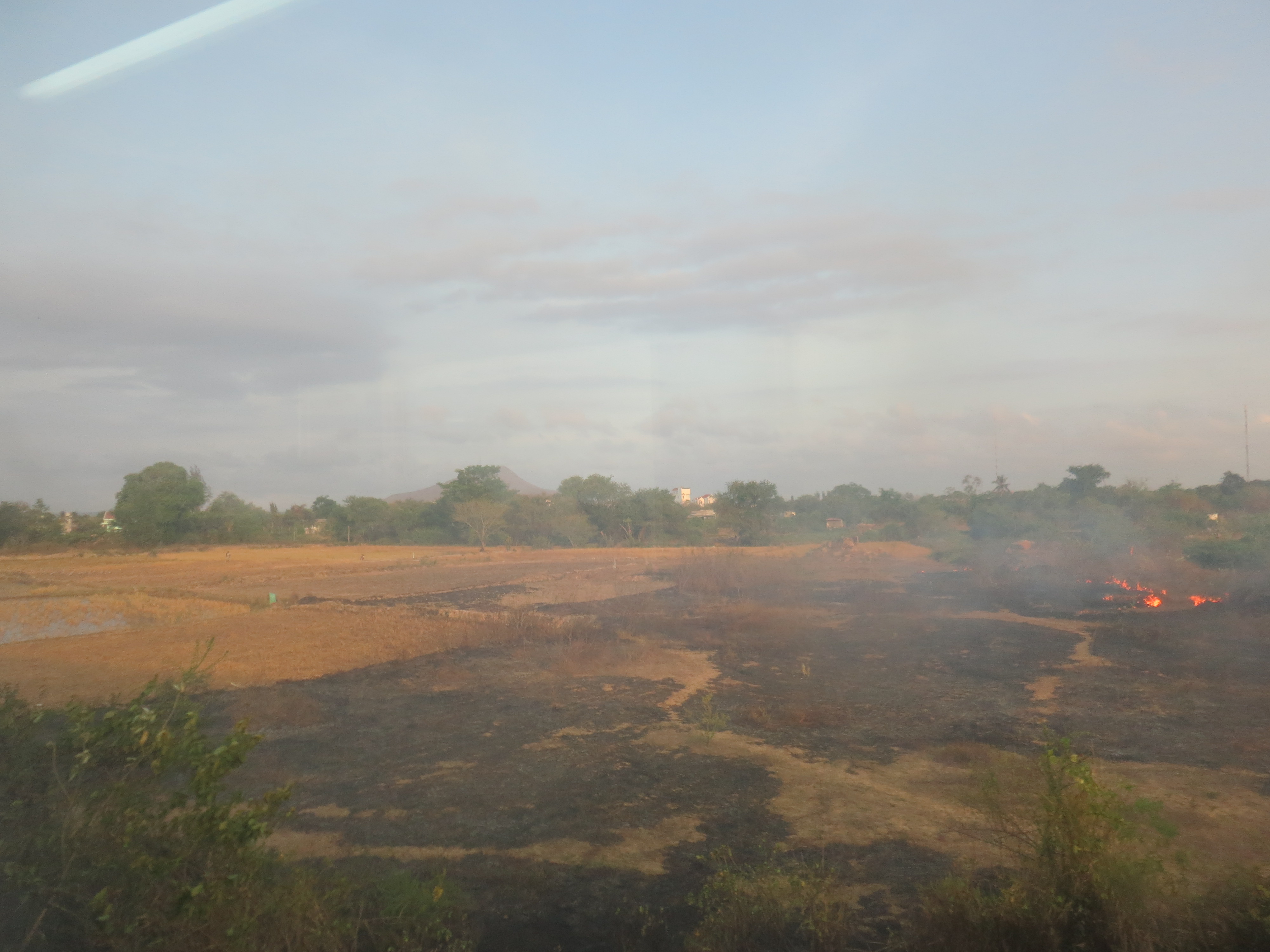
Burning in the fields

Burning in the fields

Scenery on the way from Saigon to Nha Trang

Scenery on the way from Saigon to Nha Trang

The train had a couple TVs on it, playing flashy ads and soap operas. Nearly all the coat hooks were being used to hold people’s bags of food. A cart came around a couple times, selling treats and drinks. At one point the train stopped longer than usual at a station, and Laura nudged me, pointing out the possible reason: a couple of men in official looking uniforms, arguing with a middle-aged woman in a seat six or seven rows in front of us. A couple stations later, the uniformed men led her off the train, carrying what looked like a toy machine gun. We’re guessing the toy was hers and it wasn’t allowed? We really hope it was just a toy. It remains a mystery.
From Danang to Hue
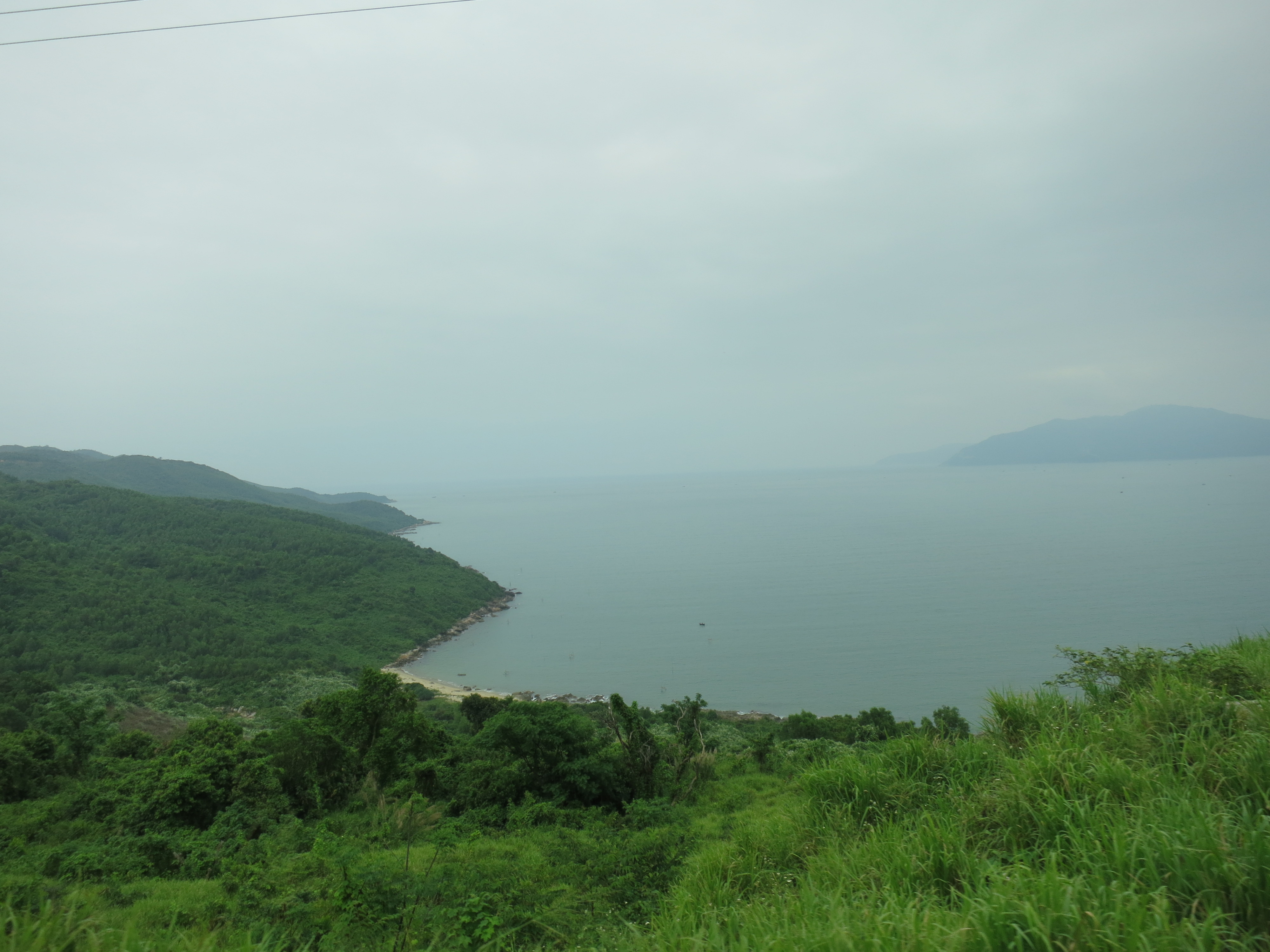
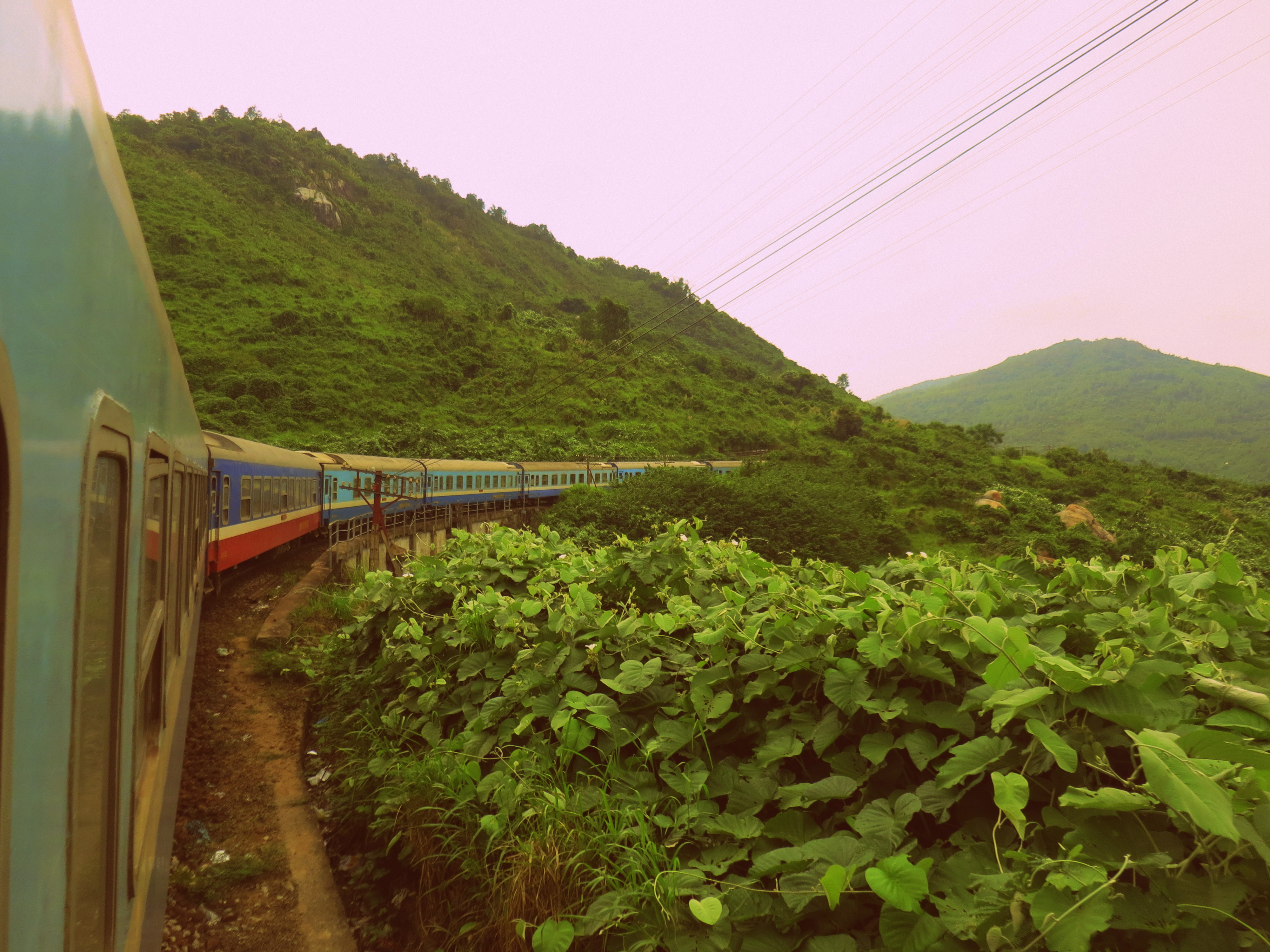
From Danang to Hue

Misty coast

Misty coast

I took a train from Danang to Hue, and that was the prettiest train ride of my trip. The tracks followed the coast, and even though it was an overcast day, I saw plenty of lush tropical forest tumbling down the hills and into the ocean. This train was empty, so we all just picked which seats we liked best, which was good because the seat I was assigned seemed to have some springs poking out of it. This train was not as nice as the first one, but with scenery like that, who cares.
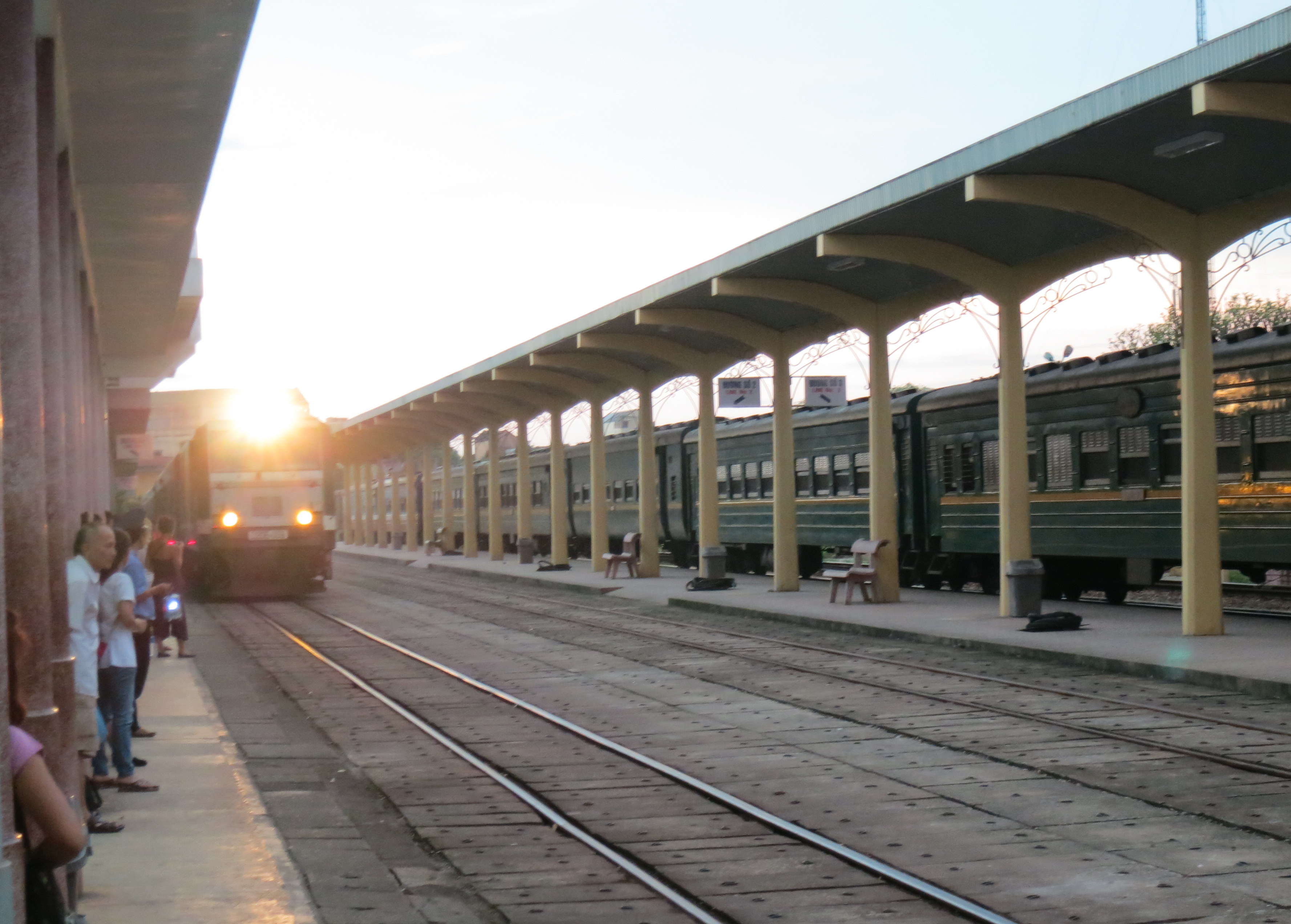
That sunset ride is pulling in

That sunset ride is pulling in

hue to hanoi train

The last train I took in Vietnam was an overnighter from Hue to Hanoi. I was determined to be picky about my seat, since I’d paid extra for a bottom bunk in a six-bunk cabin. Imagine my surprise when I arrived in the cabin and found the pillow and blanket tossed to the side, and a man sitting on my bunk. Once I showed him my ticket proving it was my spot, he gave it up and sat on the other bunk with his friend and the woman whose bunk it was. I only meant he couldn’t sleep there, not that he couldn’t sit while we chatted, but that was just the first of a series of small misunderstandings. I fit my bags in around the five-gallon jar of homemade whiskey the guys were transporting, and then we faced each other and tried to talk. I had bought a small bag of sticky rice at the station and ate that while we talked, which the three of them found hilarious (I am not very good at chopsticks).
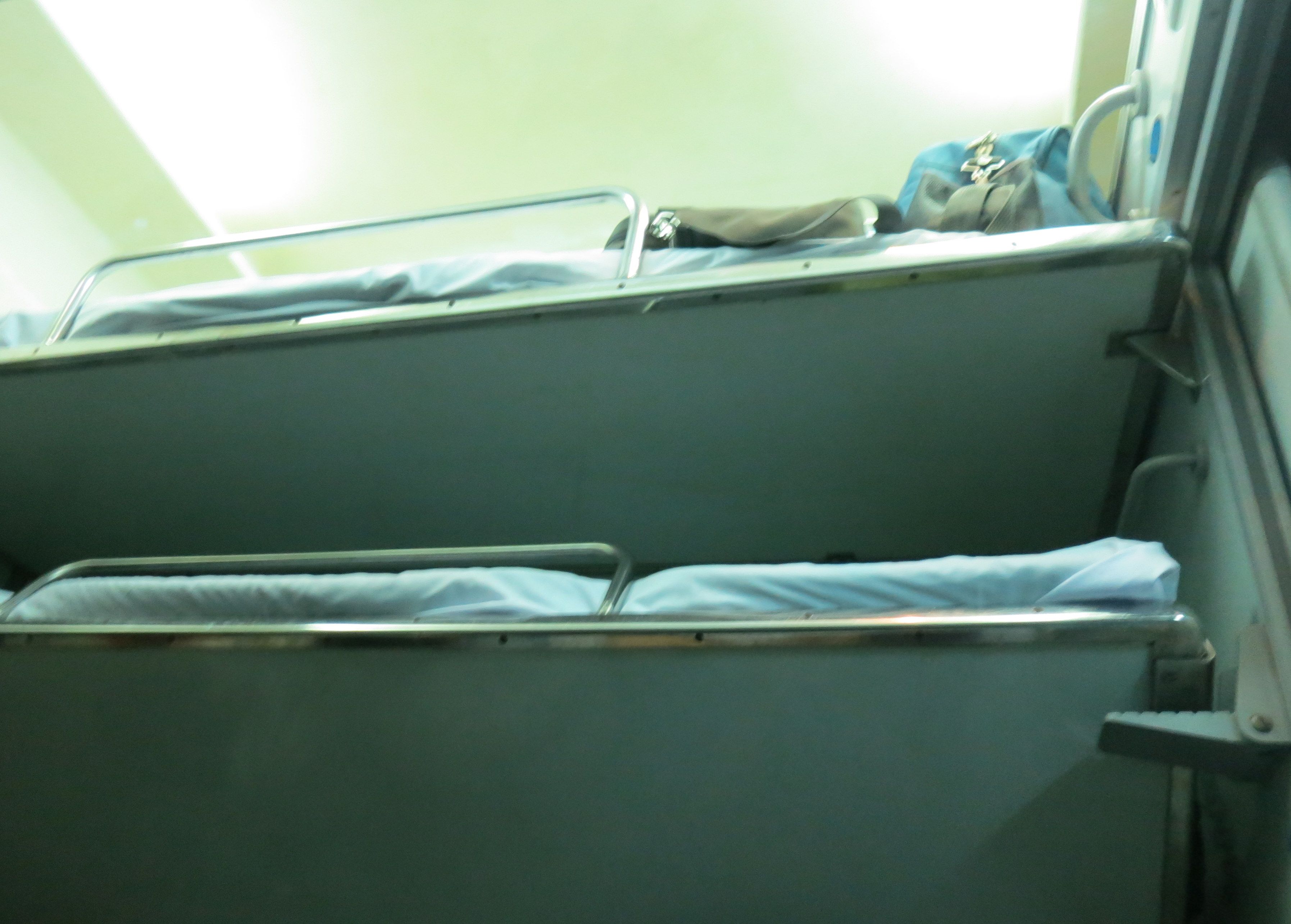
Bunks on the overnight from Hue to Hanoi

Bunks on the overnight from Hue to Hanoi

My bunk, with the homemade whiskey just visible in the corner there

My bunk, with the homemade whiskey just visible in that rucksack in the corner there

The two men had very limited English, and I only knew how to say “please” and “thank you” in Vietnamese, so it was a real struggle to talk. The most astonishing sunset was taking place outside the hall window, but every time I tried to peek out there, the guys pulled me back and tried to talk some more. There’s a lot to be said for cross-cultural communication, but when the language barrier is this huge, there’s really only so much that can be said. They would ask a question, and I would respond, and they’d smile, uncomprehending. Then I would ask a question, and they would respond, and I’d smile, uncomprehending. Any attempts to clarify what was said were met with more smiles and shrugged shoulders. I learned that their names were Tien Troung and Van Hien (they wrote their names for me in my notebook), and they were engineers on a work trip to Hue, returning home to Hanoi. They brought the homemade whiskey with them and were eager to return to their wives and children. Tien Truong showed me a photo of his six-month-old. That, at least, is universal. I congratulated him, and he grinned proudly.

Tien Truong and Van Hien

Tien Truong and Van Hien, who insisted on posing for photos and asked me to pose as well

Sleeping on that train was nearly impossible, since the guys played music on their phones and two other passengers climbed in the middle bunks midway through the night, and I had to use the bathroom twice, and tried to forget the experience each time because it was so disgusting that if I remembered how nasty it was, I’d never be able to go again.

hue to hanoi train

We arrived in the capital around 6am on Gio to Hung Vuong Day, a celebration of the Hung Kings, who founded Vietnam. I said farewell to my cabinmates, scooted my bags away from the whiskey jar, and left the train behind.
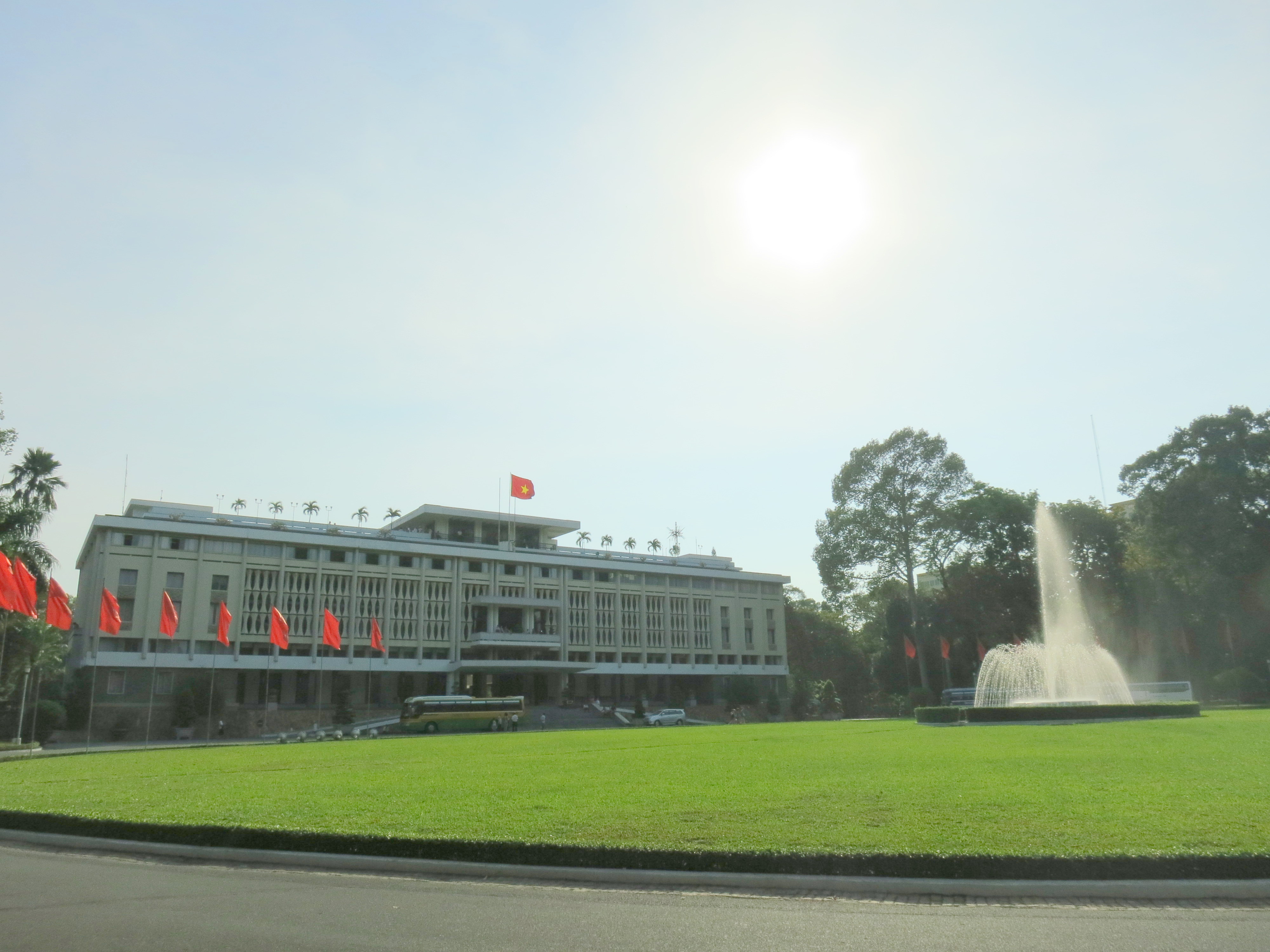
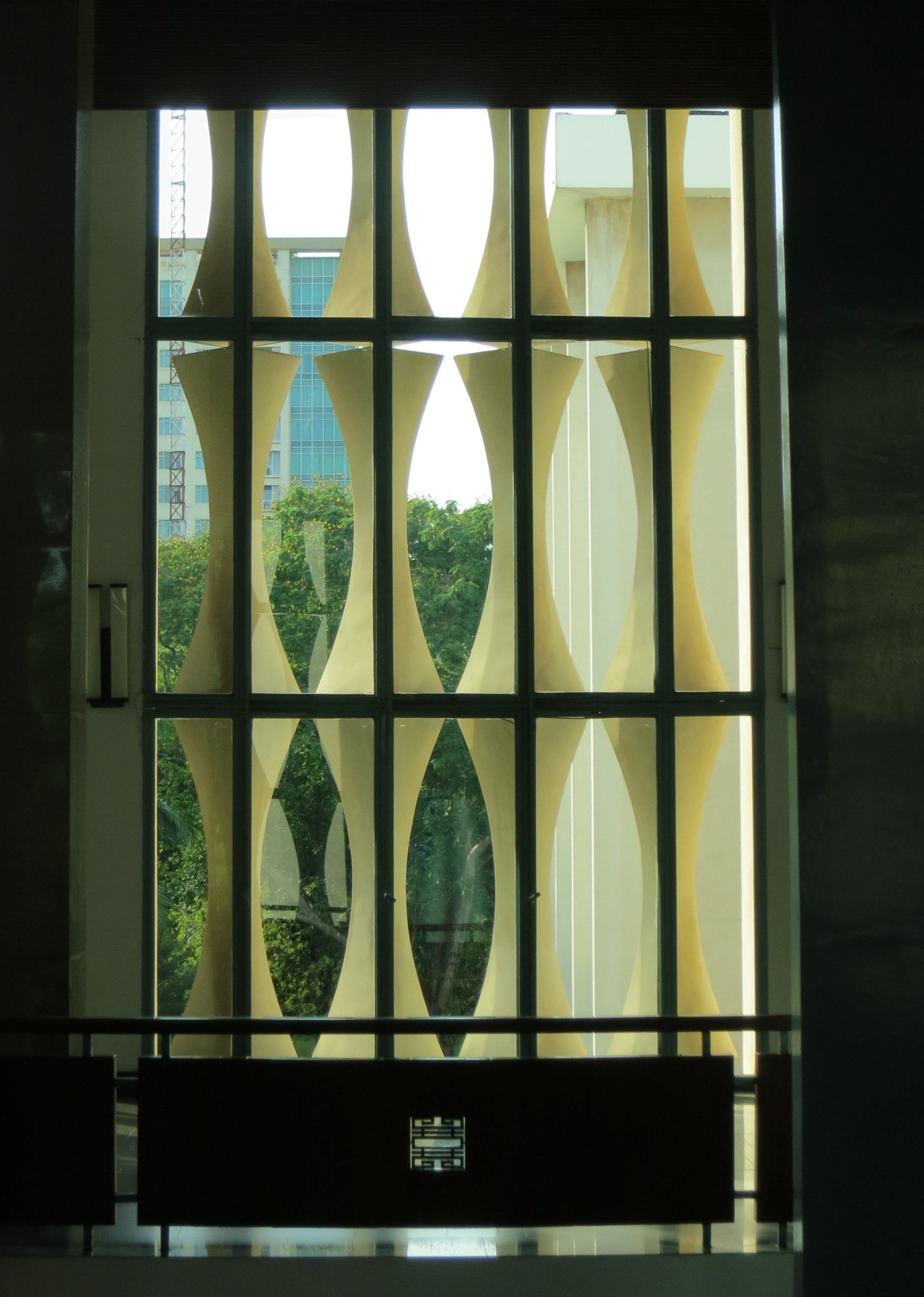
The Glamour of Vietnam’s Reunification Palace

I went to Reunification Palace right after going to the War Remnants Museum, and the change was jarring. I had an emotional experience in the museum, and it was strange to walk away from the troubling rooms of the museum into the perfectly manicured halls of the palace.

Reunification Palace, Ho Chi Minh City

Reunification Palace, Ho Chi Minh City

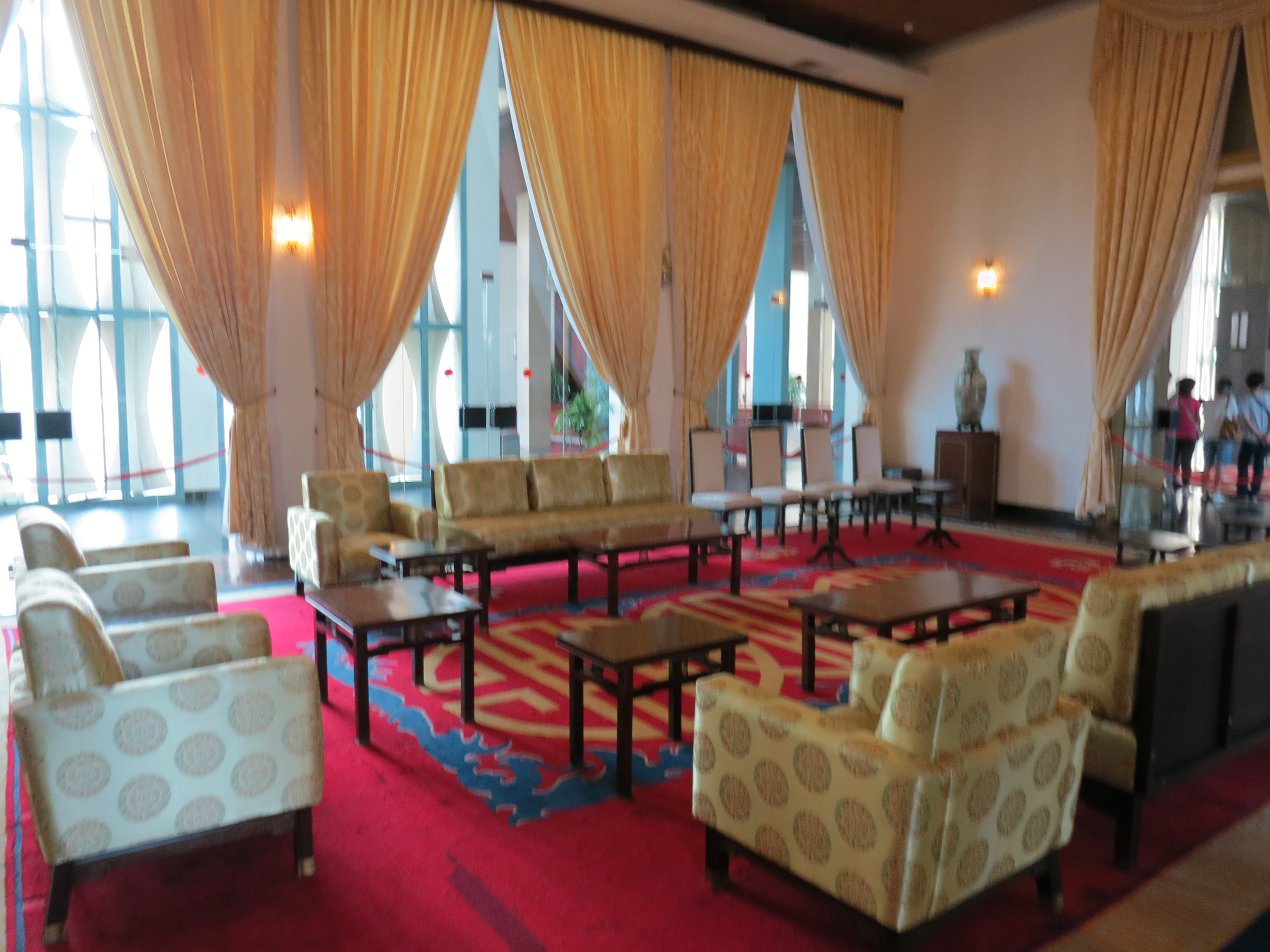
I caught a tour midway through, and learned a little about the building. The French had built a mansion on the site back in the 19th century, but it was bombed in 1962 in an assassination attempt on President Diem. The damage was so extensive that Diem ordered the building razed and rebuilt, which is why it’s entirely built and decorated in the modern style of the mid-1960s. 

I often dislike these types of windows, because they're usually done in a heavy concrete, but here they seemed much lighter

I often dislike these types of windows, because they’re usually done in a heavy concrete, but here they seemed much lighter

One of the reception rooms

One of the reception rooms

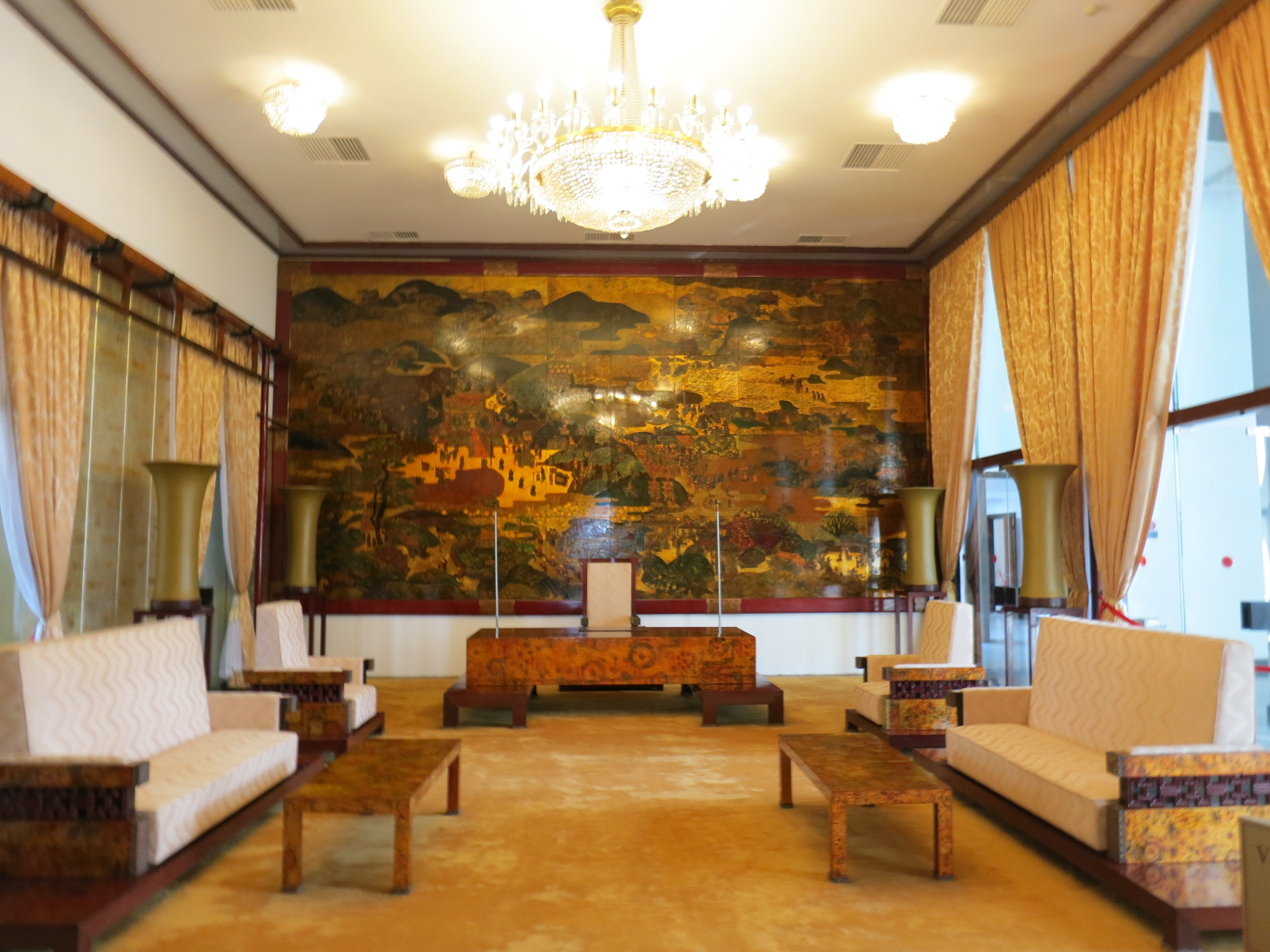
It was like stepping on the set of Mad Men, except where I find the dark browns of that show uninspiring, the bright colors and rich materials of the palace were a sight to behold. I think a lot of that had to do with Vietnamese-born, French-trained architect Ngo Viet Thu, who purposely used fabrics, rugs, and paintings showing Sino-Vietnamese designs. Everything was sleek lines, symmetrical layouts, long rooms filled with matching furniture. One room held a painting that represented the north, middle, and south of Vietnam. The president’s main reception room incorporated traditional Vietnamese designs, and the lacquer on a painting in another meeting room was stunning.

Check out that lacquer

Check out that lacquer

From left to right: the north, middle, and south of Vietnam

From left to right: the north, middle, and south of Vietnam

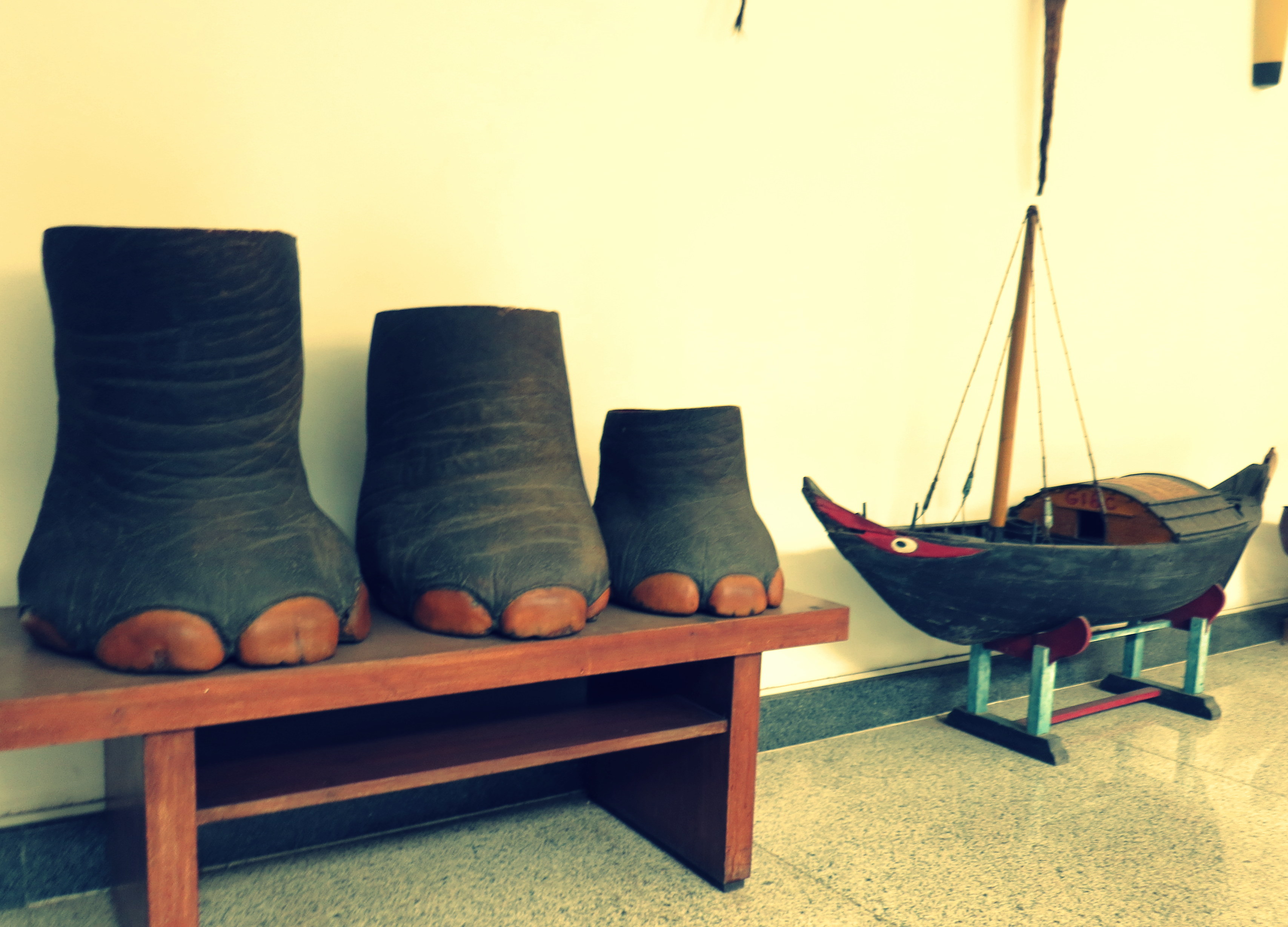
The residential quarters were emptier, nearly bleak, compared to the dressed to impress public rooms. The courtyard of the residential quarters contained the preserved legs of elephants, a miniature ship, and a Chinese ceramic dog, which seemed an odd assemblage.

The relatively bare residential quarters

The relatively bare residential quarters

Odd mementoes

Odd mementoes

The palace includes a movie theater, a gambling room, and my favorite–a rooftop ballroom. There’s a dance floor, bar, and grand piano up there in the center of the roof, and space on either side to drift away to for conversations romantic or political, or maybe both.

Tables were set up for mahjong and blackjack

Tables were set up for mahjong and blackjack

Dancing on the rooftop

Dancing on the rooftop

Down in the basement is the war strategy room, several small offices, a small cell for the president to hide in during combat, the kitchens, and the Mercedes used by the last president of South Vietnam.

The door to the movie theater

The door to the movie theater

Strategy room underground

Strategy room underground

One of the views from one of the balconies

A view from one of the balconies

Diem was killed before he could ever live in the palace, but two of his successors lived there. On April 30, 1975, a tank crashed through the gate of the palace during the fall of Saigon, and the war officially ended. What had been called Independence Palace was renamed Reunification Palace by the Communist government, and it has remained pretty much untouched ever since. Sometimes official meetings are held there, but mostly it’s a strange museum piece, a building barely used for its intended purpose, a monument to the decadence of a former regime.

Adding the traditional to the new building

Adding the traditional to a new building

Goodbye Saigon, Hello Ho Chi Minh City

I liked Saigon. I’d heard a lot about about moto thieves and grime and crowds, so I was wary. But the streets were wide, and there were several big green spaces I could walk to from my hostel in District 1, and the buildings were colorfully painted. They’re all very narrow, tall buildings, and the ones along the canal remind me of Amsterdam, but brighter. The boulevards and main streets were wide, but as soon as I ducked down any alley, I found myself in a narrow passageway packed with people, goods for sale, tiny stools to perch on while eating, bicycles and motorbikes. These alleys are the main entrances to the homes of the 9 million people who live here; the main streets are lined with shops and eateries. 

Alleyway in Ho Chi Minh City Alleyway in Ho Chi Minh City

Every time I left the guesthouse, the employees would implore me to hold on to my purse, not just let it hang by my side. I met up with a friend of a friend, a Vietnamese woman born and raised in Ho Chi Minh City, and she looked concerned when I showed up by myself–did I walk here alone? Did I feel safe? I never witnessed any muggings, but one of my friends from the elephant camp had her bag snatched as she crossed the street. A motorbike zipped by, the driver pushed her down and pulled at her bag, and next thing she knew, she had a bruise and no phone or wallet. So it’s not all good news there, but I was fortunate and only saw the good side of the city.

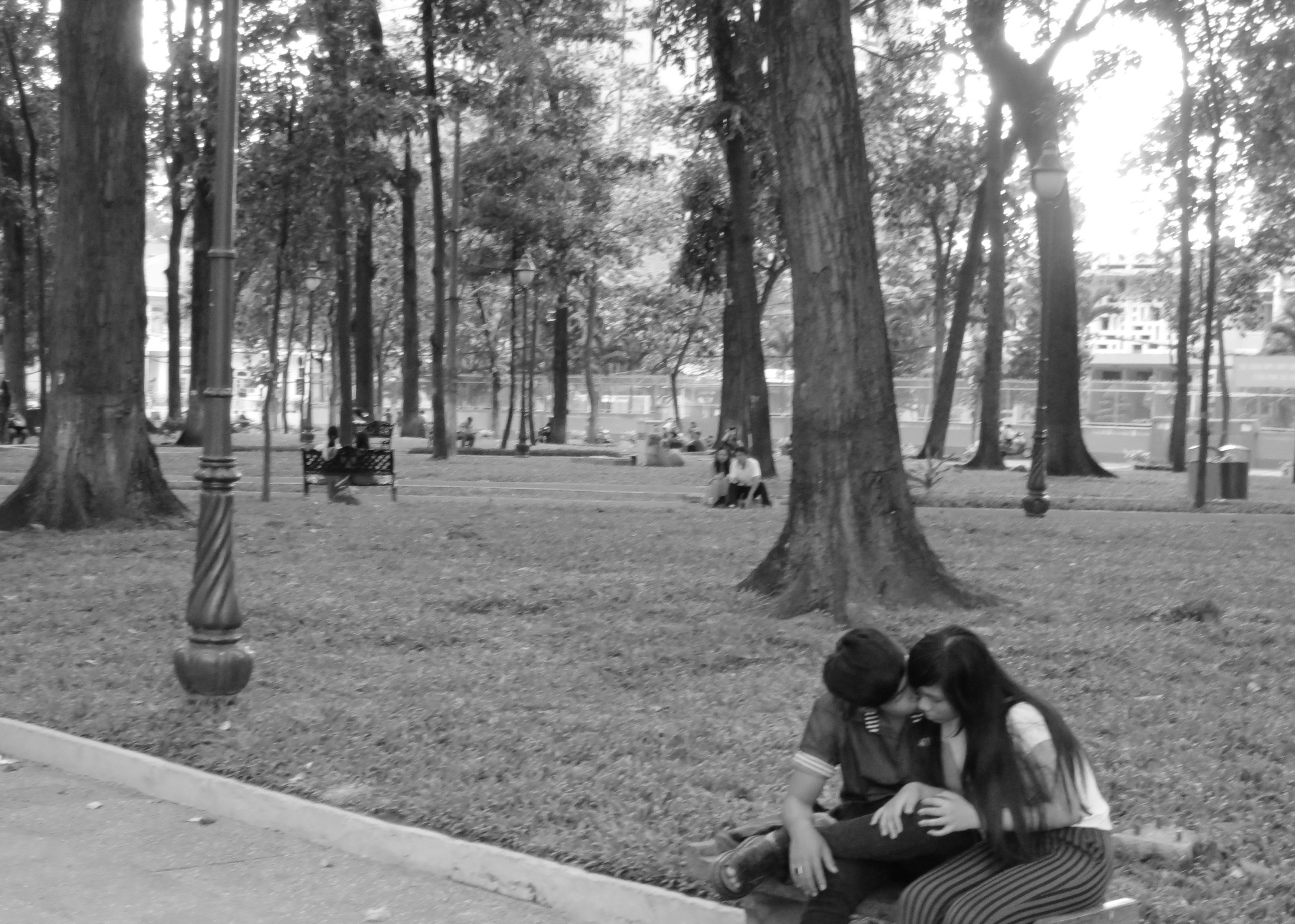
Intimate moments in large parks Intimate moments in large parks

What’s with the name change, you might be wondering. The city was called Sài Gòn, part of Gia Định district, and when the French invaded in the 19th century, they Westernized the name to Saigon. It was known as Saigon until 1975, when the last American forces left the country and the new government branded this stronghold of Western influence with the name of the late Ho Chi Minh, the late communist leader. However you feel about the politics of the war, that was a canny and cutting move. The central part of the city is still called Saigon by most residents.

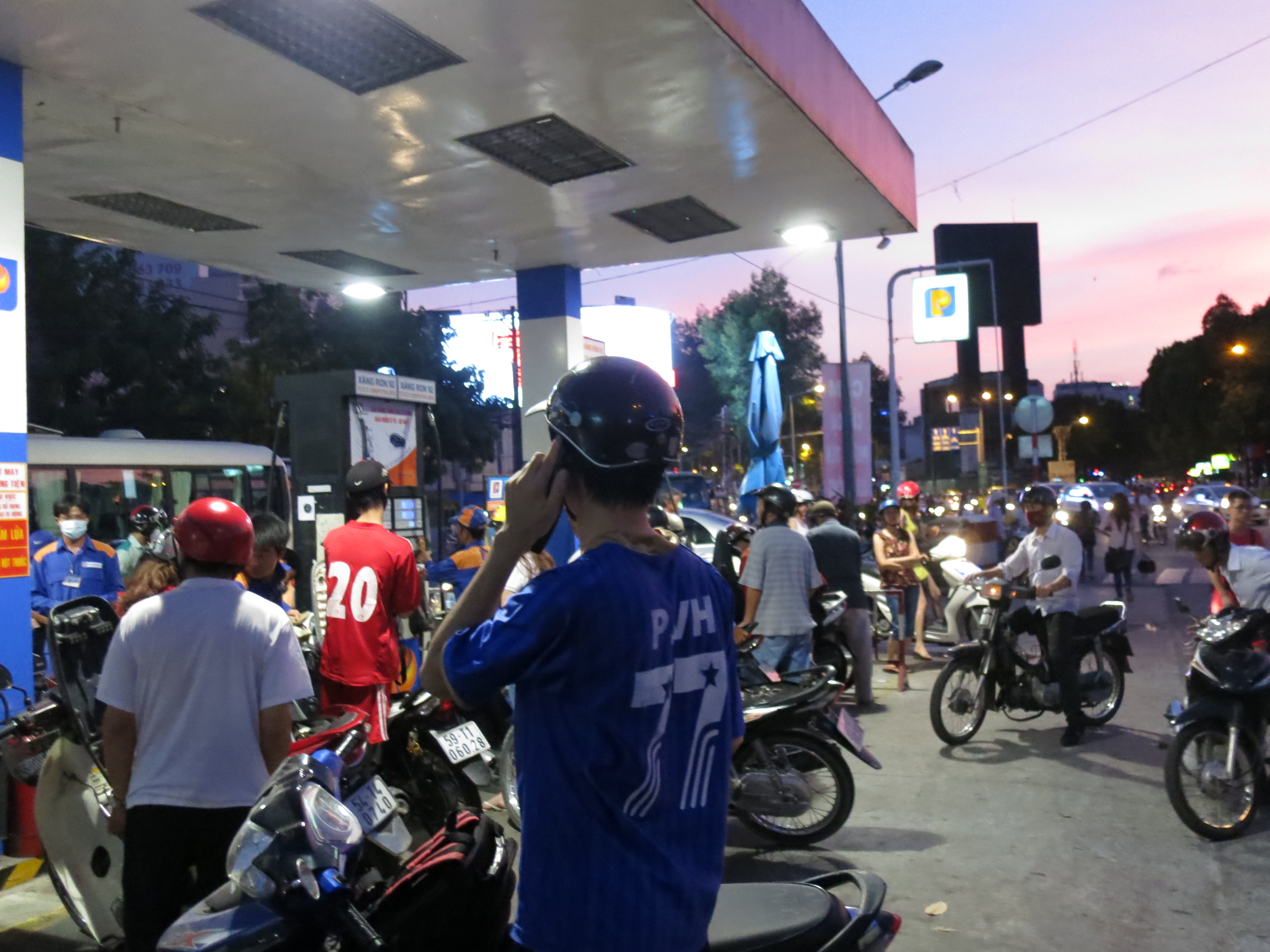
A swarmed gas station A very busy gas station

The Cinemax TV channel I got in my guesthouse advertised all the movies it would play in Southeast Asia in the month of April, with a note that The Hunger Games wouldn’t play in Vietnam. I wonder if that’s because the areas of Ho Chi Minh City are split into district numbers, and there are districts in the movie; or if the anti-government sentiment of the film is too much for the Vietnamese government to condone (although there wasn’t nearly enough of the book’s anger in the movie, I thought); or if it’s a more prosaic reason, like a distribution rights issue. You do start to notice the tiny things after a while on the road, I suppose!

A wall in the Catholic cathedral of Ho Chi Minh City, which I saw on Easter Sunday A wall in the Catholic cathedral of Ho Chi Minh City, which I saw on Easter Sunday

Mostly I spent my time in Saigon visiting museums and sites about the Vietnamese-American War (which I’ll write about next week), but I also found time to have a feast of a meal with my friend’s friend at Mon Hue, and bia hoi with a new friend from my guesthouse.

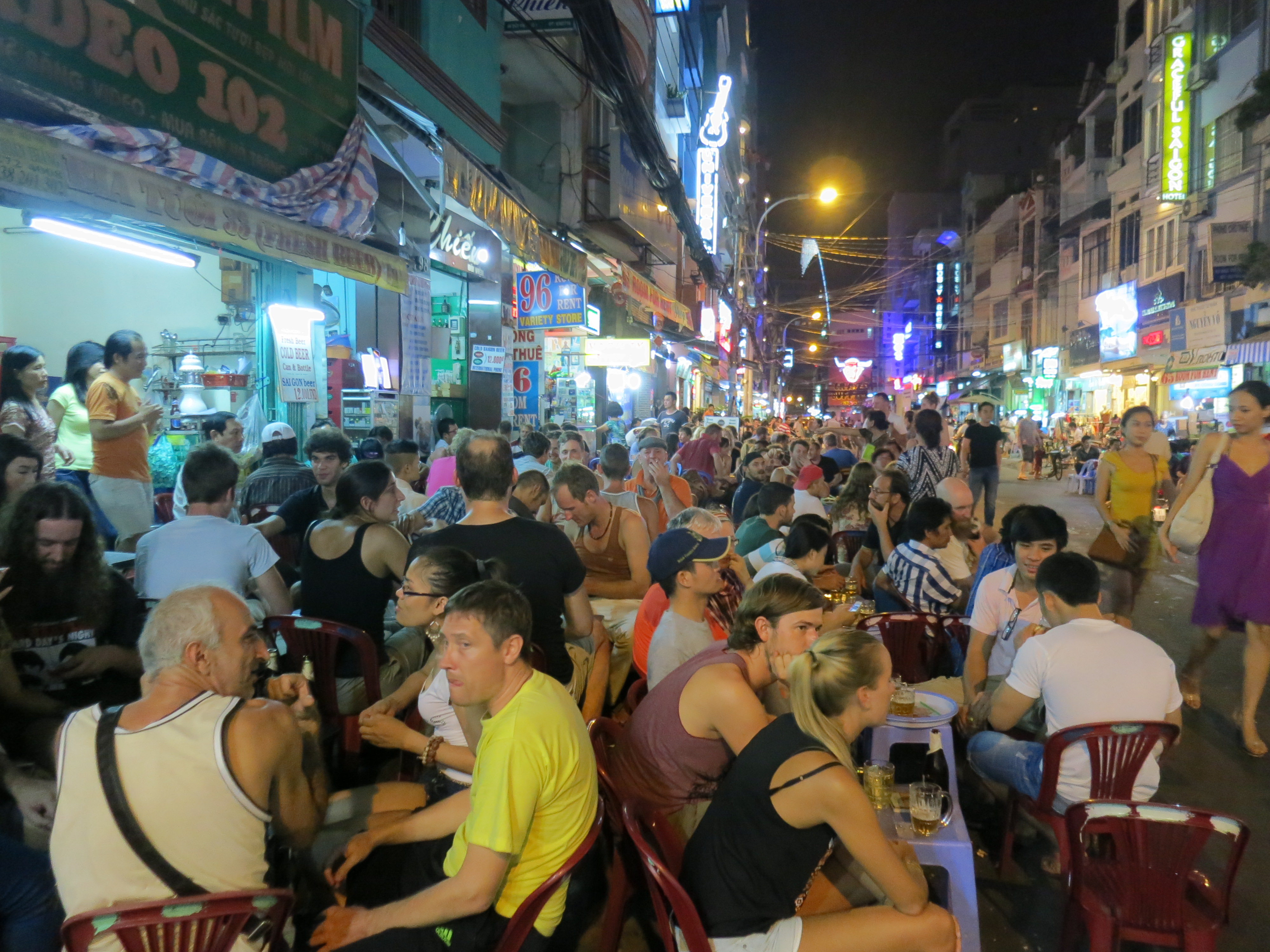
Bia hoi Bia hoi

Bia hoi is the beer that’s brewed daily at many places throughout Vietnam. There’s a “beer corner” in Hanoi that’s become a tourist destination, but there are plenty of places in District 1 of HCMC that sell the stuff too. It wasn’t great beer, but that’s not the point. We sat on tiny red plastic chairs on the sidewalk, surrounded by others spilling out onto the street, and we watched food hawkers and fellow tourists wander by in the noisy neon night. When I was ready for bed, I went back down the alley to my room, where it was several decibels quieter.