Welcome to Wellington–You’ll Want to Stay Awhile

Wellington proudly wears the title given it by Lonely Planet—“the coolest little capital in the world”—and I’d say it has good claim to it. It’s a small city on the southern tip of the North Island of New Zealand. Although most of the city is curled around the harbor and seems like it ought to be protected, the city is relentlessly buffeted by winds that rival Chicago’s. Or possibly outdo Chicago’s. Four months later, I’m still combing the tangles out of my hair, so I haven’t had time to consider the question.

Much of the public art in Wellington plays on how windy it is there.

Much of the public art in Wellington plays on how windy it is there.

I spent a few hours in Wellington with my friends after Christmas, as we waited for the ferry to take me across the Cook Strait. They drove me up to Mount Victoria, which stands guard over town. It contains a monument to Antarctic exploration, made up of stones from a glacier on the seventh continent; and a cannon that was fired at noon every day for years, to tell time by. We stood at the lookout and watched planes brave the gusts of wind on their descent into town. On the way down the hill, my friends pointed out a stand of pine trees that had been used for scenes in the Lord of the Rings movies.

View from Mount Vic
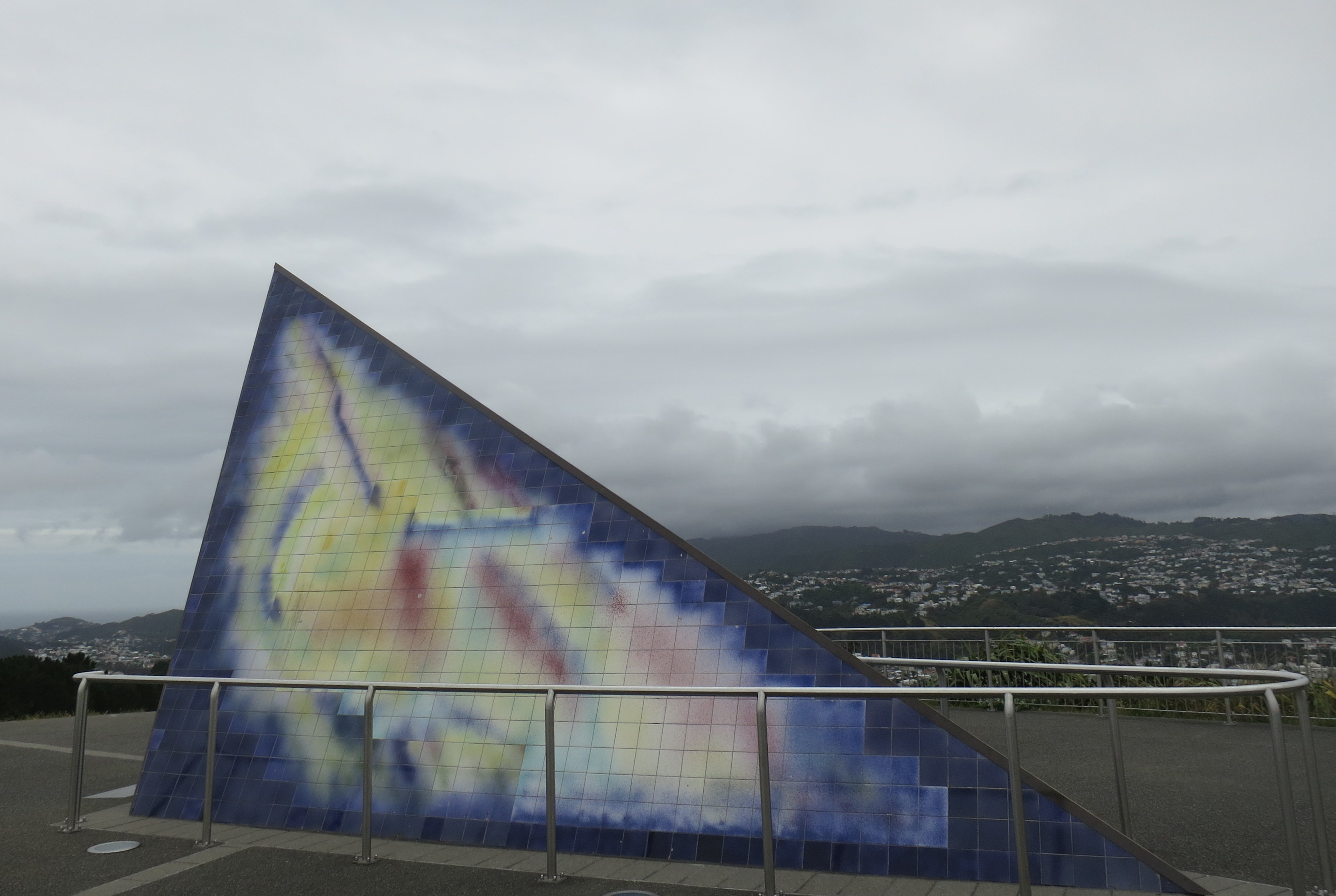
View from Mount Vic

Antarctic monument

Antarctic monument

My second time in Wellington, I lucked out yet again in my Couchsurfing host. Woo was an accommodating host, and the other surfers at his place were super friendly. We had a nice dinner out and cakes in a frilly tea shop. Also, Woo’s place was right downtown, so for probably the first time since I set foot in New Zealand, I didn’t have to hike up and down hills just to get to the corner store.

I’m not sure what the economic situation is in New Zealand right now, or in the greater Wellington area, but I can say with confidence that the government has put a lot of money into the downtown area, because it looked great. City Hall and its square; Te Papa, the national museum; Waitangi Park and the waterfront; the Embassy movie theater, home of Lord of the Rings premieres: they were all pleasant places to spend time in, without seeming too whitewashed.

I wouldn't mind Gandalf watching over my city

I wouldn’t mind Gandalf watching over my city

I grabbed a couple free brochures from the visitor’s center and went on a self-guided tour along a path that followed the Art Deco trail and the Te Ara O Nga Tupuna trail through downtown. The Art Deco tour was less historically interesting than the Maori sites tour, but I sure do like that sleek, clean style of the interwar period.
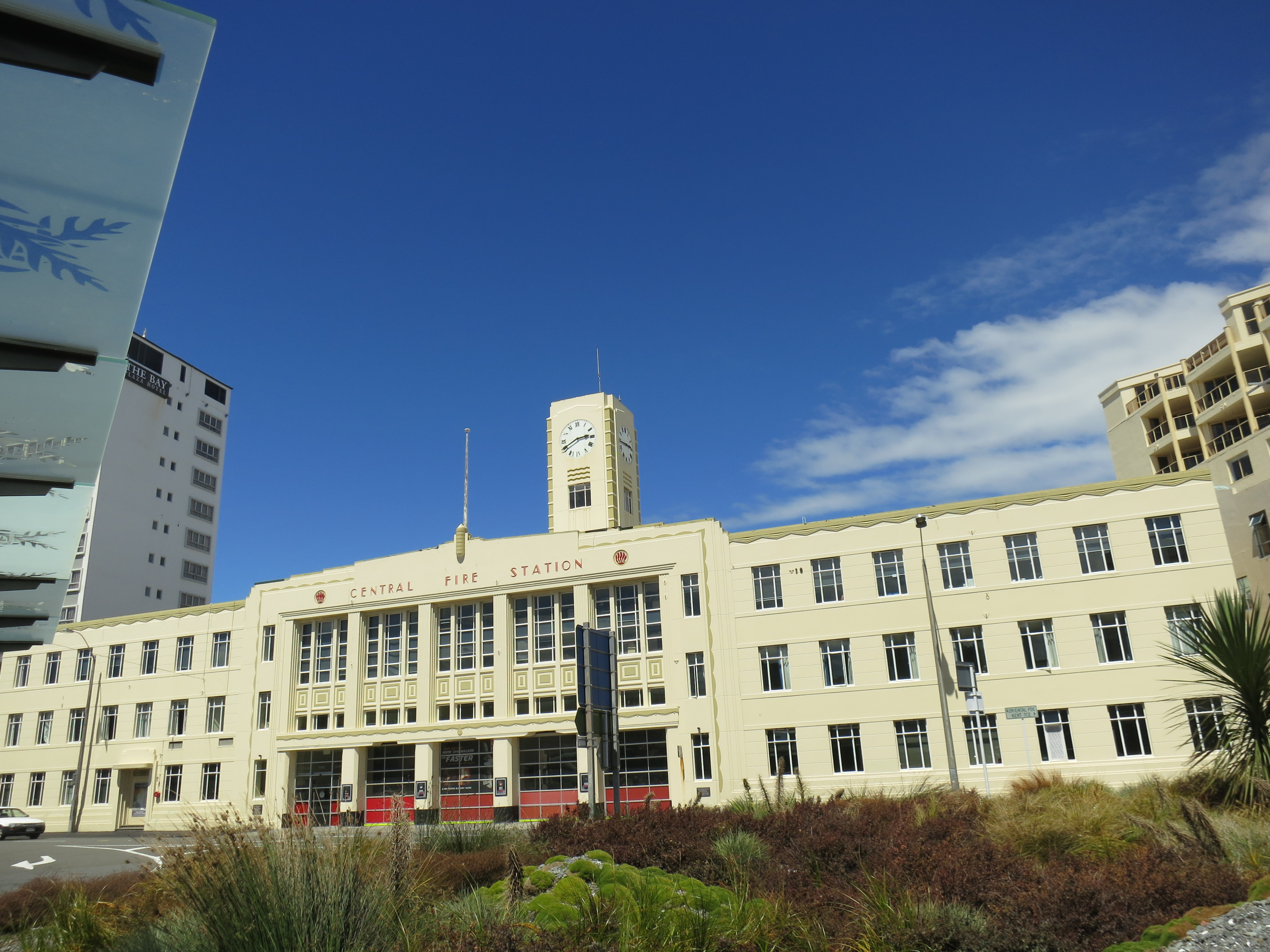
Quite the fire station

Quite the fire station

The Te Ara trail covers a broader area than can be walked, but there are a few sites in town important to Maori history that the brochure points out. Waitangi Lagoon was a major source of food in pre-Pakeha times, and is now a major intersection. Waitangi Park is up the road, a carefully maintained patch of marsh grasses facing both the harbor and Te Papa, with a climbing wall at the end.

Waitangi Park

Waitangi Park

The most surprising site was Whare Ponga, a storefront that contains an archaeological dig showing the original Te Aro Pa—a pa being a fortified Maori village. The site, which was unearthed, like so many interesting sites around the world, during construction work, is from the 1840s.

Te Pa

Te Aro Pa

I met up with Jose, a traveler friend from Chicago, at the botanic gardens for a summer concert in the park. It was quite chilly for a summer concert, but that didn’t stop everyone from coming out. The band played upbeat reggae, and at least one overtly political song, and Jose took me ‘round the gardens as the sun set to show me the colors.

The groovy duck pond

The groovy duck pond

When the sun goes down, the lights come up: pink globes on the duck pond, red spotlights on the palm trees, even a blacklight area by the ferns. Bubble machines were mounted on some of the lampposts, and when they started up, all the kids in the area leaped into the path—some to dance, some to swat at the bubbles with their sweatshirts in a battle that they all won.
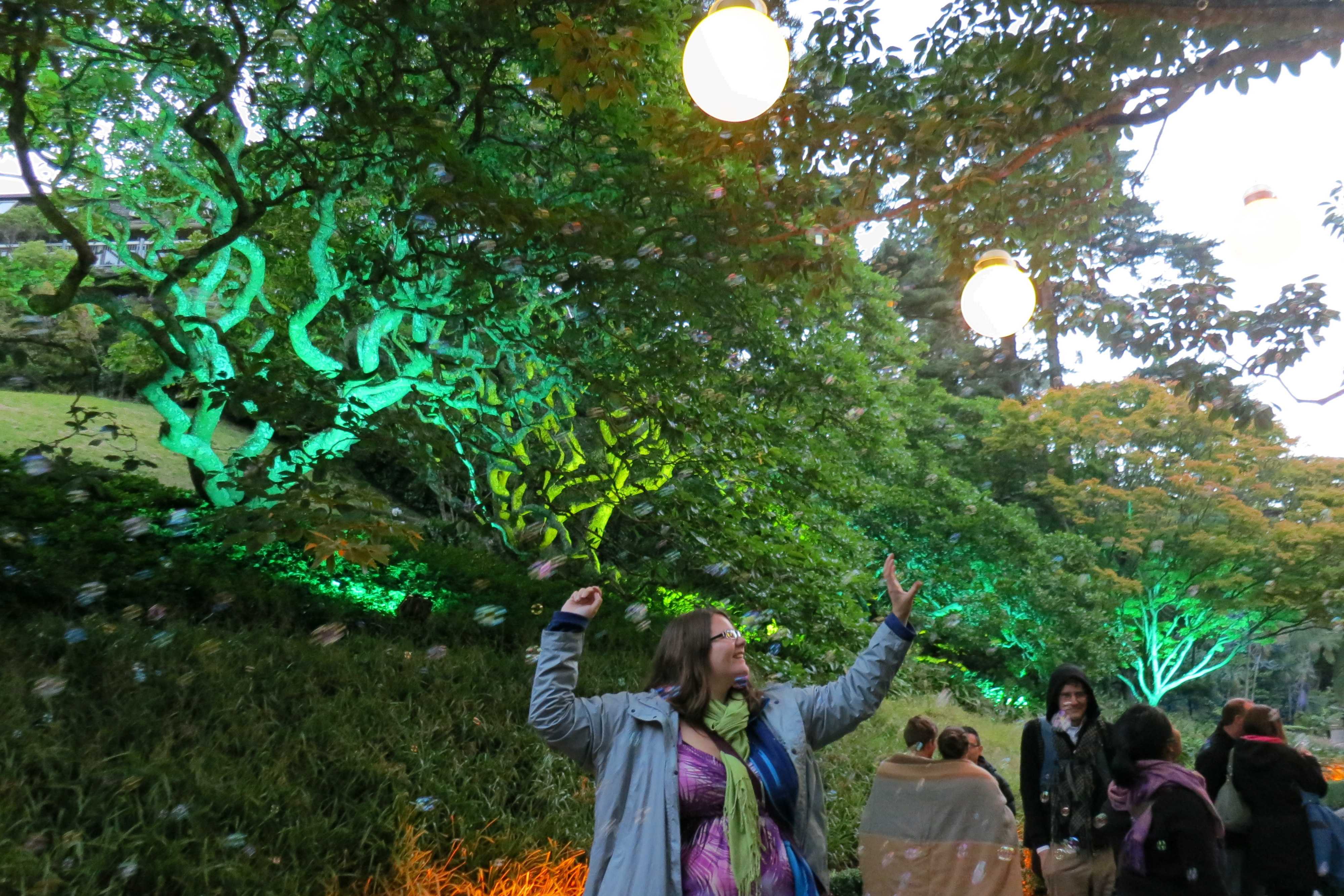
wellingtonJose showed me a willow tree that seemed to sparkle; when we pushed aside the leaves and stepped under the tree’s broad branches, we saw a half dozen disco balls rotating in the air, reflecting hidden lights and creating a dance hall for fairies. The whole place was magical.

Blurry disco scene--is there any other kind?

Blurry disco scene–is there any other kind?

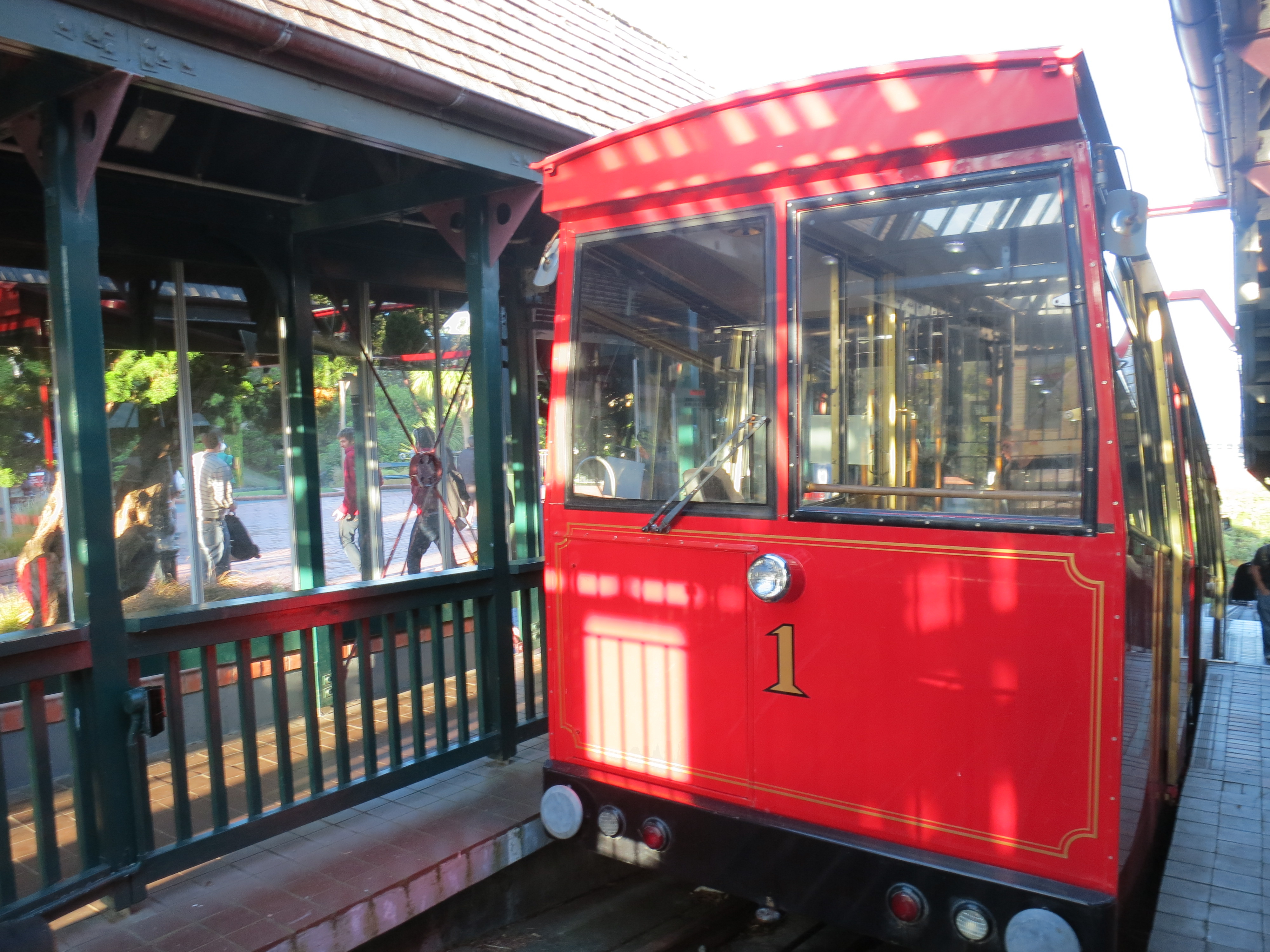
I took the cable car up to and down from the gardens. It’s a quaint little car, with small wooden seats and brass poles. It makes a few stops along the way, so if you live on the hill, you could use the cable car to get around. That’s the only form of transit I took the whole time I was there. Woo picked me up from the ferry station and took me to the airport (an excellent host, as I said), but otherwise it’s a super walkable city, and it was nice to wander around. I passed the Bucket Fountain on Cuba Street, and plenty of other public art installations around town. I walked by a guitarist busking on the sidewalk and a girl who sat nearby and quietly harmonized on a recorder.
The cable car

The cable car

Bucket Fountain

Bucket Fountain–that little kid loved it

I left the visitor’s center on my last day in town and cut through Civic Square, where a drag queen and her assistants cheered on audience participants in a delightfully clumsy dance contest, and then two police officers on duty were cajoled on stage, where one cheerfully did her own little dance and put on the tighty whiteys flung at her before continuing on her beat. That was easily one of the simplest, most fun moments of Everyone Getting Along I’ve ever witnessed.

Fun for everyone

Fun for everyone

Te Papa is a huge museum five floors tall, and its permanent exhibits include a Maori meeting house built specially for the museum, a hokey display about geothermal activity, and an interactive hall about the sea and forest especially aimed at kids. It was a great museum, too big to explore in one day, so it would be easy to revisit again and again, which is fitting for a museum built as a tribute to a country’s citizens, who might return over a number of years.

Te Papa meeting hall
Te Papa meeting hall

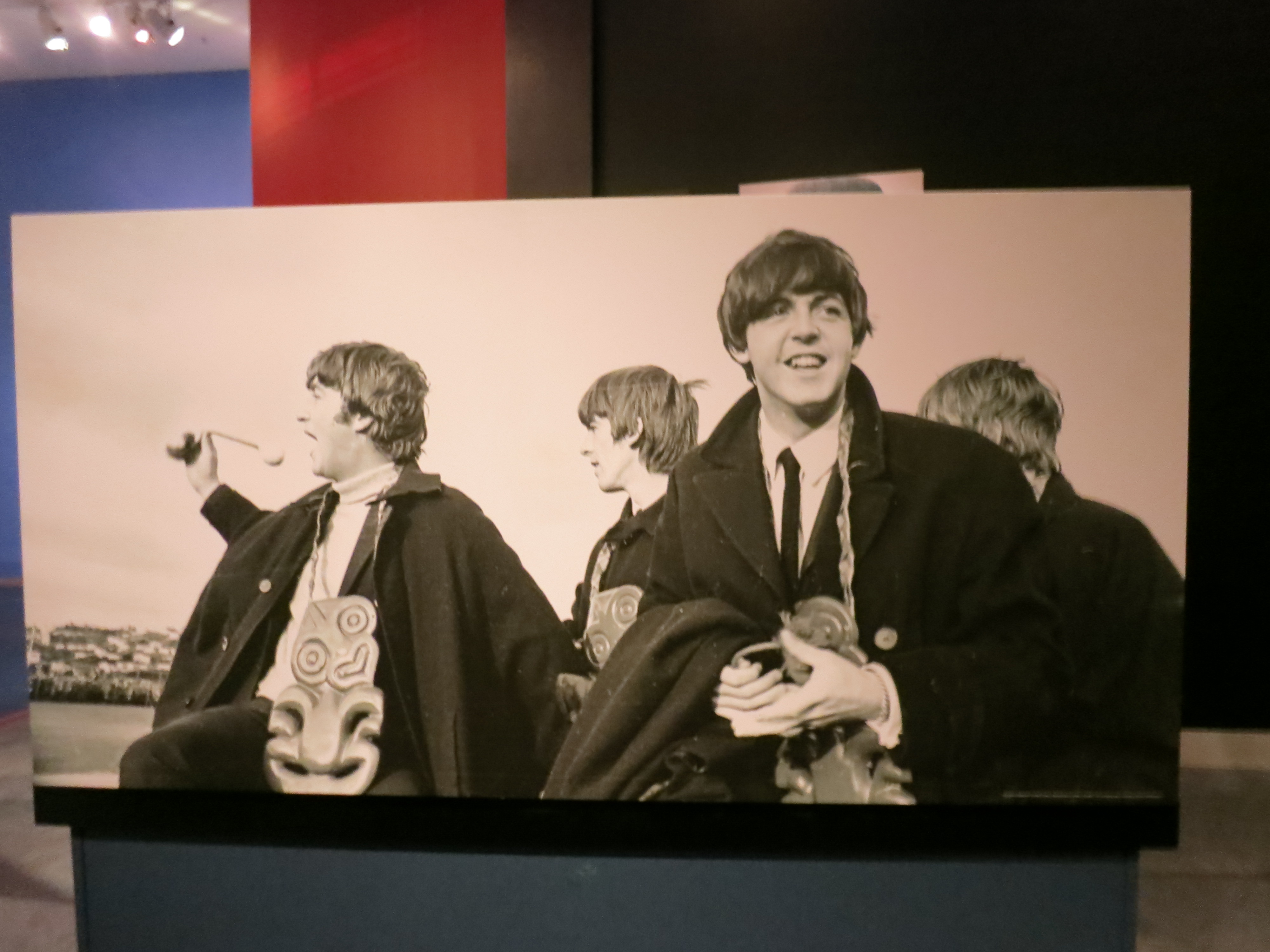
The Beatles look cheerful, but I know they must have been freezing under those capes.

The Beatles look cheerful, but I know they must have been freezing under those capes.

The Maori exhibits struck a tricky balance between anger and indignation at Pakeha treatment of Maori throughout history, and relaying information about Maori traditions still maintained today. One plaque carefully explained how disrespectful it is to wear images of carvings, which are considered something close to sacred, which I hope informs visitors’ souvenir choices.

Lovely detail and color

Lovely detail and color

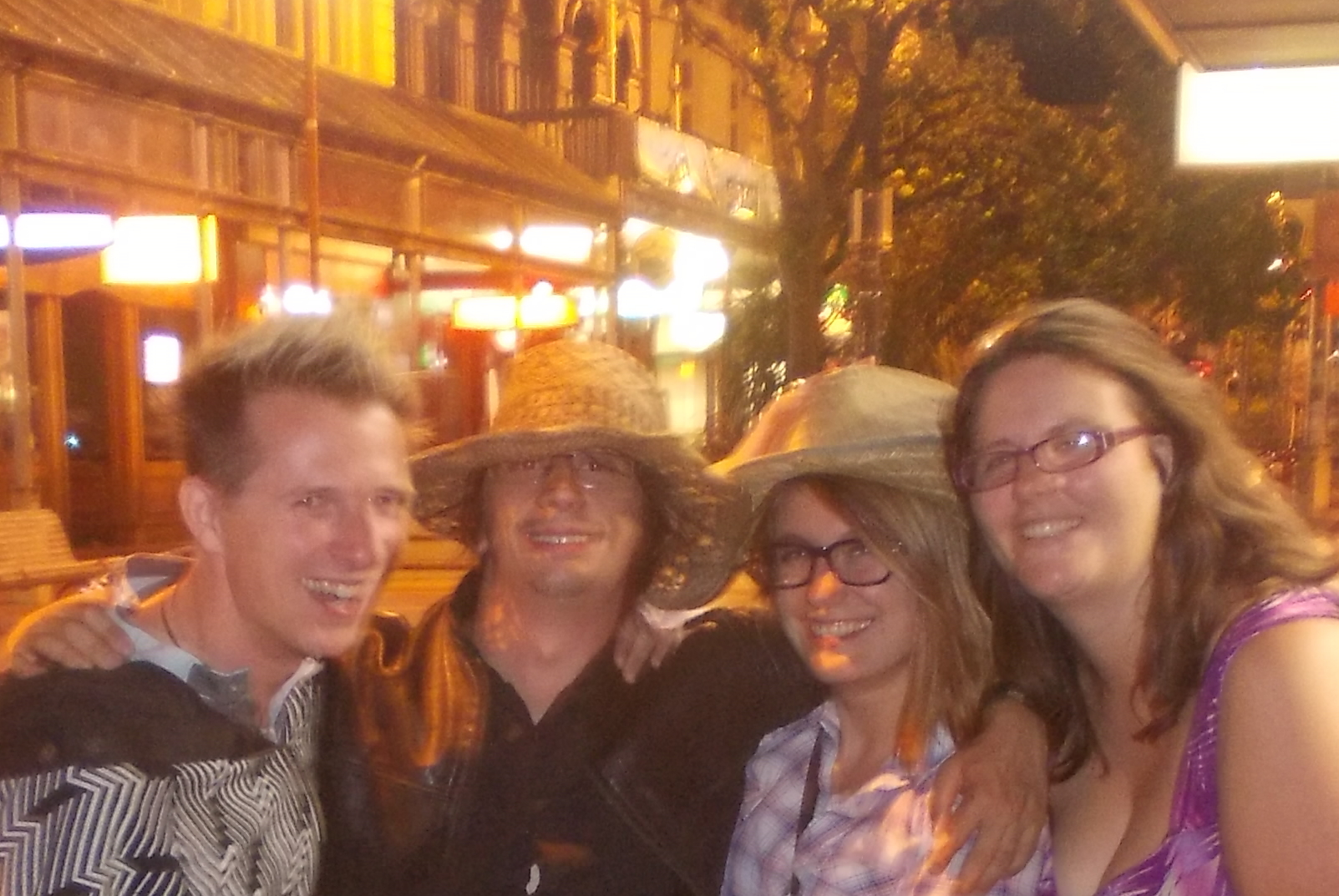
I had an epic night out with Jez, who I’d met at Theresa’s in Melbourne. We drank delicious local craft beers during Wellington Weekend at Hashigo Zake, caught the end of a queer rock show on a hoedown theme night at Bar Medusa, danced to the sometimes questionable choices of the DJ at Mighty Mighty Bar, and ended the evening at an overpriced Irish pub playing bad Top 40–a somewhat ignominious end to an amazing night.
Good times

Good times

I know a lot of people who want to immigrate to New Zealand, and after days exploring downtown and a night of fun and music, I was half convinced to myself.
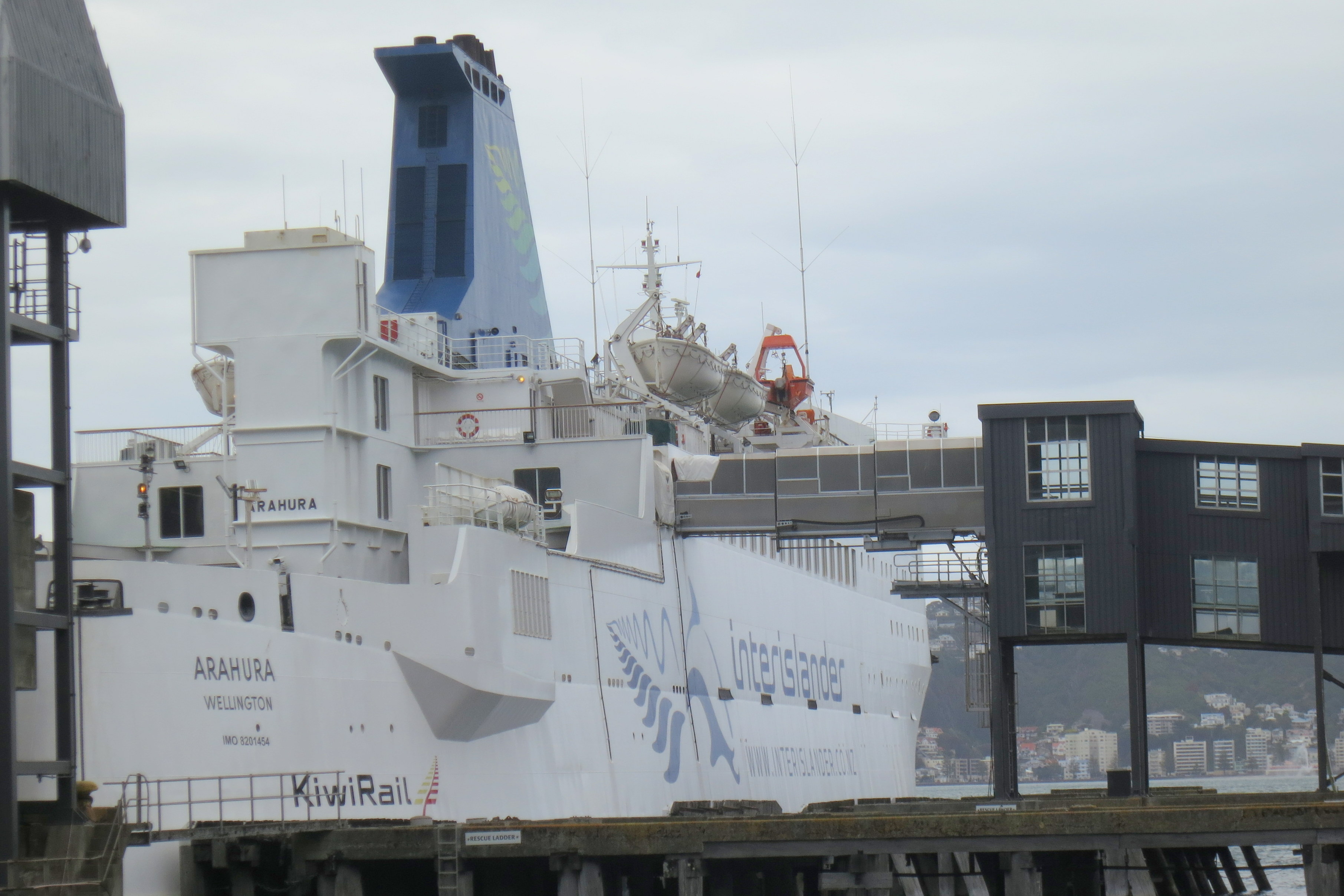
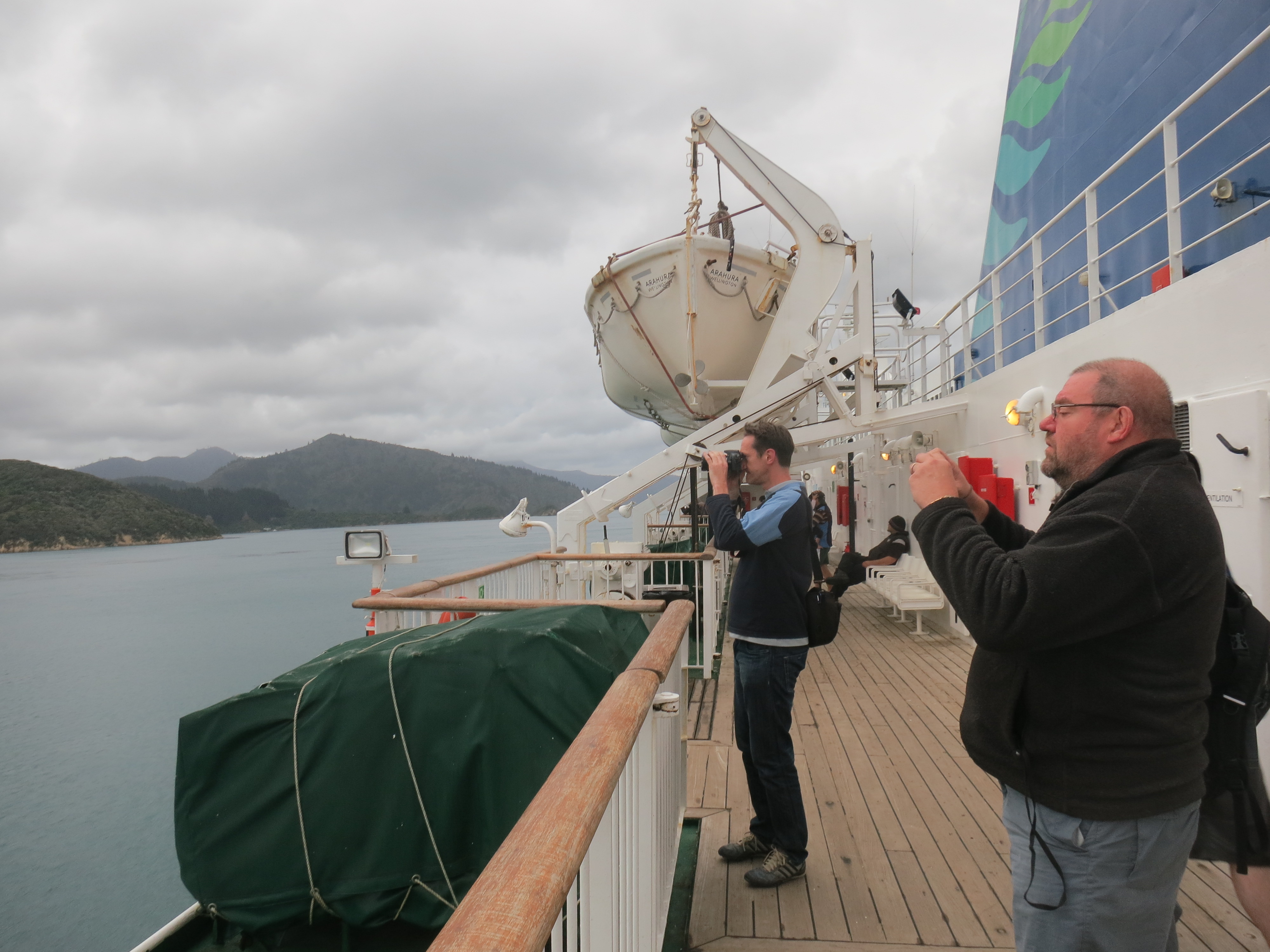
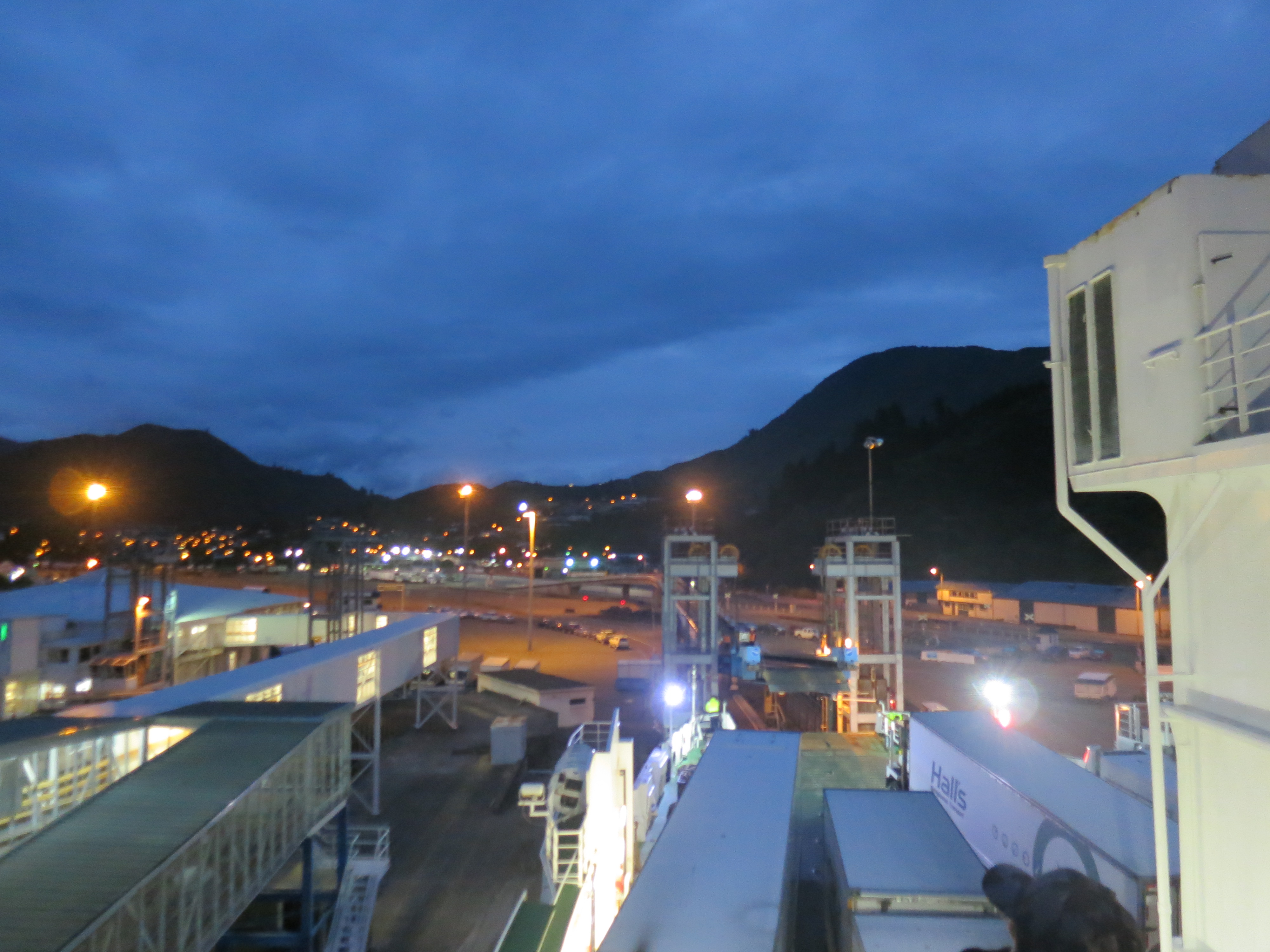
The Interislander Ferry Crossing

According to Maori legend, the hero Maui went fishing one day and pulled up the North Island, and his canoe became the South Island. Ever since 1962, the Interislander Ferry has acted as the fishing line between canoe and fish, carrying passengers and their cars from Wellington to Picton and back again. After Christmas, I took the ferry over to Picton to meet back up with Liz for a few days (Picton is mostly west and only a little south of Wellington, because of the way the South Island skews to the left).

An imposing Interislander Ferry

An imposing Interislander Ferry

If you’re taking your car across, you check in quite early and get it loaded on board. If you’re just taking yourself, you can show up 45 minutes ahead of time and check your bag like you do at the airport. There are no assigned seats, and there don’t seem to be seats for everyone (at least on one of the boats I took; different models make up the fleet). I set myself up in one of the airplane-type seats, plugged in my computer, and got some writing done.

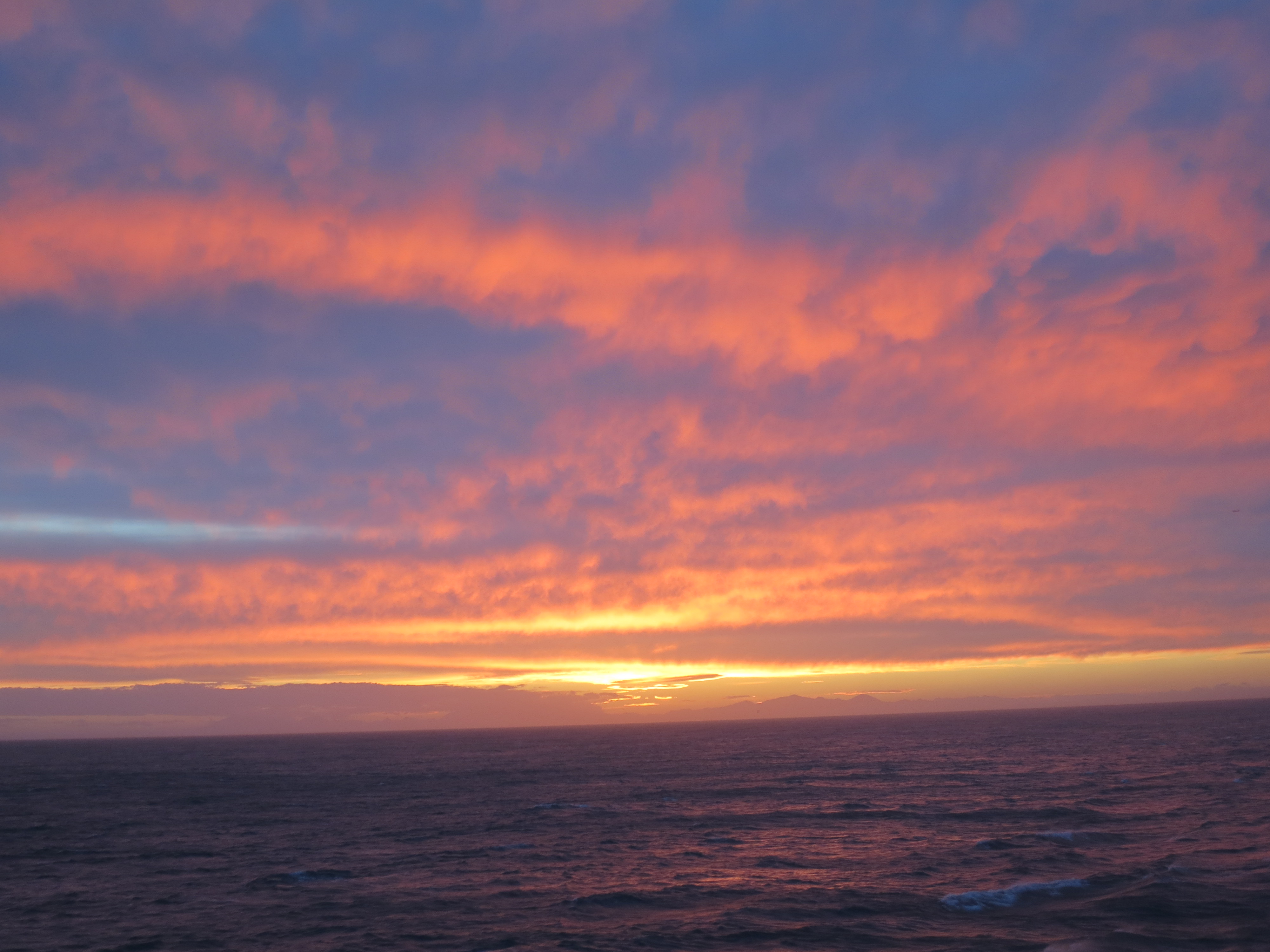
IMG_4451After a bit, I went out on the deck to watch the sunset as we sliced through the open ocean waters, and later I went back out to watch the craggy hills of the South Island rise up on either side of us. The outer decks are very basic; just a few benches line the inner ring, and smokers huddle against the cold by the railings.

Emergency instructions by labelmaker

Emergency instructions by labelmaker

Inside, there’s more comfort, with a bar, a pricy snack shop, a movie theater, and a children’s play area. On my second ferry trip, I found myself near a TV that played a five-minute ad about the history of the Interislander on a continuous loop for the entire journey. That was too much, but I did like the vintage posters for the ferry lining the halls as you disembark.

IMG_4475Once you get to Picton, it’s an easy walk down the main road to hostels, a bus pick-up, the rail station, etc. It looked harder to find your way to the city in Wellington, but happily for me, my Couchsurfing host picked me up when I arrived, so I didn’t have to figure it out.

Picton

Picton

Taking the Interislander ferry isn’t quite the sunny holiday frolic depicted in the ads, but it is a serene three hours out there on the water.

IMG_6398

The Second Letdown of the Trip: Waitomo Caves

The first letdown, of course, was the very mixed bag that was the trip to Fraser Island in Australia. The fact that I’ve only had two disappointing tourist experiences in the first four months of travel strikes me as a really good record. Waitomo Caves is a major tourist attraction in the Waikato region of New Zealand, and it’s an efficient operation. But the tour I took wasn’t really worth what I paid for it.

Exiting the Waitomo Caves

Exiting the Waitomo Caves

The caves were known to the Maori of the area for years, but it wasn’t until a Pakeha and his Maori guide saw the caves in 1887 that tours started arriving. There have been tours here pretty much ever since. There are several different tours to take, and a couple different cave systems with different kinds of formations. I went on the main tour, although there are three to choose from, and you can combine them in different packages. (You can also go on a black water tour, which involves spelunking, floating, and abseiling. That’s the one Liz went on, and she loved it, but I’m too unfit and claustrophobic to attempt it.)

My tour went down to the caves with a quiet older Maori man, and he took us through the caves, which are a lovely white-ish color. (Photos weren’t allowed in the caves at all until just as we were leaving.) He showed us different stalagmites and stalactites, and pointed out the ones that looked like animals and pipe organs. He stood us in the center of the cave and sang us an old Maori song. The acoustics right there are perfect; they’ve held opera concerts there.

Next, he showed us some glowworms in a corner of the cave and talked about their lifecycle, how the shimmery blue color we see is the long, sticky line of the nesting larva, so it can feed. The larva grows for nine months before entering the pupa stage, emerging, mating, and then, of course, dying, as insects do.

Finally, we walked down some steps and entered a dark part of the cave. Here, we were told to keep as quiet as we could, to preserve the mystery of the boat ride. Our guide stood at the bow and moved the boat slowly around the cave by pulling on guide cables strung from the ceiling. The glowworms were lovely, and the cave ceiling was a starry sky of bright blue.

It’s just, well, it was rather small, and the ride was rather short. The ads all showed pictures of a much larger cave, which frankly would have just been more magnificent. It was a smaller, shorter experience than I was expecting, and I suppose that’s the main part of it: expectations. I’d expected something a little different, and I’d paid almost $50, and I was disappointed when expectations didn’t match reality. It happens all the time, although as I said, not too much to me on this trip. Still, all that said, it was a beautiful sight, and gliding through the dark in a boat was a wonderful way to experience the luminescence.

History is Not Inevitable — and That Matters for Today

History is not inevitable. Perhaps this is something they go over with history majors (although I will say I never encountered the idea in the several history courses I took in college), but for me and I think for the general populace, it’s an unusual idea. After all, events unfolded the way they did and now we are here, so how could it have been otherwise? It’s like a kind of Q.E.D. — it happened, therefore it is proven; it happened, therefore it must have been meant to happen. I know that this shows up in several religious schools of thought, like determinism in Christianity, and also in general ideas about fate. But it’s a poor approach to history.

This way of thinking sees history as static, and usually consisting of political, military, and economic events rather than a synthesis of these with social, religious, artistic, and scientific events and movements. But history is a living, breathing thing that we are creating right now. If we view ourselves as not only part of the history we know but also the part of the history future generations will learn about, it becomes easier to see past historical events as not inevitable or fated, but part of a series of individual and communal decisions made in constantly shifting circumstances. That’s not to say that I can quite wrap my linear-focused brain around the Australian Aboriginal concept of Dreamtime (in which you are here now but also in the past and the future, all at once) or the physics concept of nonlinear time. All that fluid space and time is nifty but makes me dizzy. But I can grasp the interlocking moments, motivations, and actions that make up our history, as opposed to the clear-cut line from Cause A to Effect B.

Understanding history as more complex than a straight series of inevitable events is crucial to understanding the ways we interact now — legally, socially, personally. For example, the colonization of New Zealand by the British is often seen as something that was bound to happen. The British had more efficient killing machines and more of them, they had thousands more people to populate the land, and they had the backing of an entire empire. But even if colonization were inevitable, the way it happened was drastically different from, say, the colonization of Australia. The British imported convicts to Australia and swept aside the Aborigines as if they were only a small obstacle to populating a continent, rather than the original inhabitants of that continent. In New Zealand, however, they found the Maori not only ready to fight for their land (as many Australian Aborigines were), but organized in a way the British could better understand, with recognizable leaders and specific land boundaries. So the British decided the Maori were more advanced than the Aborigines, and much more likely to respond well to being “civilized.”

Because the British saw the Maori as more civilized and basically more human than the Aborigines, they gave the Maori more consideration when taking their land, and that different historical approach has repercussions today. Unlike Australia, which was declared terra nullius (“empty land”) despite the very obvious presence of Aborigines, the British negotiated for land sales with the Maori of New Zealand. The Treaty of Waitangi was signed by the Pakeha Lieutenant-Governor and most Maori chiefs on February 6, 1840. The document was written in English and immediately translated so the Maori could know what they were signing, but the translation has some key differences from the English version. Notably, the treaty states that New Zealand is part of the British Crown, and only the Crown has the right to purchase land from Maori – or at least, one version states that. Another states that the Crown does not have this right of pre-emption. All versions were introduced with Lieutenant-Governor William Hobson stating, “We are one people.” As Philippa Mein Smith says in A Concise History of New Zealand,

Did ‘one people’ mean all the same, including one law, which in British thought meant civilising and assimilating Maori? Or did it endorse the idea of a new community of Maori and Pakeha, two ethnic groups henceforth defined in relation to each other? (p. 47)

Did the treaty mean Maori chiefs were giving up their sovereignty, or did it mean they were ruling alongside the British monarch and Pakeha governor?

These questions reverberated through the next century and a half, as first the Pakeha poured into New Zealand and bought up Maori land at ridiculously cheap prices (after the Crown bought them at even cheaper prices; an insulting way to get around that provision of the treaty) and later Maori asserted their land rights and citizenship rights. The Waitangi Tribunal in the latter half of the twentieth century resulted not only in recognition of Maori as an official language of the nation and the recognition of the importance of environmental considerations in indigenous rights, but in actual money settlements for breach of treaty (p. 231-236). Central to the arguments for money settlements and land renegotiations in the 1980s and 1990s were questions of not just what had taken place in 1840 but what kind of future both Pakeha and Maori were envisioning when they signed that treaty.

I find it fascinating that the New Zealand national government actually had a public discourse about what its intentions had been 150 years previous, and what effect those intentions and actions had on its citizens subsequently. The government recognized a breach of treaty and redressed that breach to the descendants of the wrong party. It’s all very proper Western legal action, but it’s also a bold step in acknowledging history as a living thing with no inevitable outcome and no fixed endpoint. Just because New Zealand is now a part of the British Commonwealth and overwhelmingly run by people of European descent doesn’t mean that that’s how it has to stay. Maori have regained some fishing and land rights, and they have also gained seats in parliament due to proportional representation measures, so they have more of a voice in the shaping of history going forward and not just looking back. Asians, instead of being legally shut out of the country and considered a threat to New Zealanders, are now being welcomed and encouraged to settle in New Zealand.

Certainly New Zealand has its share of bigots and racist policies, but I do find it heartening that a country that had a strong “White New Zealand” movement for decades (much like the “White Australia” movement that has unfortunately not died out as quickly it should) has made conscious efforts to not erase that history but to repudiate it and build a better one. Of course, it took the tireless efforts of thousands of ordinary citizens, activists, and politicians to bring about these changes, and I find that even more encouraging. The more people recognize history as living and evolving, the more we can build a just and peaceful history for ourselves and those who come after us.

Use It or Lose It

I’m about a third of the way through Philippa Mein Smith’s A Concise History of New Zealand, and I’m starting to get the hang of some of the words she’s using. Mein Smith carefully uses Maori words for Maori objects and concepts throughout the book. She includes a glossary in the back, but once she’s explained it once in the actual text, that’s it, you have to remember what it means or constantly flip back to see what she’s talking about. This shouldn’t be hard, of course; many books introduce unfamiliar English terms and don’t re-explain them later, and I’m pretty easily able to file that new vocabulary word away in my brain and apply it to the reading at hand. But non-English phrases always stump me. My brain takes extra time to process them, even after a clear definition, so that I really am constantly flipping back to the glossary to see what she’s talking about. I find it frustrating to have to do this, but it is actually getting less frequent. I can remember now that “waka” means “large, ocean-going canoe” and “Pakeha” is the word for “white people of European descent” in the Maori language. I know that the more I think of these words themselves instead of their translations, the more I’m actually understanding the text and the culture it’s describing.

Language is hugely important in understanding anything about ourselves or others (and to some, it’s the only thing that matters at all, depending on how committed to language as sole meaning you are, but that’s a discussion for philosophers and English majors). To use the language of the people you’re learning about is to get a better sense of the nuances of words and the layers of meaning in each phrase. For example, as Mein Smith points out, the Maori weren’t Maori until the Pakeha arrived. It took the arrival of a whole new set of people to necessitate the construction of identity in opposition to (that doesn’t mean conflict with) the newcomers. So we get Maori and Pakeha, and Pakeha is different from Europeans. “Pakeha” implies intrusion, late arrival, strange new customs. “Europeans” implies Old World, civilization, explorers. “Europeans” may be the appropriate word in certain portions of histories, or in histories that don’t involve the Maori at all. But for Maori-Pakeha relations, “Pakeha” is the appropriate word to use. This repositions us, the American readers and travelers, from an outsider’s perspective so that we’re in New Zealand, with the Maori. This isn’t to say we suddenly become insiders and get to talk about the Maori as our brothers and sisters — that is just appropriation. But it does mean we get closer to understanding this point of view, this way of seeing and discussing the world, and that is a key part of travel.

I’m pretty bad at learning languages, but I’ve always wanted to be fluent in more than one. I want to be able to communicate with people in their language, to get their jokes and idioms, to see the world without translation. I don’t see myself becoming fluent in anything any time soon (although I do keep trying French), but I can learn a few words of the language everywhere I go. Saying “please” and “thank you” can seem like the lazy American’s concession to culture, but it doesn’t have to be. It can be a very real way to show respect for those you can’t understand, and a simple attempt to show appreciation for the communication you are having — be it through a translator, with gestures and pantomimes, or with their own knowledge of English.

Whether in a book or in a real life conversation, if you can use a word from the relevant language and use it with a good understanding of its many meanings and not just a word-for-word translation, chances are you’ll gain a better understanding of the culture that uses that language. Use it enough times til you’re comfortable with it, and then there’s no need to get lost in translation.