Temple of Literature
The Temple of Literature in Hanoi was the first place I’ve been to that literally makes a shrine to learning. When I visited, it was the end of the school year and dozens of schoolgirls congregated to pay their respects to ancestors and ask for success in the future. It was cool to see a specific place you could go to hope for academic success, a place that had been the seat of learning for almost 1,000 years.

Temple of Literature, Hanoi

This structure is so iconic that it’s been made the symbol of Hanoi.
I met another American in line for tickets, and we split the cost of hiring a guide. Hanh, our guide, was a middle-aged woman who was thrilled to hear we were from the States. She related the facts about the temple, but mostly she wanted to talk about how proud she was of her daughter, who is at college in Nebraska. It was fitting to hear a running commentary on the benefits of education in a place devoted to the celebration of it.

This character says men should be reliable. I do not disagree. (Okay, so it’s intended to represent a virtue that scholars should have, but they meant “men” when they said “scholars,” so I took the easy joke.)

There are 82 stelae inscribed with the names of those who passed the highest level of testing.
The place was established as the Imperial University in 1070, and it only closed in 1779. By 1802, the Nguyen dynasty set up the university in Hue, and the Hanoi temple became less important. For a 300-year period, large stone stelae were inscribed with the names of those who passed the rigorous examinations to hold the highest titles of learning in the land. The stone slabs were set up on the backs of stone turtles, which represent longevity and appear in various guises around the temple grounds.
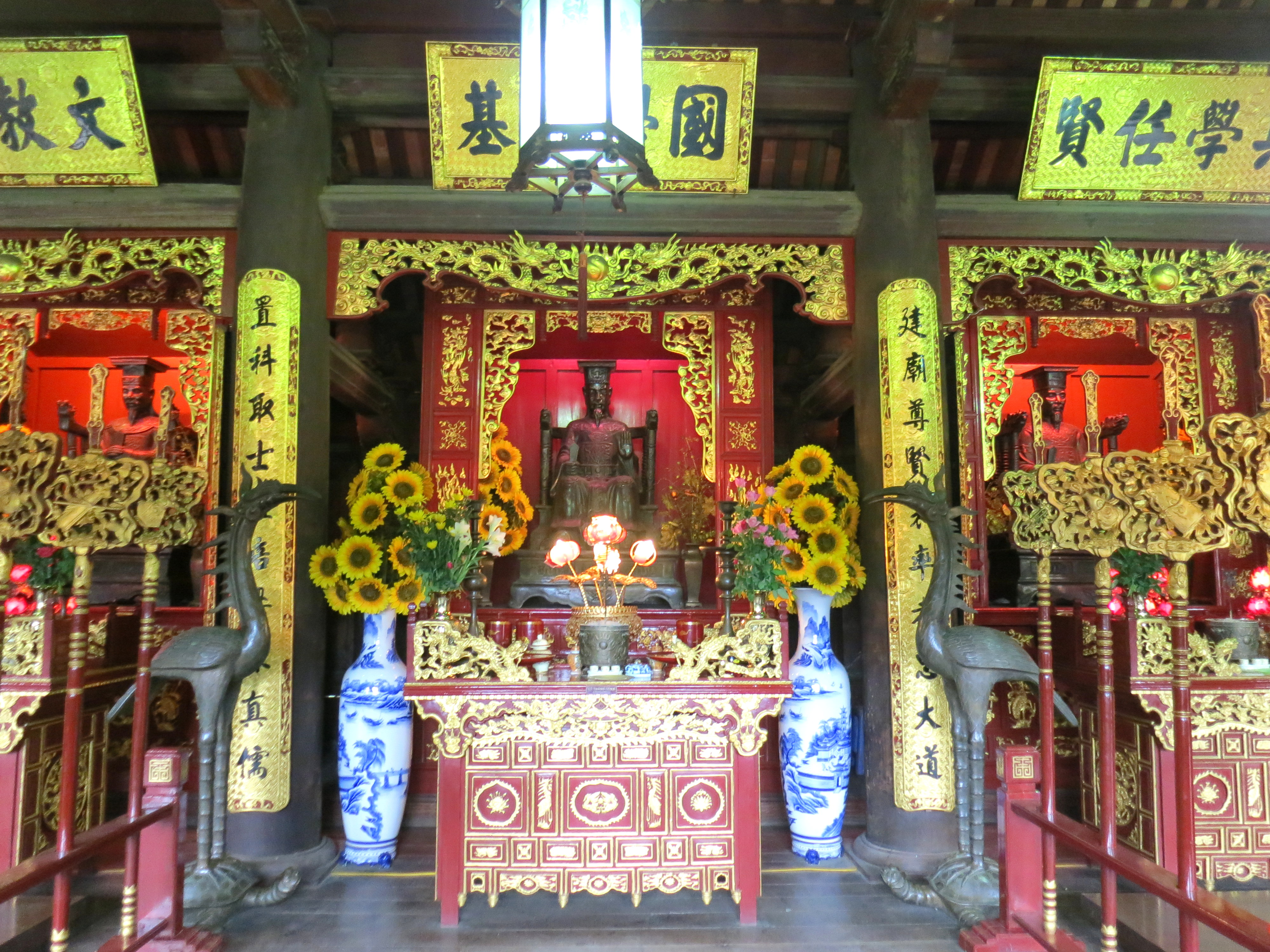
Altar in the temple
The Chinese influence in Vietnam was strong for many years, and Chinese was the language of learning for centuries, much in the same way that Latin was the language of learning in Europe until recently. So most of the writing and inscriptions were in Chinese characters, including the stelae and the planters lining the central path, which spelled out virtues learned scholars are expected to possess.

One of the students who posed for photographs for family and tourists alike.

And then it got weird, with tourists hopping in to pose with the students, getting in the way of the students’ own photos.
Temple of the Jade Mountain
Hoan Kiem Lake is at the south end of the old town of Hanoi, and it’s a popular place with locals and tourists alike. I saw lots of Vietnamese relaxing by the shore on their lunch break or walking around the perimeter. There’s a tiny island of a shrine in the middle of it, and separately, there’s a Taoist temple, Temple of the Jade Mountain, accessed by a simple red bridge.
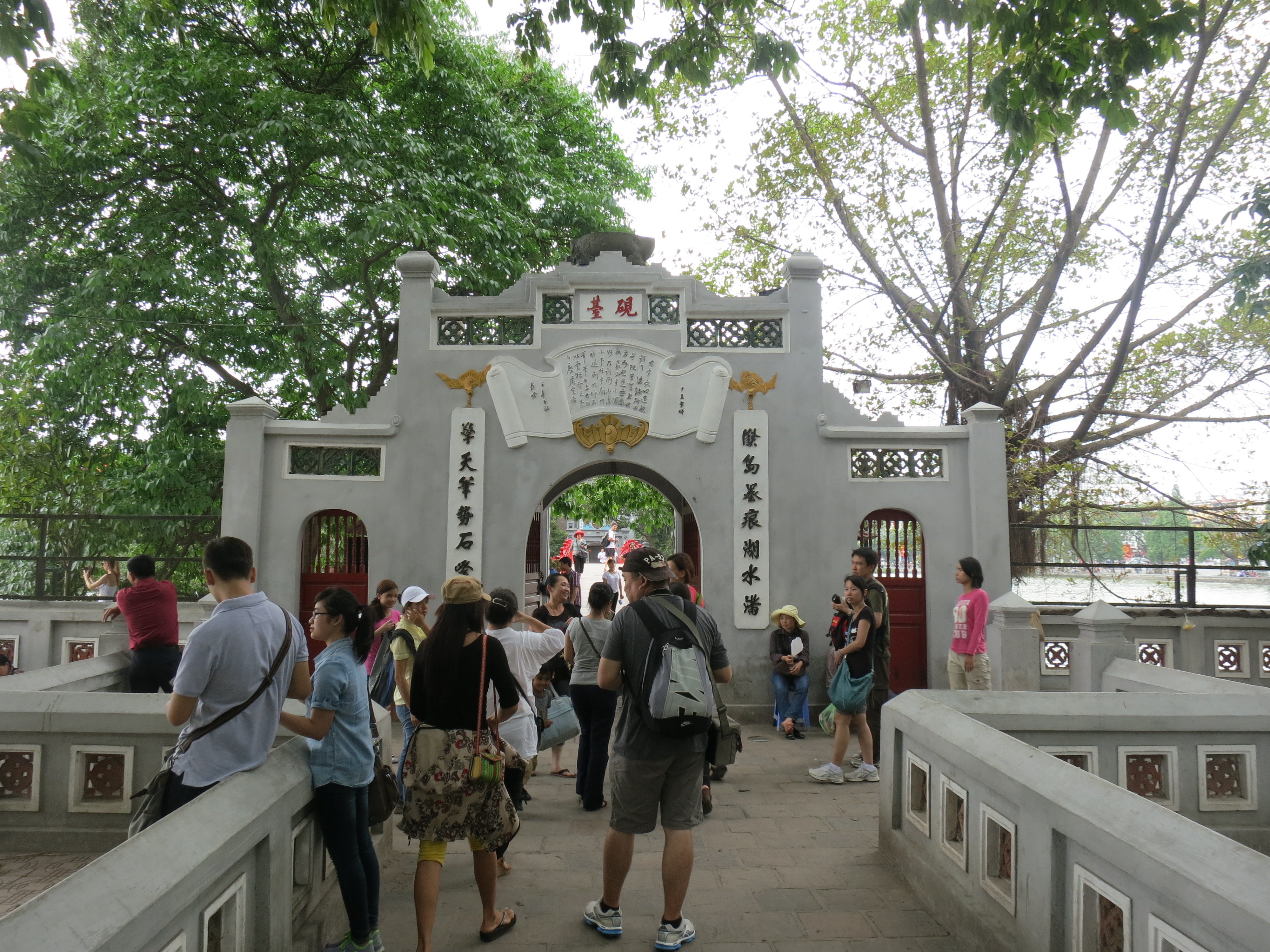
The approach to the red bridge (apparently called the Welcoming Morning Sunlight Bridge–it does go east-west)
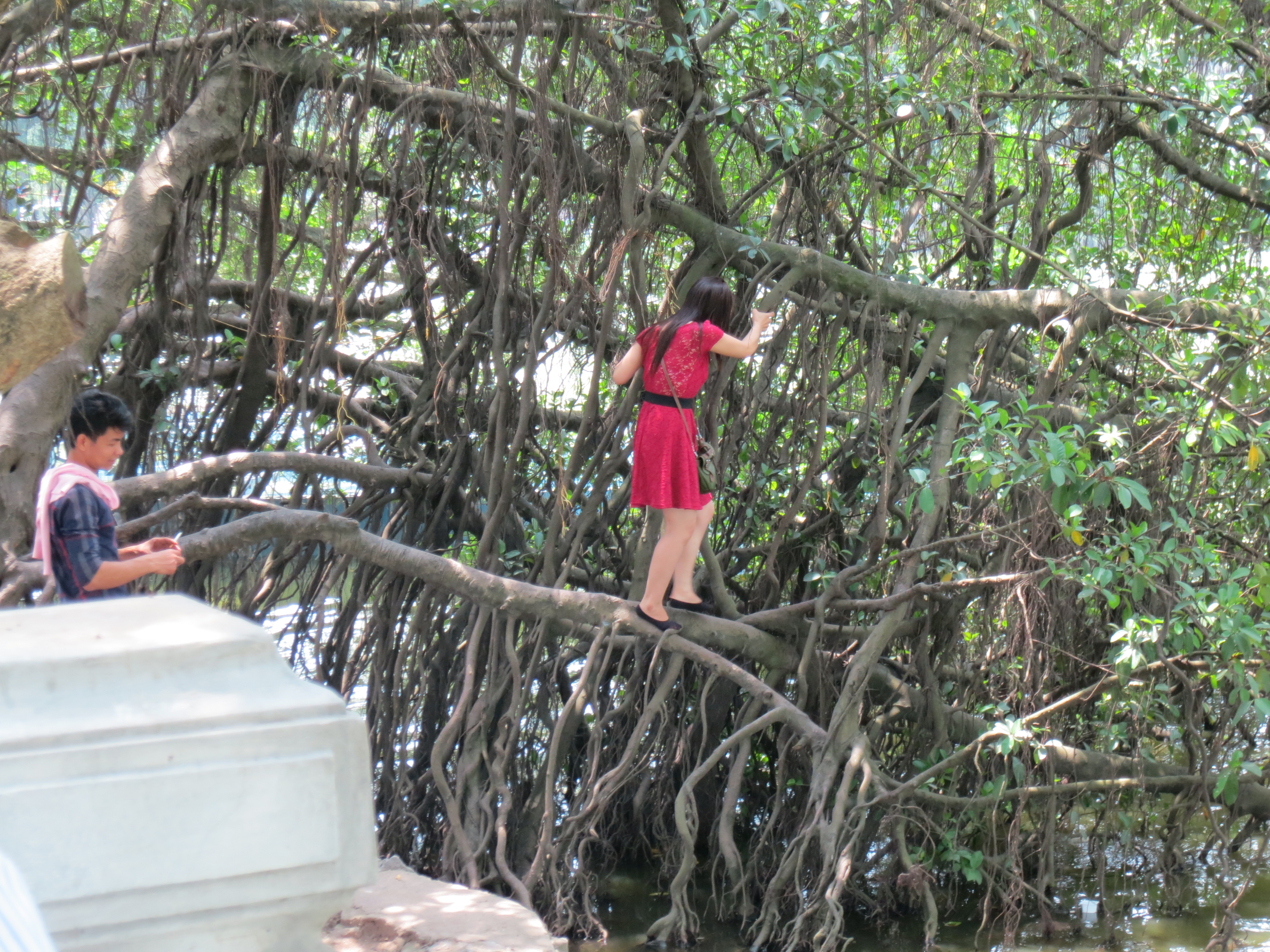
People will do a lot for a good photo

Somehow, I never got a picture of the bridge from a distance, which is too bad because it was pretty nice looking. Expand on this photo in your imagination.
I found it an odd temple once I crossed the bridge: a few cartoon-like paintings on the stucco gates, a garden of patchy grass, a couple dusty back rooms. But the altar was well-maintained, and the view of the shrine on the lake was nice, and there was the preserved body of a giant tortoise on display. Giant tortoises are something of a legend in this lake, not appearing very frequently but always happily received when they do. The one on display was one such adored specimen.

The famous tortoise

The place to burn the prayers you’ve written on a bit of paper, so they’ll be taken up into the air
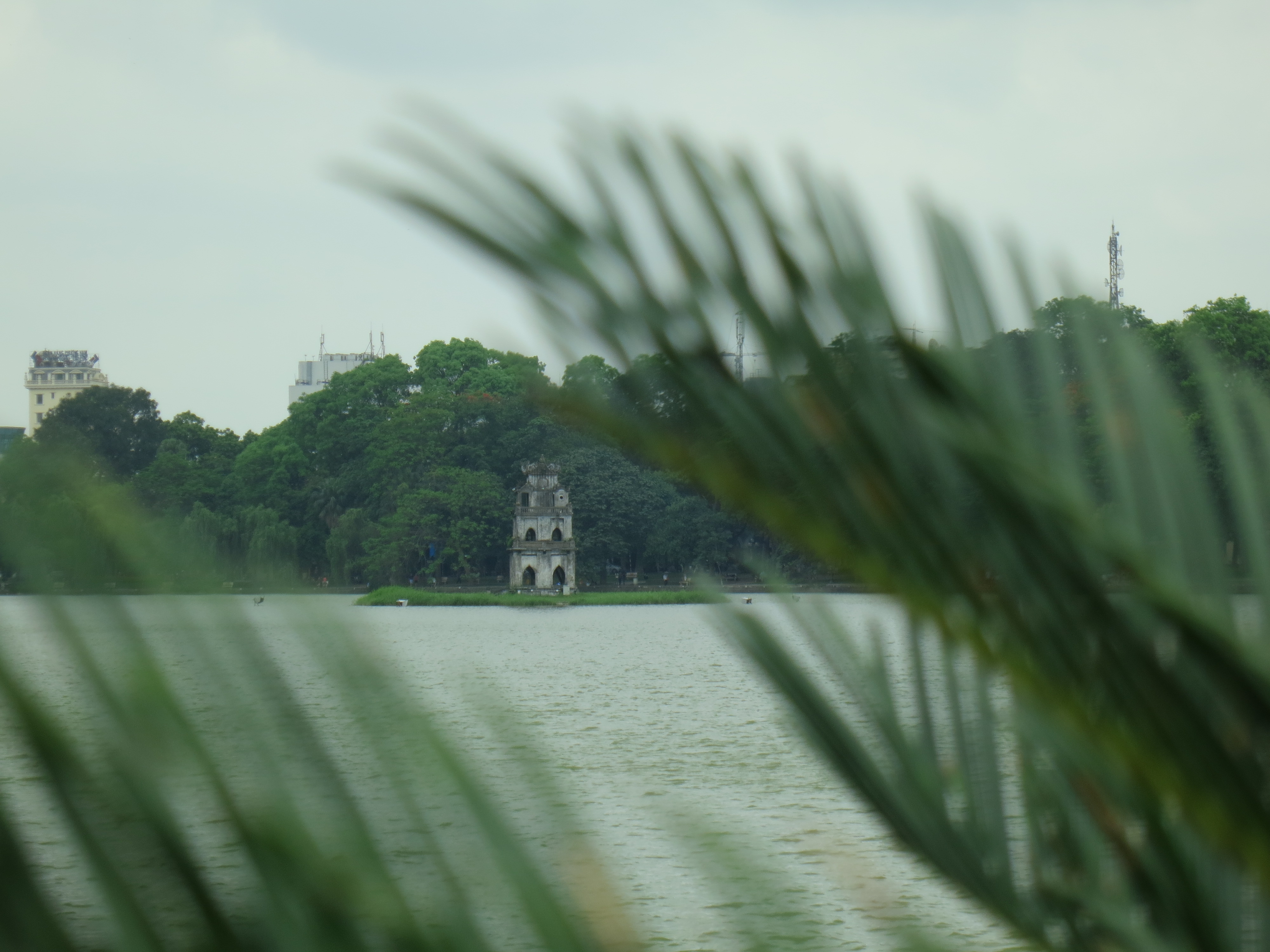
Shrine in the distance
 Stowaway Travel Writing & Editorial Services