Screaming Seals and Preening Penguins: Driving through the Catlins, Day 1

One of my favorite things about traveling in New Zealand was that, no matter how popular the tourist spot, it never felt truly overcrowded. Locals told me that tourism has been down in the last few years, ever since the economic crash, but it’s back on the upswing now. Still, you can visit the most stunning natural places without thousands of people jostling for space to get a good shot on their iPhones. Then there are places like the Catlins, in the southeastern part of the South Island, which are even less visited than Milford and Rotorua, and all the more beautiful for being quieter.

A 1998 memorial of the Glencoe Massacre in Scotland--which happened in 1692. Now that's what I call holding a grudge.

Spotted near Glencoe, on the drive east: A 1998 memorial of the Glencoe Massacre in Scotland–which happened in 1692. Now that’s what I call holding a grudge.

I drove through the empty farmlands of the Southland when crossing from west to east, and spent the night in Kaka Point, at a hostel set up on a hill over the small town. The tiny cabin I stayed in used to be a family summer retreat, and now the elderly woman who inherited it runs it as a hostel during the summer season. The decorations hadn’t been changed since the mid-1960s, and it was so similar to the cabins I’ve been to in northern Michigan that I expected my mom to come in at any moment to tell me to hurry up and get down to the lake.
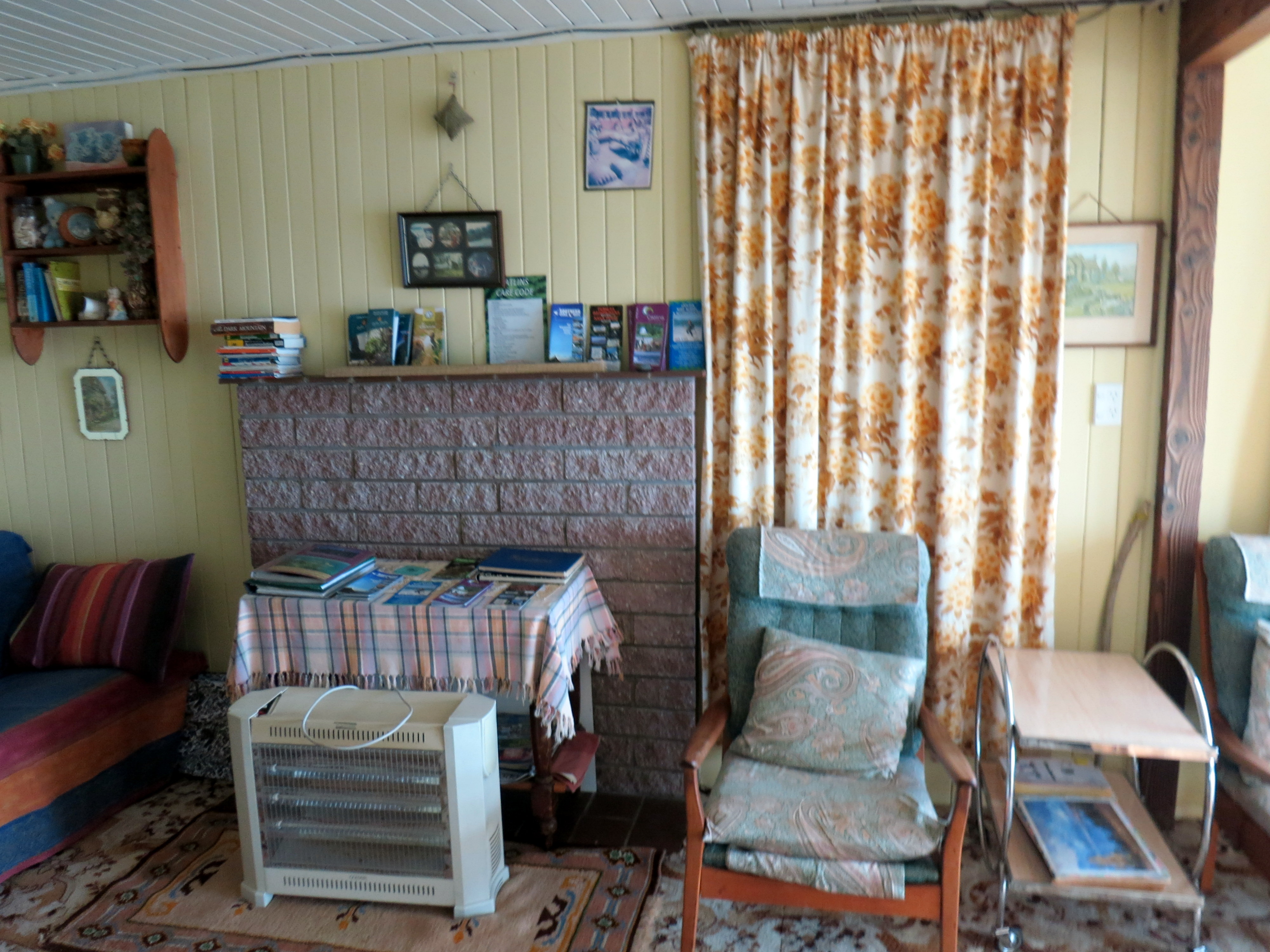
Stepping back in time for an evening at Fernlea Backpackers
Stepping back in time for an evening at Fernlea Backpackers

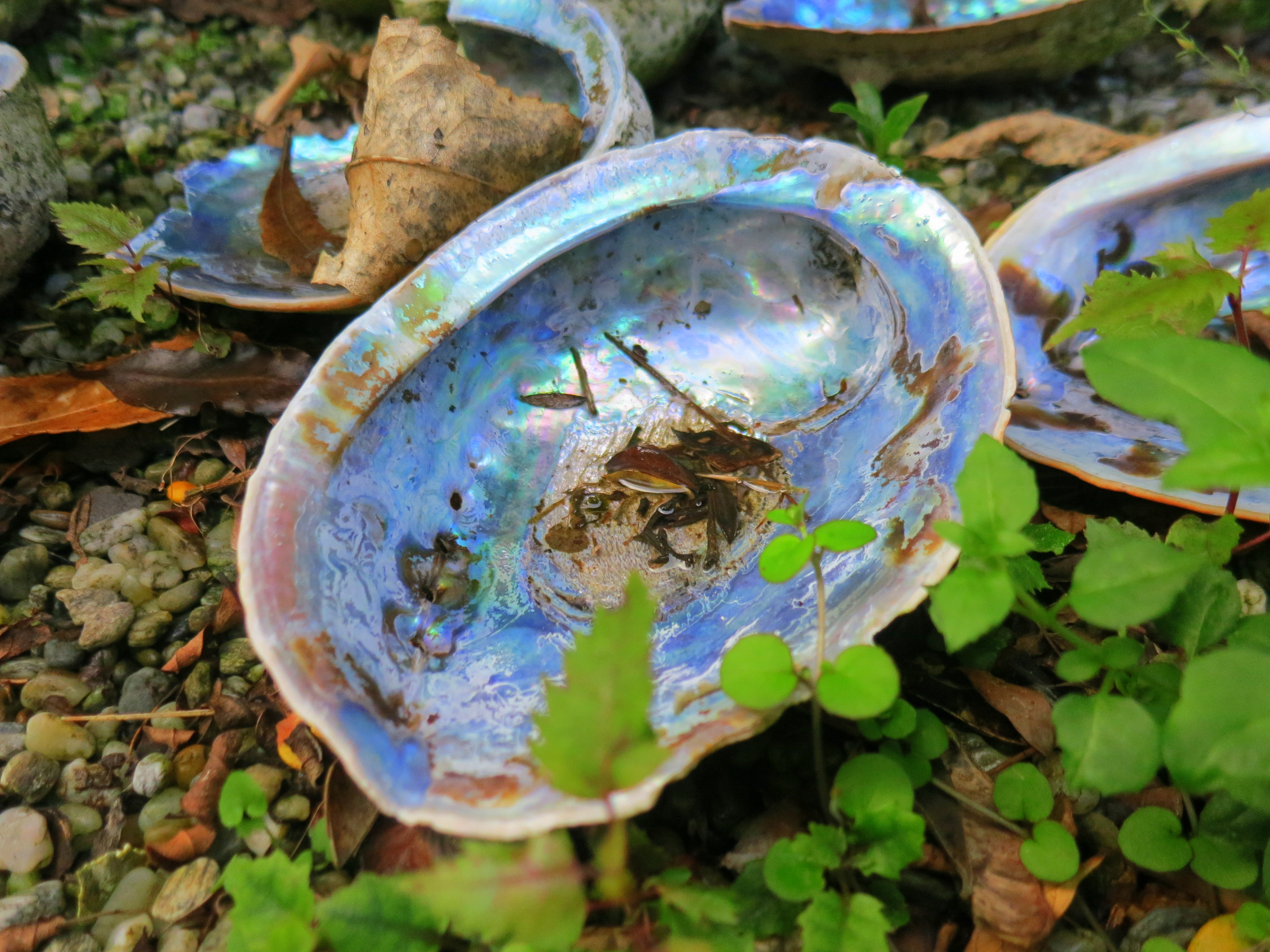
Paua shells are commonly found on the Otago coast--pretty, aren't they?

Paua shells are commonly found on the Otago coast–pretty, aren’t they?

I hurried up and drove to Nugget Point before sunset. After navigating more jaw-clenching unsealed roads, I arrived at the parking lot. The skies were threatening rain again, but what else was new, so I put my raincoat on and started the walk out to the lighthouse. Naturally, it started to rain, so I moved a little faster, but not too much, since there’s no guardrail here and a steep drop to the rocks below. I only passed three people on my walk out to the lighthouse, and just four on the way back; I loved admiring the scenery in total peace and solitude.
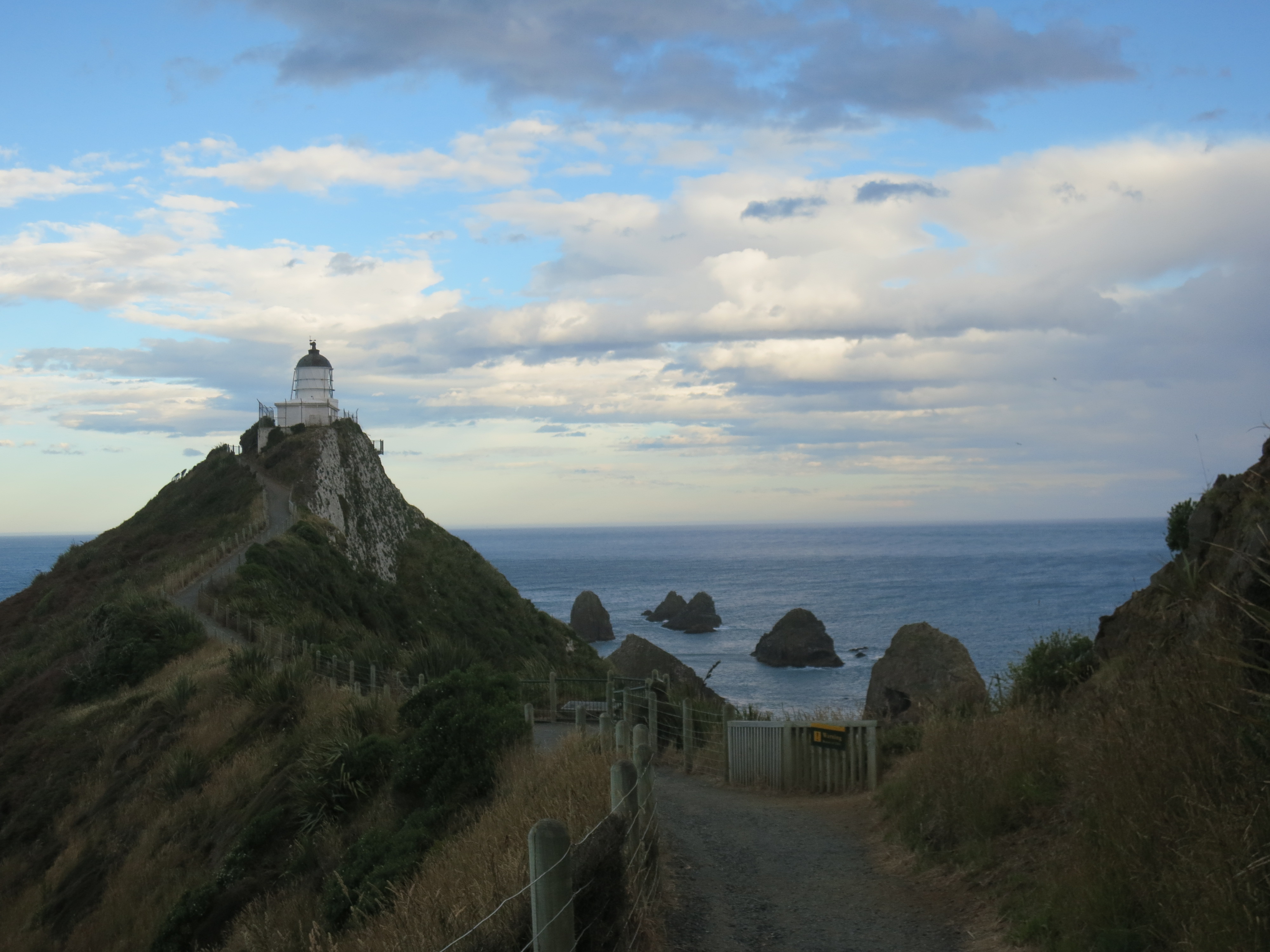
Nugget Point Lighthouse

Nugget Point Lighthouse

The rain stopped after about 10 minutes, and in another 10 I was at the lighthouse, a standard white structure built in 1870 and automated in the late 1980s. Just beyond the lighthouse lie the rocks that give the point its name. I believe these are just tiny rock islands, and not rock stacks formed by crumbling arches, like those at the Twelve Apostles.
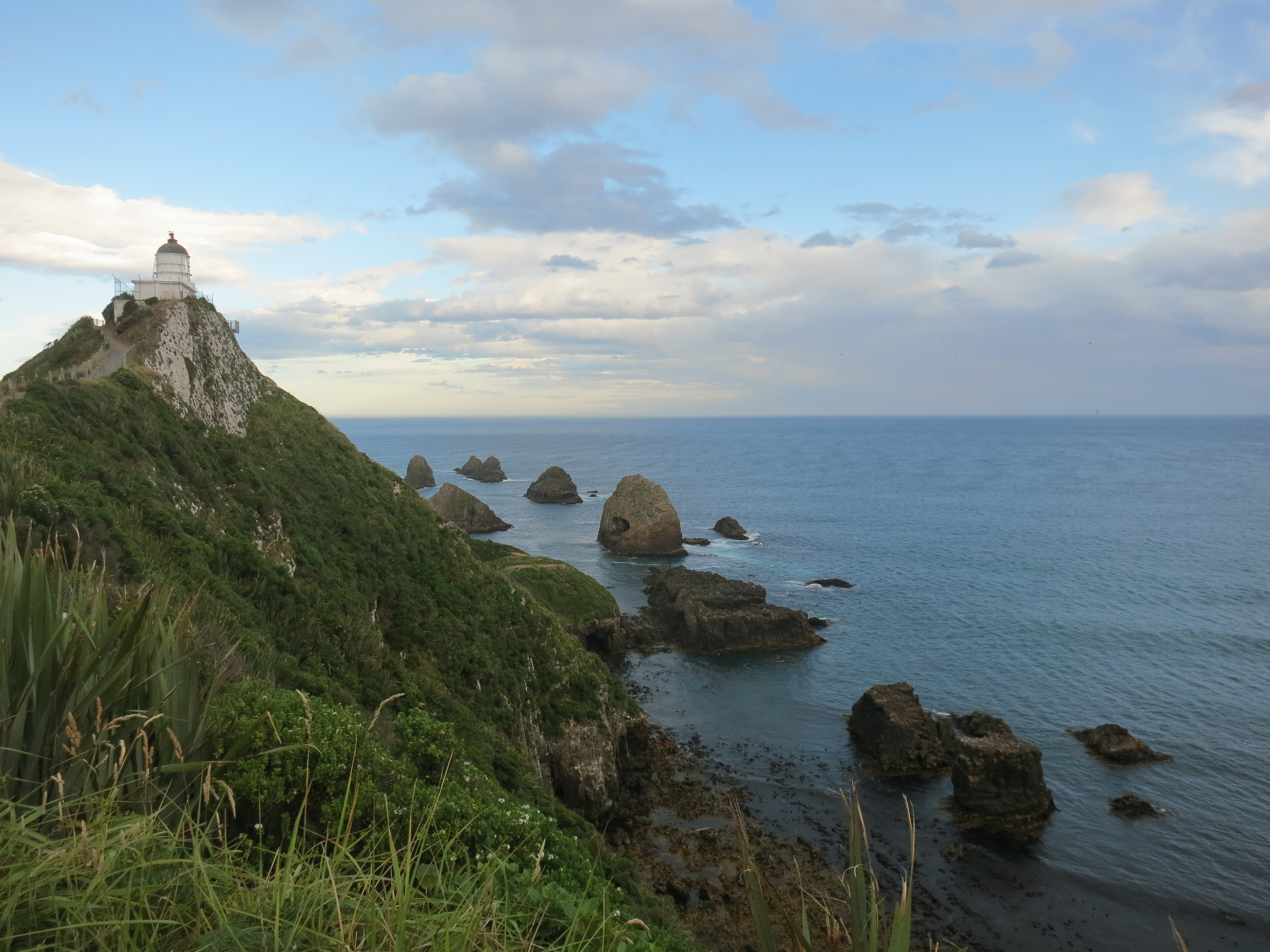
Nugget Point Lighthouse

Plaques of ridiculous poetry lined the walk out there

Plaques of ridiculous poetry lined the walk out there

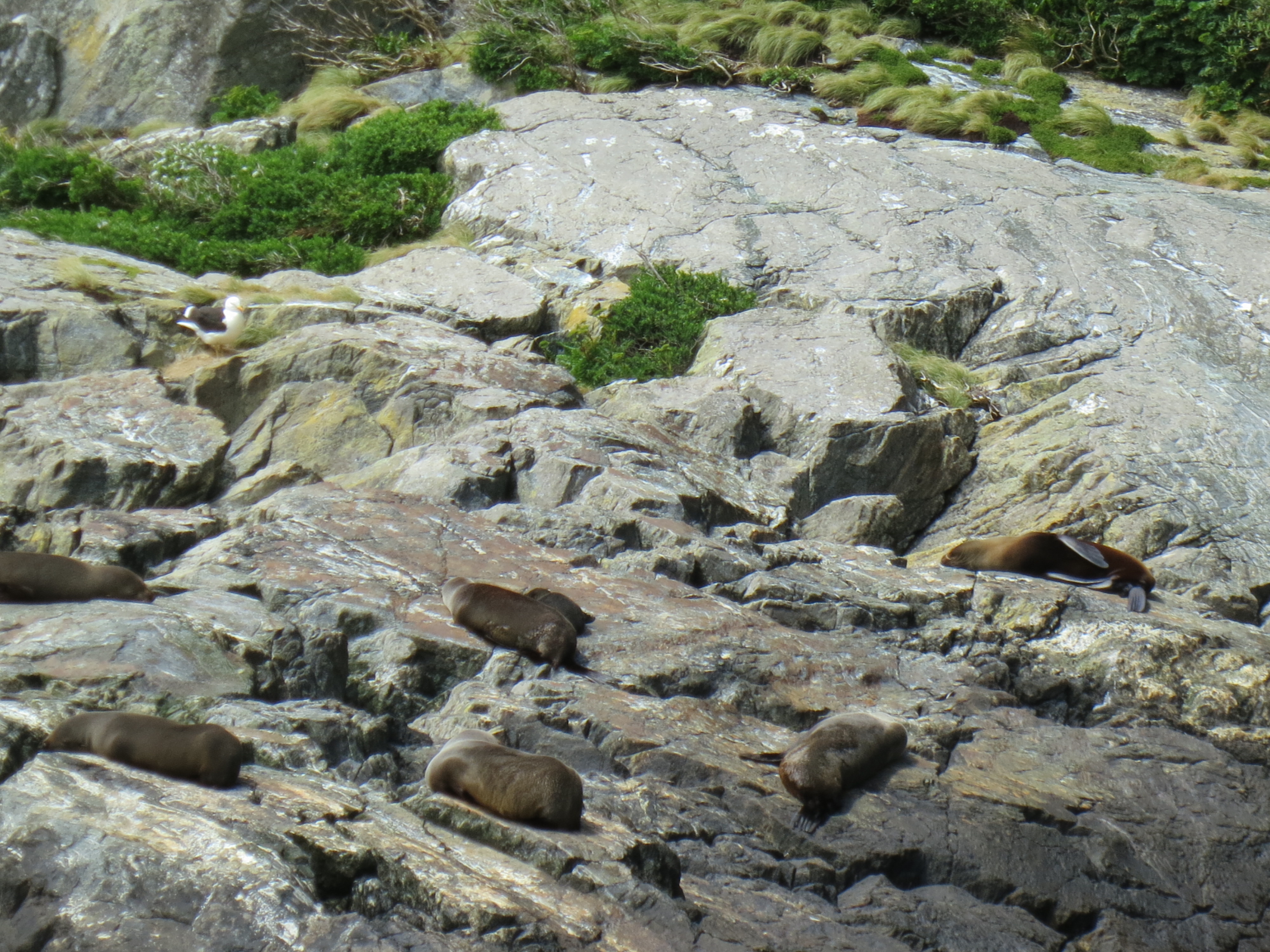
I watched seagulls swoop and dive, and noted the chalky white cliffs that reminded me a little of Dover. On my walk back, I realized that the screaming I was hearing wasn’t the screeching of a seagull; it was a different kind of piercing sound. I looked down the cliffs and saw fur seals on the rocks below! One was making an awful racket while a couple others splashed around in a little pool formed by the tide. I’d read that fur seals like to spend time around here, but I never expected to find them by their call. (Important note: These might actually be sea lions. I have no idea how to tell them apart, and apparently they both make screaming noises, and both can be found at Nugget Point. If you can tell from the photo what I’m looking at, let me know!)

Fur seals frolicking after a long day at sea

Fur seals frolicking after a long day at sea

I drove just a short way down the road to another parking bay, and walked down the steep path to Roaring Bay. It was a lovely spot for the beginning of the sunset. To the left, the Department of Conservation (DOC) had built a viewing structure so that you can watch the famous yellow-eyed penguins without disturbing them–they’re nervous creatures. Some idiots still climbed outside the structure and leaned over to flash their cameras at the penguins, of course, but mostly people stayed in the little bunker and watched from a distance.

Yellow-eyed penguins coming in for the night

Yellow-eyed penguins coming in for the night (with a seagull in the middle)

I’d seen one penguin waddling up from the ocean when I was farther up on the path, and I’d rushed to take super-zoomed photos before he disappeared. I needn’t have worried, though. He was still there when I got to the viewing structure, and he was still there when I left half an hour later. He was a preener, that penguin. He waddled a few feet, stopped, combed his left side with his beak, shook his head, combed his right side with his beak, flapped his wings a little, reached around to get his back with his beak. Repeat. It was funny to watch, and a little mesmerizing. He was a fine looking fellow, and maybe deserved to preen a bit.

Worthy preener

Worthy preener

(I have no idea what the sex of the penguin was. Also, I know that they need to proceed up the beach very cautiously, as this one was doing, in order to be aware of predators lurking in the rocks.)
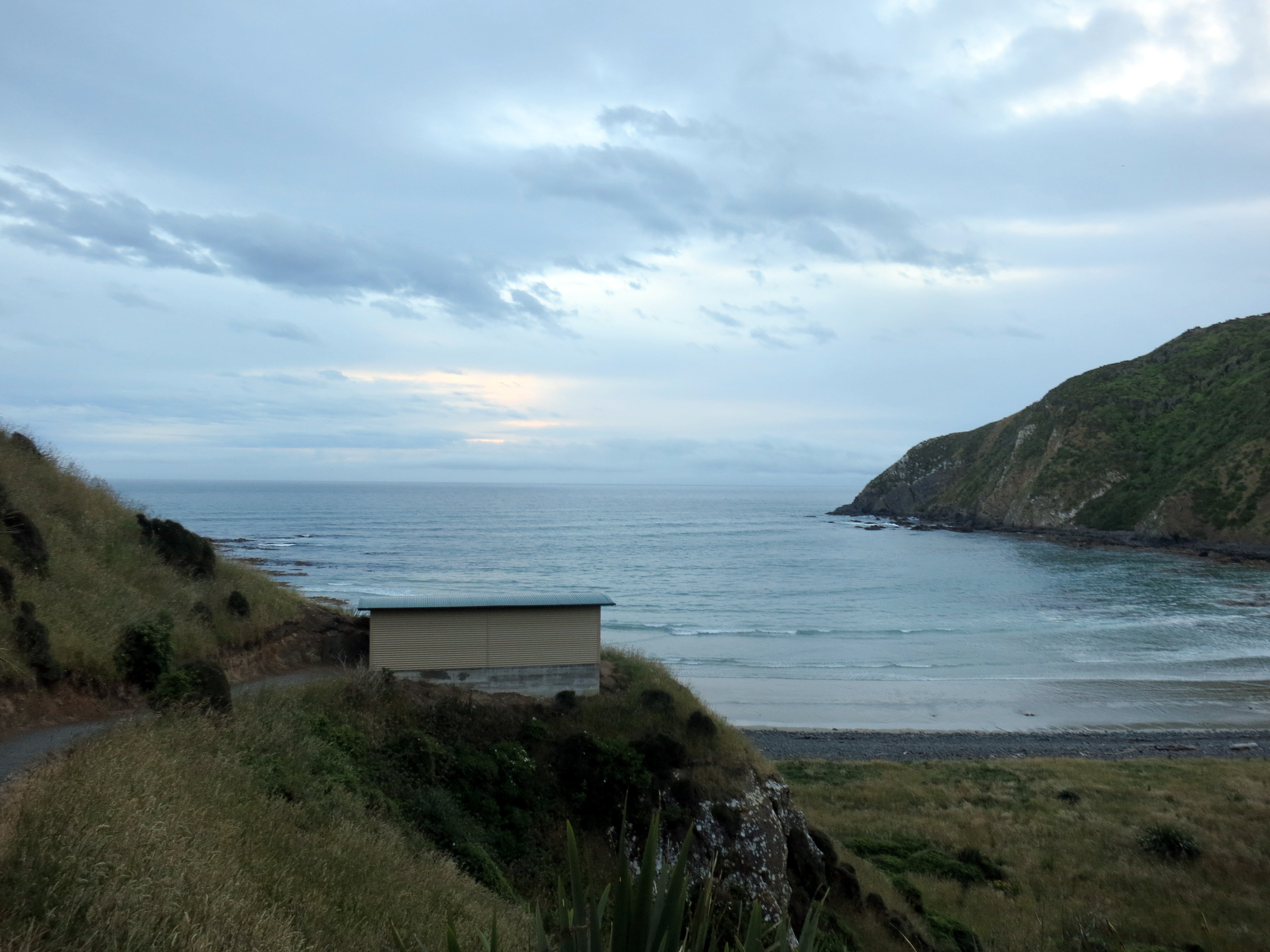
The viewing bunker at Roaring Bay

The viewing bunker at Roaring Bay

I saw another penguin on the sand at a little distance from the first, and when I asked the couple next to me if they saw any more, they pointed out another one huddling in the rocks. I also spotted a lone fur seal up the beach; whether it was contemplating penguin dinner or just enjoying the sunset, I don’t know.
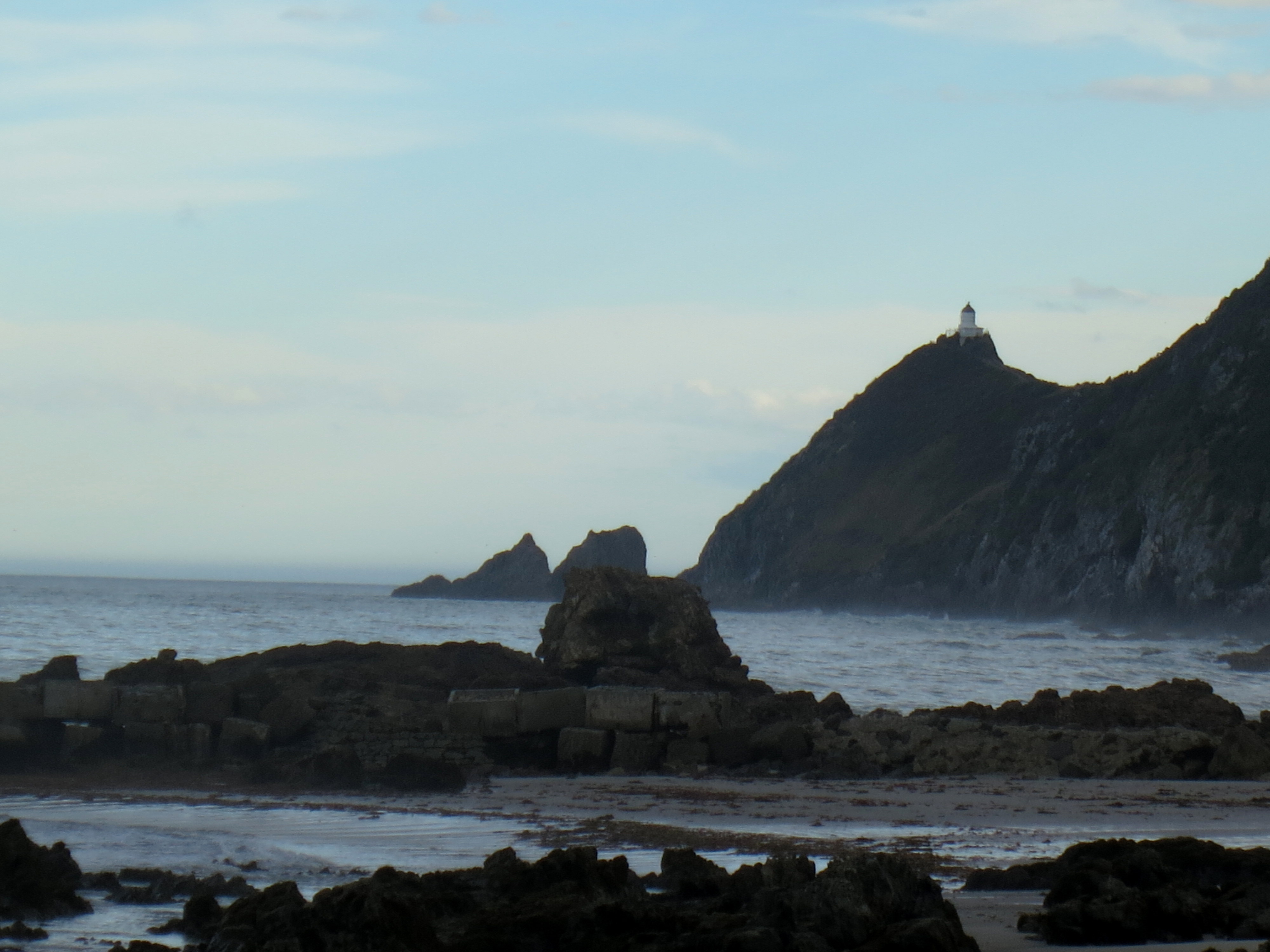
nugget point lighthouse catlinsI didn’t want to drive that gravel road in the dark, so I started back, and watched the sky turn gorgeous colors out the passenger side as I drove. I had a quiet night in before seeing more natural splendor the next day.
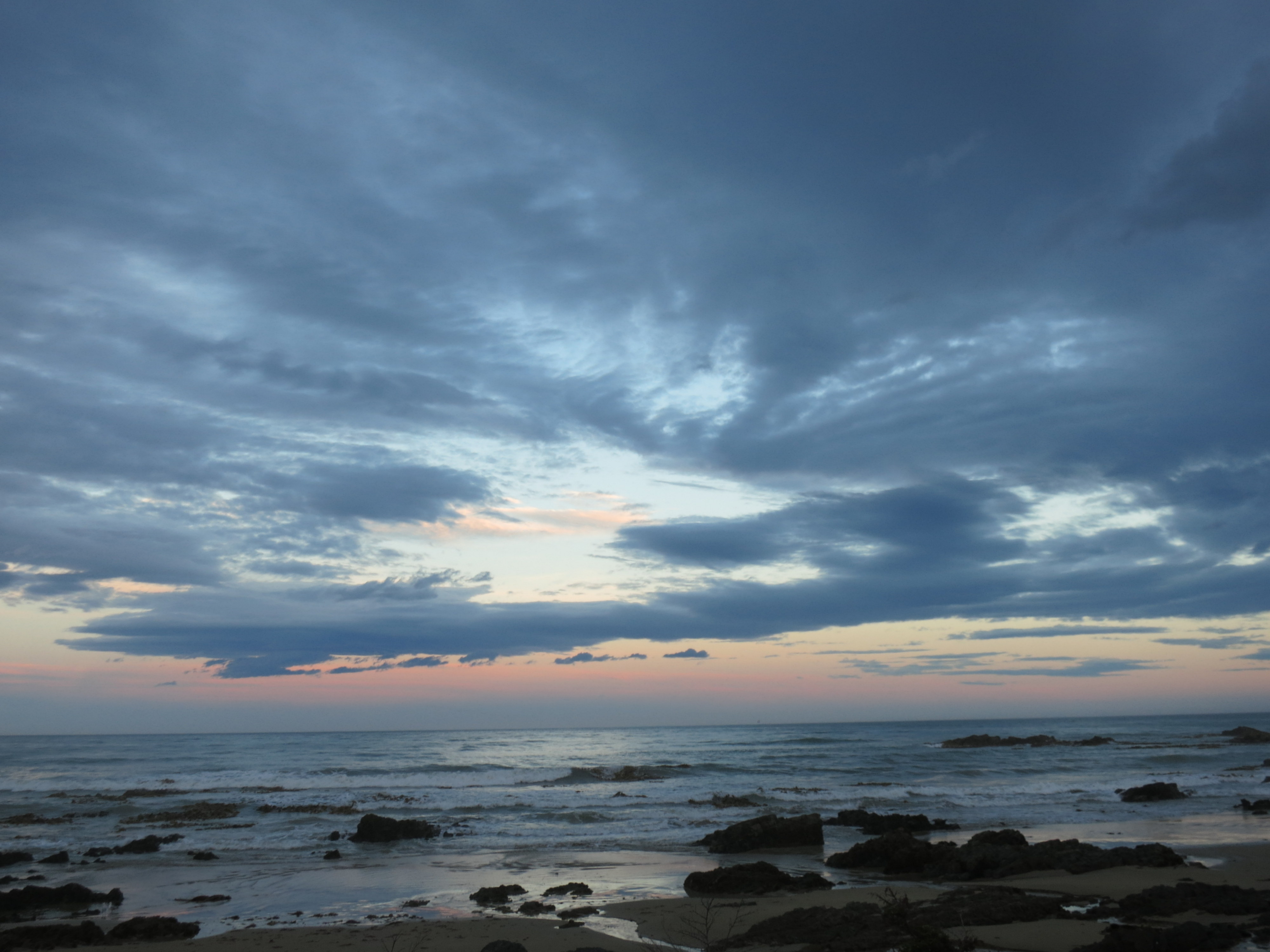
Good night

Good night

A Perfect Day in Milford Sound

Beautiful. Stunning. Jaw-dropping. All the superlatives apply to Milford Sound in New Zealand. Of the twelve sounds that Maori legend Tu-te-raki-whanoa carved from the rock of the southwestern coastline, he’d deemed this one the most perfect. Fog hugs the mountaintops, fur seals snooze on the rocks, waterfalls cascade down the steep cliffs. I visited on a sunny day, and was astonished by the clarity of light, the sharp beauty of everything I saw.

On Milford Sound

On Milford Sound

Milford is remote enough that you can only sleep out there on the extreme ends of the income scale–in the one hotel at the pier, or in a tent in the hills, as part of a multi-day trek. Most people take day trips out there, and it can be exhausting. I heeded the warnings to not go from Queenstown and back again in the same day, because it was too much time on a bus and not enough time enjoying the sights. Instead, I used Te Anau, the town about halfway between Queenstown and Milford, as my starting and ending point for the day. This was the right decision. I was so much more enthralled by the scenery than I would have been if I’d spent an extra four hours on a bus.

You could easily pull a Julie Andrews here.

You could easily pull a Julie Andrews here.

Mirror Lakes

Mirror Lakes

This area of New Zealand is known as Fiordland, and most of that is part of Fiordlands National Park, a mountainous area with no industry other than tourism and a few dairy farms on the outskirts. When I visited, there was talk of bringing the west coast highway down through the mountains to connect to Milford. A lot of people are against it, since that would cut through some of the more remote parts of the wilderness and significantly alter the landscape and its accessibility. For now, there’s just the one road, coming in from Te Anau. It’s closed when it’s too wet or snowy. The park department triggers avalanches during winter, like planned fires in forests, so that they know when they’re going to happen and people won’t be caught in them.

drive to milford

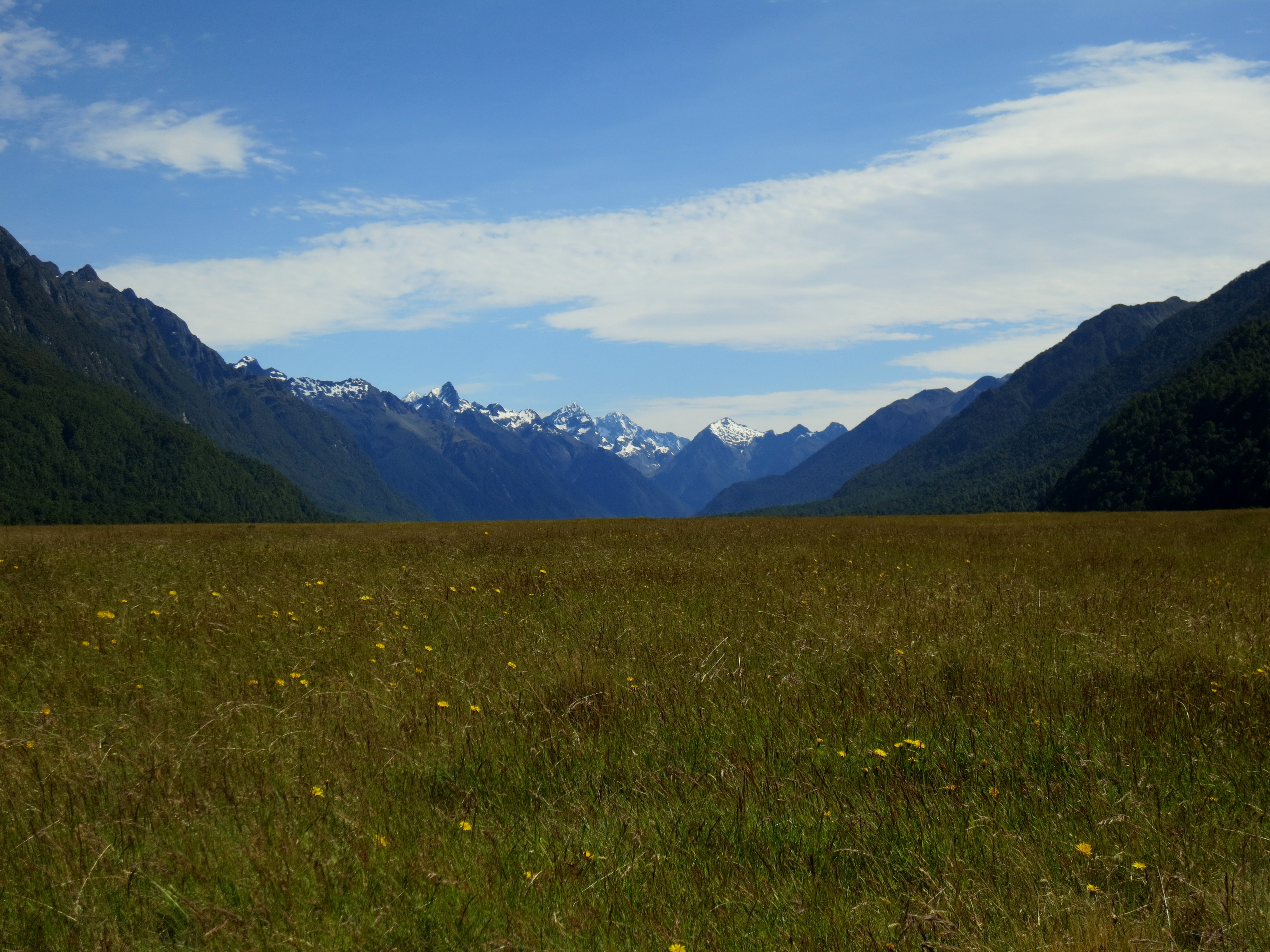
Dennis Moore's dream field (Monty Python joke)

Dennis Moore’s dream field (Monty Python joke)

The drive out to the sound is gorgeous as well. The bus driver gave us a few facts and figures as we wended our way through fields of invasive lupins, and I tried to pay attention to what he was saying as I stared out the windows. We made a few stops, at the Mirror Lakes and at a large field with a view of the mountains we were driving into. We drove through Homer Tunnel, the only part of the road built by blasting through solid rock. Once we were on the other side, I felt just how far from everything we were. The open spaces of the meadows were gone, and in their place jagged rocks stretched in the rare blue sky.

The road after Homer Tunnel

The road after Homer Tunnel

I boarded a Southern Discoveries boat with about 50 other people, and we set off into the wide ellipse of the sound. Or rather, the fiord. All the English names for the ragged inlets in the area are geographically incorrect; sounds are formed when a river valley is flooded, whereas fiords (or fjords, both spellings are correct) are formed by glaciers cutting out the rock of the surrounding mountains and melting to fill up the resultant valley. Both the bus driver and the guide on the boat relayed this information, so I guess it’s an important distinction, but I have to say that when you’re on a boat in the middle of Milford, it doesn’t matter if it’s a sound or a fiord, it’s just lovely.

Mitre Peak, shrouded in clouds

Mitre Peak, shrouded in clouds

It had rained pretty heavily the days before my visit, so the waterfalls that ring the fiord were full. We slowed down near most of them so we could get a good look, but for a couple, the captain piloted the boat right up under the falls so the prow–and anyone on it–got soaked in the spray. Further proof that anywhere you go in New Zealand, you should bring a raincoat.

One of the many waterfalls at Milford

One of the many waterfalls at Milford

A refreshing drink

A refreshing drink

Fur seals sunned themselves on rocks in a couple places, and at one point I even saw a baby snuggled up next to its mother. The boat went out almost to the mouth of the fiord, and we squinted out to the Tasman Sea and pretended to be able to see Australia. Then we circled round on the other side, looking at the treevalanches and mossy cliffs.

Spot the baby fur seal

Spot the baby fur seal

The hillside starts to recover from a treevalanche

The hillside starts to recover from a treevalanche

We passed Lady Bowen Falls on the way back into harbor, and with one last glance back at Mitre Peak, which had only just emerged from the fog, the boat trip was over.

IMG_5481

Lady Bowen Falls

Lady Bowen Falls

Milford was certainly full of tourists, but we were all so spread out that it didn’t feel crowded. Even the occasional helicopter tour overhead couldn’t do much to detract from the beauty and peace of the day. I’ve heard that Doubtful Sound is just as stunning and less crowded, which makes sense since it’s more remote and difficult to reach, so I’ll simply add that to the list of places I’ve missed on this trip and want to see on the next go-round. In the meantime, Milford is firmly on the list of highlights of this trip.

milford blues