
Palacio de Carondelet, Quito, Ecuador; February 22, 2014
Palacio de Carondelet, Quito, Ecuador; February 22, 2014
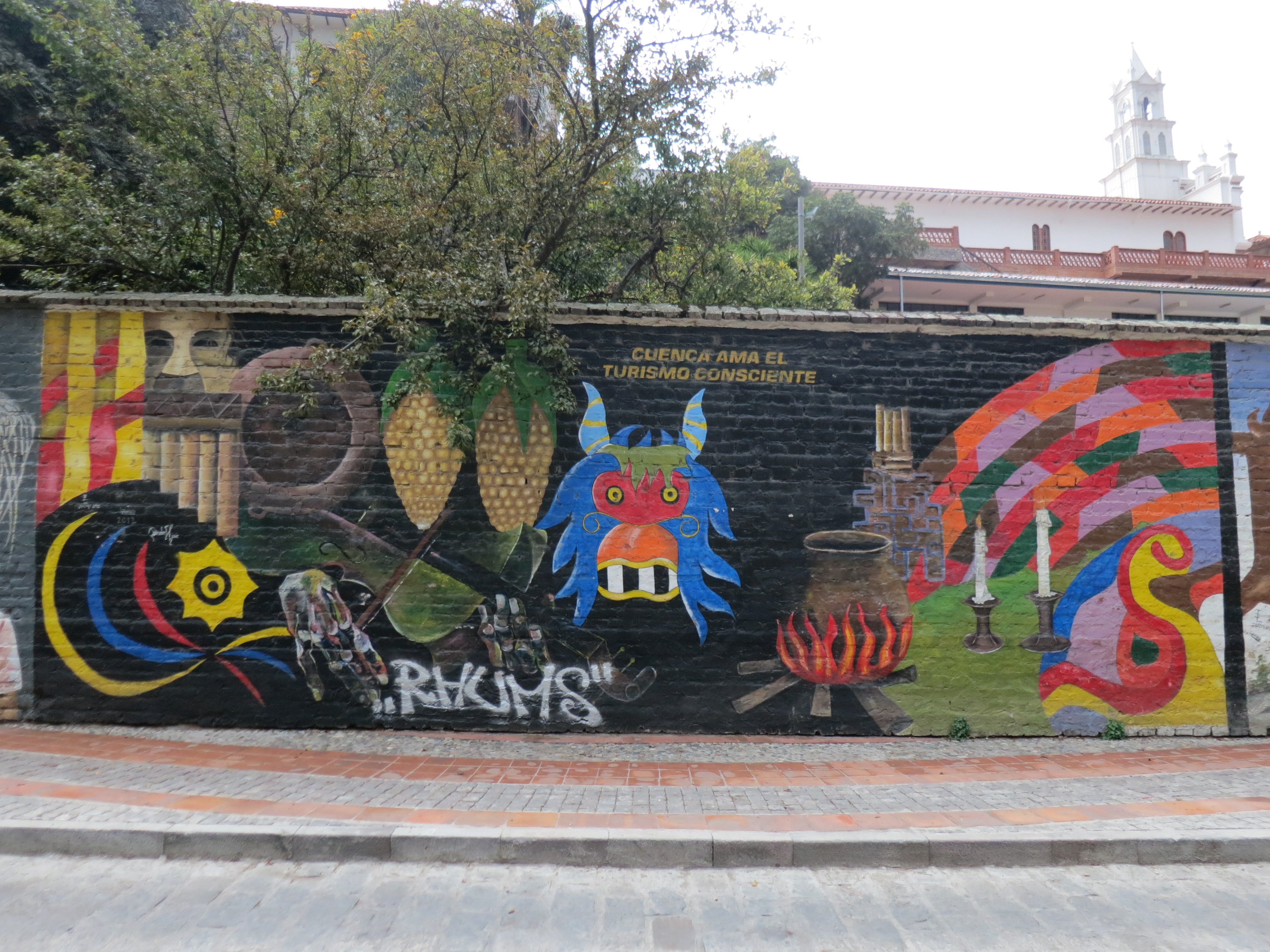
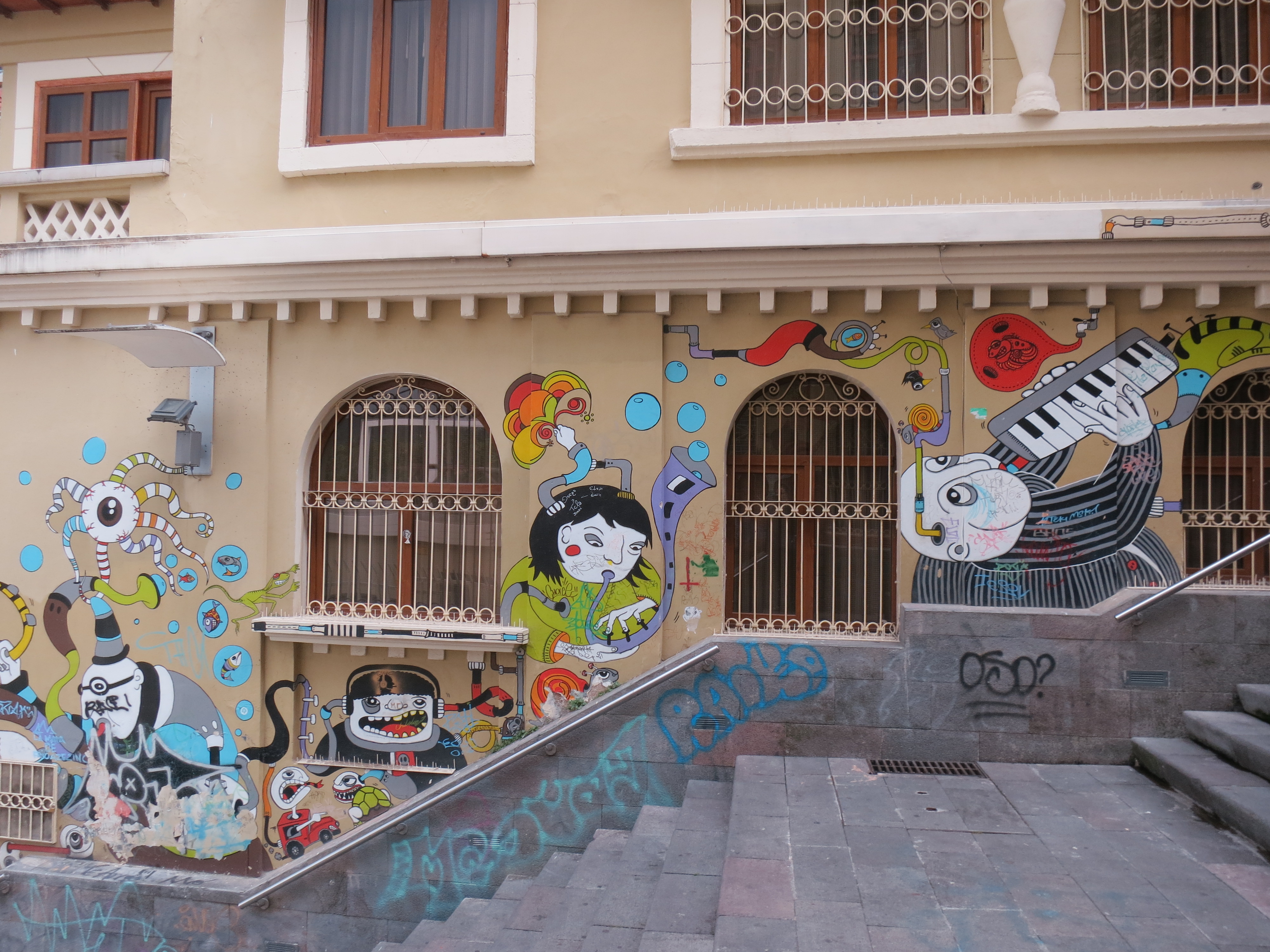
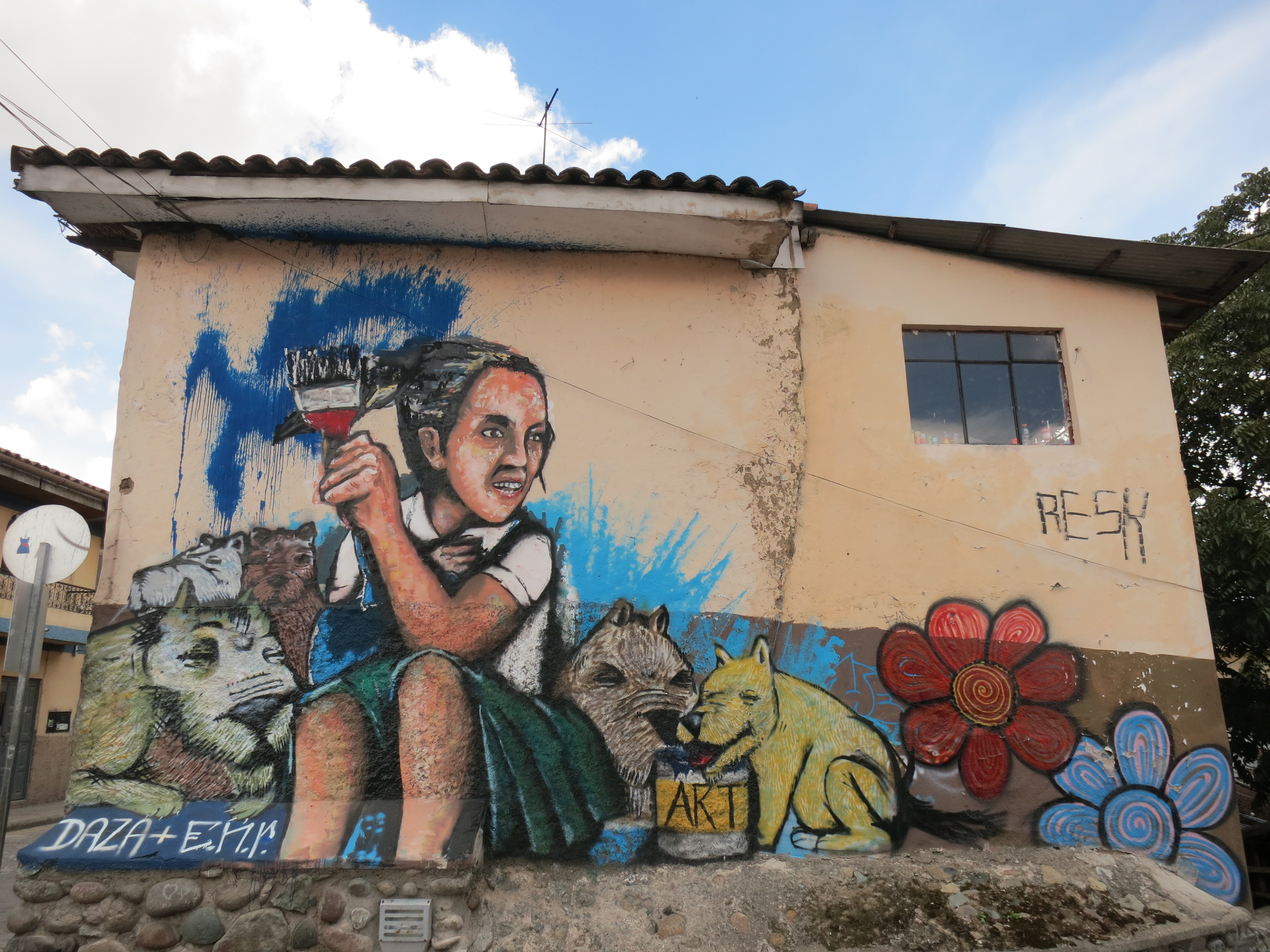
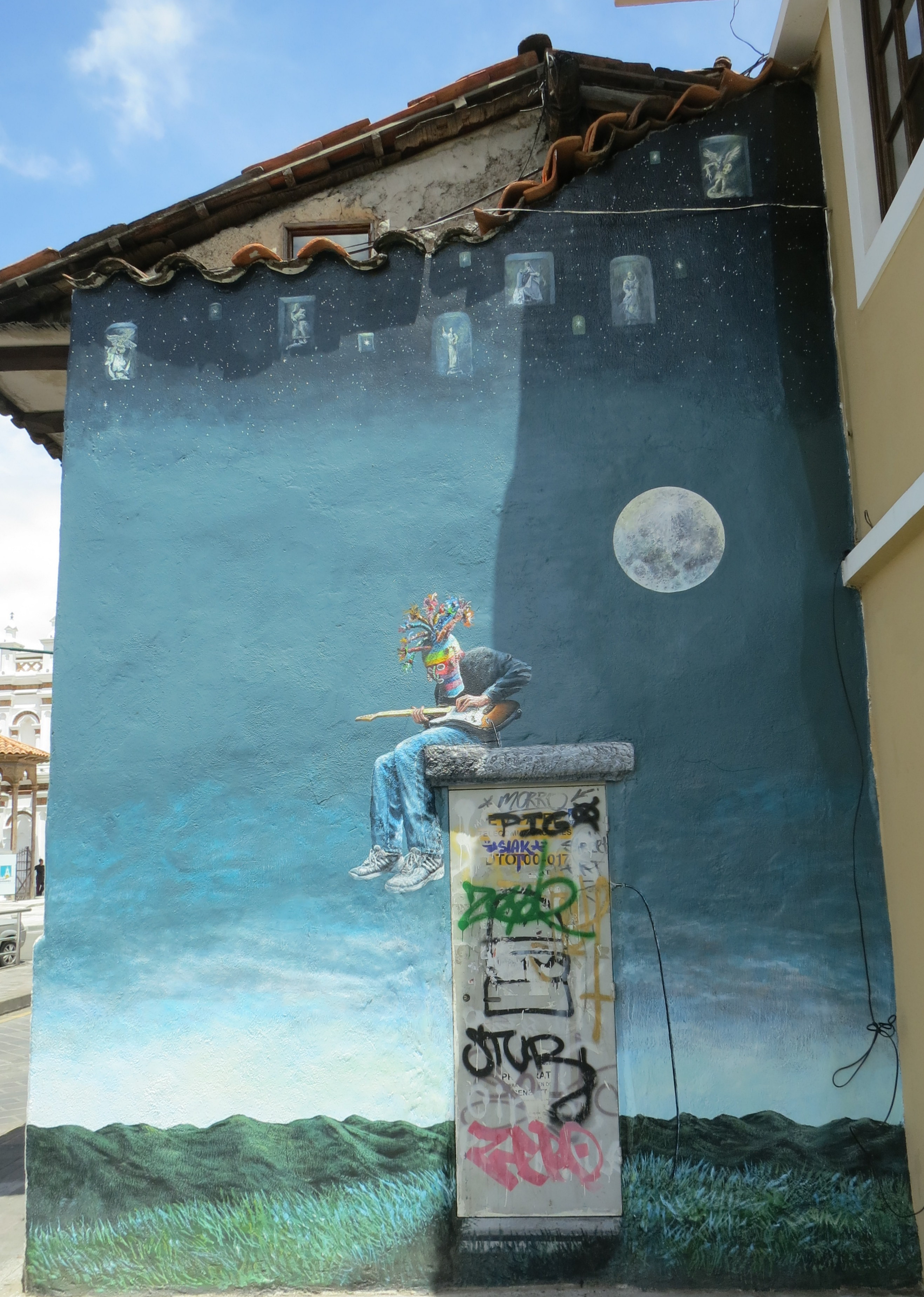
Cuenca is a university town, and it shows on the streets, which are covered in bright, beautiful murals and spray-painted political slogans and anarchy tags. Every 100 yards or so, I’d come across another cool painting or intriguing phrase, and out came my camera. Here are some paintings I enjoyed:





I haven’t spent much time in Spain, so I haven’t seen the churches that inspired those built in Latin American countries. The churches I saw in Quito were very different from the English, French, and North American ones I’m familiar with; much more elaborate decoration, the Virgin Mary featured more prominently, less emphasis on stonework and more on paintwork. I love the cathedrals of Chartres and Salisbury, but La Compañia and San Francisco were magnificent in their own right.

Iglesia de San Francisco
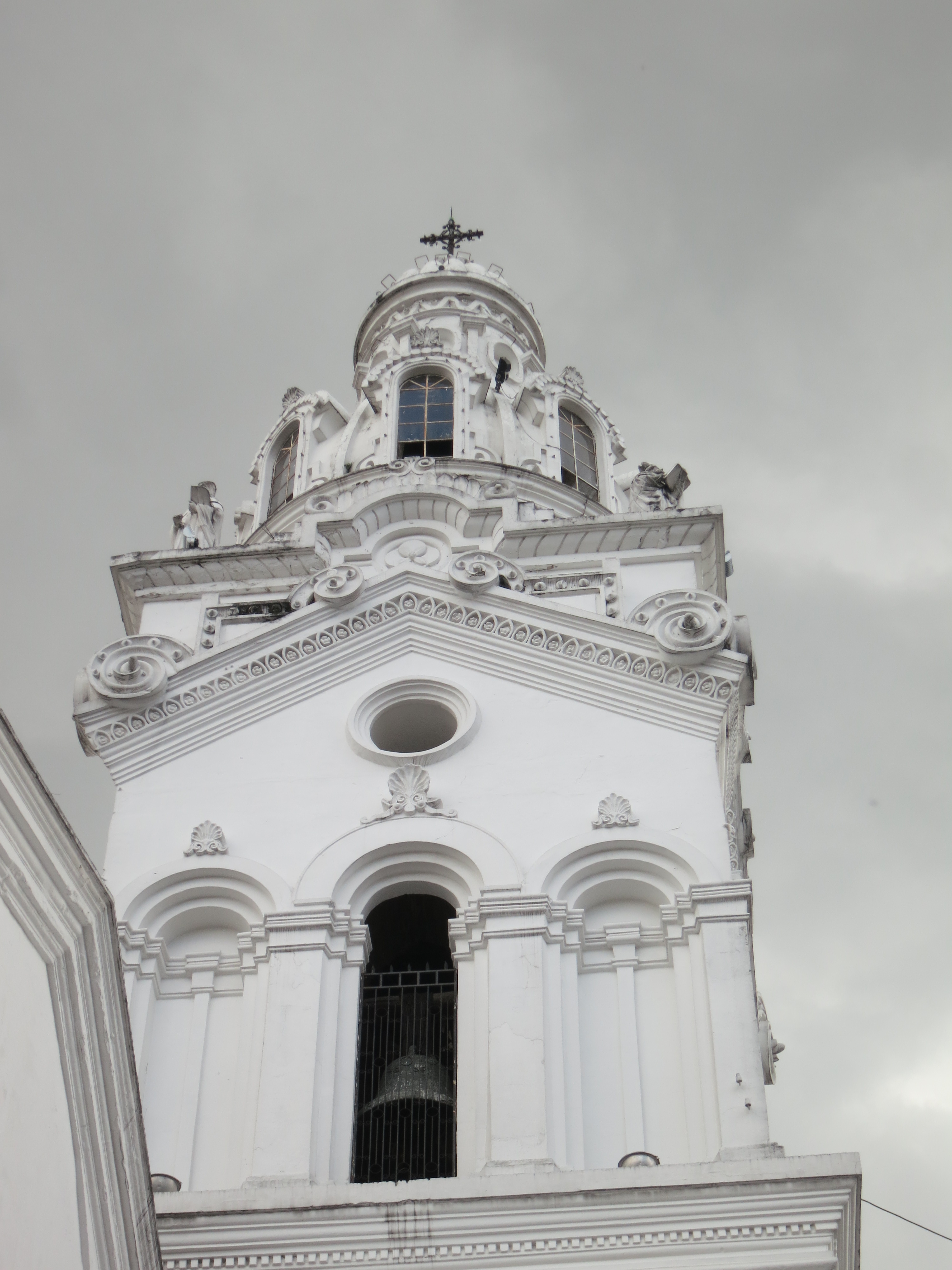
The bell tower of the cathedral
My guidebook described the Iglesia de la Compañia de Jesus as gaudy, but I loved it. Every square inch was covered in gleaming gold–the ceiling, the walls, the giant columns lining the aisles, the baroque columns framing the paintings. Some other colors crept in here and there, in the paintings and altar pieces, and okay, the pews were made of wood and the floors were a mix of stone and wood, but everything else was gold. It was stunning. They were really strict about not taking photos, but I snuck a couple.

La Compañia

The golden doors of the golden church

I wonder how bright it was in here before the age of electric light. I bet it’s actually more brilliant now.

Crystal on the sides? I’m not sure

Detailed ceiling

Loved it
The San Franciscan order of monks was the first to settle in the area, and the church and monastery they built here is now the largest religious complex in South America. The church is elaborately decorated, with paintings and an interlocking pattern on the ceiling. Saints form a semicircle around the altar, and the ceiling above is a deep blue and gold. The choir is made up of intricate wood carvings, and it affords a good view over the nave.
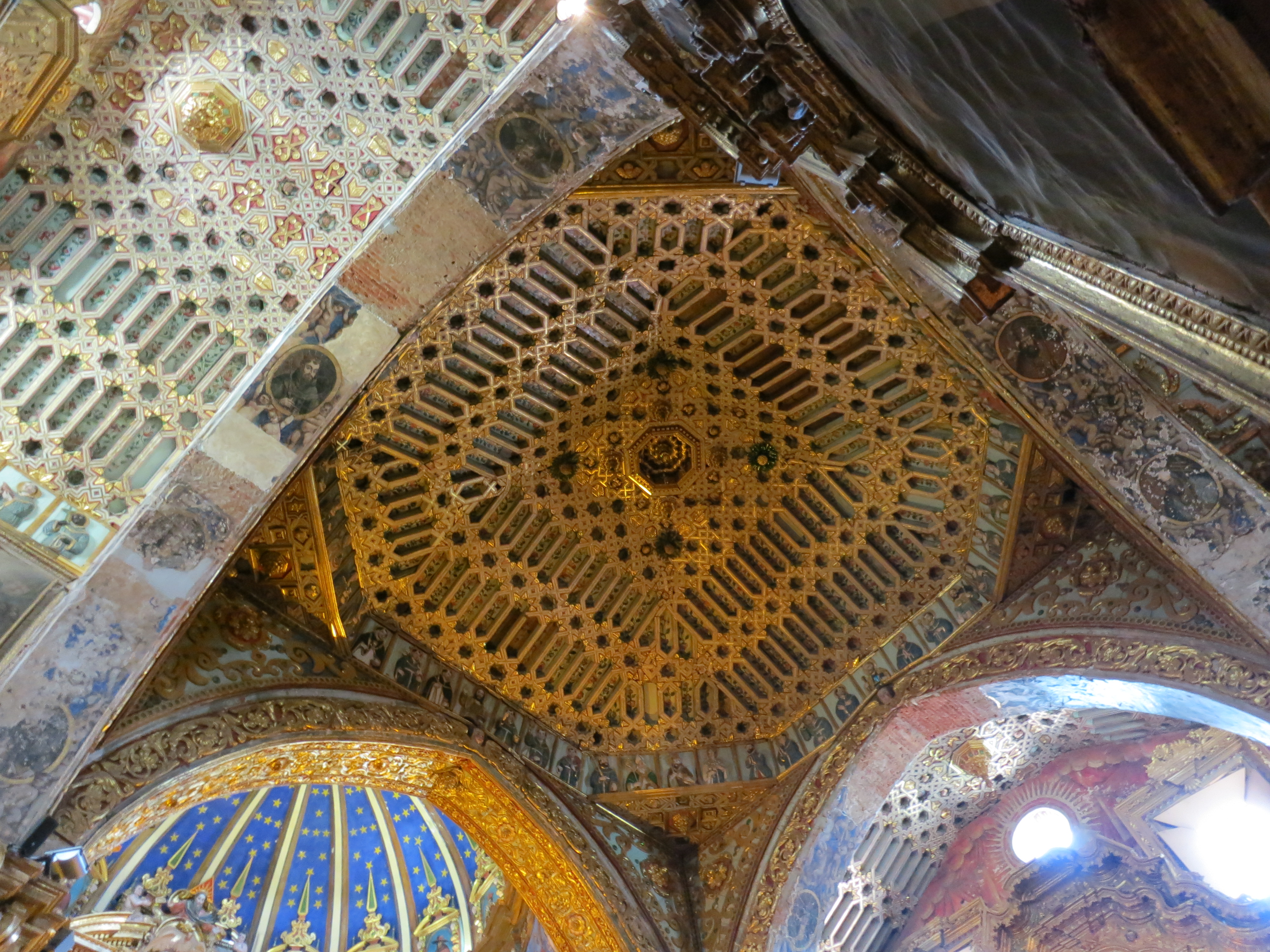
The ceiling of Iglesia de San Francisco
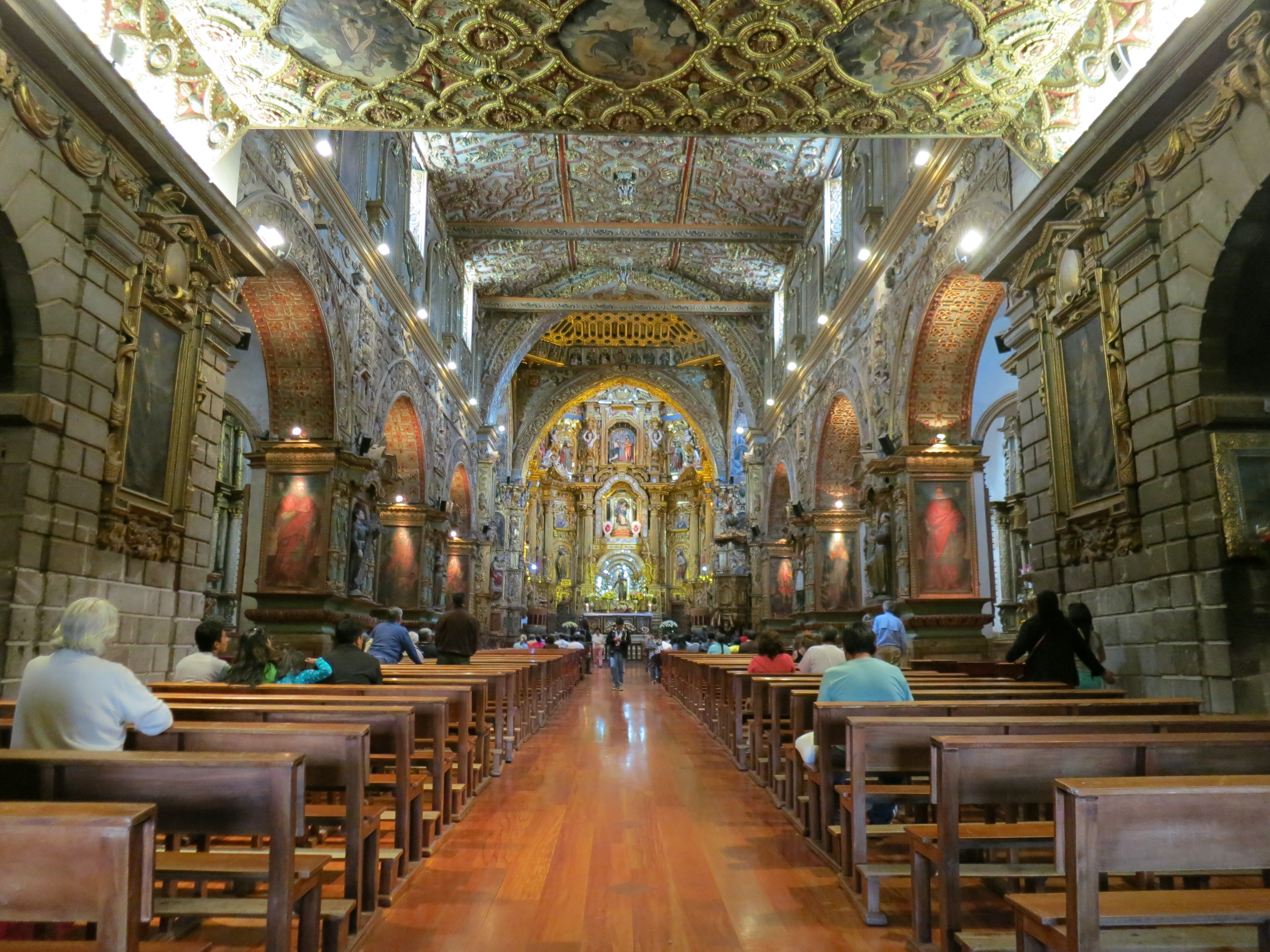
Interior of Iglesia de San Francisco

The altar of San Francisco

The ceiling of the choir at San Francisco
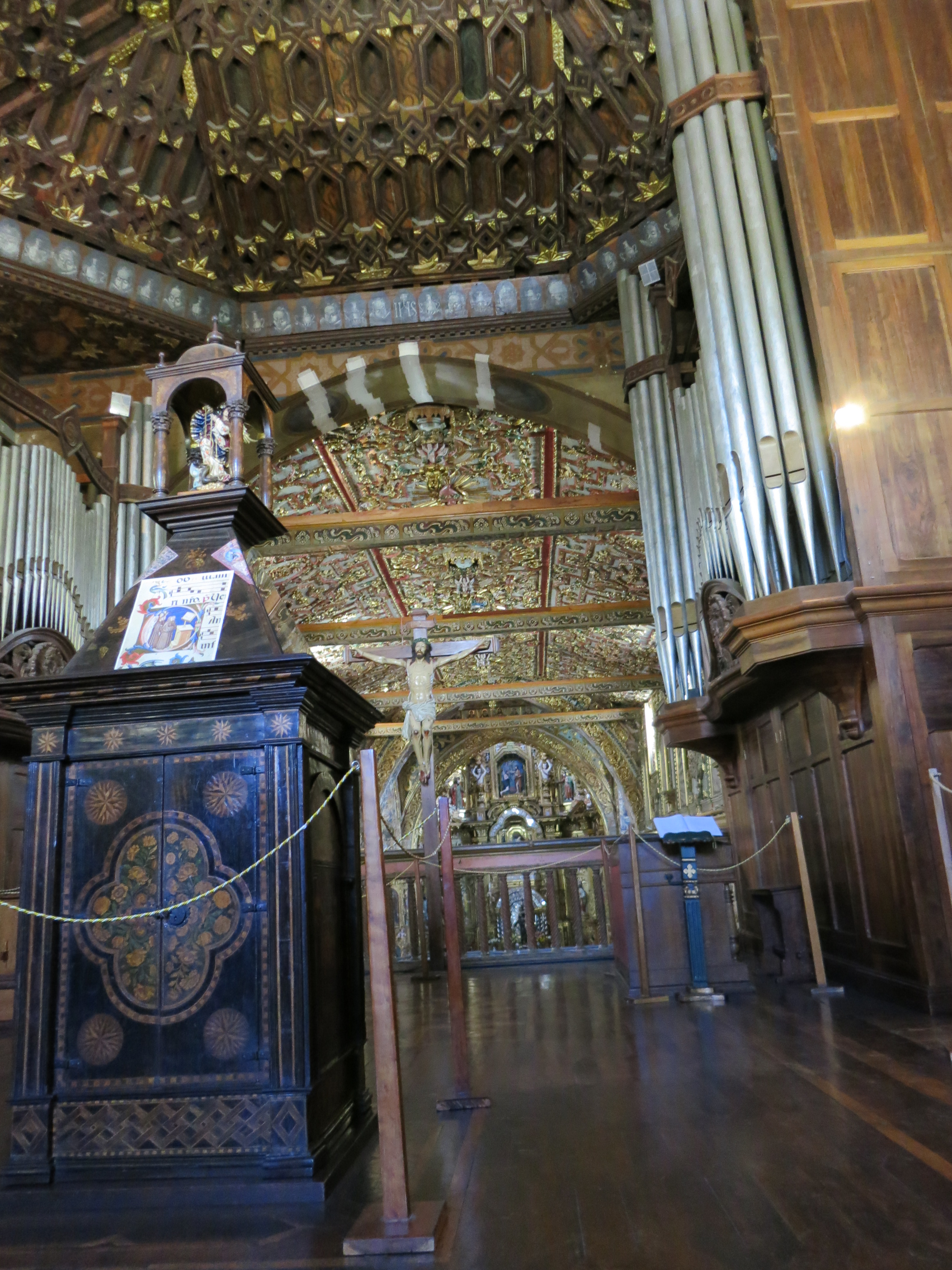
A shoddy, secret shot of the choir at San Francisco

Birds in flight
The attached museum contains sculptures and paintings done in the Quito style (one of the four main schools of art in the colonial period in South America). One of the halls was filled with figures carried during religious parades, like Carnaval and Holy Week, including a wooden bed for carrying statues. I tagged along on an English-speaking tour of the museum, learning about how the position of the statue on El Panecillo is a specific form that is found in statues elsewhere (like a couple in the museum), and how Santo Domingo is always depicted with a devoted dog at his feet.
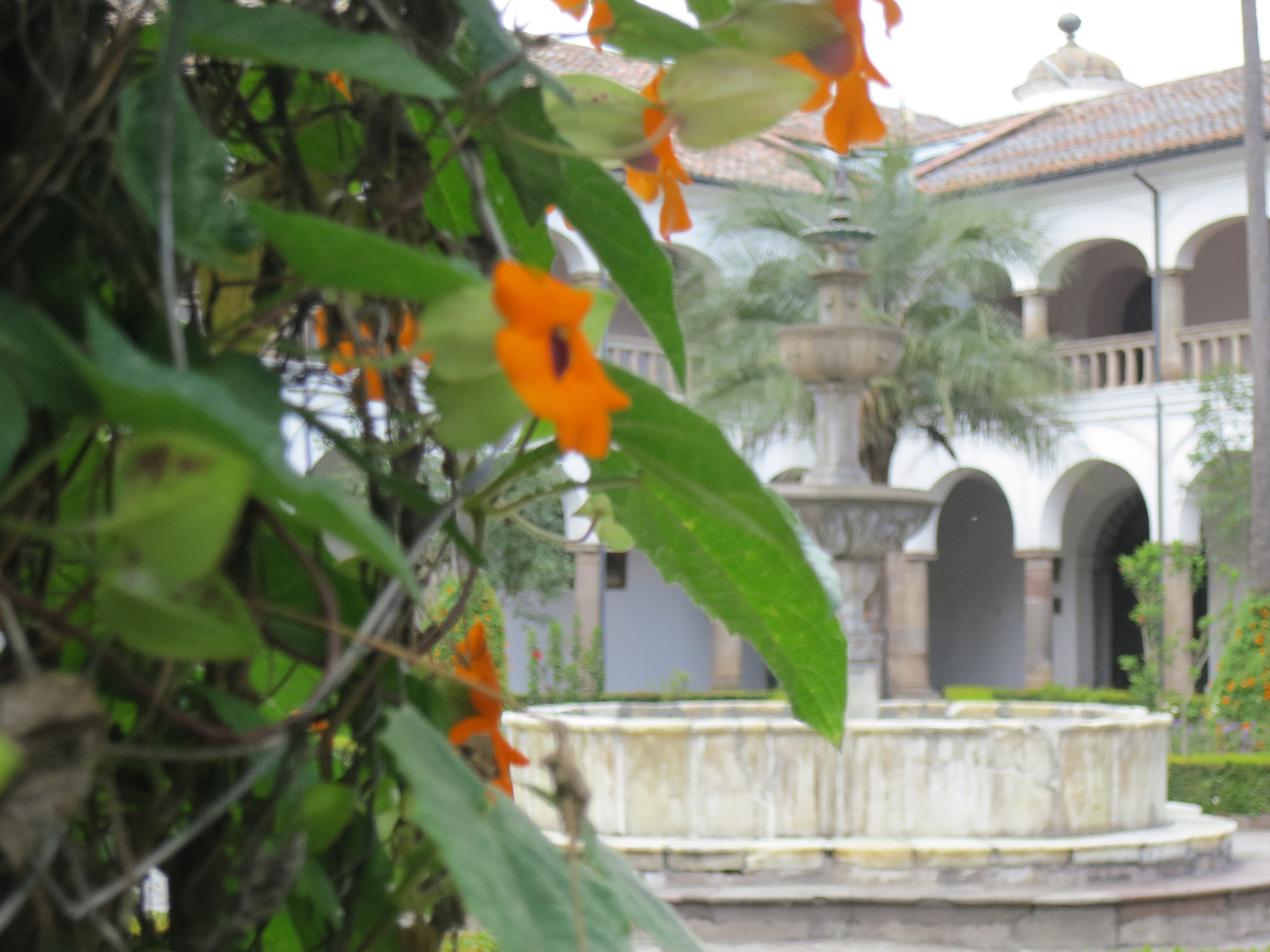
In the courtyard of the convent at San Francisco

The specific pose for the Virgin of the Apocalypse (she has wings, and vanquishes a snake) — also found in the statue of El Panecillo

For religious processions
The cathedral that forms one side of the main plaza has a stark exterior and a lovely interior, sky blue patterned with gold and pink, transporting you into the heavens as soon as you walk inside. They were starting a service when I ducked in there, so I didn’t spend much time.

The austere exterior of the cathedral

Walking into heaven

Sky blue

A postcard of the Compañia
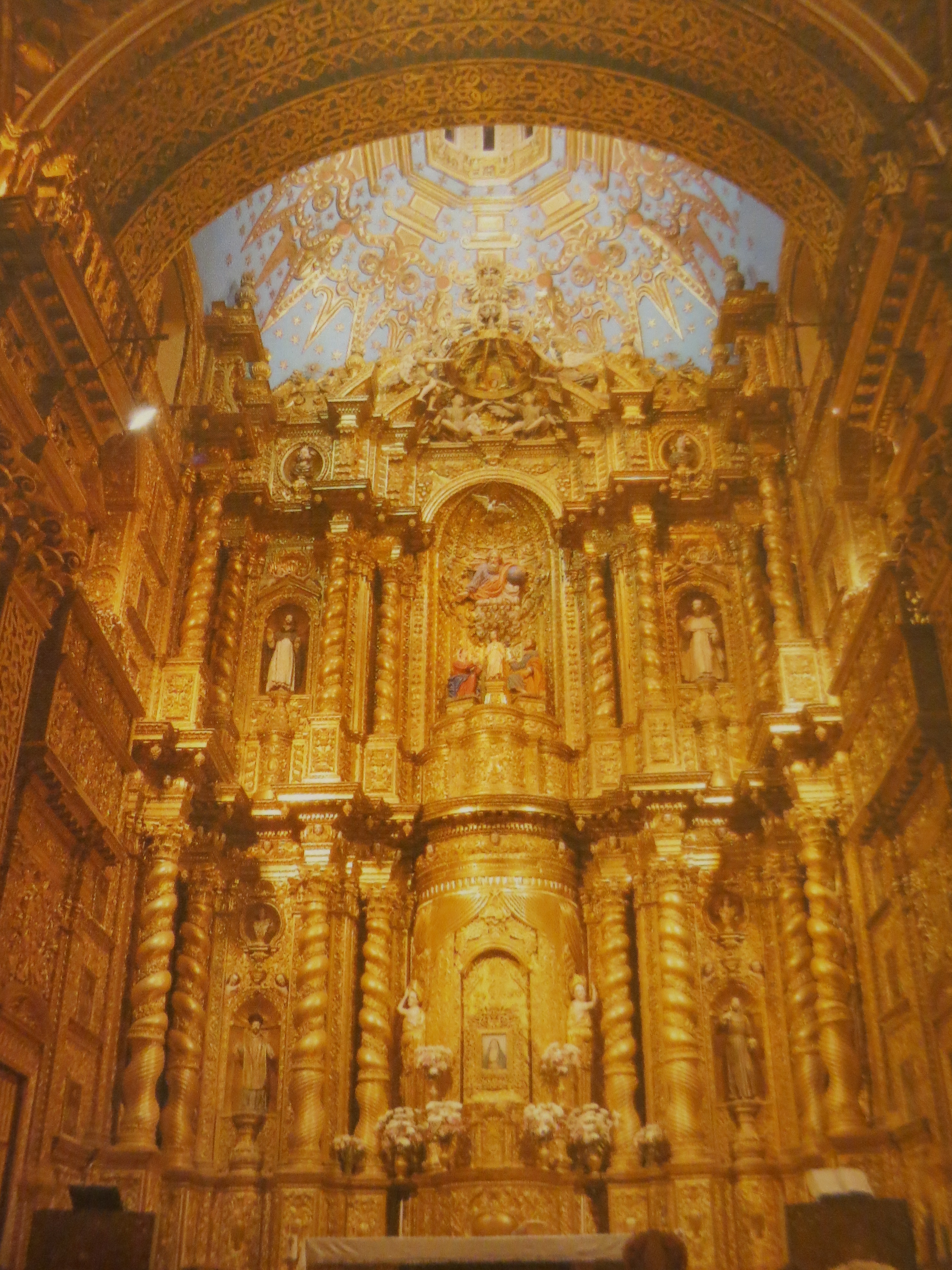
Another postcard (to get at least one good shot since the no-photos-please people were hawk-eyed)

Sunset, Cuenca, Ecuador

Las Tunas, Ecuador; March 10, 2014
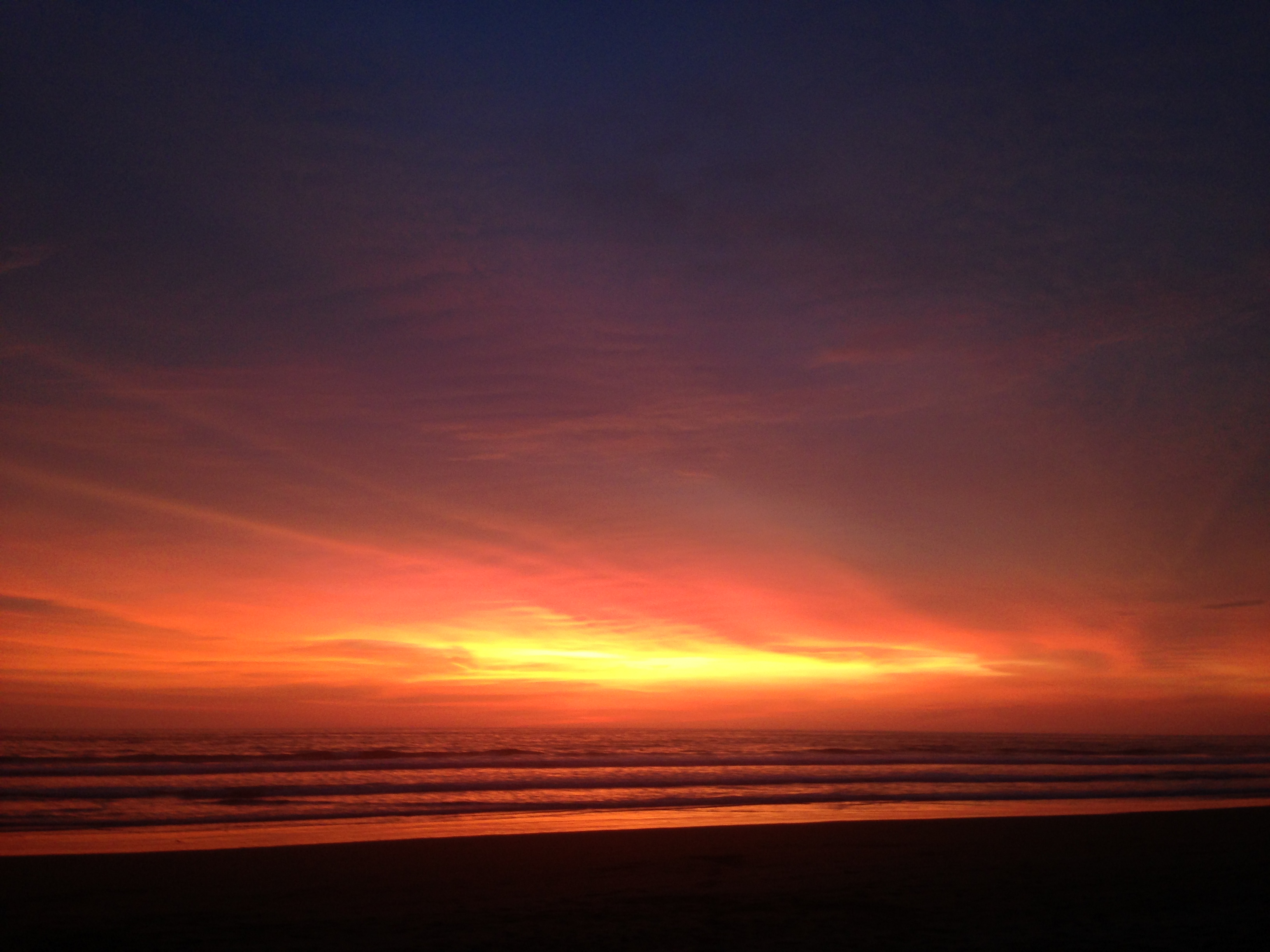
Sunset, Las Tunas, Ecuador
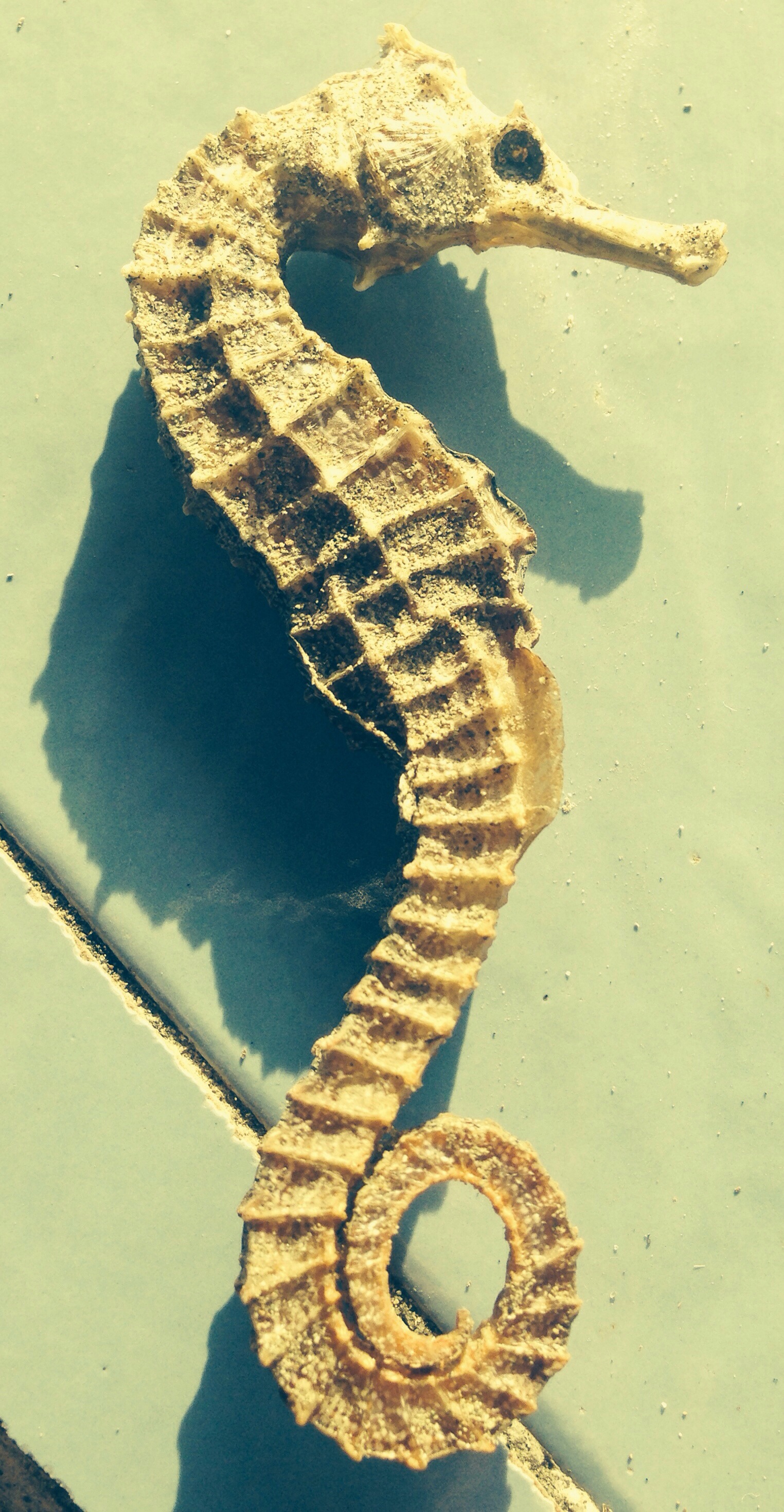
Las Tunas, Ecuador; March 12, 2014
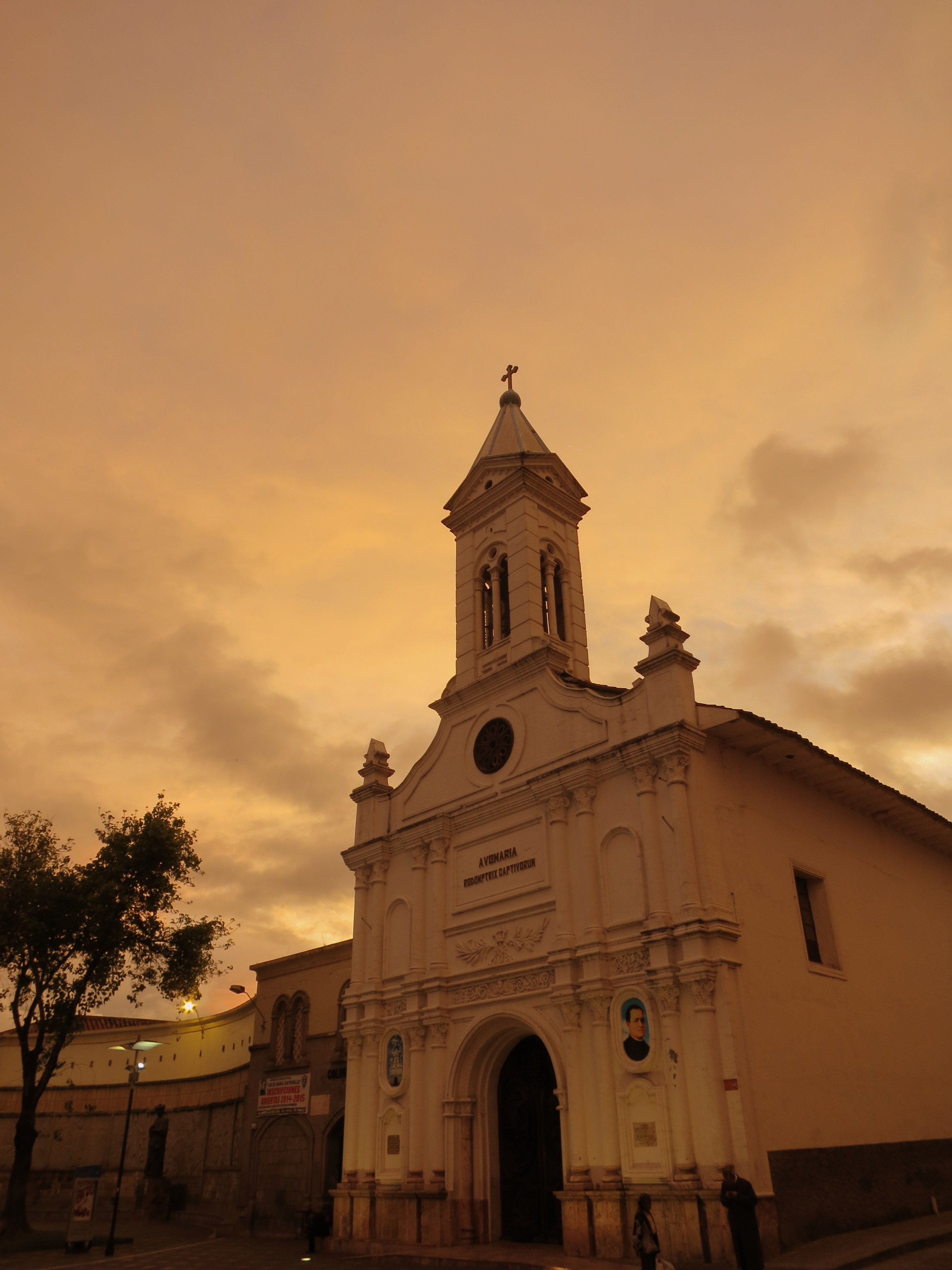
Sunset, Cuenca, Ecuador

Mindo, Ecuador; February 25, 2014
Or Mardi Gras, or Shrove Tuesday, or so on. Today’s a Christian holiday, the last day of festivities before the solemn season of Lent starts. It’s celebrated in various ways in various countries: in England, it’s sometimes “Pancake Tuesday” because people eat pancakes for dinner, from back when they needed to use up all the fat in the house before the lean 40 days of Lent; in France and French-influenced places like New Orleans, Mardi Gras, or “Fat Tuesday,” is a time of partying and fatty foods; in Italy and Brazil, “Carnaval,” from the Latin for “remove the meat” (which is what pious Catholics do until Easter), is a time of masked parties, exuberant dancing, and wild abandon.
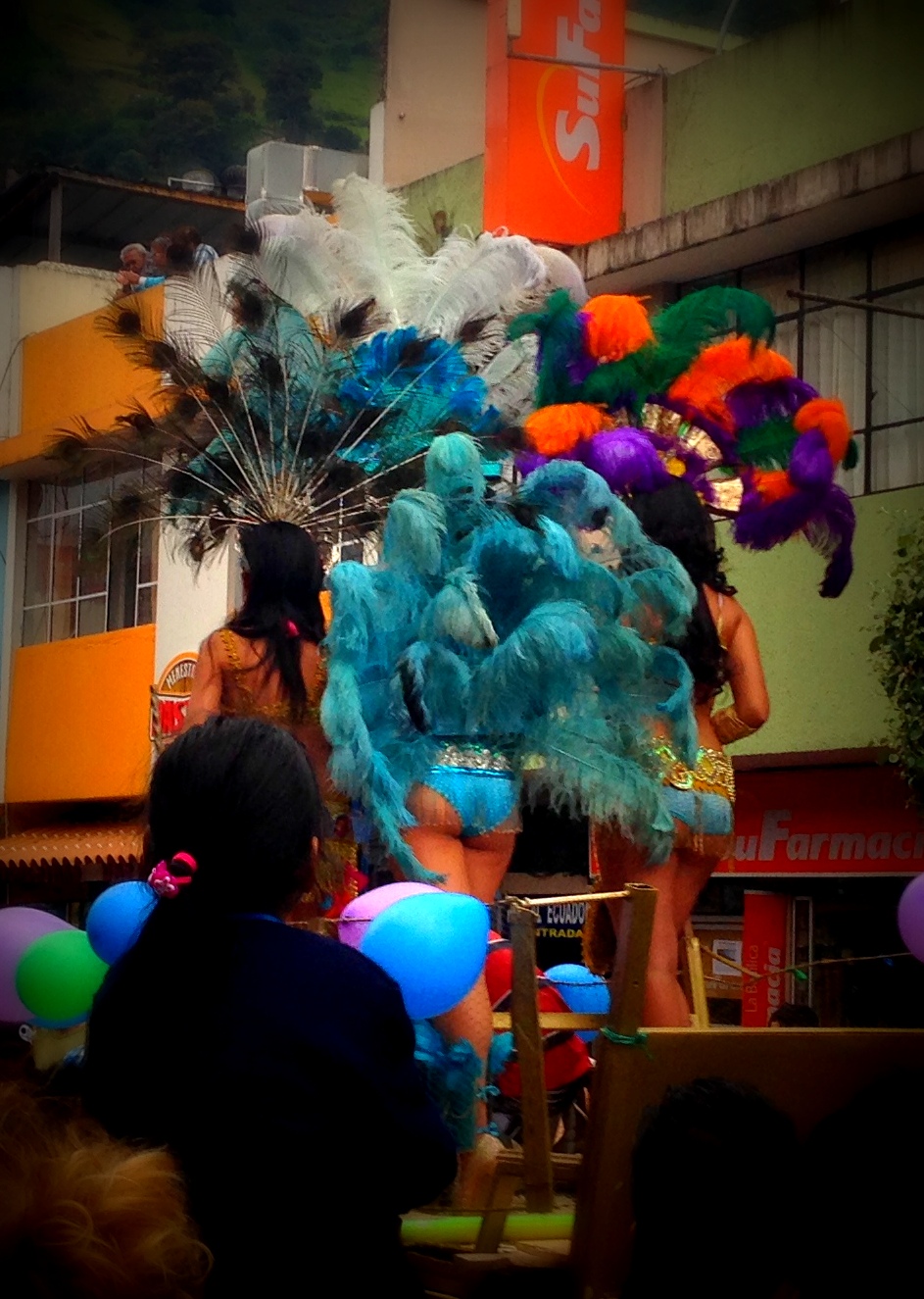
Part of the Carnaval parade in Baños, Ecuador
In the Andes highlands of Ecuador, Carnaval combines Catholic traditions with indigenous ones, so people party but also hope for a good harvest and good luck in the coming year. One Ecuadorian tradition is to throw water at friends and family, and sometimes at strangers on the street. Some people also throw flour and even eggs. This comes from an indigenous festival that pre-dates the arrival of Europeans to the continent. I’ve seen guys douse their girlfriends with buckets of cold water, and little kids squirting each other with water guns.

Foamed!
But nowadays the popular thing is to use tall spray cans of foam. So any time you hear that little rattling noise that a spray can makes when you shake it, look out! Someone’s gonna foam you. I feared I might be a special target, as a gringa, but mostly people seem to target their friends. I did get foamed when I went out Sunday night, but so did every other girl who walked by that corner, and it was easy to laugh it off as I headed to the bar.
Taita Carnaval is a symbolic character who arrives from out of town, bringing good luck and food to clean and industrious homes, and letting his sidekick Hunger linger in dirty households. I didn’t see Taita Carnaval this year, but I did catch a parade in Baños, a small town in the shadow of an active volcano. I took some shaky video and stitched it together in a little movie. I hope you enjoy this glimpse of how one town celebrates this holiday!
 Stowaway Travel Writing & Editorial Services