A Day in the Gardens of Kew

The Royal Botanic Gardens at Kew are almost as large as their name is long. They run along the River Thames in the southwest of London, taking up about a half mile square (121 hectares, in case the hectare is a unit of measurement that means something to you). They’re on the World Heritage list because they’ve maintained their size and purpose for over two centuries; they do a lot of plant research here, and have one of the best orchid collections in the world, for example. When my friend Sessily and I met up in London, we decided to pack a picnic and make a day of it at Kew. We spent a lovely day in the warm sunshine, admiring the trees and flowers, gazing out over the pond, having an ice cream, watching kids run around excitedly, listening to the sound check for the Human League concert taking place there later that night… You know, normal gardens stuff.

I don’t know the names of plants, and a lot of plants didn’t have labels (or none that we could find), so I can’t name most of these for you. Feel free to educate me in the comments!

They have their own tube stop.

They have their own tube stop.

The oldest tree in Kew, planted in the early 18th century. It's a sweet chestnut--that one I did find out!

The oldest tree in Kew, planted in the early 18th century. It’s a sweet chestnut–that name I did find out!

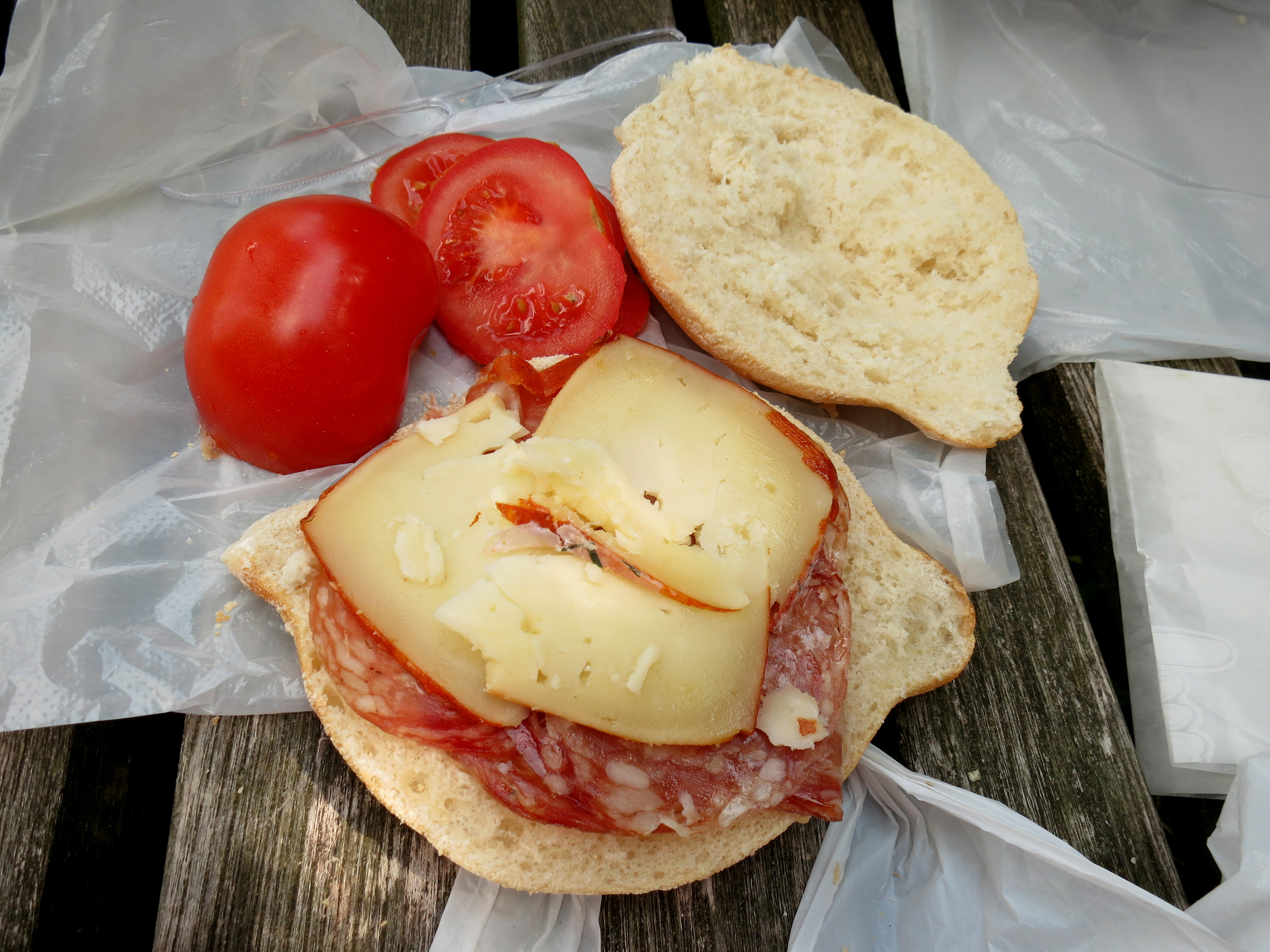
We bought sandwich fixings from a Portuguese deli. This was a very good sandwich.

We bought sandwich fixings from a Portuguese deli. This was a very good sandwich.

kew

Treetop walk

Treetop walk

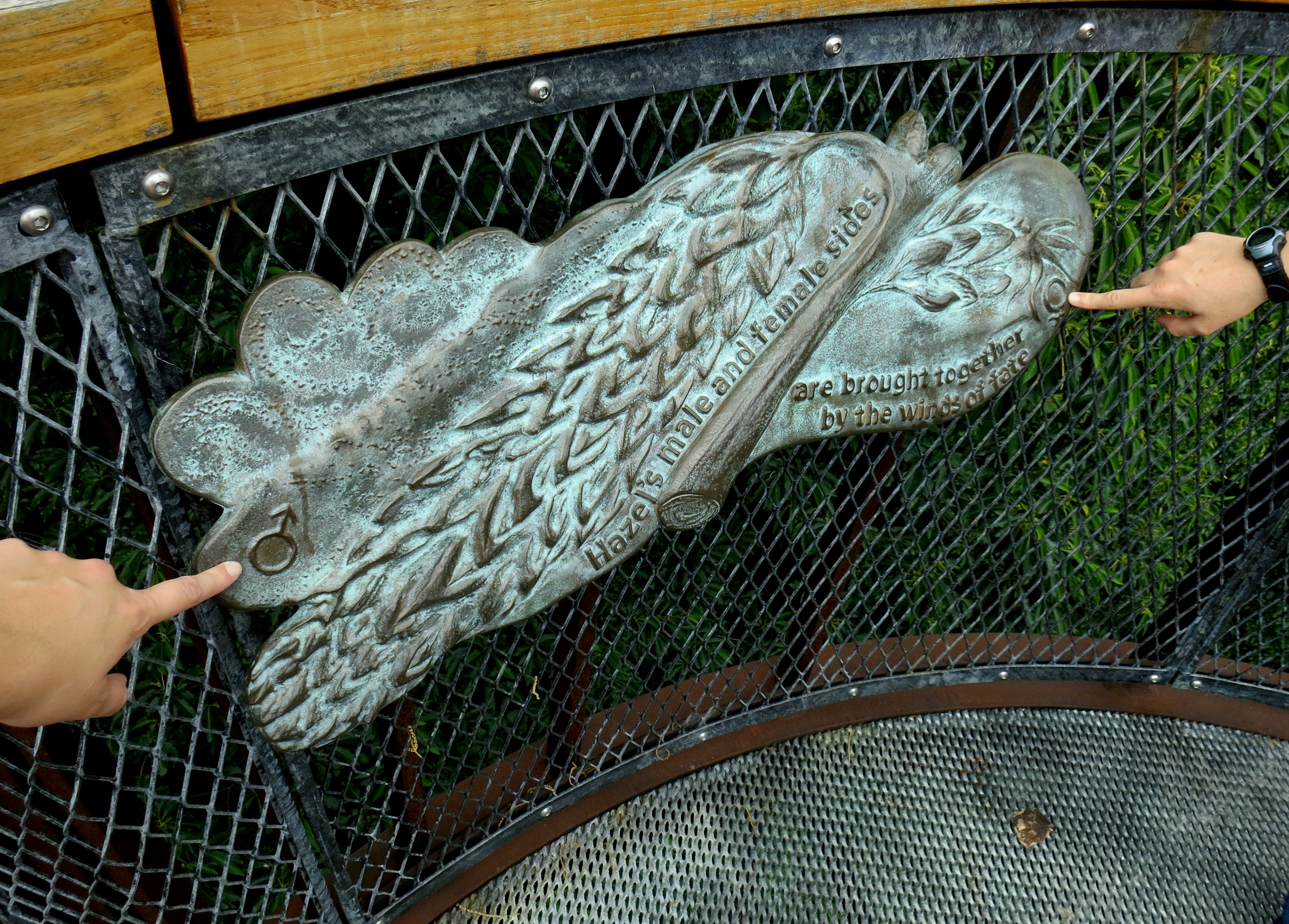
The treetop walk featured hilarious plaques noting plant facts. We loved this one because the artist decided to put in the male and female symbols (see where our fingers point), just in case you missed it in the text.

The treetop walk featured hilarious plaques noting plant facts. We loved this one because the artist decided to put in the male and female symbols (see where our fingers point), just in case you missed it in the text.

kew

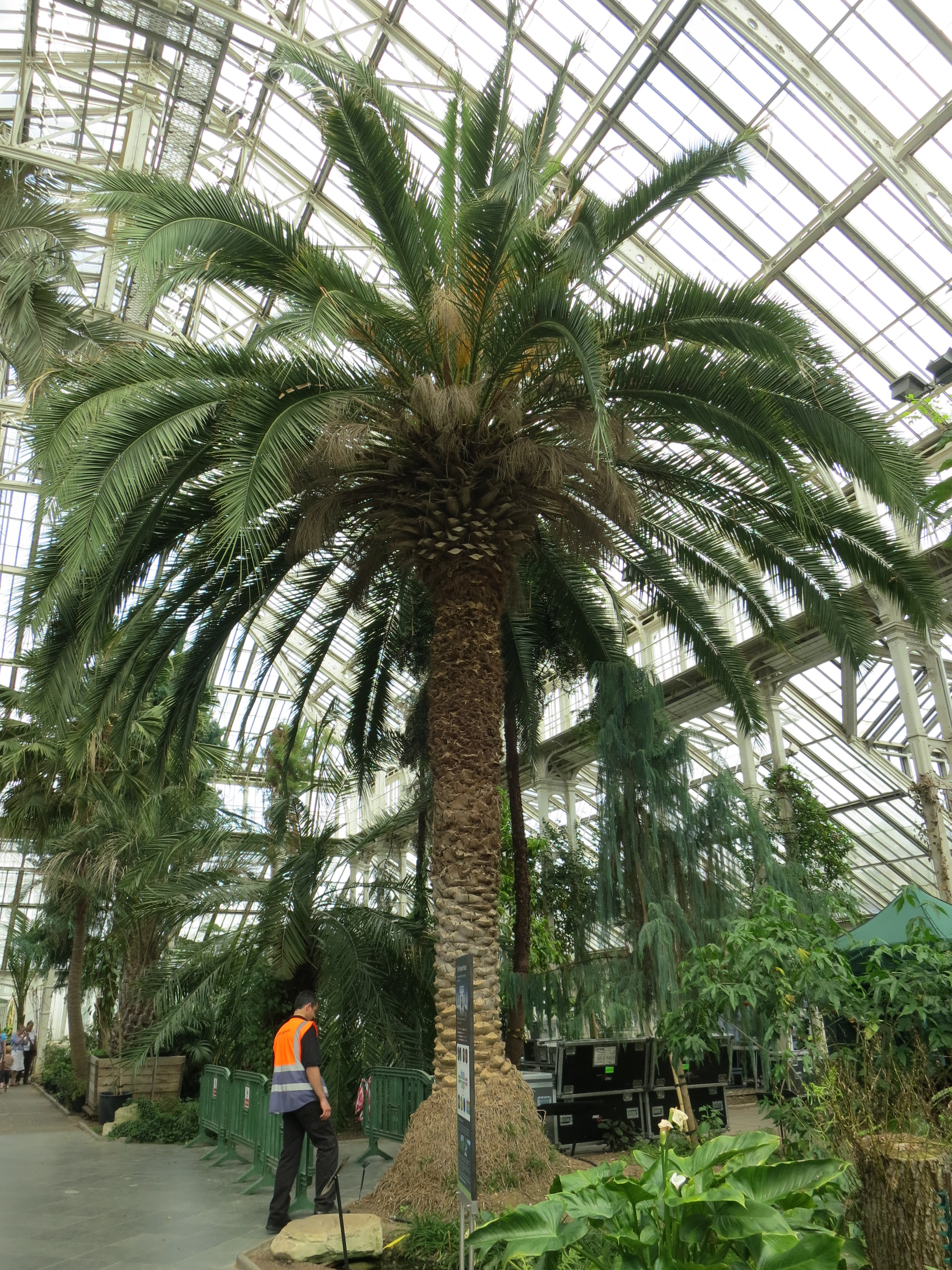
Palm tree in the Temperate House

Palm tree in the Temperate House

I think this was a rhododendron--cool star pattern

I think this was a rhododendron–cool star pattern

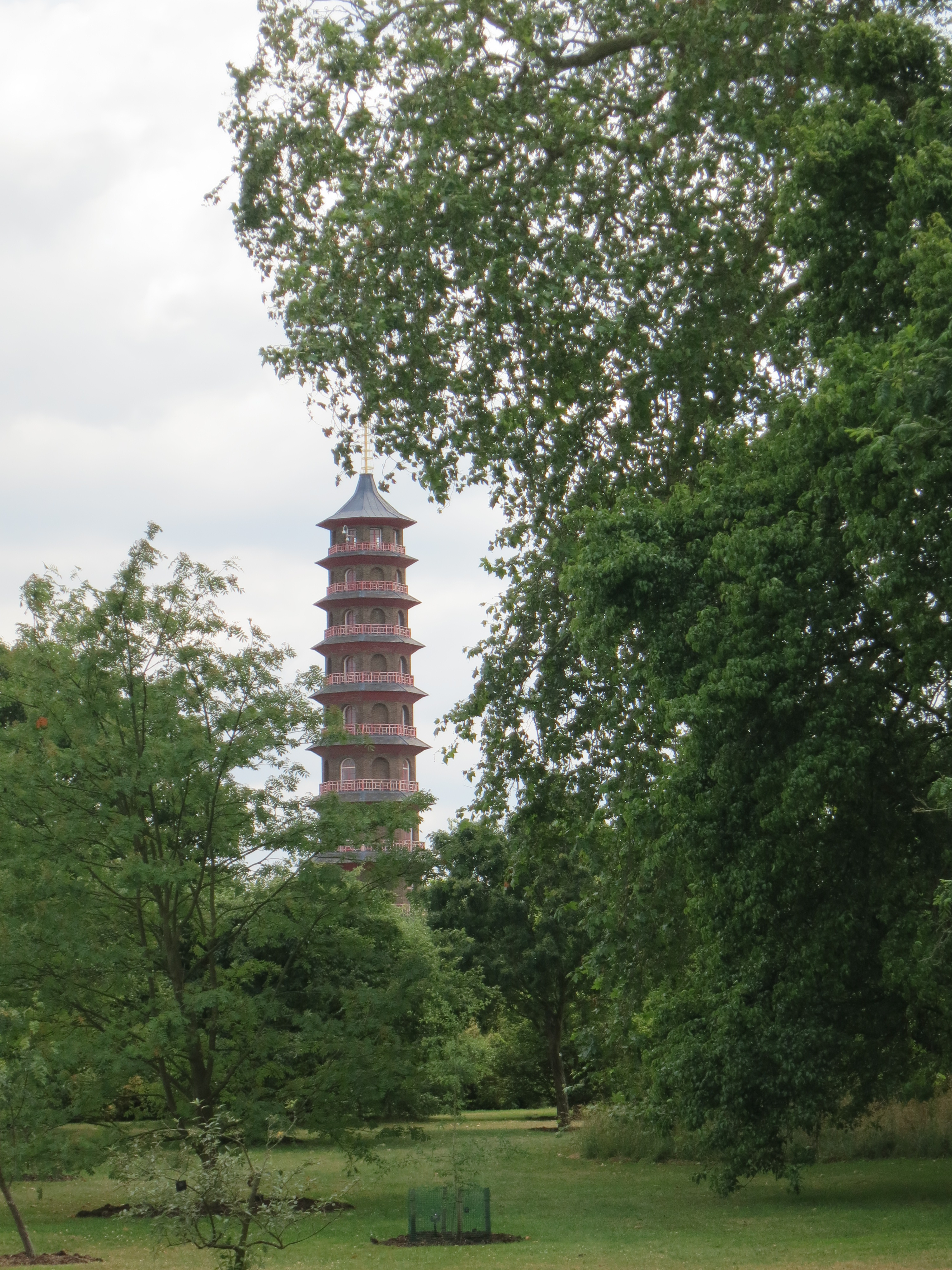
Giant Japanese pagoda. The gardens also contain a small wooden house, called a minka, which was transferred piece by piece from Japan in 2000.

Giant Japanese pagoda. The gardens also contain a small wooden house, called a minka, which was transferred piece by piece from Japan in 2000.

Pink and blue

Pink and blue

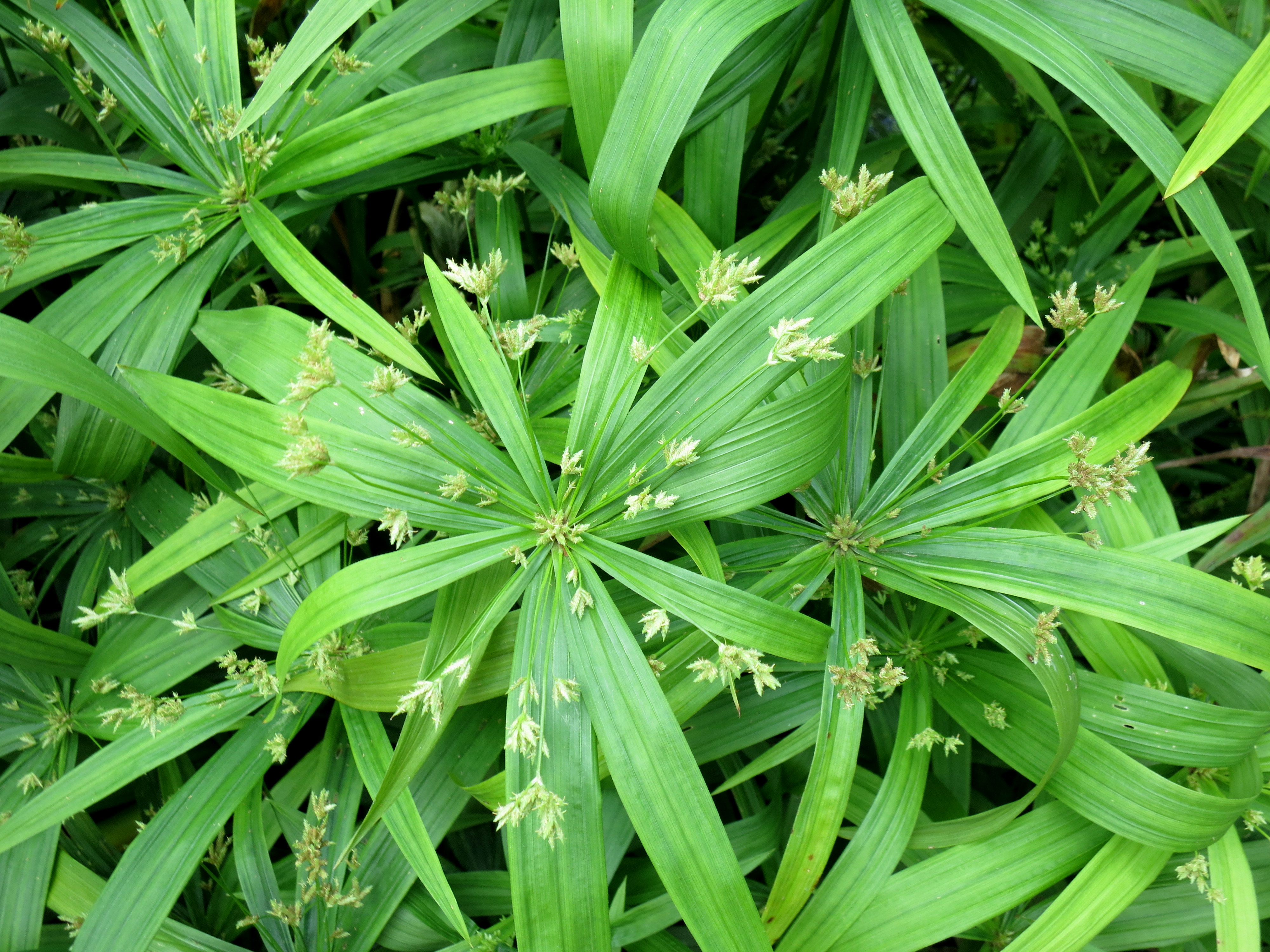
I was really into this plant. It was so airy! It looks like something the fairies might live in.

I was really into this plant. It’s so airy! It looks like something the fairies might live in.

Kew Palace, the smallest royal residence in Britain. George III lived here during one of his bouts of madness.

Kew Palace, the smallest royal residence in Britain. George III lived here during one of his bouts of madness.

They've restored the inside of the house.

They’ve restored the inside of the house.

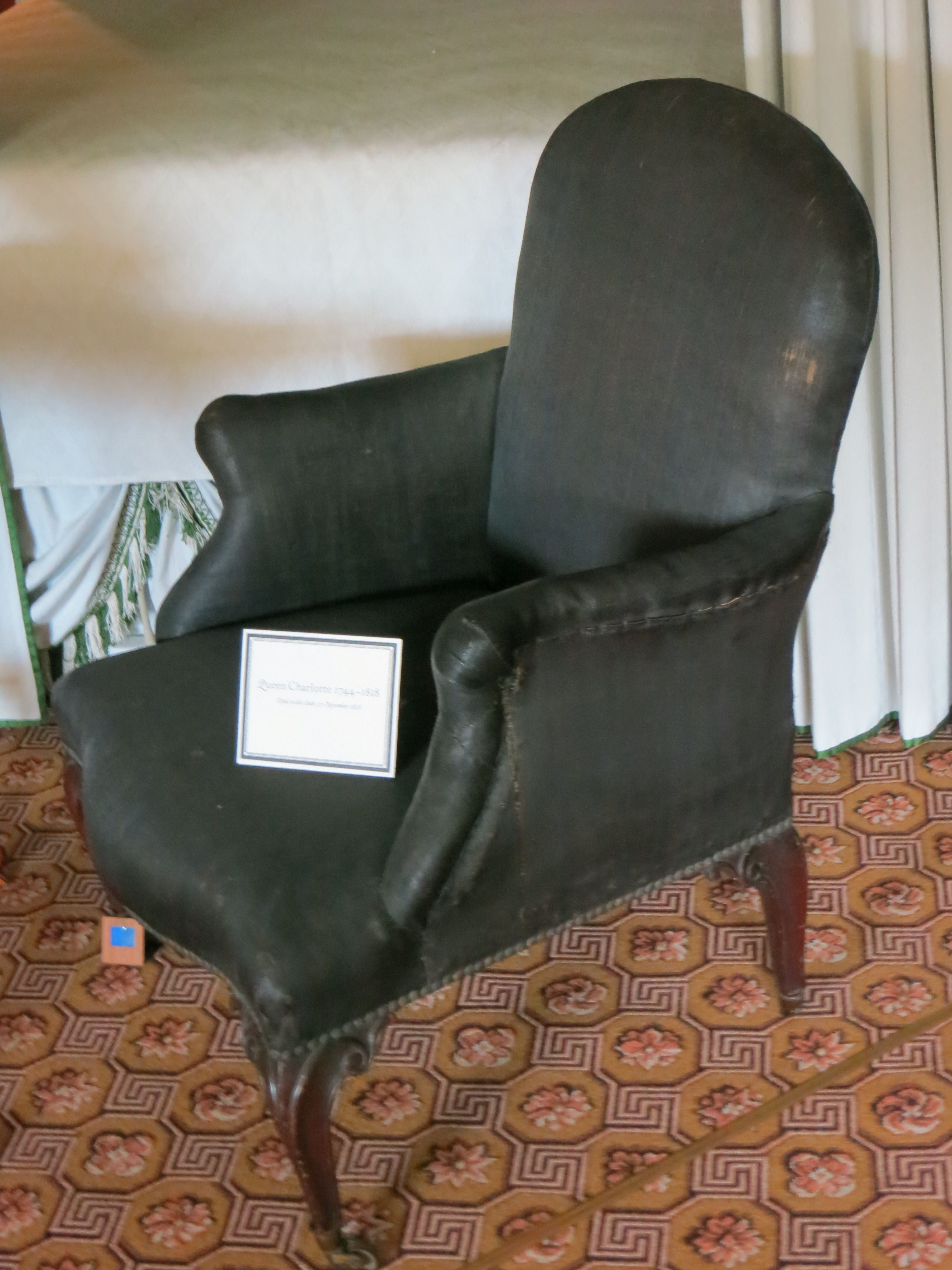
Do do do, it's a chair in the house. What's that little placard say? Ahh! It's the chair Queen Charlotte DIED in, back in 1818. I jumped away from that chair like the dead woman was still in it.

Do do do, it’s a chair in the house. What’s that little placard say? Ahh! It’s the chair Queen Charlotte DIED in, back in 1818. I jumped away from that chair like the dead woman was still in it.

They make their own ice cream here. This mint chocolate chip was fantastic.

They make their own ice cream here. This mint chocolate chip was fantastic.

kew

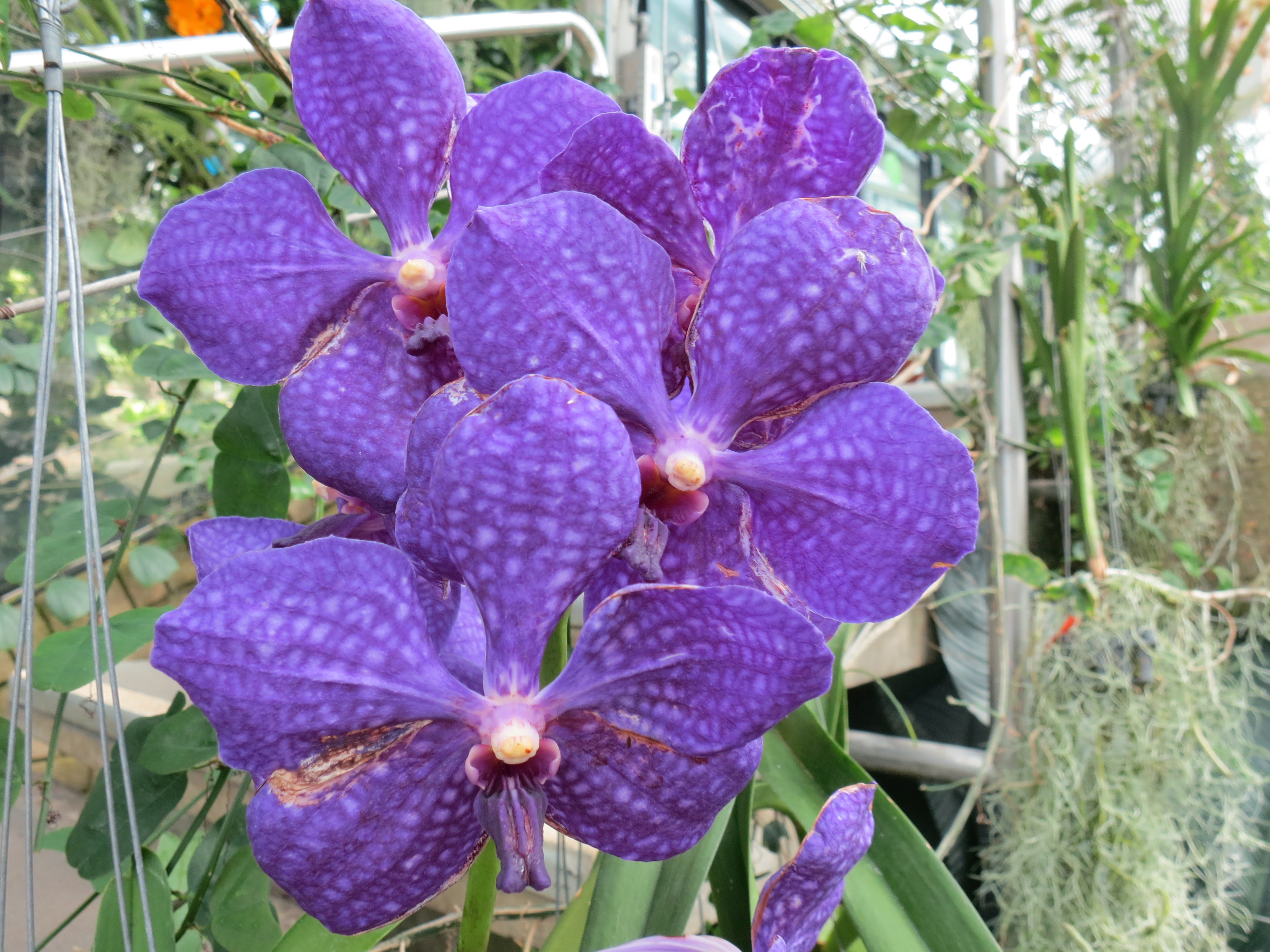
Orchids

Orchids

kew

In the Princess of Wales Conservatory

In the Princess of Wales Conservatory

kew

Welcome to Wellington–You’ll Want to Stay Awhile

Wellington proudly wears the title given it by Lonely Planet—“the coolest little capital in the world”—and I’d say it has good claim to it. It’s a small city on the southern tip of the North Island of New Zealand. Although most of the city is curled around the harbor and seems like it ought to be protected, the city is relentlessly buffeted by winds that rival Chicago’s. Or possibly outdo Chicago’s. Four months later, I’m still combing the tangles out of my hair, so I haven’t had time to consider the question.

Much of the public art in Wellington plays on how windy it is there.

Much of the public art in Wellington plays on how windy it is there.

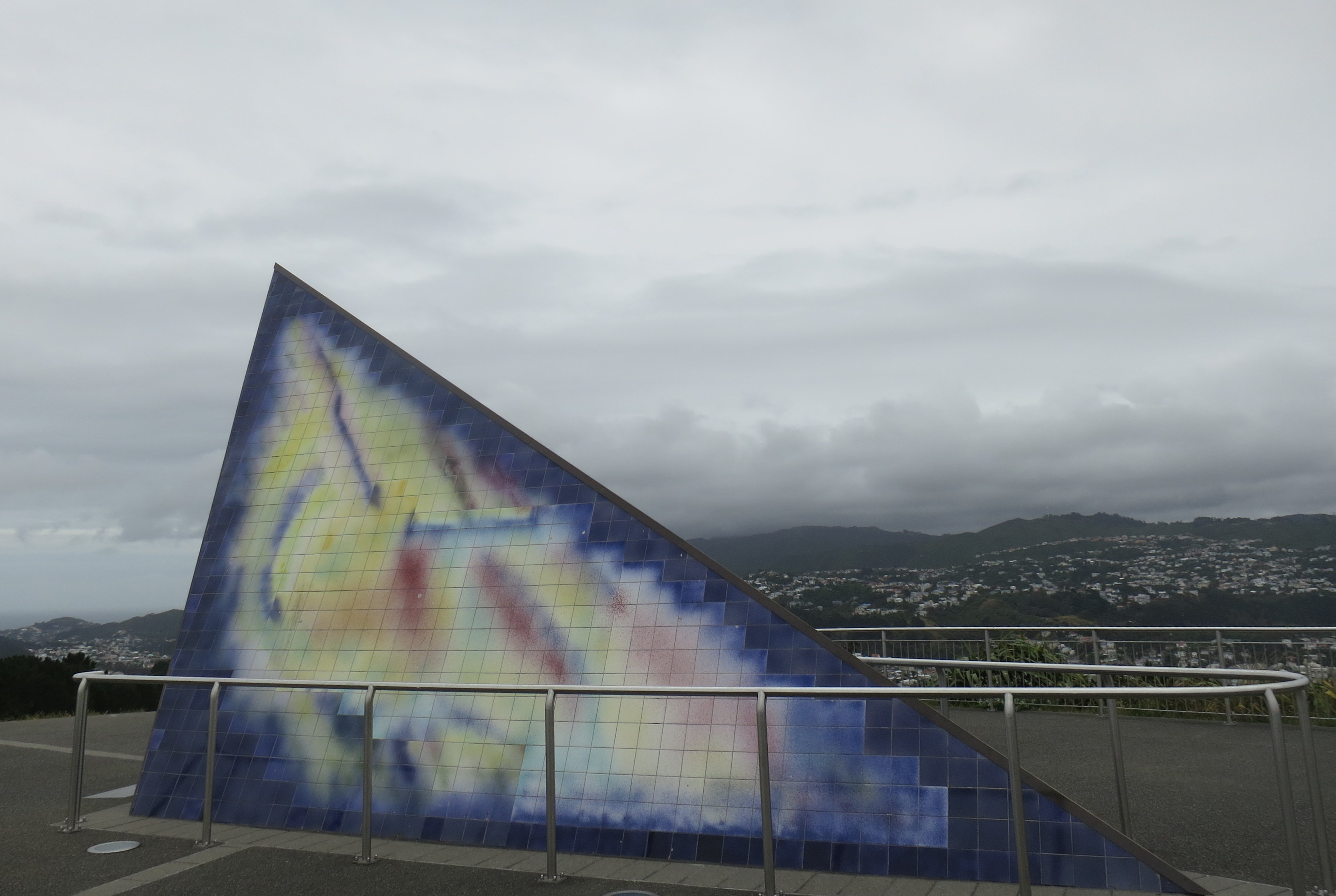
I spent a few hours in Wellington with my friends after Christmas, as we waited for the ferry to take me across the Cook Strait. They drove me up to Mount Victoria, which stands guard over town. It contains a monument to Antarctic exploration, made up of stones from a glacier on the seventh continent; and a cannon that was fired at noon every day for years, to tell time by. We stood at the lookout and watched planes brave the gusts of wind on their descent into town. On the way down the hill, my friends pointed out a stand of pine trees that had been used for scenes in the Lord of the Rings movies.
View from Mount Vic
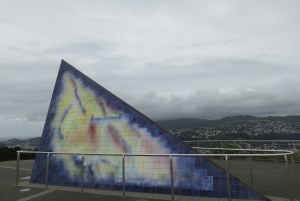
View from Mount Vic

Antarctic monument

Antarctic monument

My second time in Wellington, I lucked out yet again in my Couchsurfing host. Woo was an accommodating host, and the other surfers at his place were super friendly. We had a nice dinner out and cakes in a frilly tea shop. Also, Woo’s place was right downtown, so for probably the first time since I set foot in New Zealand, I didn’t have to hike up and down hills just to get to the corner store.

I’m not sure what the economic situation is in New Zealand right now, or in the greater Wellington area, but I can say with confidence that the government has put a lot of money into the downtown area, because it looked great. City Hall and its square; Te Papa, the national museum; Waitangi Park and the waterfront; the Embassy movie theater, home of Lord of the Rings premieres: they were all pleasant places to spend time in, without seeming too whitewashed.

I wouldn't mind Gandalf watching over my city

I wouldn’t mind Gandalf watching over my city

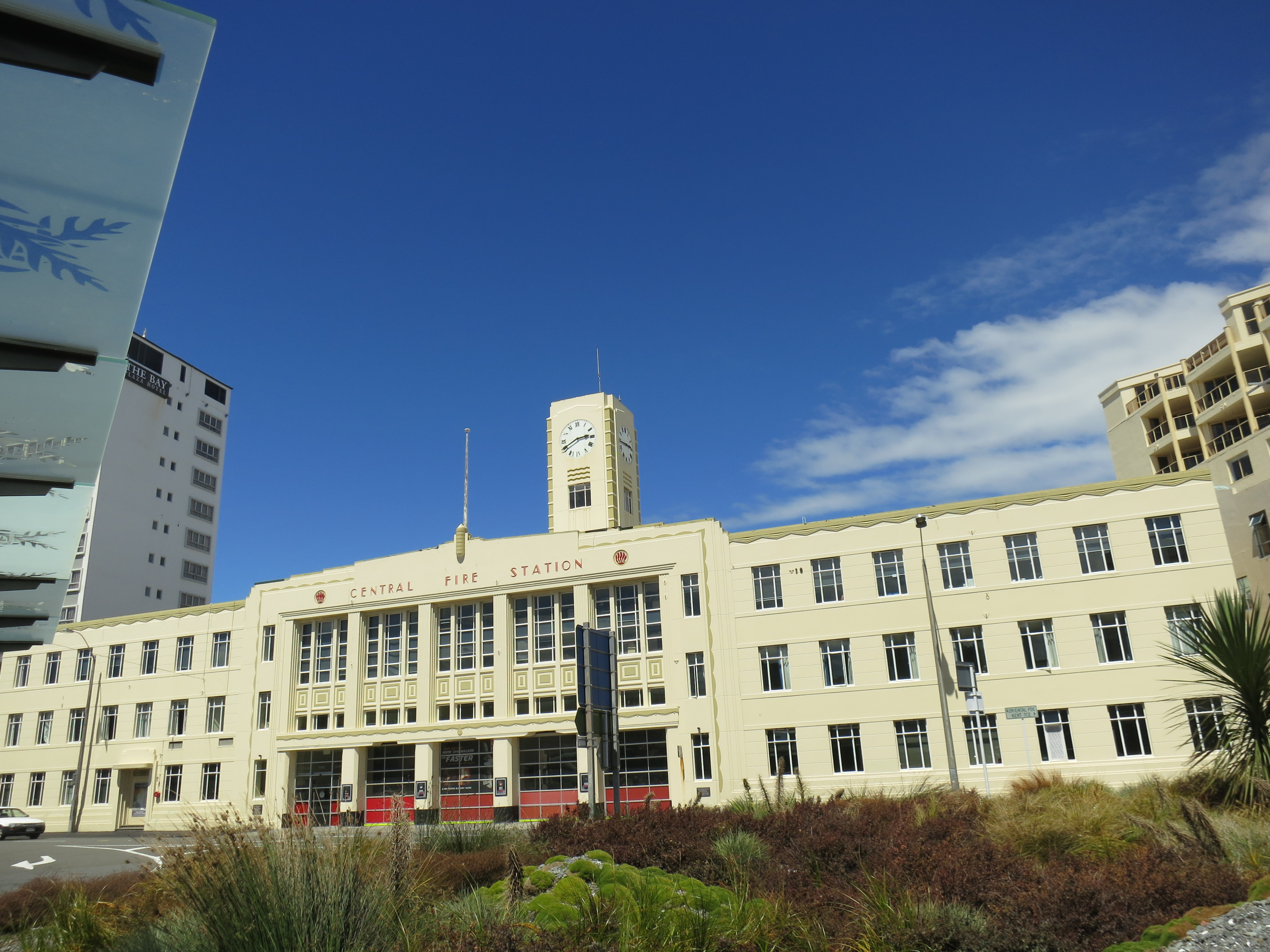
I grabbed a couple free brochures from the visitor’s center and went on a self-guided tour along a path that followed the Art Deco trail and the Te Ara O Nga Tupuna trail through downtown. The Art Deco tour was less historically interesting than the Maori sites tour, but I sure do like that sleek, clean style of the interwar period.

Quite the fire station

Quite the fire station

The Te Ara trail covers a broader area than can be walked, but there are a few sites in town important to Maori history that the brochure points out. Waitangi Lagoon was a major source of food in pre-Pakeha times, and is now a major intersection. Waitangi Park is up the road, a carefully maintained patch of marsh grasses facing both the harbor and Te Papa, with a climbing wall at the end.

Waitangi Park

Waitangi Park

The most surprising site was Whare Ponga, a storefront that contains an archaeological dig showing the original Te Aro Pa—a pa being a fortified Maori village. The site, which was unearthed, like so many interesting sites around the world, during construction work, is from the 1840s.

Te Pa

Te Aro Pa

I met up with Jose, a traveler friend from Chicago, at the botanic gardens for a summer concert in the park. It was quite chilly for a summer concert, but that didn’t stop everyone from coming out. The band played upbeat reggae, and at least one overtly political song, and Jose took me ‘round the gardens as the sun set to show me the colors.
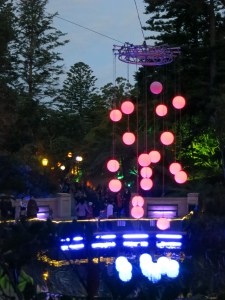
The groovy duck pond

The groovy duck pond

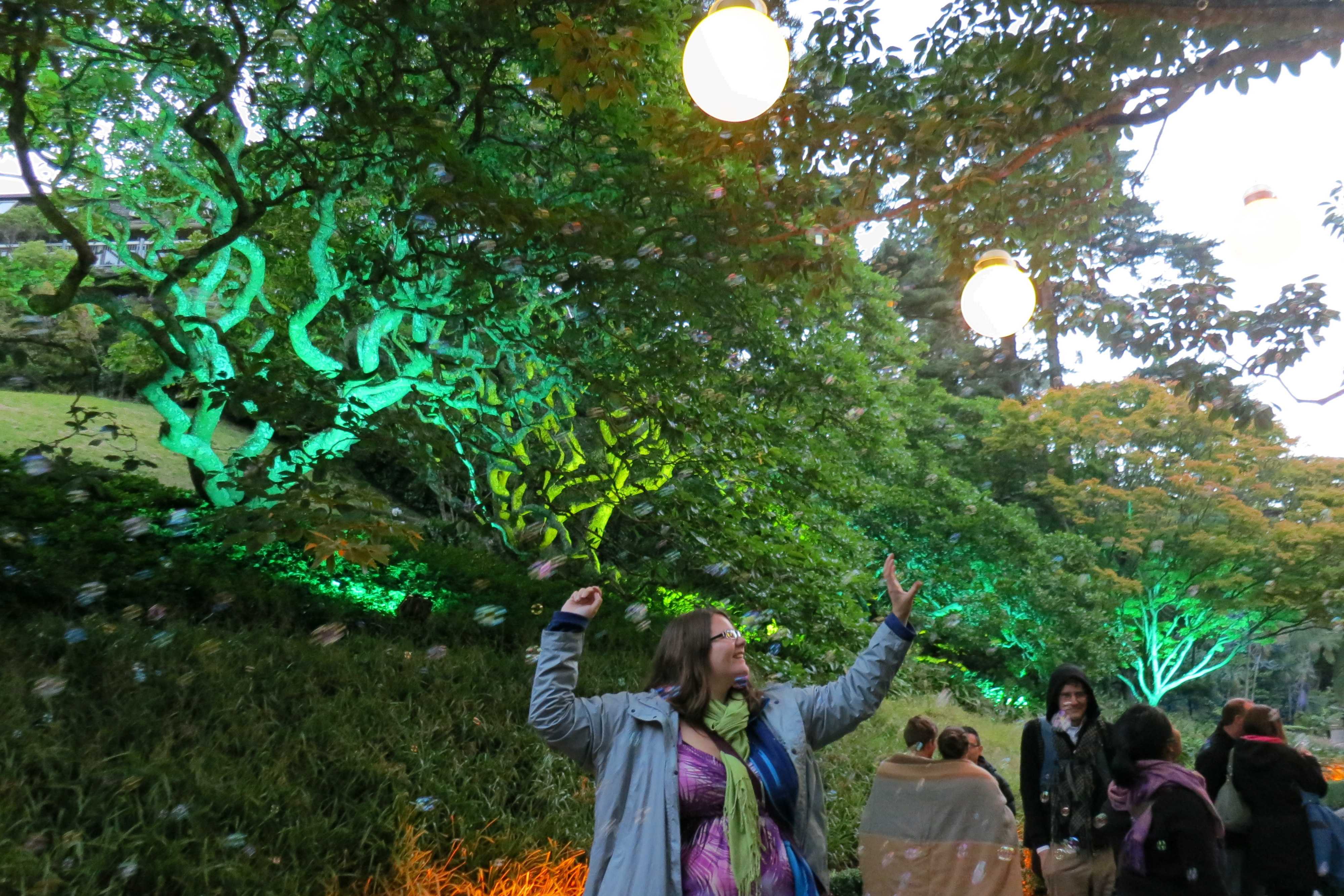
When the sun goes down, the lights come up: pink globes on the duck pond, red spotlights on the palm trees, even a blacklight area by the ferns. Bubble machines were mounted on some of the lampposts, and when they started up, all the kids in the area leaped into the path—some to dance, some to swat at the bubbles with their sweatshirts in a battle that they all won.
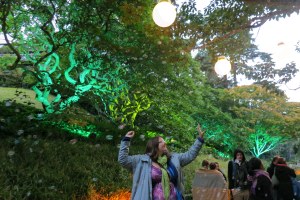
wellingtonJose showed me a willow tree that seemed to sparkle; when we pushed aside the leaves and stepped under the tree’s broad branches, we saw a half dozen disco balls rotating in the air, reflecting hidden lights and creating a dance hall for fairies. The whole place was magical.
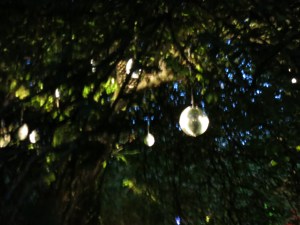
Blurry disco scene--is there any other kind?

Blurry disco scene–is there any other kind?

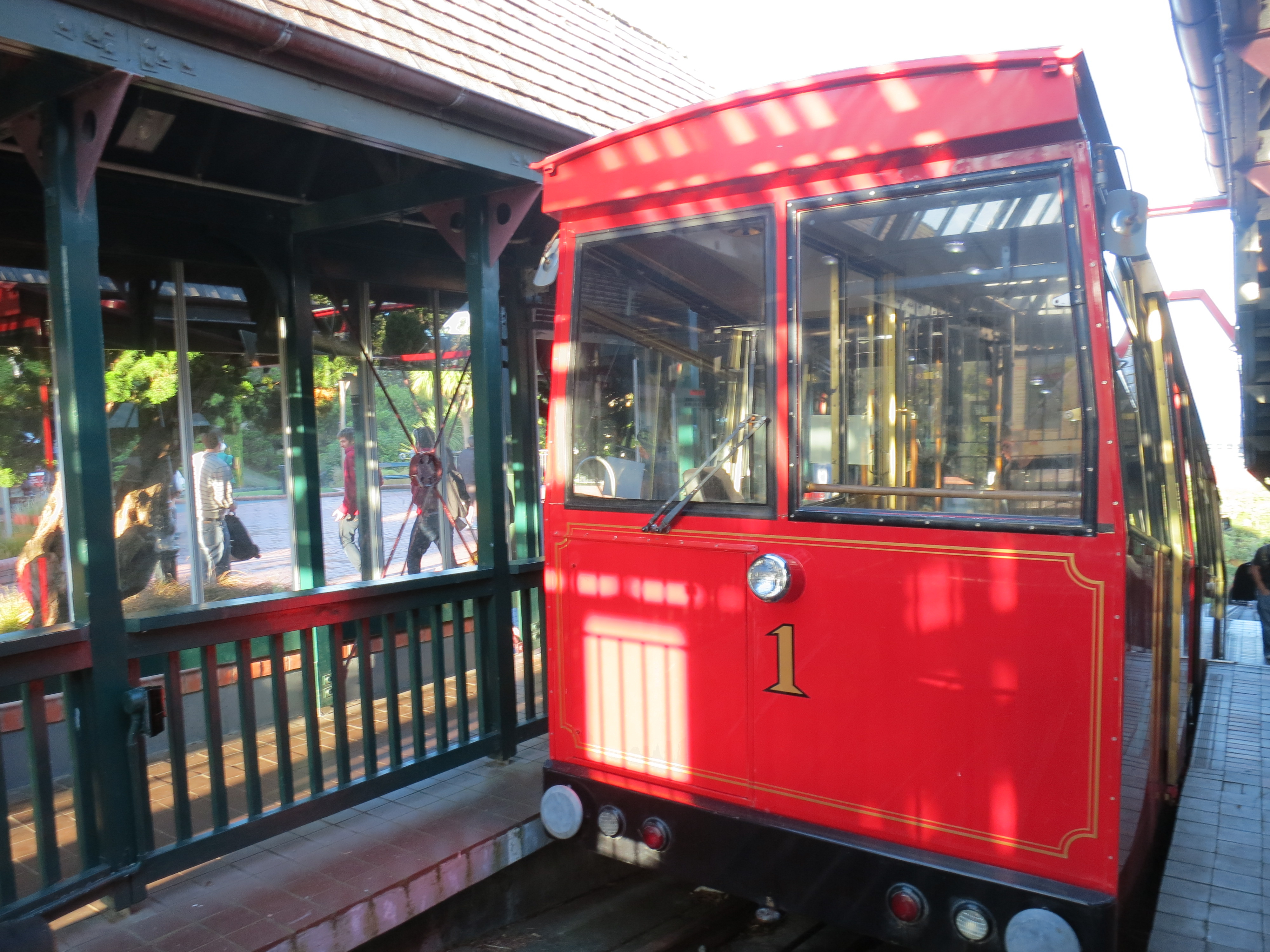
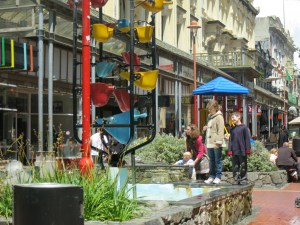
I took the cable car up to and down from the gardens. It’s a quaint little car, with small wooden seats and brass poles. It makes a few stops along the way, so if you live on the hill, you could use the cable car to get around. That’s the only form of transit I took the whole time I was there. Woo picked me up from the ferry station and took me to the airport (an excellent host, as I said), but otherwise it’s a super walkable city, and it was nice to wander around. I passed the Bucket Fountain on Cuba Street, and plenty of other public art installations around town. I walked by a guitarist busking on the sidewalk and a girl who sat nearby and quietly harmonized on a recorder.
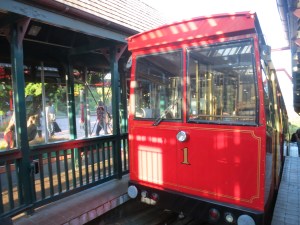
The cable car
The cable car

Bucket Fountain

Bucket Fountain–that little kid loved it

I left the visitor’s center on my last day in town and cut through Civic Square, where a drag queen and her assistants cheered on audience participants in a delightfully clumsy dance contest, and then two police officers on duty were cajoled on stage, where one cheerfully did her own little dance and put on the tighty whiteys flung at her before continuing on her beat. That was easily one of the simplest, most fun moments of Everyone Getting Along I’ve ever witnessed.
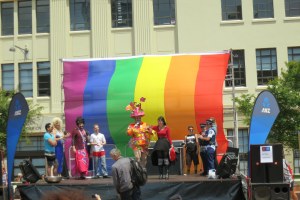
Fun for everyone

Fun for everyone

Te Papa is a huge museum five floors tall, and its permanent exhibits include a Maori meeting house built specially for the museum, a hokey display about geothermal activity, and an interactive hall about the sea and forest especially aimed at kids. It was a great museum, too big to explore in one day, so it would be easy to revisit again and again, which is fitting for a museum built as a tribute to a country’s citizens, who might return over a number of years.
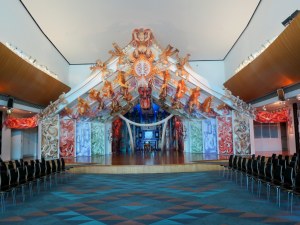
Te Papa meeting hall

Te Papa meeting hall

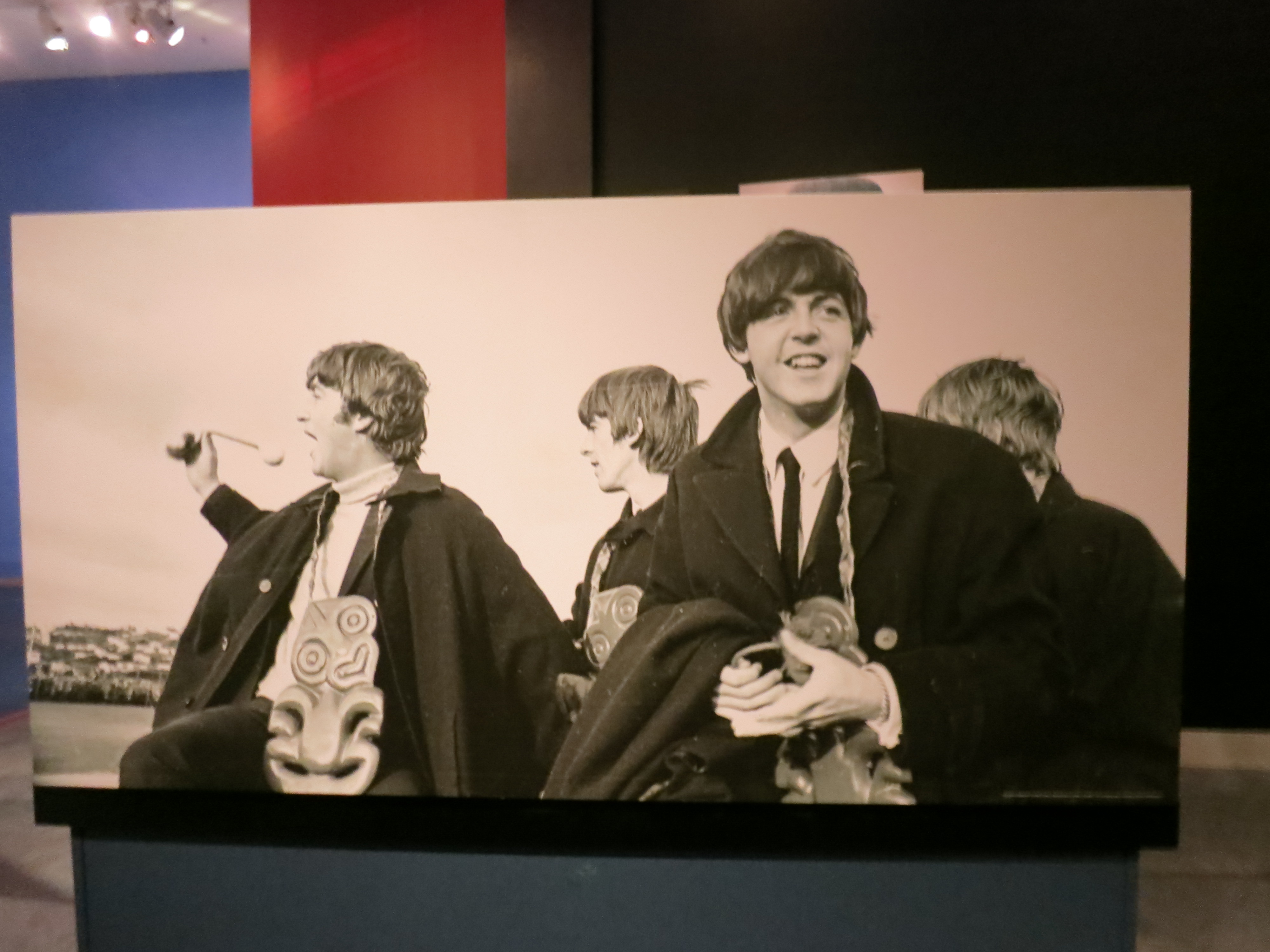
The Beatles look cheerful, but I know they must have been freezing under those capes.

The Beatles look cheerful, but I know they must have been freezing under those capes.

The Maori exhibits struck a tricky balance between anger and indignation at Pakeha treatment of Maori throughout history, and relaying information about Maori traditions still maintained today. One plaque carefully explained how disrespectful it is to wear images of carvings, which are considered something close to sacred, which I hope informs visitors’ souvenir choices.
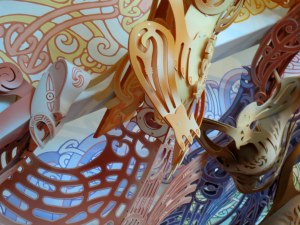
Lovely detail and color

Lovely detail and color

I had an epic night out with Jez, who I’d met at Theresa’s in Melbourne. We drank delicious local craft beers during Wellington Weekend at Hashigo Zake, caught the end of a queer rock show on a hoedown theme night at Bar Medusa, danced to the sometimes questionable choices of the DJ at Mighty Mighty Bar, and ended the evening at an overpriced Irish pub playing bad Top 40–a somewhat ignominious end to an amazing night.

Good times

Good times

I know a lot of people who want to immigrate to New Zealand, and after days exploring downtown and a night of fun and music, I was half convinced to myself.

Roses and Rubble in Christchurch

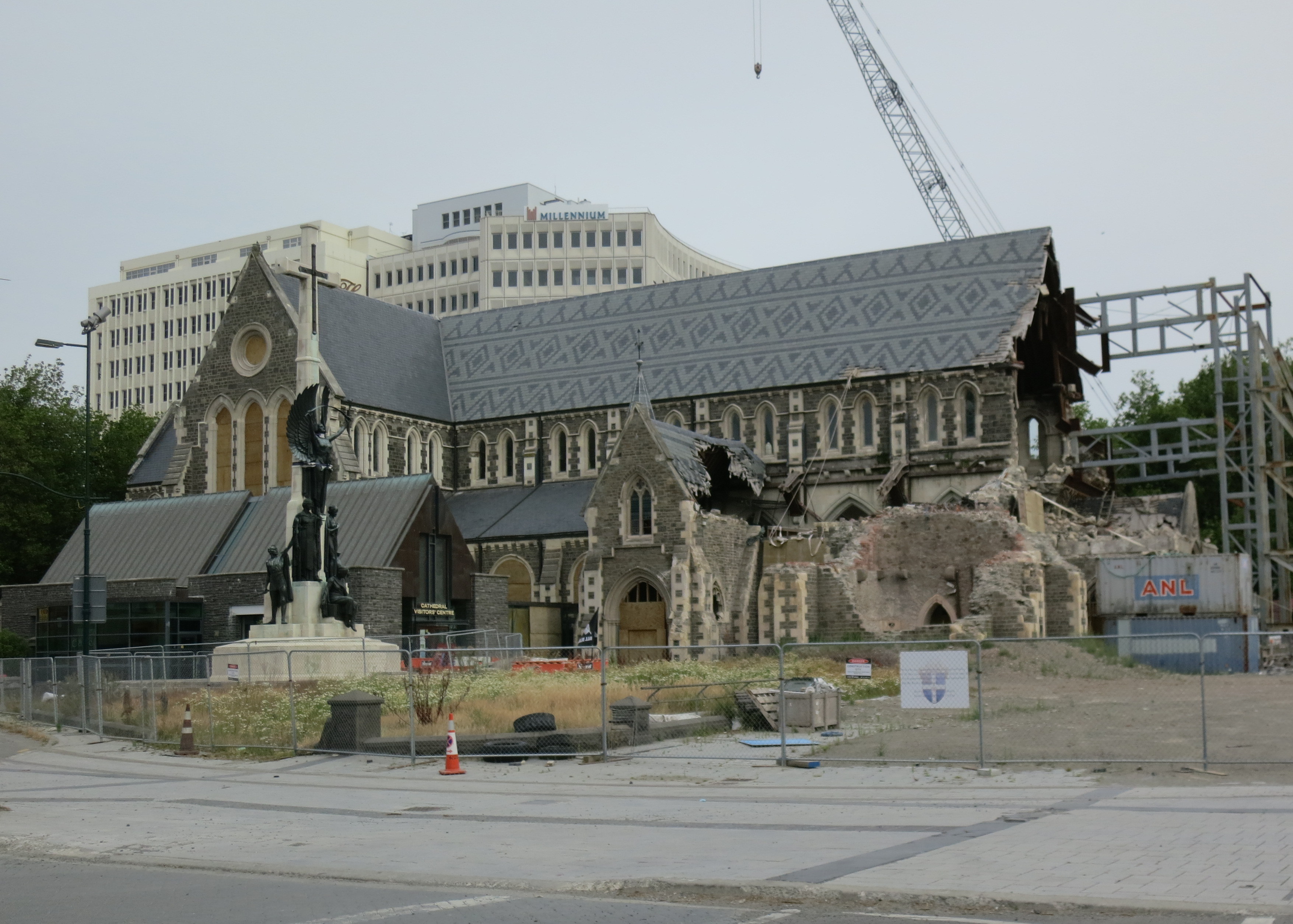
It’s a peculiar thing to visit a place still recovering from a natural disaster. Khao Lak was badly hit in the tsunami, but by the time I went there, it was built back up again and was a thriving tourist town. Christchurch, on the other hand, is far from reconstructed. The earthquake of February 22, 2011 hit the town center hard, and a huge part of downtown is completely shut off as workers dig up the rubble and reinforce the remaining buildings against future earthquakes.
Central Christchurch

Central Christchurch

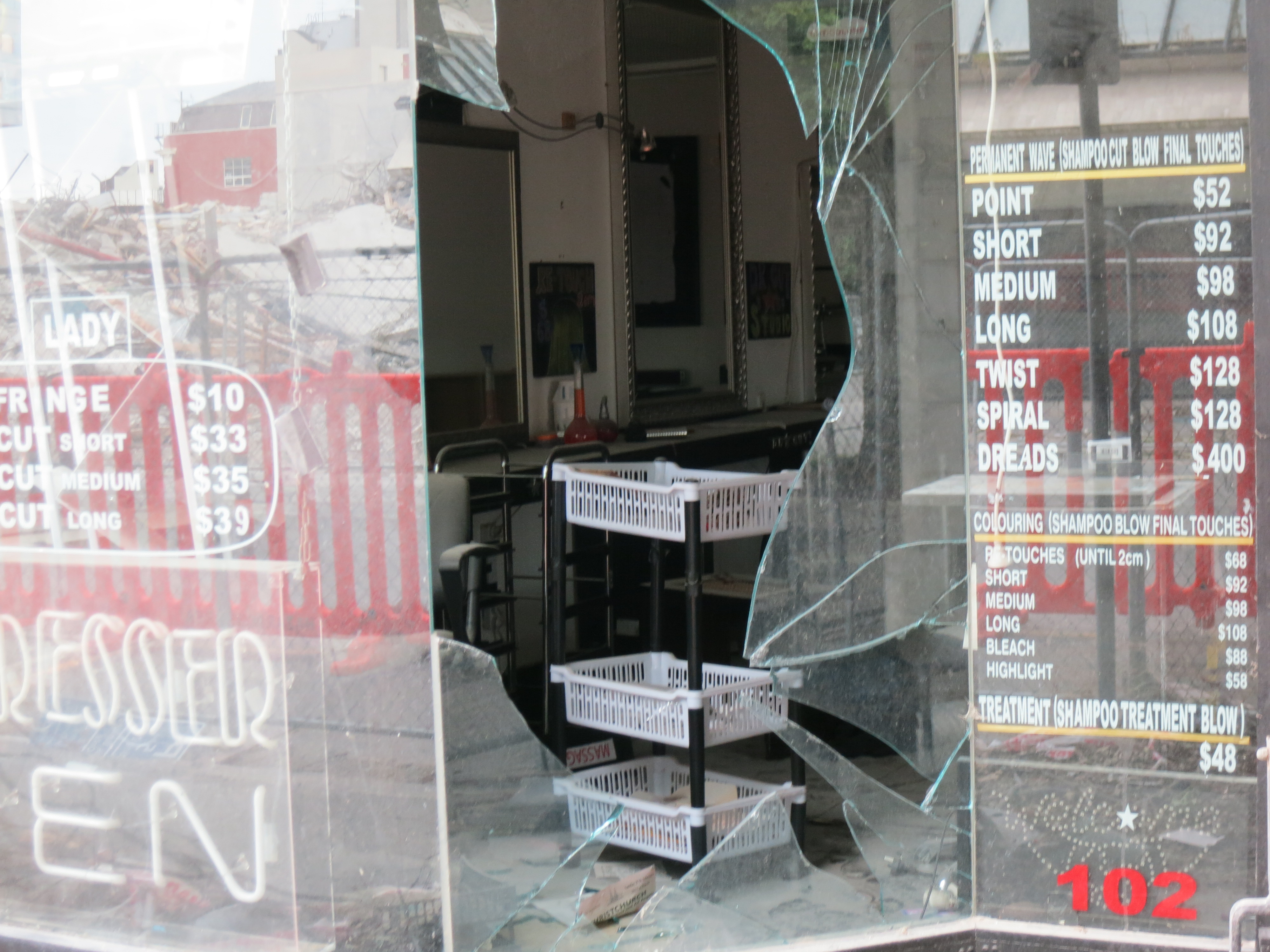
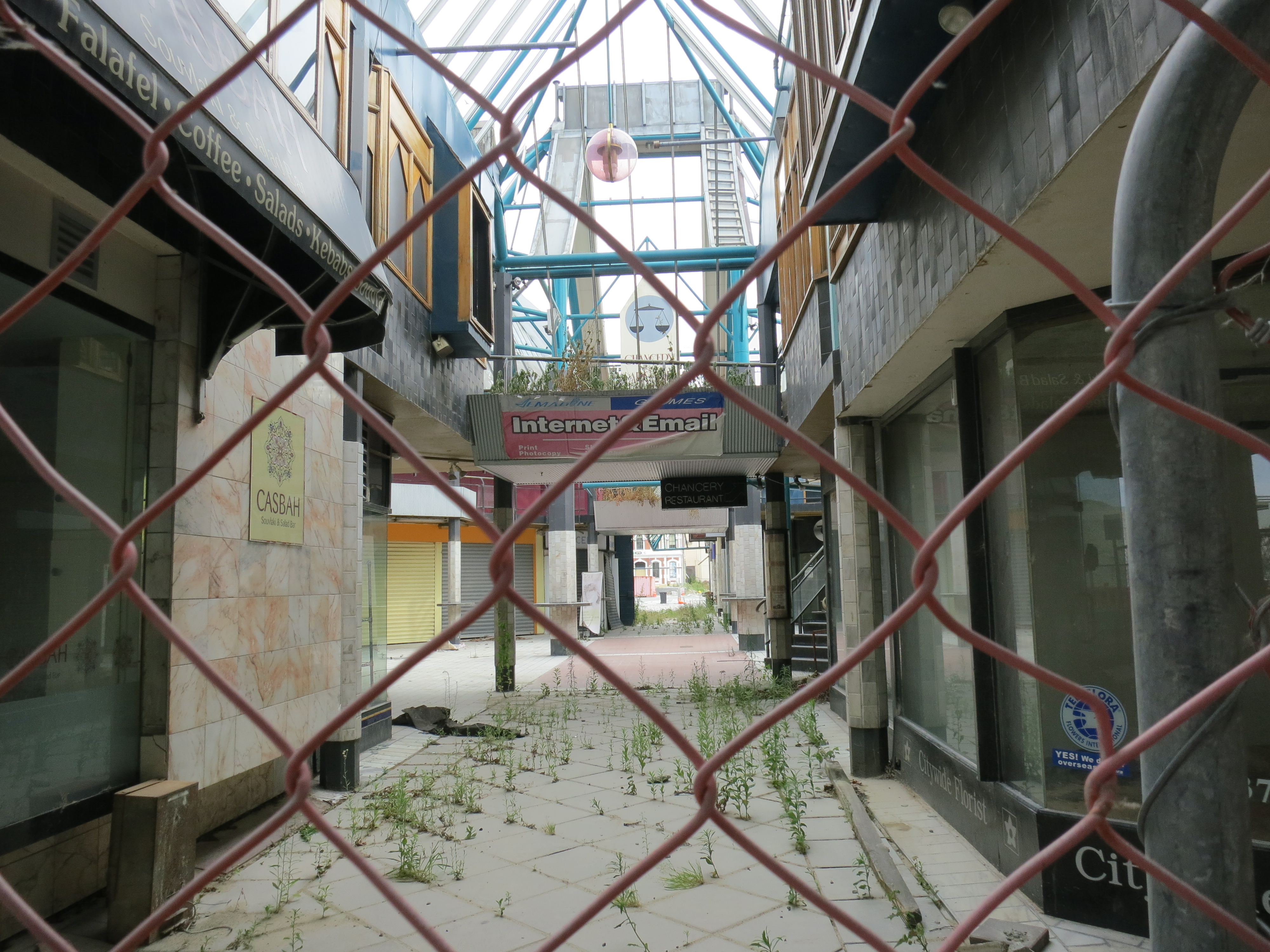
Walking past the no-go zone is eerie; shops have been left just as they were on February 22. The neon sign for an Italian restaurant lay tipped over in the overgrown grass, and weeds poked through the pavement on a walking street that no one’s walked on in two years. I looked through the smashed window of a barbershop and saw a perfectly preserved mirror and a chair facing the outside, as if someone had been in the middle of a haircut and turned to see what that rumbling sound was.

A modern-day Pompeii

A modern-day Pompeii

There’s a lot of controversy about how to rebuild the city, in terms of how funds are allocated and which neighborhoods get priority. Condemned buildings stand alongside brand-new constructions (which actually reminded me of some neighborhoods in Chicago that are gentrifying quickly). Insurance companies were apparently unable to pay out to everyone who was affected, and anyone who wants to buy a house now can’t even get earthquake insurance. So you invest in the city’s recovery, but you can’t get protection for potential damage to that investment. Not a great situation.

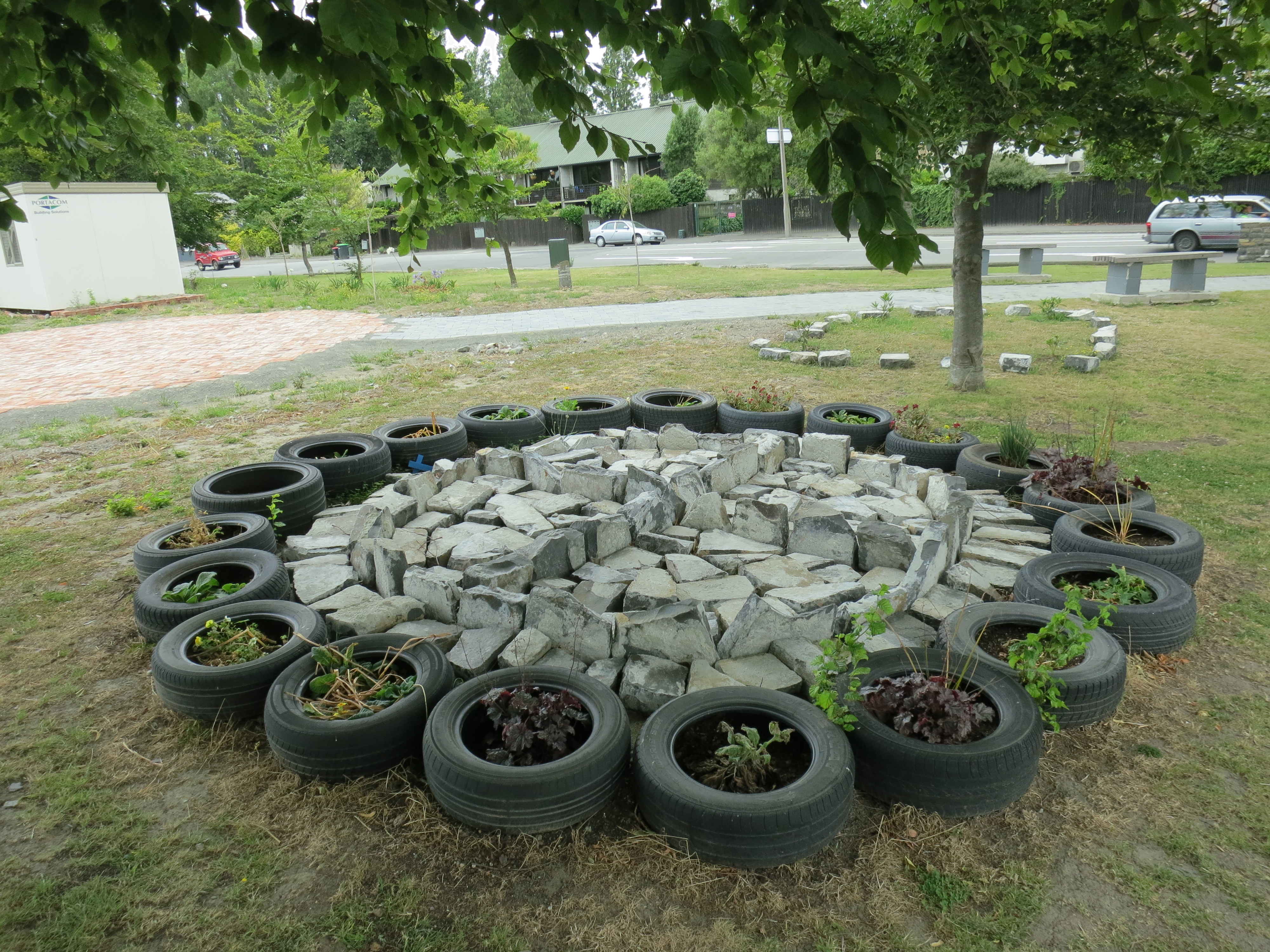
christchurch earthquake rubbleThe city was bursting with art, a lot of it graffiti or pop-up displays. Some of it focused on the earthquake and the city’s resilience, and some of it was unrelated. One of the more moving pieces was a permanent-looking display on the site of St. Luke’s in the City, a church built in 1859 and destroyed beyond repair in the earthquake. The congregation have erected a small wooden bell tower, a labyrinth for reflection, and a circle of stones from the rubble of the church—one stone for each of the 185 people who died on that day.

Memorial to the 185 killed in the 2011 earthquake

Memorial to the 185 killed in the 2011 earthquake

I stayed with Biz, a friend of a friend from back home. She put me up in her flat near the center of town and fed me veggie burritos—perfect! The next day I walked past the destruction to the botanic gardens, which are remarkably well-preserved. The visitor’s center and greenhouses are shut indefinitely, but kids were running around the playground, and a modern sculpture rose, gleaming, from one of the ponds.

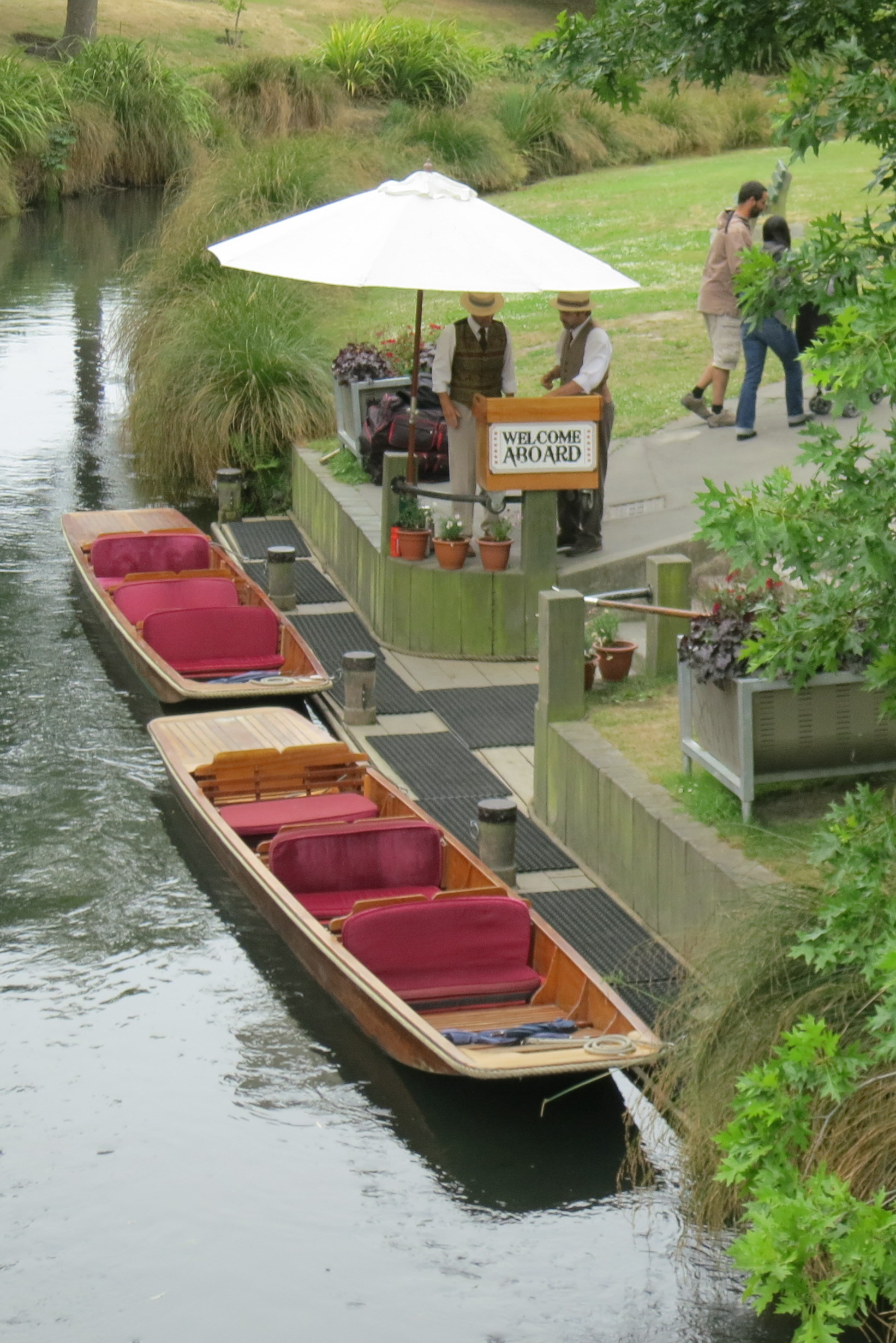
Punting along the Avon

Punting along the Avon

Before the earthquake superseded whatever else anyone knew of the city, the tagline for Christchurch was that it’s more English than England. The gardens are the greatest example of this. Carefully maintained flower beds, a river named the Avon that you can punt along, and a museum built in the style of Cambridge. The park was too big to explore in one afternoon, so I focused on the famous rose garden, which is a giant circle of 250 varieties of roses, all of them wonderfully colorful and in full bloom. I had a pleasant walk around the gardens and got back to the flat just before the inevitable rain started.

Central Rose Garden

Central Rose Garden

roses christchurchI was going to make the last paragraph something about the resilience and spirit of the people of Christchurch, and how they’re going to make their city great again. But that’s self-evident, and there’s not much to add except I admire the folks of Christchurch and wish I could stay longer to see what that rebuilding looks like.

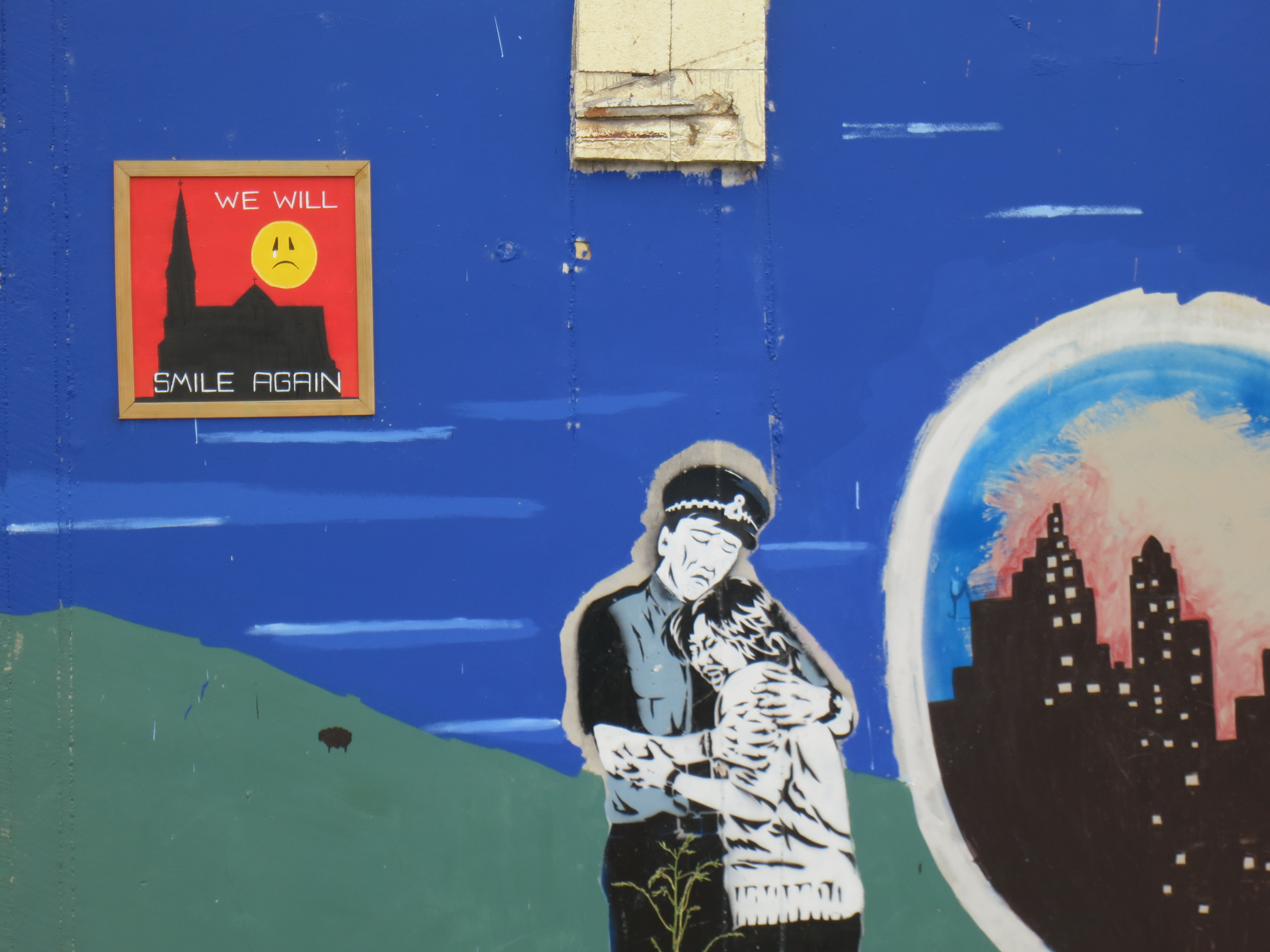
We will smile again

We will smile again