Beverage Service Not Included

Storage space was limited on the train

Storage space was limited on the train, apparently

The train from Poland to Hungary was perfectly pleasant, once I moved out of the car with the busted A/C. I ate a lunch I’d packed wrote in my journal. Judging by these empties found in the bathroom sink onboard, other passengers were passing the time differently.

Then I got to Budapest and saw an elderly woman holding up a “rooms for rent” sign negotiating price with a mohawked man, and a woman in a spangly shirt sweeping out the train, presumably before going clubbing. I liked it right away.

Back in the States in a Week

I can hardly believe I’m writing this, but exactly a week from now I will be boarding a plane to return to North America. I’m in Budapest right now, and next week I’ll spend some time in London. Of course, there’s no reason to make flying home a simple process when it could be complicated: I’m flying from London to Toronto because it’s cheaper by several hundred dollars than flying to Michigan, and then I’ll get a bus to Detroit, and my parents will pick me up and drive the last hour and a half to my childhood home. After 308 days on the road, I’ll be back where I started from.

i heart michigan

I’m in Budapest with some friends right now, and we’re about to explore the basilicas and public baths, so I don’t have time for a major reflection on what nearly 11 months on the road means to me. (That’s definitely one of the things I’ve learned–how hard I have to work to make time to reflect, because there’s always something to see or do.) But there will be time for reflections and end-of-trip lists aplenty.

Don’t worry, the blog isn’t going anywhere! I’ve only taken you as far as Laos, after all. There’s still Cambodia, Vietnam, Japan, the UK, Croatia, Slovenia, Germany, Poland, and Hungary left to visit with Stowaway. And that’s just for the first part of the trip. I’m not totally broke yet, so I’m trying to figure out how I can extend the trip and carry on come this fall or possibly after the new year. There’s still so much of the world to see and I’m surprisingly not sick of living out of a backpack yet.

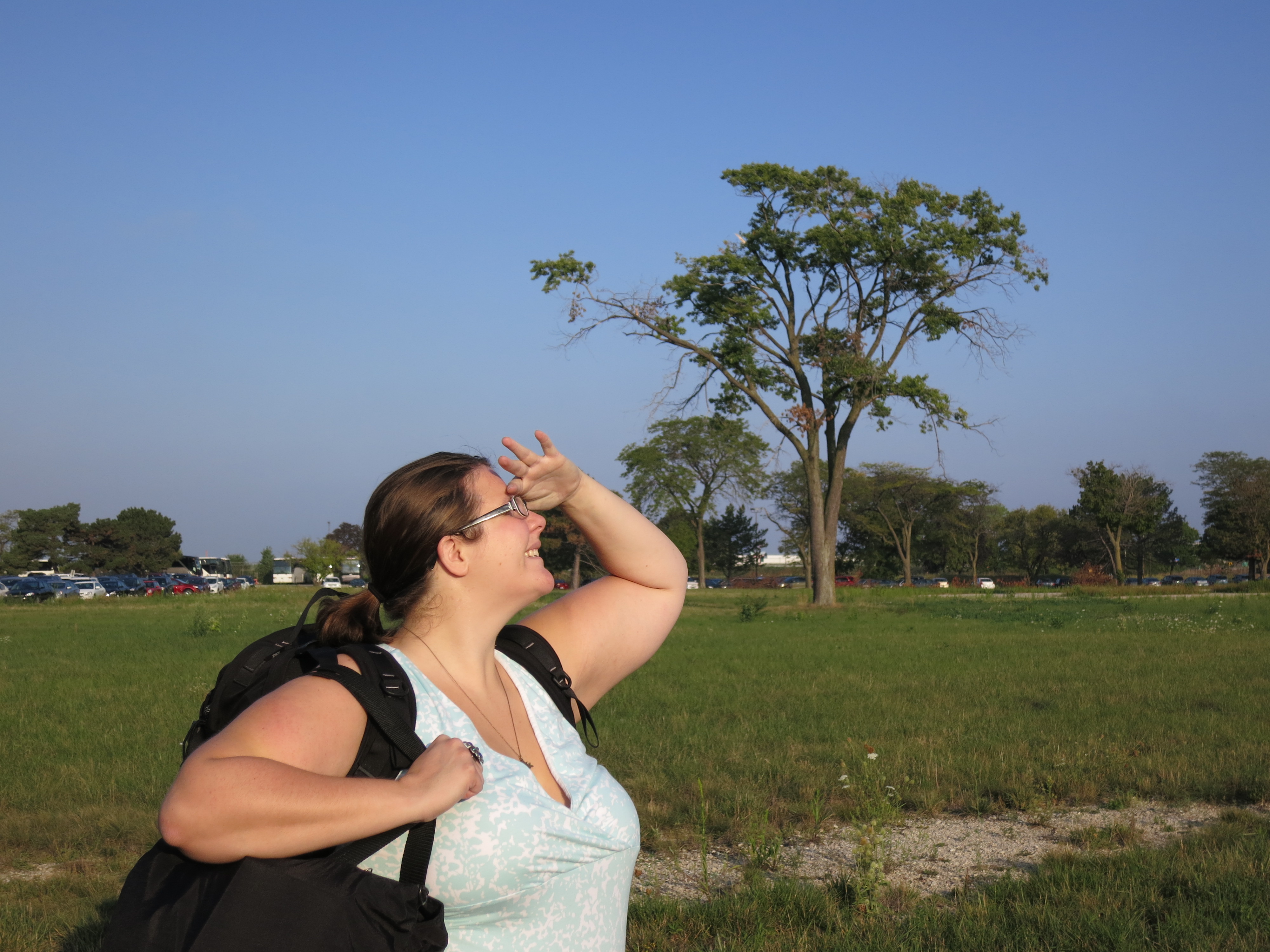
I can almost see home from here

Looking for home and far-off horizons

I’m incredibly fortunate to have been able to do this trip, and there have been many times that I’ve looked around me and said out loud, “What is my life? Amazing, that’s what.” It’s all the better for the wonderful people I’ve met or re-met along the way.

Thanks to everyone who’s funded parts of this trip, and thanks to everyone who’s followed along on Stowaway as I make my way around the world. I’m happy to know that the blog brings something fun or thoughtful or new to your day, or at the very least provides photos to kickstart daydreams. That’s what my favorite travel blogs do, and I hope to do the same for my readers.

So stick around; just because I’m headed back to the States doesn’t mean Stowaway is going anywhere!

And for those of you I’m about to see in the States: I am so excited to hug you all! Minimum three minutes per hug. Get ready.

I'm headed home

I’m headed home

Image 1.

An Uneventful Yet Alarming Flight

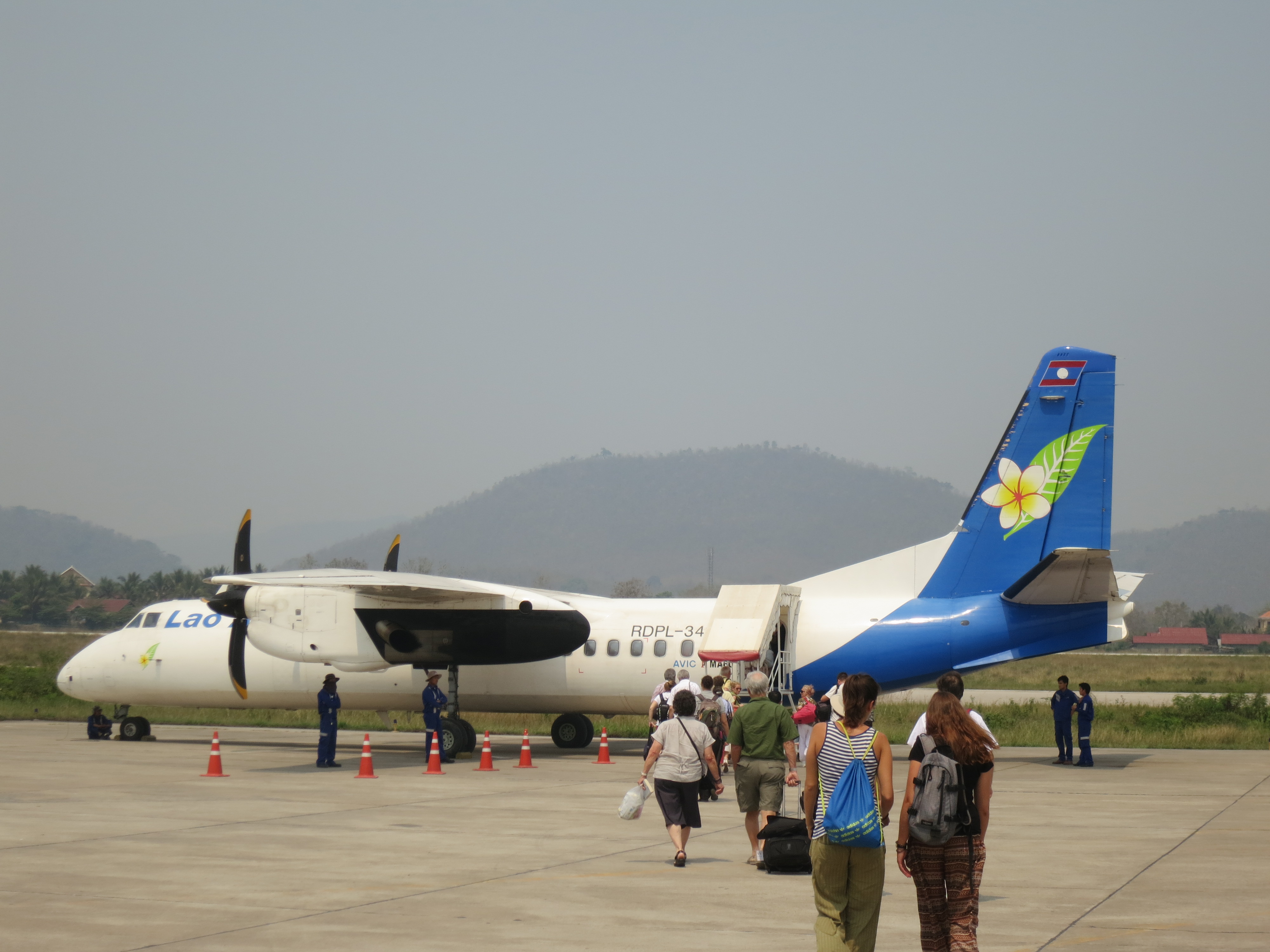
My flight from Luang Prabang to Siem Reap was uneventful, but I was a little nervous at first. It had been awhile since I flew on a propeller plane:

laos

And the safety card seemed to indicate that in case of an emergency, you should leap out of the plane into mid-air, and try to avoid being chopped to bits by the propeller:

laos

Finally, instead of the normal two layers of window, there was just one piece of plastic between me and some serious loss of air pressure:

laos

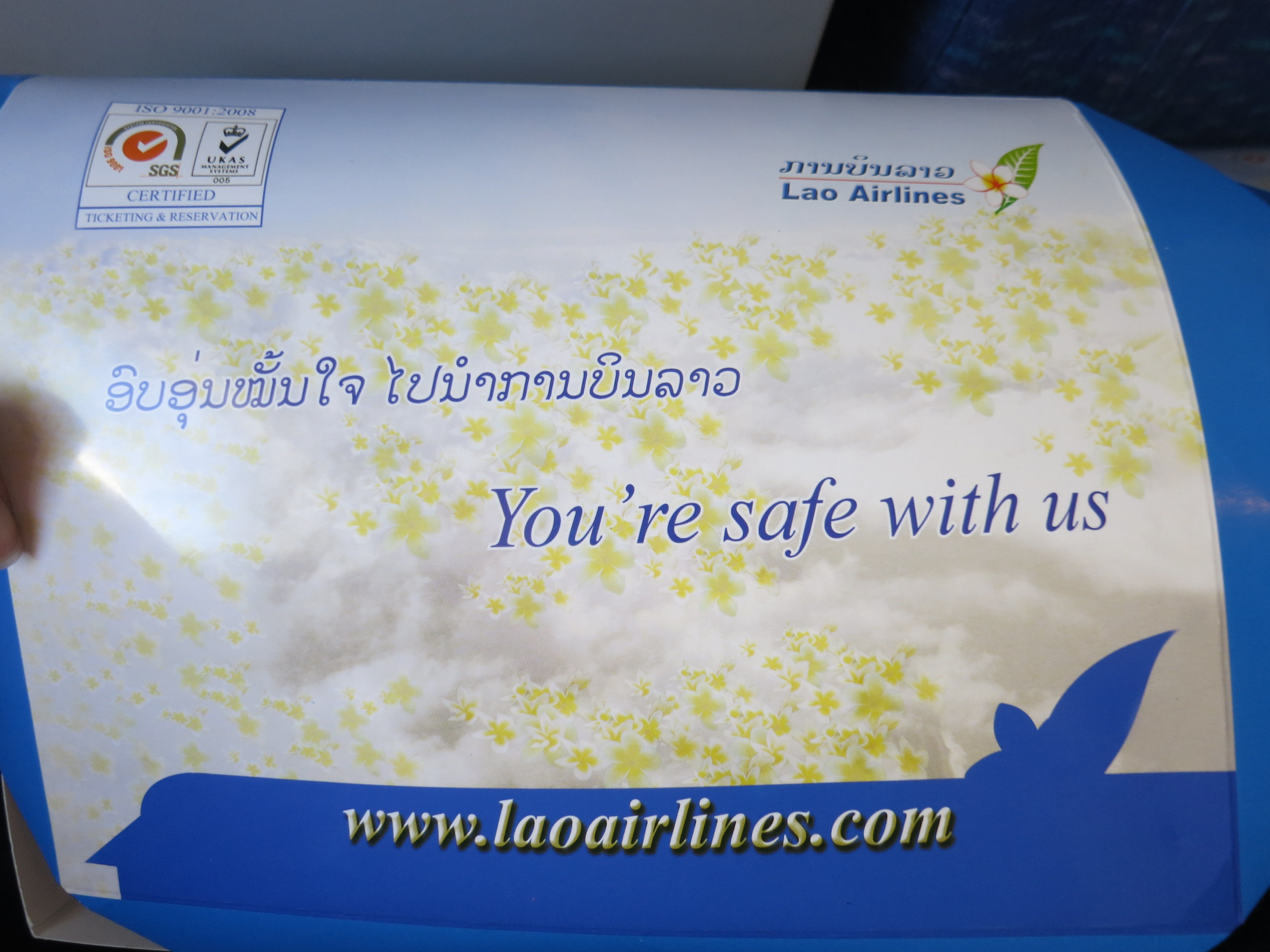
In the end, though, it was just as the snack box promised, and I made it safely to Cambodia:

laos

Volunteering at Big Brother Mouse in Laos

Following the glowing recommendation of a blogger I follow, I volunteered at a literacy organization while in Luang Prabang. Big Brother Mouse–so named for the cartoon mascot, who acts as a friendly “big brother” encouraging kids to read–says its mission is “making literacy fun,” and it looks like they’re succeeding.

Big Brother Mouse Bookshop

Big Brother Mouse Bookshop

It was founded by a non-Laotian, American publisher Sasha Alyson, but he now serves as an advisor, and all paid staff are Laotian. The website emphasizes the importance of Lao educational efforts being headed by Laotians, rather than foreigners coming in and doing things their way. I strongly agree with this philosophy, so I was all the happier to give my time to an organization that values this kind of empowerment.

Big Brother Mouse is a publishing and distribution outfit. There’s a lot on the website about how hard they’re working to write and publish books in the Lao language so that kids will want to learn how to read–and so they’ll take pride in the Lao language and culture, rather than learning to read only in English.

Once the books are published, the distribution part kicks in. You can sponsor a book party, which is what they call it when volunteers strap books to their backs and hike into remote parts of the country to distribute one book per child in the villages they visit. Kids who have never seen a book before, or who have only held a tattered textbook from the ’50s, now have their own book, written in their own language, about a fun topic that interests them. A lot of kids get really attached to their books, and eagerly await another book party in their village.

That’s the main purpose of the organization, and you can, of course, contribute funds to help publish and distribute the books. But there’s also volunteering, two hours twice a day, to help locals practice their conversational English. You don’t sign up or anything, you just show up and talk with whoever wants conversation. Suggestions for how to be a good conversation partner are posted on the tables inside the small store where these makeshift meetings take place: talk slower, enunciate clearly, ask simple questions but not yes/no ones, and talk slower.

Sy, Khmsy, and other students at the Big Brother Mouse conversation hour

Sy, Khmsy, and other students at the Big Brother Mouse conversation hour

When I arrived the first time, a staff member was doing calculations at the cash register and didn’t give me any advice on what to do. I saw one volunteer talking with one Buddhist novice, and a couple other white people sitting around, presumably waiting to help out if other Laotians showed up. After about 20 minutes, several people did arrive, so we all split up and ranged ourselves around the long table and started talking. The other two times I went, there were people waiting and eager to talk as soon as I got there.

I talked to just one woman, who runs a business in town and is always on the lookout for ways to improve her slang so she can be more familiar with her customers. Everyone else I spoke with was male, mostly university students and young Buddhist novices.

One guy wanted help with his workbook–should he use “his” or “her” in these instances? Another brought out a book in English and wanted to practice his pronunciation–he read a paragraph on astronomy and I corrected pronunciation in the few places he needed it, and then he read another paragraph. Several students sat there wide-eyed, pencils in hand, ready to write down any words I mentioned that they were unfamiliar with, so they could add them to their vocabulary. There was one communal Lao-English dictionary, which was passed around as needed when we came to a translating impasse. Everyone spoke heavily accented English, but their skills varied widely; some were beginners fumbling over “My name is,” and some held a conversation easily.

I had no idea what I was doing; I didn’t have a pedagogy and I’m not a trained teacher. But I tried to take to heart the “talk slower” imperative, and I smiled a lot to encourage the shy ones, and I think I was a little bit helpful.  We were all happy to see one another, and I was happy to be part of an organization run so well that the local people see it as a reliable, useful resource. If you’re in Luang Prabang, I recommend making volunteering at Big Brother Mouse part of your itinerary.

4 Waterfalls and 4,000 Buddhas

After I moved out of my first guesthouse in Laos (we don’t need to get into details, but suffice it to say, always pay the extra $3 because the cheapest room is far worse than the next-to-cheapest room), I lucked into meeting up with some slow boat friends at the night market. They were planning to go to the Kuang Si Waterfalls the next day and invited me to join them, which I was happy to do.

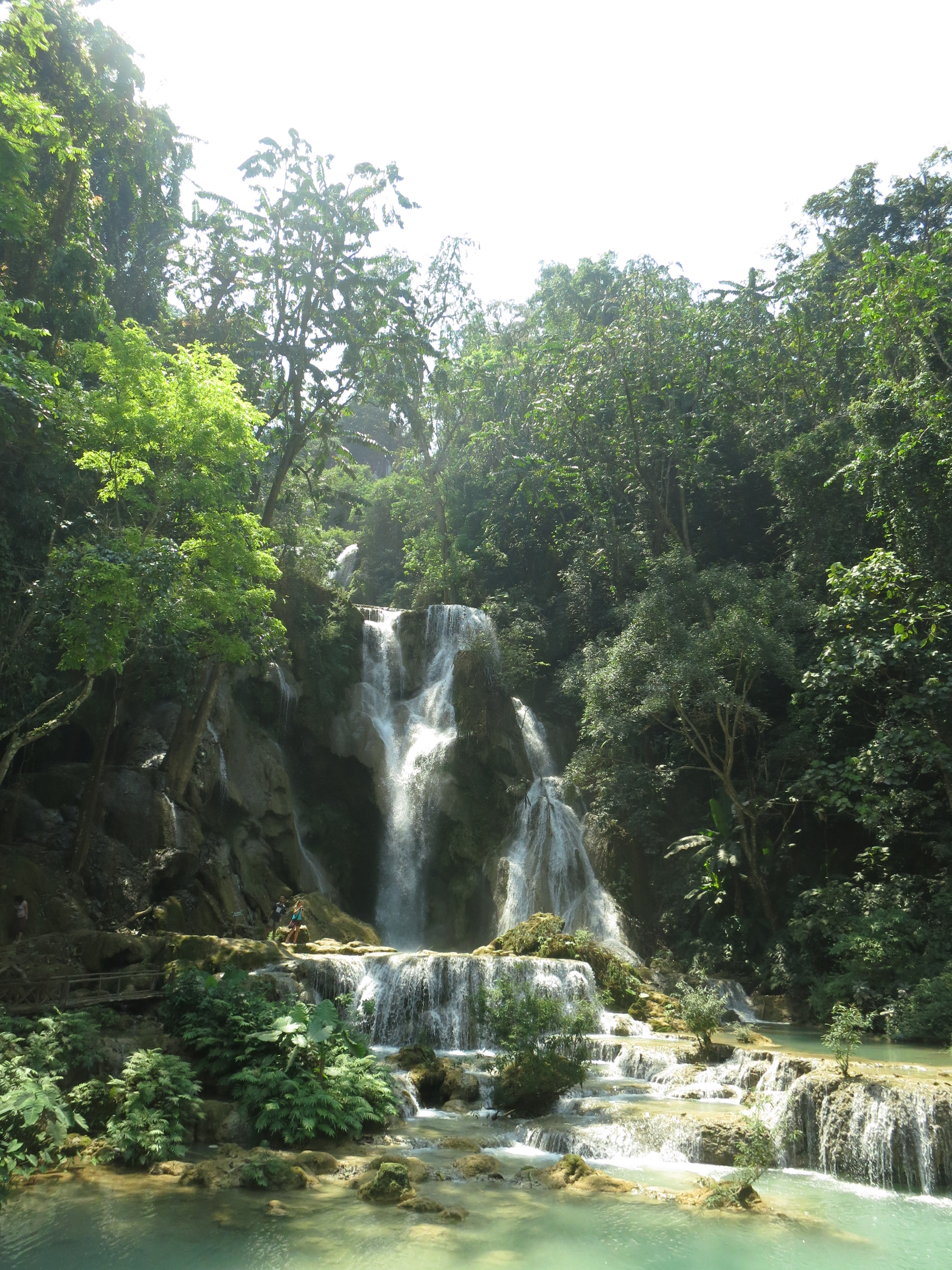
Kuang Si Waterfall

Kuang Si Waterfall

We bounced along the mostly well-maintained road out of town, through small villages, past children in school uniform bicycling home for lunch. Our driver told us what time we had to be back by, and then he set up his hammock in the back of the songthaew for a late morning nap. I bought a sandwich and an entrance ticket, and we went inside the park.

Lunchtime traffic on the road to Kuang Si

Lunchtime traffic on the road to Kuang Si

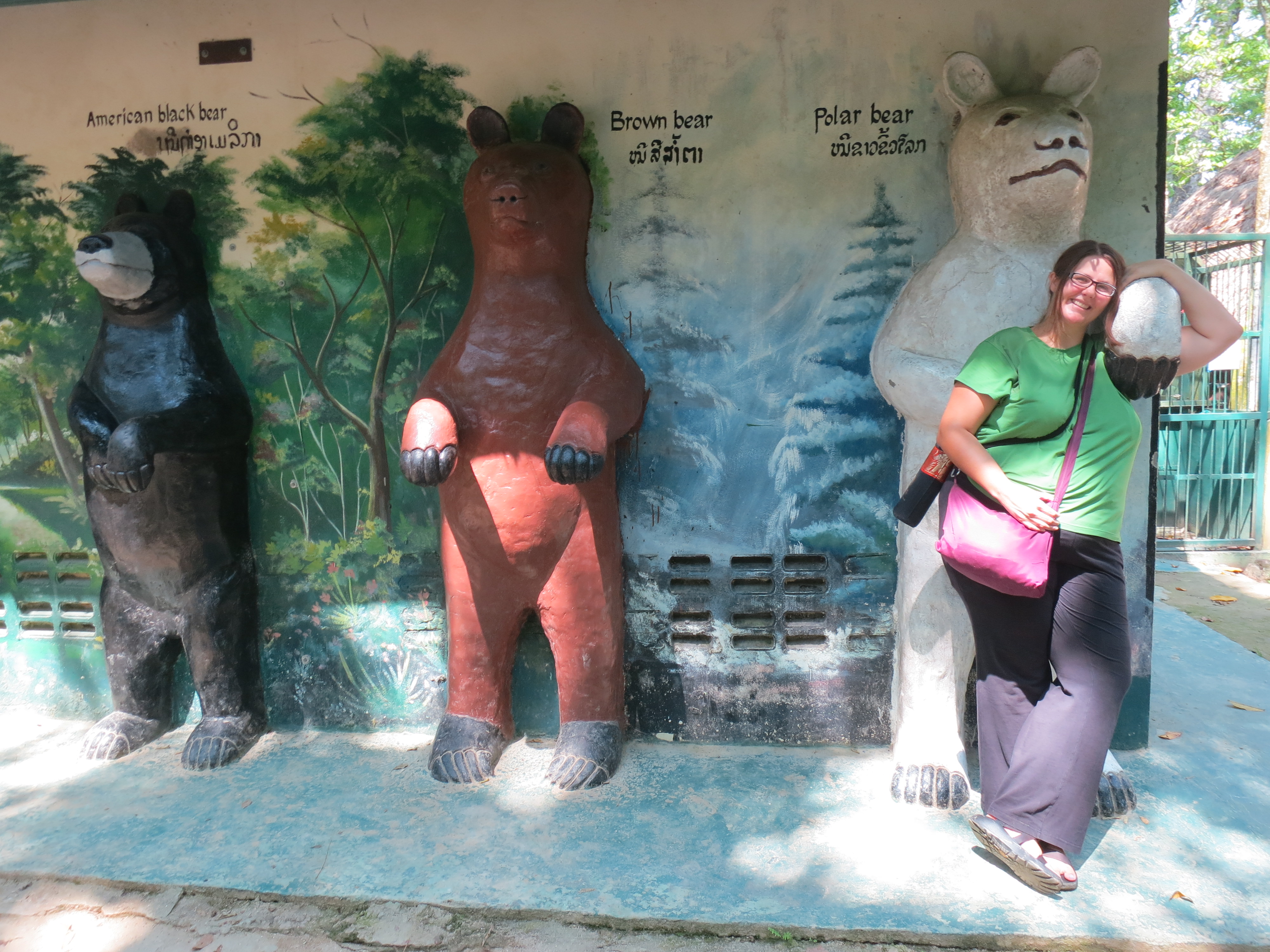
The first thing we saw were signs to a bear sanctuary. Asiatic Black bears and Malaysian Sun bears are threatened native species in Laos, and the center shelters bears confiscated by government authorities from wildlife smugglers. Probably the bears were going to end up in cages, having bile sucked from their bodies for traditional medicines, and now they hang out on tire swings and forage for food the center’s workers hide around the enclosure to keep them stimulated.

Naptime for bears
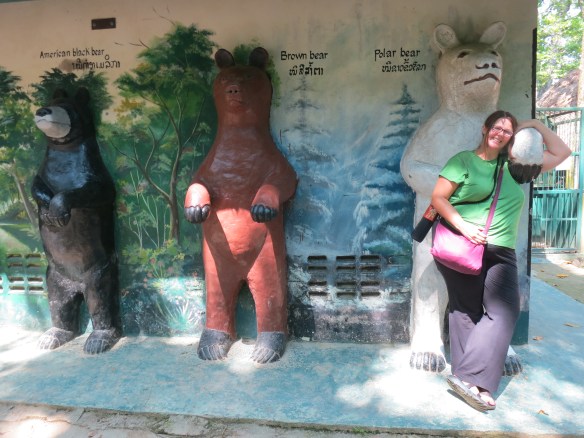
Naptime for bears

Hangin' with bears

Hangin’ with bears

A short walk away, we came to the first of the waterfalls. I said in the title of this post that there were four waterfalls, but really I made four stops along the path of many little and some large waterfalls. The water was the bright green of jade, and the pools were calm, stacked on layers of brown limestone, until they suddenly tumbled over steeper rocks in a rush of white foam.

Looked like Turtle Falls to me

Looked like Turtle Falls to me

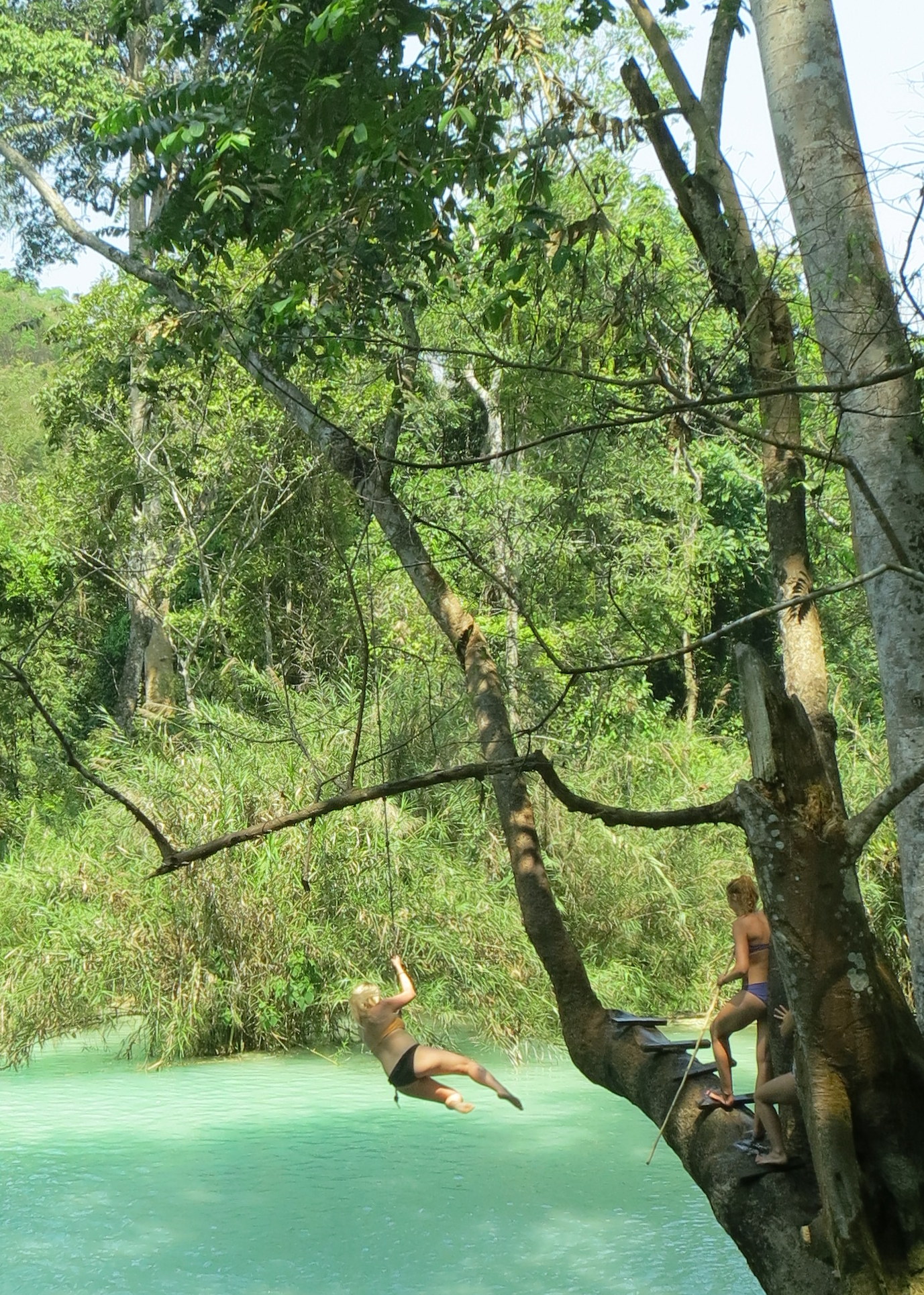
We passed a swimming hole, its main attraction being the rope swing you got to by edging along a tree branch and using a pole to hook it, after which you grabbed the rope and flung yourself into space, letting go before you swung back too far toward the tree. It looked fun, and scary, and I did not do it.

At the swimming hole

At the swimming hole

The path was one of the cleanest I’d encountered in Southeast Asia; signs in Laotian and English reminded visitors to refrain from littering, and woven baskets dotting the path served as trash cans. The water also looked clean, which was gratifying. It was so clear and beautiful, I’d hate to see it polluted.

kuang si laos

The final waterfall was huge and hugely impressive. We carefully made our way through over the slick rocks to take pictures more or less in the middle of the pool, which was cool. I wanted to linger, maybe write in my journal or read a book with the water rushing past, but other women wanted to make sure we weren’t late for our driver, which is fair, so off we went. It was a pleasant morning, and the only change I’d make if I went back is I’d stay longer.

***

Another popular day trip from Luang Prabang is a river cruise to the Pak Ou Caves. I bought a ticket from a travel agent in town, as did most other people on my boat. I think you can just show up the day of and get on a boat, but I didn’t want to wake up early only to find all spots taken. It was slightly organized chaos at the dock. I gave my ticket to the woman in charge, and she gave me a number. Later, she stood at the top of the stairs down to the boats and yelled out numbers, which I realized when we got down to the dock corresponded to different captains, so that each captain had roughly the same number of passengers. (Communism at work, for equal pay and equal distribution of weight!)

Tiny boats

Tiny boats

Unfortunately, I got The Unlucky Boat. We were the last group to leave because it took the captain ages to get his boat untangled from the others and move it around toward the floating dock we waited on. Finally, we boarded the tiny, narrow boat, only to have to shift around to accommodate the guy in the back, who was obliviously moving from side to side, apparently unaware that he could sink us if he weighed us down on one side more than the other. We got underway and stopped after only 30 minutes, at an island populated with incurious cows, so two girls on the boat could pee in the bushes. Restless dude in the back took the opportunity to share a cigarette with the captain. Finally, we arrived at our first stop, the whisky village.

The cutest kid ever to feed herself

The cutest kid ever to feed herself

Ban Xang Hai is a village specializing in the production of lao lao, a strong whisky fermented in jars. We spent an awkward 30 minutes wandering around the streets, which were lined with tables piled high with scarves for sale. I stopped near the whisky distillery and made googly eyes at a toddler learning how to feed herself. Her mother okayed me taking a picture of this beautiful baby, and everyone smiled as she shoved noodles in her face.

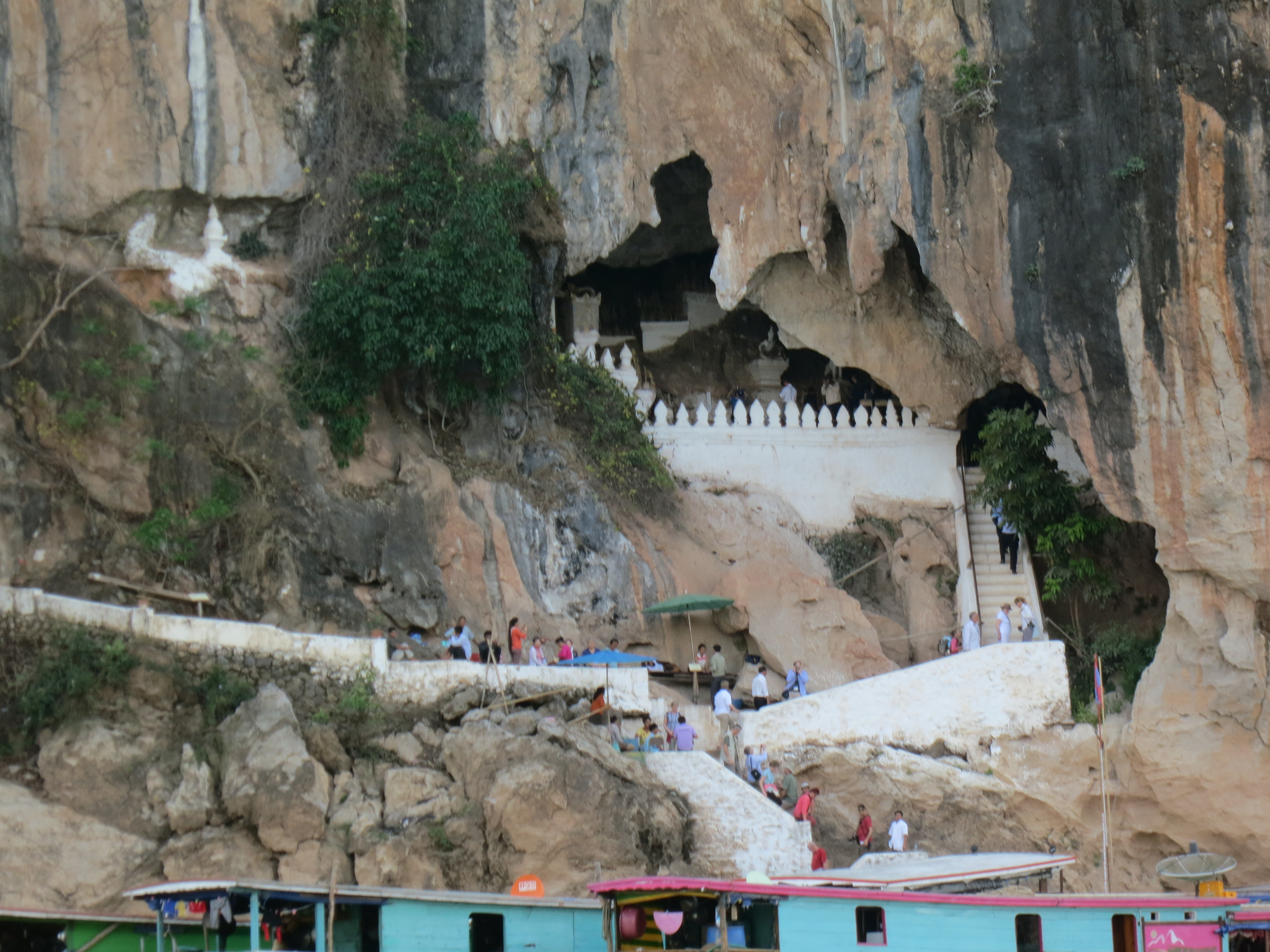
Seen from the river

Blurry shot of the caves, as seen from the river

Now it was time to go to the caves, so we set off again… only to stop ten minutes later, beached on another small island in the middle of the Mekong. Our captain went in the back and tinkered with the engine, but after a few minutes it was apparent it wasn’t coming back to life any time soon. Another boat puttered by, and after a little conversation between the captains, all the passengers in ours shifted over to the other one. We left The Unlucky Boat behind, the captain taking a drag on his cigarette and contemplating the engine.

The lower cave

The lower cave

All these delays meant we had a much shorter time at the caves than other visitors, so I had to hoof it to get to the upper cave. The buddhas in the Pak Ou Caves are either damaged beyond repair or no longer in use, and in recent years tourists have brought their own buddhas to add, although I don’t know what the official stance is on that. The upper cave is lit by a few candles and what sunlight drifts in from outside, so I brought my headlamp in case I found myself in the dark, but enough people were up there with the same that I never did. The lower cave is well-lit, but there’s less exploring to do.
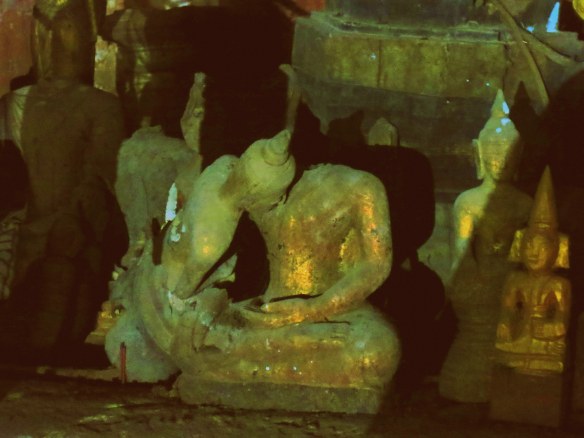
Fallen embrace

Fallen embrace

I liked poking around the upper cave, looking at the buddhas of all sizes and poses, made of different materials, ranged about the caves on long concrete shelves. During the Laotian New Year, people flock here to wash the buddhas, but the rest of the year, the statues sit under thin layers of dust, their limbs wearing away or broken off, their Mona Lisa smiles undisturbed by the dark. It must’ve been the luck of all those buddhas that followed me back to town, because the boat didn’t stop once.

The upper cave of Pak Ou
The upper cave of Pak Ou
The Temples and Night Markets of Luang Prabang

UNESCO put Luang Prabang on its World Heritage Sites list because it’s a town with a well-preserved mix of Laotian and French colonial architecture. After the jumble of rowhouses and tiny shops of Chiang Mai, it is striking to see the long, broad buildings of Luang Prabang, painted a colonial yellow and set at a dignified distance from the brightly decorated Buddhist temples.

Colonial architecture

Colonial architecture

Colonial yellow

Colonial yellow

Dignified, stately, slow-moving: these are the words I kept coming up with as I wandered the streets of Luang Prabang. A little in keeping with that stately feeling (and certainly in keeping with its colonial history), there were a lot of fences and walls; more space is cordoned off in this small town than I saw walled away in all of Thailand.

laos luang prabang

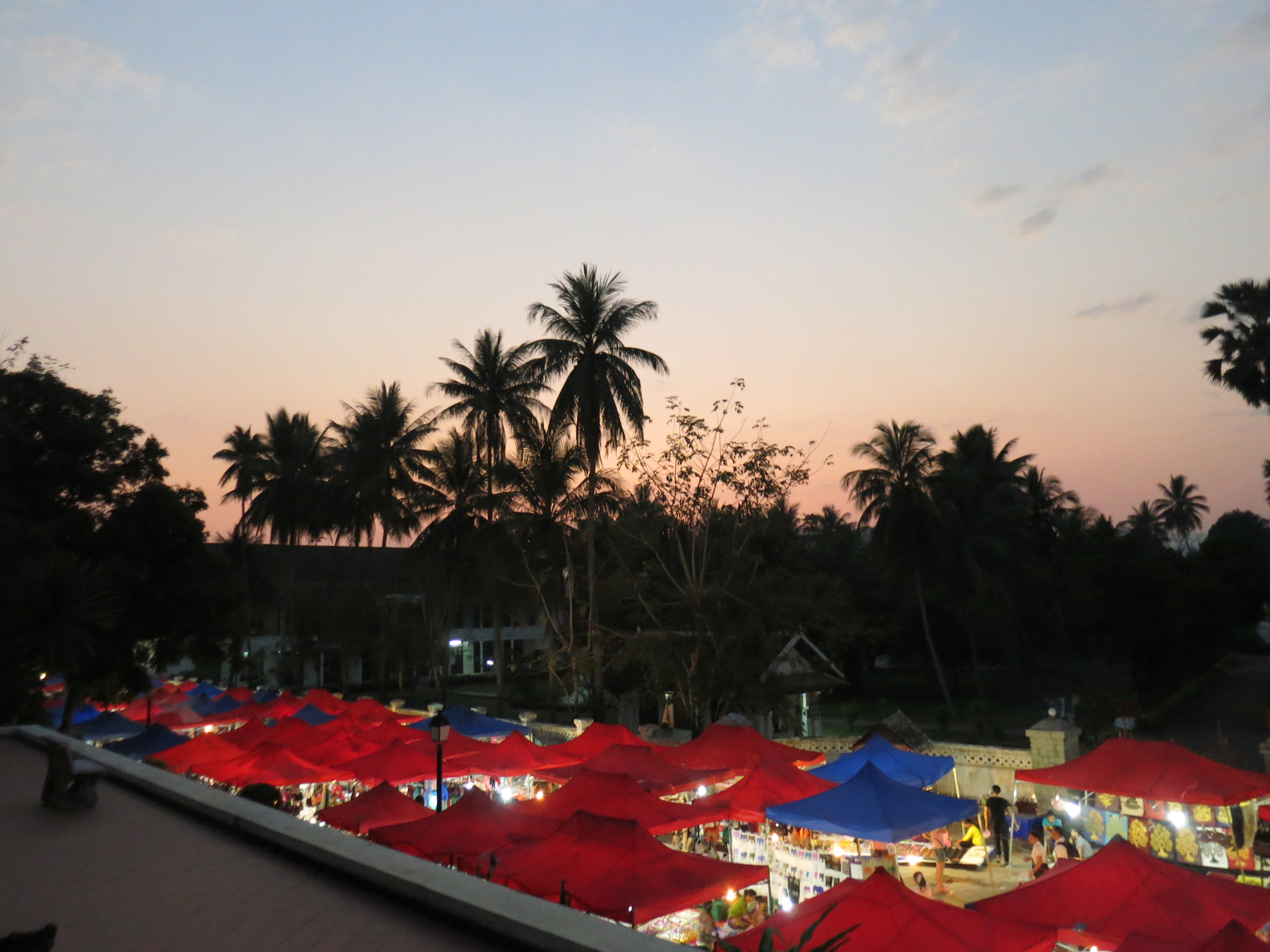
Every evening, vendors set up outside those walls for the night market. In Thailand, the markets are set up on card tables, but in Laos, the goods are laid out on tarps and blankets on the ground. If you want to inspect the goods at a particular booth, you have to squat down, or use one of the tiny plastic stools the vendor whips out for you. I would gingerly lower myself onto these unstable pieces of plastic and smile genially as all the women selling quilts and table runners laughed. Just about every stall has a woman holding a baby, and some stalls are staffed by men or teenagers. I saw one little boy playing on an iPad while his parents sold handicrafts–it’s a shrinking world, indeed!

The tents of the night market

The tents of the night market

Bombs to bracelets

Bombs to bracelets

I picked out wedding presents and souvenirs from various stalls, but my favorite spot was the bombs-to-bracelets stall. The US waged a secret bombing campaign on Cambodia and Laos in the late ’60s and early ’70s, as part of its campaign against the Communist bogeyman. The villagers of Ban Napia in eastern Laos took the aluminum from the thousands of bombs dropped on their homes and, in their words, turned it from “something that kills into something that feeds,” producing spoons. They later added bracelets and charms to their collection, and the number of bombs dropped can be guessed at by the fact that they’re still making jewelry today, nearly 40 years after the bombs stopped falling. I chose to support the artisans, although there is some controversy in doing so, because villagers have to collect scrap metal to make them, and there are a lot of accidents and sometimes deaths with the UXOs (unexploded ordnances). As with so many potential purchases, it’s complicated.

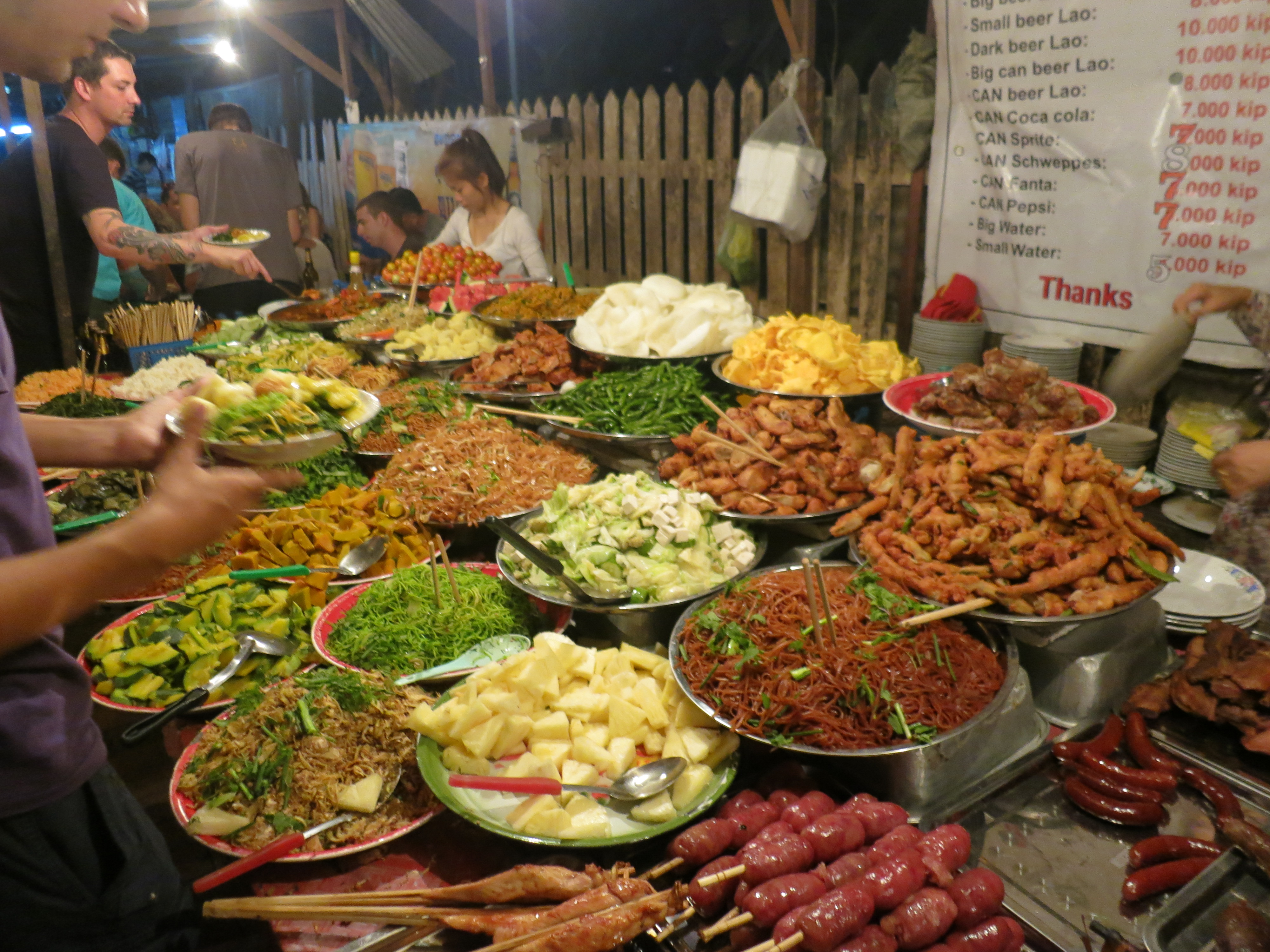
Meat on a stick--a lot of it

Meat on a stick–a lot of it

The much-lauded buffet (I never tried it)

The much-lauded buffet (I never tried it)

Of course, there’s food. One woman sliced watermelon with a machete while another flipped sweet potatoes on a small woodfire grill. A narrow alley of food vendors included pork and fish on sticks, dumplings, grilled sticky rice, and two giant all-you-can-eat buffets. I had really good veggie and pork dumplings, and a non-spicy lemongrass sausage (a specialty of the area).

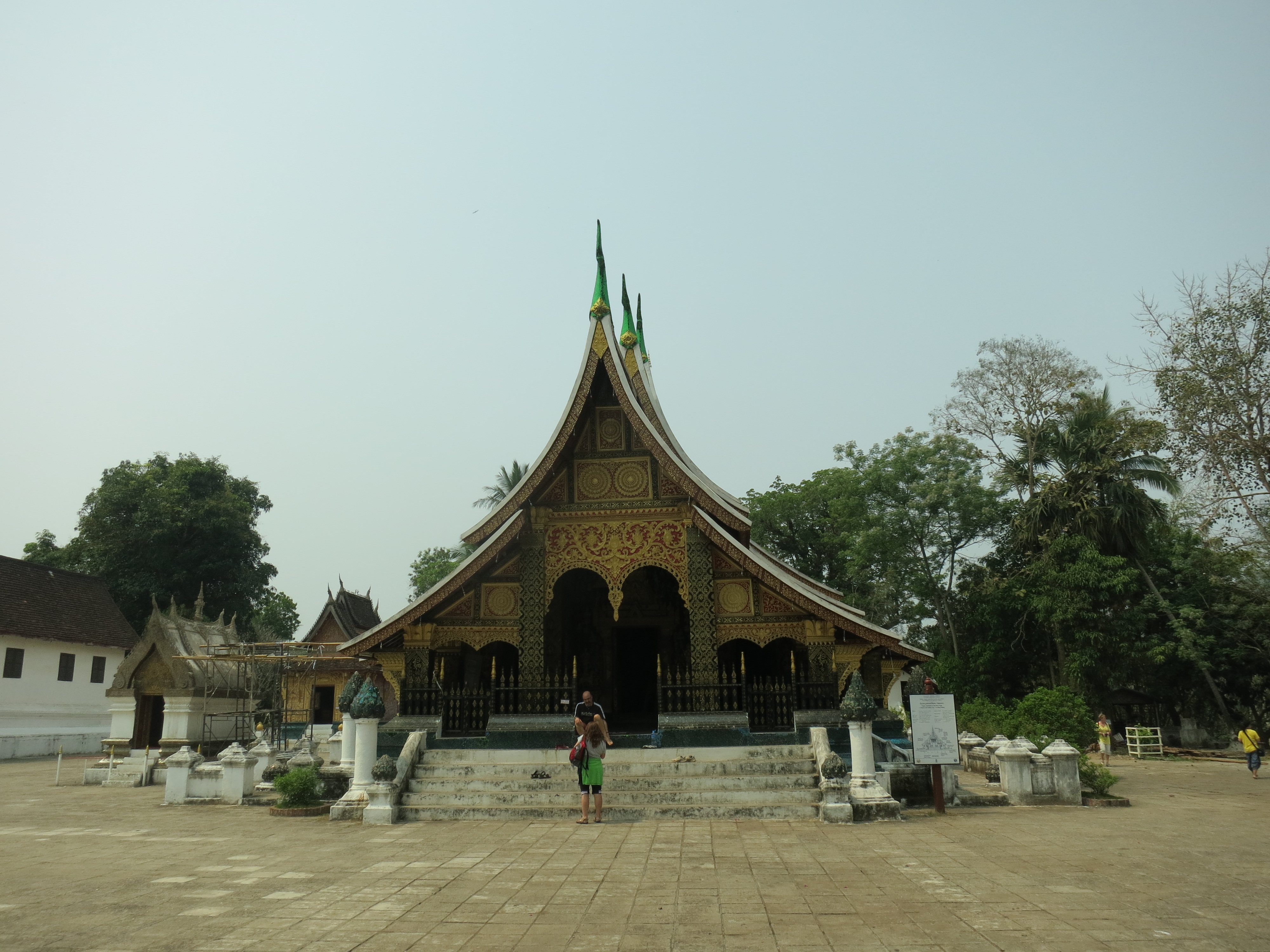
Wat Xieng Thong

Wat Xieng Thong

Gold painting everywhere

Gold painting everywhere

Luang Prabang has dozens of Buddhist temples, and a high concentration of monks and novices (those under age 25 are called novices). The temples, or wats, are painted in elaborate, intricate scenes, sometimes both inside and outside. The grounds are spare, with just a little greenery carefully confined to a few areas, and the rest tiled courtyards between buildings. Monks and novices move around on the edges, running errands, doing homework (many boys enter the monastery to get a good education), making adjustments in the temples.

Seriously impressive

Seriously impressive

luang prabang laos

Probably the most famous wat in Luang Prabang is Wat Xieng Thong, sometimes called The Temple of the Golden City. Since Luang Prabang is on the World Heritage list, there’s a lot of upkeep work going on at various temples, funded by various countries–and this temple is no exception. The US Embassy is supporting efforts to reinforce the structural elements of the temple, and scaffolding was set up around the buddha when I visited.

Unfinished renovations

Unfinished renovations

luang prabang laos luang prabang laos

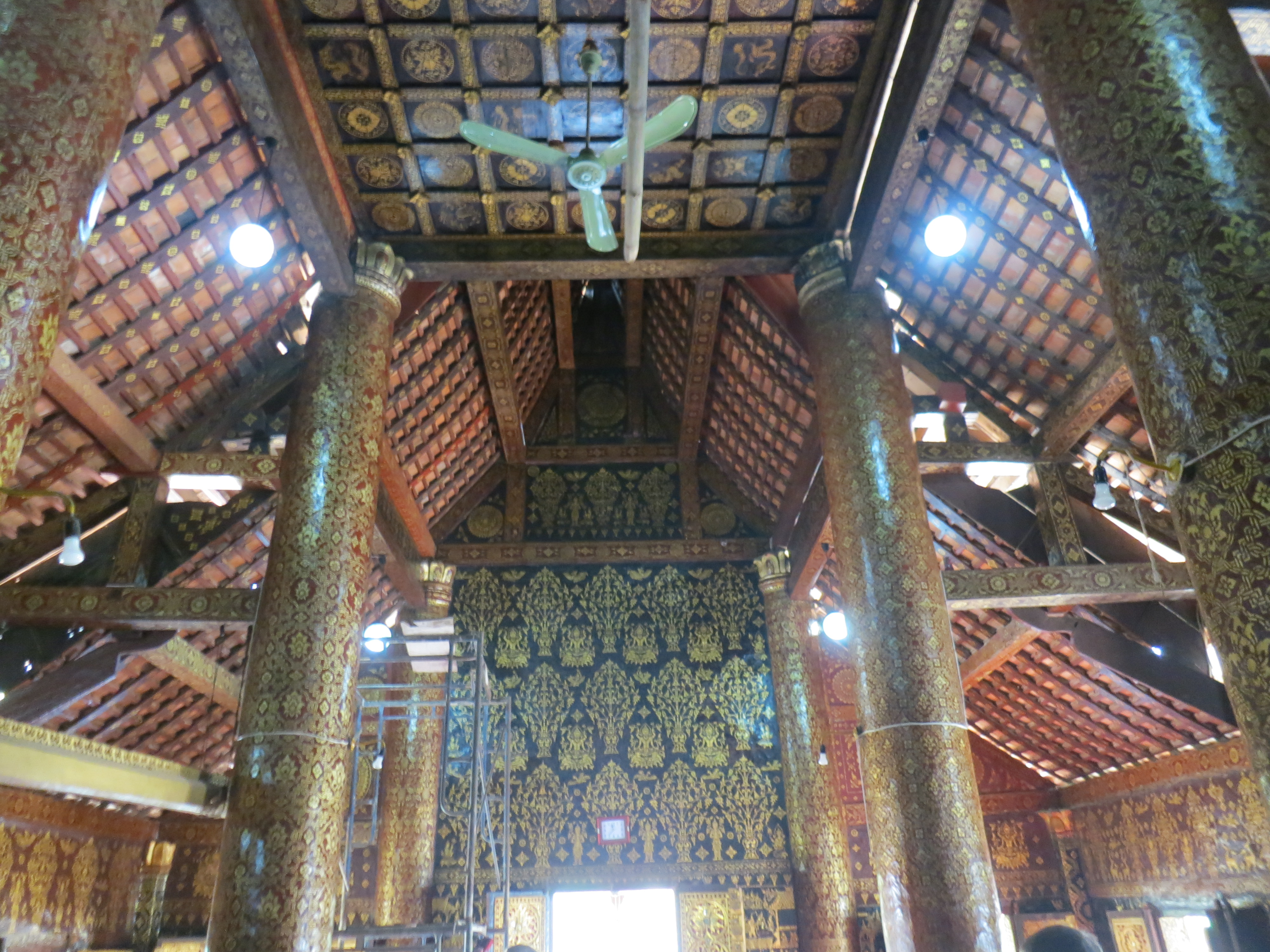
The main building was painted a maroon color inside, and then gold leaf designs were painted on top of that, on every available surface–ceiling, columns, walls. Inside, a long wooden pipe sat along one wall, and at the end of it sat a small buddha in a glass box. During a water-based festival, water blessed by monks travels through the wooden pipe and washes the buddha. My favorite part of this temple was a separate building, which housed a giant dragon boat. The back wall was red, covered in intricate, colorful mosaic scenes and accented with sparkly glitter. There was no way to get a decent picture to show just how big and full of life it was, but I tried. Exteriors of some other buildings were dotted with similar mosaics.

View from Mount Phousi

View from Mount Phousi

Buddhas in various positions

Buddhas in various positions

Mount Phousi rises above the center of town, and a small temple sits atop it, with various buddha statues and shrines scattered below it, so each step of the climb to the top takes you past a holy site. At the top, if you can balance yourself between the edge and the dozens of fellow tourists, you can see a beautiful sunset over the Mekong. On the walk up, off to the side is the Imprint of the Buddha’s Foot; it’s a large, vaguely foot-shaped indentation in the rock that someone decided was a holy sign. (In that way, it reminds me of the Virgin Mary water spot under the bridge on Fullerton in Chicago.)

Indentation of the Buddha's Foot

Indentation of the Buddha’s Foot

The foot is just past a pavilion with a view of the Nam Khan River to the east, and on this pavilion stood a young novice. His name was Tip, and he was doing homework. He clearly stations himself here most nights in hopes of practicing English, because he was eager to ask and answer questions with me. He was 17, he’d been a novice for many years, his wat was across the river, America sounded interesting… I didn’t have time to ask for a photo or chat with him further, because a couple teenage Laotian boys entered the pavilion, and Buddhist monks aren’t supposed to be alone with women. I didn’t want him getting in trouble, so I said goodbye and he said, “I hope you have many happinesses in your travels in Laos.”

luang prabang laos