Angkor Wat: A Temple, A City, A Breathtaking Sight

When I say I’ve been to Angkor Wat, people sometimes reply, “where?” but when I show them this photo, they nod in recognition:

Angkor Wat at sunrise

Angkor Wat at sunrise

Oh yeah, that place. The giant temple thing in Cambodia. In fact, Angkor Wat is the largest single religious monument in the world. (I guess that’s under dispute by Those Who Measure Religious Monuments or something, because most of the info I can find on it won’t give me a hard yes or no on the topic. Regardless, it’s huge–the outer wall runs over 2 miles long.) Of course it’s big, when you learn that “angkor” roughly translates to “city” and of course we know “wat” is fairly synonymous with “temple.” Angkor Wat is a temple and also a city.

Angkor Wat

Angkor Wat

Khmer king Suryavarman II built Angkor Wat in the beginning of the 12th century. He broke from tradition by dedicating it to Vishnu rather than Shiva, and orienting the temple complex to the west, rather than the east. In the next century, the main religion of the Khmers changed from Hinduism to Buddhism, so the religion associated with the temple changed, too. One of the main statues of the temple, which was somehow not destroyed during the reign of the Khmer Rouge (as most of the statuary was), is an eight-armed Vishnu whose head has been swapped out for a buddha’s head.

Vishnu/Buddha

Vishnu/Buddha

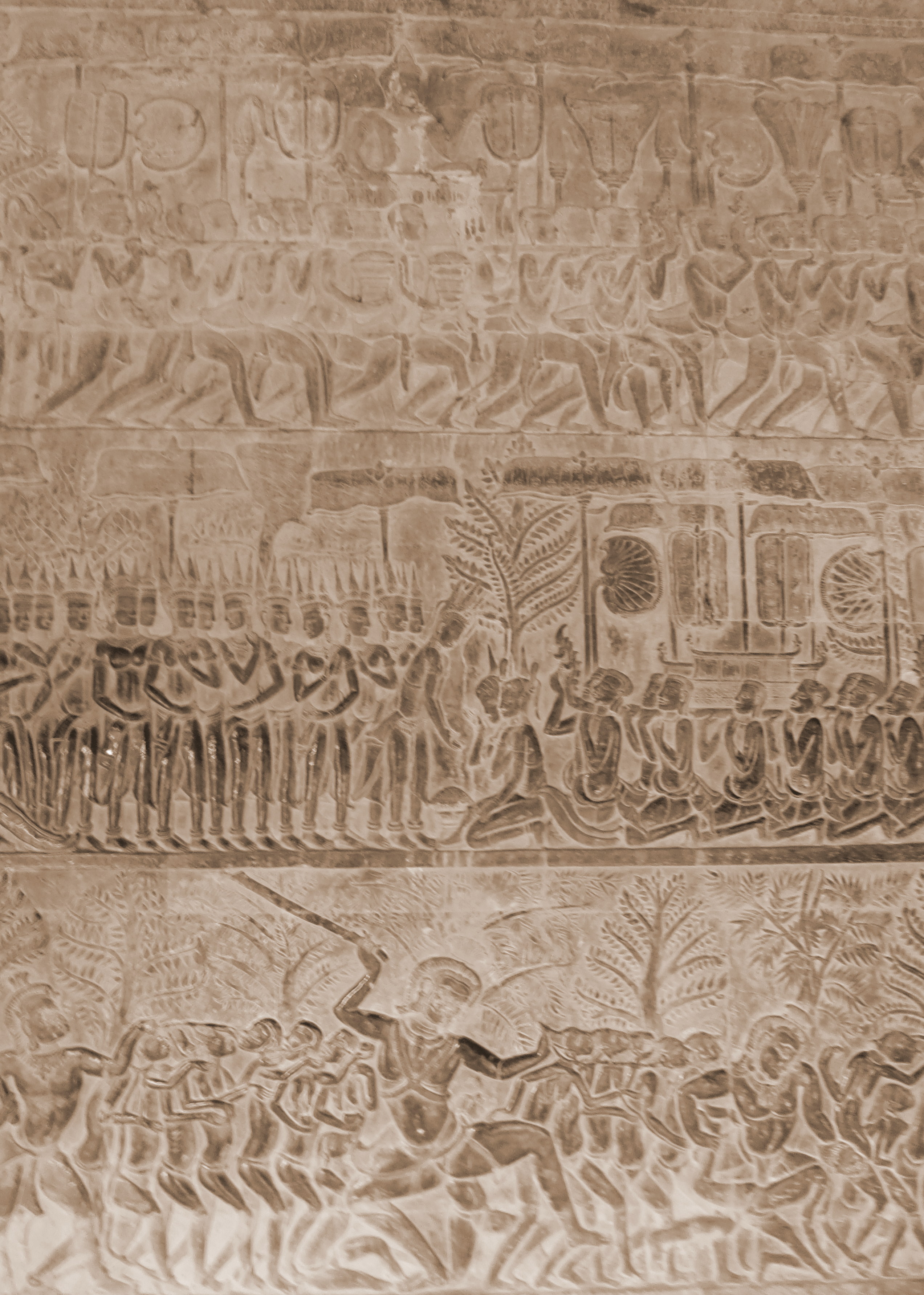
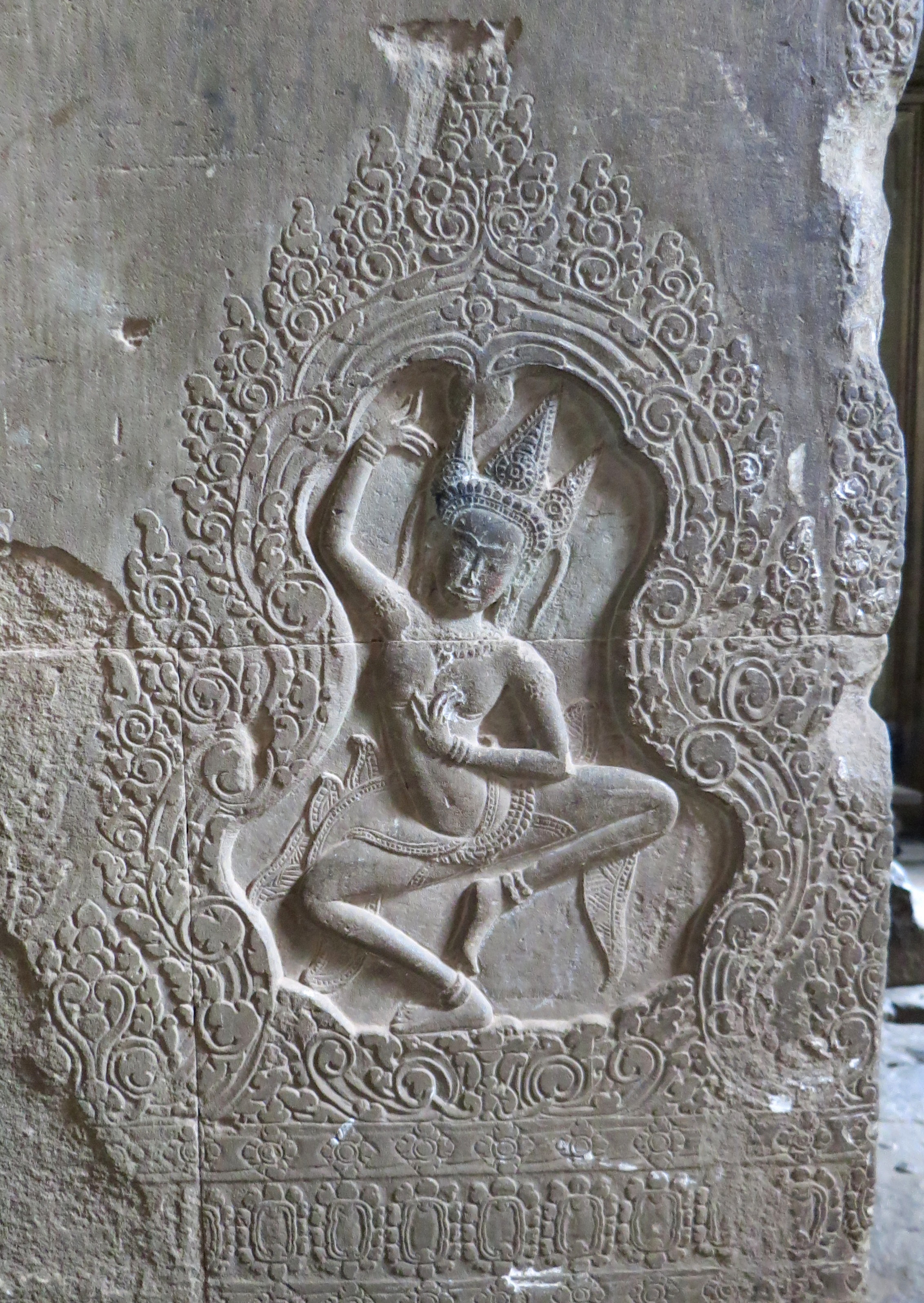
Other decorations, however, are not so easily changed from one religion to another. Angkor Wat is impressive not just for its size and age, but for the bas-relief friezes that run around a large part of one of the inner walls. These friezes show scenes from the Ramayana and the Mahabharata, two Hindu epics. Many of the friezes have been restored by various conservation groups over the past few decades, and I’m so glad I got to see this artwork dusted off and cleaned up. It’s much easier to appreciate the incredible detail of each carving when the accumulated grime of centuries has been swept away.

The Churning of the Ocean of Milk
The Churning of the Ocean of Milk

Bas-relief frieze

Bas-relief frieze

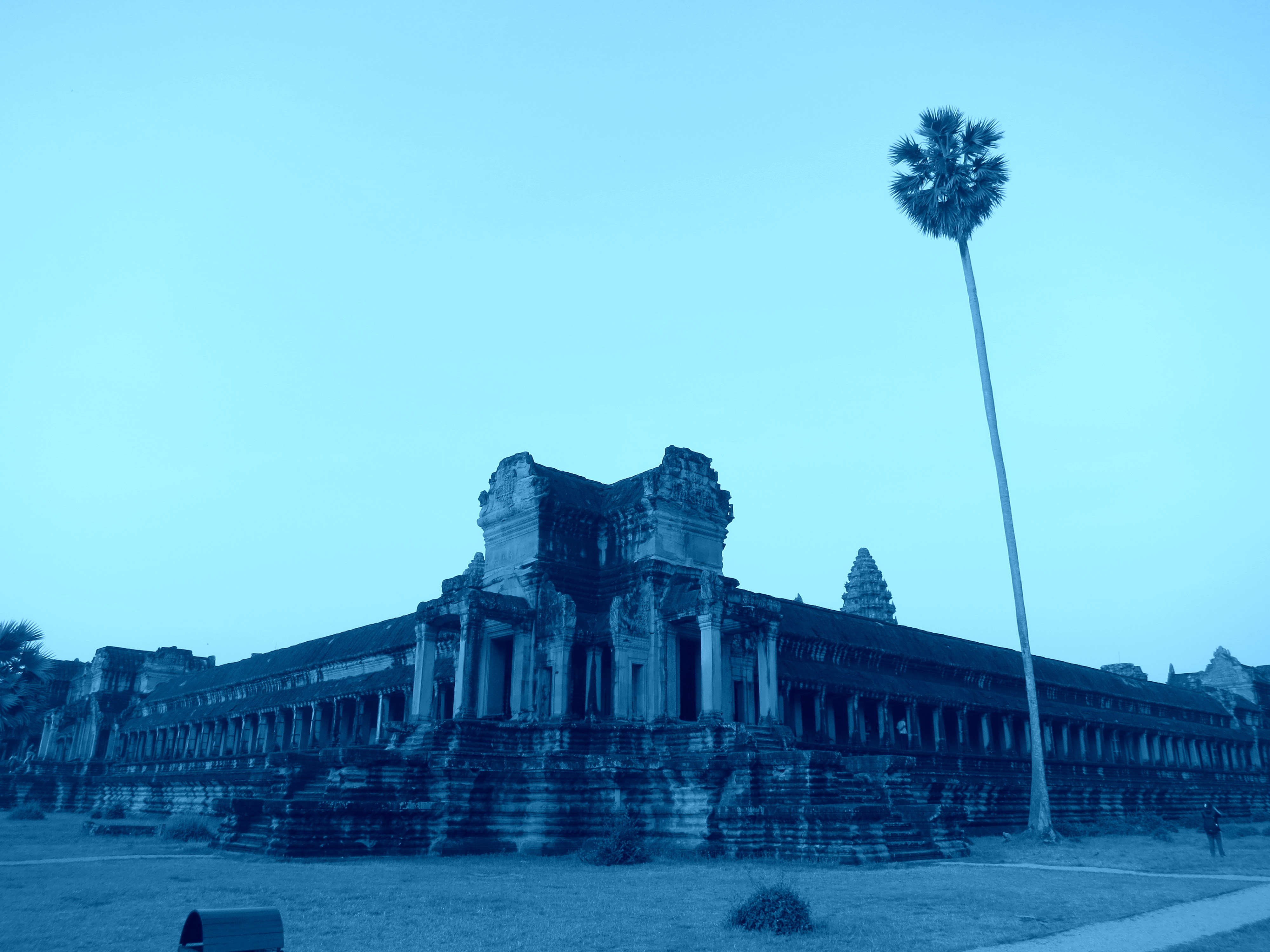
Angkor Wat is built in the temple mountain style: it’s meant to resemble Mount Meru, the home of the gods in Hindu mythology. There are always outer walls representing mountains, and usually a moat to represent the ocean. The inner temple is made up of five pyramids representing the five peaks of Mount Meru–usually four in the corners, and an elevated one in the center, the innermost sanctum of the gods.
angkor wat

One of the distinctive features of Khmer architecture, according to my architecture guidebook, was the “trick of perspective” achieved by progressively reducing the height of each structure from the center outwards, making the central towers appear even taller and more impressive. This architectural trick expresses the religious beliefs of its builders, too, since it emphasizes the importance of the home of the gods and the humility of the rest of creation in comparison to it–even the oceans are reduced to flat moats calmly reflecting Mount Meru’s glory back to it.

angkor wat

For those of us who haven’t made a study of Khmer architecture or Angkor period temples (and that’s most of us, isn’t it), it’s good to keep in mind that a Khmer temple “was not a meeting place for the faithful but the palace of a god,” as Michael Freeman and Claude Jacques note in Ancient Angkor. Thus, the tiny space in the interior of the central pyramid, made only to house the statue of the god and not for crowds of worshipers; the super steep stairs that were usually only scaled by a few temple workers; and small buildings housing various gods, the grouping of which made up one large temple, rather than one temple per god. This is such a different approach to religious architecture from the Western, Christian one that I hadn’t even realized I had been making assumptions about what a temple was for and how that affected the architecture until this book pointed it out.

angkor wat

I’m used to vast cathedrals built to house masses of congregants; the altar is often large and ostentatiously decorated, and it’s easy to see from just about anywhere in the building. The temple mountain structure of the Khmer Hindu places of worship also accommodates large crowds, but in the outer areas of the grounds; the inner areas are difficult to reach, and the sacred space is small and hidden from the casual eye. I love that the book made me look at the temple in a different way, and also had me reflect anew on the churches I’d been to before.

angkor wat

None of the buildings from the city surrounding the temple (the “angkor” part of “Angkor Wat”) have survived. They were likely made from wood, unlike the sandstone, brick, and laterite of the temples. This means that a lot of imagination is required to envision what it must have looked like in its heyday, a little harder than putting paint on the Forum in Rome, but not as difficult as seeing the cooking fires smoking at the side of Uluru. I stood on the east end of one of the interior walls of the temple and looked out over the forest that stretched to the moat nearly two miles away. All this forest was once royal palace, regular houses, streets, food stalls, markets–all populated with one of the largest concentrations of humanity in the pre-industrial age.
Aspara

Aspara

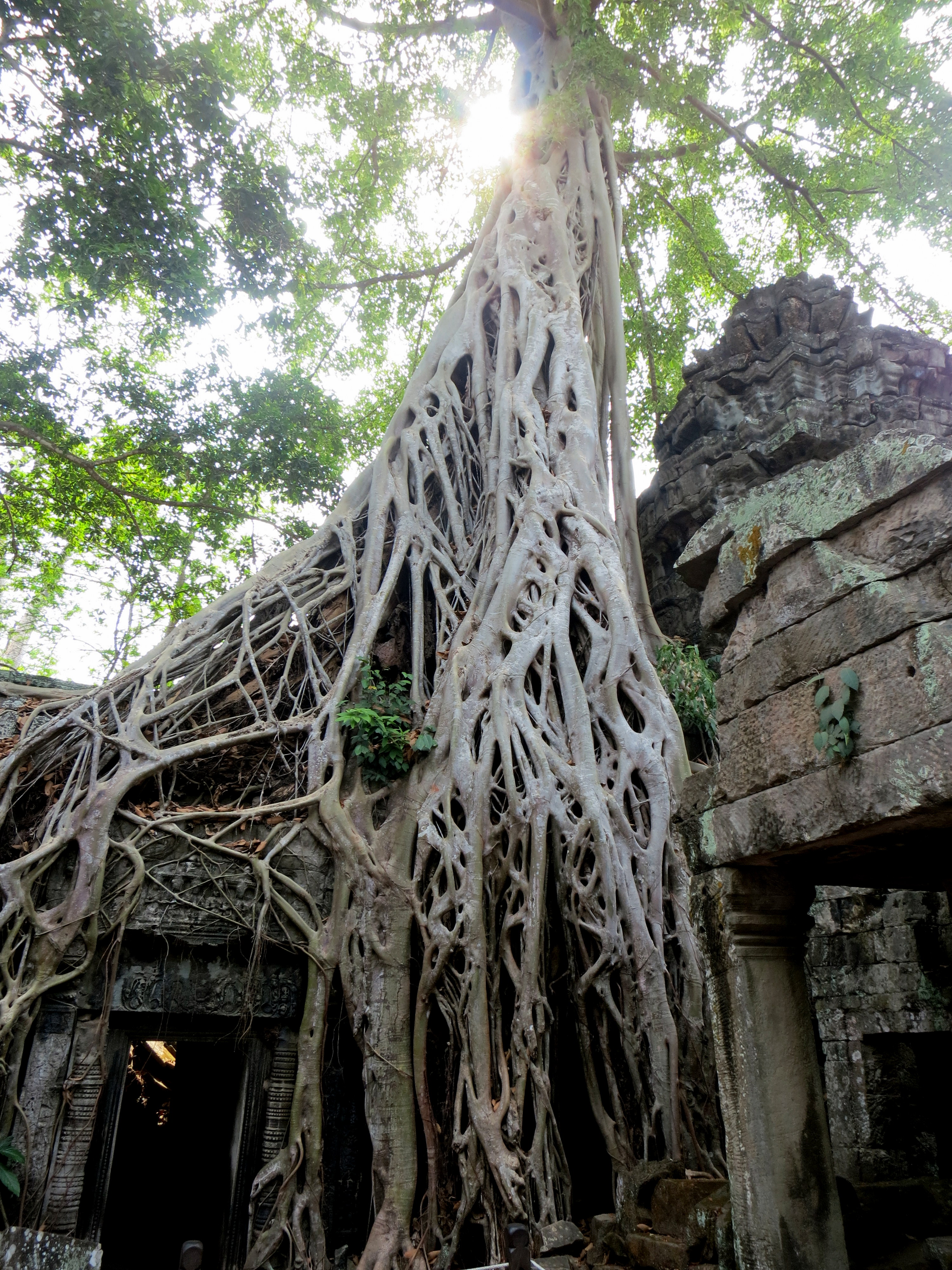
This is all about Angkor Wat, but let’s not forget that the Angkor period lasted several hundred years, and almost every king built at least one temple (perhaps as a mausoleum for himself, the god-king), so there are nearly a thousand temples in the area. Dozens of these have been restored and opened to the public. It all seems an embarrassment of riches once you see Angkor Wat. Not only is there this magnificent complex, but there are more–and in different styles, with their own delightful carvings and architectural quirks? I enjoyed discovering those temples as well; stay tuned this week for more on those.

Embracing the sunrise

Embracing the sunrise

Do’s and Don’ts at Angkor

I went to Angkor, World Heritage site and location of dozens of ancient temples renowned for their architecture, carvings, and historical importance, in March of this year. I read up a little on what to expect before I went, but was still tripped up by a few things I discovered on the ground. Here’s my advice for how to visit the temples with minimum fuss and maximum enjoyment. Share your own tips in the comments!

Angkor Wat at sunrise

Angkor Wat at sunrise

DO:

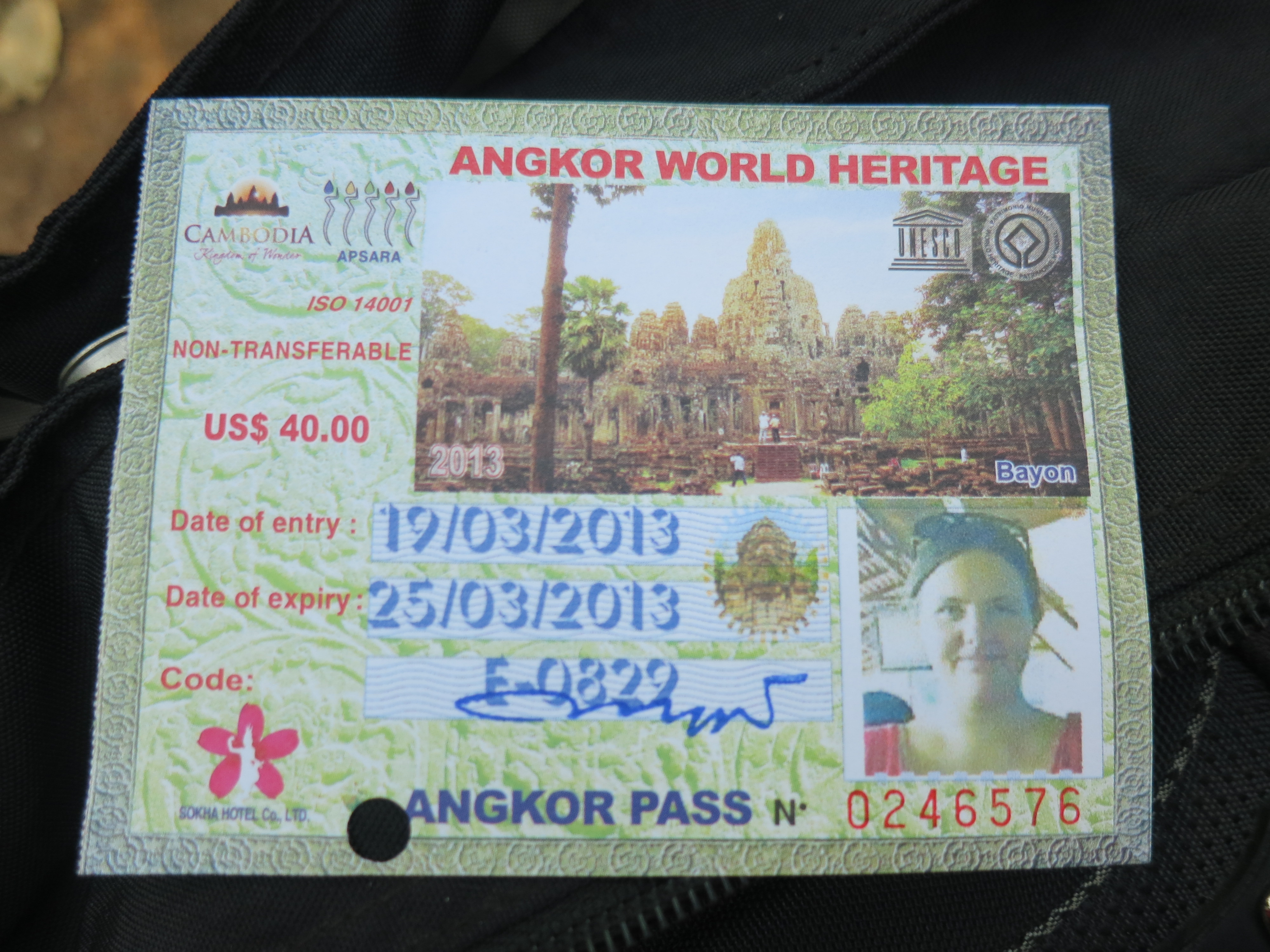
Buy the 7-day pass for $60, if you have a flexible schedule and at least four days in the area. I bought the 3-day pass for $40, intending to use every day in full, but then I stepped outside and almost fainted from the humid heat (we’re talking over 100 degrees Fahrenheit every day). If I’d had the 7-day pass I could have done half-days in the mornings and escaped to air conditioning in the afternoons, but as it was I had to push on through the heat. I still didn’t fit in everything I wanted to see, so I had to buy a 1-day pass for $20 for my last trip out there. If I’d spent that $60 upfront, I’d have had more time in the park for the same amount of money.

angkor

Bring at least a liter of water to drink and plan to buy at least another liter while at the park. It is 40*C/104*F on a regular basis here.

Bring a bandana or handkerchief. You’ll use it as a sweat rag during the amazingly humid days, and also as a face mask during your tuk-tuk rides on the often dusty roads.

Bring snacks, and a full lunch if you can swing it. Unlike in town, no one’s pulling a food cart all over the parks, and there are just a few places where restaurants are set up. I got hungry climbing up and down the many stairs of the temples, and was glad of the fruit and granola I had in my bag. Of course, your driver will know of the perfect little place to take you when it’s lunchtime, and they all seemed more or less the same to me, so why not say yes and let him have his commission?

Plot your trip ahead of time. If you’re just going for a day and you want to catch sunrise and sunset at Angkor Wat and maybe see the Tomb Raider temple, then you’re fine and your tuk-tuk driver will have no trouble getting you to each place with plenty of time. However, if you have more time and want to explore the temples in more depth, work out with your driver ahead of time exactly where you want to go and in what order, and generally at about what time. My driver thought I would take less time than I did at each temple I went to, so he was surprised I couldn’t do his normal itinerary in one day, but I know I take a long time seeing sights, so I wasn’t surprised. I should have communicated better with my driver about timing, though, so that we both knew what to expect.

Bring a proper cardigan or long-sleeved shirt when going to Angkor Wat and Phnom Bakheng. I had a scarf to cover my shoulders as a sign of respect, which was fine at other temples, but at Angkor Wat and Bakheng I was turned away. I was told I needed to have a proper shirt–because a scarf is too easy to take off? I’m not sure what the reasoning was, but the guards were absolutely strict on this, despite there being no warnings about such rules at the ticket office or anywhere else, and as a result I never got to climb to the very top of Angkor Wat (yep, I planned to do it on my last day there, oops).

Plan more than one sunrise at Angkor Wat, if your schedule and sleepyhead ways can swing it. I only made it to one, and it was gorgeous, but I was torn between staying by the pond with the hundreds of other visitors to see the full sunrise, and scooting into the temple after a few minutes to explore while it was mostly still empty. I ended up doing the latter, and I do not regret that at all, but it would have been nice to have gone another time and just relaxed for sunrise.

angkor

DON’T:

Lose your pass. That ticket just cost you at least $20, and they won’t replace it. At nearly every temple I entered, I needed to show my pass before I could climb the steps of the actual temple, so don’t think you only need it at the entrance, either. They take your photo and put it on the pass when you buy the ticket, so there’s no mistaking whose ticket is whose.

angkor

Pay attention to guidebooks that say you need a special ticket to get non-consecutive passes. That may have been true in past years, but not anymore. If you buy a 3-day pass, you can use it on any three days in a week, and you can use a 7-day pass any seven days in a month.

Forget to bring or buy a guidebook. There are no helpful placards here, no clear markers next to exhibits of note. You can hire a guide for the day, and I overheard some great guides sharing in-depth information, but I also heard some impenetrable accents and bare-bones introductions to the sites, so the quality of the guides varies and it can get pricey to hire one if you’re on your own. I bought Ancient Angkor by Michael Freeman and Claude Jacques, and it proved pretty useful. There’s a lot of history up front and then the sections on specific temples focus more on the architecture. It was last updated in 2003 and there have been improvements to the park since then, so some of the info on what is accessible is outdated. I got the book for $8 at a bookstore in town, and then six different touts tried to sell me the same one for $1 at the park itself. You can go that route, but realize it’s probably an illegal copy so the publisher isn’t getting paid, and of course the tout sees maybe a few pennies of that money.

angkor

Stress about getting from Siem Reap to the park. Your guesthouse/hostel/hotel will have tuk-tuk drivers they can call, guaranteed. The only thing you’ll need to do is negotiate price, which you can prepare for by looking online to see what other people have paid in the past. If you’re fancy, you can take an air-conditioned car, but tuk-tuks are much more affordable and perfectly comfortable (see above about a face mask, though). Hopping on the back of a motorcycle is even cheaper, but if you’re fat they might not let you, even if you’ve done this before and you know it’ll be fine. You can also bicycle there, if bicycling in 90% humidity at 100 degree temperatures appeals to you. Pretty decent roads, not sure where you’d lock it up, scary drivers to share the road with, but you do get to set your own pace and schedule.

Try to go against the grain on the prescribed routes in the temples. There are no markers telling you what you’re looking at, as I mentioned, but there are plenty of signs telling you which way to walk once you’re in the temple. These are set up to manage the flow of the crowds, and are really helpful. You can always dart off to the side and come back or take a seat if you need a breather, but try not to turn around and head the opposite way everyone else is going. You’re gumming up the works. Of course, some temples don’t have a prescribed path, so you can hop about all you like there.

angkor

Normal in Toronto

I’ve lived in Chicago for five years, and I’ve been to New York, LA, London, Sydney, Tokyo, and Paris. All have their own vibrant queer scenes, of course, but it was the subway in Toronto that actually showed how normalized the LGBT experience might be in that city. While waiting for a train I saw an ad for the personals:

toronto train ad

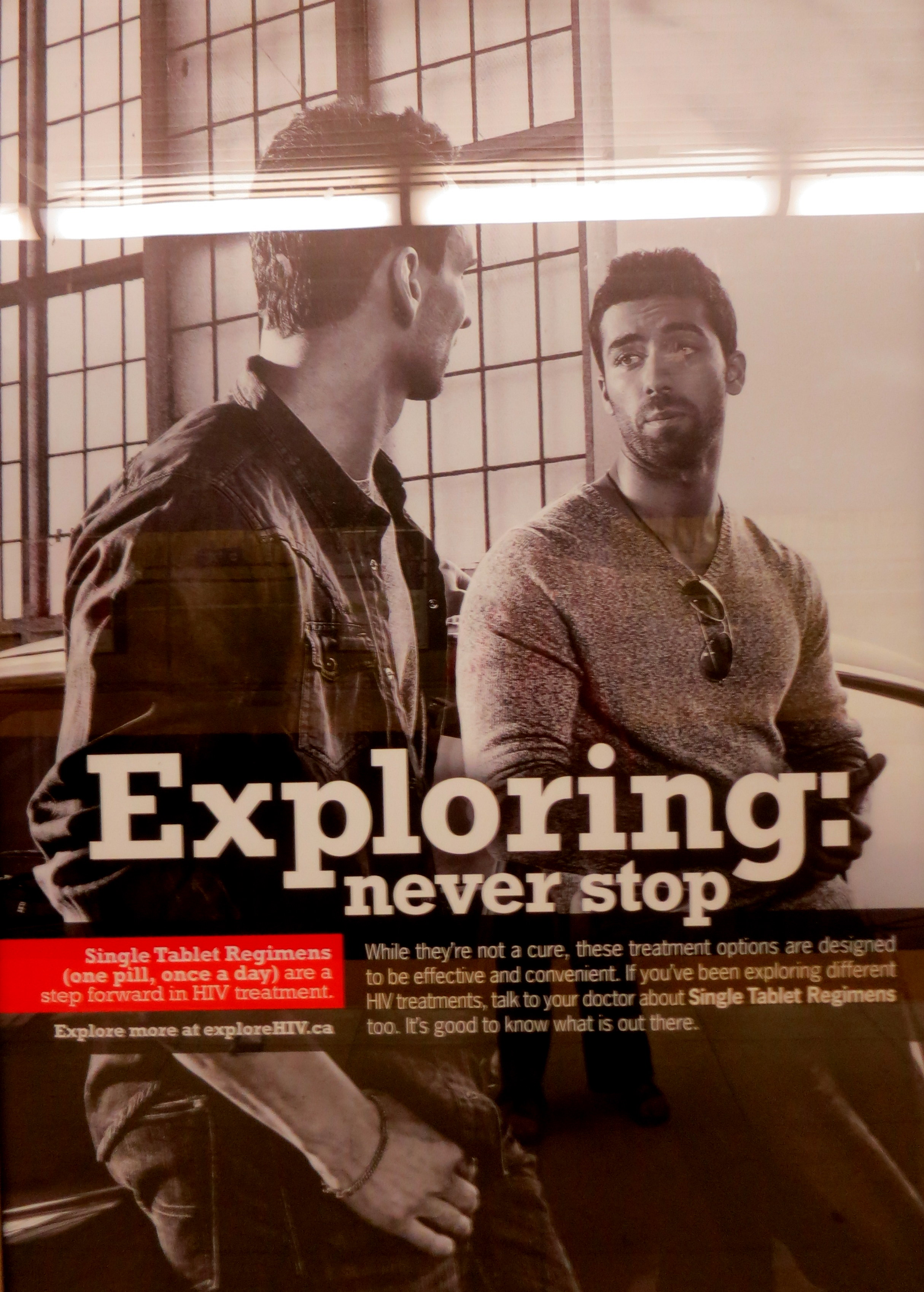
And when I got off a couple stations later, I saw an ad for HIV medication, showing a gay couple discussing whether to use single tablet drugs to manage the virus:

toronto train ad

I don’t know what the daily life situation is like for LGBT folks in Toronto, but seeing those two ads made me think that at least the first hurdle of being seen, and being seen as normal humans at that, has been crossed. Other cities, take note.

Culture Clashes

Couchsurfing can make people nervous for various reasons, but questioning what it might do for your reputation or job security is not usually something that comes up. Janet at Journalist on the Run published a letter her friend received after hosting CSers at her flat in Korea. In it, her supervisor warns that her neighbors have filed a complaint about her because several strange men have been seen exiting her apartment over the past month.

Basically, her supervisor says, “I know you’re doing Couchsurfing, but you look like a slut, which is not the image we want for teachers in Korea, and you’re hired by the government of Korea, so you gotta change your ways or risk being fired.” Janet and the commenters discuss whether the supervisor should have supported the employee or whether the employee should have taken a cue from CS and adjusted to the new culture she finds herself in.

It’s a fine line between respecting cultural norms that are different from yours, and standing up for your own beliefs and way of life. This particular issue is made trickier because it involves her job. I guess for me, knowing that my job protection as an American in Korea is basically nil, I’d err on the side of caution and keeping my job. Then engage in conversation with other teachers and parents over the course of the year, with the goal of gently encouraging alternate points of view. Actually, if you’re a teacher in the States, your job security is pretty bad too, so that’s probably the tactic to take here as well.

Now, if it didn’t involve employment, I might act differently. Living in an apartment in Rome and my landlady disapproves of my nighttime visitors? Too bad, lady, I pay you each month and my bedroom is my business. Miming trying on a skirt at the night market in Chiang Mai and the merchant just laughs and says “too big! too big!”? Okay, that’s blunter than I’d hear at home, but you know your product better than I, so I’ll move on.

It can get a lot more serious, of course. A woman visiting Saudi Arabia? Cover your head. A lesbian couple visiting South Africa? Don’t hold hands. A Sikh man visiting rural Alabama? Bring a white friend. These aren’t matters of cultural misunderstanding so much as basic personal safety. How do we integrate respecting other cultures and respecting our own integrity? A question for the 21st century, and one that can only be answered by including the voices of people from the countries we visit as outsiders.

There’s a lot more to say on the topic, but I find myself posting later than expected today. Weigh in, dearest fellow travelers. What would you do if you were the teacher in question? What changes do you make in deference to cultural differences when you travels? What changes do you refuse to make?

Laos by the Numbers

New friends made over a big do-it-yourself hot pot meal: 3

Pick-up badminton games observed: 8

Laotian wedding karaoke performances stumbled upon: 1

Meals that made me cry from the spice level: 1

Bears seen playing in the bear rescue center: 2

Bears seen napping through the heat in the bear rescue center: 4

Monks and novices spotted: 56

Conversations with novices: 3

Boats used for transportation: 4

Buddha statues seen: 4,034

Total days spent in Laos: 10

Total money spent: $562.79

Average per day: $56.28

Total money spent, minus gifts: $341.04

Average per day, minus gifts: $34.10

Shifts volunteered at Big Brother Mouse: 3

Meals shared with students from Big Brother Mouse: 1

Total days I could easily have spent in Laos, given more time: 40

Good morning!

Good morning!

Now What? The Short-Term Goals After Nearly a Year Around the World

I’ve been back in the States for a week, and I’m just now starting to settle in. It’s been a whirlwind of cleaning and organizing the stuff I carried around in a backpack for the better part of a year, meeting up with friends I haven’t seen in as long, going to one of my favorite weddings ever, and dragging my family along to my most-missed eating spots in town. But now it’s the second week here, the jet lag is behind me, and it’s time to think about what’s next.

Lots of this in my future

Lots of this in my future

As I’ve mentioned before, my long-term goals involve more travel and finding the money to make that happen. I will definitely be in the States through the end of September, and possibly through Christmas, depending on what kind of employment I find. But I’d like to skip winter again this year if I can, so in the new year (if not sooner) I’ll be heading off to Africa or Latin America.

In the short term, I’m readjusting to suburban America, which takes some doing–the politics, the modes of transportation, the distances from place to place, the foods, they’re all different. I’m also living with my parents again for the first time since I graduated college 8 years ago. That takes adjustment on both sides! We’re figuring out how to make it work for everyone; they’re quite content with their lives and I don’t want to get in the way of that, and they want me to be happy but also productive. Which sounds about right.

Here are my goals for the next few months:

1) Get short-term health insurance. This is easily the biggest difference between where I’ve been and where I am now. I’ve had health insurance through my various employers ever since I graduated college, and before that I was covered under my parents’ plan. If I were in the UK, I’d show the National Health Service (NHS) proof of residency and they’d assign me a doctor (who I could change if I wanted), and that would be that, no fuss. But as we know, it’s a very big fuss in the States. It’s scary to be without insurance here, so I’m shopping around to find a short-term plan that won’t charge a huge deductible or monthly fee. If you have any leads, let me know!

2) Find employment. If I stay through the end of the year, I’d like something stable, but I also don’t want to feel bad ditching after just a few months. I’ll be signing up with temp agencies, which will hopefully provide me with admin or data entry work, or something that will put some money in my pocket. Of course, I’m always on the lookout for freelance editing work, so I’ll keep that search up, and I might try pitching some pieces of my own to online magazines and such as well. Be sure to tell your friends and neighbors they can hire me for odd jobs, housesitting, babysitting–just about anything!

3) Focus on the writing. I’ve been cranking out blog posts for y’all Monday through Friday for all of 2013, as promised, and I’m happy I challenged myself to do that. I’ll continue to make that a goal, but I’m also going to try my hand at more in-depth essays and pieces that someone other than me might want to publish.

4) Keep within a budget. It’s easy to simultaneously feel like I’m still traveling about and should experience everything at least once and the extra dollar or two isn’t that much, AND to feel like I’m back on familiar ground so all the old spending habits can come back. But I do not have the steady job I used to, and the whole point of this interlude is to save up for the next adventure. I have to keep that in mind.

Of course, there are other things I want to do, too: visit my friends in Chicago, make the playlist for my sibling’s wedding, learn new songs to sing with my dad, take walks with my mom, enjoy the beauty of a Michigan summer, read new books, and finally watch the new season of Arrested Development.

It’s going to be a good few months.