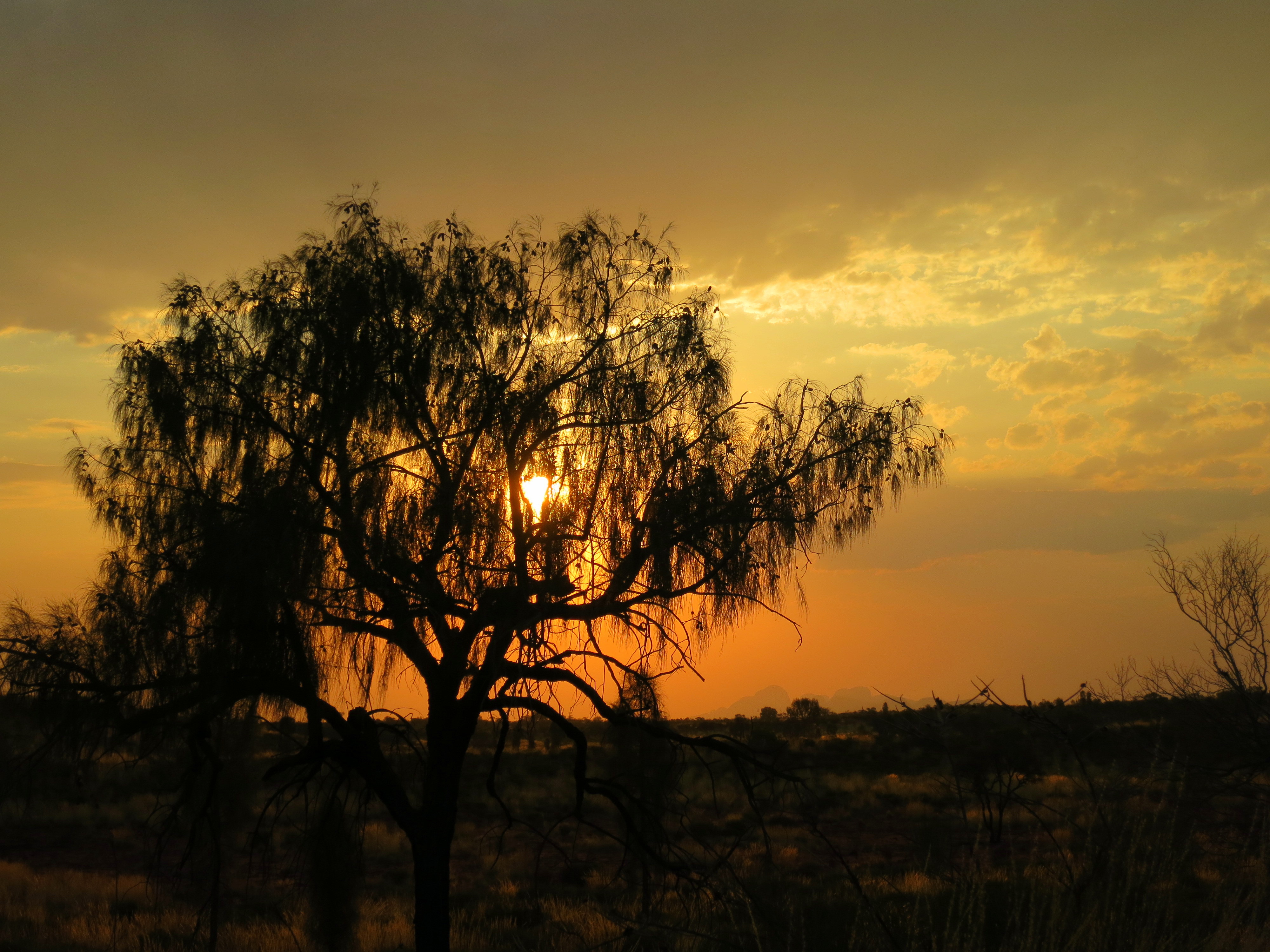
Sunset, Uluru, Australia
Sunset, Uluru, Australia
I’ve been back in the States for 8 weeks now, which sounds like a long time, but I’ve spent a lot of that time at weddings and catching up with friends, so it’s felt shorter. I’m settled in to my parents’ house, and I’ll be here ’til the end of the year. So what am I up to these days?
Today I took a look at my short-term goals from July, and I’m doing pretty well! 1) I bought catastrophic health insurance through Priority Health. It costs $72 a month, and that includes emergency room visits and not much else. Pre-existing conditions aren’t allowed (I cannot wait for the Affordable Care Act to be fully implemented so that kind BS is no longer permitted), and I pay full price for prescriptions and most doctor visits. But it’s one of the better plans I found, with a fairly low premium ($1,000), and I might not need it for very long, because… 2) I got a job! I start the day after I return from my sibling’s wedding in New York. I signed up with a local staffing agency, and they got me an interview at an auxiliary health care-type office. I’ll be doing data entry and a little proofreading, full-time, and the bosses seem very nice. It doesn’t pay a lot, but I’ve done the math and it should be enough to get me back on the road sometime next year. Also, I can walk there from my parents’ house, so I don’t need to buy a car.
I’m hoping that having taken care of #1 and #2 from the original list, I’ll be able to really dig into #3. Now that I’ve removed the stress of job hunting and hiding inside lest I injure myself and have no way to pay for recovery, I should be able to use my free time writing. The changing season will make that even easier, as the nights come faster and the days grow colder, and I stay inside and focus on writing. Fingers crossed.
Next week I’ll be in New York, helping set up for the wedding and then dancing the night away at said wedding. After that, I’ll be in an office for the first time in over a year. Wish me luck!
I liked Saigon. I’d heard a lot about about moto thieves and grime and crowds, so I was wary. But the streets were wide, and there were several big green spaces I could walk to from my hostel in District 1, and the buildings were colorfully painted. They’re all very narrow, tall buildings, and the ones along the canal remind me of Amsterdam, but brighter. The boulevards and main streets were wide, but as soon as I ducked down any alley, I found myself in a narrow passageway packed with people, goods for sale, tiny stools to perch on while eating, bicycles and motorbikes. These alleys are the main entrances to the homes of the 9 million people who live here; the main streets are lined with shops and eateries.
 Alleyway in Ho Chi Minh City
Every time I left the guesthouse, the employees would implore me to hold on to my purse, not just let it hang by my side. I met up with a friend of a friend, a Vietnamese woman born and raised in Ho Chi Minh City, and she looked concerned when I showed up by myself–did I walk here alone? Did I feel safe? I never witnessed any muggings, but one of my friends from the elephant camp had her bag snatched as she crossed the street. A motorbike zipped by, the driver pushed her down and pulled at her bag, and next thing she knew, she had a bruise and no phone or wallet. So it’s not all good news there, but I was fortunate and only saw the good side of the city.
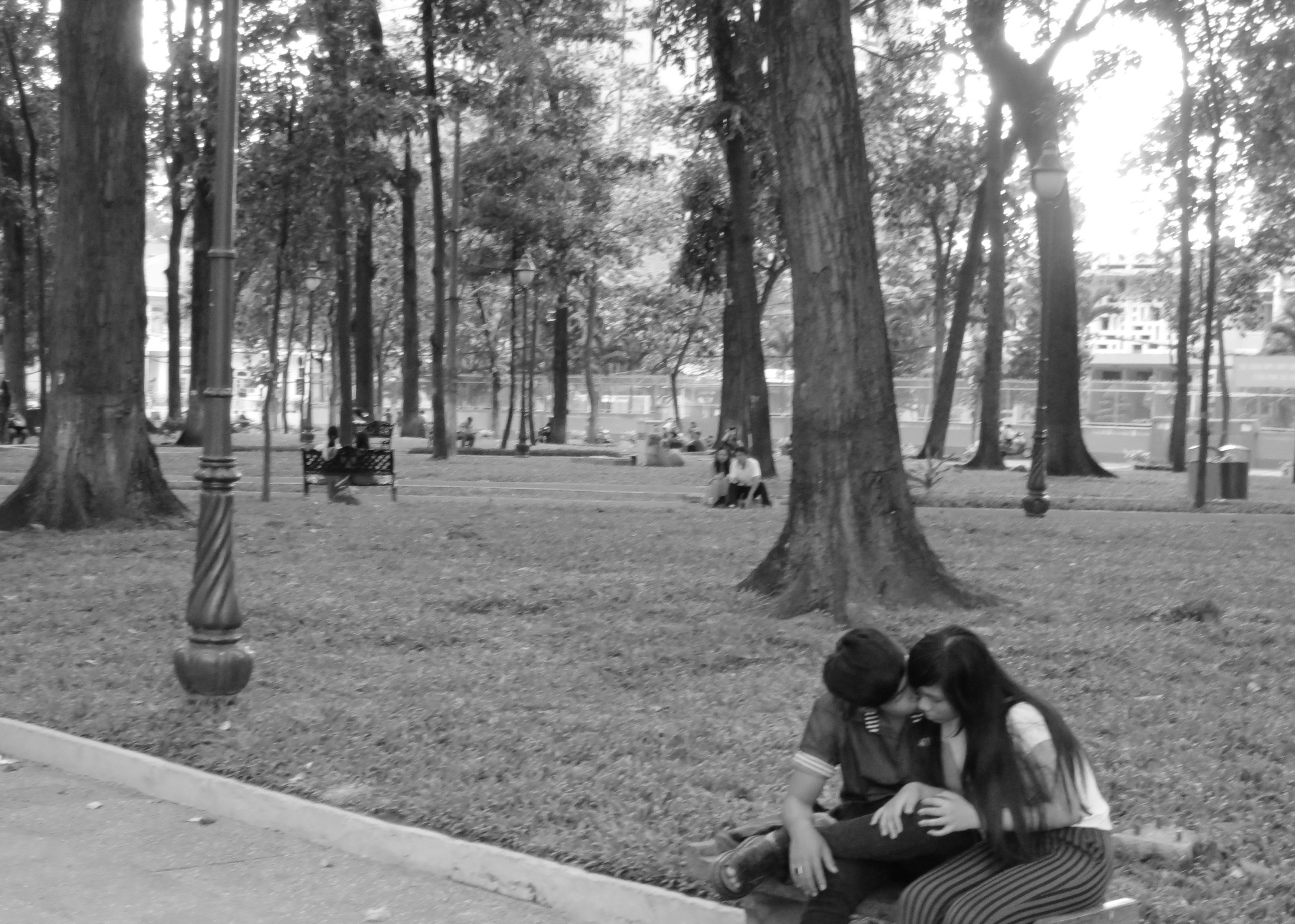 Intimate moments in large parks
What’s with the name change, you might be wondering. The city was called Sài Gòn, part of Gia Định district, and when the French invaded in the 19th century, they Westernized the name to Saigon. It was known as Saigon until 1975, when the last American forces left the country and the new government branded this stronghold of Western influence with the name of the late Ho Chi Minh, the late communist leader. However you feel about the politics of the war, that was a canny and cutting move. The central part of the city is still called Saigon by most residents.
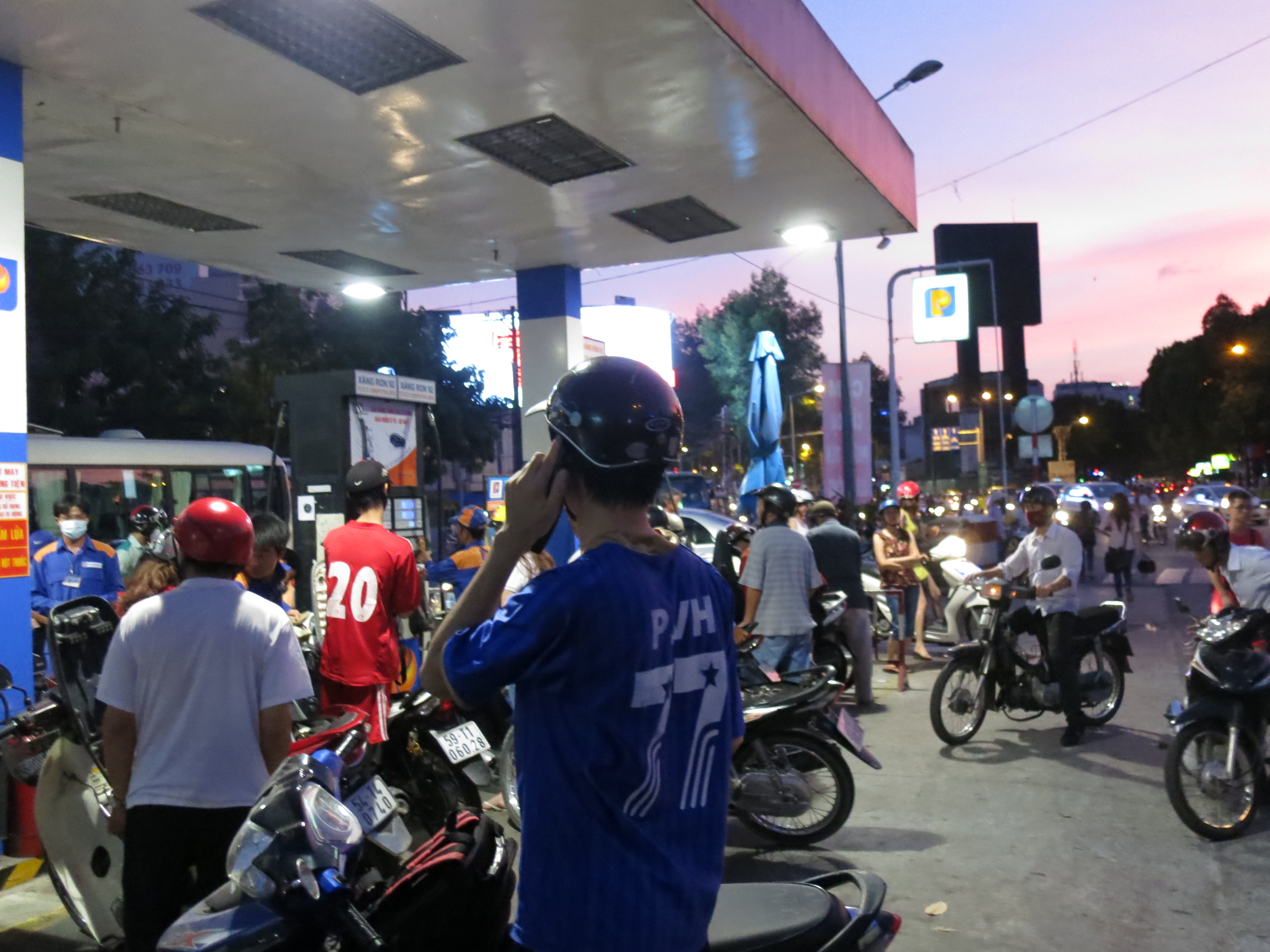 A very busy gas station
The Cinemax TV channel I got in my guesthouse advertised all the movies it would play in Southeast Asia in the month of April, with a note that The Hunger Games wouldn’t play in Vietnam. I wonder if that’s because the areas of Ho Chi Minh City are split into district numbers, and there are districts in the movie; or if the anti-government sentiment of the film is too much for the Vietnamese government to condone (although there wasn’t nearly enough of the book’s anger in the movie, I thought); or if it’s a more prosaic reason, like a distribution rights issue. You do start to notice the tiny things after a while on the road, I suppose!
 A wall in the Catholic cathedral of Ho Chi Minh City, which I saw on Easter Sunday
Mostly I spent my time in Saigon visiting museums and sites about the Vietnamese-American War (which I’ll write about next week), but I also found time to have a feast of a meal with my friend’s friend at Mon Hue, and bia hoi with a new friend from my guesthouse.
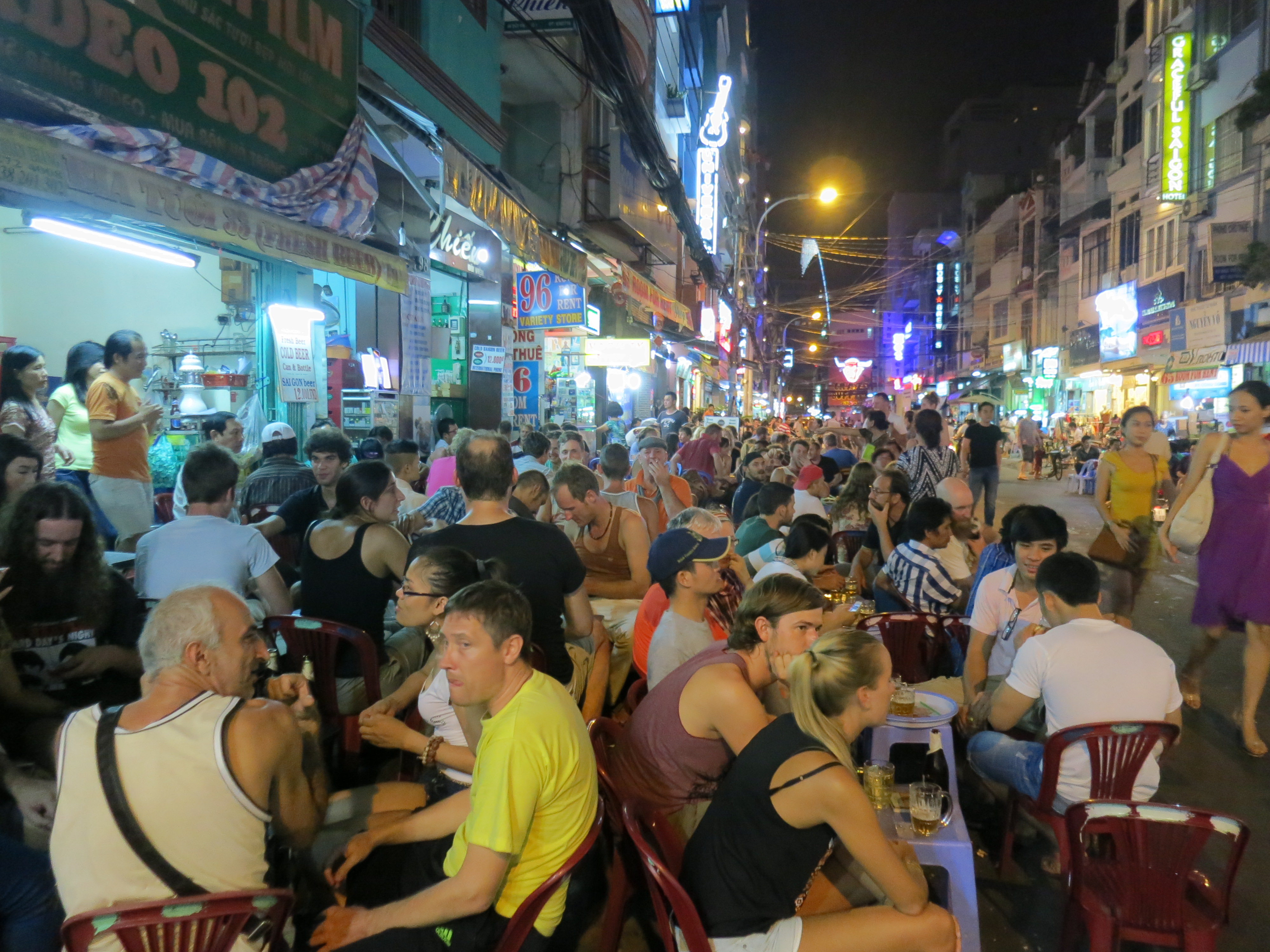 Bia hoi
Bia hoi is the beer that’s brewed daily at many places throughout Vietnam. There’s a “beer corner” in Hanoi that’s become a tourist destination, but there are plenty of places in District 1 of HCMC that sell the stuff too. It wasn’t great beer, but that’s not the point. We sat on tiny red plastic chairs on the sidewalk, surrounded by others spilling out onto the street, and we watched food hawkers and fellow tourists wander by in the noisy neon night. When I was ready for bed, I went back down the alley to my room, where it was several decibels quieter.
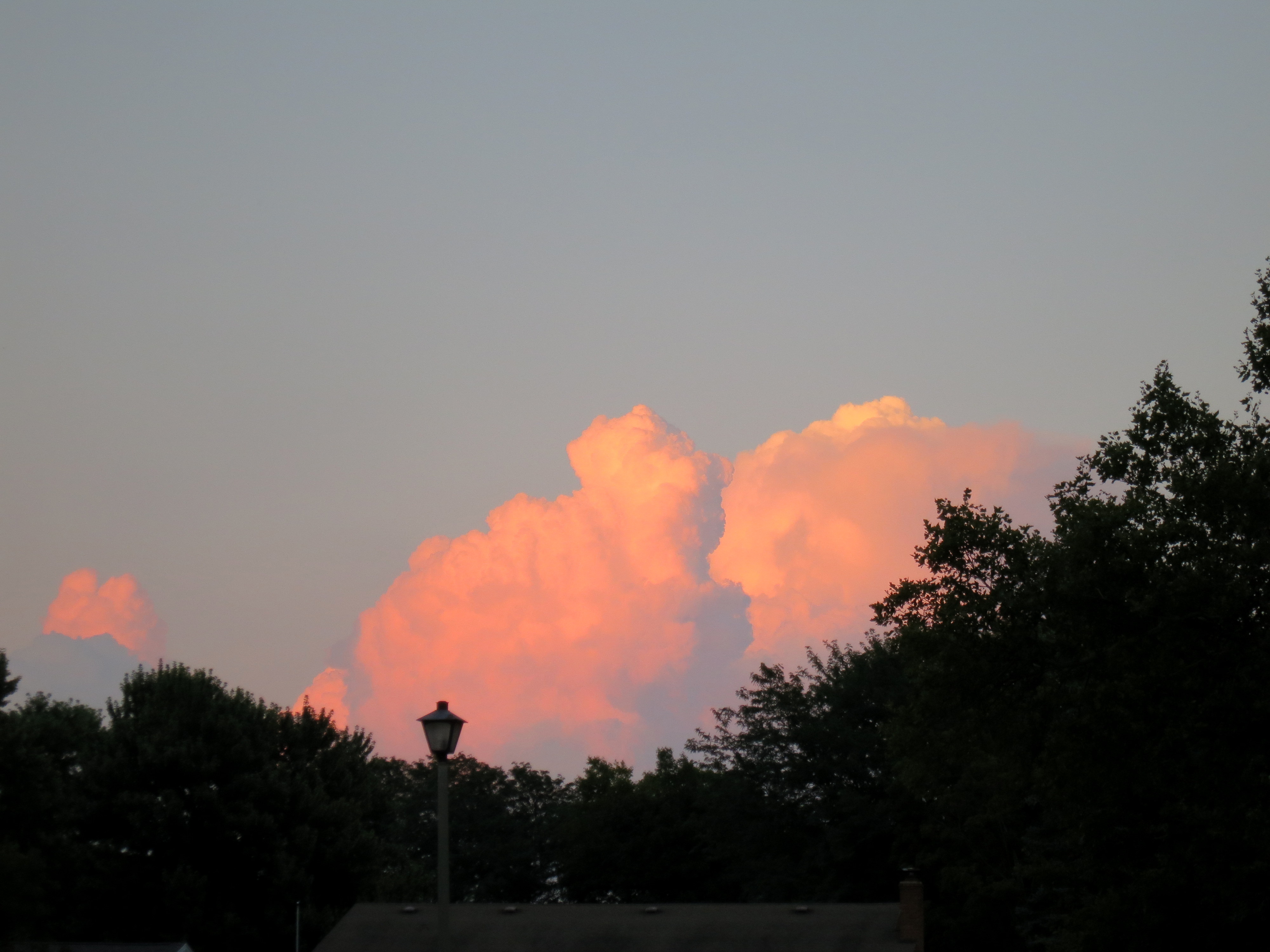
Sunset, East Lansing, Michigan

Toronto, Canada; July 12, 2013
I’ve made three border crossings by land on this trip. Actually, when I got to Europe I made several bus and train crossings, but they were all seamless, and all but one were in EU countries, so I don’t really count them. The ones that stand out are Thailand to Laos, Cambodia to Vietnam, and Canada to the United States. Guess which one was the most aggravating?

I got 3/4 of the way through this top form before messing up, and I had to start all over again. Genius.
I’m used to either shuffling through the EU, where they glance at your passport, grunt, and move on; or flying into a new country and standing in a long line at border control, to have an official scan my passport through some criminal system, take my fingerprints, sometimes even snap a photo. The land crossings I made on this trip fell somewhere in-between these types.
Thailand to Laos
Crossing from the town of Chiang Khong, Thailand to Huay Xai, Laos was pretty simple. I walked up to the small hut near the bottom of the hill, filled out the card that border control had stapled to my passport when I entered the country, and turned it in to the guard, who literally did not look up from the pile of papers he was stamping. He just stamped my card and waved me away. At the bottom of the hill I bought a ticket to cross the river, waited until there were enough people for a full ride, then climbed in the skinniest boat I’d ever been on.

A tiny boat on a huge river
I suppose that technically this was a water border crossing instead of a land one, but whatever, the main thing is I hardly breathed as that tiny boat skimmed across the Mekong River. Once on the other side, I filled out a long form and helped a Japanese guy fill his out; he had a little English, but not enough to navigate the customs questions on his own. An Israeli chipped in when I had trouble explaining a concept, and then we all went up to the window to get our visas. Most Westerners owe $35 (except for Canadians, who owe $42—what did Canada ever do to Laos?). I had crisp tens and twenties, as I had read enough to know that beat-up bills might be rejected, and then you’re screwed, because they want payment in US dollars, and where are you going to find an ATM with US dollars on the western border of Laos? I had read it was good to have exact change, but not necessary. Well, for me anyway, they wanted exact change. I had two flimsy dollar bills and was wondering whether to insist they take three tens and give me five back, or just tell them to keep the five, when the Israeli next to me in line said he could help out. He gave me $3 with a smile. I peeked in the office and saw three officials standing around and two creating visas, which seems a standard ratio of layabouts to workers for government offices worldwide. Eventually, I received my visa, shiny and pink, and I was officially allowed to stay in Laos for 30 days.
Cambodia to Vietnam
My bus from Phnom Penh was mostly full of Cambodians and Vietnamese, which I think explains why some aspects of the border crossing that are infamous on internet boards were absent in my experience. No one charged me an extra dollar or three for a “health exam,” for example, and I didn’t get taken to a fake border control office. Unlike in Laos, the bus didn’t drop me off a kilometer or two from the actual border, forcing me to hire a tuk-tuk to get to my actual destination.
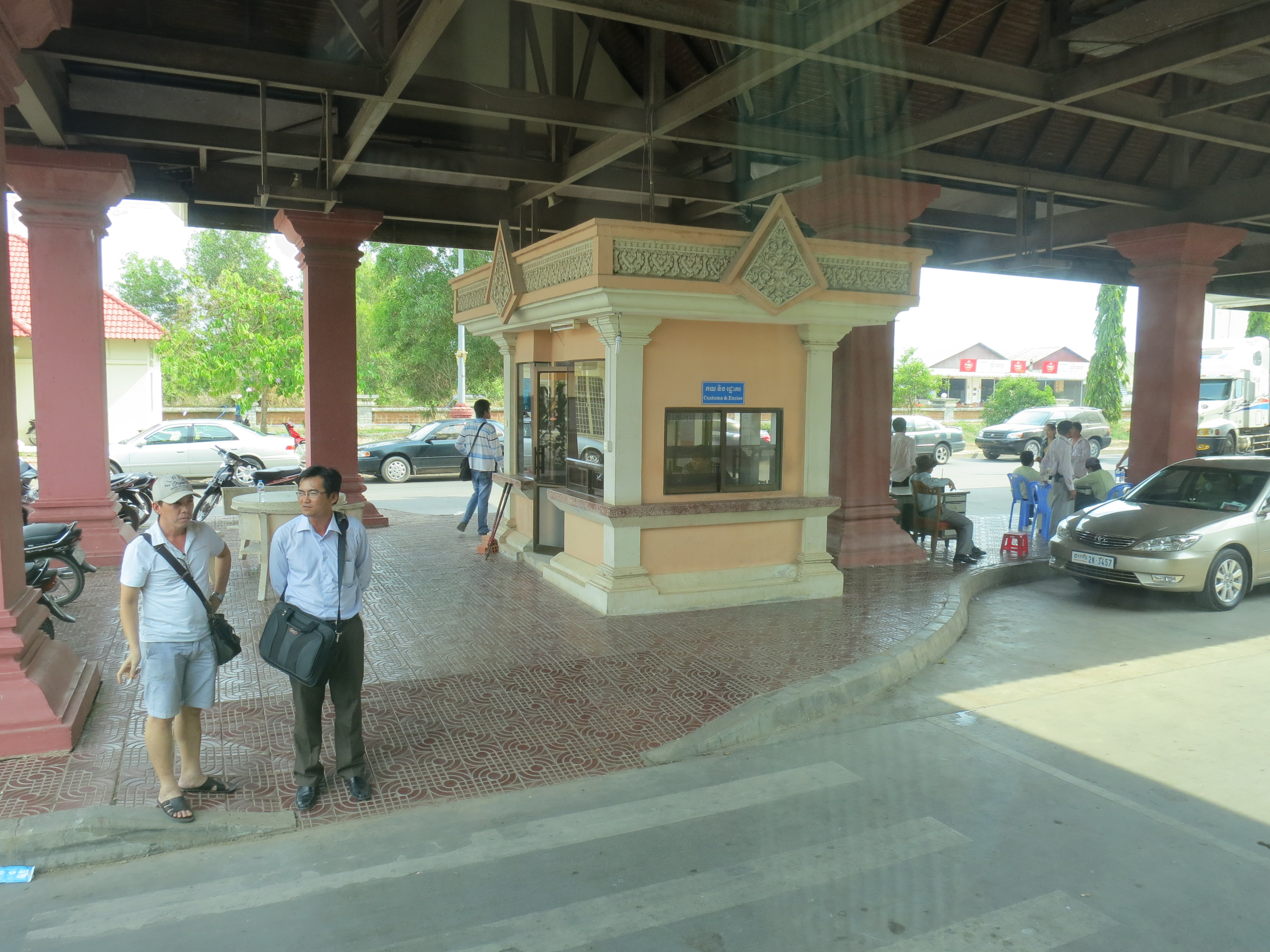
Guard station at Cambodia to Vietnam border crossing
Instead, our bus pulled up to the Vietnamese border control office (we never did anything to say goodbye to Cambodia), and we were waved off and told to bring everything with us, including our bags from the hold below. We stood in a clump in the mercifully cool border control building and watched our driver hand over a stack of our passports to an official, who then stamped each one without a glance or a scan anywhere. The driver then called out people whose passports were ready. I grabbed my passport, walked past an empty “health exam” window, and put my bags on an x-ray belt. I picked up my bags on the other end, showed my passport with its stamp on my visa to a guard slouching in a folding chair, and walked to the bus, which had been moved to the other side of the border. Voila!
Crossing from Cambodia to Vietnam was pretty painless. Officials didn’t hassle me or anyone on my bus, and security was light. The bus was carrying goods for some small businesses, and they must have checked those while we were inside, because when I put my bag back on the bus, everything was back in there, customs approved and ready to go.
Canada to the United States of America
Here’s where it got annoying. Trying to get from friendly neighbor Canada to my home country was way harder than it should have been. They are strict! And by “they” I mean the US Border Office. The bus I was on breezed through Windsor, Ontario and took the tunnel under the Detroit River. When we popped up on the other side, the bus pulled over at the super clean border patrol office. We unloaded our gear and stood in line. Probably it would have been fine if it hadn’t been for one officer.

Passport control on the Thailand side of the Mekong River
This guy was a total tool, almost stereotypically power tripping. He targeted me and two other people, all of whom had backpacks instead of rolling suitcases. I showed him my US passport and he waved me ahead, but the woman from New Zealand and her boyfriend from South Africa, these needed special attention. He demanded to see their visas; the Kiwi said she had the waiver that she’d filled out online. Nope, doesn’t count, he made her fill it all out again on paper. Isn’t the online form supposed to save us from wasting time like this? He grilled the South African on just why he wanted to visit America anyway—what were his intentions? He didn’t plan to stay, did he? Worse was when it was the Kiwi’s turn. She explained that they were couchsurfing in Chicago, and that they’d been traveling for nine months. Why would you want to travel for that long, and what is this “couchsurfing” you speak of, etc., etc., and all in a smarmy tone. He leered at her as he talked, and when we got back on the bus she said it felt like he was hititng on her. While making her feel small and trying to find a way to keep her out of the country. Ugh.
Even I got a bit of a hard time from the officer checking my passport. Where was I living? How long had I been gone? Why had I gone to so many countries? I just want to go home, yeesh! Then I sat in the row of hard chairs with the rest of the people from the bus (about 15 of us) while we waited for any one of the four free officers to turn on the x-ray machine and run our bags through them.
The South African and the Kiwi were camping for much of their trip, so there were pots, a tent, and a large carving knife in the guy’s bag. The officer pointed out the knife to a civilian standing next to him at the x-ray machine and said, “Huh, wonder what’s up with the knife” and waved him on. So that seemed like a secure process. Not that it had been any more secure at the Vietnamese border, but they weren’t pretending it was, and the US officers were definitely treating us like we were all smuggling in kilos of drugs and AK-47s, while not really checking to make sure we weren’t; but they still did their best to make us all—including the American citizens—feel super unwelcome.
Ancient temples clambered upon: 14
Times the A/C went out at my guesthouse in Siem Reap, on days when it was 90% humidity and 90*F out: 5
Times I said “oh my god” in horror at Choeung Ek and S-21: 15
Times I said “oh my god” in wonder at Angkor: 15
Teenagers who chatted with me over a couple hours of lunch: 3
Water bottles purchased so those same teenagers wouldn’t lose their day’s earnings: 3
Fish spas undergone: 1
Contented pizzas consumed: 3
Friends who I first met in Laos and then had meals with in Cambodia: 4
Total money spent: $706
Number of days in the country: 11
Average amount spent per day: $64.18
Total money spent, minus the flight from Laos: $514
Average amount spent per day, minus the flight from Laos: $46.73
Times I nearly passed out from the heat: 3
Times I complained about the heat, then and since: innumerable
Seconds I’d take to consider going back and seeing more of this country: 5

Every totalitarian regime has an apparatus for maintaining control: trusted government officials and spies, torture facilities to get information from those the spies turn in, secret prisons to stash uncooperatives away. Every totalitarian regime finds that the paranoia this system engenders results in the very same officials and spies who turned people in being themselves brought in on charges of sedition. If your government is run on fear, that fear is going to turn against the government and the people who work in it.

S-21
Pol Pot’s Khmer Rouge regime was no different. Pol Pot and his top advisers, including Comrade Duch, set up prisons throughout the country. I visited S-21, a high school that was converted to Security Prison 21, now called Tuol Sleng, which apparently means “Hill of the Poisonous Trees” or “Strychnine Hill.” Unlike the killing fields at Choeung Ek, S-21 wasn’t torn down during the liberation. Instead, it looks like the prison was left exactly as it was when the prisoners were freed. The bed frames sat at an angle in the center of the floor, the doors creaked on the hinges of the wooden barracks built in classrooms. The floors were dirty and the walls covered in grime and what was probably dried blood. It’s like the prisoners who were here only just left. History as recent as yesterday. Ghosts in every room.


One of the prison rooms
S-21 is a complex of buildings. Most of them were open to the public but unlabeled, and only a few had placards explaining what went on in there. One building had thin metal frame beds, small lockboxes used as chamber pots, and shackles along the wall. Another building had cells made of wood on one floor and cells of brick on another. They were tiny, barely big enough for me to stand in, and I don’t think I could stretch out my legs if I sat on the floor. The cells were built as the regime brought in more and more prisoners, accusing more and more people of crimes against the state. They needed room to put them.

Wooden cells

Bricked-up cells
Some rooms were emptied of artifacts and filled with fading posters explaining who the leaders of the Khmer Rouge were and what the status of their trials was as of 2011. So far, Comrade Duch is one of the only ones to be convicted of war crimes. The posters included snippets of communication between the top Khmer Rouge officials and their families; these letters were filled with rants against capitalists and those who opposed the regime.
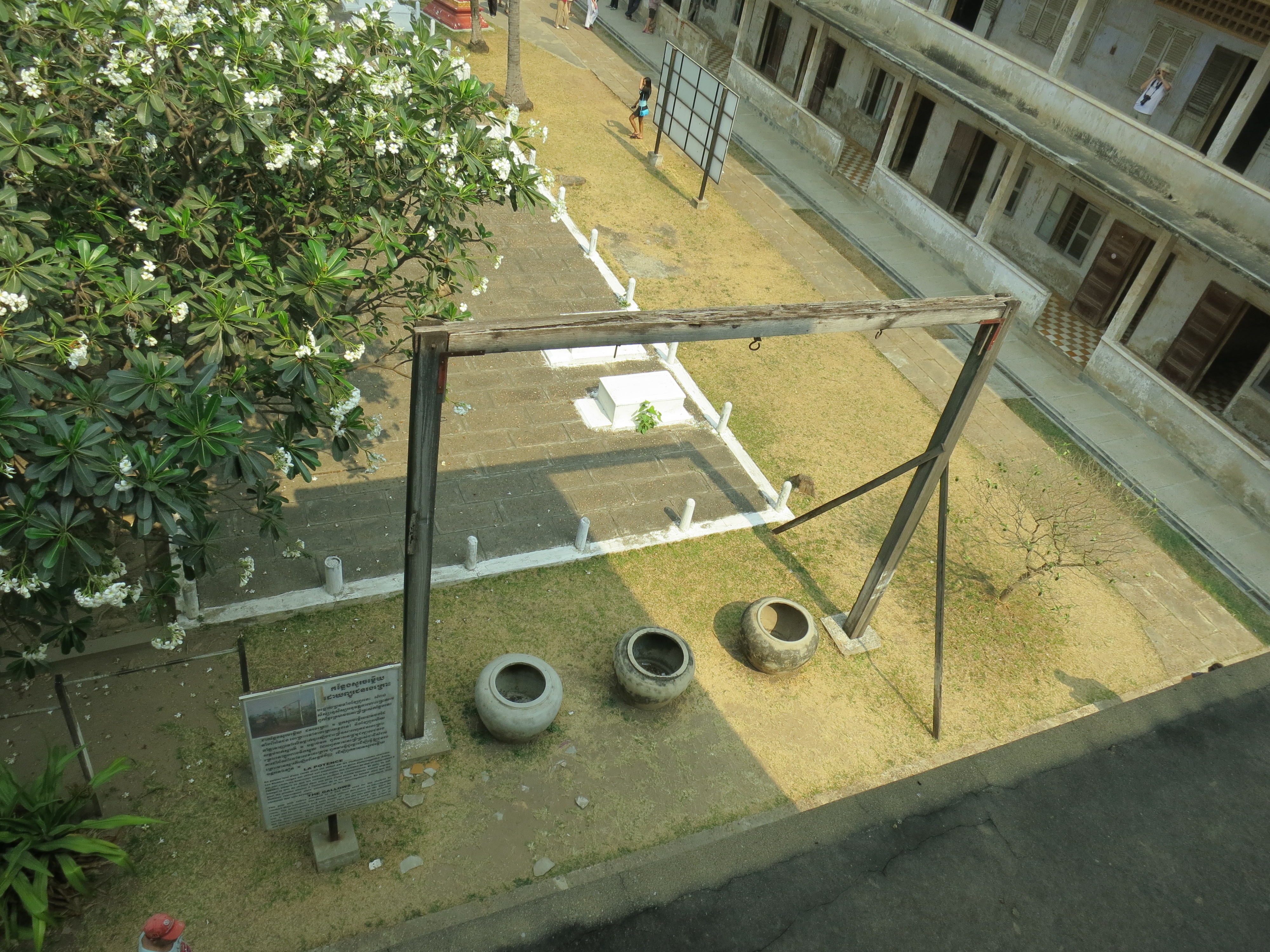
The gallows

An artist’s map of the country after the regime
One floor showed photos of victims and of guards, and copies of statements they signed when confessing crimes–seeing as how some of the guards became victims as the paranoia of the state increased. One binder included confessions by foreign nationals who happened to be in the country at the wrong time. A popular crime to confess to was working for the American CIA.

A written confession and English translation
One floor was dedicated to peace; it had photos of a place that was the site of the only land battle in Japan in WWII, and also a room of drawings by kids calling for peace. All in a building with barbed wire strung in front of the balconies so prisoners couldn’t attempt suicide by jumping. In the courtyard, plumeria trees bloomed.

Barbed wire to prevent suicide jumpers
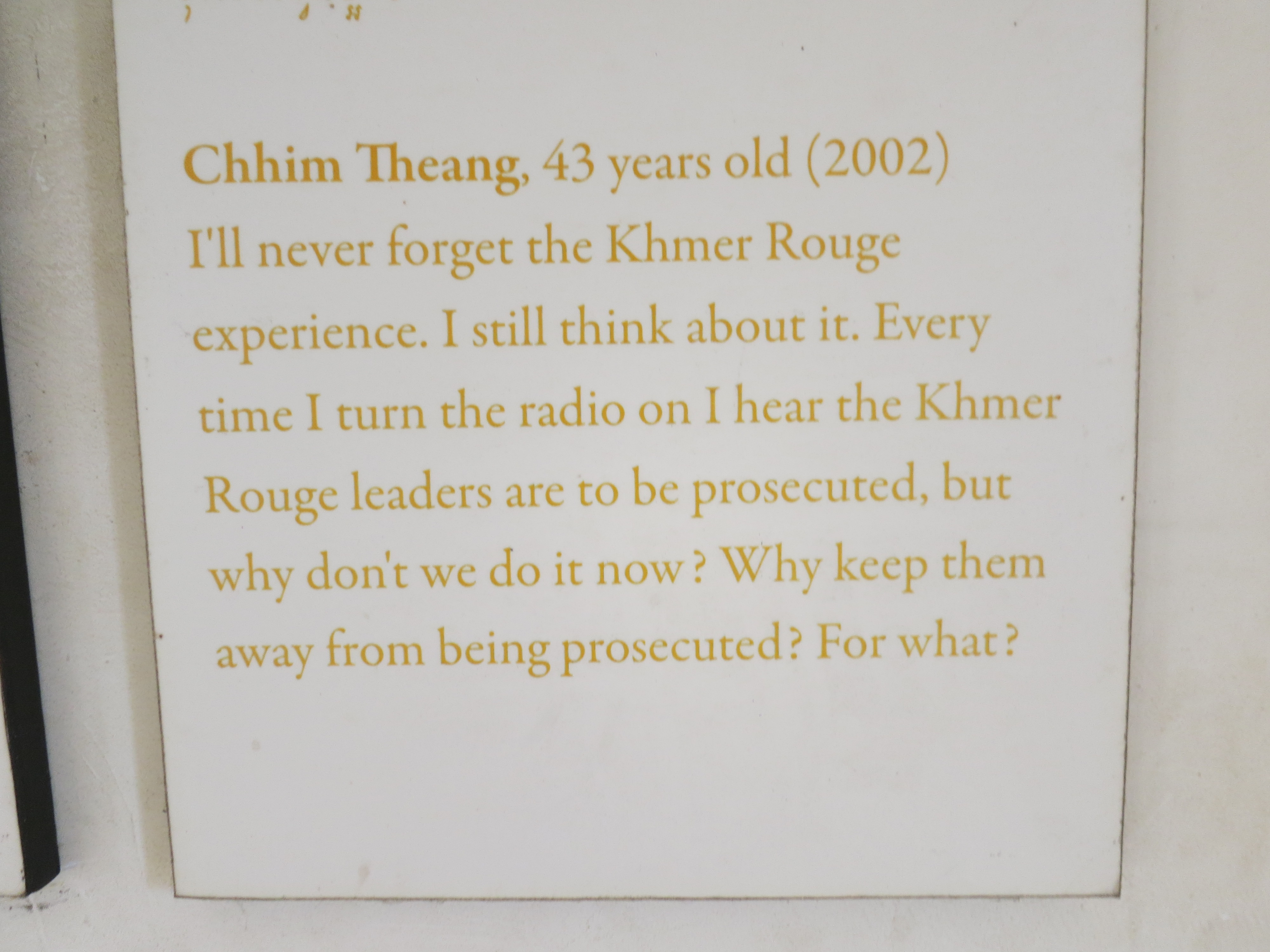
Part of an art project that asked former workers at S-21 about their memories of the place
There were signs posted outside some of the rooms with a person smiling/laughing and a line through it, but I can’t imagine who would go through these rooms and have any desire to smile. Outside, a poorly translated sign proclaimed the rules of the place, which included “While getting lashes or electrification you must not cry at all” and “Don’t make pretext about Kampuchea Krom in order to hide your secret or traitor.” Duch said the Vietnamese who set up the museum at Tuol Sleng invented these rules, but others claim they were real.

Security regulations at S-21

Graves of prisoners
In one disconcertingly bright room, past a row of rusted foot shackles used to immobilize prisoners, down a long corridor of bricked-up cells barely large enough to fit in sideways, behind the barbed wire fence, I saw a graffitied message a tourist had left at some point. It was a hard message to read in that horrible place, one that seemed nearly impossible under the weight of this very recent, very terrible history. But it was vital to see, and to keep close when returning to the recovering city outside: Give us hope.


Logan Square, Chicago, IL; August 15, 2013
Today’s post contains some disturbing imagery of the remains of victims of Pol Pot’s reign in Cambodia.
The sites were chosen for their relative isolation. Space was cleared out in the middle of farmers’ fields, fences erected to keep the curious out and the doomed in. Prisoners arrived in the dead of night and dug their own graves. Patriotic music blasted from loudspeakers–there were no gunshots to hear, but the shrill music covered the dull thud of machetes hitting flesh and the screaming that followed. In the morning, guards sprayed the graves with DDT to ensure everyone in them was dead, and to cover the smell of the corpses. These were the killing fields.
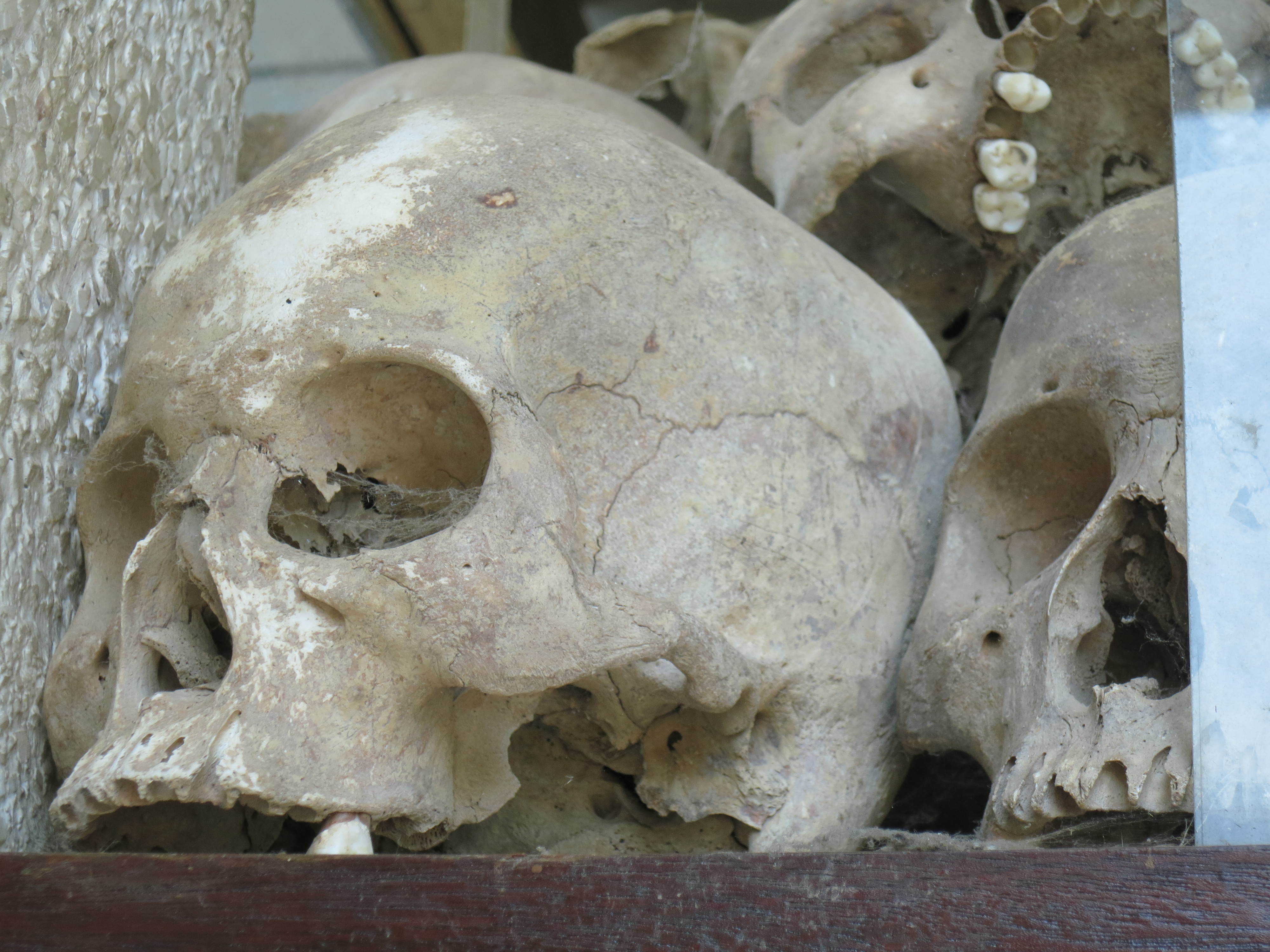
At the Killing Fields
During Pol Pot’s reign in Cambodia, the Khmer Rouge murdered somewhere between 1.7 and 2.5 million fellow Cambodians. Most of the murders took place in what have come to be known as the killing fields. There were dozens of such sites, mostly concentrated around the capital, Phnom Penh. So many people died, but there are very few records that show names, which is part of the reason it’s hard to get an accurate number. After the defeat of the Khmer Rouge by the Vietnamese in 1979, one of those sites, Choeung Ek, was made into the memorial for the dead.

Mass graves at the killing fields

The memorial stupa, containing 17 levels of skulls and bones
I visited Choeung Ek in March, and I was impressed by the audio guide, which was one of the most thorough and thoughtful I heard on my whole trip. The guide took me past dusty stretches of land, which once contained a small hut to house prisoners when there were too many to execute in one day, and several sheds that held the machetes, hoes, knives, hatchets, cart axles, and other weapons. Bullets were expensive, so while farmers in the surrounding fields grew crops with shovels and hoes, the guards used the same implements to hack humans to death.

Some of the weapons used to kill victims

Sometimes the guards even used the sharp edges of palm fronds to cut throats

The fencing today only keeps out neighbors’ chickens
None of the original structures remain. They were all destroyed in 1979, upon liberation. Now, the fields are dusty brown and empty of buildings, except for the Buddhist stupa towering over the dry grass and containing 17 levels of human skulls recovered from the mass graves here. The path went along a few fenced-off areas, where the museum had grouped some victims, such as children who were beat to death against a nearby tree.

Bones that surface after heavy rains are placed in this box


Human bone in the path–history near the surface
Perhaps the most upsetting thing for me, during this hugely (and rightly so) upsetting visit, was when I stumbled over human bones. There are so many bodies buried here that they haven’t finished exhuming them all, so even though I didn’t walk on the mass graves, I twice found myself looking underfoot to find a piece of bone sticking out of the path. The skulls in the stupa, even the bones piled haphazardly in a glass box on the path–these were hard to see, but they were behind glass, they had been processed by officials, they had been counted as part of history. The bones I trod upon in the path were raw reminders of the brutality that took place here, over and over again, and the enormity of trying to order and record it, and the futility of ever knowing who died here.

These skulls are shelved behind sliding doors of glass. Most skulls show some form of trauma.

Bracelets left in memoriam
When I removed the headphones of the audio guide, I heard nothing. A little noise from neighboring animals, a man quietly selling flowers for people to place outside the stupa, but otherwise–silence. I’ve seen hungover, loud tourists at just about every place I’ve visited, but not here. The horror was too great, the history too recent. Everyone maintained a respectful silence for the barely buried victims, whose screams echo in the humid air.

