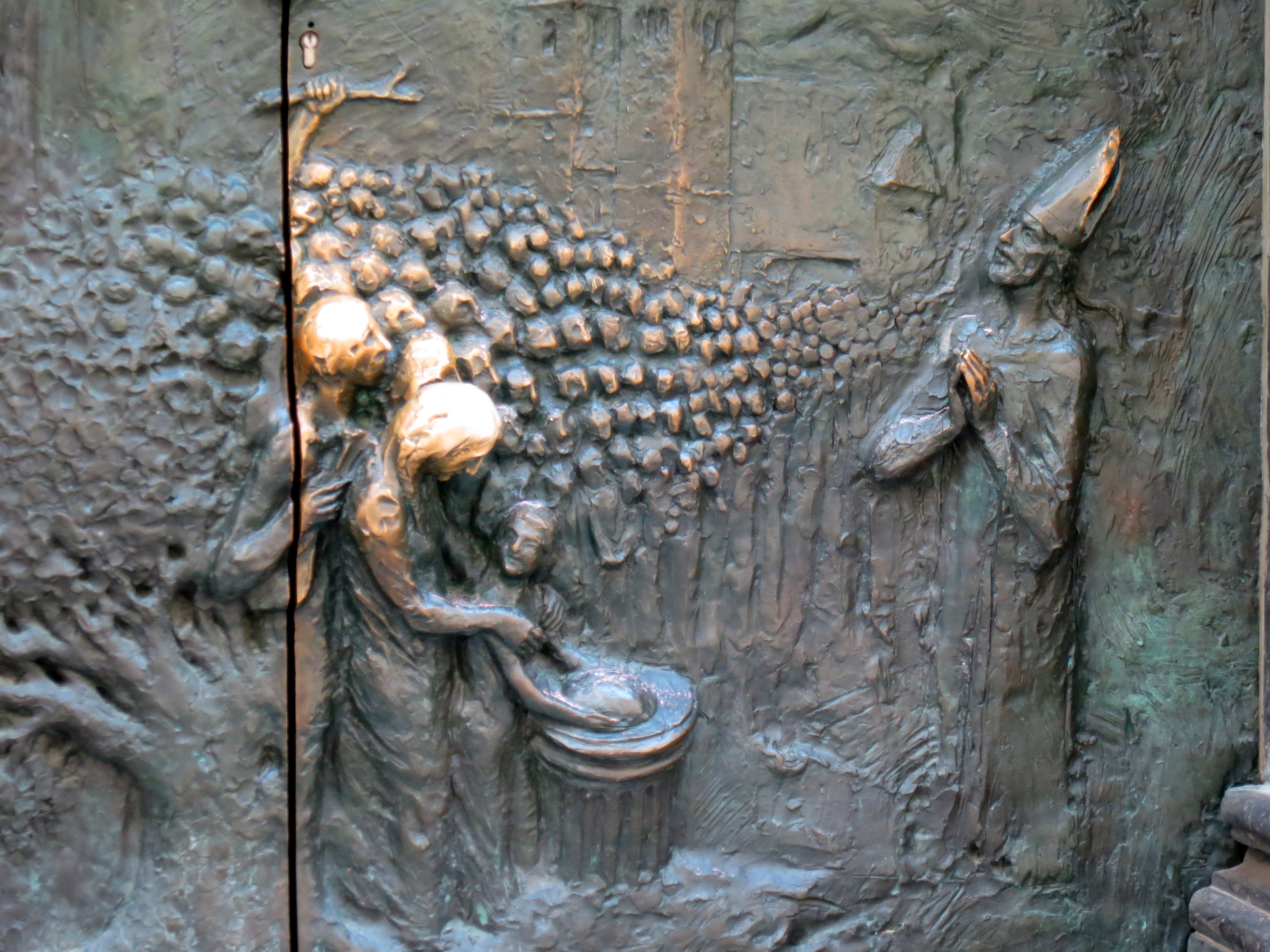
St. Nicholas’ Cathedral, Ljubljana, Slovenia; June 17, 2013

St. Nicholas’ Cathedral, Ljubljana, Slovenia; June 17, 2013
There’s just so much of it. Here’s a mural I spotted by the (delicious) Soup Spoon Cafe this weekend:

Are you grateful for pork fat?

Where the heart is
And a bumper sticker I saw in my neighborhood:

Statistics
I didn’t intend to go to Nha Trang, a coastal city in southern Vietnam, and the way things turned out, I wish I hadn’t. But it was a good midpoint stop on the way from Ho Chi Minh City to Hoi An, and my friend’s dad had described it as a “the Riviera of Vietnam,” so I thought I’d stay a couple days to lay out before moving on. As it turned out, I got hit by a car my first full day in town, and I never made it as far as the beach.
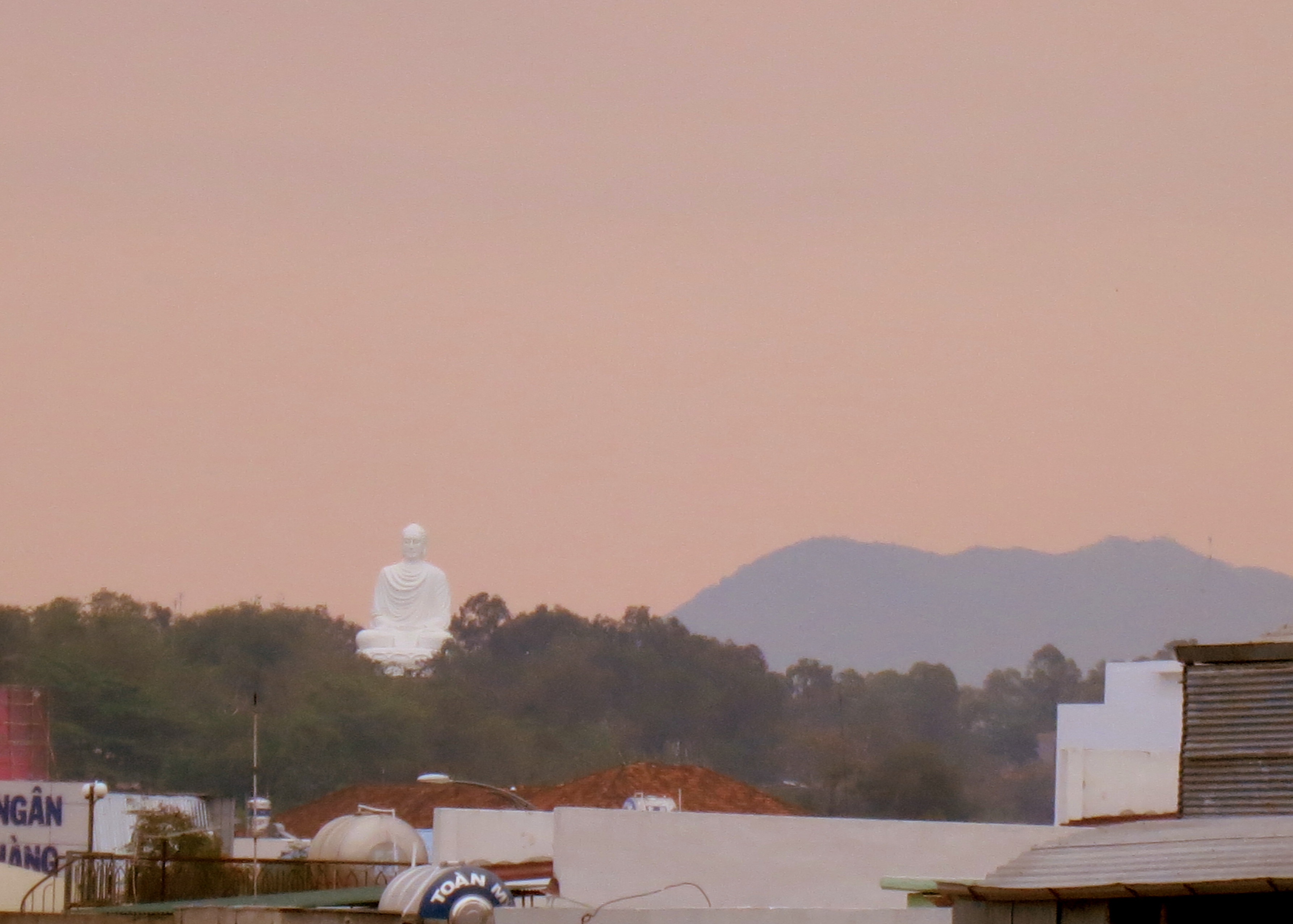
Buddha in the distance
The “hit by a car” story is one for another day, but suffice it to say I didn’t explore too much of the town after that. (Yes, I’m fine now, and it’s a funny story in retrospect, so watch this space.) Nha Trang was in low season, anyway; most tourists come during the summer. The weather was warm, of course, but overcast and sticky. Not great for laying out or even working up the energy to go swimming. I saw maybe a couple kids in the water when I took a walk to the edge of the beach. But the wide expanse of sand and the view of hilly islands in the distance hinted at what a nice place this would be in the sunshine.
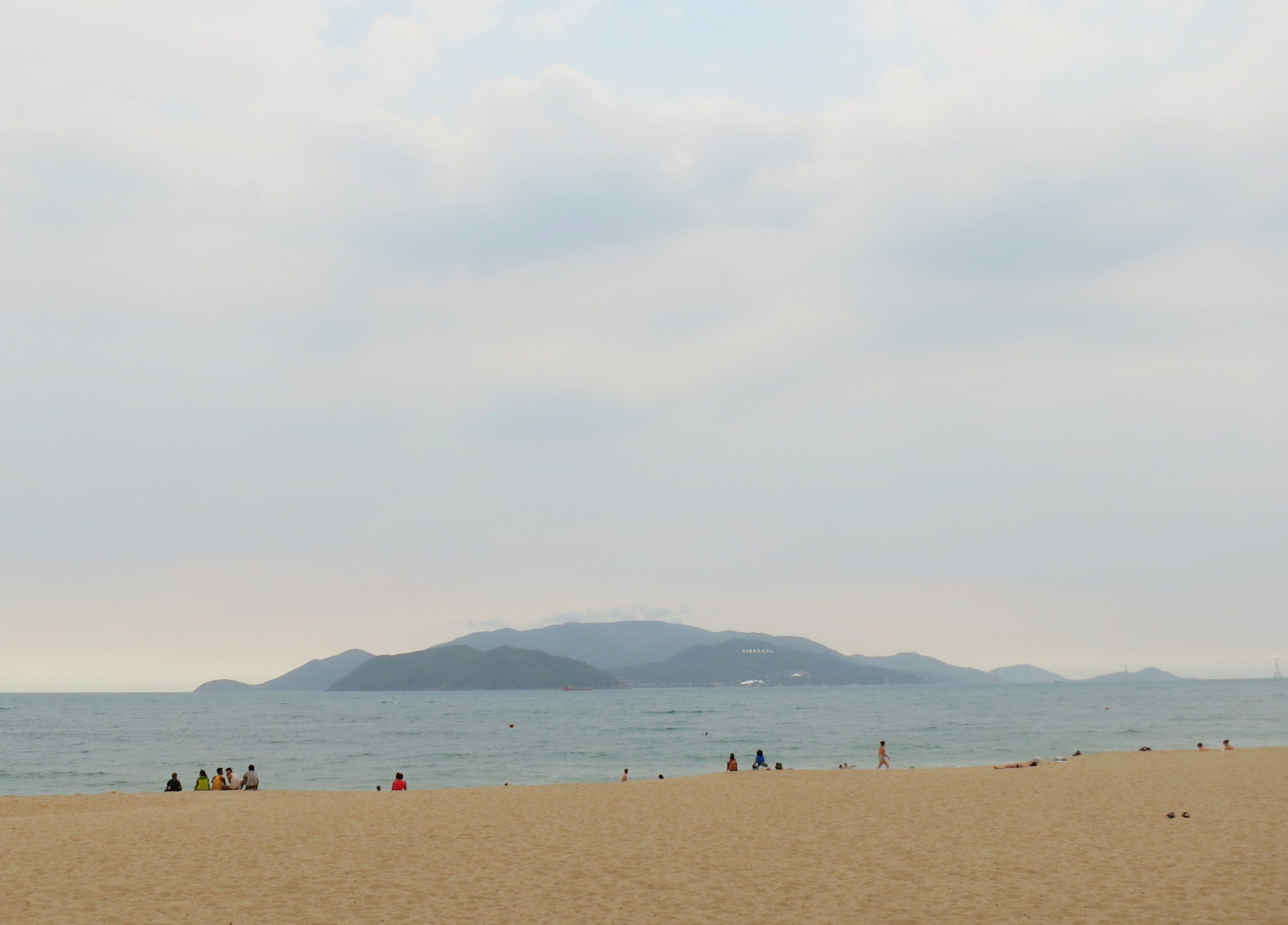
The beach at Nha Trang
I walked up to the Roman Catholic cathedral, which was a strange sight after the many temples I’d seen throughout Southeast Asia. Services were being held when I got there, so I didn’t go in for a good look around, but I did glimpse the neon red cross blazing over the altar. I had to step aside for several elderly ladies zooming up the hill on their motorbikes to attend church.

Nha Trang Cathedral
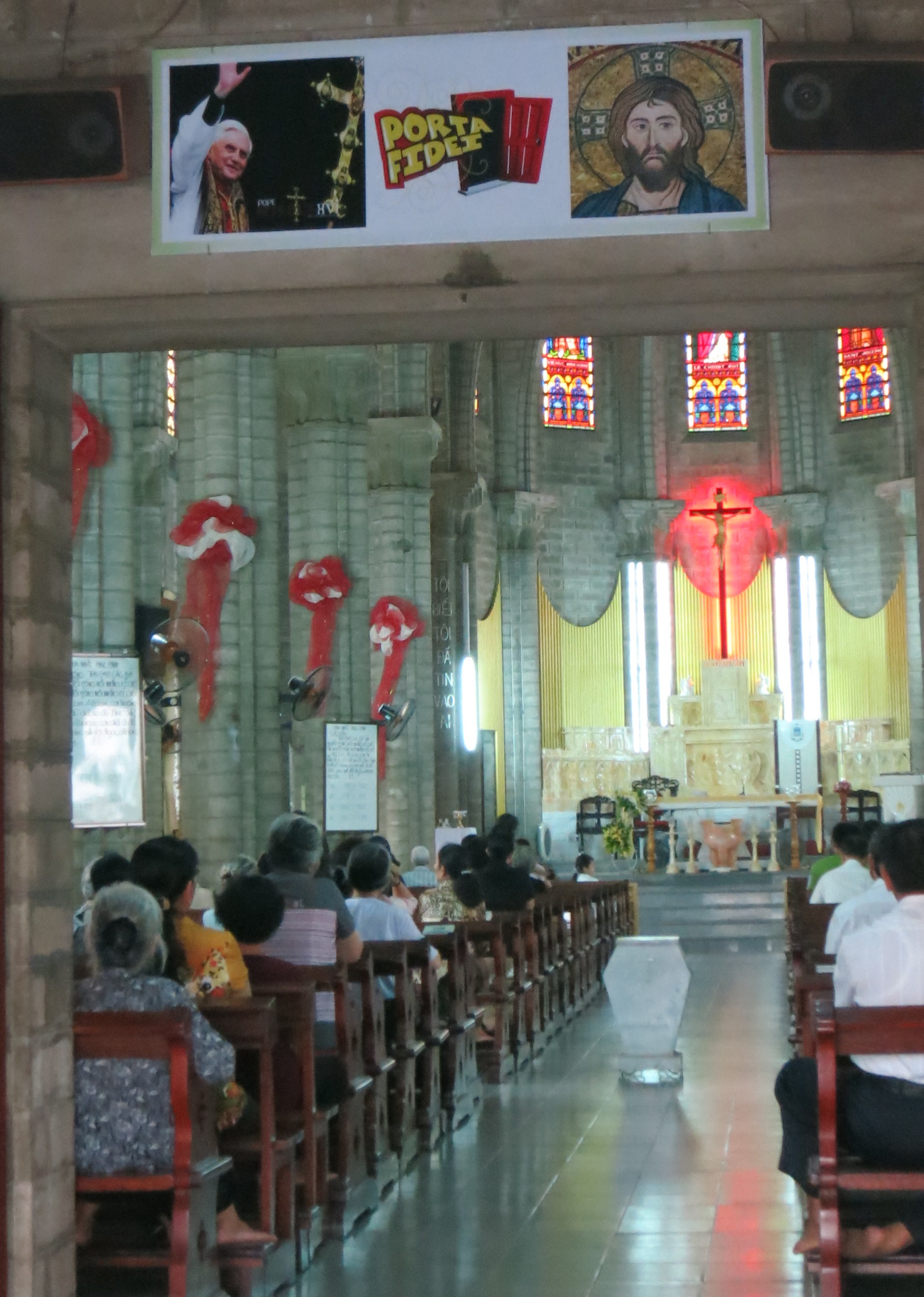
Neon Jesus
 I got lost on the walk back to my hostel, which was great, because I walked through a couple different neighborhoods and got an idea of what the town is like. I walked through an entirely Vietnamese neighborhood, where I smiled at the behind-the-hand giggles my size and whiteness prompted. I then passed through a tourist area filled almost entirely with Russians; this is a popular resort town for people from the eastern part of Russia. Finally, I got within blocks of the beach, an area that mixed English and Russian signage and was entirely populated by Vietnamese tourist businesses and their customers.
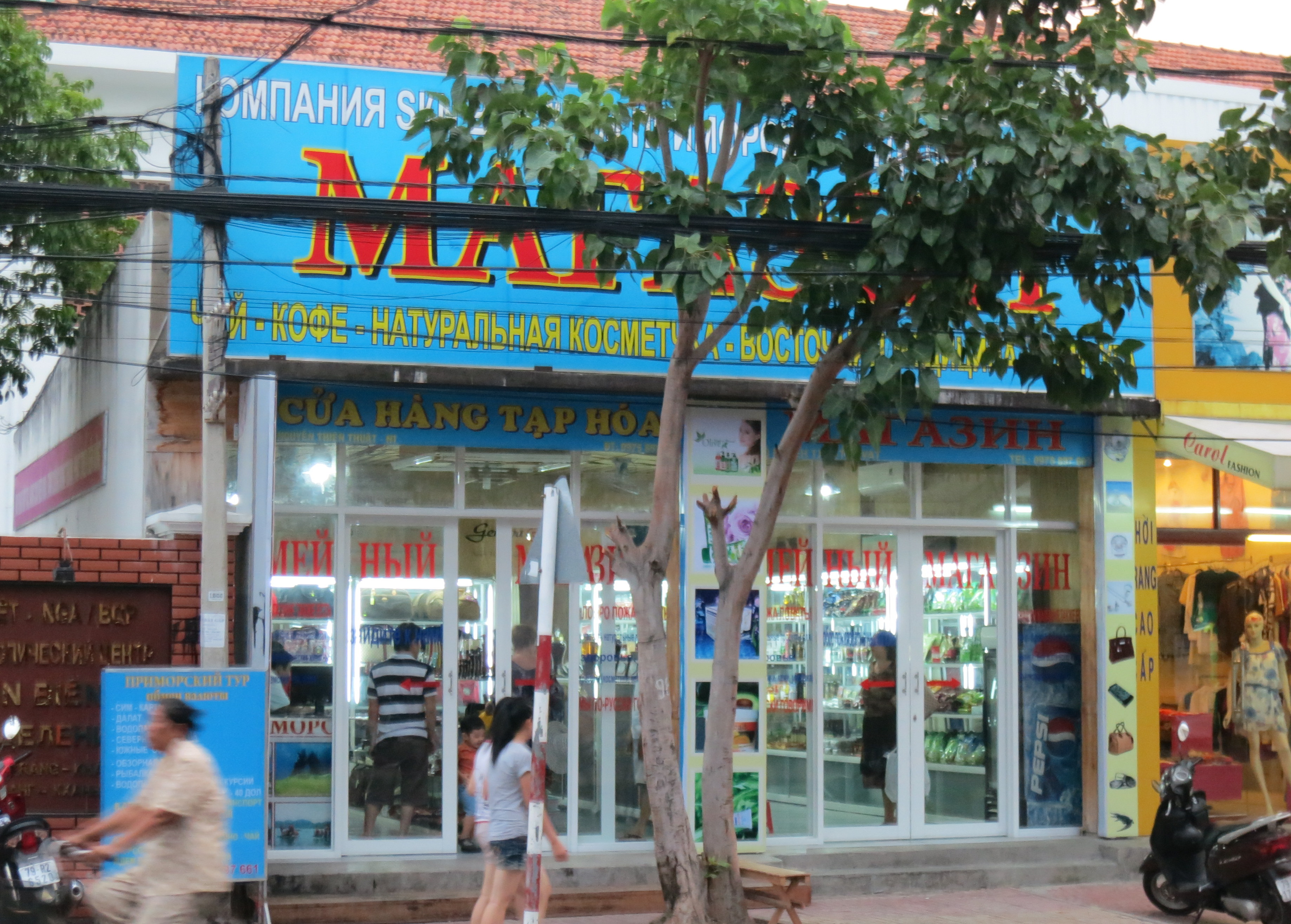
I’m not sure why I didn’t take any better photos of the Russian signage in town–it was striking to see Vietnamese, Russian, and English all on one storefront

Cycle taxis
I’d met a couple of lovely women on the train over from Ho Chi Minh City, and we met up for dinner and drinks at one of the many tourist-and-expat bars in town. Laura and Kate cheered me up immensely after my scrape with a 3,000-pound metal bully, and we danced the night away at an establishment that guaranteed “Free Headache Included” at the bottom of its drinks list. Kind of a fitting end to my brief, strange visit to Nha Trang.
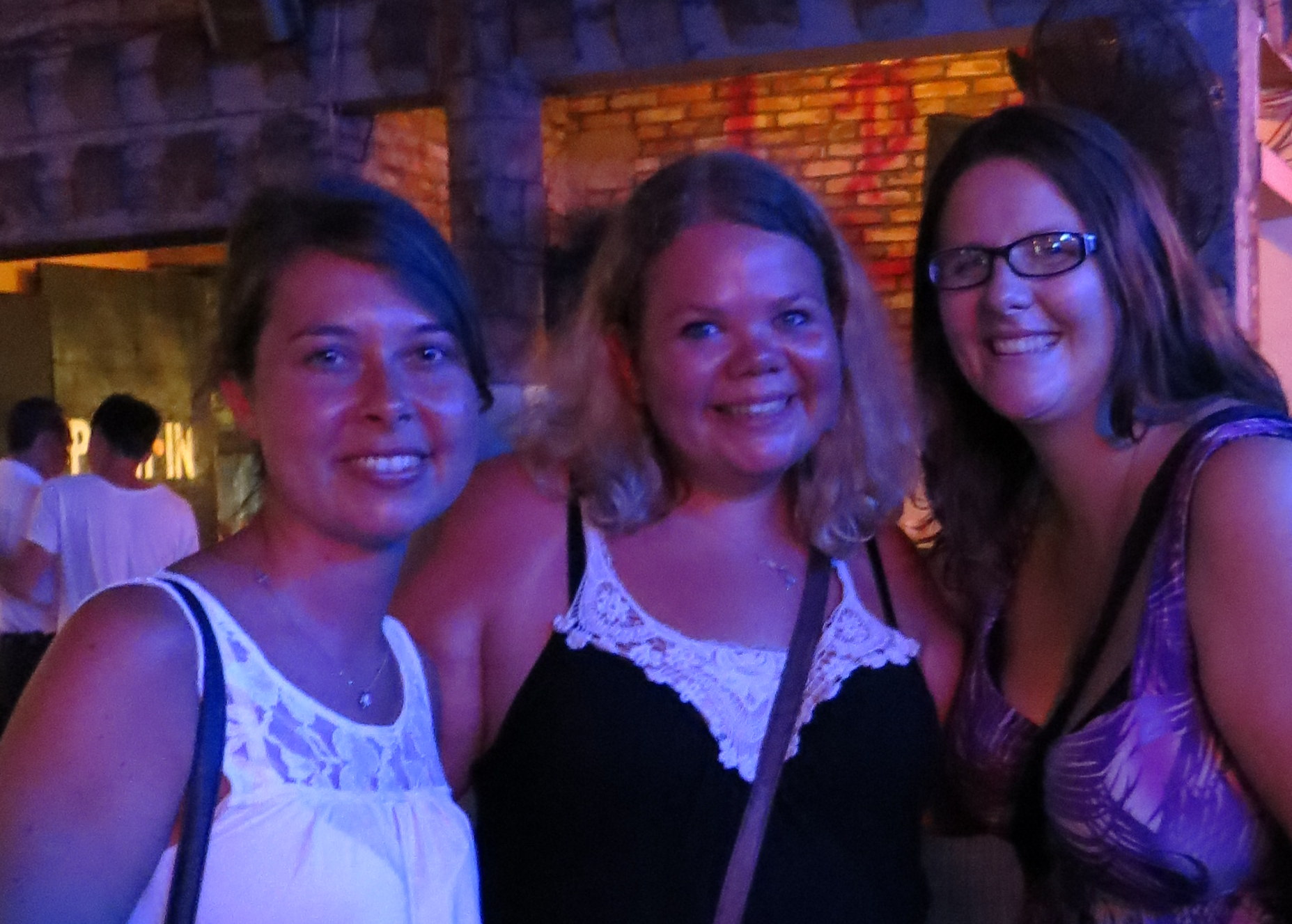
Kate, Laura, and me

Sunset, Brooklyn, New York


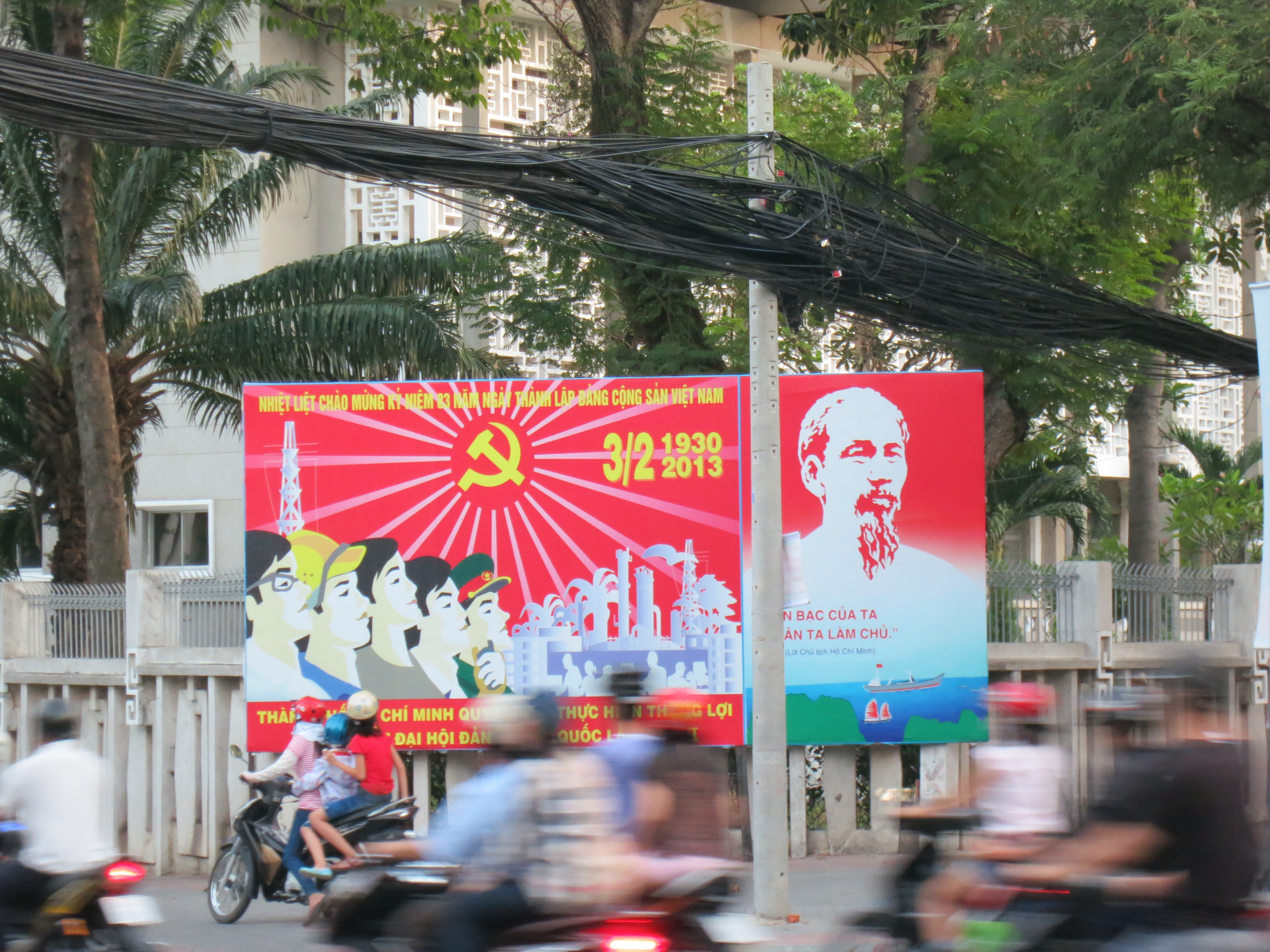
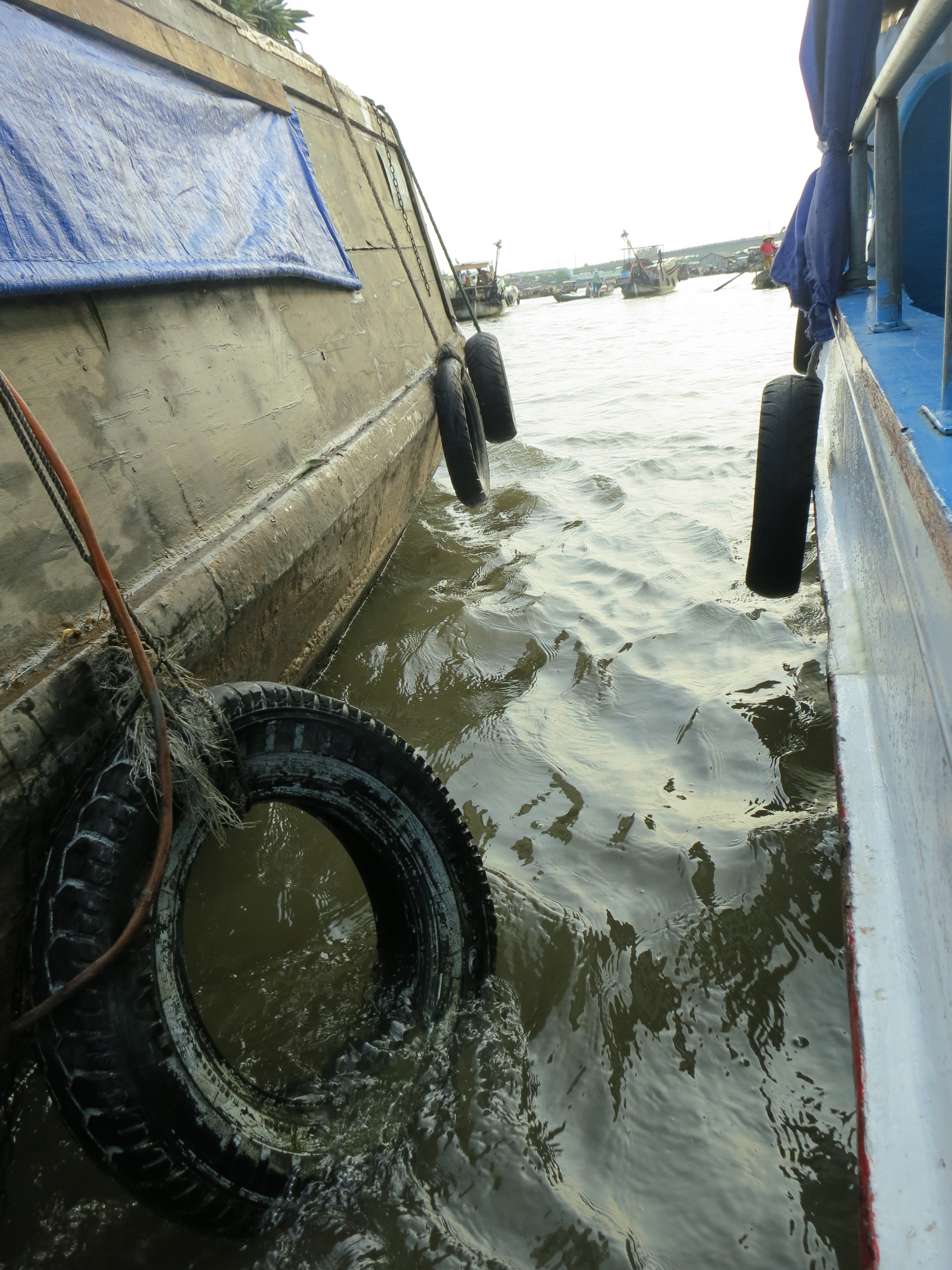
Mekong Delta, Vietnam; April 1, 2013
I went to Reunification Palace right after going to the War Remnants Museum, and the change was jarring. I had an emotional experience in the museum, and it was strange to walk away from the troubling rooms of the museum into the perfectly manicured halls of the palace.
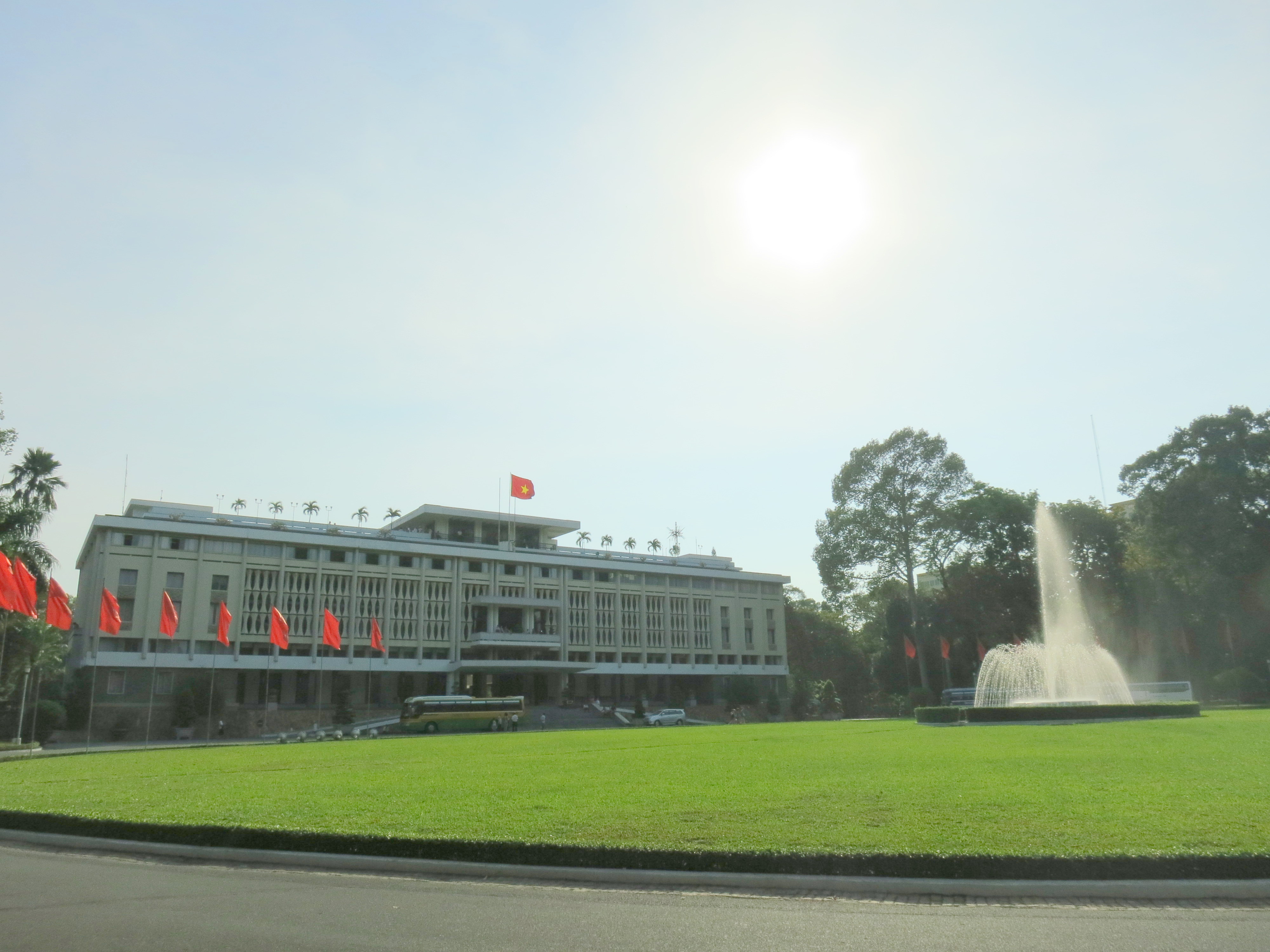
Reunification Palace, Ho Chi Minh City
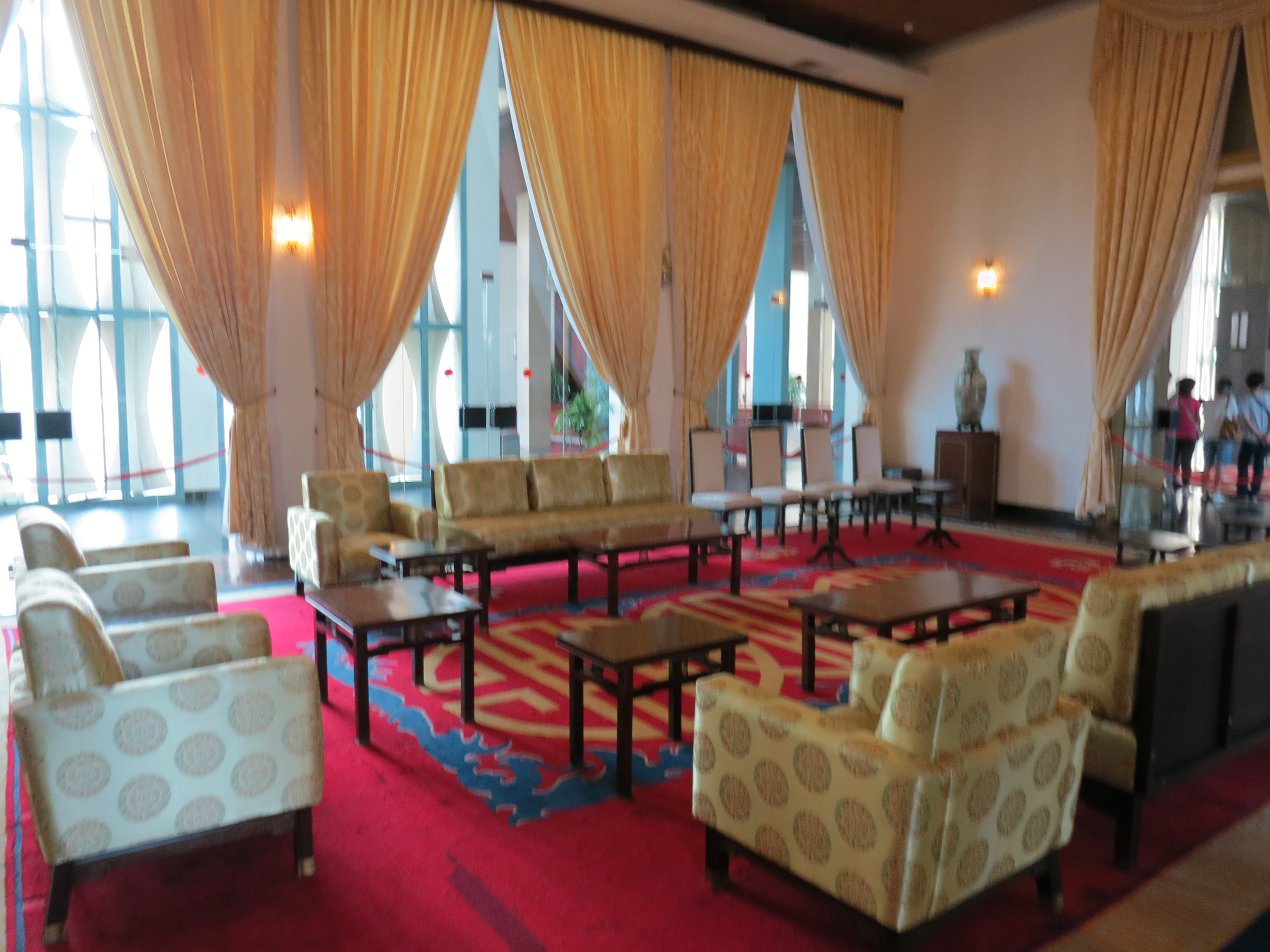
I caught a tour midway through, and learned a little about the building. The French had built a mansion on the site back in the 19th century, but it was bombed in 1962 in an assassination attempt on President Diem. The damage was so extensive that Diem ordered the building razed and rebuilt, which is why it’s entirely built and decorated in the modern style of the mid-1960s.
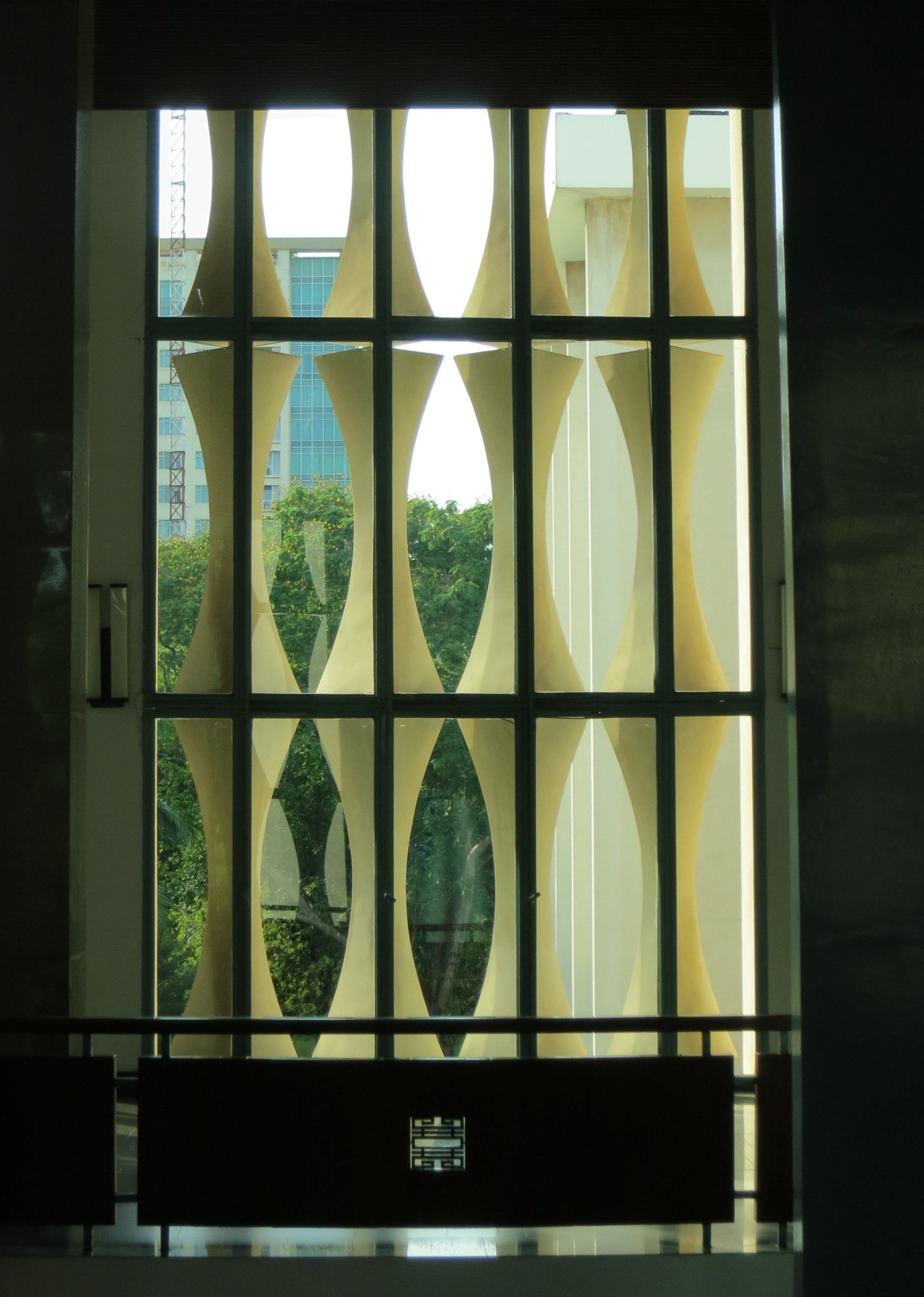
I often dislike these types of windows, because they’re usually done in a heavy concrete, but here they seemed much lighter
One of the reception rooms
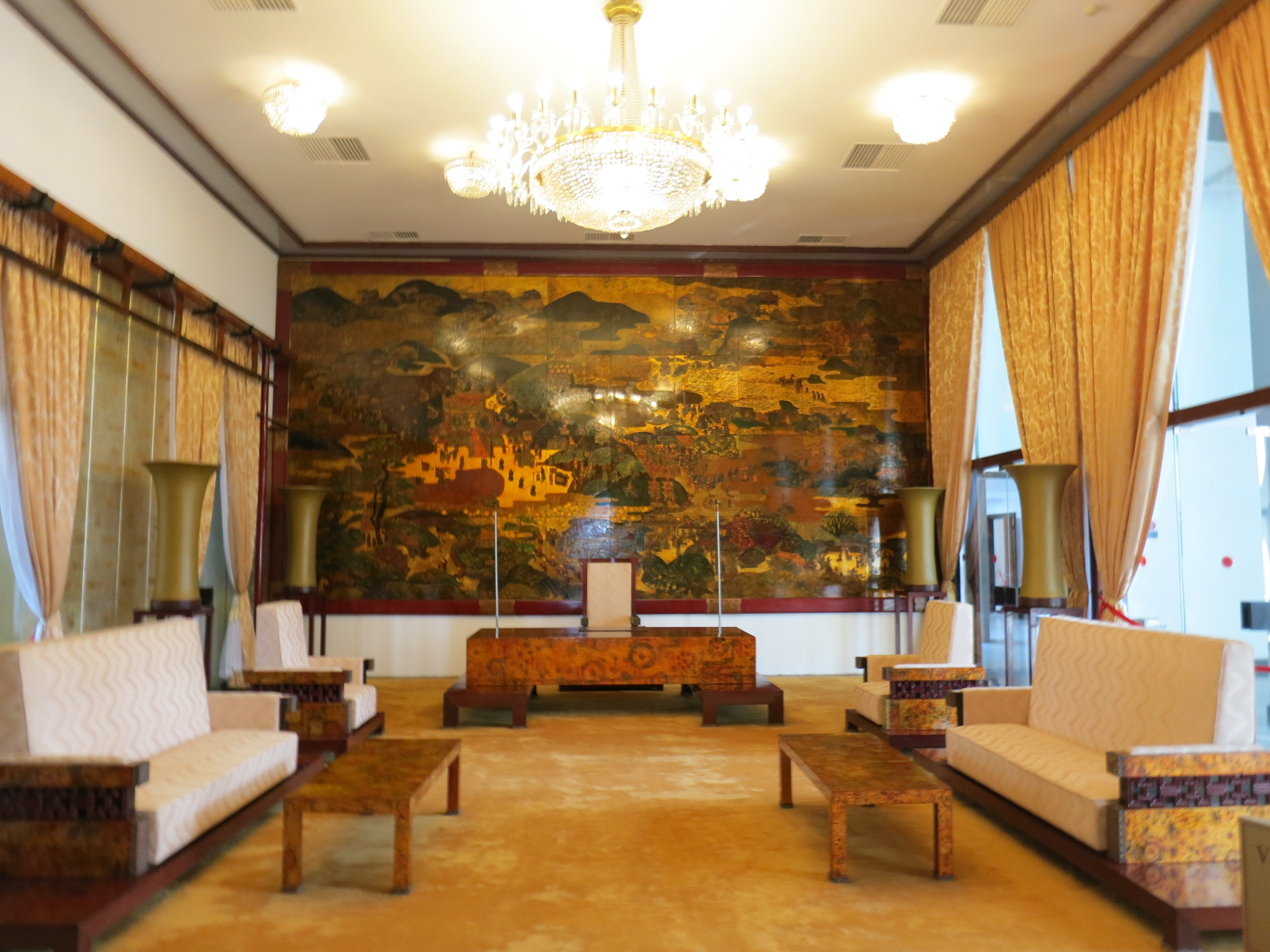
It was like stepping on the set of Mad Men, except where I find the dark browns of that show uninspiring, the bright colors and rich materials of the palace were a sight to behold. I think a lot of that had to do with Vietnamese-born, French-trained architect Ngo Viet Thu, who purposely used fabrics, rugs, and paintings showing Sino-Vietnamese designs. Everything was sleek lines, symmetrical layouts, long rooms filled with matching furniture. One room held a painting that represented the north, middle, and south of Vietnam. The president’s main reception room incorporated traditional Vietnamese designs, and the lacquer on a painting in another meeting room was stunning.
Check out that lacquer

From left to right: the north, middle, and south of Vietnam
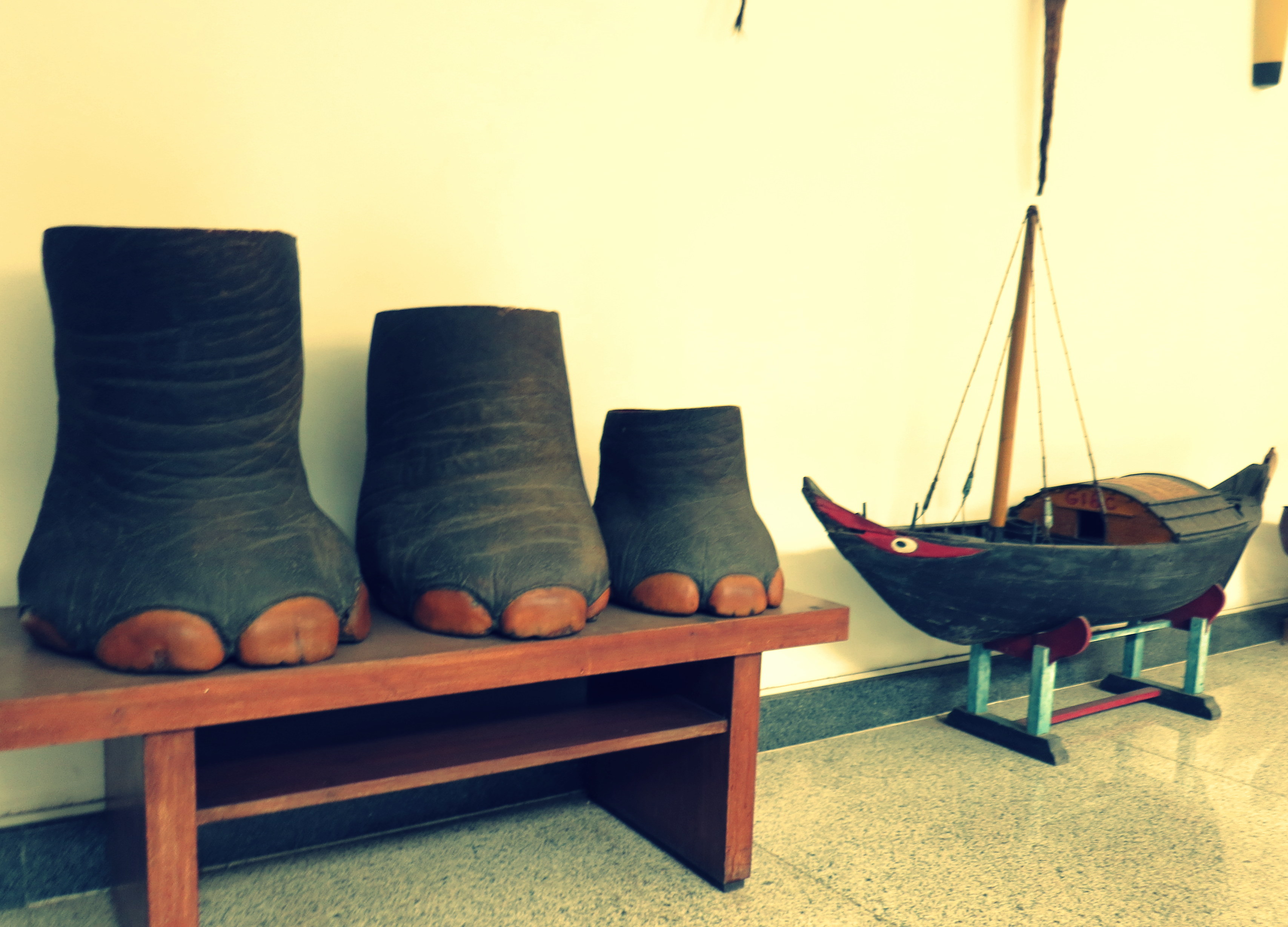
The residential quarters were emptier, nearly bleak, compared to the dressed to impress public rooms. The courtyard of the residential quarters contained the preserved legs of elephants, a miniature ship, and a Chinese ceramic dog, which seemed an odd assemblage.

The relatively bare residential quarters
Odd mementoes
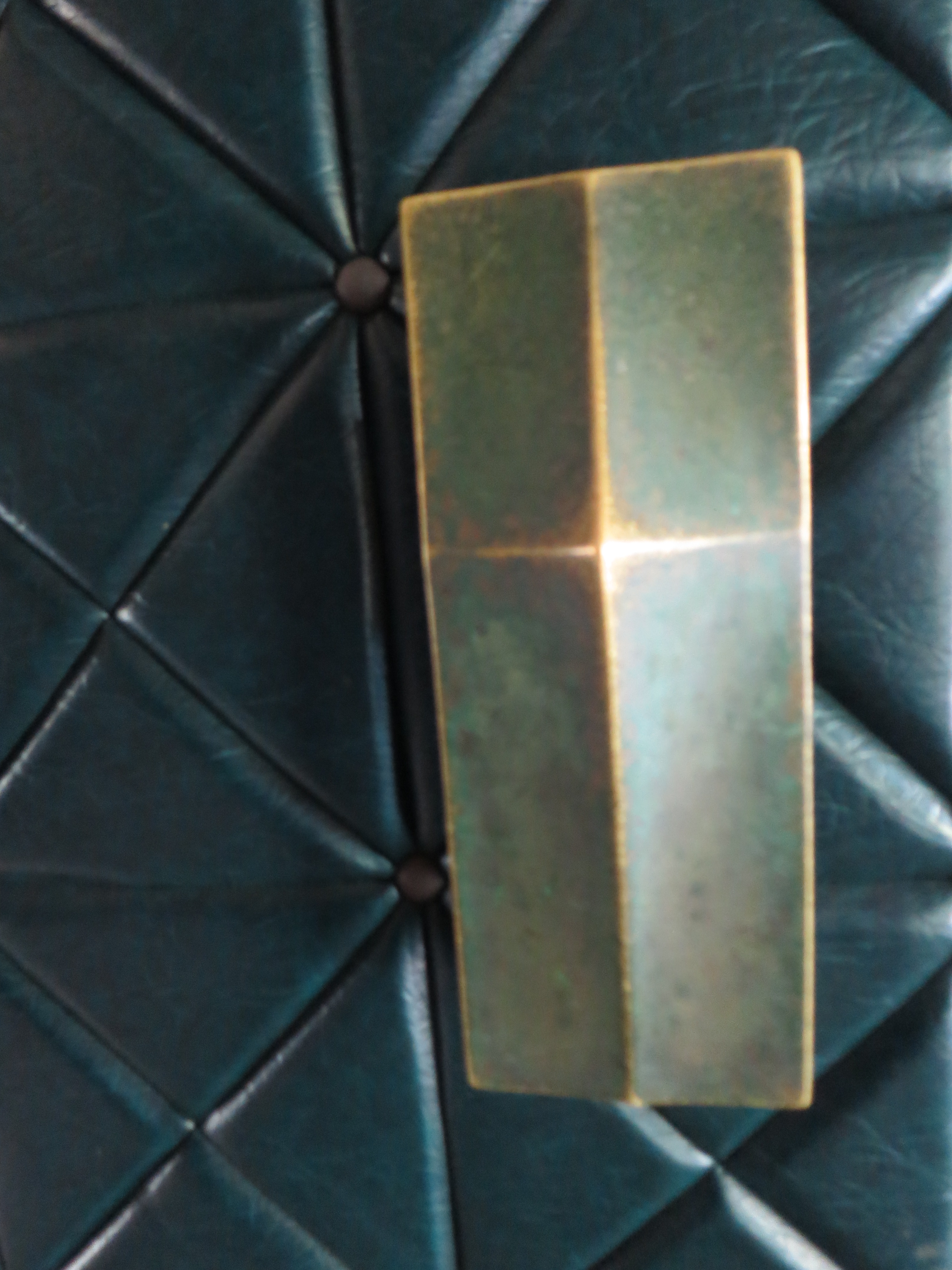
The palace includes a movie theater, a gambling room, and my favorite–a rooftop ballroom. There’s a dance floor, bar, and grand piano up there in the center of the roof, and space on either side to drift away to for conversations romantic or political, or maybe both.

Tables were set up for mahjong and blackjack

Dancing on the rooftop
Down in the basement is the war strategy room, several small offices, a small cell for the president to hide in during combat, the kitchens, and the Mercedes used by the last president of South Vietnam.
The door to the movie theater
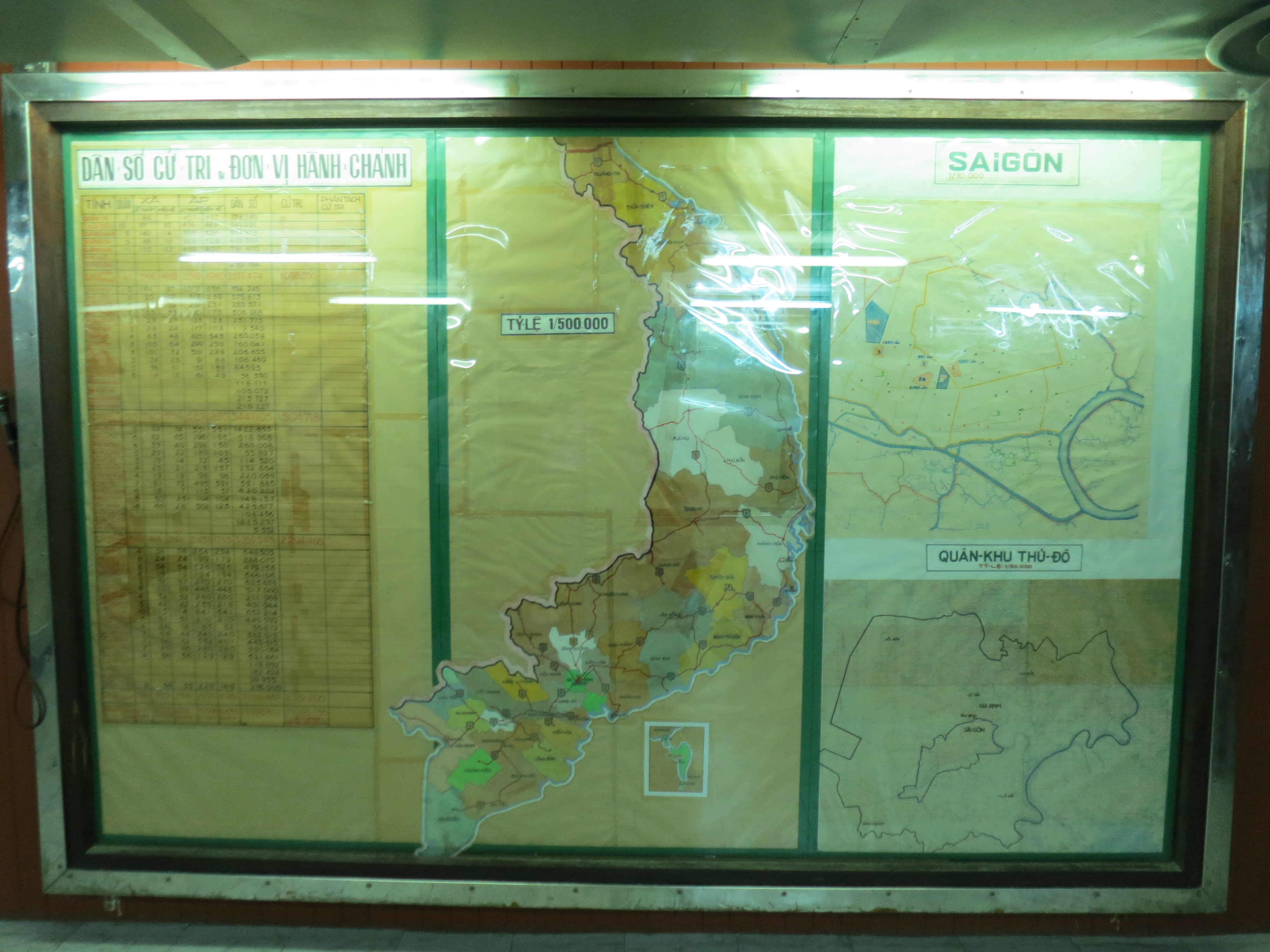
Strategy room underground

A view from one of the balconies
Diem was killed before he could ever live in the palace, but two of his successors lived there. On April 30, 1975, a tank crashed through the gate of the palace during the fall of Saigon, and the war officially ended. What had been called Independence Palace was renamed Reunification Palace by the Communist government, and it has remained pretty much untouched ever since. Sometimes official meetings are held there, but mostly it’s a strange museum piece, a building barely used for its intended purpose, a monument to the decadence of a former regime.

Adding the traditional to a new building
No museum is a mere collection of facts. It’s not possible to display information completely objectively; there’s always a point of view taken, a lesson to impart, an agenda to push. This is true even for museums that aren’t at all political; for example, the Laura Ingalls Wilder Historic House & Museum promotes not just Wilder’s writing, but the idea that her values and way of living are worth emulating. Museums only exist because somebody thought the topic was worthy of further study and wider knowledge by the general public. Just by building a museum, you’re taking a position. But I have to say, I have never been to a more baldly biased museum than the War Remnants Museum in Ho Chi Minh City.

The War Remnants Museum in Ho Chi Minh City, Vietnam
Unlike a lot of museums, this one makes no bones about its purpose: it is there to tell the story of the Viet Cong during the Vietnamese-American War, and it is there as a corrective to the American narrative of the war. Every single poster and placard called it the American War of Aggression. Any time the war was called “the Vietnam War,” the phrase was placed in quotes. South Vietnam was called the “so-called Republic of Vietnam.”

Protests around the world
When the USSR or China were mentioned, the war was called a “struggle for national salvation,” to be more aligned with Communist vocabulary. One placard showed Australians protesting their government sending troops to aid the Americans, and the placard said they were protesting the agreement between the Australians and US to “force Australian youths to become field targets in the US battles in Vietnam.” The whole museum was a master course in semantics. (Which is not to say it was false–you can put a lot of gloss on a base of facts.)

Some veterans from the US have sent in their medals and fatigues to the museum, with notes of apology
It was also extremely difficult to visit, because the anger and loss on display was so raw and so recent. An entire room was devoted to photos of children suffering from painful and debilitating birth defects, which they got because their parents were exposed to the dioxin in Agent Orange. Did you know that this was only one of the toxins sprayed over forests and farmlands? The museum showed posters of the various “colors” of toxins used by the US. The posters looked a lot like our terrorist threat level posters today, only guess who was the threat?
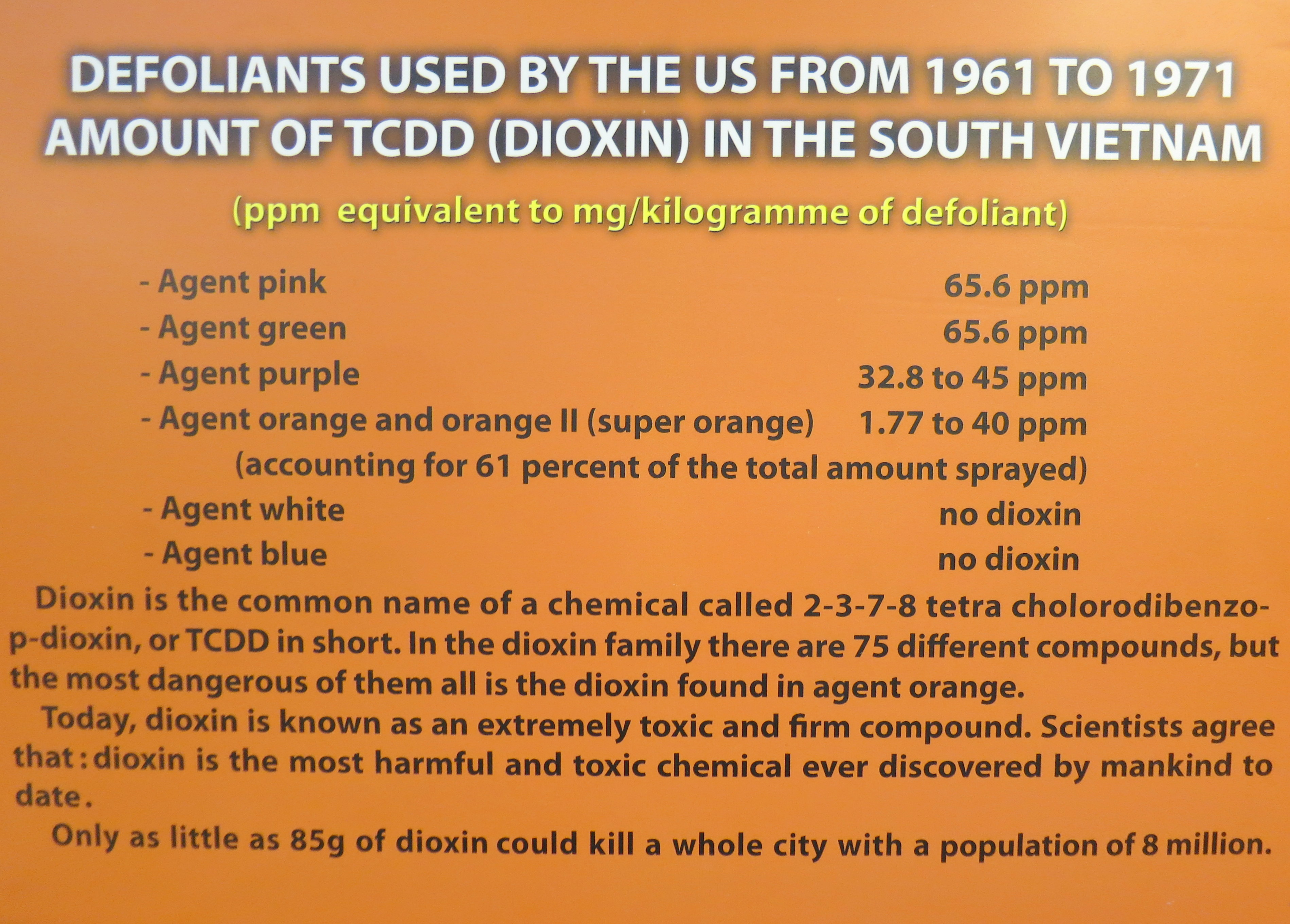
Yikes
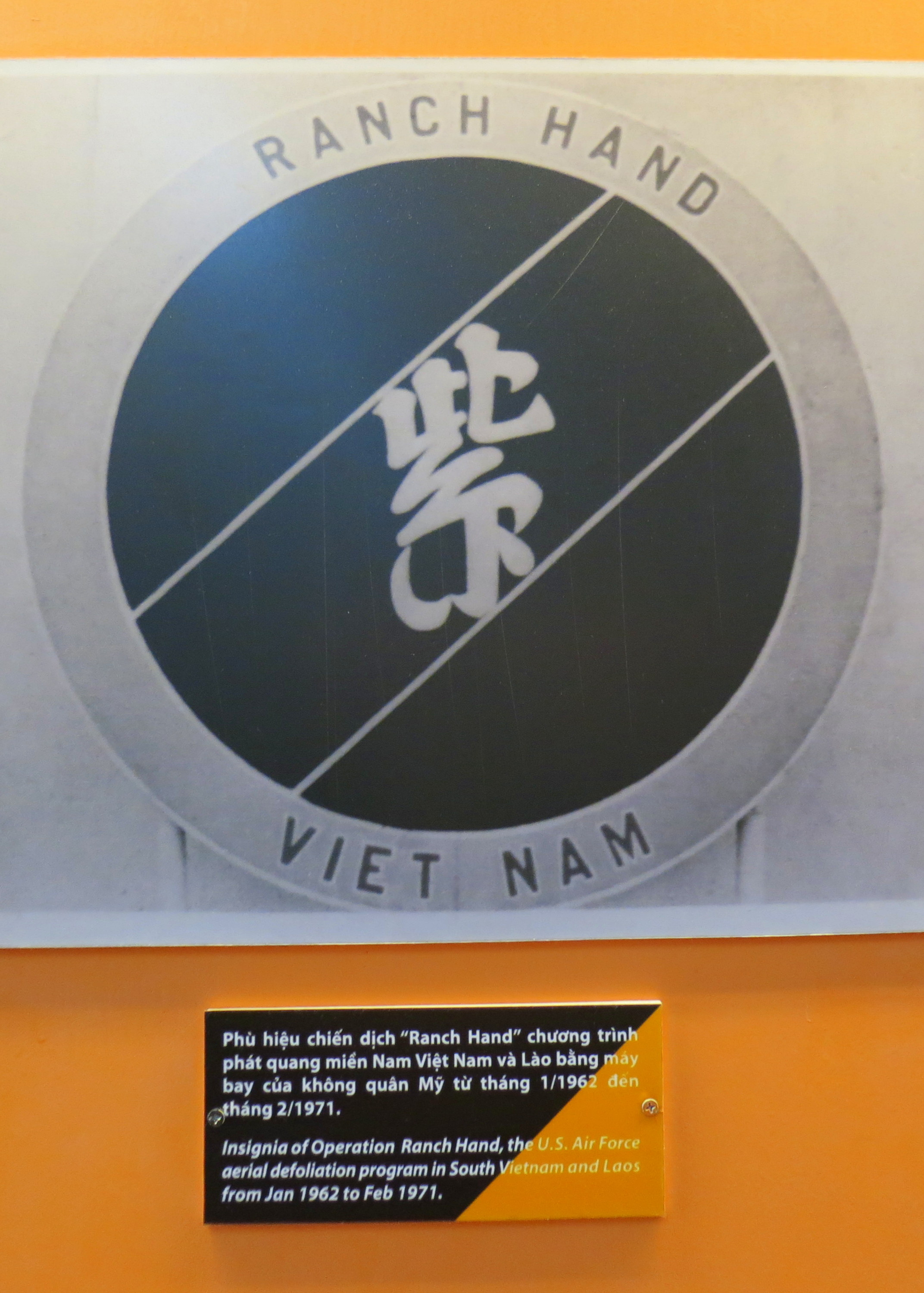
Ranch Hand: the name of the operation that sprayed various chemicals over the farmlands and forests of Vietnam from 1962 to 1971
Research since the 1960s has shown that even just one parent exposed to dioxin could affect the DNA of the child, resulting in spina bifida, diabetes, various cancers, twisted or missing limbs, developmental disabilities, and other defects and diseases. So it’s not just the people who survived the war who developed health problems, but their children did, too. (Of course, this has been a big issue in the States, too, as the military has slowly agreed to compensate some US veterans for the health problems they and their children suffer as a result of being exposed to Agent Orange. We hurt ourselves when we hurt others.)

A whole room of these images, difficult to see, harder to contemplate.
The Aggression War Crimes and Historical Truths sections, in addition to containing the Agent Orange room, included displays on the My Lai massacre, the founding of the National Front for Liberation (what we know as the Viet Cong), the bombings in Laos and Cambodia, and the airlift of Americans in Saigon in 1975.
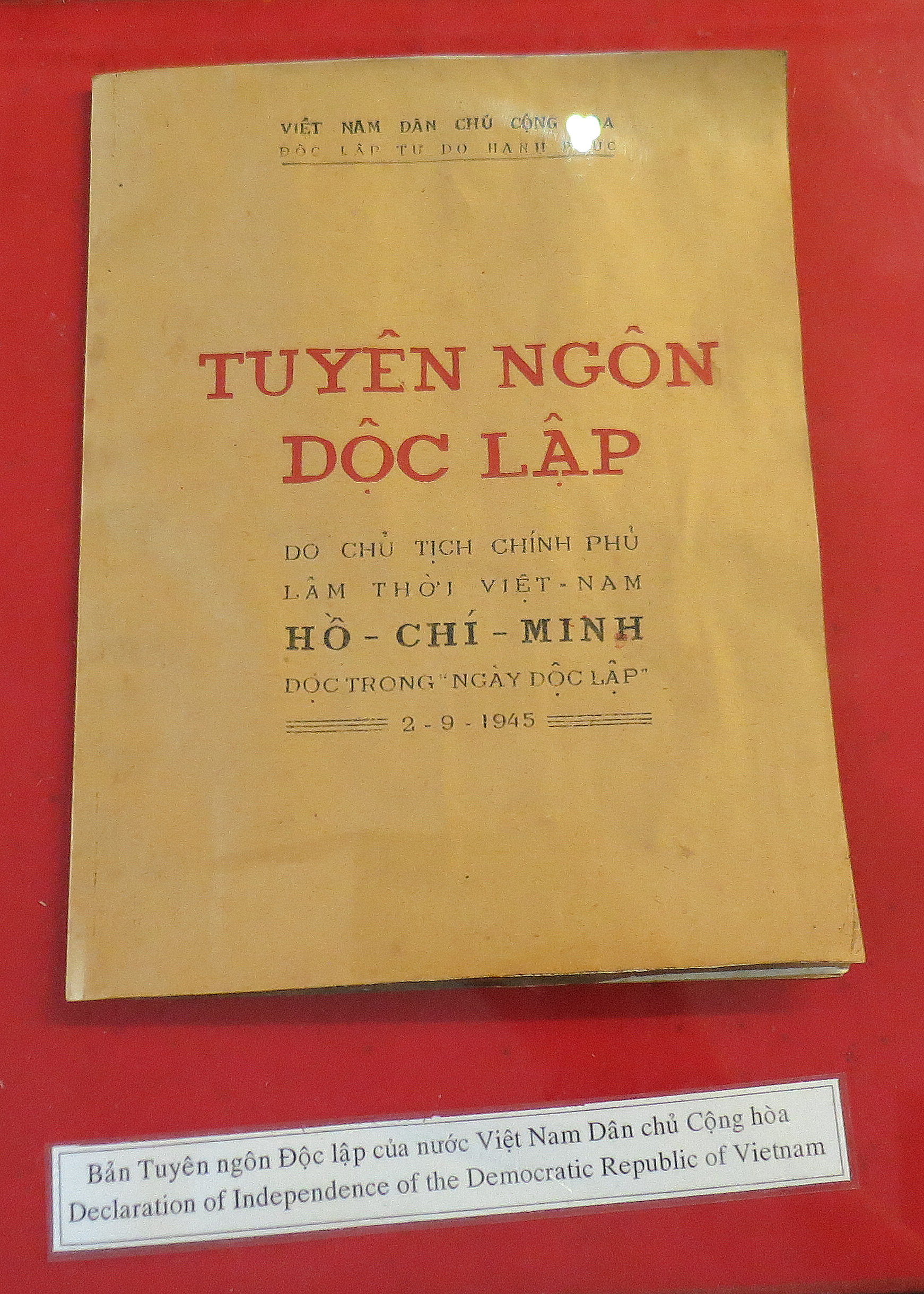
The Declaration of Independence of the Democratic Republic of Vietnam
There was a special display on photographers of the war, especially American and French photographers who trained their cameras on the atrocities the Vietnamese suffered at the hands of the American troops. A couple rooms held displays of shell fragments, different kinds of guns, and in a display on the total destruction of villages in Son My, pots and baskets to show what the lives of the villagers were like before the attack.
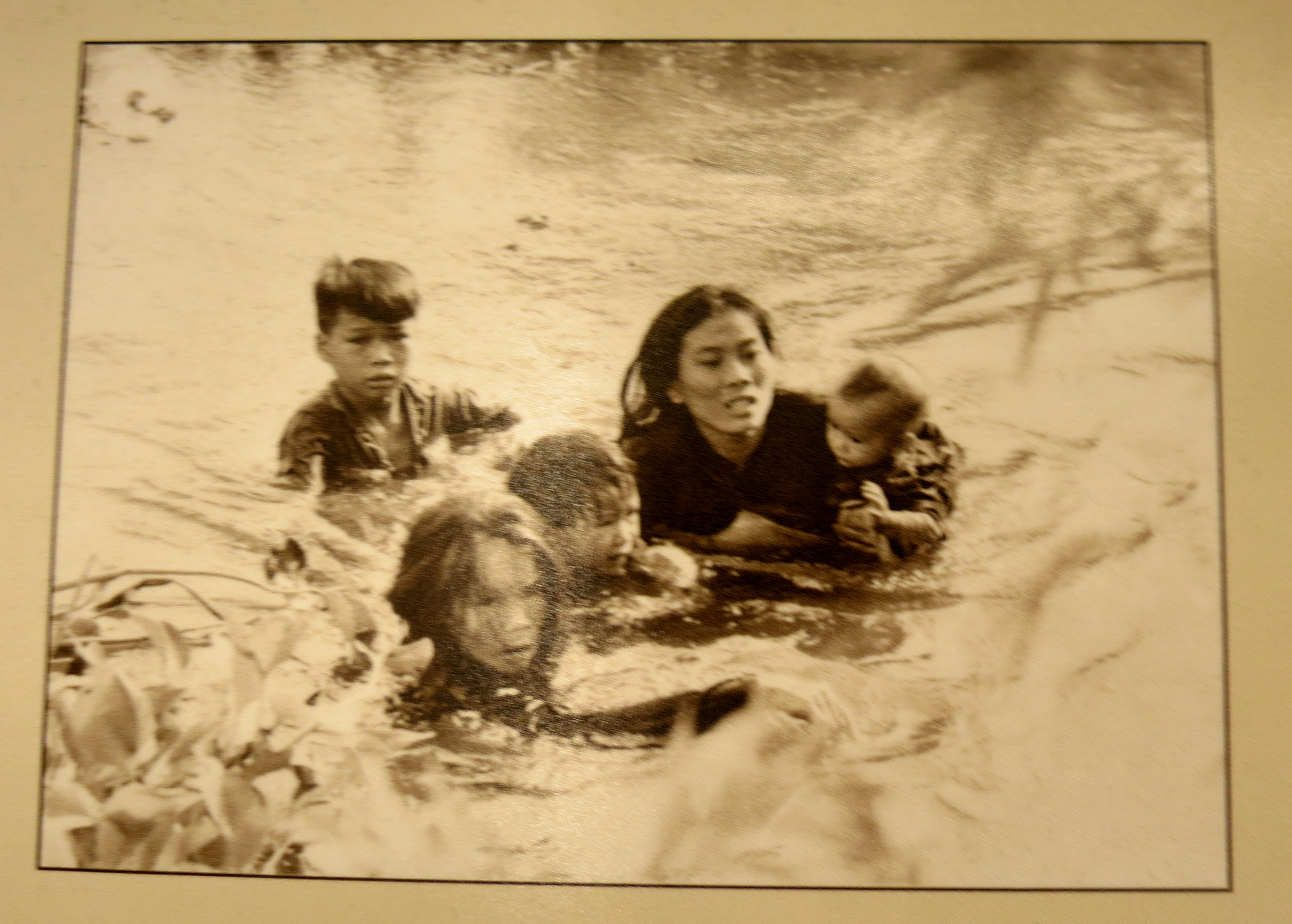
Part of the Photographers of the War exhibit


Pottery from the Son My massacre. We know it as the My Lai massacre, but that was just one of several villages in the area that was destroyed, and the Vietnamese call it the Son My massacre.
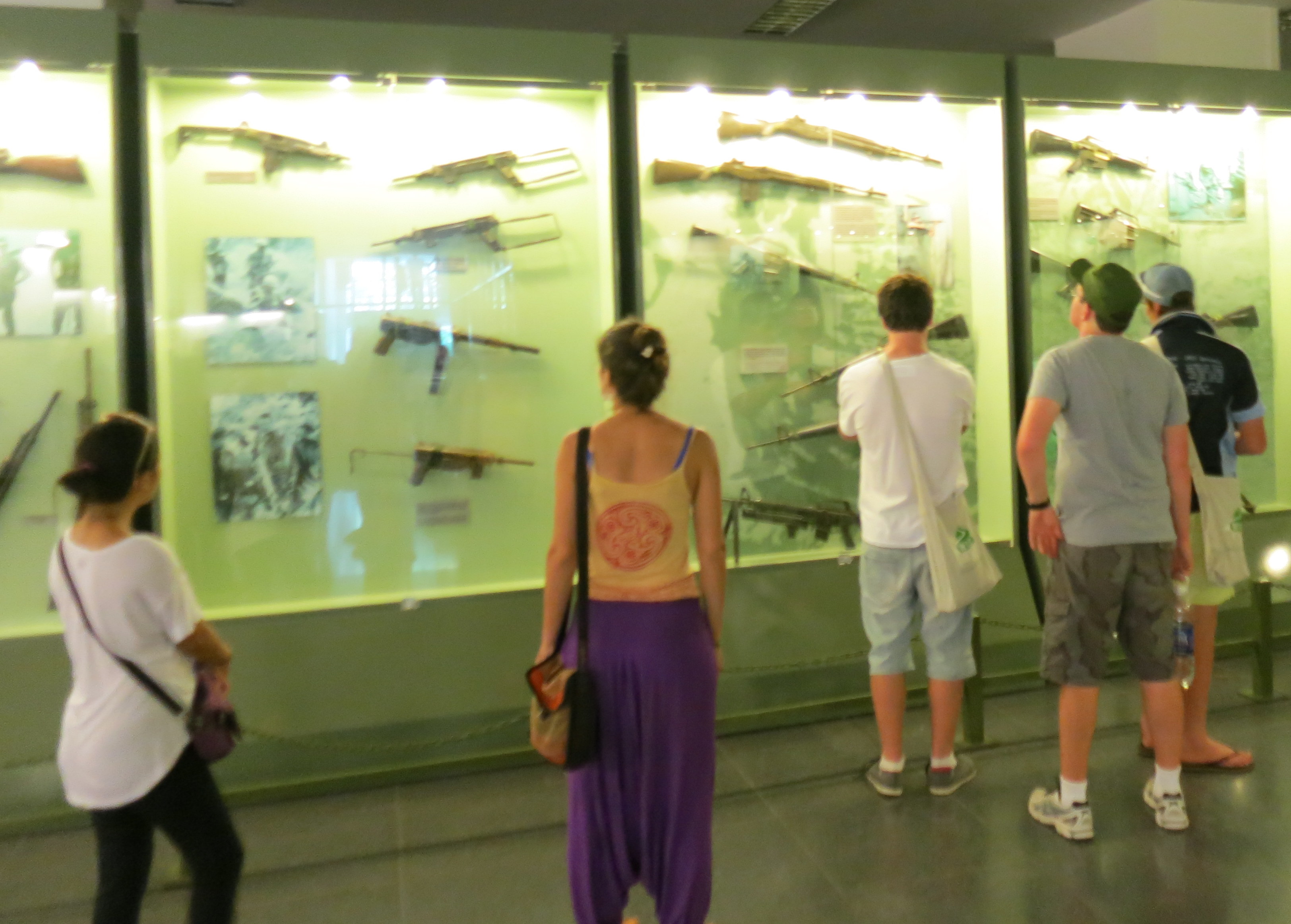
Visitors look at the guns on display
The first floor was split between two displays: one on the education the young Vietnamese received under the Viet Cong during the war, and one on the worldwide anti-war protests held during the ’60s and ’70s. The education display was dated, a magazine spread for people to read during the war. It showed children in obvious poses, smiles plastered on their faces as they shouted dedication to “Uncle Ho,” with captions like “Children tried to study well and work hard to make the contribution to the people’s movement defeating American aggressors.” I don’t mean to undermine the importance of the teachers during this time, though; they taught children in tunnels if they needed to, never sure of where or when the next bomb might go off.
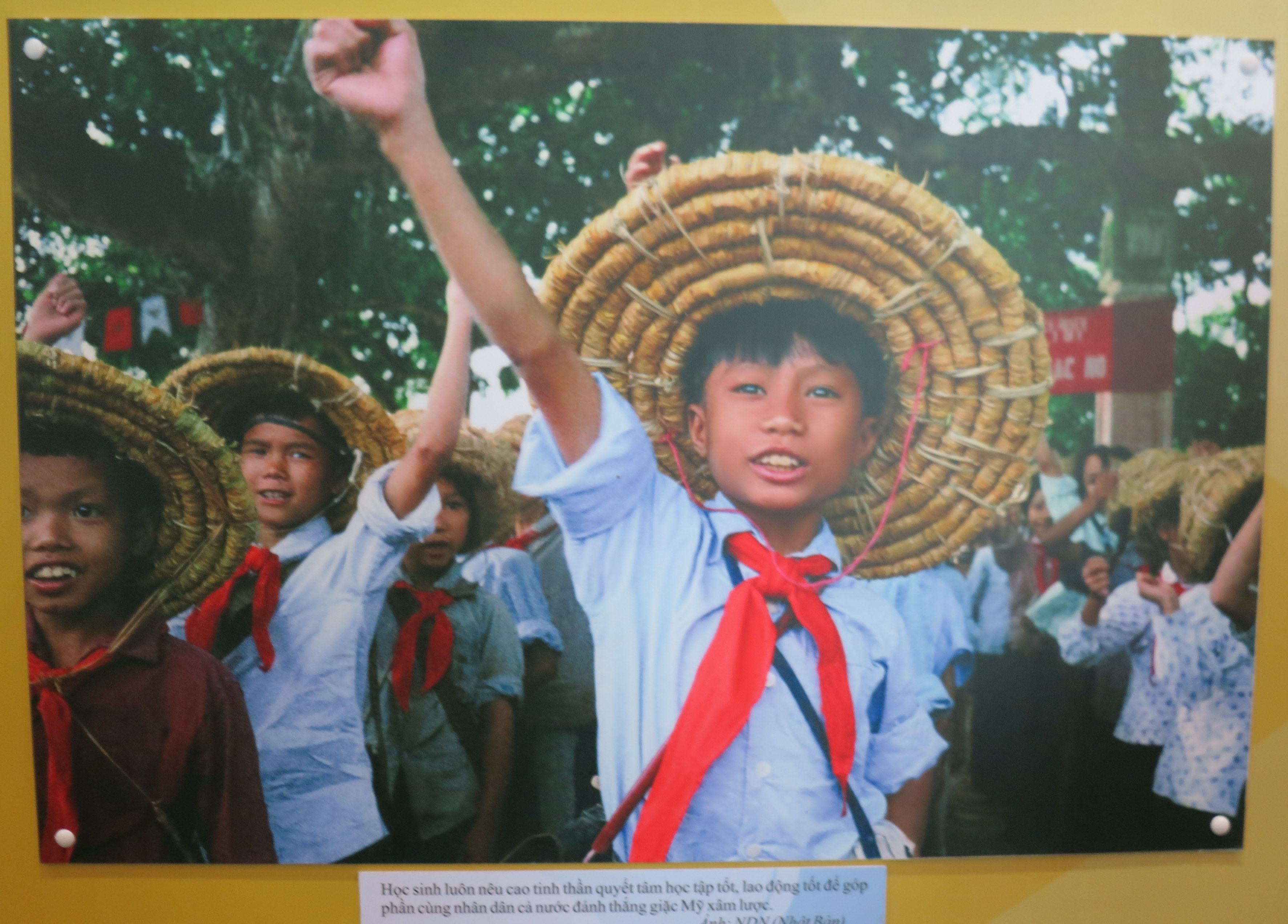
Part of the “Children During War” exhibit
The anti-war display was the opposite of dated; seeing the accumulation of anti-war and pro-Vietnam support from all those different countries, over many years, brought home how much this war meant to people around the world. People were not only concerned for the lives damaged and lost on both sides of the war, but also for what this kind of unofficial but all too real war meant for the world they lived in, and how it might affect their future. Seeing large posters declaring “Solidarity with Vietnam” in German, only 20 years after the end of World War II, was affecting. A man in Japan wore a sign saying “US Withdraw from Vietnam” during his commute, every day for 8 years. Several tribunals were convened on the “war crimes of the US” in Norway and Sweden. Thousands of people in South America, Africa, and Europe signed letters denouncing US intervention in Vietnam. Massive protests were held on every continent.

Before and after the war, from places around Vietnam
I’m so used to the American version of the story, even the anti-war story, that I was surprised by these global actions against the war. I’d let myself be insulated, seeing everything through a particular lens, and it was good to be reminded how narrow that view is. Especially in light of the anti-war protests in 2003–those didn’t come from nowhere, they have a lot of historical precedent.

Let there be peace
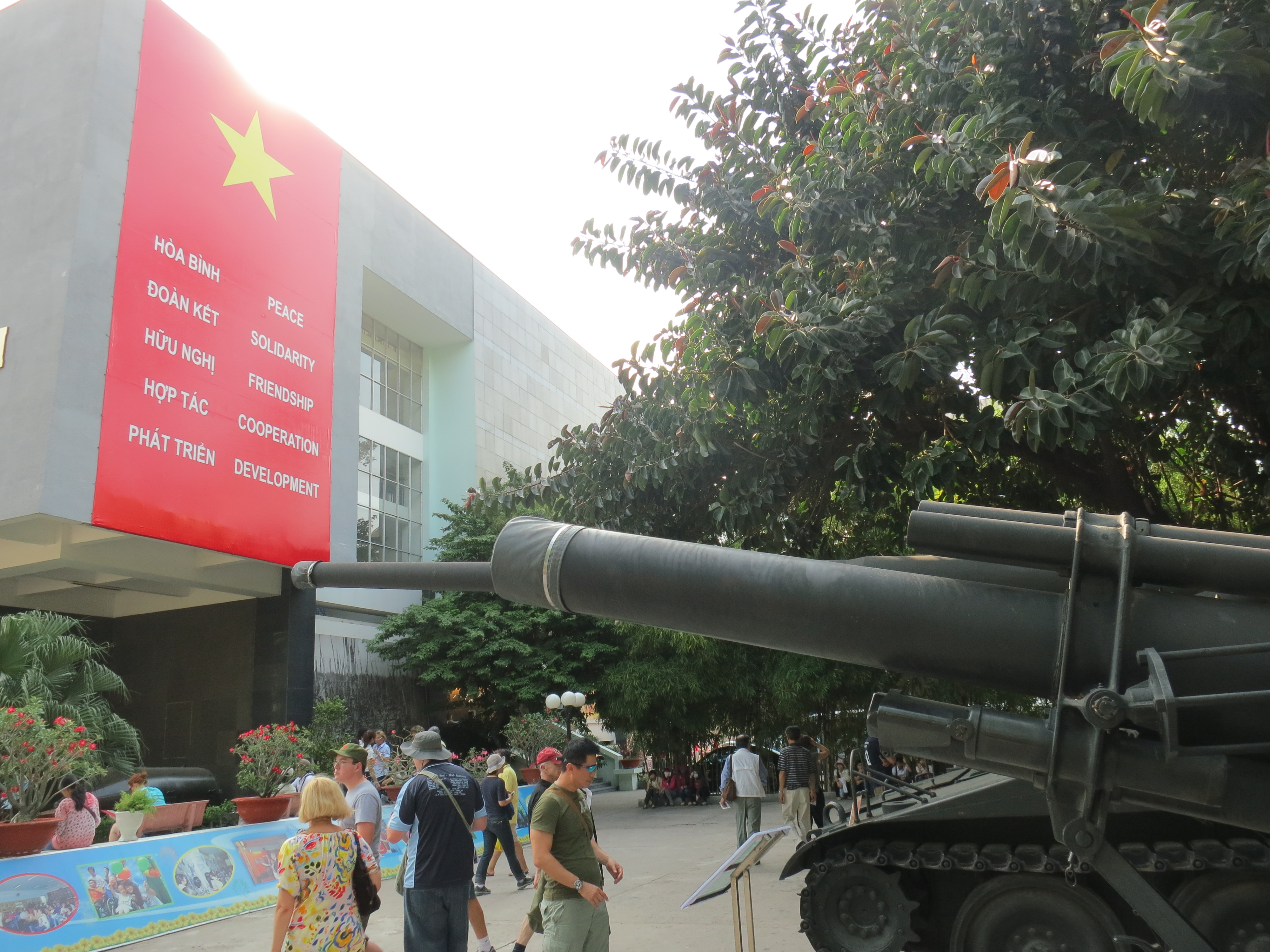
Outside the museum, captured American tanks, heavy artillery, and a bomber plane were on display in the sunshine. A group of children deformed by Agent Orange played musical instruments for a growing crowd of Vietnamese tourists. I stuck a flower in the gun of a tank, smiled and flashed a peace sign, consciously re-creating several historical photos of hope reaching out into violence. Behind me, the band struck up a folk song, and the gathered Vietnamese began to sing.
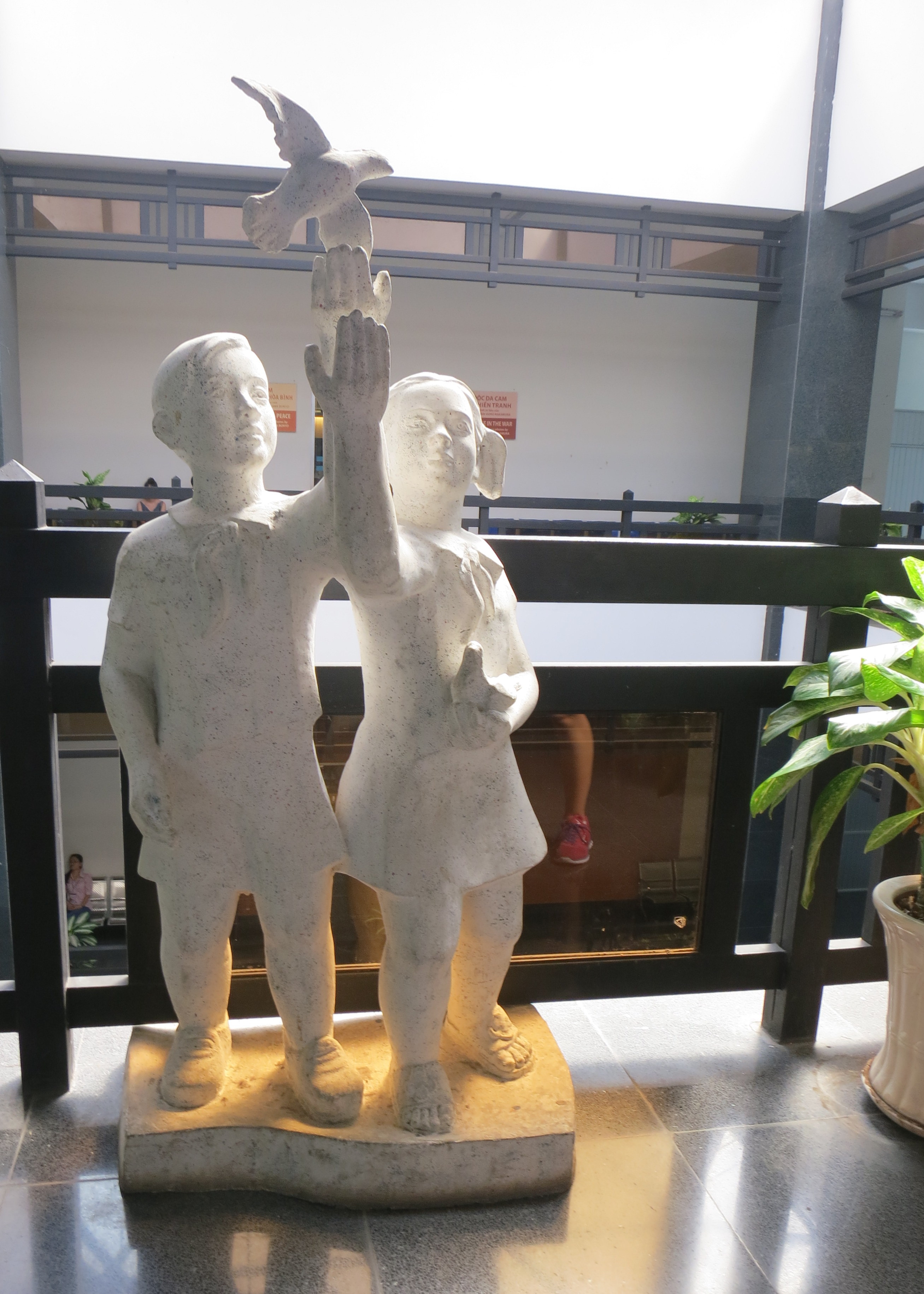
Outside the Peace Room
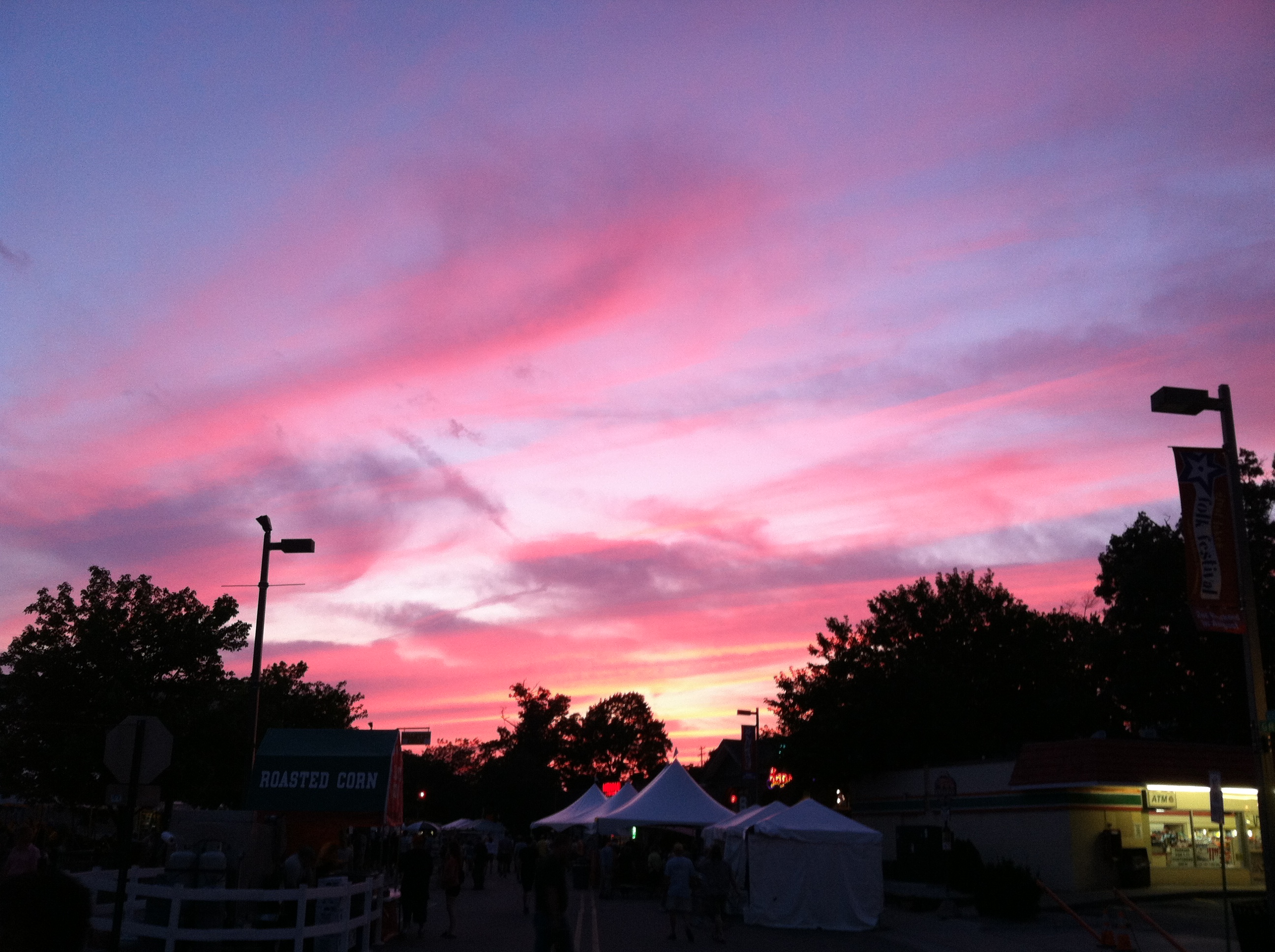
Sunset, East Lansing, MI
I was nervous about visiting Vietnam, nervous because of how excited I was to see the places that stood out in my memory from my teenage years (when I was mildly obsessed with what we call the Vietnam War), and nervous for whether that excitement made me an insensitive visitor.
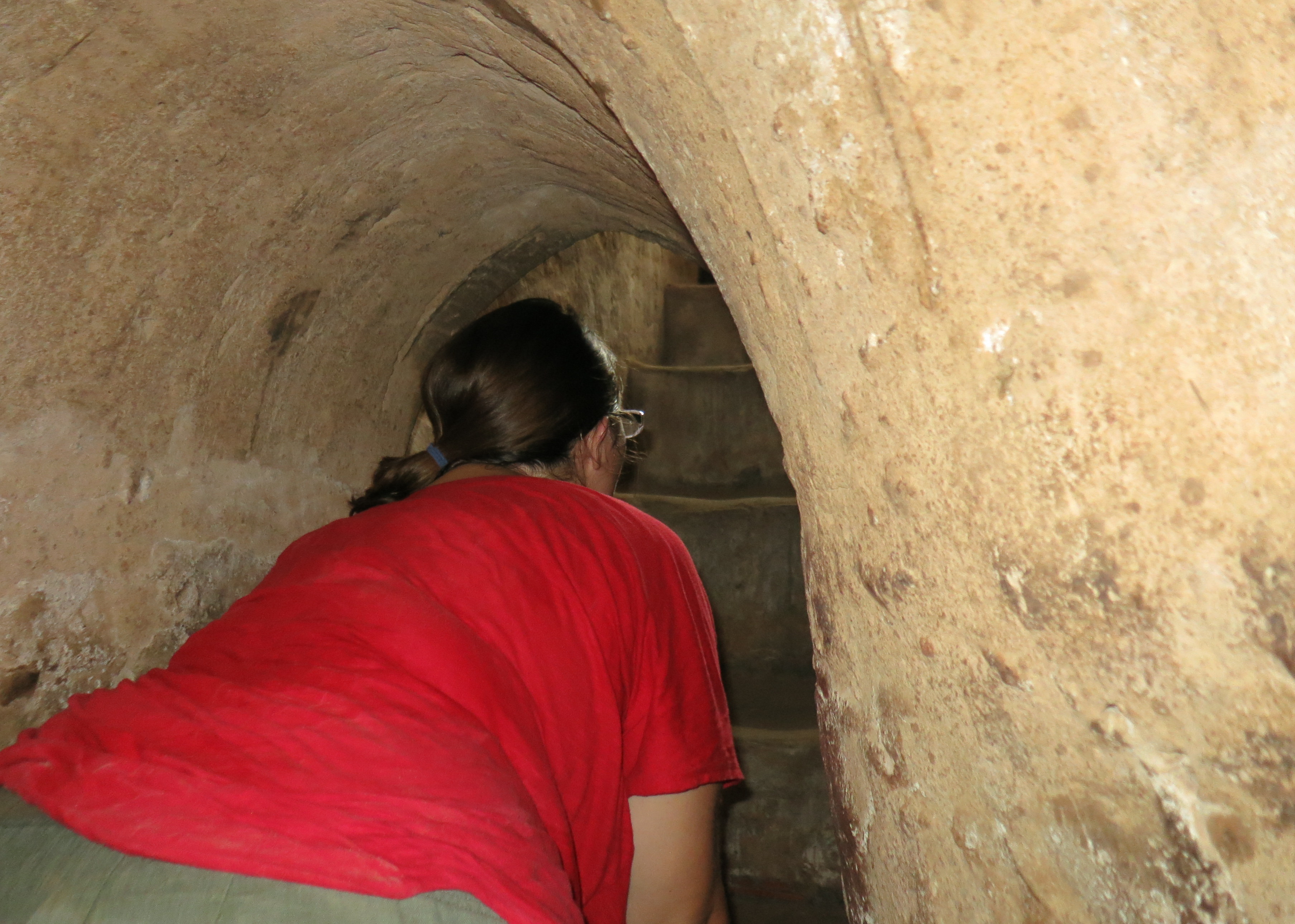
The enlarged tunnels didn’t feel large at all
Turns out that asking those kinds of questions is kind of like asking, “am I being a good parent?”–the mere fact of asking means you’re on the right track. On my group tour of the Cu Chi Tunnels just outside Saigon, I saw people clamber on captured American war tanks, shooting finger guns and grinning. I saw people line up at the shooting range at one end of the park, paying by the bullet to shoot Uzis and M-21s. I saw a ten-year-old walking around with his family, totally oblivious in an American flag t-shirt.
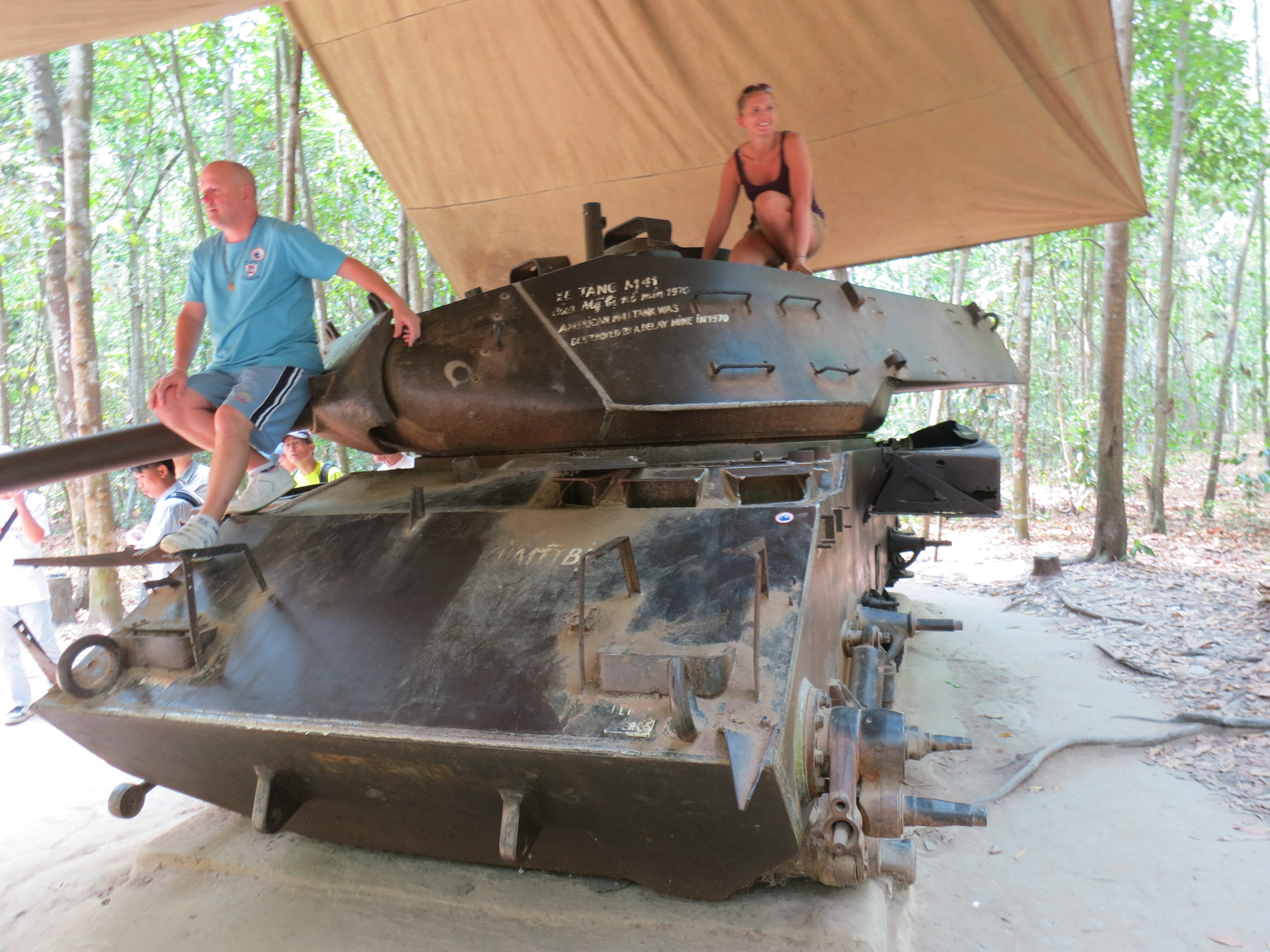
Ahh, tourists
The tunnels are part of an extensive network the Viet Cong built throughout the Saigon area during the war with the United States. They even managed to get under the American base, which rankled the US Army to no end. The Viet Cong lived in those tunnels; women cooked in them, men ran around in them on missions, children had lessons in there. The tunnels were tiny, perfectly sized for the Vietnamese, and far too small for the “tunnel rat” soldiers the Americans sent in to try to dismantle them. They never managed it, and the tunnels were a large part of the Viet Cong’s success in the war.
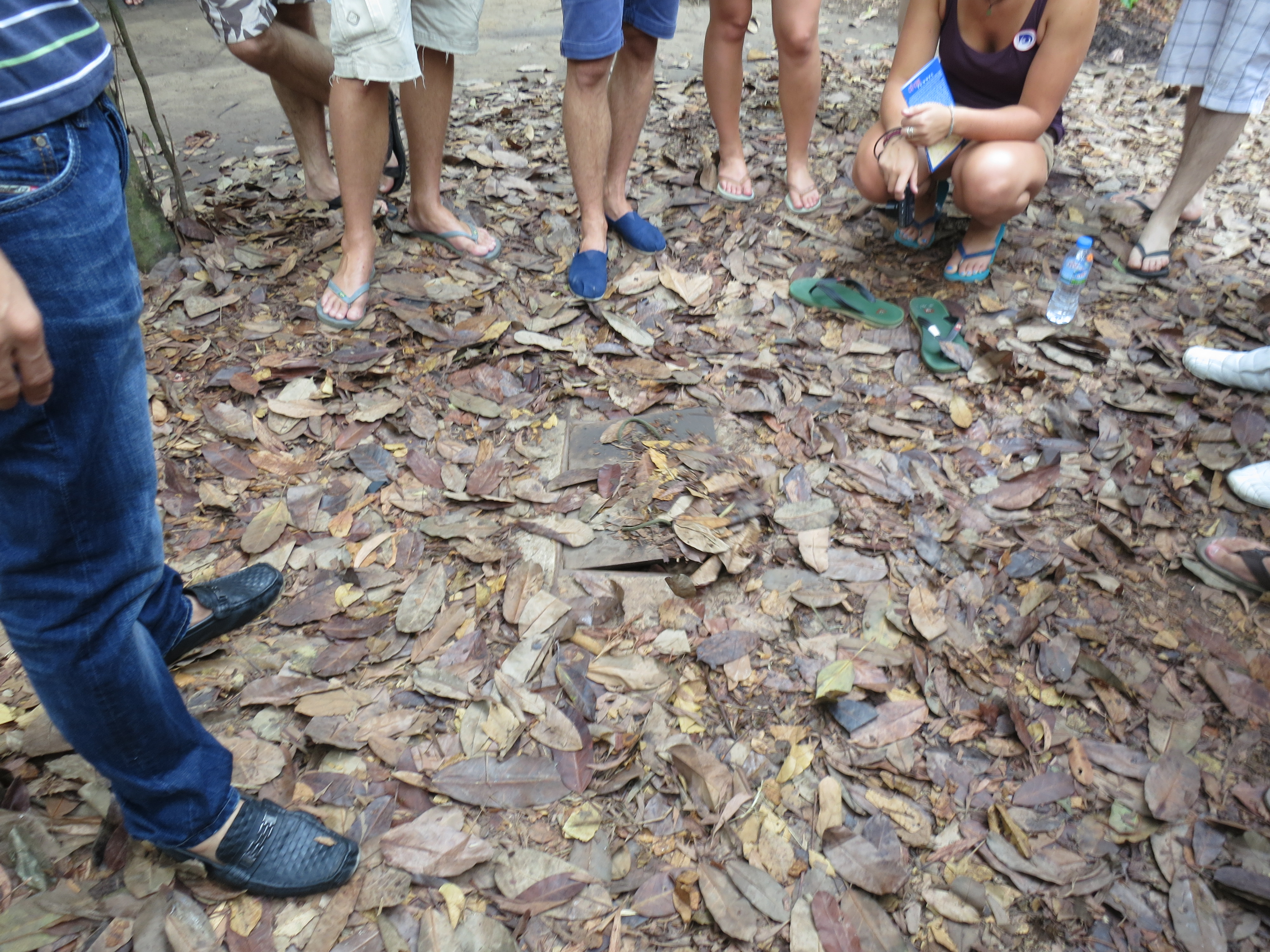
A nearly invisible tunnel entrance

The tiny entrance to the tunnel
We saw the tiny entrance holes to the tunnels, which were so small that the soldiers had to go in feet first, holding the cover over their heads because the entrances were too narrow to fit their shoulders. We saw the small mounds that hid the holes the kitchen smoke escaped from; the mounds were many meters from the kitchens, so even if the Americans bombed where they saw smoke, they wouldn’t hit the actual kitchens.

An eerie kind of ambiance at the Cu Chi Tunnels
The Viet Cong set up many traps in the area–tiger traps armed with sharpened bamboo sticks, door traps studded with iron spikes, swinging traps to take a man’s leg off. At the park today, they have a row of the traps set up, and park employees walk solemnly down the row, poking at each trap with a long pole to set it off. We heard the bang! bang! from the shooting range nearly the whole time we were on the tour, which was disconcerting but I suppose actually gave some sense of realism for what it was like.
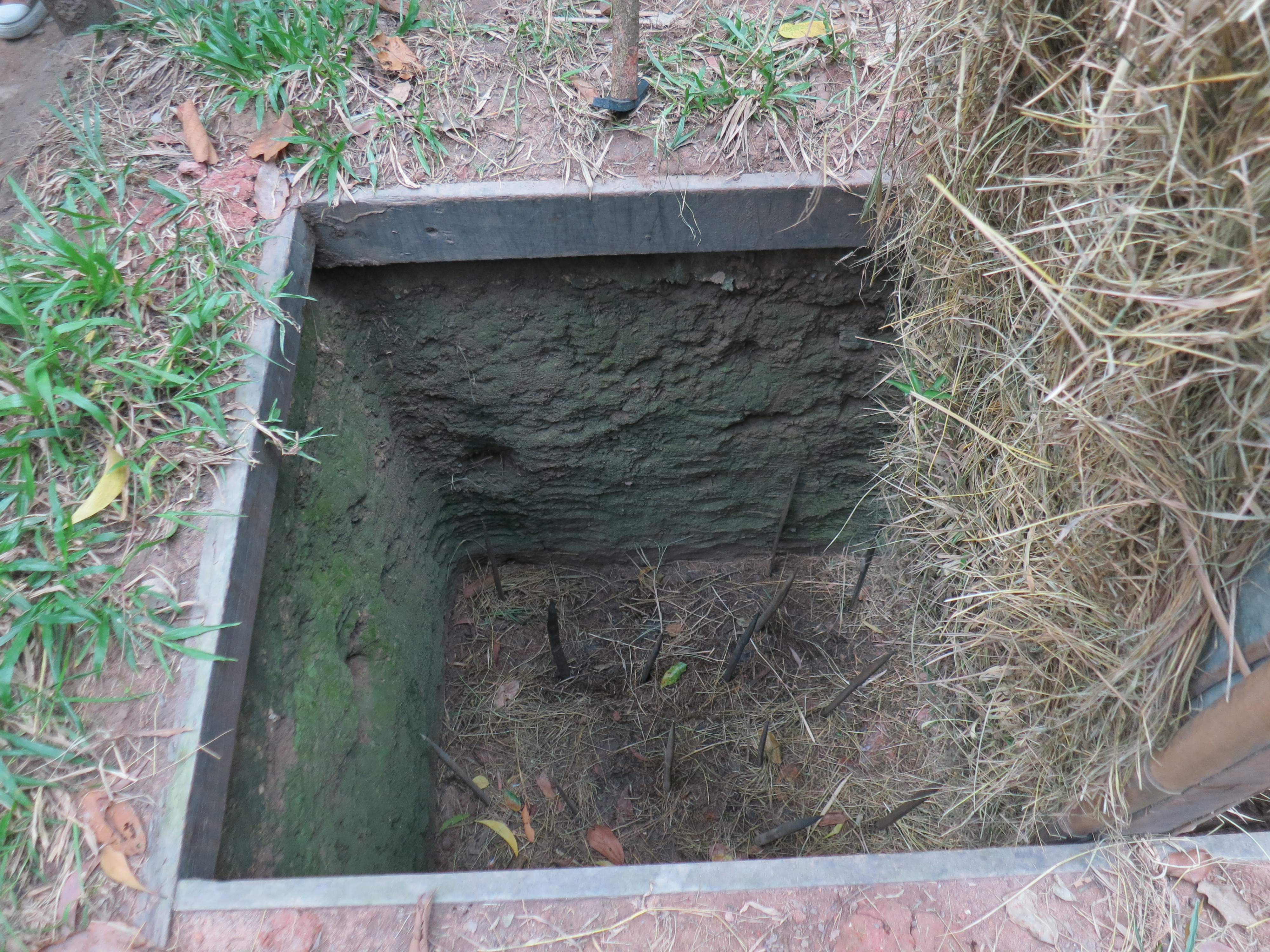
A tiger trap
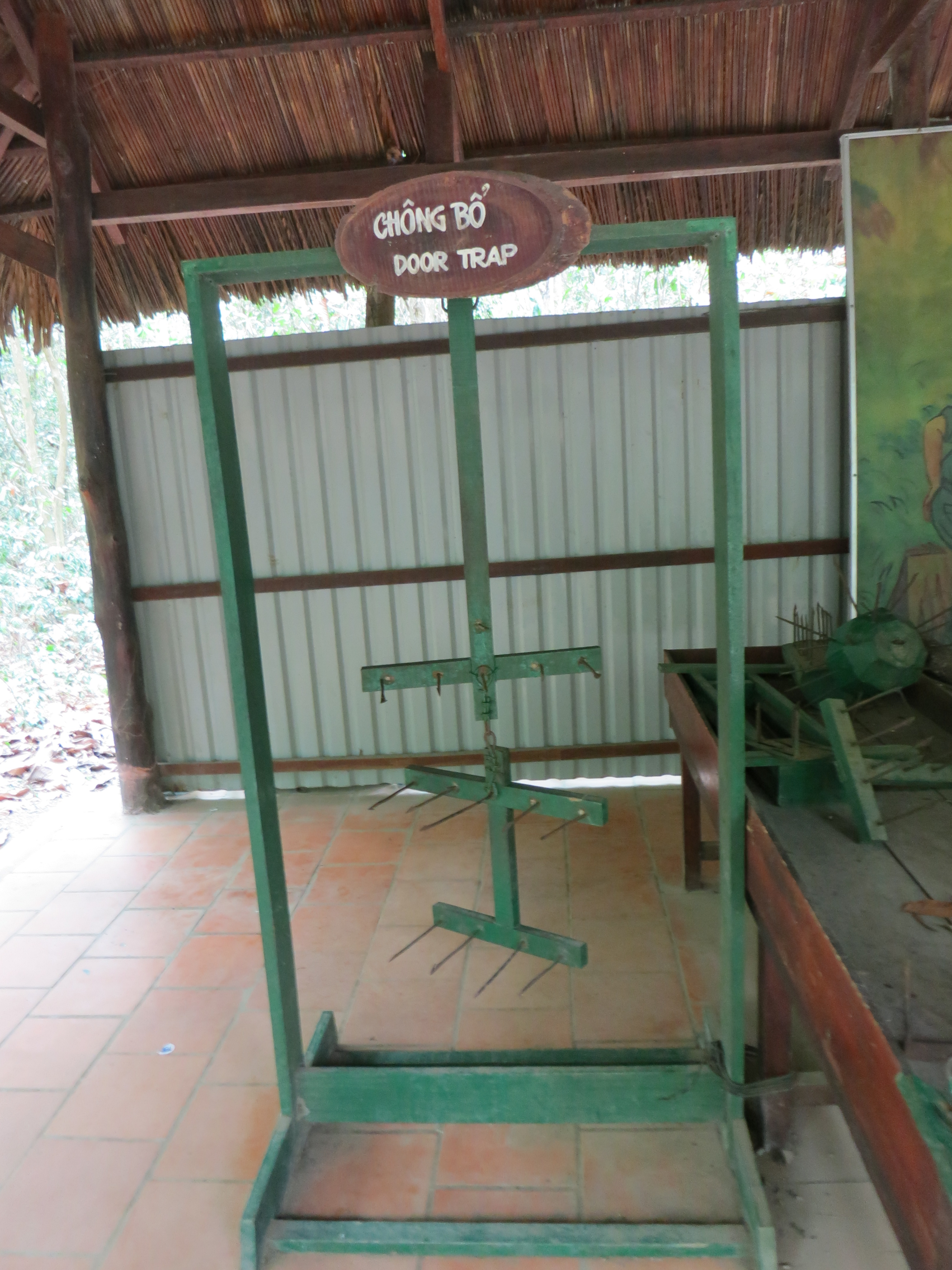
Used on doors in the area: US troops would kick in the door, and this would swing out at them, stabbing them with spikes
The original tunnels were too small for Westerners, so they’ve built enlarged tunnels for visitors, but our guide warned us that even these are too small for some. I could go down, he told me, but come out at the first exit; the tunnel gets progressively smaller and I’d be stuck if I tried to go to the third exit. With that cheery news in mind, I descended. I’m mildly claustrophobic, so I considered not going down at all, but I wanted to see what it was like, even for a little.
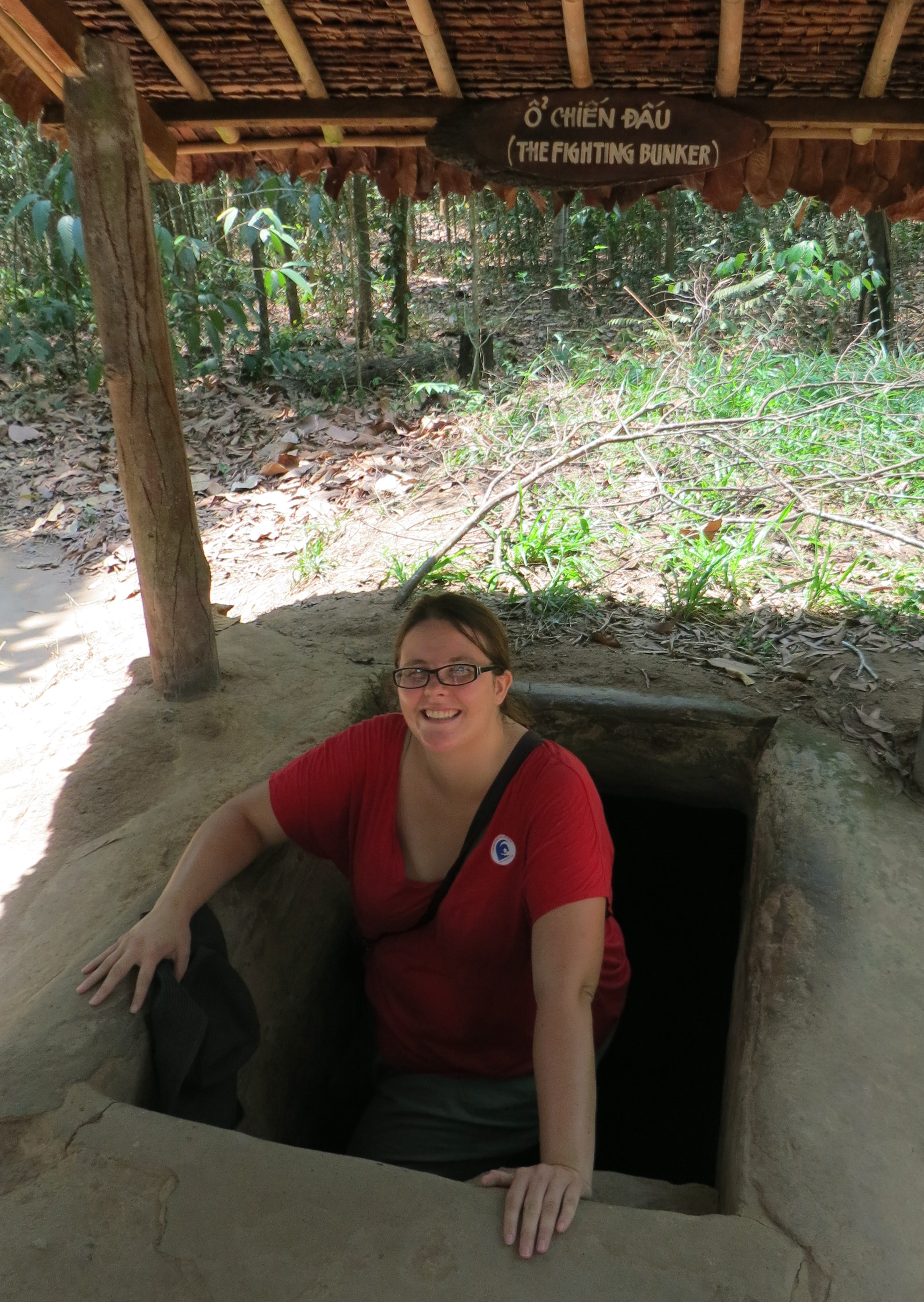
I’m smiling because I haven’t gone underground yet

The tunnels keep going down
What it was like was scary. I started crouched down and walking, but that was too constricting, so I ended up crawling. The walls were tight and there was a little light at either end, and I could hardly imagine it half its size, immersed in total darkness. Not to mention the vermin and insects that lived down there with the soldiers and families. I still shudder thinking about being down there.
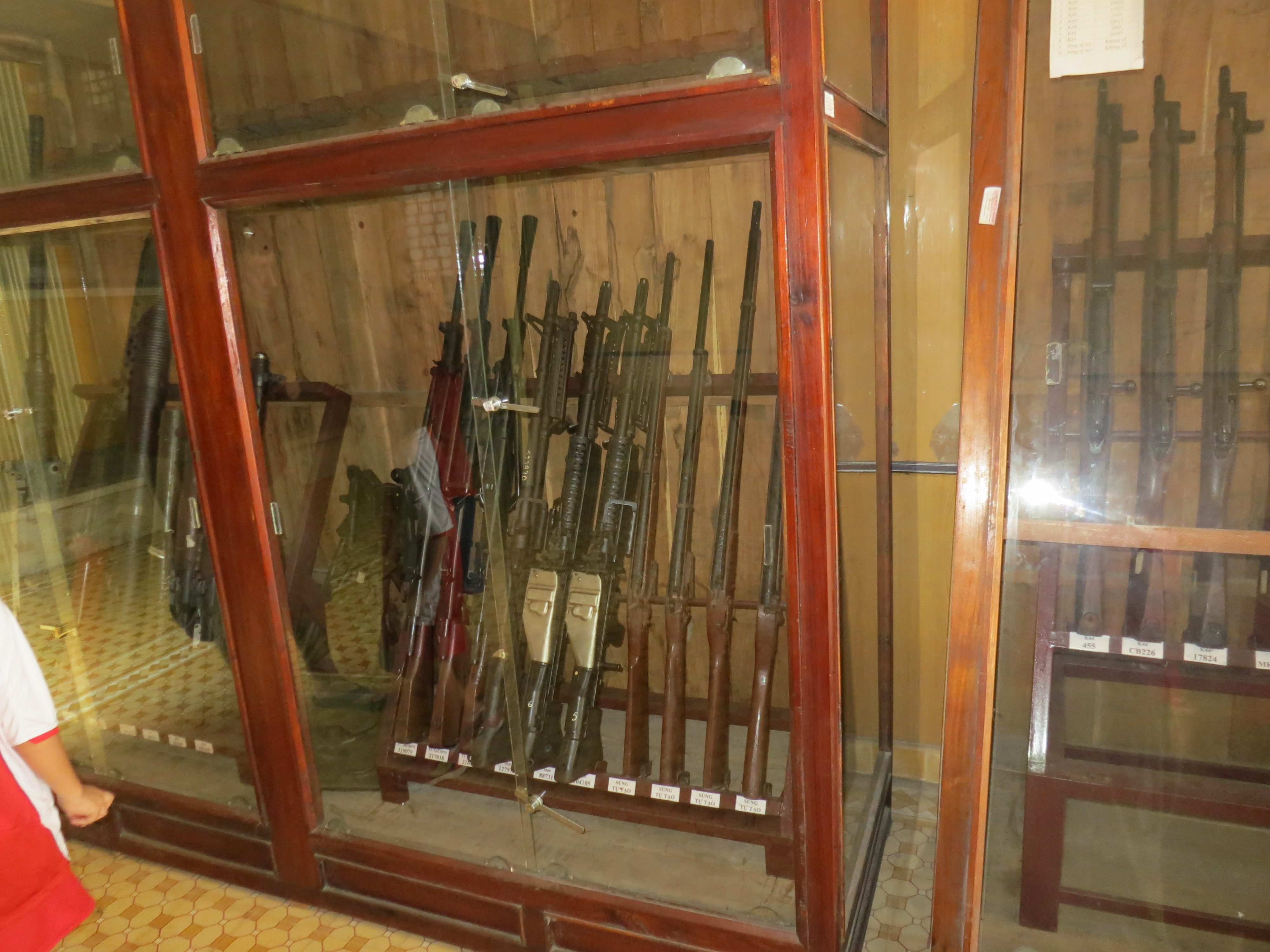
A lot of weapons on display at the end of the tour
At the end of the tour of the park, there was a video, more like a work of art in the field of propaganda actually, on the tunnels and the Vietnamese who dug them, cooked in them, slept in them, ran dangerous missions in them, and made them their home for as long as it took until it was safe to come aboveground again.

