
I wrote this post last year, after my visit to Bare Knuckle Farm up north. It slipped through the cracks when it came to posting. I’m glad I found it; I’m pleased with the piece and excited to tell you about the shortest distance a farm to table gourmet meal has ever traveled. This year they’re focusing on farming and not cooking, so I’m extra glad I had a meal there while I could.
I wore the wrong shoes. Pam had said there was a short tour of the farm before dinner, and one might logically conclude that a tour of a farm might require somewhat sturdy shoes, but I wanted to look nice for dinner, so there I was in a dress and strappy sandals. We’d arrived a little late, which meant our tour was short — hoop houses of towering plants, a muddy pigpen, a field dotted with geese — and I lagged behind the small group, scolding myself for dressing inappropriately, as my friends asked intelligent questions about the diet of chickens and how the tomatoes were doing. I caught up to the group just in time to see one pig chase another across the pen, and then it was time to go up to the house, where, as it turned out, strappy sandals fit in just fine next to cowboy boots and flip flops.

Abra and Jess, cheerful farmers
Bare Knuckle Farm lies outside of Northport, Michigan, the tip of nail on the pinky finger of the state’s left hand. Jess Piskor and Abra Berens are the brains and hard work behind this joint venture. Both University of Michigan grads, they started up a business partnership three years ago based on a mutual desire to grow local, natural food and serve it in a farm-to-table setting. Jess’s grandfather owns the 40 acres of land; most of it is leased to cherry farmers, and the organic farm, so lovingly tended, makes up about 2 acres.
During the growing season, Jess works daily on the farm, and in the summers Abra joins him just about every day. The list of plants they grow and animals they raise is impressive, especially when you think about the small plot of land it’s all done on and the fact that they’re doing it with little assistance and pesticide-free. From May through October, they take their wares to different farmers markets in the region every Friday, Saturday, and Sunday. They also run a small CSA (community supported agriculture), providing weekly produce boxes to families in the area. They’ve been covered in local and national press.
Which is to say that they’re incredibly busy people, so the fact that they also set aside a few days every month to prepare special meals for their friends is just another example of their passion for what they do and the generous spirit they do it in.
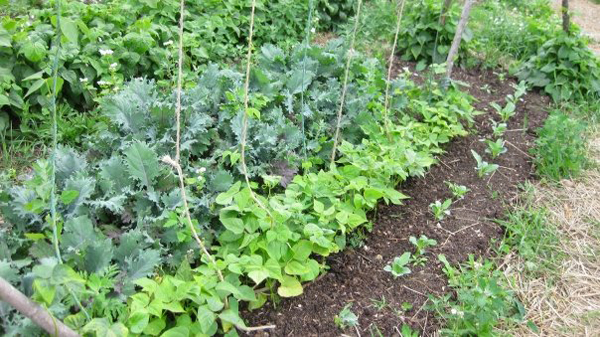
neat rows of kale at Bare Knuckle Farm
Both Jess and Abra have worked in the restaurant business (including the famous Zingerman’s in Ann Arbor), and Abra is a trained chef who spends her winters working in fancy restaurants in Chicago. So it’s not surprising that they feel strongly about incorporating some form of meal preparation into the operation of the farm. There are several obstacles, however; the restaurateur’s nightmare of health code regulations, zoning ordinances, and so forth, as well as the unique challenges of opening a business venture in a tourist town.
Memorial Day through Labor Day in the northern part of the Lower Peninsula brings the tourists in droves, and more often than not, they’re upper middle class white folks with money to burn on local arts, crafts, wines, and restaurants. But come September, they’re back at home, and the local population returns to its normal level (under 700 in Northport, and 14,000 in Traverse City, the nearest metropolis for a couple hundred miles). Such a feast and famine situation when it comes to customers presents a dilemma to potential entrepreneurs in the area. Jess and Abra have discussed the possibility of opening a seasonal restaurant, in order to benefit from the tourist influx without suffering during the colder months, but as of yet they have no firm plans.
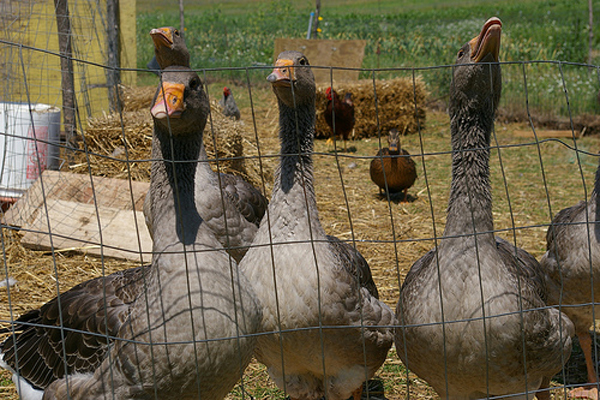
when I visited, the geese were doing lawn duty, munching down grasses in a field
In the meantime, they have friends over every month to try out Abra’s recipes using the literal fruits of their labors. Guests eat at the house, built by Jess’s grandfather in 1961 and still showing his original decorative touches, such as antique sewing machines holding up the deck seats and a working wood-burning stove in the living room. Giant sliding glass doors take up the entire west wall, with a view directly onto the sunset side of Lake Michigan, and mutli-colored bottles line the support beams, allowing the fading light to filter through dusty prisms and set a glow on the dining tables inside.
When we arrived after a short walk up a dirt path through the trees, I was relieved to see the gleaming wood floors and homey mismatched lamps of the main room. This was clearly a place for comfort and companionship, and just about any shoes would fit here. I followed my friends Pam and Matthew out onto the porch, where Abra had served up the appetizer (goat cheese and apple chutney on toasted bread) and the other guests were opening their wine bottles to start the evening off right.
We all got a little acquainted, and then moved inside for the main event. Jess and Abra had printed up a menu, and on the back they listed where each ingredient came from; most were from a five-mile radius of the farm, and it doesn’t get much more local than that. I appreciated the list of ingredients for another reason, too. It shows a serious investment in community and credit-sharing that is not something I normally associate with the culinary world.

charm you can’t fake
One of the advantages of their set-up is that it has the air of authenticity that so many chi-chi restaurants nowadays are trying to reproduce. They didn’t have to carefully re-create old dishware to achieve the mismatched look; those dishes of varying size and color happened to be what they had on hand. No Applebee’s “neighborhood” setting was required; they just plumped up the cushions on the 1970s couch and wiped down the wood table that Jess’s family ate around when he was a boy. If they strike out on a restaurant venture, that’s something to consider, whether they want to continue cultivating that down-home look or shoot for something different. I liked it, and can see it fitting in well in a Northport environment.
Another aspect of the intimate dining environment that was one part friendly conversation, one part fancy restaurant affectation, and one part straight up informative, was the little speech Jess and Abra gave at the beginning of the meal. We were all pouring ourselves a new glass of wine when they came out of the kitchen and said welcome. Jess thanked us for visiting the farm and hoped we’d enjoy ourselves, and then Abra talked us through the menu. She pointed out a few dishes she was especially excited about, such as the salad, which was from a good crop of a certain type of lettuce this year, and the lardo Jess made, which was from last year’s hogs. I loved that she took the time to tell us these things. If the point of a farm-to-table meal is to connect the food on your plate to its source, this seems a necessary step, and if you’re a chef who wants to steer people to appreciate foods they might previously have been unaware of, a pleasurable one.
I was too busy eating and oohing and aahing to take photos, but let me assure you that the presentation was as pleasing to the eye as the food was to the palate. I’ve shared my distaste for vegetables with you all, and I can’t pretend that even this gourmet meal cured me of that, but I will say that a pretty looking salad can make a difference, and collard greens, if placed next to an exquisite chunk of pork, will go a long way indeed. It’s a toss-up whether the poached trout or braised pork cheek (yes, cheek! who knew?) was better, so I will compromise and say both were the best. And then came the cherry ice, made from cherries the next farm over. It’s over a month later and my mouth is watering again, thinking about it.
The atmosphere was entirely genial. We chatted with friends of Pam’s from U of M at one table, and a family from out of state at another. The father of that family generously shared a glass of wine with us during the pork course; he said it went perfectly with the meat, and he was not wrong. After the meal, we sat around chatting as the sun went down, and we watched the kids play with their new puppy on the deck. A lot of this good feeling probably came from the fact that Jess and Abra knew everyone already, but I think their taking the time to sit with us and answer our questions about the farm as well as just chat in general had a lot to do with it as well. I’m sure they were exhausted from an entire day of farmers markets and food preparation, but it didn’t show, and if they can carry that personal touch over to their future restaurant venture, they will create a special bond between restaurateurs and customers that will cement them in the area as a destination for good food served by good people.
Shoe type at your own discretion.
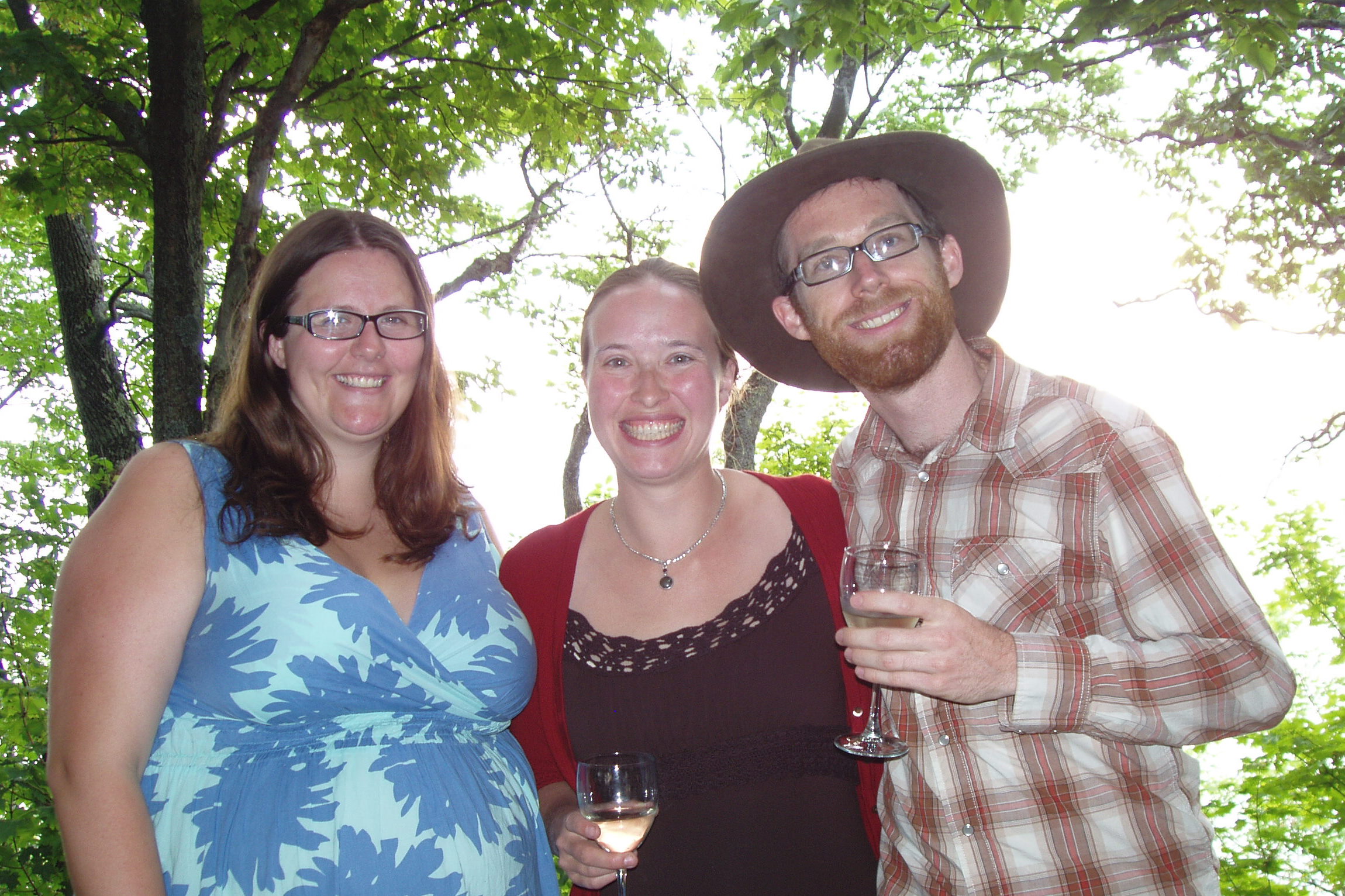
After a day at the beach, an evening at Bare Knuckle Farm — a perfect summer day with friends
Images 1-3. Images 4-5 by me.






 Stowaway Travel Writing & Editorial Services