
The Meiji Jingu shrine is named after the last Meiji emperor of Japan and his wife, Empress Shoken. The shrine was built after the emperor’s death in 1912, near the imperial couple’s favorite iris garden.
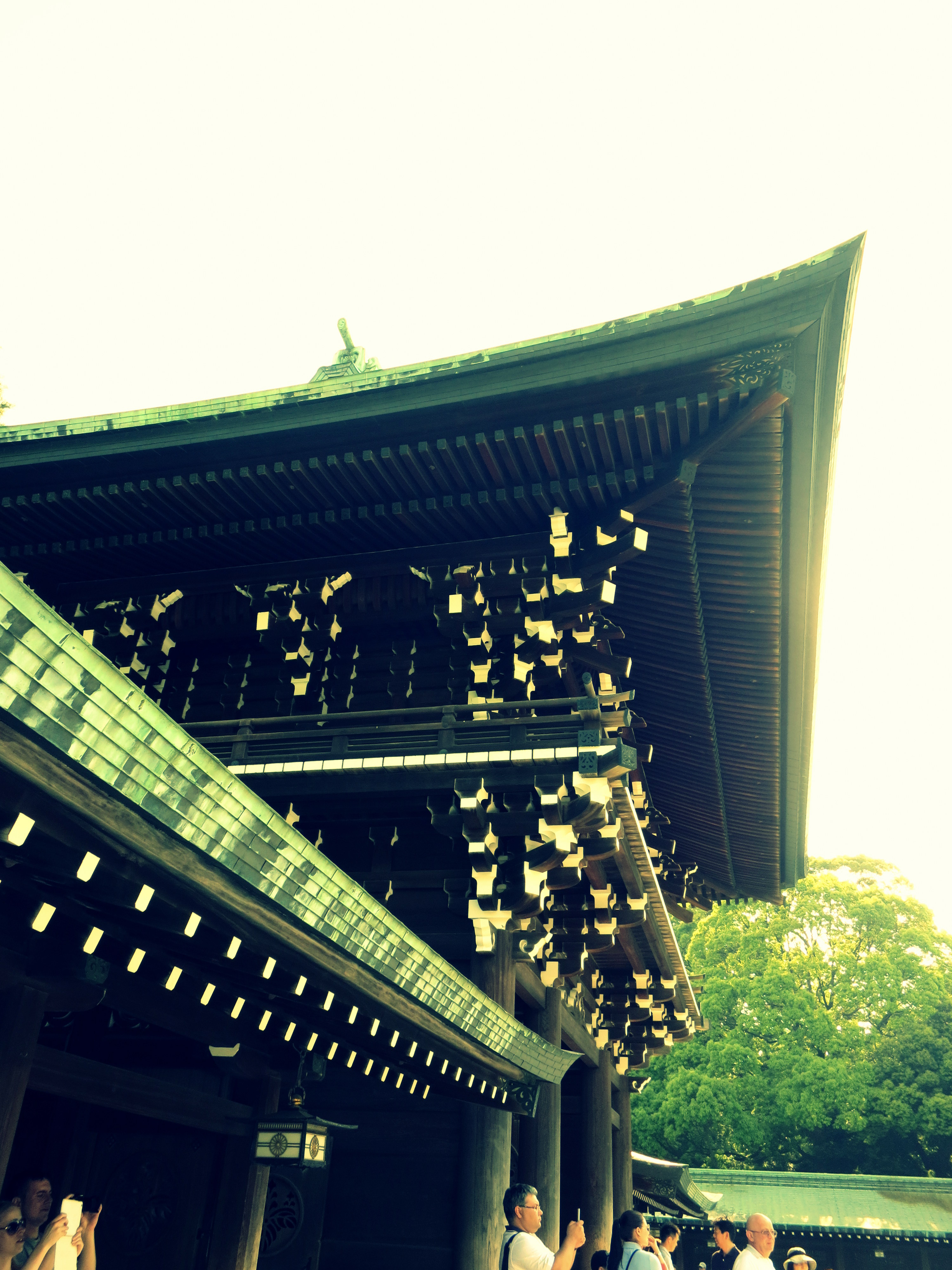
The Meiji Jingu Shrine in Tokyo

The front of the shrine
The government decided to build a Shinto shrine to the deified spirits of the emperor and empress, and they surrounded the building with over 100,000 trees donated by citizens from around the country. I found that a lovely idea, to build a living, natural shrine as well as a painted, manmade one.

Turtles laying out
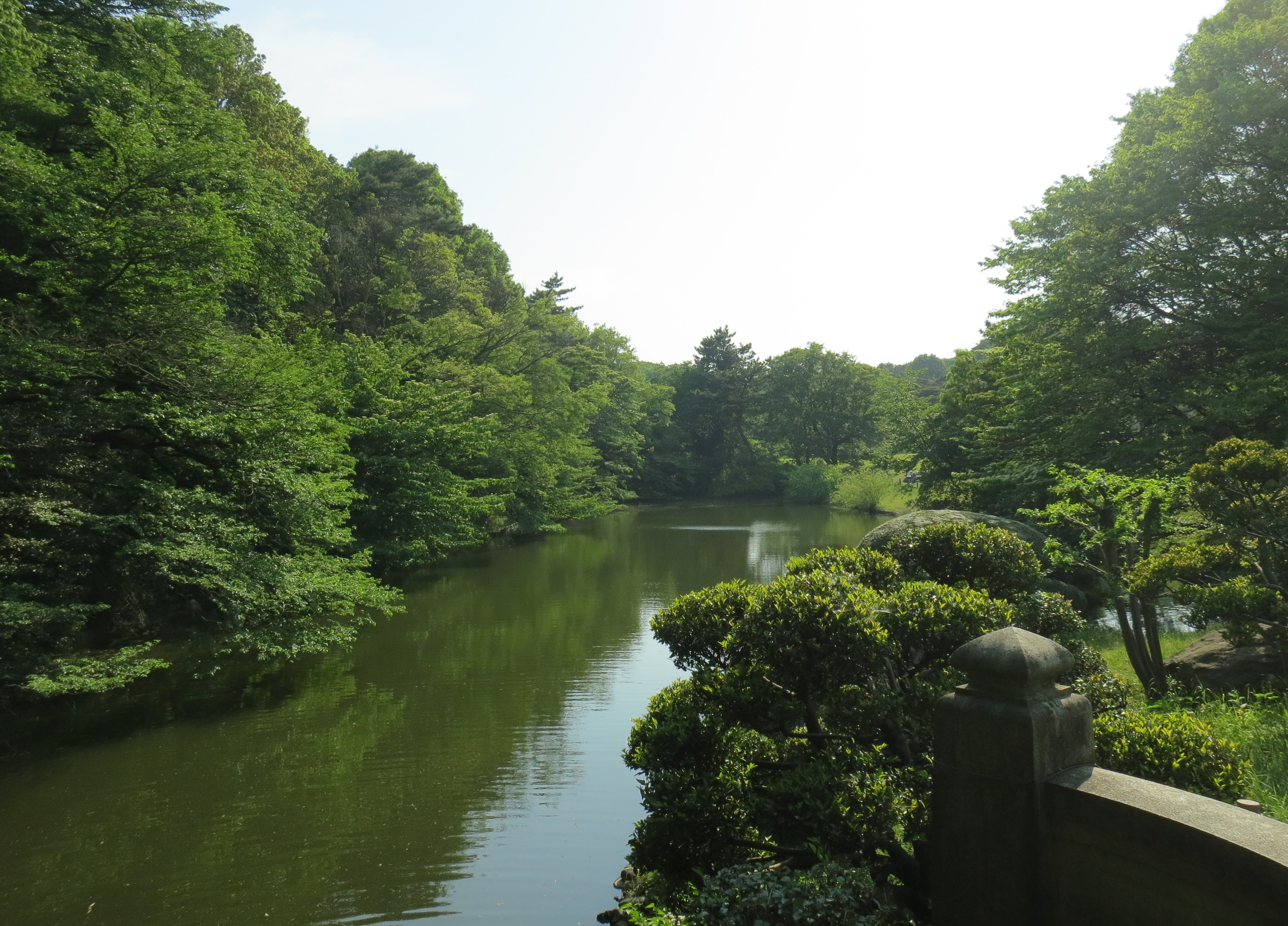
The peaceful gardens surrounding the shrine

Trees donated by people from all over Japan
The park is large, as you can imagine since it contains over 100,000 trees, and I had a nice walk through the forest, over a pond lined with turtles sunning themselves. I entered the main grounds and took in the large trees hung with paper lightning bolts of power, and saw a wedding party walking across the large gravel courtyard.
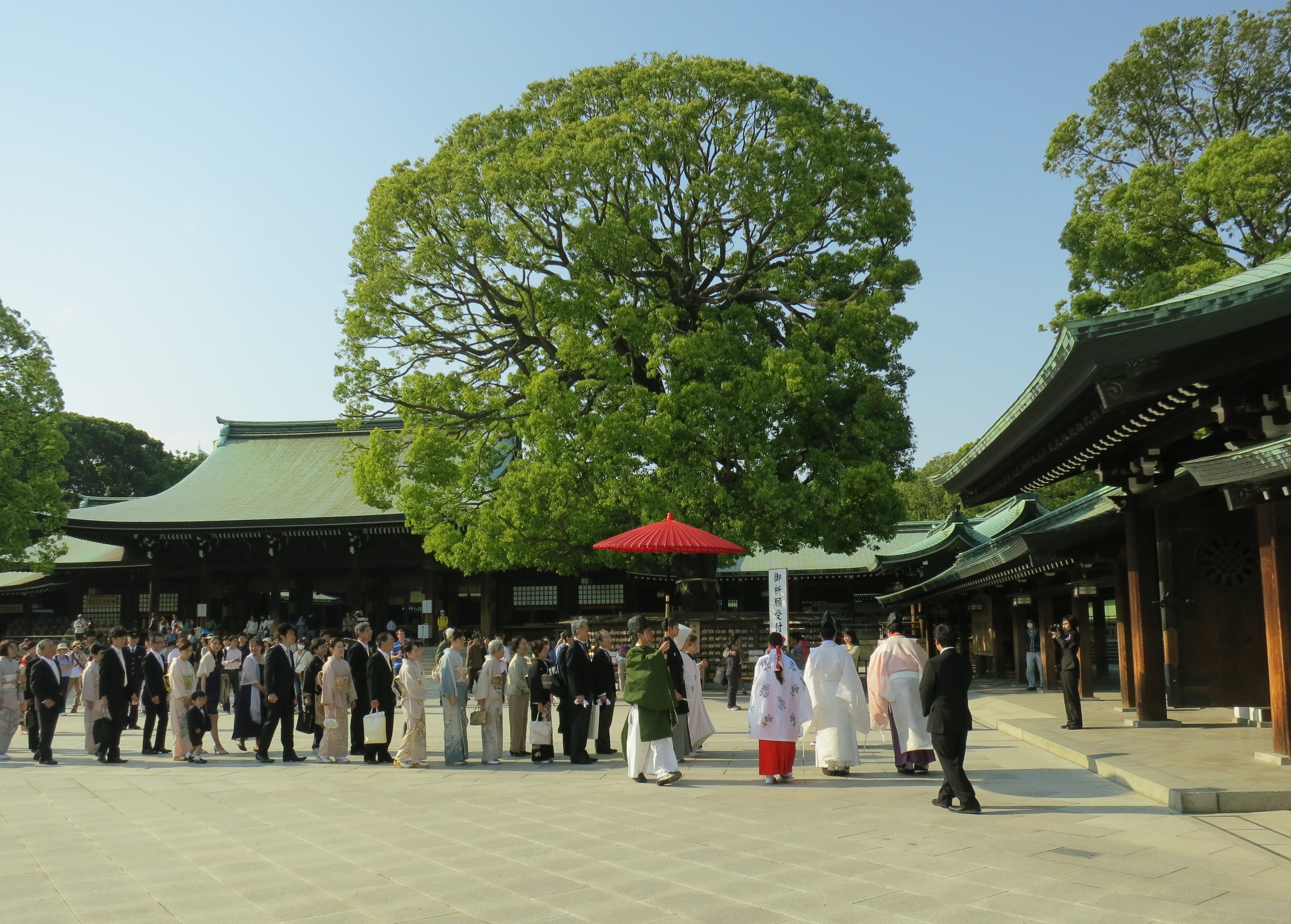
A wedding procession

Everyone quieted down in respect for the passing wedding party
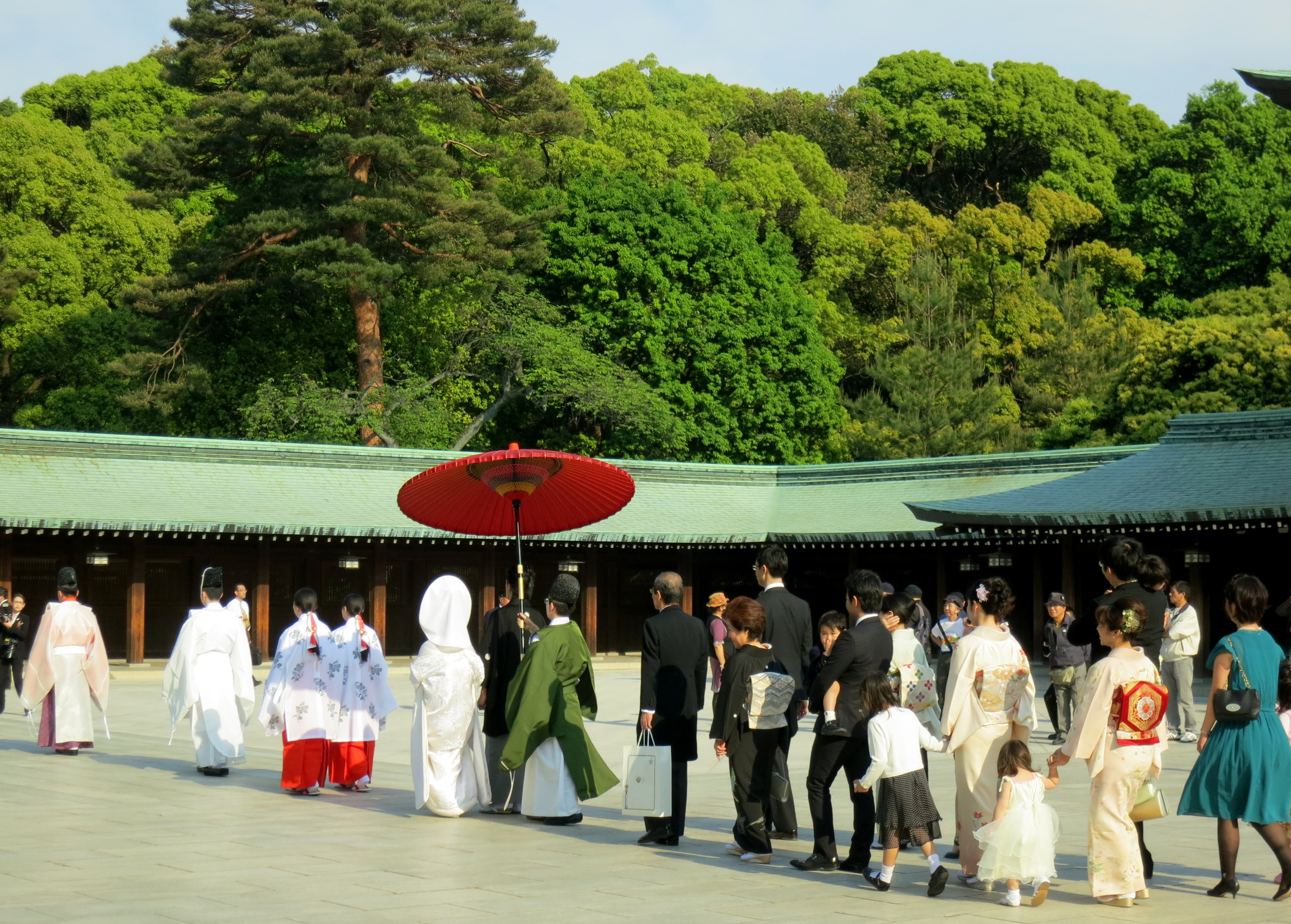
Wedding procession from behind
Priests in ceremonial dress led a procession through the courtyard to a side yard and around a corner out of sight. The groom wore a dark suit and the bride wore a white kimono with a mushroom-shaped hood. A female attendant carried a parasol over the bride. Friends and family, some dressed in kimonos but most in contemporary clothes, walked behind.

One of the massive doors to the shrine

Tree hung with lightning
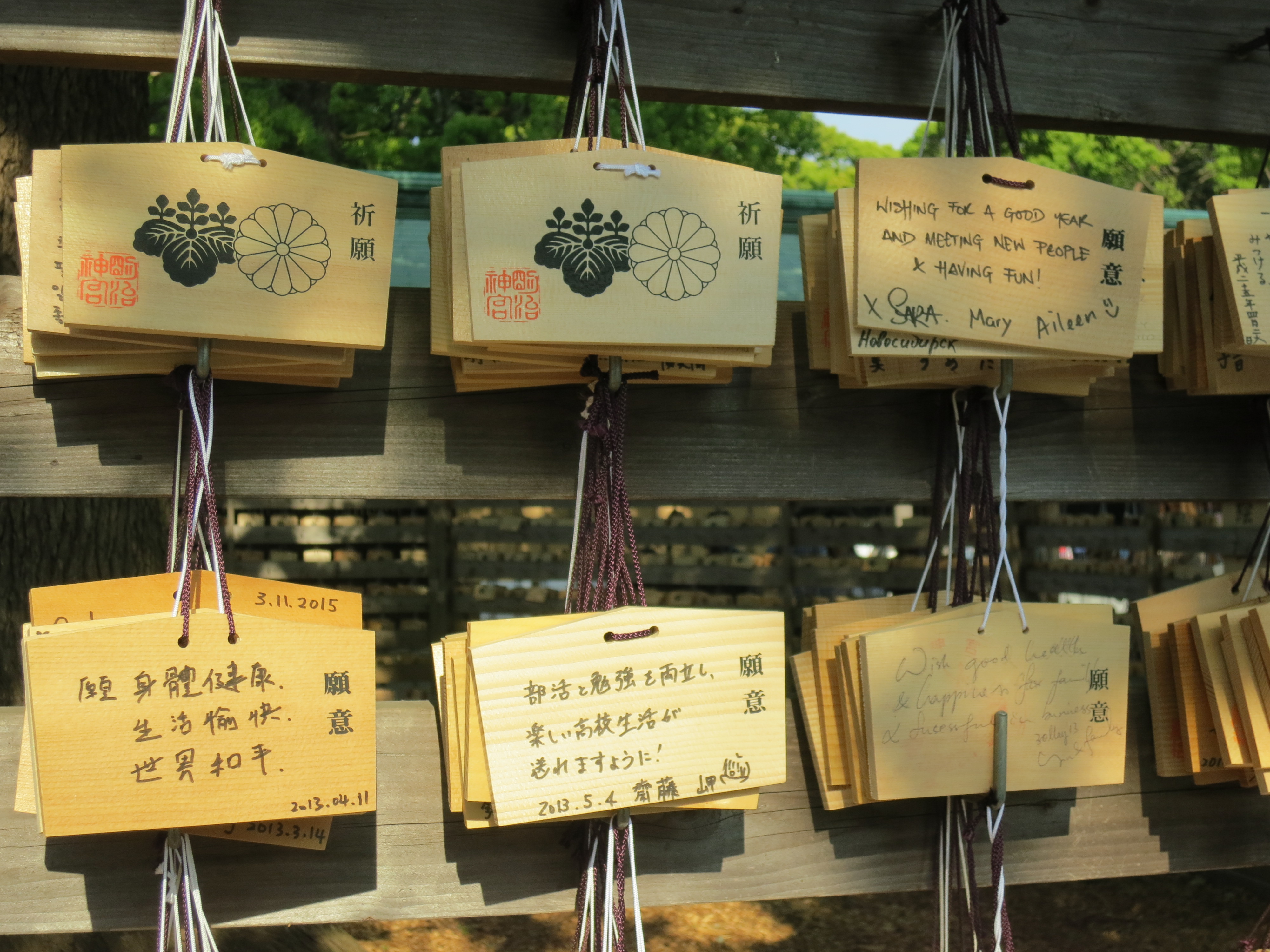
Fortunes and prayers to hang on the trees
The empress was a big supporter of the Red Cross, so there were collection boxes for the charity around the temple. The emperor was considered quite the poet, and for 107 yen, I purchased a small roll of paper with a short poem inscribed on it.

The edge of the torii
The torii, the main gate to the shrine, is the oldest of its style in Japan. According to the sign posted under it, the torii was rebuilt in 1975, modeled exactly after the original built in 1920. It seems unlikely all other torii of this style in the country were built after 1975, so this seems to be another instance of something being displayed as an original in Japan, without actually being made of the same materials as the original. I’m so used to the old buildings and sites of Europe and the States, which are venerated for being the very same stones touched by previous generations.

A priest near the lightning bolts
The original is such a prized thing in Western civilization, from paintings to cathedrals, and the materials used are an integral part of that originality. I have not made a study of this, so please do correct me in the comments if I’m wrong, but originality in Japanese culture is less important, or it’s interpreted in a different way; the materials aren’t as important as the precise style and location, perhaps. The London Bridge was moved to the Arizona desert, and people still flock to see it because it’s made of stones centuries old. In Japan, temples may have been rebuilt only a few decades ago, but they imitate the form and decoration of their predecessors so precisely, and inhabit the same space so perfectly, that they are admired as the temple, not a copy.
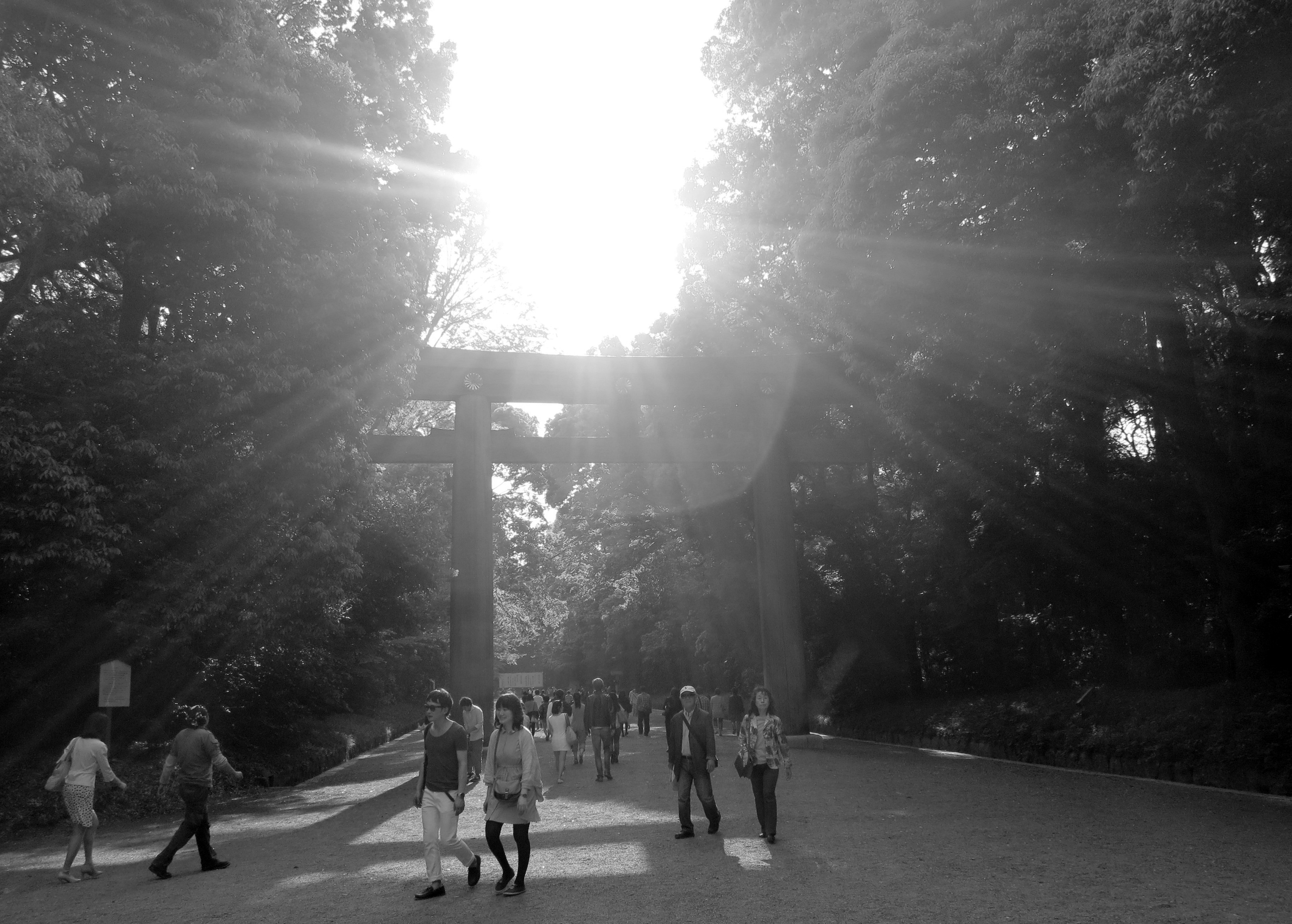
On the approach
This is ending up very freshman philosophical, all “what is the you-ness that makes you, you,” but it’s something I pondered several times at the different tourist sites I visited throughout Japan. I admit to a thrill when I see or touch something truly old, but seeing a perfectly symmetrical temple identical to one people admired centuries ago is a thrill of its own. The common thread, for me, is the historical connection to others. Whether it’s the actual building that people stood in, or a replica, the exciting thing is the idea that I might be experiencing the sights and sounds of a place just as earlier generations did.
 Stowaway Travel Writing & Editorial Services