I went to Reunification Palace right after going to the War Remnants Museum, and the change was jarring. I had an emotional experience in the museum, and it was strange to walk away from the troubling rooms of the museum into the perfectly manicured halls of the palace.
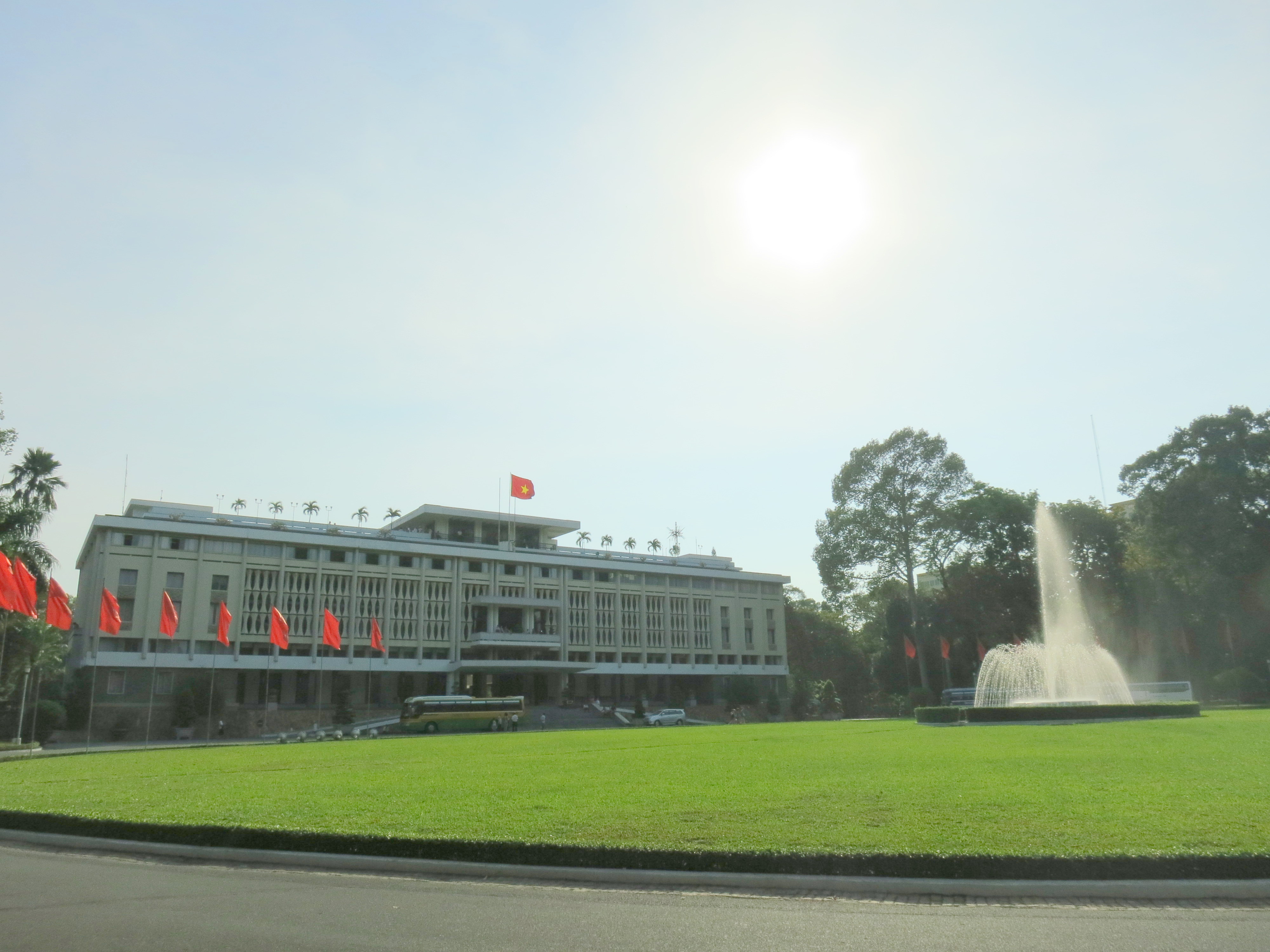
Reunification Palace, Ho Chi Minh City
I caught a tour midway through, and learned a little about the building. The French had built a mansion on the site back in the 19th century, but it was bombed in 1962 in an assassination attempt on President Diem. The damage was so extensive that Diem ordered the building razed and rebuilt, which is why it’s entirely built and decorated in the modern style of the mid-1960s.
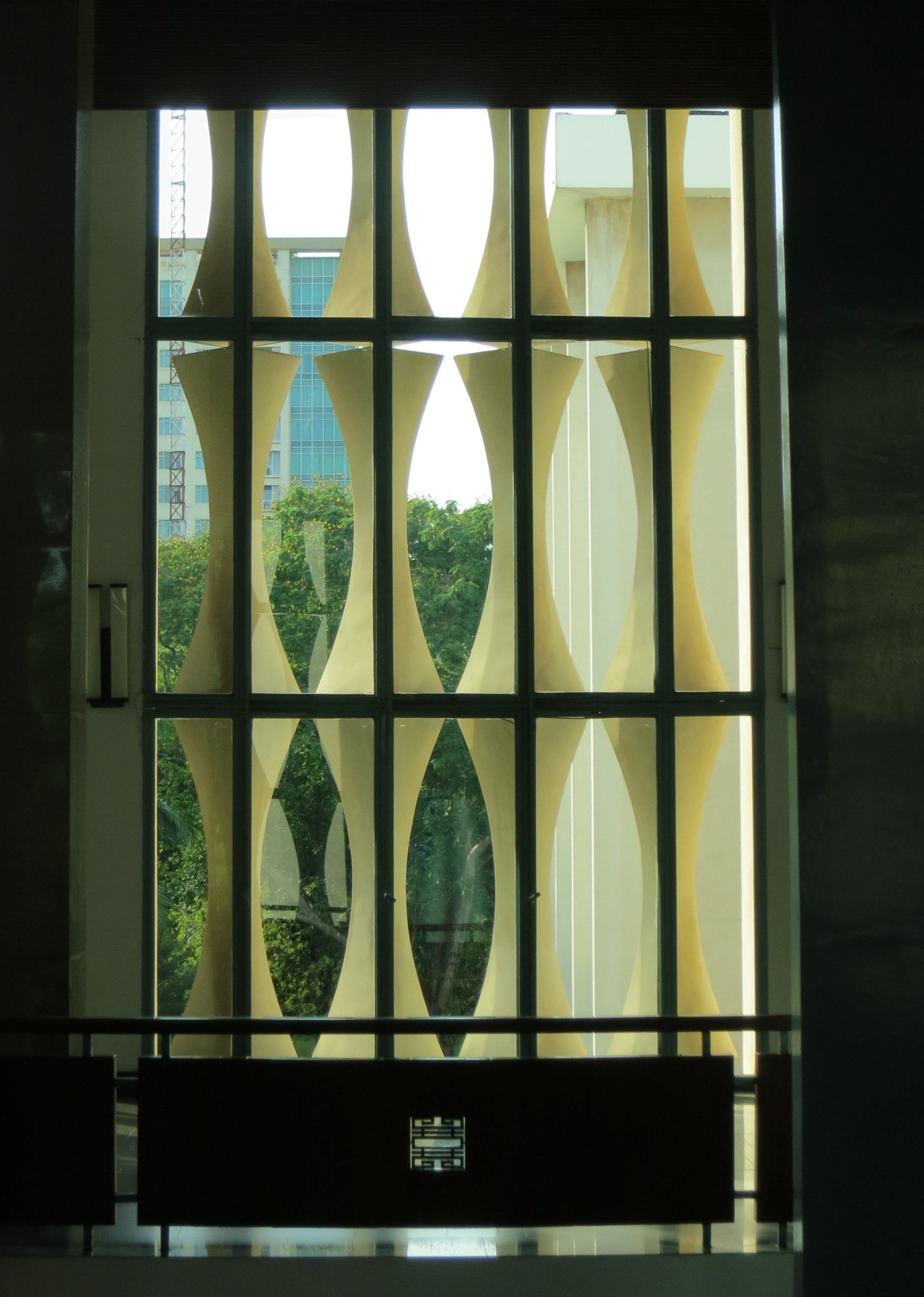
I often dislike these types of windows, because they’re usually done in a heavy concrete, but here they seemed much lighter
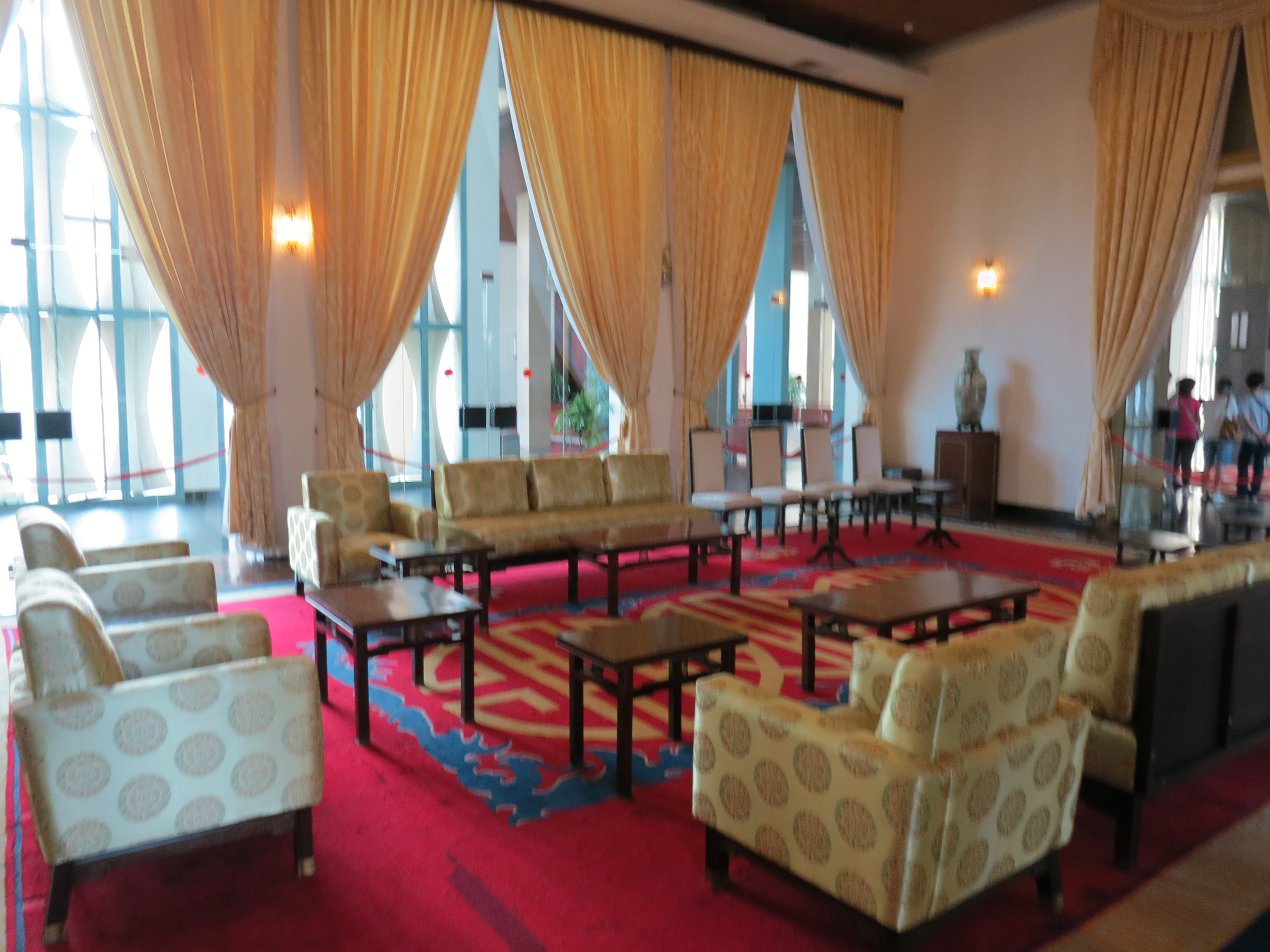
One of the reception rooms
It was like stepping on the set of Mad Men, except where I find the dark browns of that show uninspiring, the bright colors and rich materials of the palace were a sight to behold. I think a lot of that had to do with Vietnamese-born, French-trained architect Ngo Viet Thu, who purposely used fabrics, rugs, and paintings showing Sino-Vietnamese designs. Everything was sleek lines, symmetrical layouts, long rooms filled with matching furniture. One room held a painting that represented the north, middle, and south of Vietnam. The president’s main reception room incorporated traditional Vietnamese designs, and the lacquer on a painting in another meeting room was stunning.
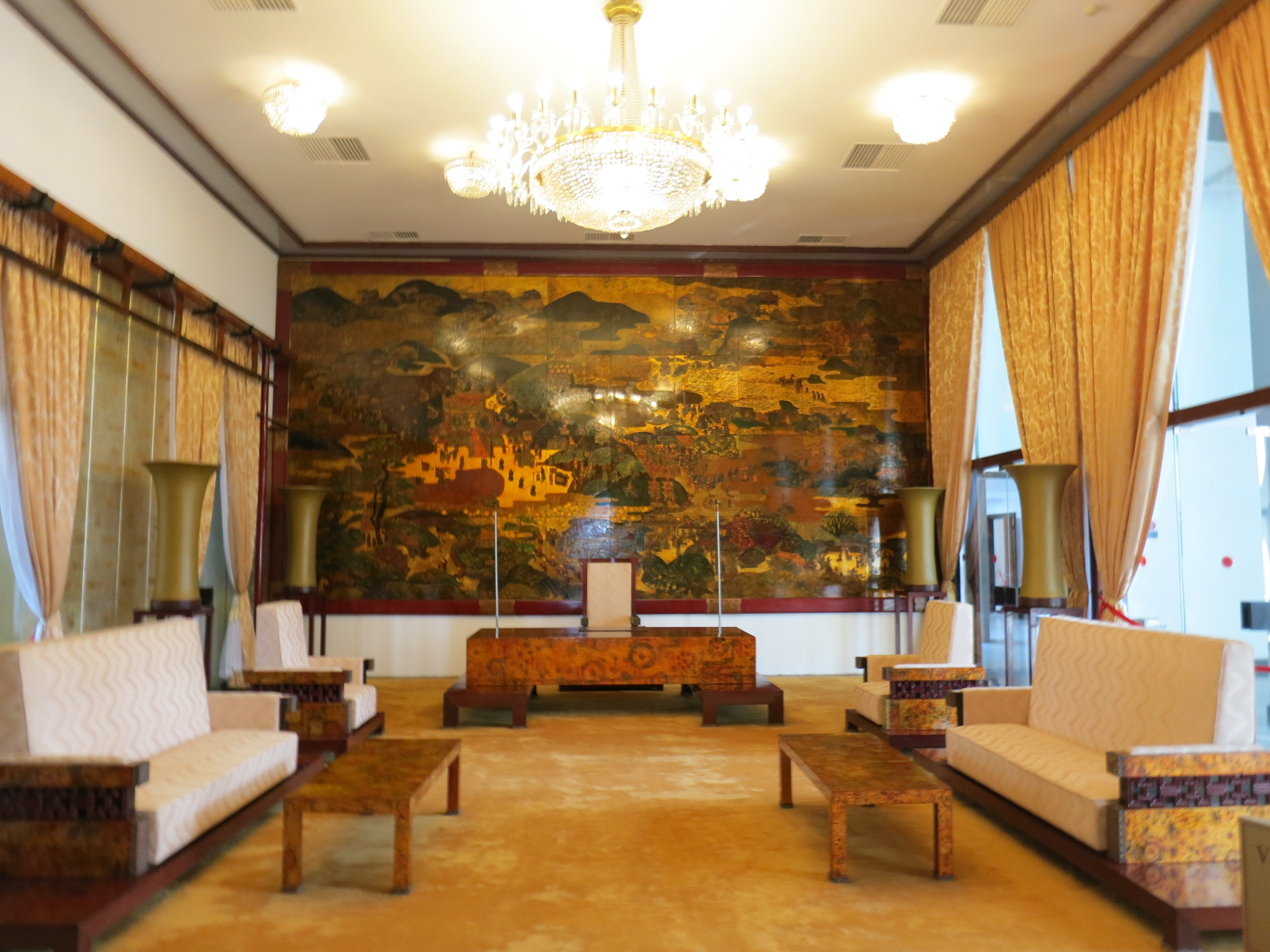
Check out that lacquer

From left to right: the north, middle, and south of Vietnam
The residential quarters were emptier, nearly bleak, compared to the dressed to impress public rooms. The courtyard of the residential quarters contained the preserved legs of elephants, a miniature ship, and a Chinese ceramic dog, which seemed an odd assemblage.

The relatively bare residential quarters
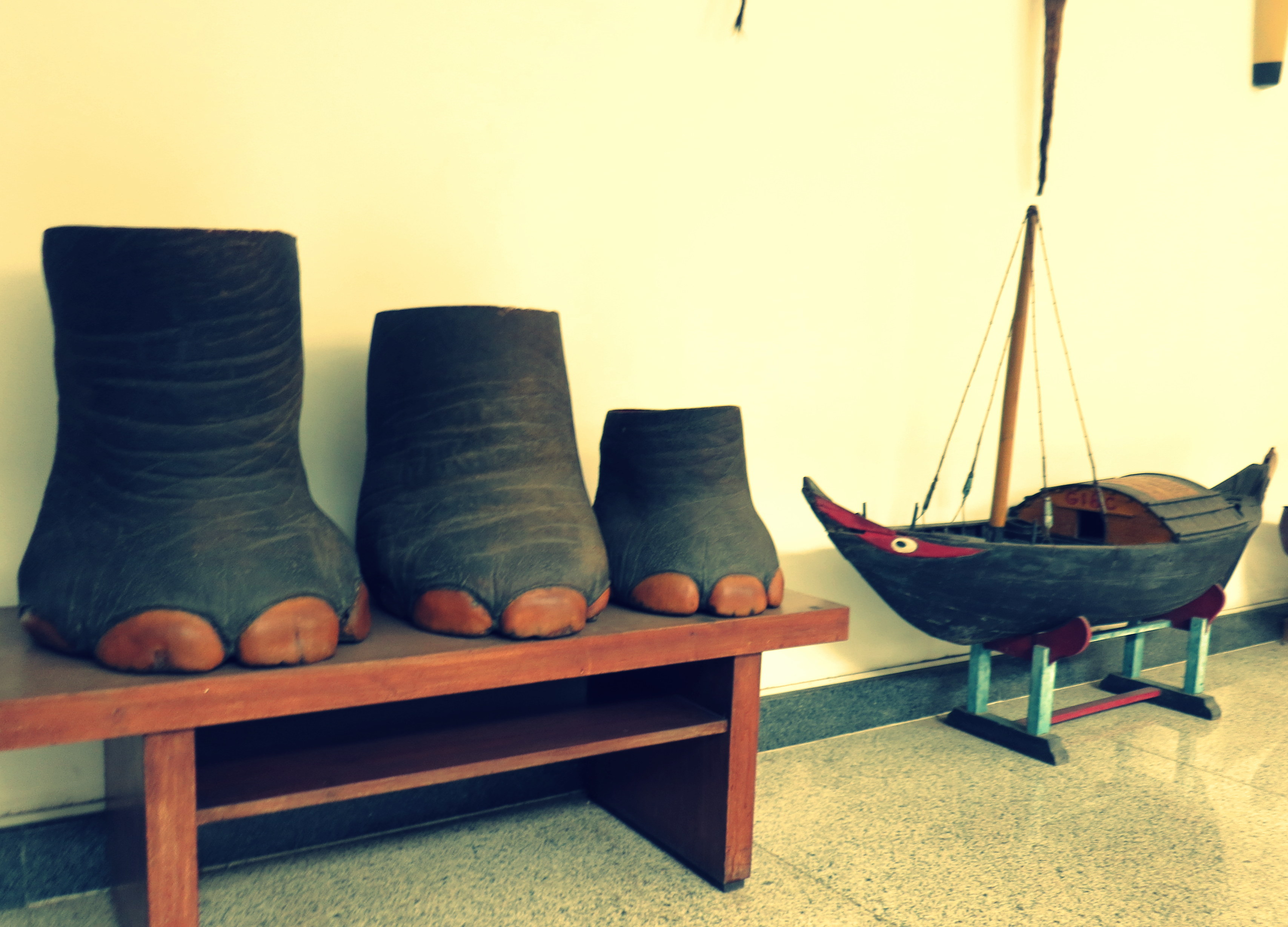
Odd mementoes
The palace includes a movie theater, a gambling room, and my favorite–a rooftop ballroom. There’s a dance floor, bar, and grand piano up there in the center of the roof, and space on either side to drift away to for conversations romantic or political, or maybe both.

Tables were set up for mahjong and blackjack

Dancing on the rooftop
Down in the basement is the war strategy room, several small offices, a small cell for the president to hide in during combat, the kitchens, and the Mercedes used by the last president of South Vietnam.
The door to the movie theater
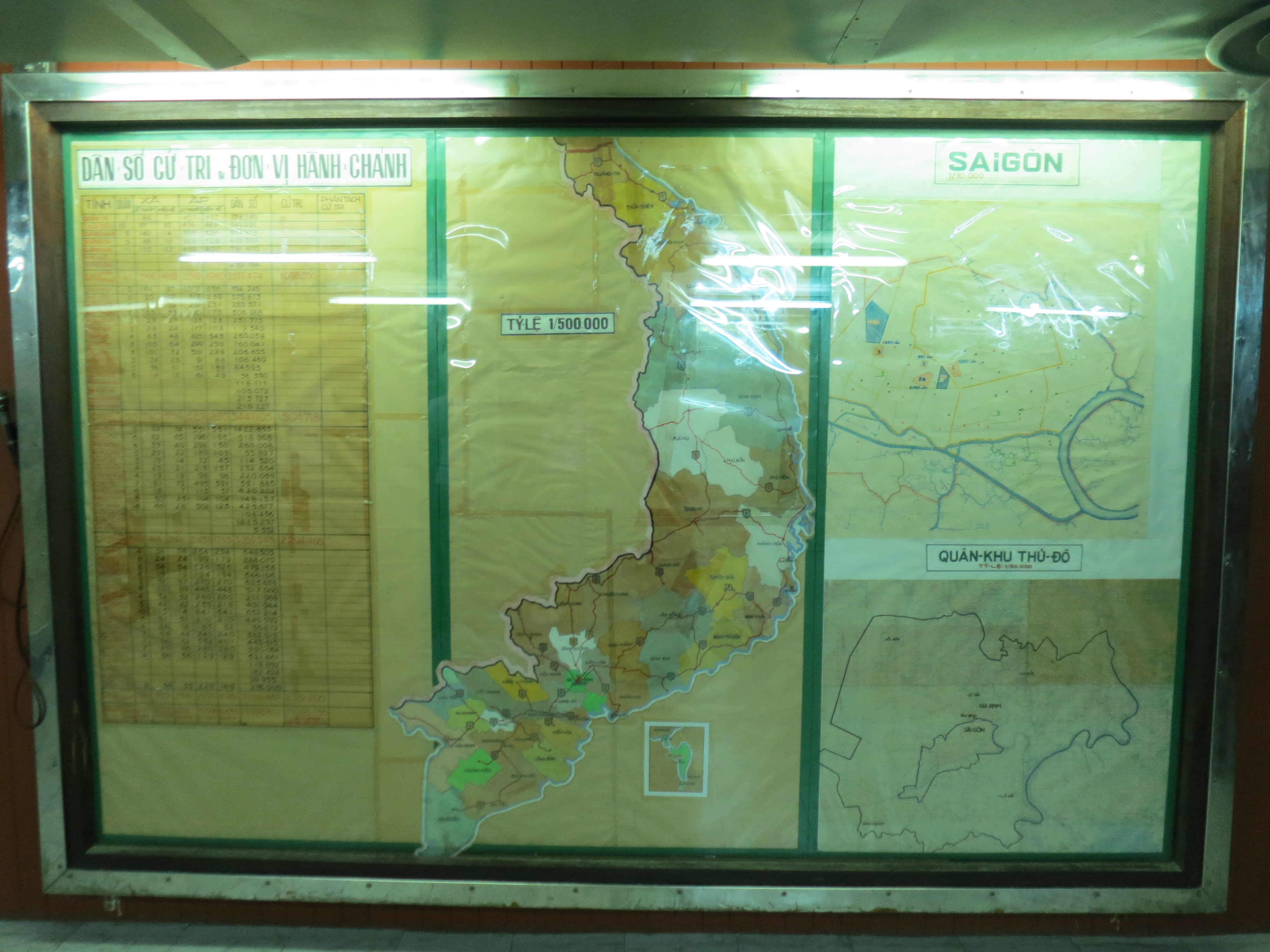
Strategy room underground

A view from one of the balconies
Diem was killed before he could ever live in the palace, but two of his successors lived there. On April 30, 1975, a tank crashed through the gate of the palace during the fall of Saigon, and the war officially ended. What had been called Independence Palace was renamed Reunification Palace by the Communist government, and it has remained pretty much untouched ever since. Sometimes official meetings are held there, but mostly it’s a strange museum piece, a building barely used for its intended purpose, a monument to the decadence of a former regime.

Adding the traditional to a new building
 Stowaway Travel Writing & Editorial Services